New World Oriole or Variable Oriole?
Here's how to tell the difference
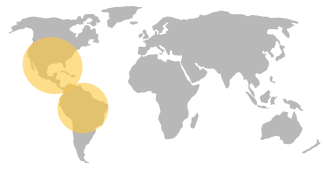

New World Oriole


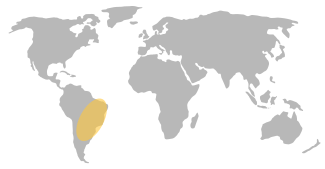
Variable Oriole
New World Oriole
Icterus
General appearance
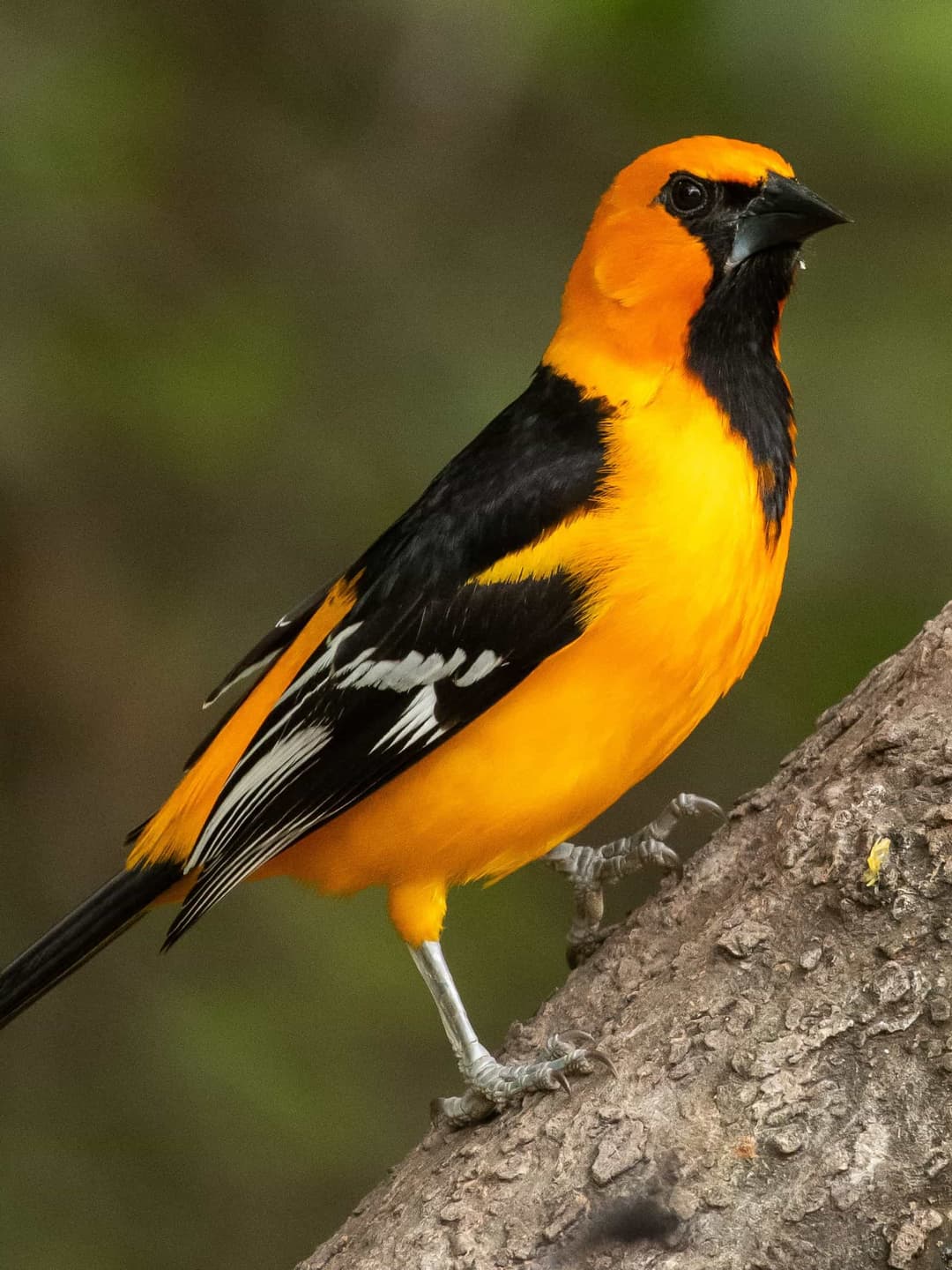
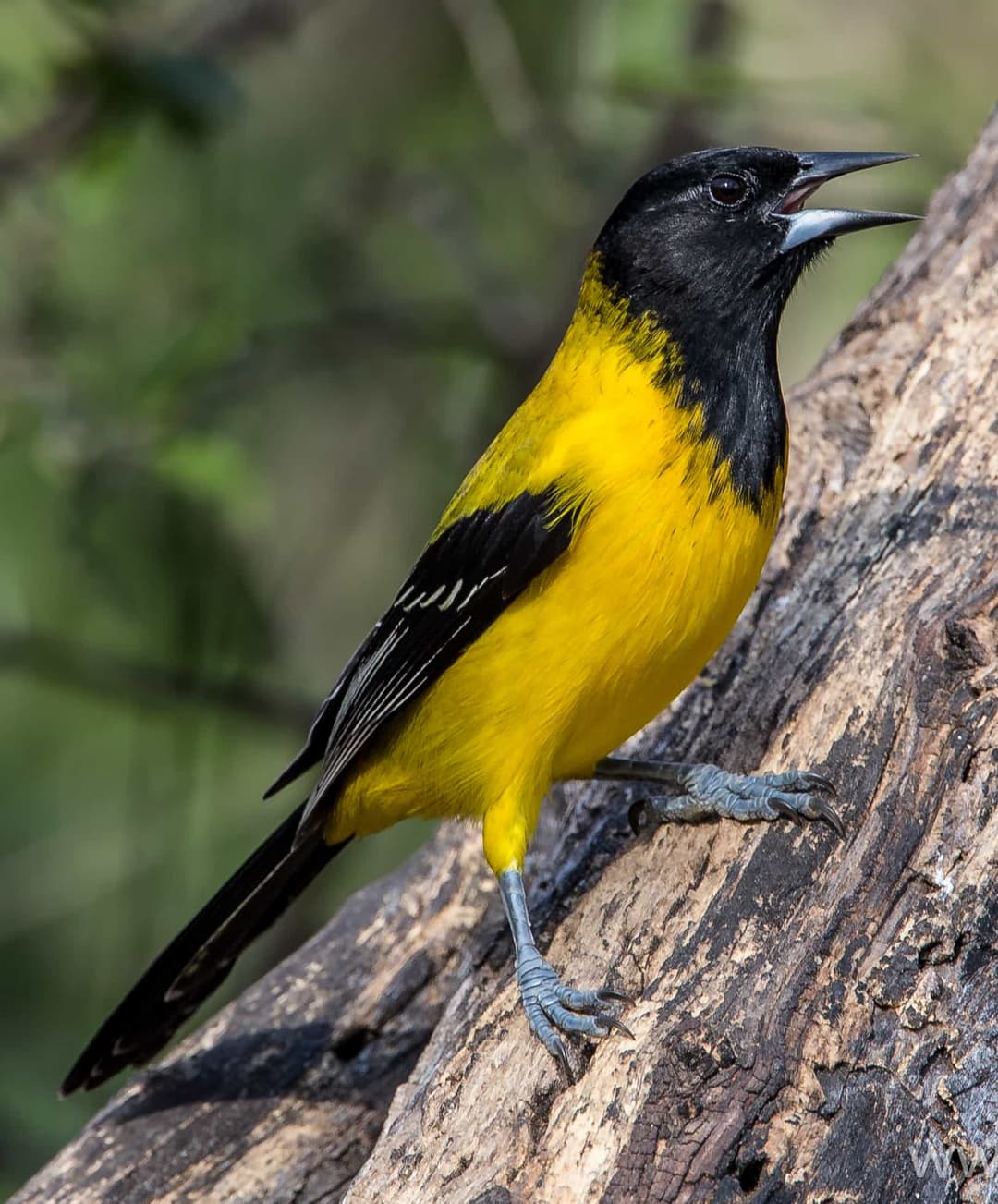
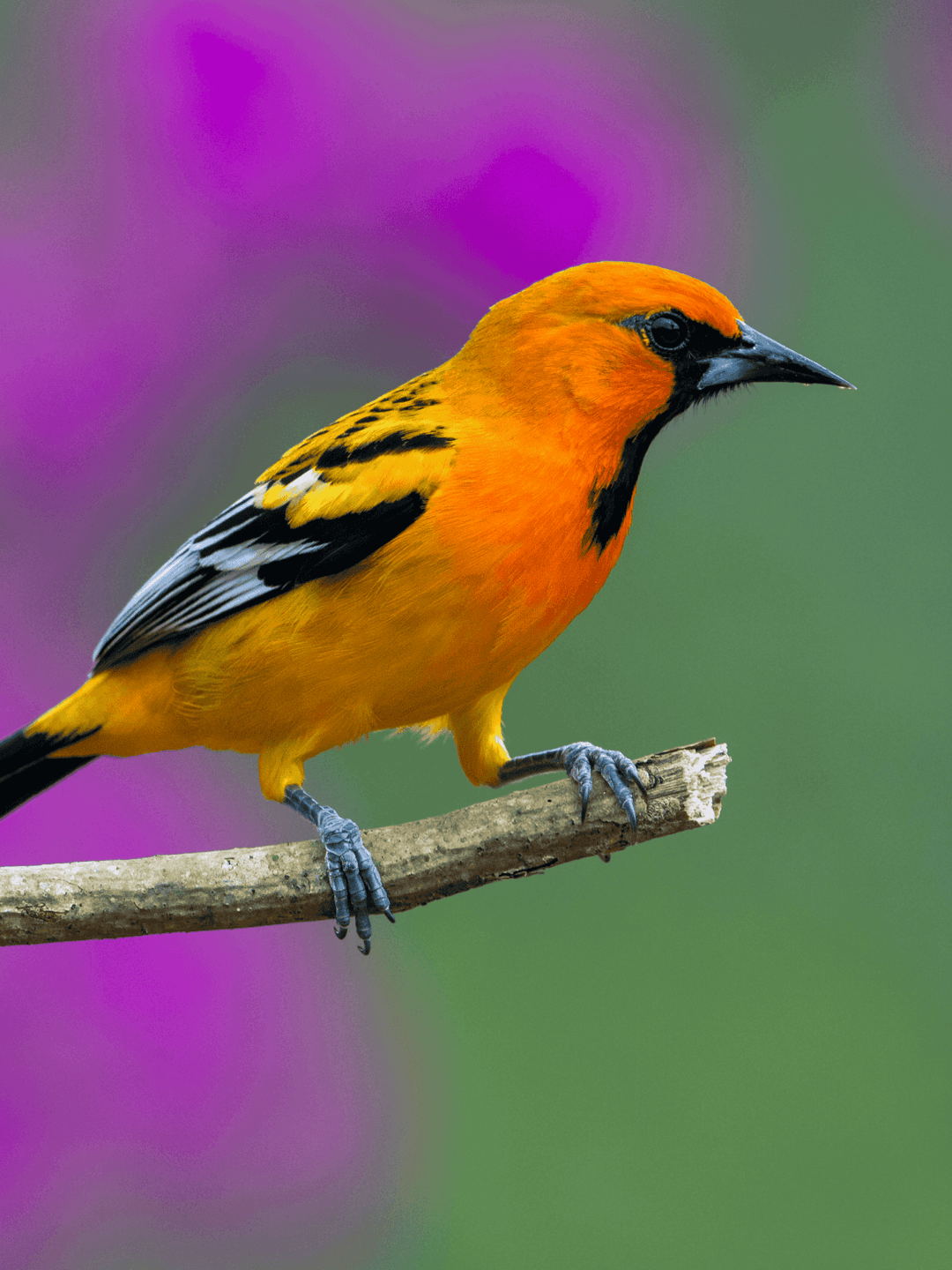
New World orioles are medium-sized birds with a slender body and a long tail. They exhibit a bright coloration, typically a mix of yellow or orange with black, white, or grey. They have pointed wings and strong legs and feet. Their bill is straight and sharply pointed, ideal for their insectivorous and frugivorous diet.
Male vs female
Typically, males tend to be more vibrant in color than females, showcasing a striking contrast of bright orange/yellow and black, while the females are usually more olive, yellow or brown, allowing them to blend in with their surroundings for protection. Their sizes are similar though males may slightly be larger than females.
Juvenile
Juvenile orioles tend to have even more muted coloration than females, often browner. This provides added camouflage from predators. As they mature, they will gradually molt into their adult plumage. The molting season usually corresponds to the end of the breeding season and may result in less vibrant colors in adults as well.
Size
5.9 - 10.6 in/0.4 - 3.1 oz
There's more to learn about New World Oriole
View full detailsVariable Oriole
Icterus pyrrhopterus
General appearance
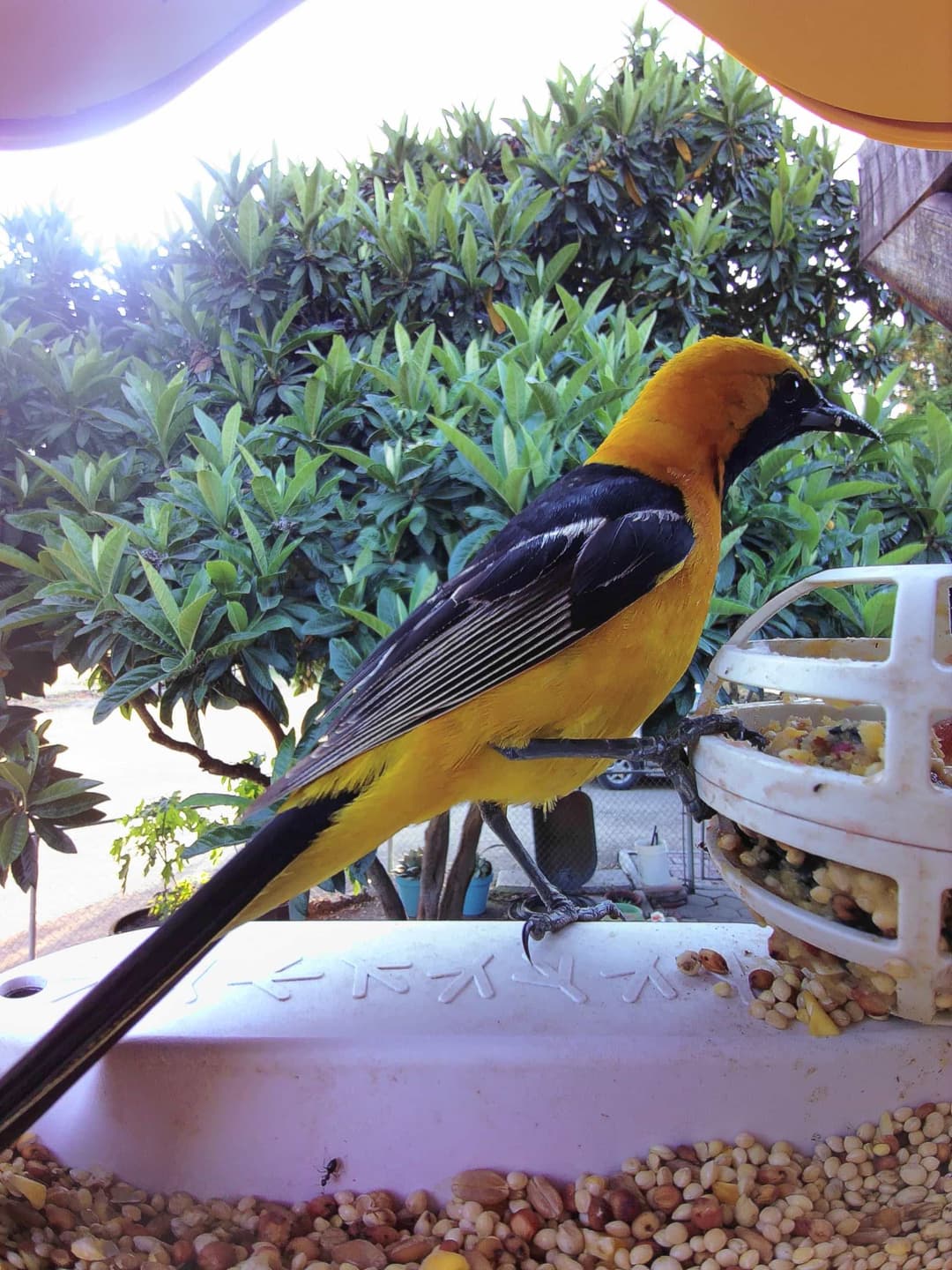
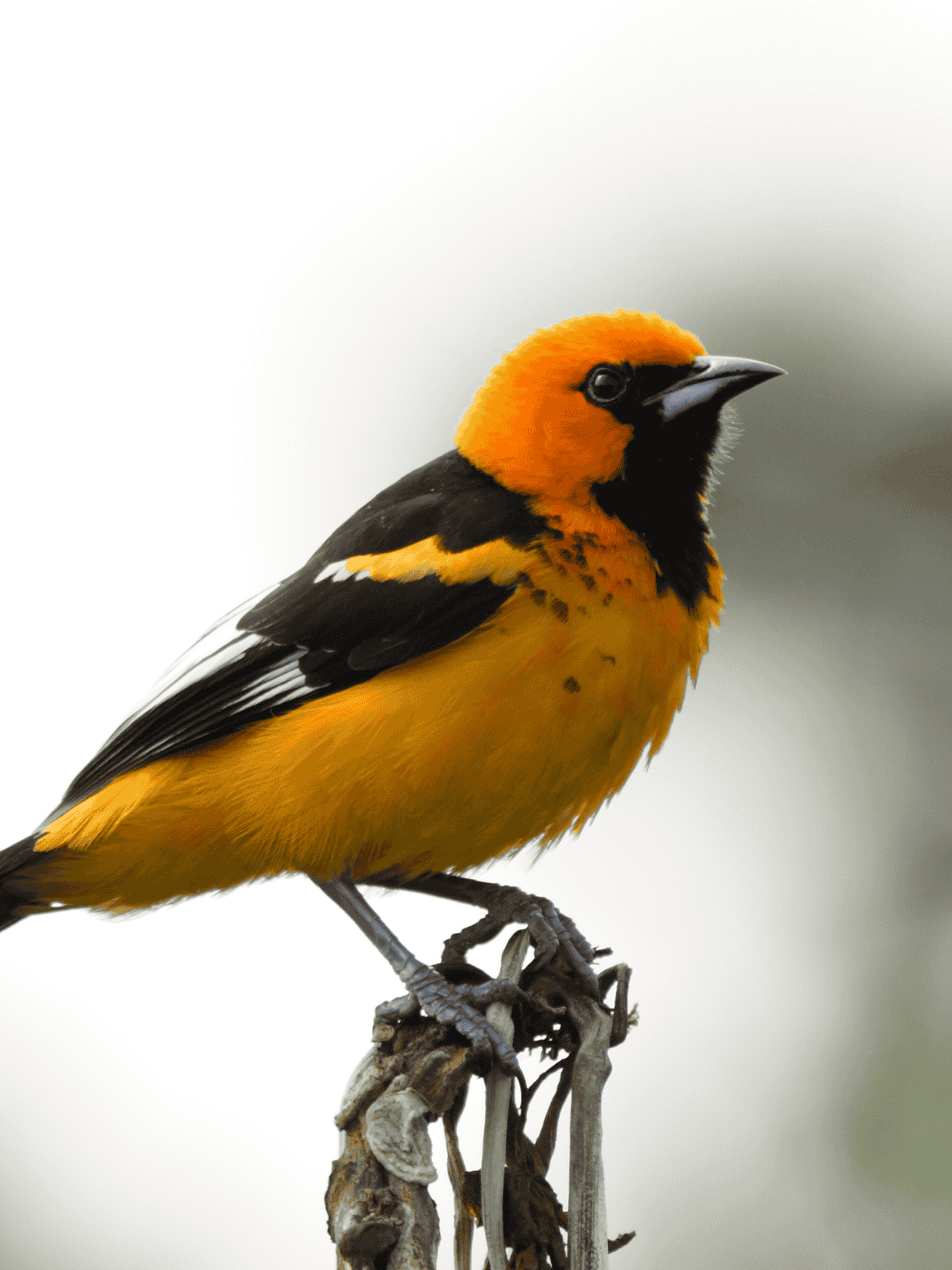
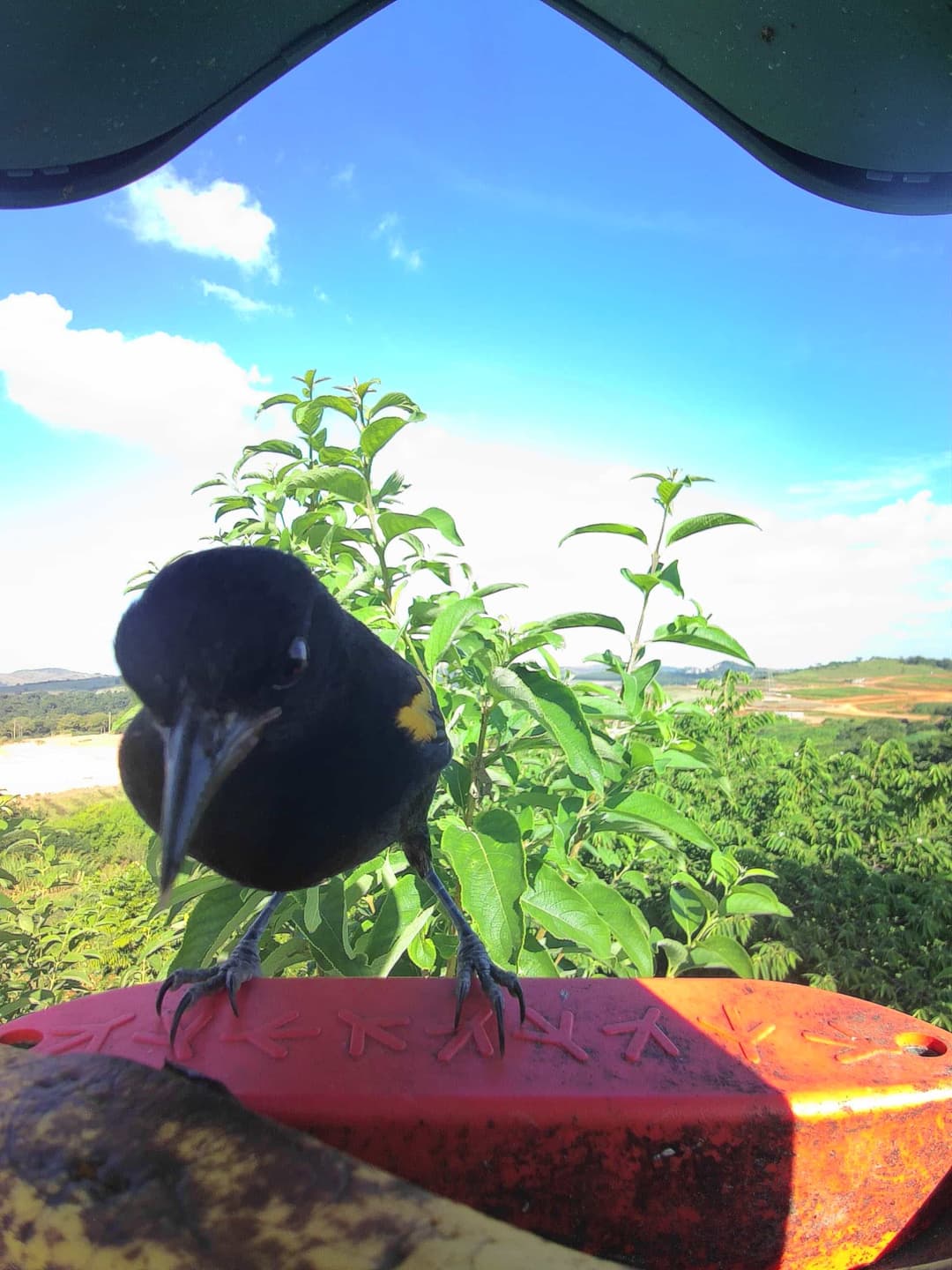
Variable Orioles exhibit striking coloration, primarily black and vibrant orange. Their physical traits include a relatively large size for an oriole, varying between 23-25 cm in length, a sturdy bill, and long tails. The wings and tail exhibit black color with white wings bars and edges.
Male vs female
Both males and females boast a vivid orange back, rump, and undertail, however, males often exhibit a darker, burnt orange compared to females. The wings are predominantly black in both sexes with the male having more extensive black on its underside. The female's underside is mainly orange whilst the male is largely black.
Juvenile
The juveniles are more modest in their coloration. They are primarily olive-brown with indistinct streaking on their underside. They lack the striking orange and black contrast of the adults till they mature to attain the full bright plumage.
Size
7.5 - 8.3 in/1.0 - 1.3 oz
There's more to learn about Variable Oriole
View full detailsHow to tell the New World Oriole from the Variable Oriole
Visual differences
The New World Oriole ranges from 6-10.5 inches in length with a mix of bright yellow/orange and black, featuring a straight, pointed bill. The male is vibrant, while the female is more subdued. The Variable Oriole is slightly smaller at 7.5-8.5 inches, with primarily black and vibrant orange plumage, a sturdy bill, and prominent white wing bars. Males have more black on the underside, while females display more orange. Juveniles of both species display muted, brownish tones. The New World Oriole often shows more variance in coloration, while the Variable Oriole features consistent bright orange accents.
Key differences and behavior
The New World Oriole (Icterus) and the Variable Oriole (Icterus pyrrhopterus) showcase distinct behavioral and habitat preferences. New World Orioles are found in open woodlands and gardens across North and Central America, migrating occasionally. They weave intricate hanging nests and consume a varied diet of insects, fruits, and nectar, frequenting feeders for oranges and grape jelly. In contrast, Variable Orioles inhabit tropical jungles and urban settings in South America, forming family groups. They perform complex courtship displays, nest in tall trees, and maintain a diet similar to New World Orioles but are more common in human-altered environments. Despite sharing feeding preferences, Variable Orioles more frequently integrate into urban landscapes, reflecting their adaptability and social tendencies.
Still not sure? Here are more lookalikes!
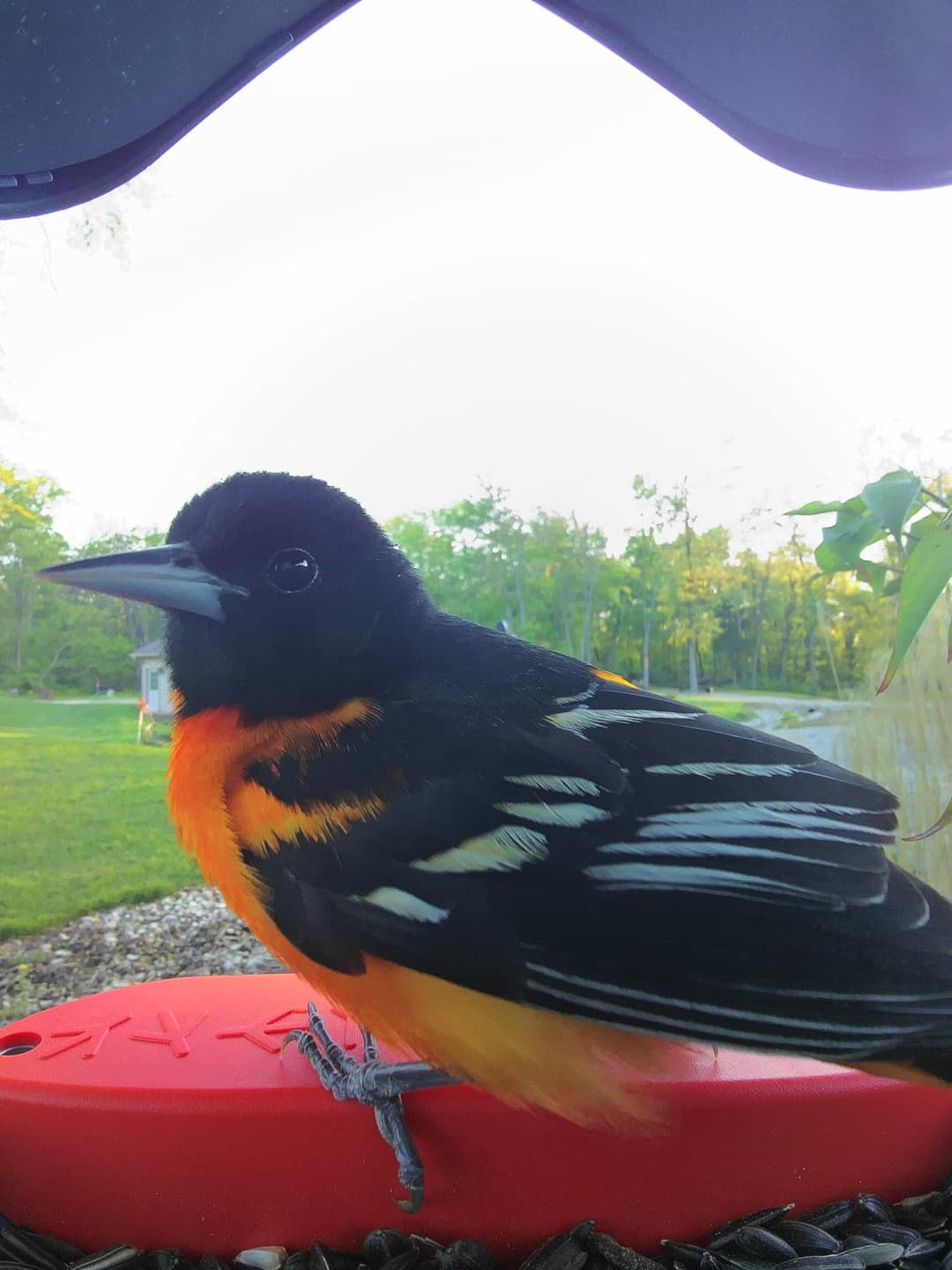
New World Oriole vs Baltimore Oriole
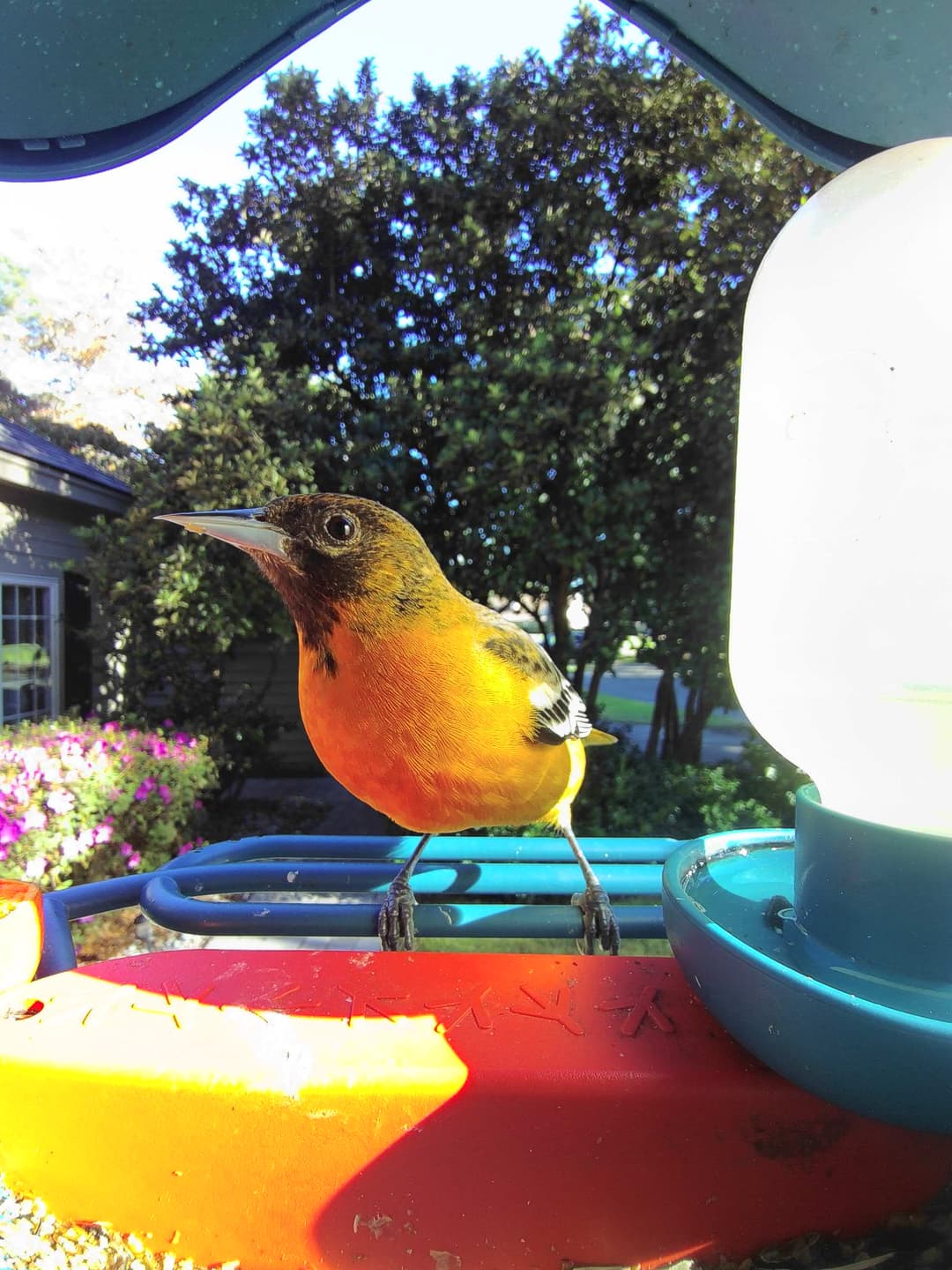
Variable Oriole vs Baltimore Oriole
New World Oriole vs [Select a bird]

[Select a bird]
Pick a bird to compare
Variable Oriole vs [Select a bird]
[Select a bird]
Pick a bird to compare