
Spot-Breasted Oriole
Spot-Breasted Oriole
Icterus pectoralis


Quick Identification guide
Quick Identification guide
- •
Bright orange plumage on the chest and underparts makes it easily recognizable
- •
Displays bold black spots on the breast and black markings on the face, including a mask extending to the throat
- •
Slender build with a pointed, slightly curved beak, typical of orioles
What does a spot-breasted oriole sound like?
The spot-breasted oriole vocalizes in a style similar to other orioles, with a loud, varied, and continuous nature. Its call pattern consists of falling, flat, and undulating notes. Its call types comprise a mix of buzzing, chattering, chirping or chipping, and whistling sounds, creating an intricate and distinctive song.


Description
It's the suburban life for the spot-breasted oriole and you can often find these beauties nesting in suburbia year round. Find as well as hear and enjoy! Females are just as bright as males and love singing just as much, though their song is slightly simpler than males'.
The spot-breasted oriole can weigh between 45to53grams and be from21to24centimeters tall.
The spot-breasted oriole typically lives for about 11 years in the wild. This is slightly longer than some related species, like the Baltimore oriole, which has a typical lifespan of about seven years. Other species in the oriole family can live for more than a decade, matching the spot-breasted oriole's longevity.
Did you know?
Most popular questions about spot-breasted oriole
How to recognise a spot-breasted oriole?
General appearance
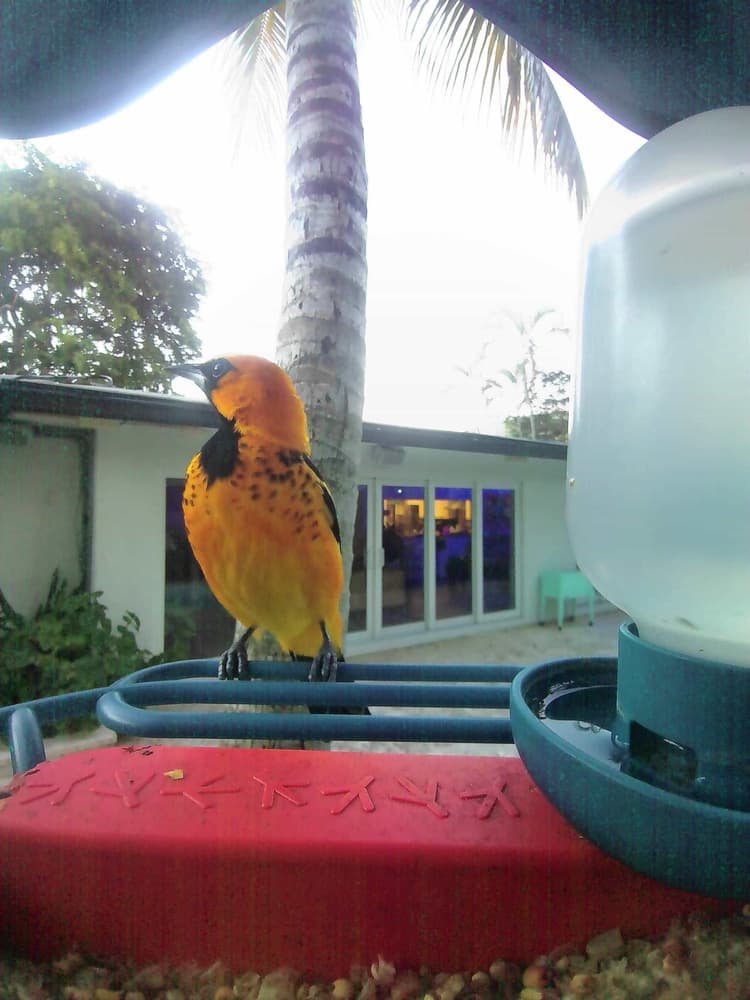
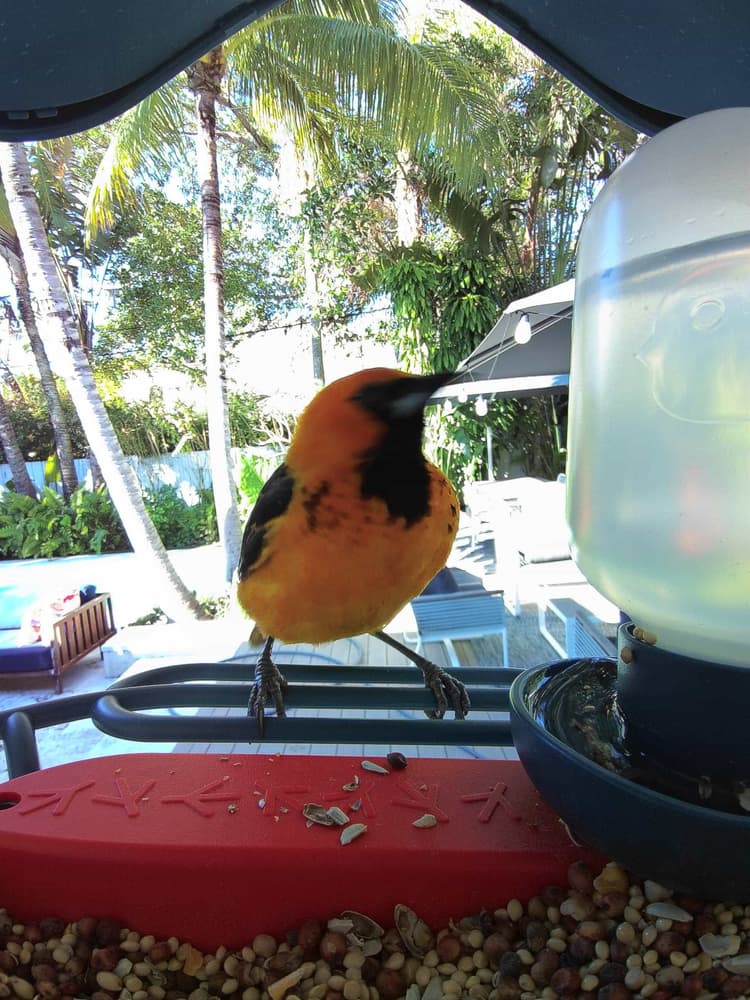
The Spot-breasted Oriole is a distinctive bird with a length of about 20 cm (8 inches). It is roughly the size of a robin. The species' standout features include a bright orange head, black throat, and spots on the sides of the chest. The black wings have generous amounts of white present, contributing to the bird's striking appearance. The bird's tail is both rounded and square-tipped, and the wings also possess a rounded shape.
Male vs female
The description does not specify any evident sexual dimorphism, meaning males and females look alike in terms of size and color. Both genders exhibit the same vibrant orange head and black throat features, as well as spots on the chest and significant amounts of white in their black wings.
Juvenile
Juveniles present a starkly different appearance compared to adults. When first hatched, they are all dull yellow in color. They lack the adult's distinctive spots and vibrant colors. As they mature, they gradually gain the distinctive adult markings, but are initially duller in colour.
Often mistaken for
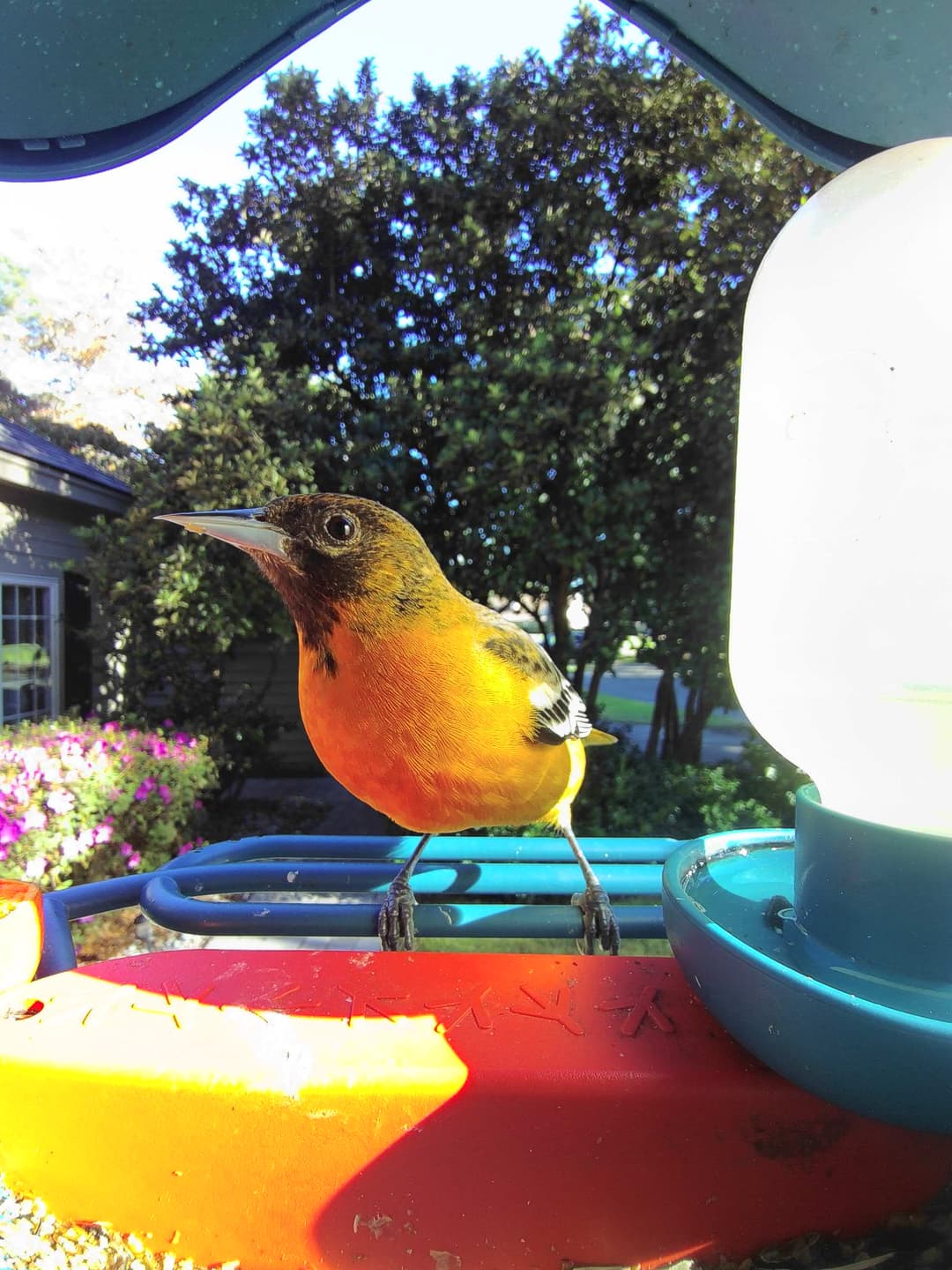
Baltimore Oriole vs Spot-Breasted Oriole
The Spot-Breasted Oriole has distinctive spots across its breast which are absent in the Baltimore Oriole. Baltimore Orioles have a more vibrant orange with no spotting and a more stark black hood and wings. Check for the black bib and the degree of orange which can help in quick identification.
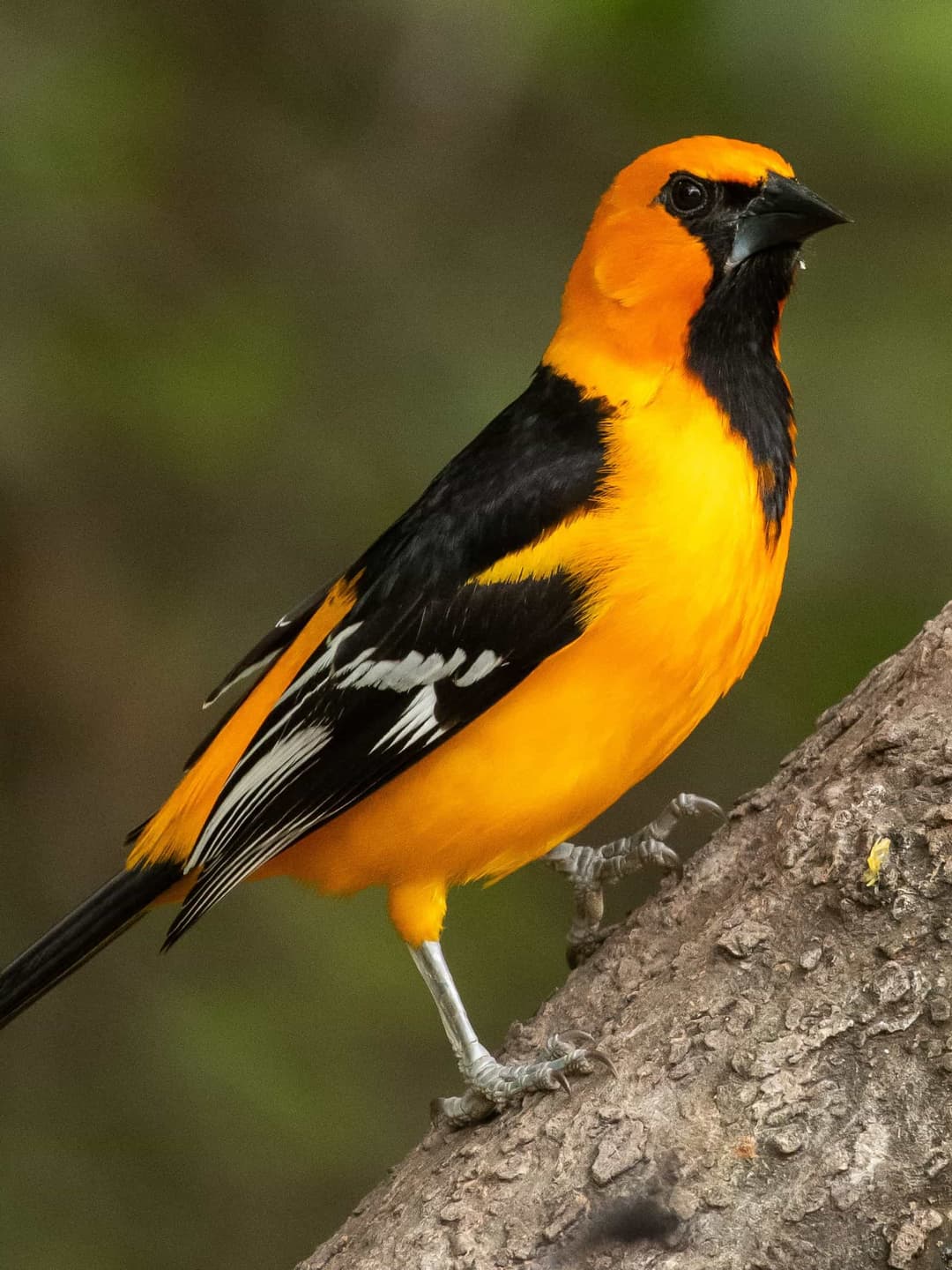
Altamira Oriole vs Spot-Breasted Oriole
Spot-Breasted Oriole is smaller than the Altamira Oriole, and possess unique spotting on the breast area, while Altamira lacks this feature. The Altamira Oriole also tends to have a more uniform golden-yellow color, and its size and lack of breast spots can be key differentiators.
Breeding and nesting habits of the spot-breasted oriole
Mating behaviors
Spot-breasted orioles engage in vibrant courtship displays, where males showcase their plumage and sing to attract females. These elaborate performances often include a series of calls, fluttering, and chasing, aimed at securing a mate and establishing a breeding territory.
Nesting details
Spot-breasted orioles typically build woven hanging nests in trees or shrubs. They prefer secluded locations, often using branches that hang over water or in dense foliage. Nests are crafted from grasses, strips of bark, and plant fibers, woven securely to provide safety and warmth. To attract orioles to gardens, plant native trees like palms or oak and provide natural fibers for nesting.
Eggs and chick-rearing
Females lay 3-5 pale blue or gray eggs, speckled with brown. Incubation lasts about 12-14 days, with both parents taking turns. After hatching, chicks are fed by both parents, who provide a diet of insects, nectar, and fruit. Nestlings fledge around two weeks post-hatch, but parents continue to care for them, teaching essential survival skills.
What does a spot-breasted oriole like to eat?
Fruits
Insects
Nectar
Plants
Natural diet
The spot-breasted oriole primarily feeds on a variety of natural food sources. Its diet includes many berries and small fruits, which are significant components of its nutritional intake. The oriole also consumes nectar from flowers, playing a role in the pollination process. Besides these, it may ingest parts of the flowers themselves, expanding its dietary range. Additionally, the spot-breasted oriole feeds on a variety of insects, benefiting from the protein they provide. Although the diet has not been studied in detail, these items form the core of its natural food habits.
Bird feeders
The spot-breasted oriole is attracted to bird feeders that offer items similar to its natural diet. Feeders providing nectar, such as those designed for hummingbirds, can draw these orioles, as they thirst for the sugary content similar to what they obtain from flowers. Offering fruit at bird feeders, such as oranges or berries, can also appeal to them. However, specifics on the frequency of spot-breasted orioles visiting bird feeders are less documented compared to their natural dietary habits.
Favorite snacks for the spot-breasted oriole
The Spot-Breasted Oriole loves to snack on fruits, insects and nectar. You can place some oranges, apples or bananas in your feeder to attract these beautiful birds. These snacks can be supplemented with Bird Buddy seeds which are known to exhibit great results as they are season specific and chosen by experts.
Ideal feeder types for the spot-breasted oriole
This bird species often prefers a simple platform feeder or fruit feeder, which allows them to easily reach their food. These feeders can be filled with their favorite snacks or Bird Buddy seeds. Be sure to place the feeder in a quiet and safe place with a good amount of cover to provide them with a sense of security.
Fun tricks to attract spot-breasted orioles
Blending some of the Bird Buddy seeds with the offerings on the feeder can make it more tempting. Placing the feeder near a water source will certainly lure them in as they love to splash and bathe. They are also attracted to bright colors, especially the color orange, so consider incorporating this color into your yard’s décor or feeder design.
Where can you find spot-breasted orioles?

Primary habitat
The spot-breasted oriole is typically found in the suburbs of Southern Florida, favoring neighborhoods with exotic trees and shrubs which bear berries and flowers in all seasons.
Additional range
In its native tropical range, the oriole prefers dry woods, thorn scrub, trees along rivers, and town trees.
Do they migrate?
The spot-breasted oriole is primarily a non-migratory bird. Within its tropical range, it is considered a permanent resident, meaning it remains in the same geographic area throughout the year. This species is found naturally in parts of Central America, including Mexico and northern Central America. In Florida, where an introduced population exists, the spot-breasted oriole is also resident year-round. Due to its permanent residency in these regions, the spot-breasted oriole does not undertake any long-distance migrations typical of many other bird species. It remains within its established habitats rather than following a migratory route or adjusting locations seasonally. The tropical climates of its native and introduced ranges provide the bird with sufficient resources and stable conditions throughout the year, reducing the need for migration. Therefore, there is no notable migration pattern, route, timing, or key locations associated with the spot-breasted oriole.
What is the role of spot-breasted orioles in nature and how to protect them?
Conservation status
The spot-breasted oriole is not considered endangered or highly vulnerable, as it doesn't seriously compete with native birds. However, its numbers in Florida declined significantly following severe winters in the late 1970s and early 1980s. Although there has been some recovery, this species remains somewhat sensitive to extreme weather conditions. There are no major conservation efforts specifically targeting this oriole, but its ability to partially rebound indicates resilience. The primary threat to its stability is the occurrence of severe cold events which can lead to population declines. Overall, it is considered relatively common in its range.
Ecological role of spot-breasted orioles
Its role in the ecosystem
The Spot-breasted Oriole plays a vital role in its ecosystem. It is a nectar, berry, and insect eater, indicating it has potential in bug population control which can be significant in pest management. These insects may be destructive to plants, and by feeding on them, the Oriole contributes to preserving the flora. Additionally, while feeding on berries and small fruits, the Oriole aids in seed dispersal. As they move from place to place, they drop off seeds from the fruits consumed, giving rise to new plant growth in different regions. Also, their choice of food includes nectar, which suggests that they may play a role in pollination, contributing to the reproduction of many types of flowers and helping maintain biodiversity. Foraging behaviour and its slow and deliberate movement between branches and foliage lightens up the ecosystem, providing valuable ecological services. Thus, the Spot-breasted Oriole contributes significantly to its ecosystem via pest control, seed dispersal, and possibly pollination.
How to help protect spot-breasted orioles
Preservation tips
Habitat preservation strategies
Supporting the conservation of the spot-breasted oriole begins with preserving its natural habitats. Avoiding deforestation and land development activities, especially in regions known to host these species, is essential. Landowners are encouraged to plant native trees that are typical of the species' habitat, such as pines, palmettos, and live oaks. Local authorities can implement stringent laws to protect habitats and rehabilitate degraded areas.
Community science initiatives
Engaging the community in the conservation of the spot-breasted oriole can multiply preservation efforts. Organize bird watching clubs and conduct regular workshops to spread awareness about the species' importance and threats. Schools can include conservation topics in their curriculum to educate young minds. Community science programs such as NestWatch and eBird encourage people to observe and record bird activities, providing valuable data for conservation initiatives.