Variable Oriole or Streak-Backed Oriole?
Here's how to tell the difference
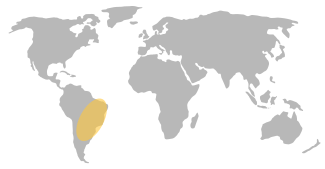


Variable Oriole

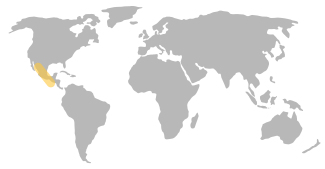
Streak-Backed Oriole
Variable Oriole
Icterus pyrrhopterus
General appearance
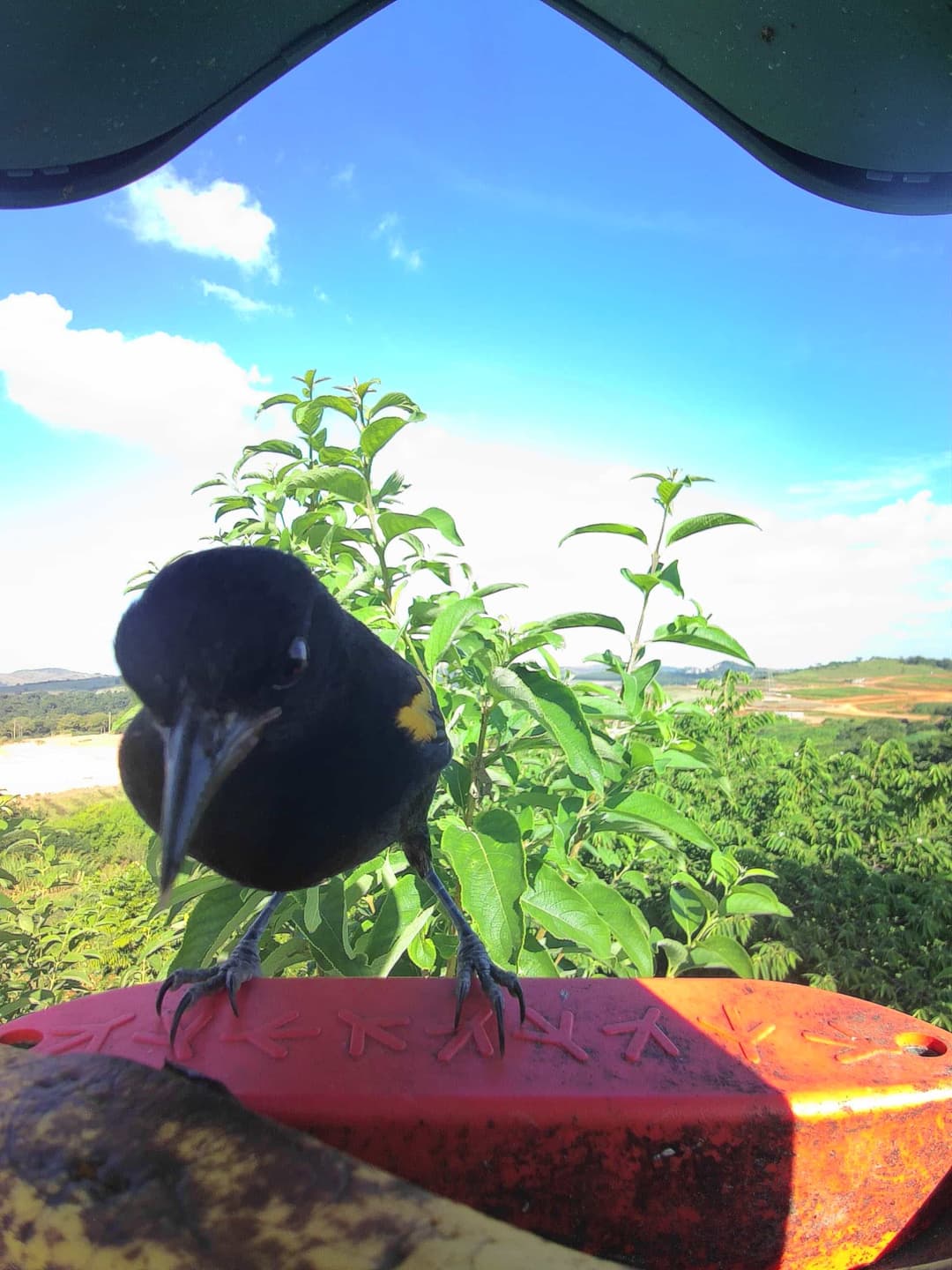
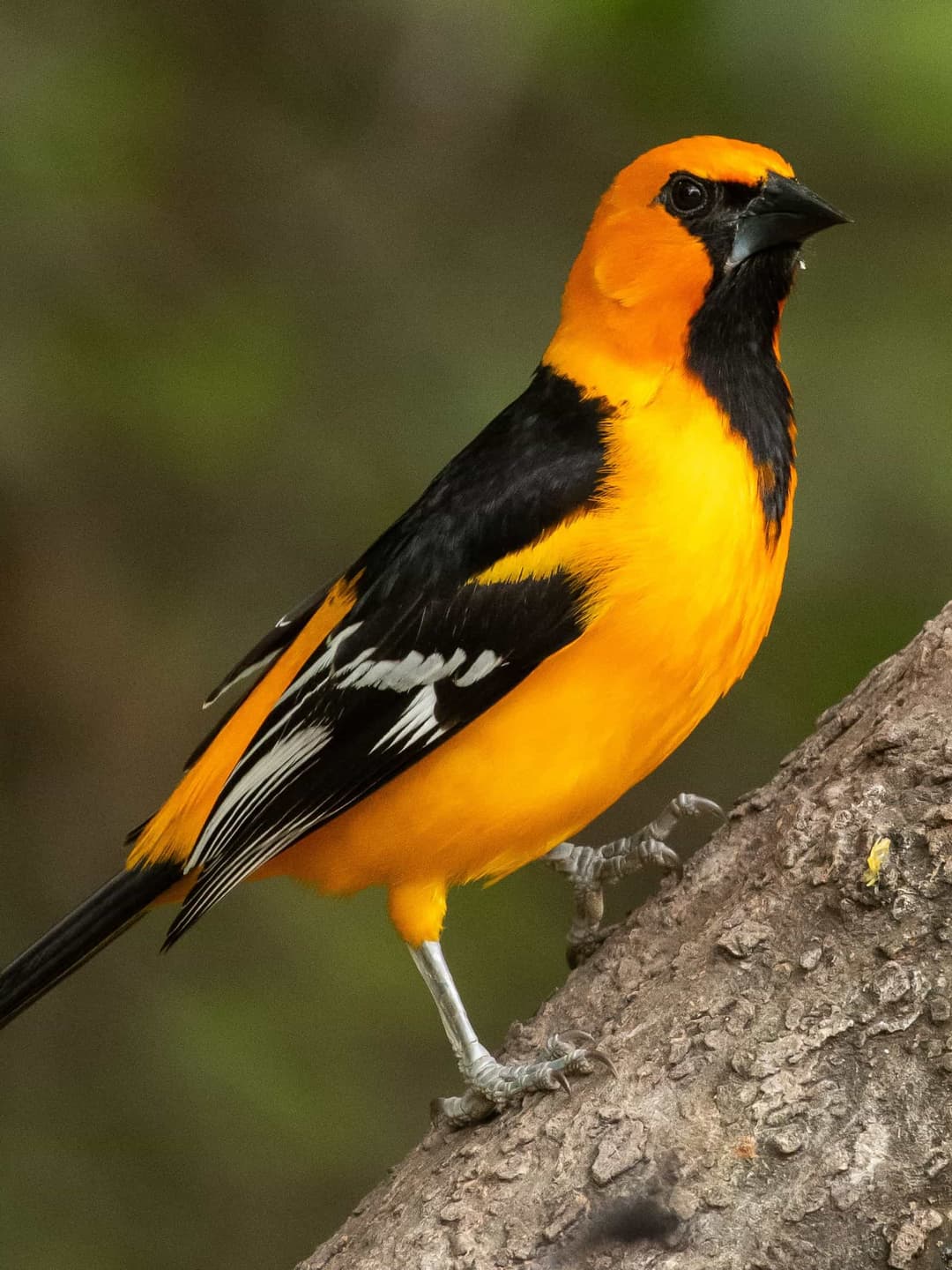
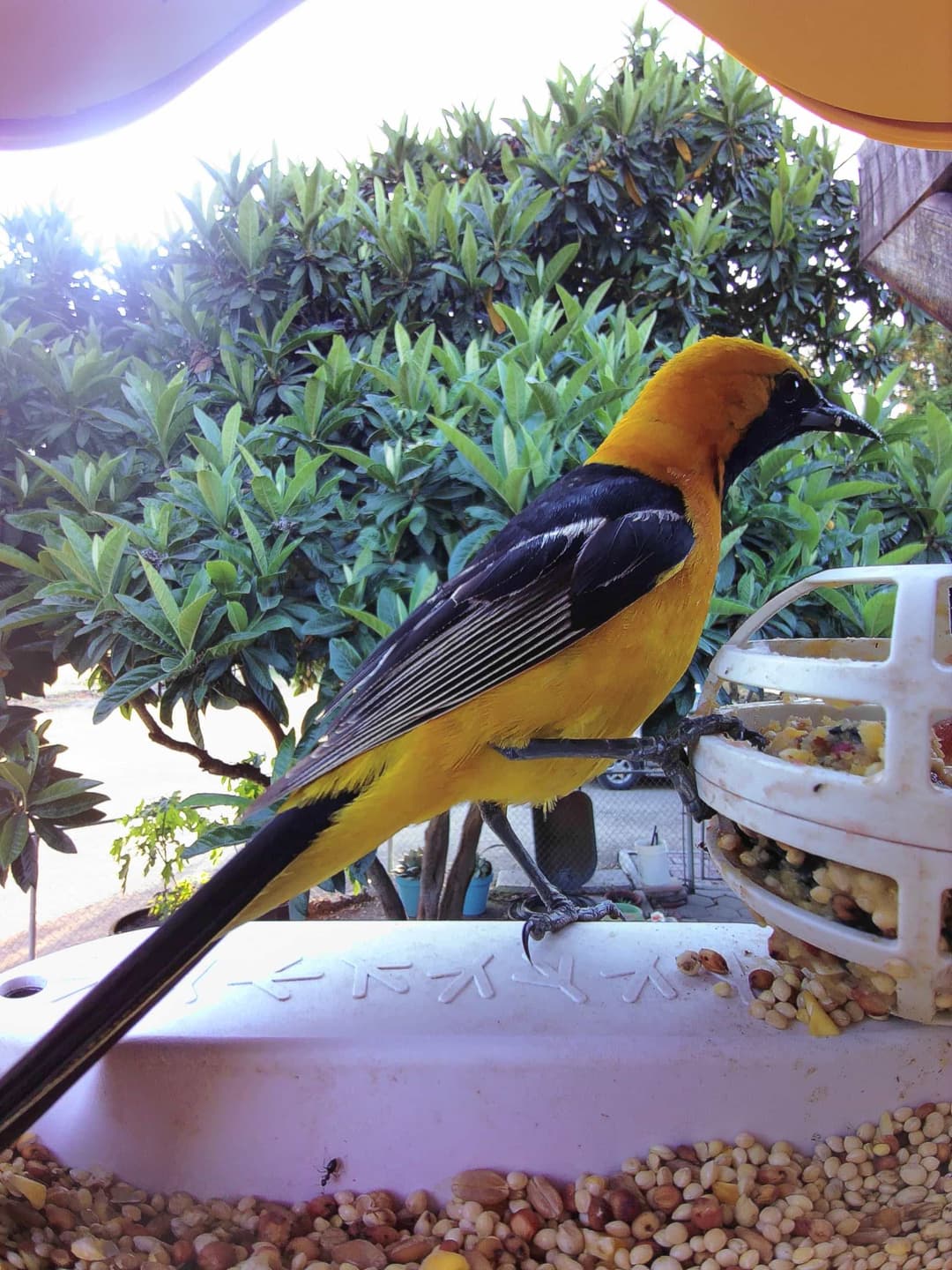
Variable Orioles exhibit striking coloration, primarily black and vibrant orange. Their physical traits include a relatively large size for an oriole, varying between 23-25 cm in length, a sturdy bill, and long tails. The wings and tail exhibit black color with white wings bars and edges.
Male vs female
Both males and females boast a vivid orange back, rump, and undertail, however, males often exhibit a darker, burnt orange compared to females. The wings are predominantly black in both sexes with the male having more extensive black on its underside. The female's underside is mainly orange whilst the male is largely black.
Juvenile
The juveniles are more modest in their coloration. They are primarily olive-brown with indistinct streaking on their underside. They lack the striking orange and black contrast of the adults till they mature to attain the full bright plumage.
Size
7.5 - 8.3 in/1.0 - 1.3 oz
There's more to learn about Variable Oriole
View full detailsStreak-Backed Oriole
Icterus pustulatus
General appearance
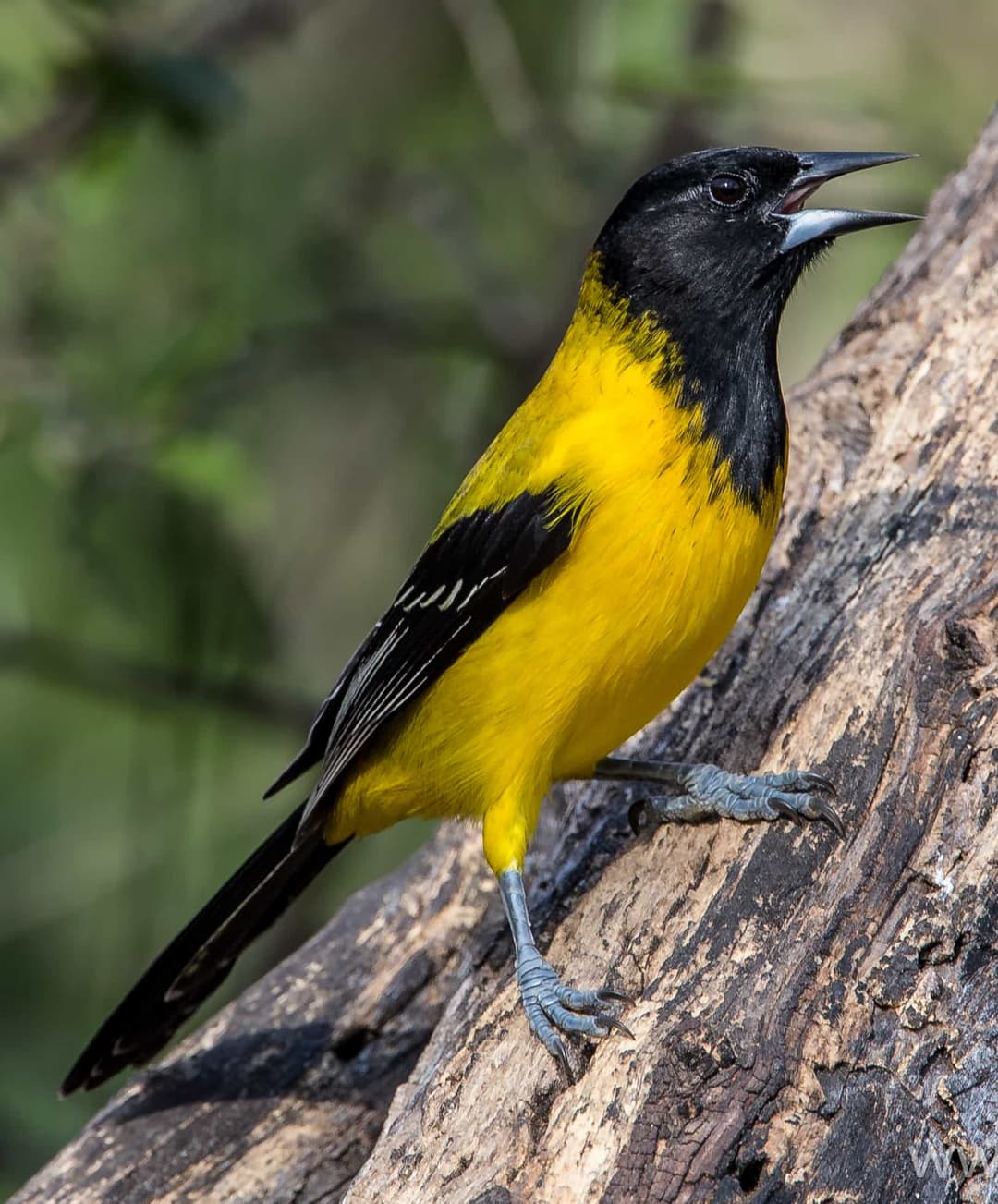
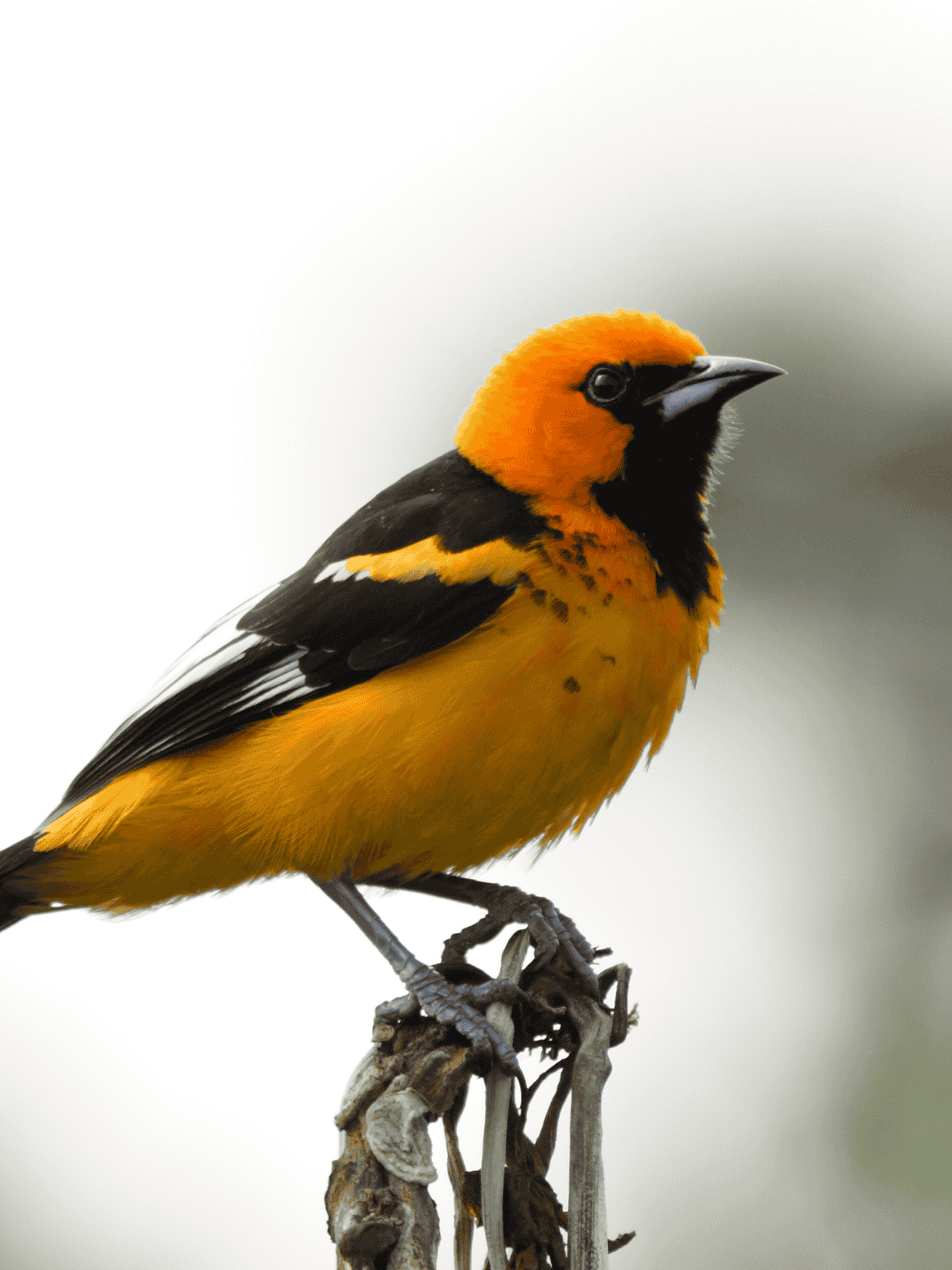
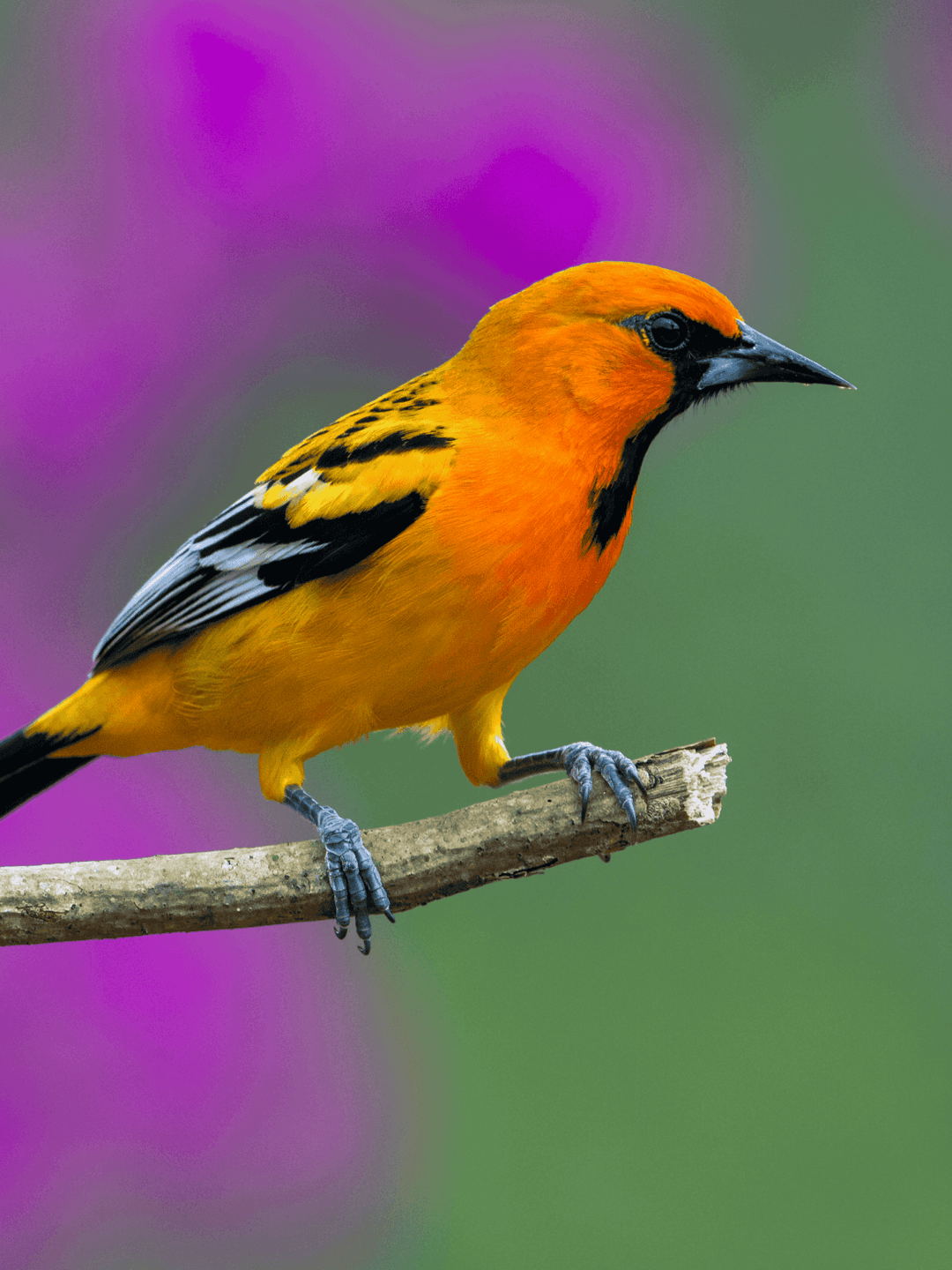
The Streak-backed Oriole is a medium-sized bird that measures 7 1/2 to 9 inches (19-23 cm). This species sports a rich orange hue, intertwined with a distinct black streaking pattern on its back. Its wings contain a significant portion of white, with its tail displaying a rounded, square-tipped shape.
Male vs female
Adult males are vivid orange with slender black throats. In contrast, females present a duller shade, not as vibrant as their male counterparts. Identification may be challenging as some young females bear similarity to female Bullock's Orioles, which have streaked backs.
Juvenile
Juvenile Streak-backed Orioles have a scaly pattern on their backs in winter, serving as an identifying feature. The subtlety in coloration compared to adults can make identification difficult, yet this particular pattern provides a helpful distinguishing characteristic.
Size
7.5 - 8.3 in/1.0 - 2.0 oz
There's more to learn about Streak-Backed Oriole
View full detailsHow to tell the Variable Oriole from the Streak-Backed Oriole
Visual differences
The Variable Oriole (9-10 inches) is larger than the Streak-Backed Oriole (7.5-9 inches). The Variable Oriole features vivid orange and black plumage with chestnut shoulder pads, and extensive white wing bars. The Streak-Backed Oriole features a rich orange hue with distinct black streaking on its back, less prominent wing markings, and a square-tipped tail. Both have sturdy, although slightly different bills suited for their diet, with the Streak-Backed Oriole exhibiting more white on its wings and tail. Juveniles of both species have duller, more olive-brown plumage.
Key differences and behavior
The Variable Oriole (Icterus pyrrhopterus) and Streak-Backed Oriole (Icterus pustulatus) share tropical habitats, but with distinct preferences: Variable Orioles thrive in dense jungles and urban areas, while Streak-Backed Orioles favor deciduous forests and can adapt to semi-desert edges. Both species display complex courtship involving songs and aerial displays. They build woven nests, with females laying 2-4 eggs for Variable and 3-4 for Streak-Backed, respectively. During breeding, both parents feed chicks primarily insects and fruits. While both orioles are attracted to sugary foods at feeders, the Variable Oriole is often seen in larger family groups, contrasting with the more solitary Streak-Backed Oriole. Additionally, the latter may venture further north, occasionally reaching the US. Both boast vibrant colors, though they have camouflaged juveniles.
Still not sure? Here are more lookalikes!
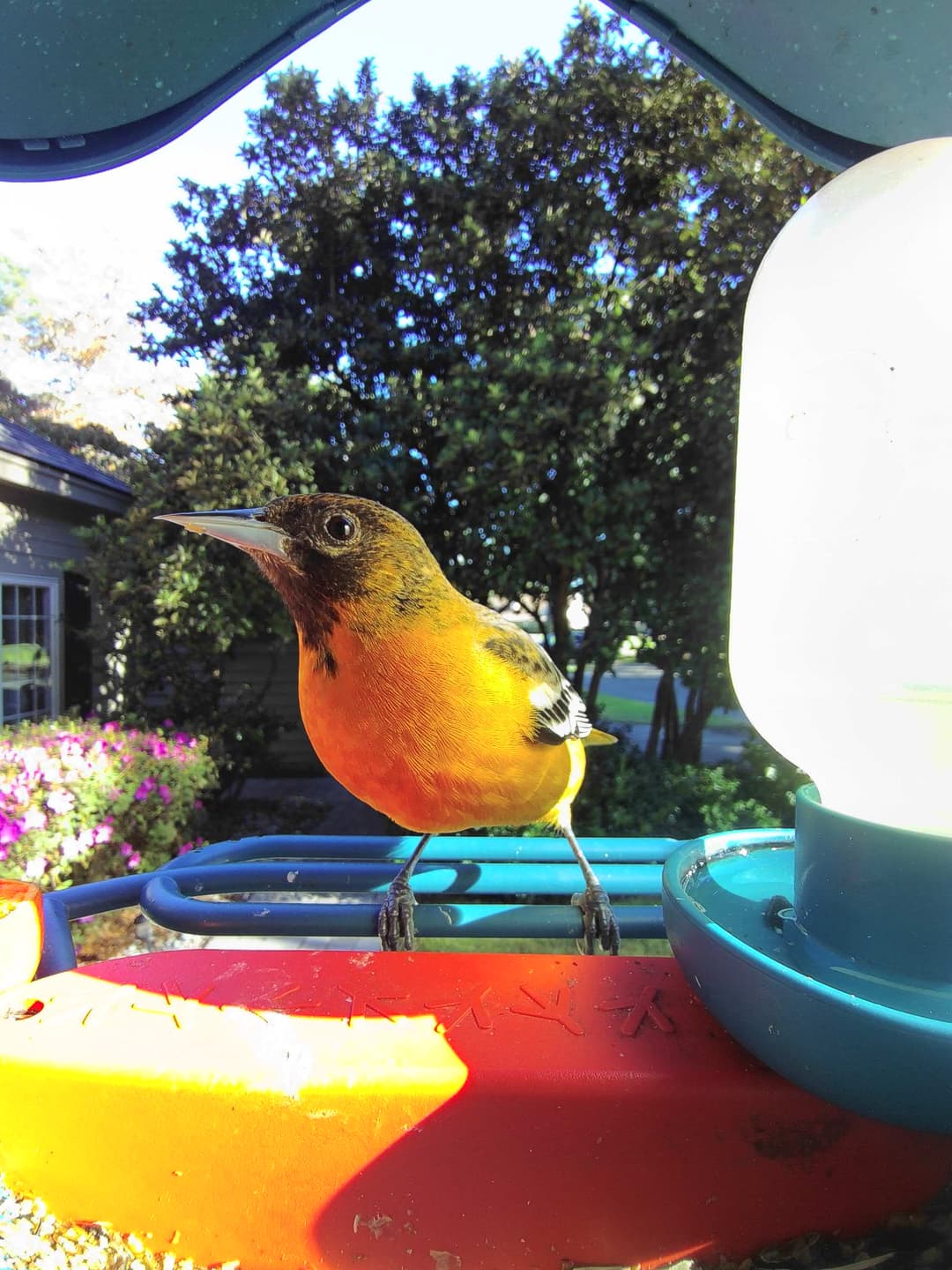
Variable Oriole vs Baltimore Oriole
Variable Oriole vs [Select a bird]

[Select a bird]
Pick a bird to compare
Streak-Backed Oriole vs [Select a bird]
[Select a bird]
Pick a bird to compare