
Baltimore Oriole
Baltimore Oriole
Icterus galbula


Quick Identification guide
Quick Identification guide
Male
- •
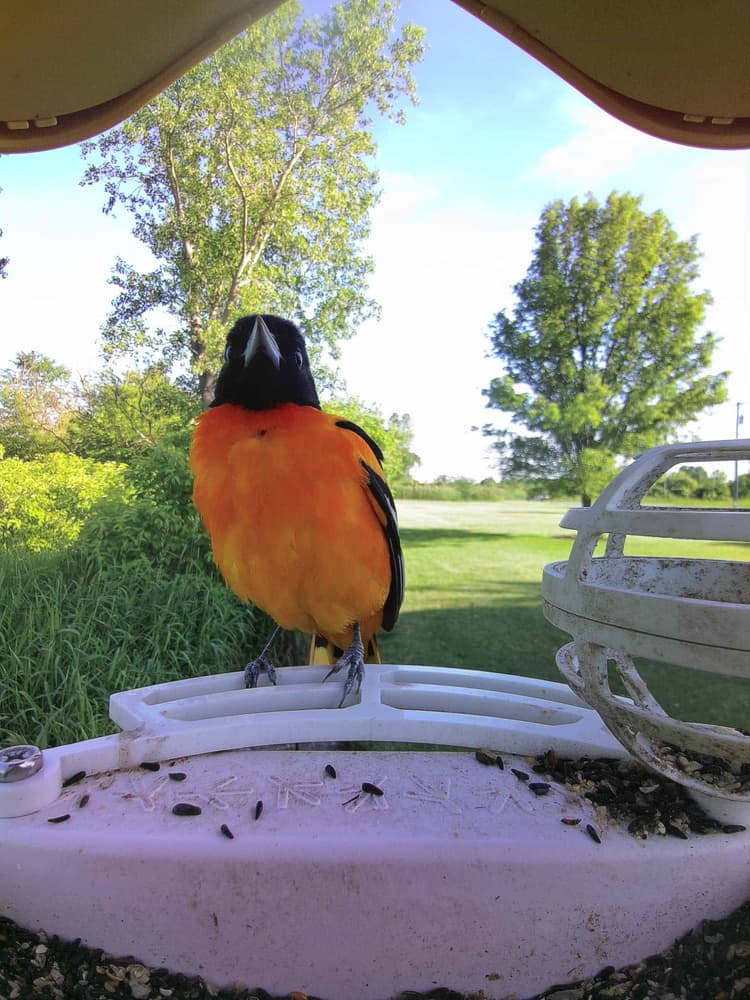
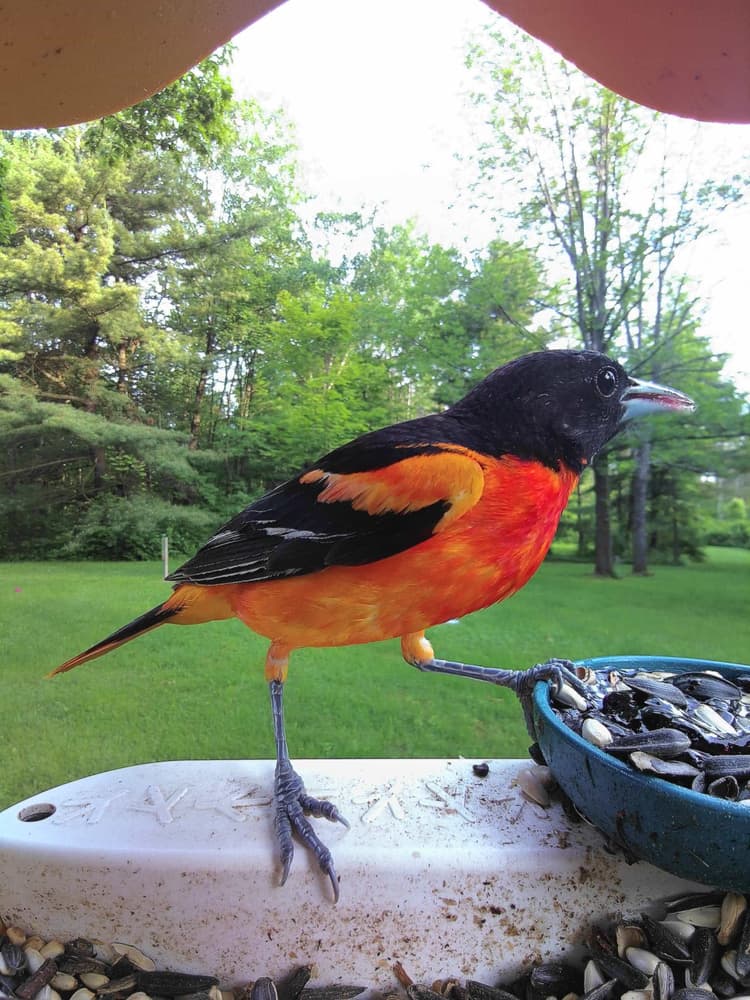
bright orange plumage contrasting with a black head, throat, and back
- •
A straight, pointed bill that is pale and slender
- •
Medium-sized oriole with distinct white wing bars
Female
- •
yellow-orange underparts with a grayish to olive-colored head
- •
Shares the slender, pointed bill similar to the male
- •
Duller white wing bars compared to the male
What does a Baltimore oriole sound like?
The Baltimore oriole produces distinctly clear and flute-like whistled notes, either solo or in pairs, paced in short, unique phrases indicating individual variation. The bird's call displays a pattern of falling and undulating tones. This vocalization is characterized by a diverse mix of buzz, chatter, flute sounds and whistles.


Description
Did you know that the name oriole comes from the Latin aureolus, which means golden? Why Baltimore? It was called the Baltimore bird in the 18th century because orange and black were the colours of Lord Baltimore, patron of the Maryland colony. Incidentally, it is also the state bird of Maryland. They are known for their remarkable craftsmanship when weaving together incredibly sturdy and durable hanging nests.
The Baltimore oriole can weigh between 30to40grams and be from17to19centimeters tall.
The Baltimore Oriole typically lives up to 11 to 12 years. This lifespan is considerably longer than some related species, like the Orchard Oriole with a maximum of 11 years. However, some larger oriole species, like the Black-headed Oriole, can live up to 13 years, slightly outliving the Baltimore Oriole.
Did you know?
Most popular questions about Baltimore oriole
How to recognise a Baltimore oriole?
General appearance
The Baltimore Oriole is an eastern bird measuring about 7-8 1/2"(18-22 cm), roughly the size of a Robin or Sparrow. Its markings are bold, with color strikingly black and orange. Its wings are rounded and tail shape can be either rounded or square-tipped.
Male vs female
The adult male is unmistakable with its vibrant black and orange coloration. The female, on the other hand, is brown above and tinged orange below. She has white wing-bars and variable amounts of black on her head. In the Great Plains, Baltimore Orioles often interbreed with Bullock's Orioles, producing hybrids with intermediate patterns.
Juvenile
The text does not provide specific details on the appearance of juvenile Baltimore Orioles. However, juvenile birds often have a more muted coloration than adults.
Often mistaken for
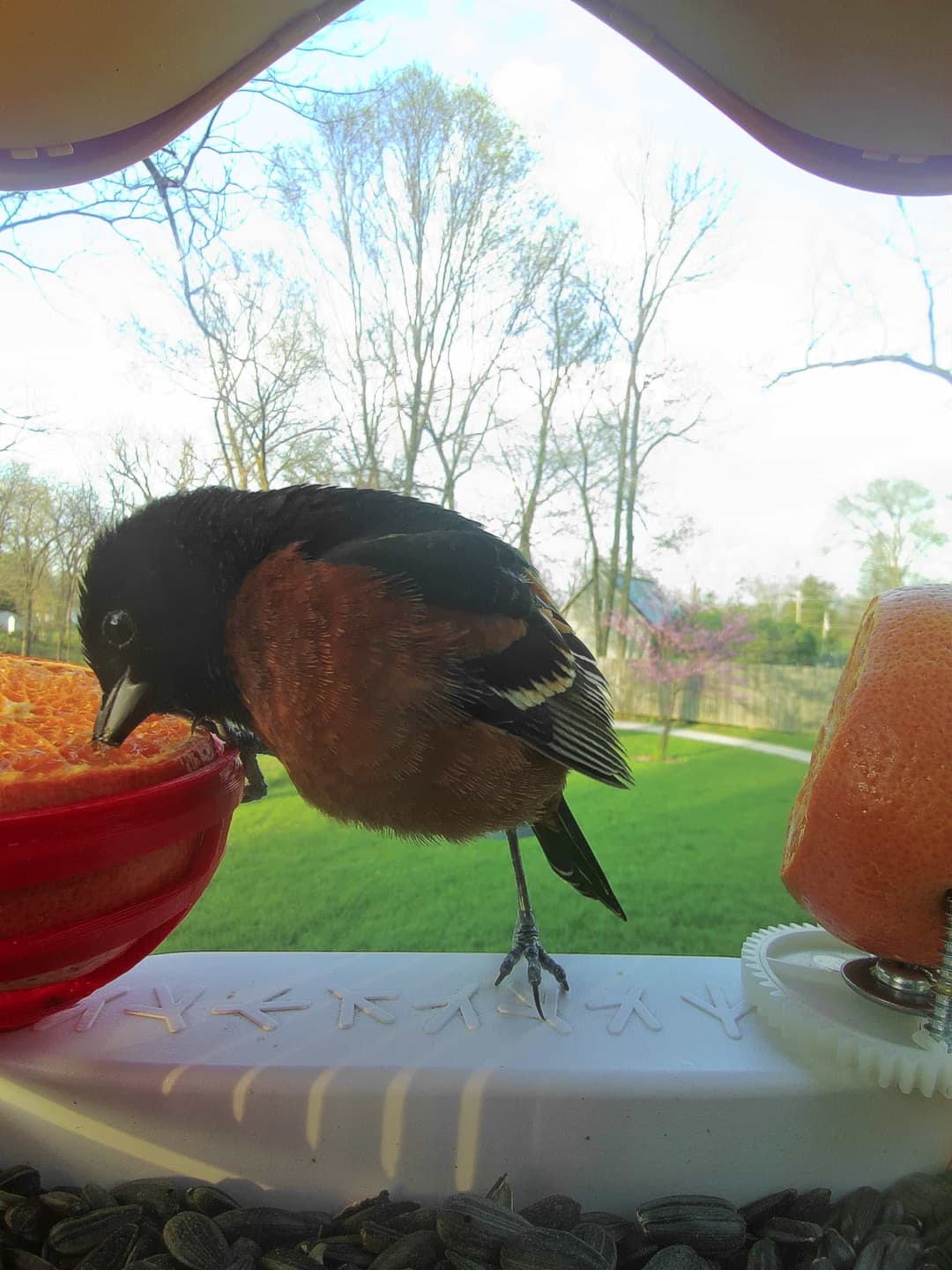
Orchard Oriole vs Baltimore Oriole
Baltimore Oriole males are brighter orange, while Orchard Orioles show a deep burnt orange or chestnut coloration. Female and immature Orchard Orioles are greener and more muted compared to the yellow-orange of female and young Baltimore Orioles. Look for the solid black head of the male Baltimore Oriole versus the black throat of the Orchard.
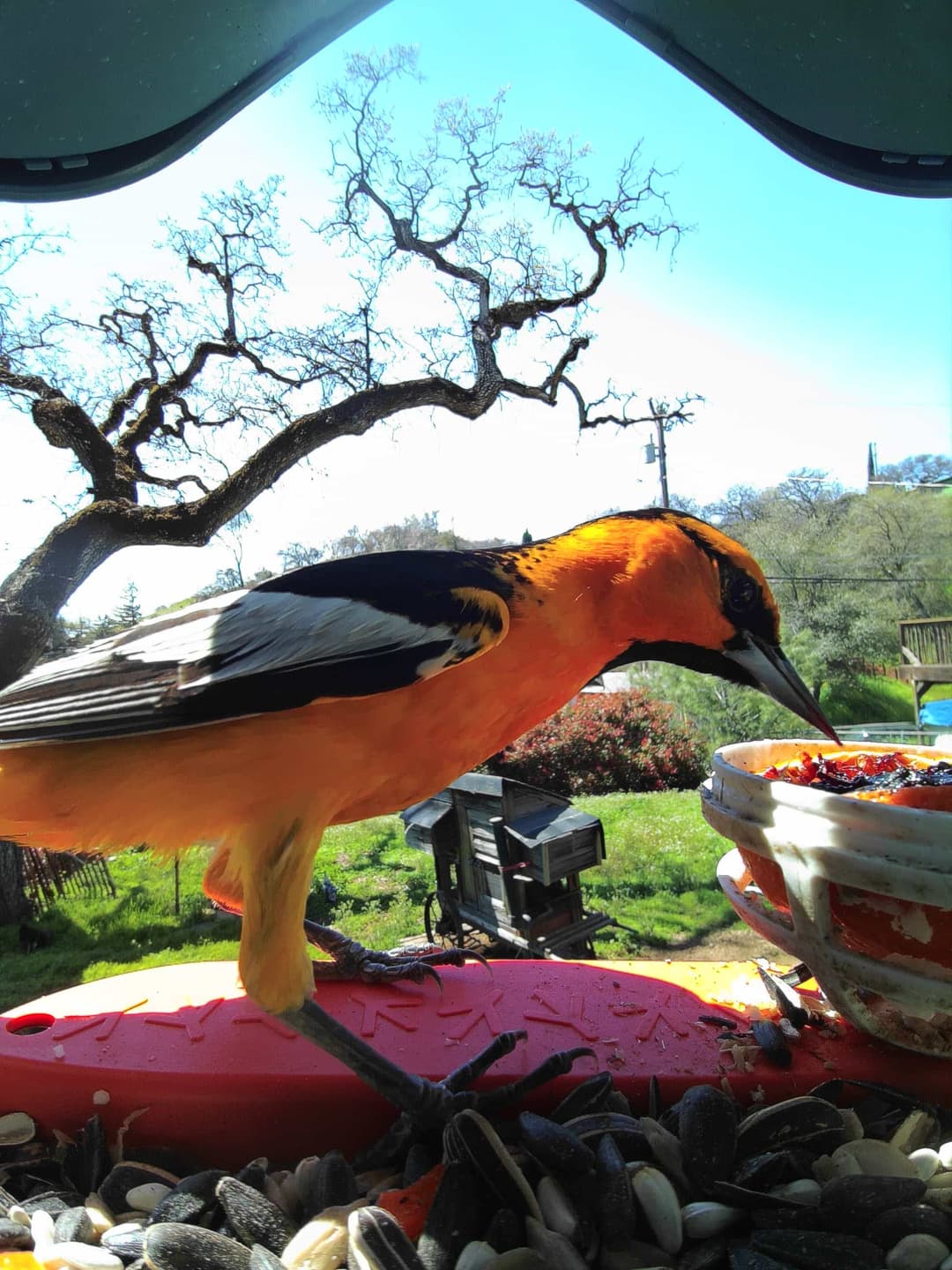
Bullock’s Oriole vs Baltimore Oriole
Baltimore Orioles have a solid black head whereas Bullock’s Orioles feature a distinctive black line across the eye and a white patch on the wing. The Baltimore's orange is more vibrant, especially under the tail, in comparison to Bullock’s more subdued hue.
American Robin vs Baltimore Oriole
Baltimore Orioles are smaller with a more slender build compared to the stockier American Robin. Robins have a rusty red breast distinct from the vibrant orange of the Baltimore. The Robin's grayish-brown back contrasts with the black wings of the Baltimore Oriole.

Breeding and nesting habits of the Baltimore oriole
Mating behaviors
Male Baltimore orioles defend their nesting territory by singing. During courtship, the male faces the female, stretches upright, and performs a bowing display with his tail spread and wings partly open.
Nesting details
Baltimore orioles nest in tall deciduous trees, selecting sites near the ends of slender, drooping branches, typically 20-30' above ground but varying between 6-60'. The female constructs a hanging pouch nest, occasionally assisted by the male, using woven plant fibers, strips of bark, vines, grass, yarn, string, and Spanish moss.
Eggs and chick-rearing
Females lay approximately 3-7 eggs per clutch. Both parents participate in feeding the chicks once they hatch, providing a diet predominantly composed of insects and fruit. Creating a suitable habitat in gardens involves planting tall deciduous trees to offer nesting opportunities and ensuring a food source through native plantings.
What does a Baltimore oriole like to eat?
Berries
Fruits
Insects
Nectar
Spiders
Natural diet
Baltimore orioles primarily feed on insects, particularly during the summer. Their diet includes caterpillars, even hairy ones that other birds often avoid. They also consume beetles, grasshoppers, wasps, bugs, spiders, and snails. Berries play a significant role in their diet, along with some cultivated fruits. Orioles are also known to feed on nectar.
Bird feeders
At bird feeders, Baltimore orioles are commonly attracted to sugar-water solutions, similar to those provided for hummingbirds. They may also be drawn to jelly and pieces of fruit, such as oranges, which can be offered to supplement their natural diet.
Favorite snacks for baltimore orioles
Baltimore Orioles love feasting on sweet fruits, especially oranges. Simply cut an orange in half and hang each half on your trees or on a bird feeding station. Orioles also adore grape jelly and nectar, a connection to their fondness for fruit. You can even create a simple sugar solution - one part sugar, four parts water - and place this in an oriole feeder. However, do make sure to change the solution and clean the feeder every few days.
Feeder types for baltimore orioles
Specialized oriole feeders are available at birding stores. They are usually colored orange to attract orioles' attention and have larger perches and feeding ports to accommodate their size. Baltimore Orioles love nectar feeders similar to hummingbird feeders. Also, consider feeders that can hold fruits or jelly.
Fun tricks to encourage orioles to visit
Make your yard oriole-friendly by placing feeders in quiet, sheltered areas to make the birds feel safe. Placing orange ribbons or decorations around can also allure these orange-and-black beauties. Maintain a birdbath as orioles love clean water sources for drinking and bathing.
Recommended bird seeds
Although orioles are mainly insect and fruit eaters, they won't ignore high-quality bird seeds. We recommend Bird Buddy seeds as the best option. These seeds are selected by experts according to the season and ensure maximum nutrition for the birds, making your yard their favorite spot.
Where can you find Baltimore orioles?

Primary habitat
The Baltimore oriole primarily breeds in open woods, alongside river groves and the edges of deciduous or mixed woodlands, often favoring elm trees.
Additional range
Aside from its natural environment, it can also frequently be found in town trees. During winter, it typically migrates to tropical regions, residing near forest edges and semi-open landscapes.
Do they migrate?
The Baltimore Oriole is a migratory bird that does not stay in one place year-round. This species typically migrates in flocks, with fall migration beginning as early as July and continuing into August. The Baltimore Oriole primarily breeds in the eastern and central parts of North America. As autumn approaches, they start their journey southward to their wintering grounds. The migration route of the Baltimore Oriole generally takes them from their breeding areas in North America, through the southeastern United States. From there, many continue onwards to Mexico and Central America, with some extending their journey as far south as northern South America, including countries like Colombia and Venezuela. Key stopover points on this migration route often include woodlands, orchards, and areas with abundant fruit and nectar sources. The orioles rely on such areas to refuel and rest during their long journey. In the spring, typically around April, they return north to their breeding grounds, completing their yearly migratory cycle. Their migration is influenced by the availability of food sources such as flowering plants and insects.
What is the role of Baltimore orioles in nature and how to protect them?
Conservation status
The Baltimore oriole is still widespread and common, although surveys indicate a decline in recent decades. A significant threat has been the loss of nesting sites due to Dutch elm disease, which in the mid-20th century killed many American elms that were favored by the species for nesting. Although not currently classed as vulnerable or endangered, its population decline highlights the need for continued monitoring and conservation efforts. Protecting suitable nesting habitats and planting diverse tree species could help support its population.
Ecological role of Baltimore orioles
Its role in the ecosystem
The Baltimore Oriole plays several crucial ecological roles. Its diet consists of insects, including caterpillars, beetles, grasshoppers, wasps, bugs, and spiders, some of which are considered pests. Therefore, the Baltimore Oriole acts as a natural pest controller reducing these populations and maintaining ecological balance. During summer, they mostly feed on insects, contributing significantly to pest management. Additionally, they feed on nectar, helping in the pollination process as they move between flowers. This bird's feeding habits also include consumption of various berries and sometimes cultivated fruits. Through this, they help in seed dispersal, contributing significantly to plant propagation and diversity, particularly as they tend to nest in tall deciduous trees, facilitating the widespread dispersal of these seeds. Finally, their nests, woven tightly with plant fibers, bark, grass, and other materials, contribute to the recycling of these organic matter in their habitat.
How to help protect Baltimore orioles
Preservation tips
Habitat preservation strategies for baltimore oriole
To protect the Baltimore Oriole, ensure maintenance of their habitats like deciduous trees for nesting and open park-like settings for foraging. Participate in local forest conservation initiatives and resist destructive human activities like deforestation and use of pesticides that disrupt the ecosystem.
Community science initiatives
Engage in community science projects like the North American Breeding Bird Survey and Christmas Bird Count to monitor the Baltimore Oriole populations and migration patterns. This contributes to data that aids in protective legislation and measures. Education and awareness are key – advocate for these birds and inform others about the importance of their conservation.