
Hooded Oriole
Hooded Oriole
Icterus cucullatus


Quick Identification guide
Quick Identification guide
- •
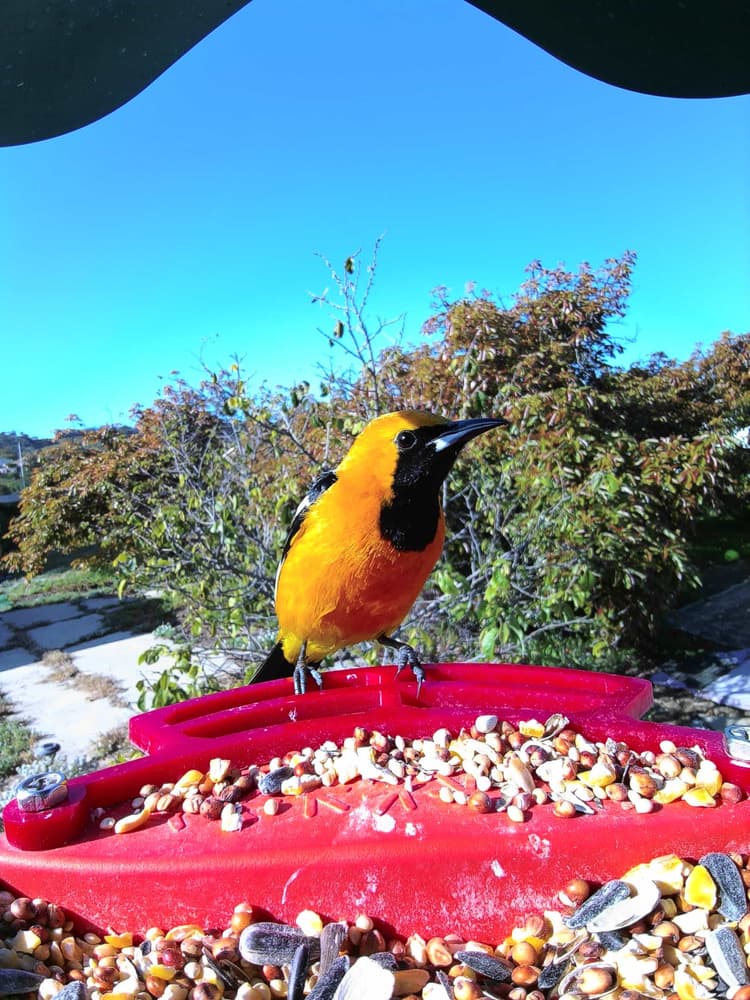
The bright yellow to orange body and black hood distinguish the Hooded Oriole from other orioles
- •
Exhibits a slim body with long tail feathers and a slightly curved thin black beak
- •
Males showcase distinctive black around the face and throat, whereas females and juveniles tend to be paler in coloration
What does a hooded oriole sound like?
The Hooded Oriole's vocalizations are a unique blend of whistles, chatters, and warbled tunes. Its typical calls involve a distinctive pattern of sound that rises and falls, creating a melodic discourse. It predominantly uses chatter and chirp types of calls, which gives the hooded oriole its unique vocal signature. The pattern and type of its calls provide a captivating and unmistakable bird song.


Description
Did you know that, in California, these guys are known as palm-leaf orioles? That's because they sew their nests on the underside of palm fronds! They aren't just talented seamsters; they are also strong and quick fliers and great little gymnasts, meaning they hang upside down or any which way to reach their food!
The hooded oriole can weigh between 20to33grams and be from18to20centimeters tall.
The hooded oriole typically lives up to 11 years in the wild. Compared to other species in the same genus, such as the Bullock's oriole which can live up to 15 years or the Baltimore oriole with a lifespan of up to 12 years, the hooded oriole has a relatively average lifespan.
Did you know?
Most popular questions about hooded oriole
How to recognise a hooded oriole?
General appearance
Hooded orioles are slender songbirds with long tails and slightly curved bills. They display a vibrant combination of orange-yellow and black, with distinctive hood-like coloring on the head and neck. The wings and back are predominantly black, creating a stark contrast with their bright bodies.
Male vs female
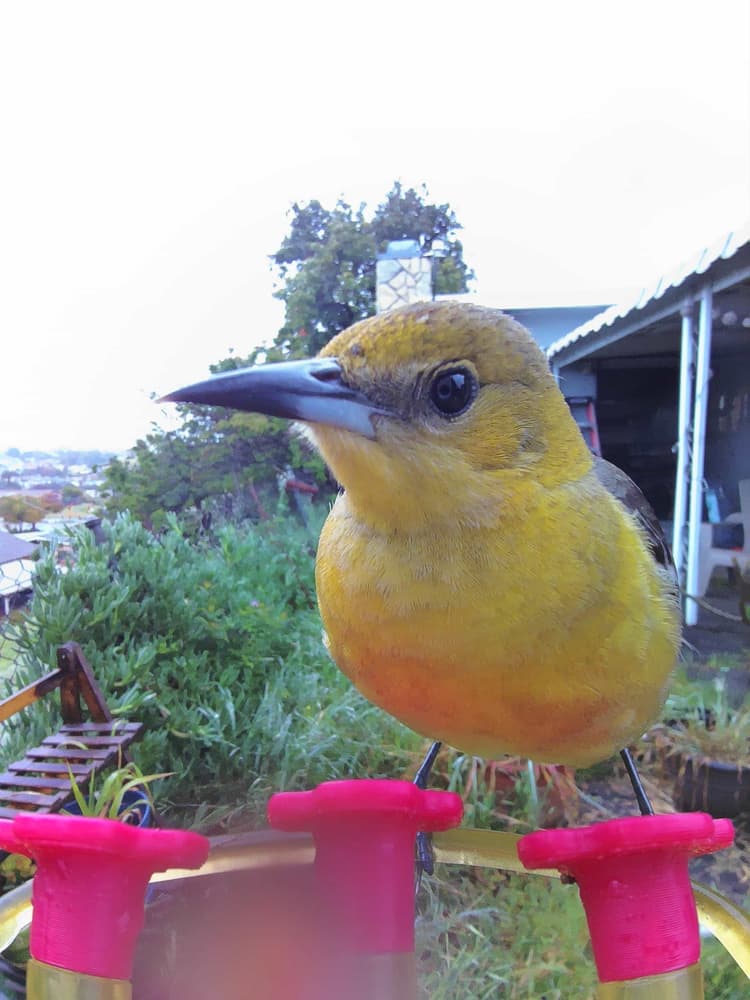
Male hooded orioles showcase a brighter orange-yellow color overall and have a more pronounced black cap and throat. Females are generally yellow to olive-yellow without the bold black markings found on males. They may exhibit some subtle grayish patterns on their wings, distinguishing them from juvenile males.
Juvenile
Juvenile hooded orioles resemble females in coloration with a yellowish-olive appearance. However, they can be distinguished by a slightly duller hue and inconsistently developed black facial markings. As they mature, young males gradually acquire brighter plumage and the distinctive black hood.
Often mistaken for
Bullock’s Oriole vs Hooded Oriole
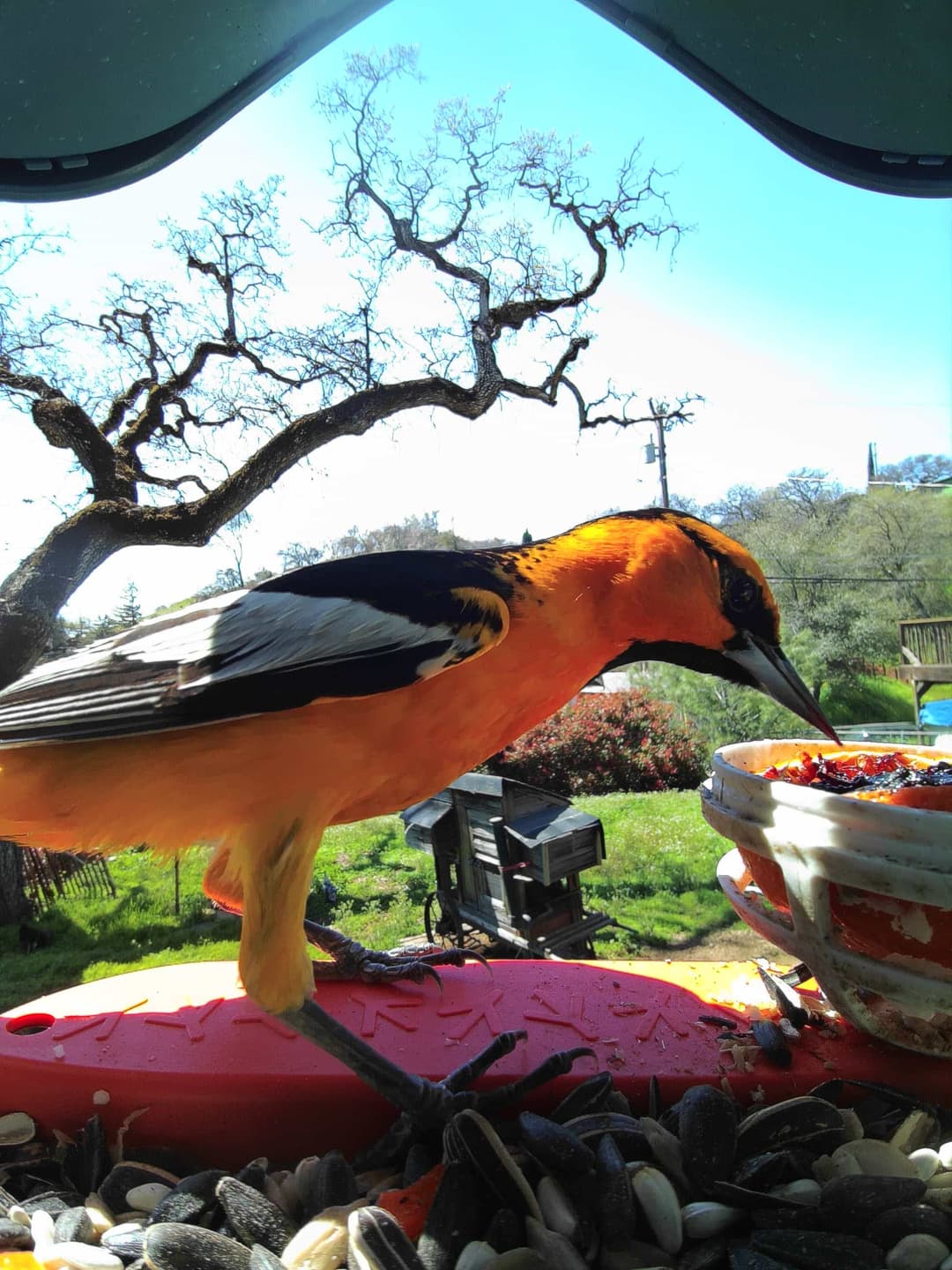
Bullock’s Oriole males have an orange body with a black line through the eye and a black throat, while females are paler. Hooded Orioles have a more pronounced curve in their thin bills and their males are more yellowish-orange with a solid black mask.
Scott’s Oriole vs Hooded Oriole
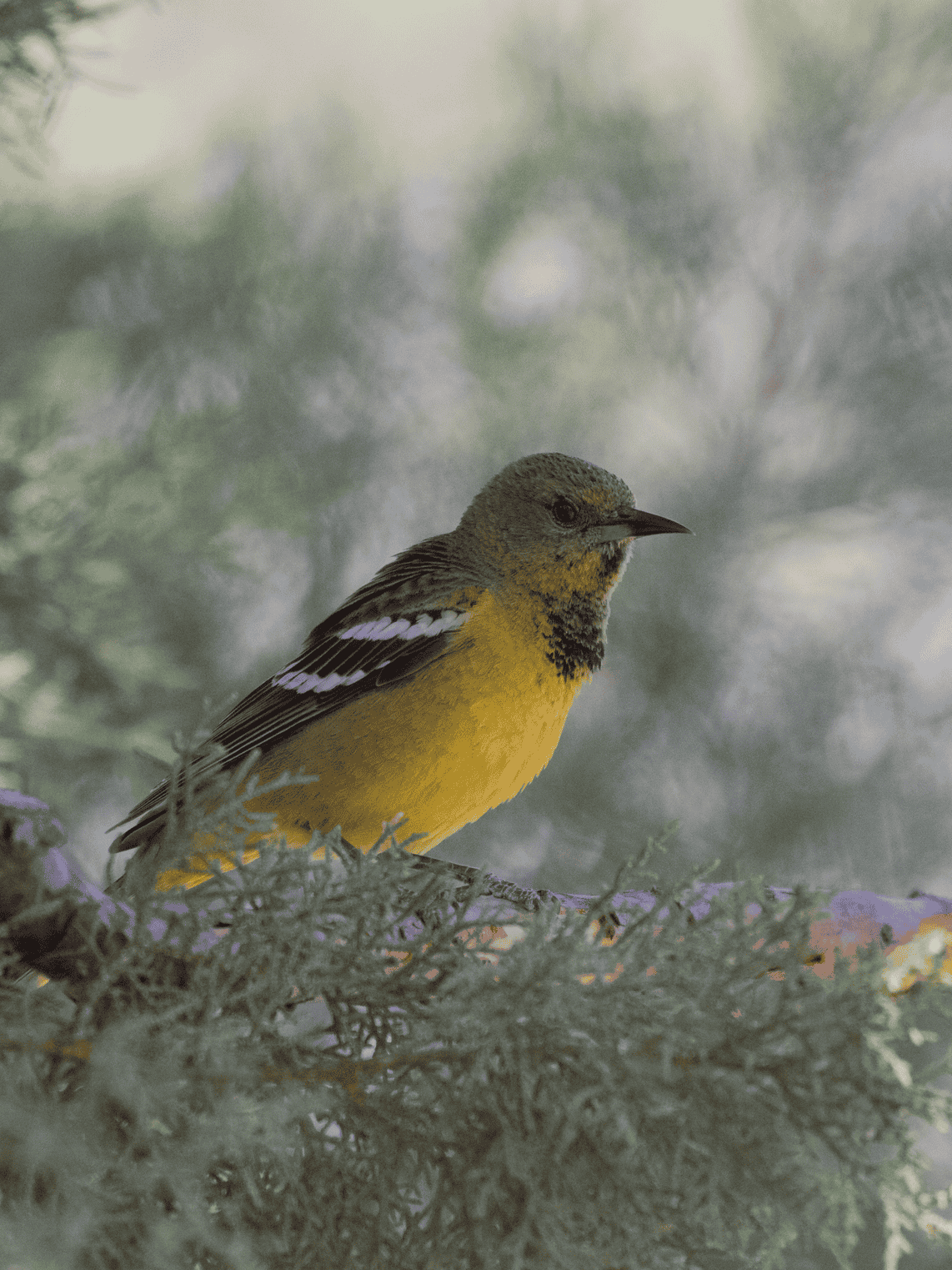
Scott’s Oriole is bright lemon-yellow with a much larger black hood and throat extending down onto the chest. Hooded Oriole males have smaller, more defined black facial masks and a slender, curved bill.
Orchard Oriole vs Hooded Oriole
Orchard Oriole males are smaller with rich chestnut bodies contrasting with black heads. Female Orchard Orioles lack the bright orange and have olive-yellow tones. Hooded Orioles have a distinctly bright hood and longer tails.
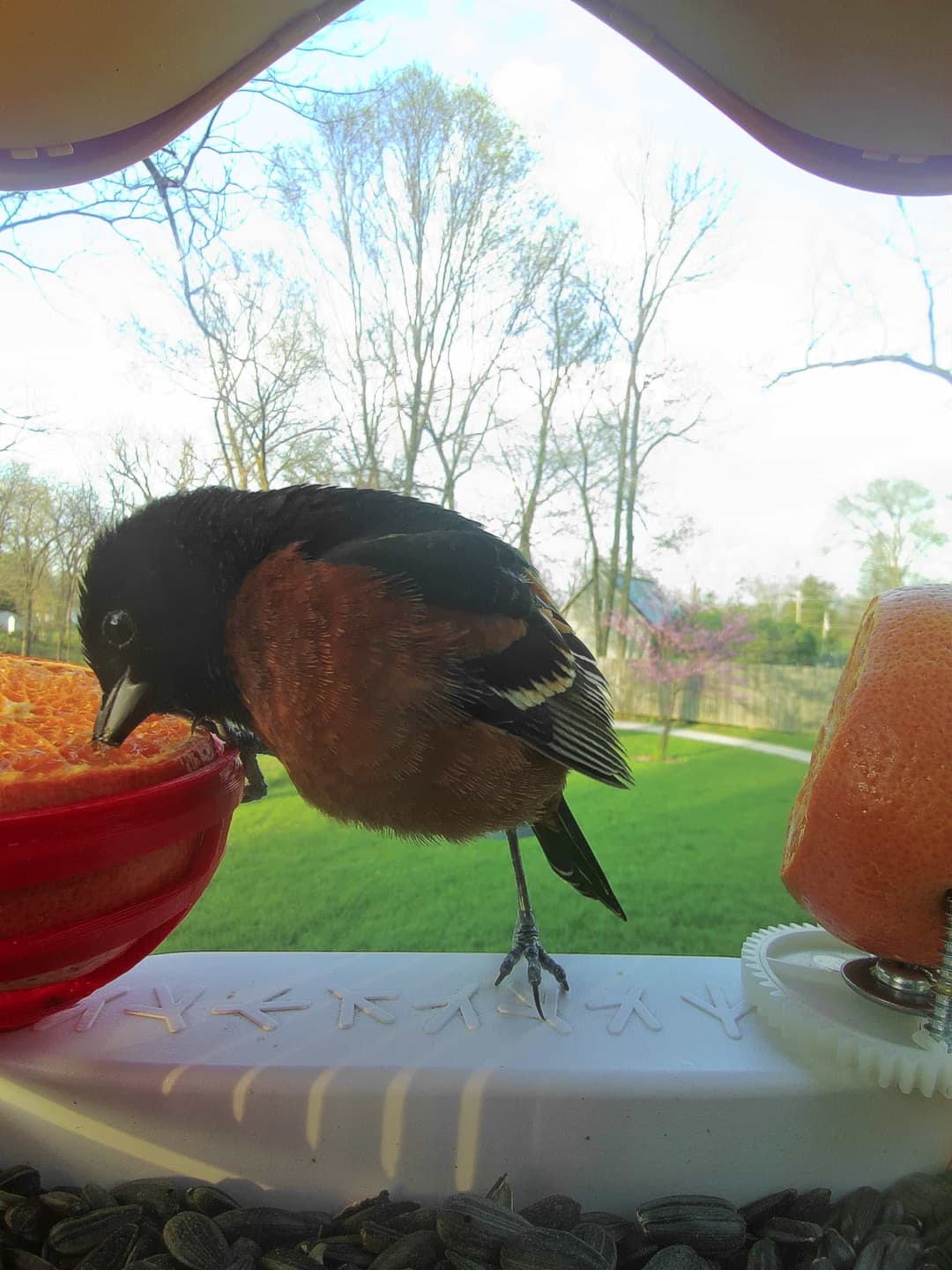
Altamira Oriole vs Hooded Oriole
Altamira Orioles are larger and more robust with a bright orange body and less pronounced black on the face. Hooded Orioles are slimmer with a more delicate build and a distinct orange hood.
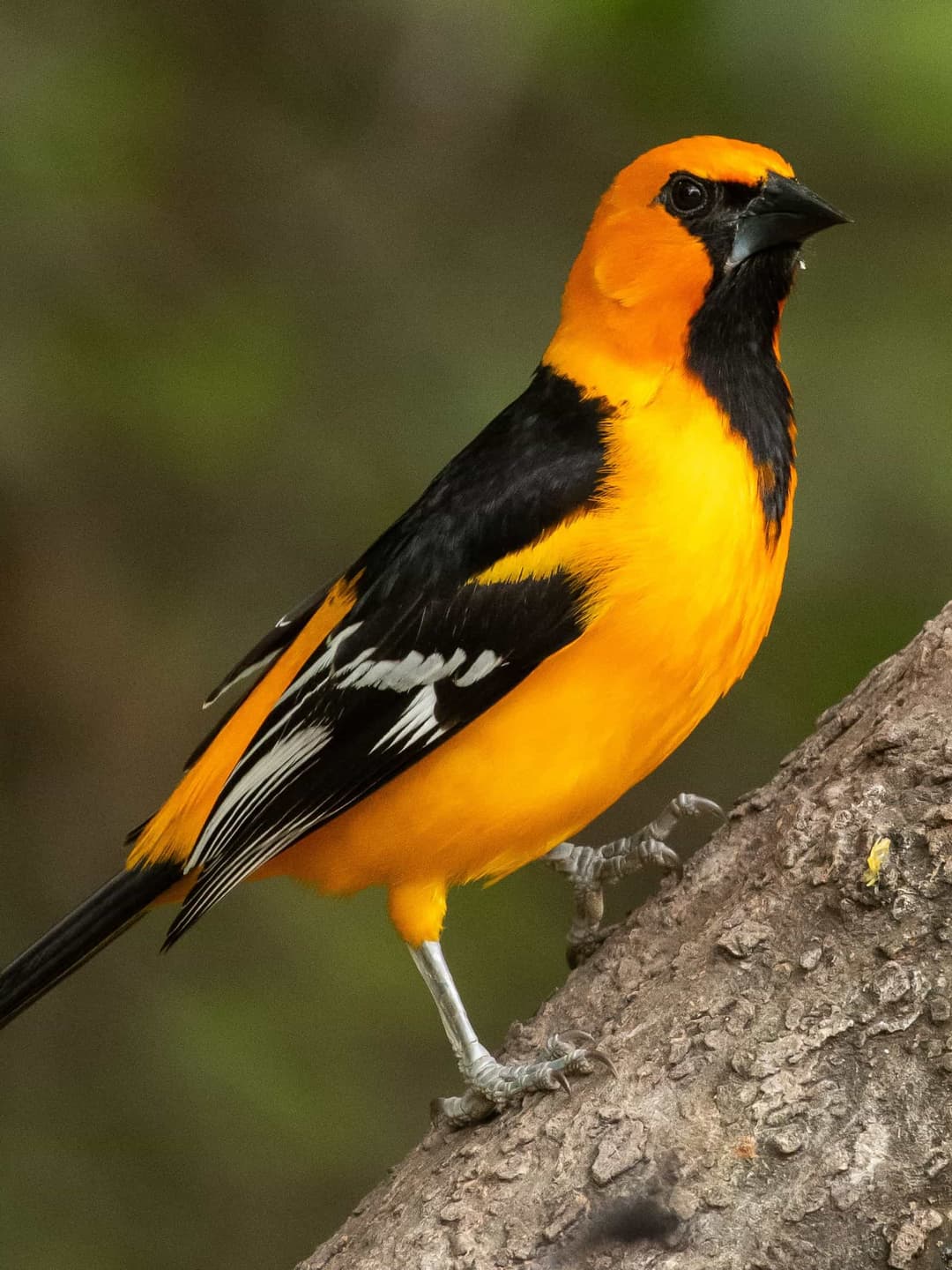
Breeding and nesting habits of the hooded oriole
Mating behaviors
In courtship, the male hooded oriole moves around the female, engaging in displays with deep bows and singing softly while pointing his bill upwards. The female often responds with similar movements. This behavior helps in reinforcing pair bonds and selecting a mate.
Nesting details
Hooded orioles typically nest in palms or large yuccas, sewing their woven hanging pouches to the underside of large overhanging leaves. These nests are usually 10-50 feet above ground but can also be lower. Alternative nesting sites include banana leaves, clumps of mistletoe, Spanish moss, or branches of deciduous trees. The nest is crafted from grass and plant fibers, lined with plant down, hair, and feathers. The female constructs the nest but the male may assist in gathering materials.
Eggs and chick-rearing
The female hooded oriole lays her eggs in the carefully constructed pouch nest. Both the male and female participate in feeding the chicks once they hatch, ensuring the young are well cared for until they fledge.
What does a hooded oriole like to eat?
Fruits
Insects
Nectar
Spiders
Natural diet
The hooded oriole's natural diet consists of a variety of insects, including caterpillars, beetles, wasps, and ants, among others. Additionally, it consumes many wild berries and nectar from flowers, providing a diverse range of nutrients from its natural environment.
Bird feeders
At bird feeders, the hooded oriole commonly consumes sugar-water, which mimics the nectar it naturally finds in flowers.
Provide favorites snacks
Hooded Orioles are fond of fruit especially oranges. Hang cut oranges from your trees and watch them flock towards the treat. They also enjoy nectar and are known to frequent hummingbird feeders. Bird Buddy seeds are a fantastic option as well, as they are curated by experts for the season to attract a variety of birds including Hooded Orioles.
Use the right feeder
Hooded orioles are attracted to feeders that resemble their natural feeding environments. They prefer long, tubular feeders where they can perch and have easy access to seeds. They are also attracted to bright colors, especially orange and red, so consider an orange or red dish-style oriole feeder. Ensure it has plenty of ports for nectar, as that's one of the oriole's favorite treats.
Create a hospitable environment
Besides food, Hooded Orioles are attracted to yards with plenty of shrubs, trees, and running water. Including native plants in your landscape will provide Orioles with nesting material and natural food sources. Don't forget to provide fresh water in a bird bath or install a water fountain. The sound of the water can draw Orioles from afar.
Sing a song
While you might not be able to communicate with Hooded Orioles through song, playing recorded bird songs can attract them. While it won't make them stay for a sing-along but it will definitely pique their interest and may lead them to your yard.
Where can you find hooded orioles?

Primary habitat
The hooded oriole primarily resides in open woods, shade trees, and palm groves in lowlands, often along streams and in canyons.
Additional range
Unexpectedly, they can also be found in urban areas, favoring city parks and suburbs with isolated palm groups.
Do they migrate?
The hooded oriole is primarily a migratory bird, though some individuals may remain in certain areas through the winter, especially where supplementary food sources, such as sugar-water feeders, are available. Generally, hooded orioles are observed as early migrants in both spring and fall. Many hooded orioles migrate northward and arrive at their breeding grounds in March. These breeding grounds are typically located in the southwestern United States, including areas of California, Arizona, New Mexico, and Texas. During the fall, hooded orioles initiate their southward migration, departing mainly in August. Their wintering grounds are typically in Mexico, particularly in regions below the U.S. border where climatic conditions are milder. The route taken by migrating hooded orioles often follows a north-south pattern, connecting breeding territories in the U.S. with wintering habitats in Mexico. Key stopover locations may include riparian woodlands and urban areas with ample food supply. By taking advantage of such habitats, these birds can refuel and continue their journey efficiently. Through this migratory behavior, hooded orioles ensure they are in environments that best support their survival and reproductive success throughout the year.
What is the role of hooded orioles in nature and how to protect them?
Conservation status
The hooded oriole has experienced a sharp decline in southern Texas in recent decades, likely due to cowbird parasitism. However, it is showing signs of a slight recovery in that region. In contrast, the species remains fairly common in areas farther west. Conservation efforts may focus on managing cowbird populations to support recovery. While not classified as endangered, the species faces potential vulnerability, primarily in specific regions. Key conservation efforts should target habitat protection and monitoring cowbird impacts to ensure the hooded oriole's continued presence and prevent further decline.
Ecological role of hooded orioles
Its role in the ecosystem
The Hooded Oriole plays a crucial role in maintaining the ecological balance in its habitat. As an insectivore, it aids in natural pest control by feeding on a variety of insects, which include beetles, wasps, ants, and caterpillars, thereby controlling their population and preventing them from causing harm to plants and crops. Additionally, it contributes to seed dispersal due to its frugivorous diet. As it feeds on berries and other fruits, it indirectly disperses the seeds, promoting plant growth and contributing to biodiversity. The bird’s nectivorous behavior contributes to the pollination of flowers, which is vital for plant reproduction. Moreover, by using plant material to build their hanging pouch-shaped nests, they contribute to the cycling of plant matter in their environment. Thus, the Hooded Oriole has several roles in the ecosystem, benefitting both flora and fauna.
How to help protect hooded orioles
Preservation tips
Habitat preservation strategies for hooded oriole
Preserving the habitat of the Hooded Oriole involves maintaining tall trees, particularly palms, for nesting and ensuring an abundant supply of flowering plants and fruit trees for feeding. Also, it's essential to limit the use of pesticides in gardens and parks, as it kills off insects vital to the bird's diet. Initiatives should be undertaken to protect their breeding and wintering grounds against deforestation.
Community science initiatives
Involving the community in science initiatives for the conservation of the Hooded Oriole will ensure a broad-based participation. Initiatives such as crowdsourcing data about migration patterns, nesting behaviors, and feeding habits through citizen science projects can be implemented. Community members can also participate in 'bird count' programs to contribute to population monitoring. Educational programs can help the local community understand the ecological importance of this species, encouraging their proactive role in conservation efforts.