Grosbeak or Pine Grosbeak?
Here's how to tell the difference
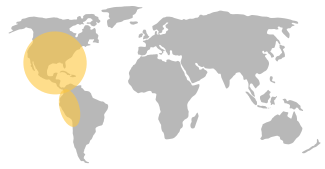

Grosbeak


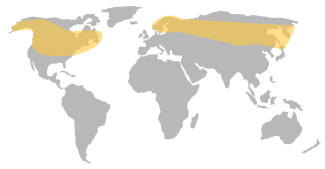
Pine Grosbeak
Grosbeak
Pheuctictus
General appearance
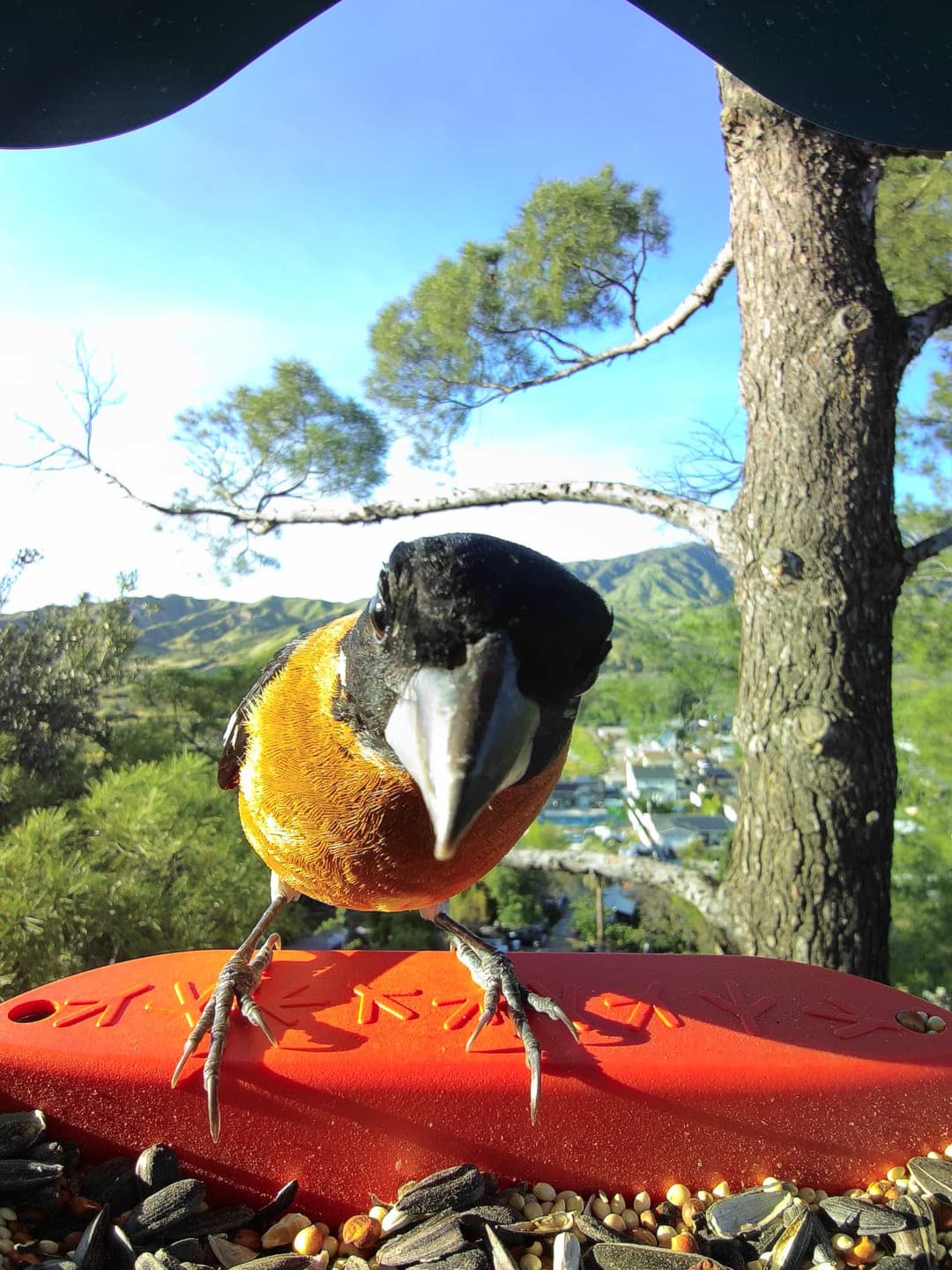
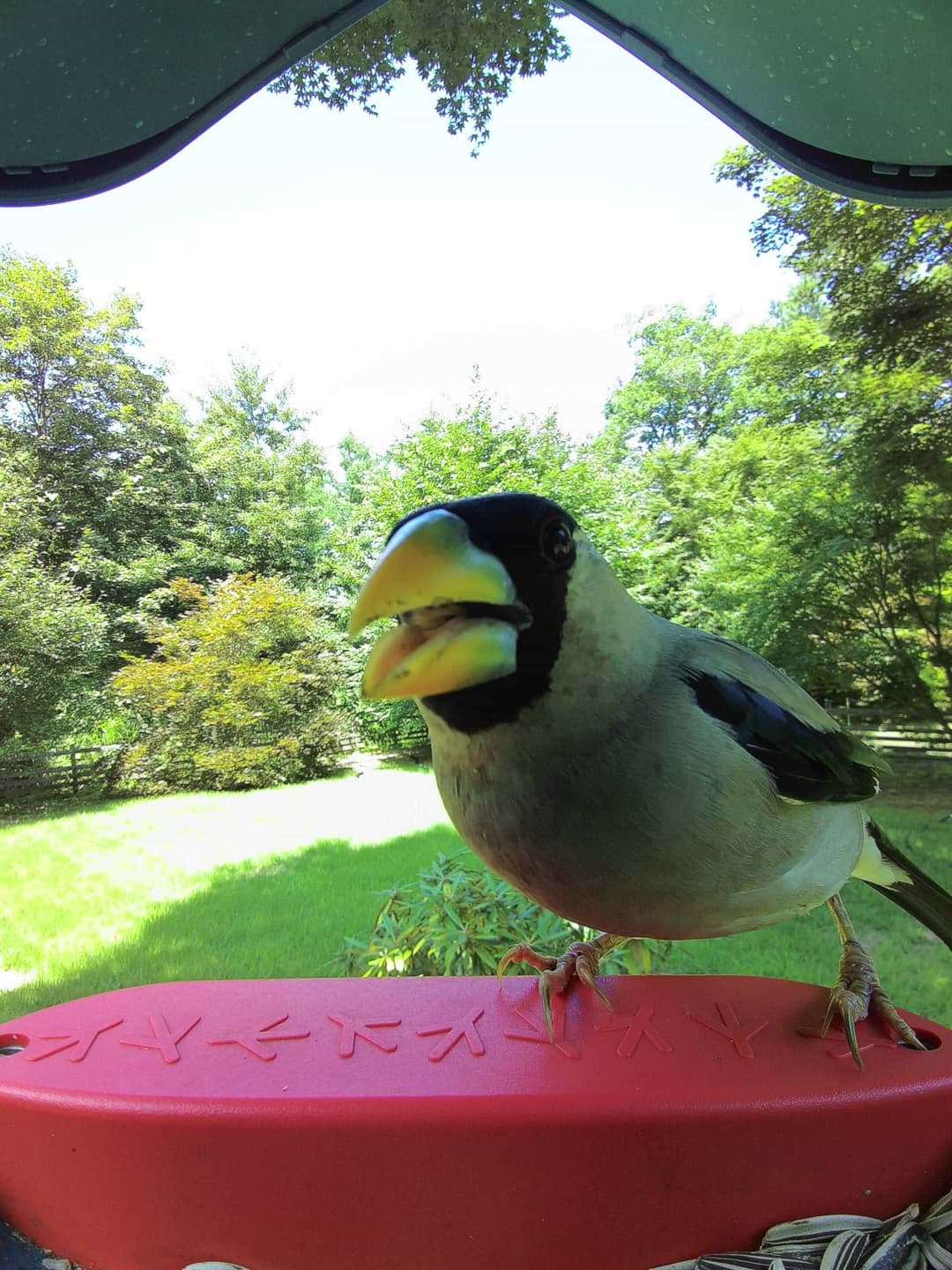
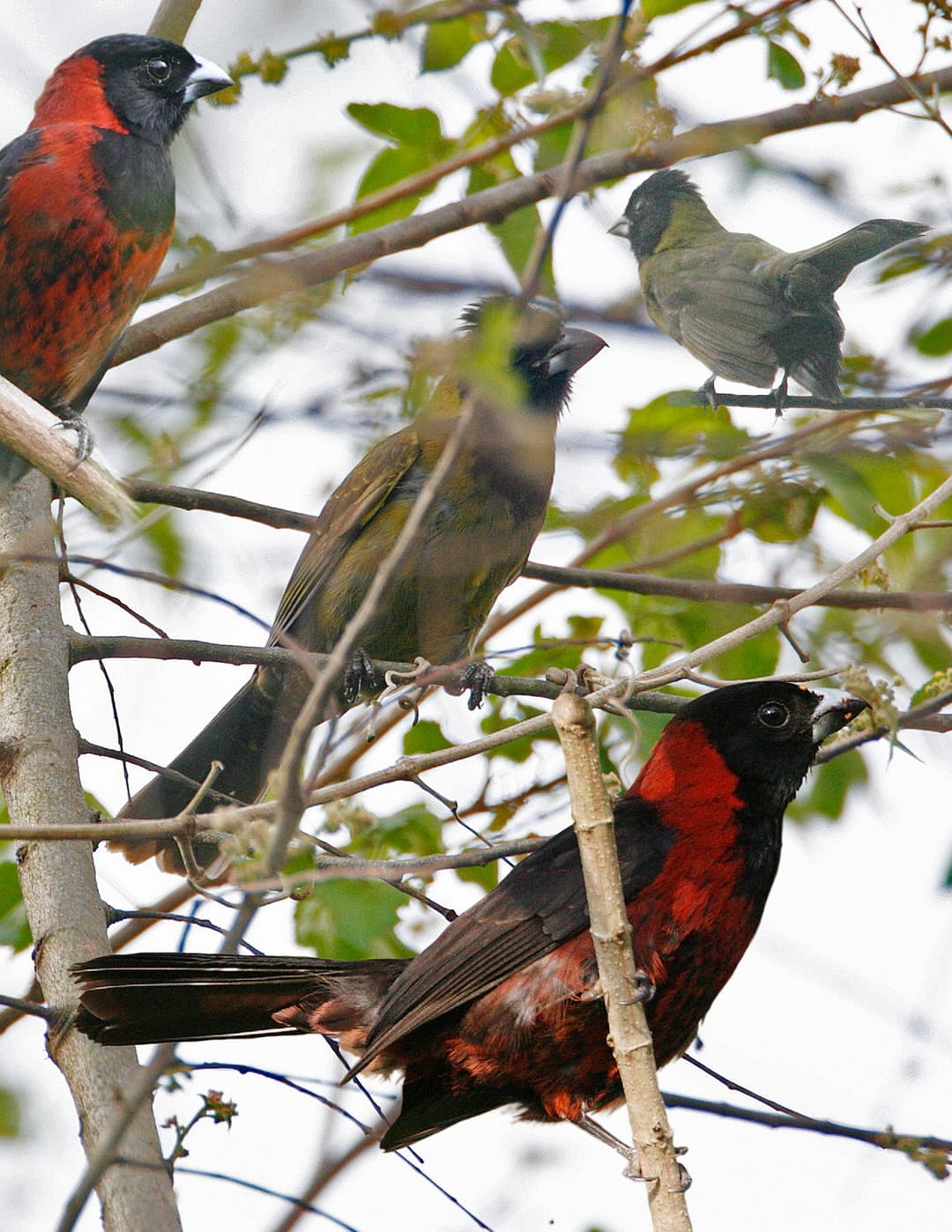
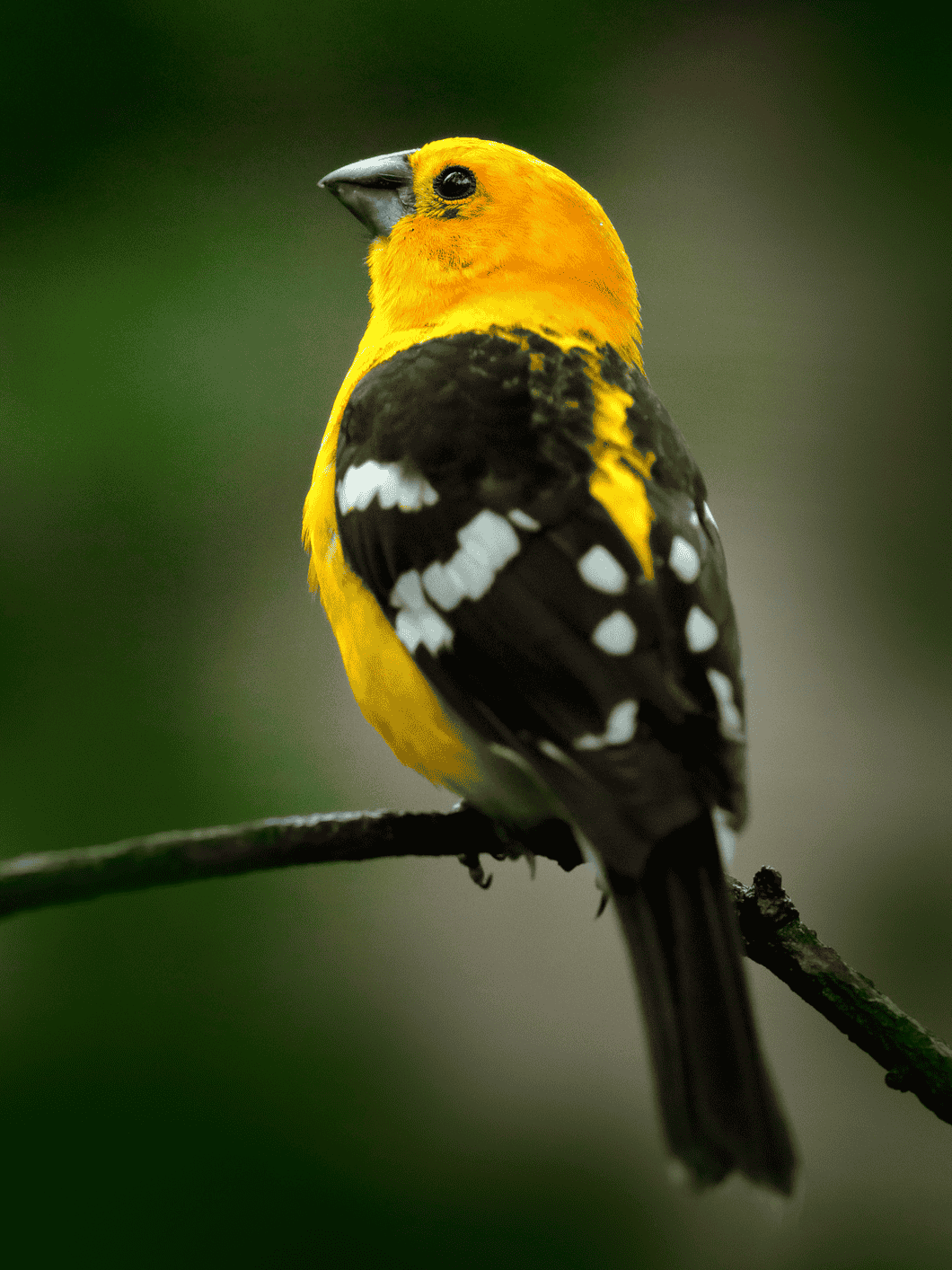
Grosbeaks are medium to large songbirds with large bills, perfect for cracking seeds. Their wings are generally pointed and they boast strong, stout bodies. The feathers contain shades of yellow, red, and black, with some species like the Pine Grosbeak bearing a pinkish-red hue while others like the Evening Grosbeak donning yellow and black.
Male vs female
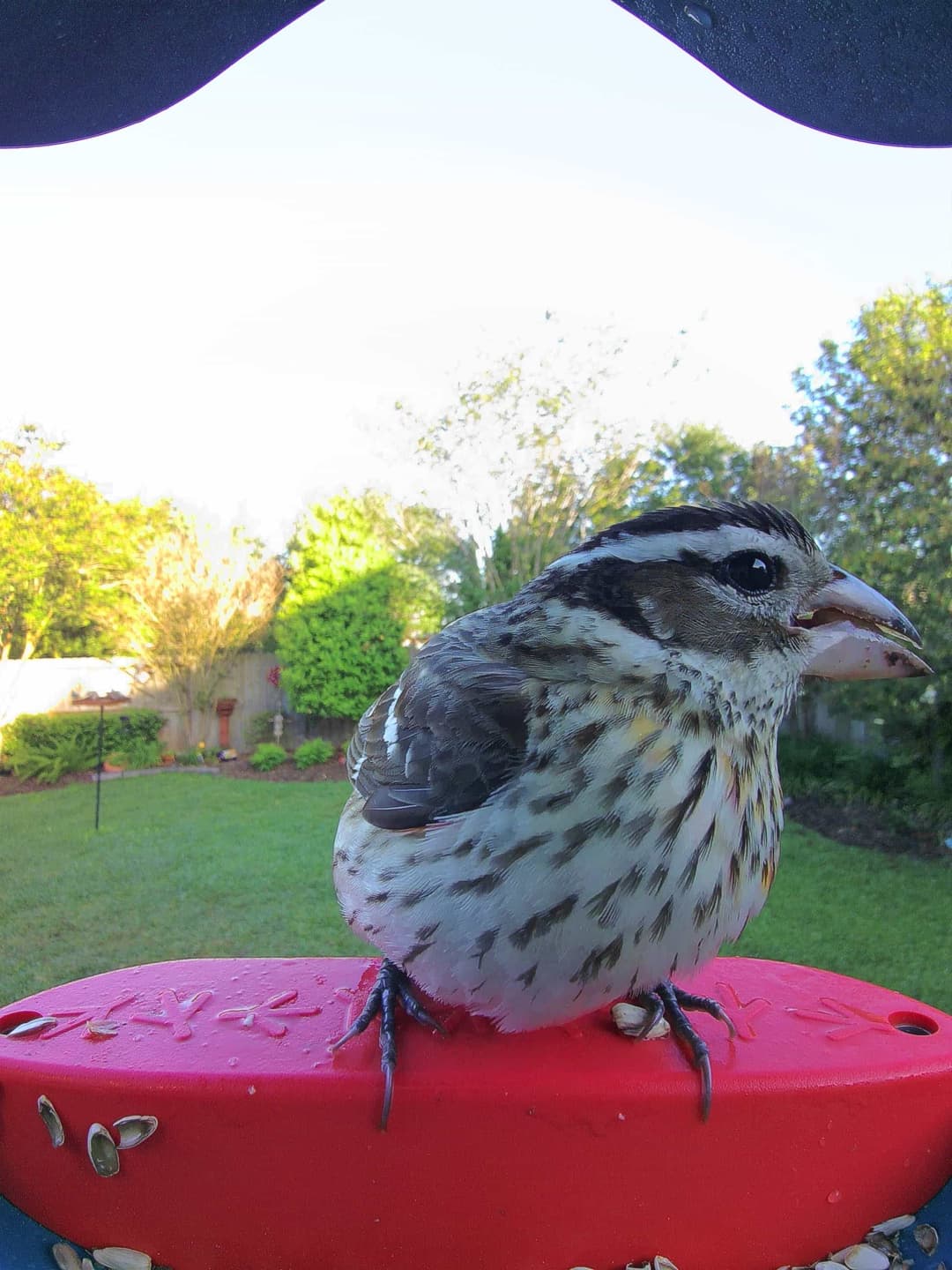
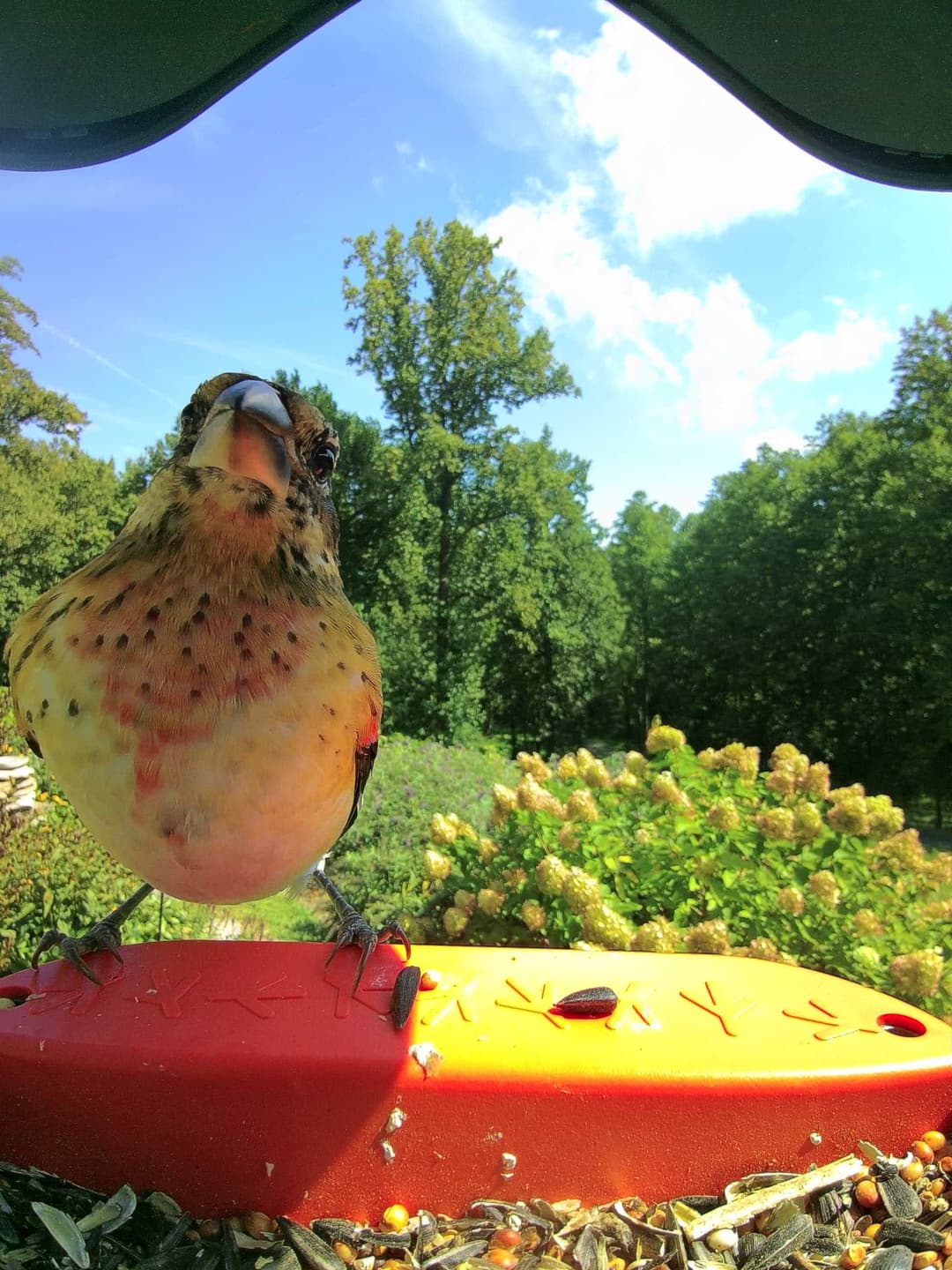
Males exhibit brighter coloration consisting of a mix of vibrant red or yellow hues with a black or brown back. The male Rose-breasted Grosbeak, for example, displays a striking black-and-white pattern with a dashing rose-red badge, whereas the female one is streaked brown and white, with a prominent white eyebrow and usually no hint of rose. This sexual dimorphism makes it easier to spot the males in their environment.
Juvenile
Young grosbeaks take after the coloring of the adult females in their respective species, possessing less vibrant coloring as they develop over the first few months. Juveniles also feature a streaked underbelly, which is absent in adults. The juvenile coloring changes towards the end of the first summer, developing into the distinct adult plumage.
Size
7.1 - 9.4 in/1.2 - 2.7 oz
There's more to learn about Grosbeak
View full detailsPine Grosbeak
Pinicola enucleator
General appearance
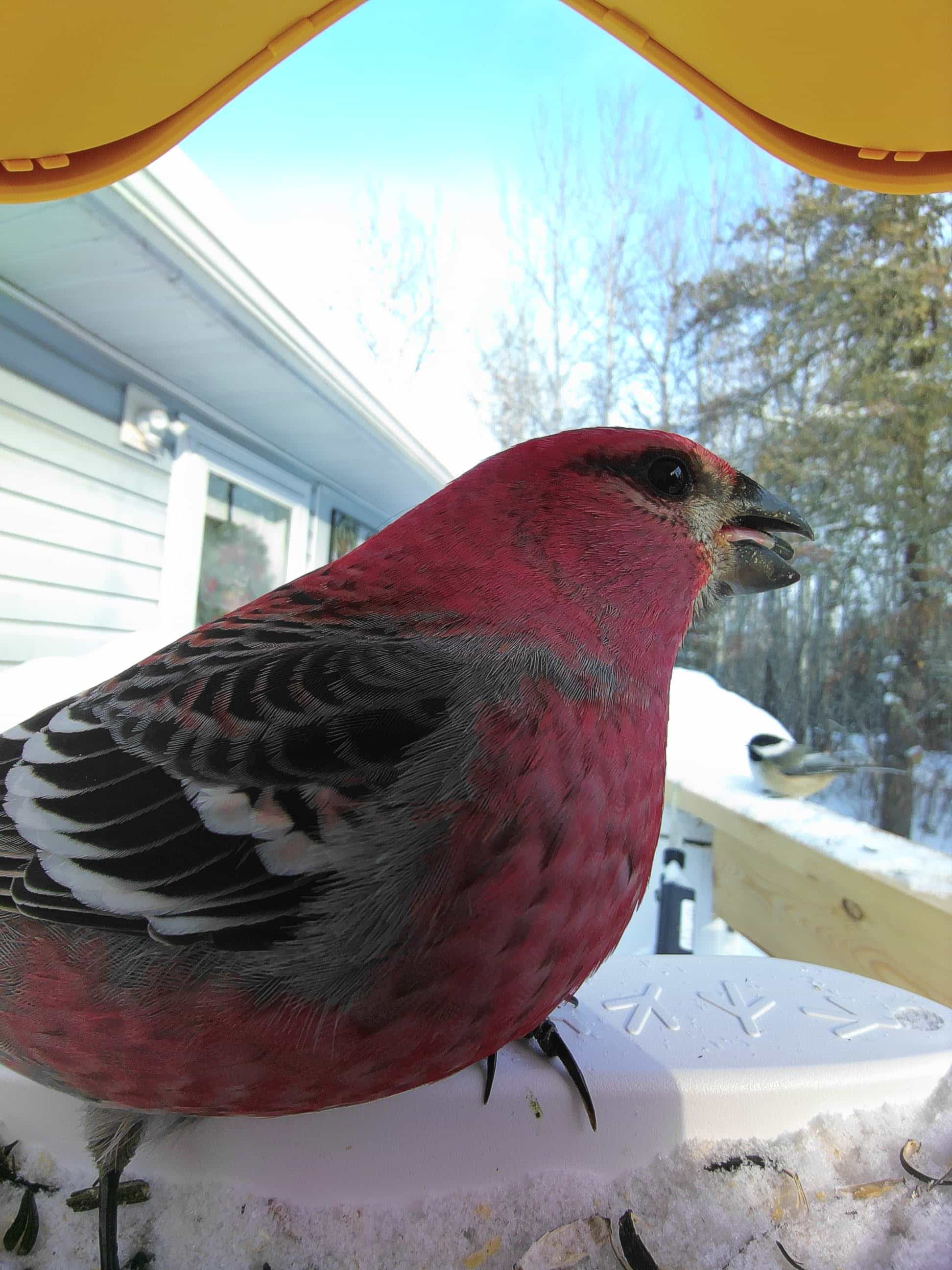
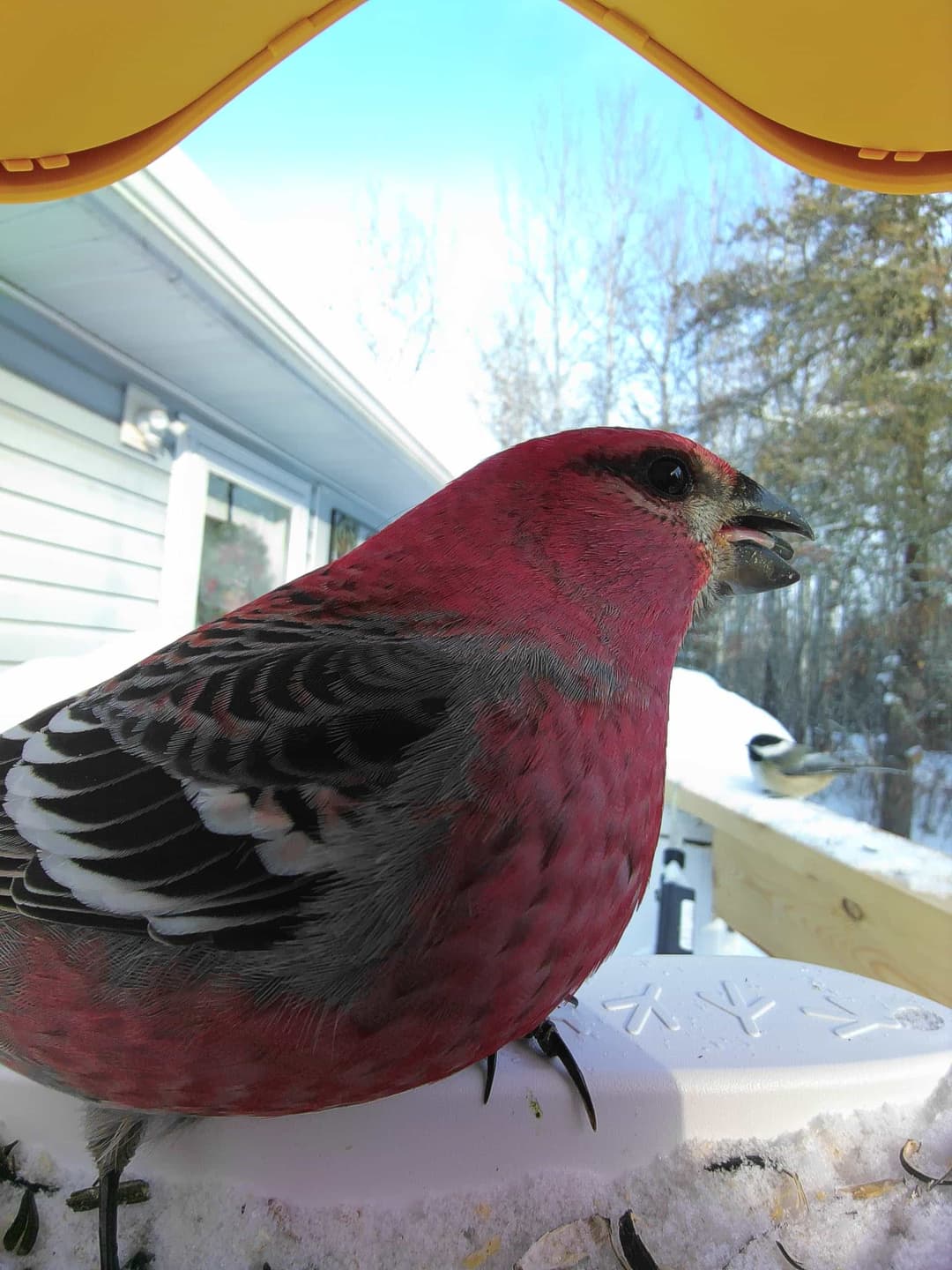
The pine grosbeak is a large finch, about the size of a robin, measuring between 8-10 inches (20-25 cm). The bird has several distinctive features including a long tail, a stubby black bill, two wing-bars, and various colors. The wing shape is pointed and the tail shape varies from notched, rounded to a square tip.
Male vs female
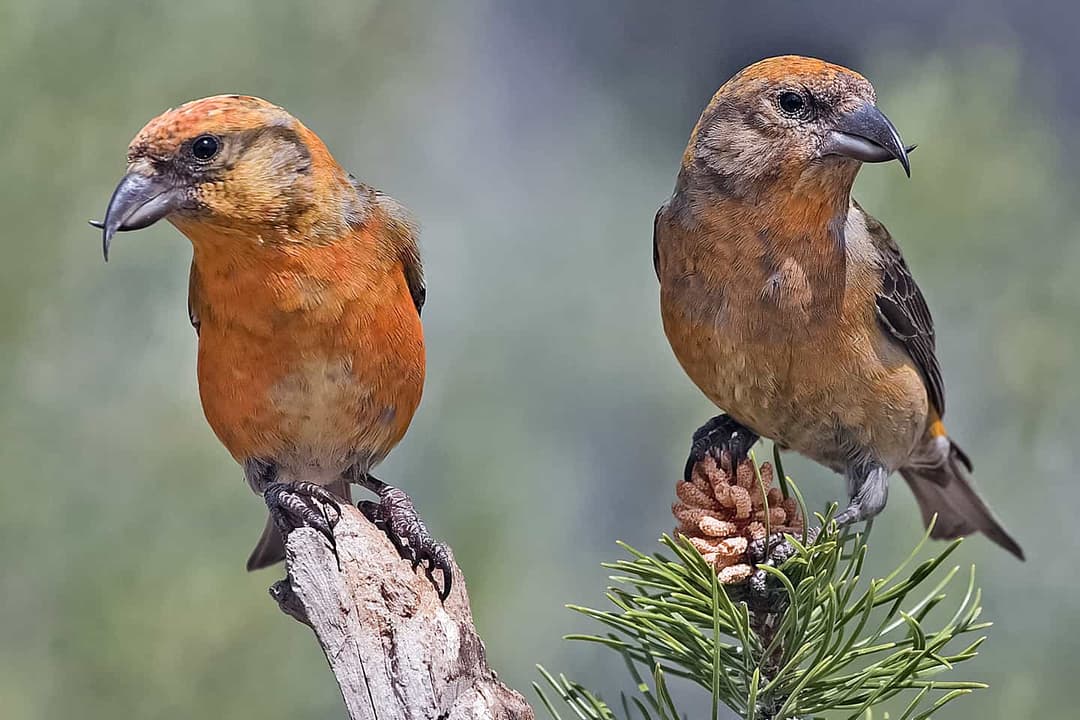
Adult males and females display different colorations. While the adult male pine grosbeak is mostly pink and gray, the female is predominantly gray, with yellow or orange on her head. This differentiation helps in spotting and identifying the species in the wild.
Juvenile
Similar to adult females, juveniles are gray in color. However, they are distinguishable by the yellow or orange coloration on their heads. There may be a seasonal variation in appearance as these birds often change their plumage.
Size
7.9 - 10.0 in/1.8 - 2.8 oz
There's more to learn about Pine Grosbeak
View full detailsHow to tell the Grosbeak from the Pine Grosbeak
Visual differences
The grosbeak (Pheuctictus) and pine grosbeak (Pinicola enucleator) differ visually in several aspects. The grosbeak is smaller, 7-9.5 inches long, with vibrant red, yellow, and black plumage and a large, seed-cracking bill. Pine grosbeaks, 8-10 inches, are the largest finches, featuring pink and gray males, gray females with yellow/orange heads, and have long tails. Both have pointed wings, but pine grosbeaks sport two wing bars and stubby black bills. These characteristics aid species identification.
Key differences and behavior
Grosbeaks and Pine Grosbeaks exhibit distinct behaviors and habitats. Grosbeaks, active yet inconspicuous, reside in temperate woodlands and gardens, often foraging solo or in pairs. Pine Grosbeaks, conversely, form winter flocks and inhabit coniferous forests, sticking to fruit trees until they're bare. In diet, both consume seeds and fruits, but Pine Grosbeaks favor conifer seeds and are less frequent at feeders. Grosbeaks are versatile feeders, attending more frequently, especially in colder months. During breeding, Grosbeaks perform vibrant displays, while Pine Grosbeaks utilize a mellow warble. Grosbeaks nest in dense shrubs, while Pine Grosbeaks prefer coniferous trees. Notably, Pine Grosbeaks involve males in courtship feeding, strengthening pair bonds. These behavioral nuances aid in field identification.
Still not sure? Here are more lookalikes!
Grosbeak vs Rose-Breasted Grosbeak
Grosbeak vs Black-Headed Grosbeak
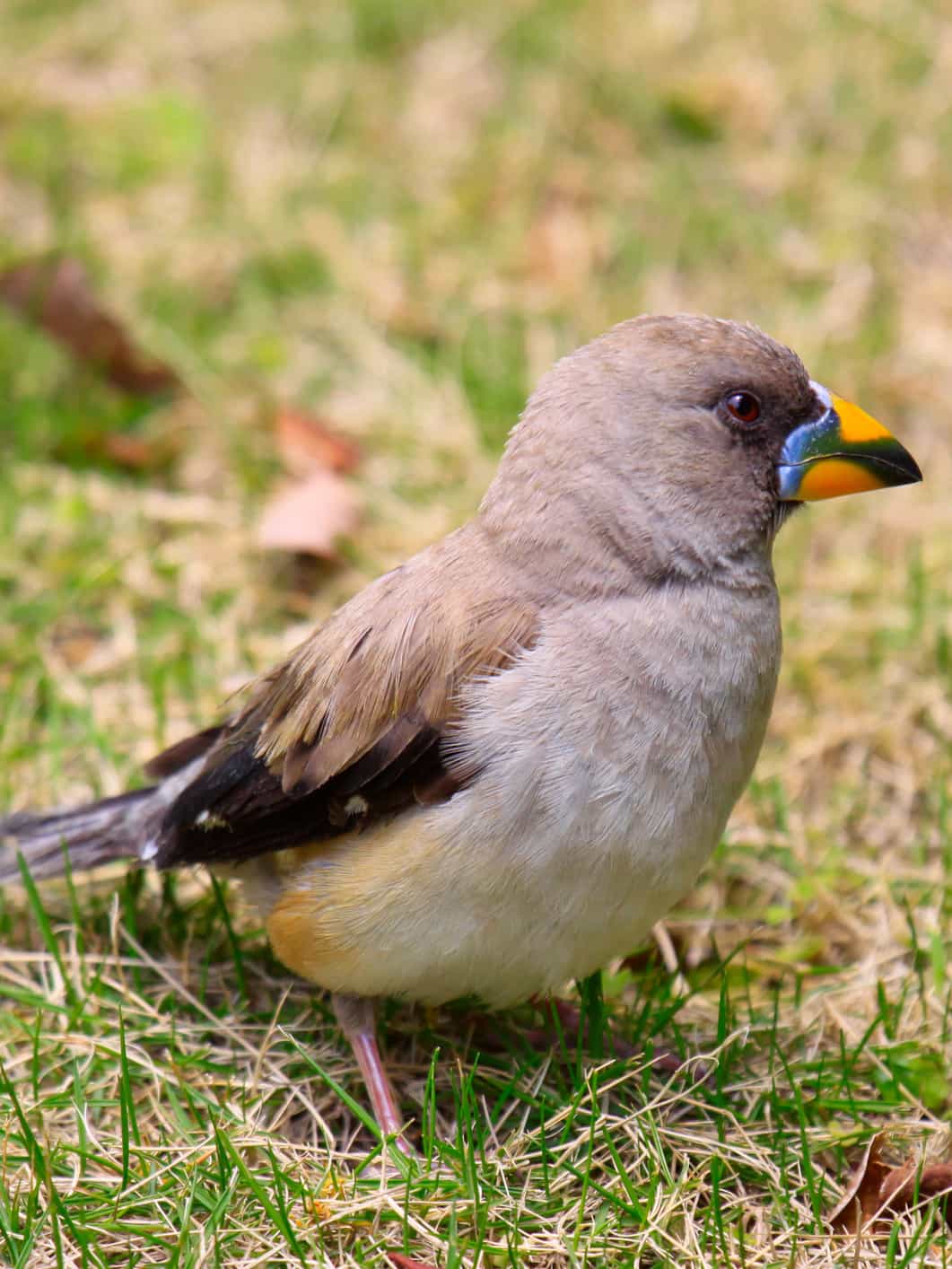
Grosbeak vs Evening Grosbeak

Pine Grosbeak vs House Finch
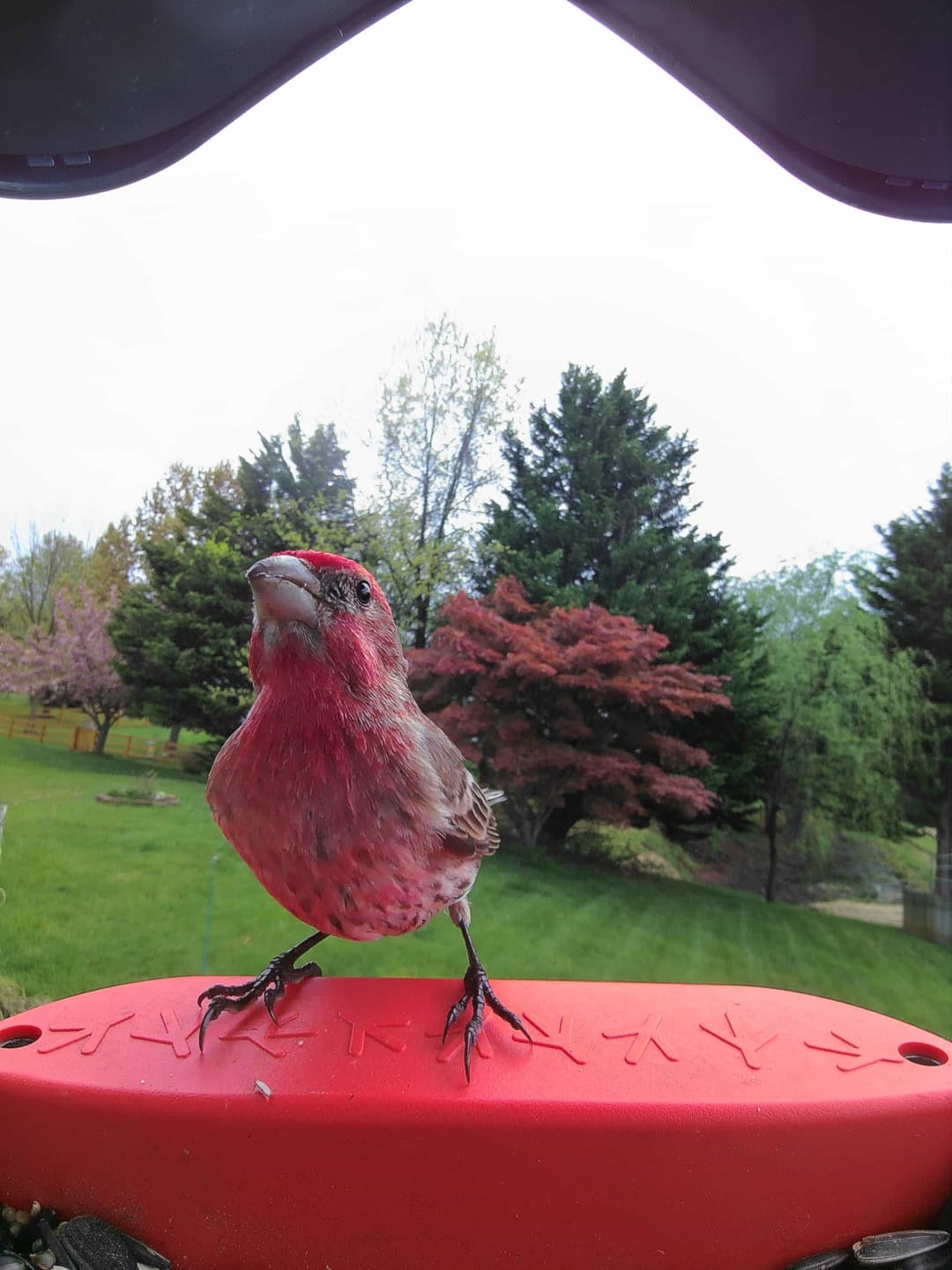
Pine Grosbeak vs Purple Finch
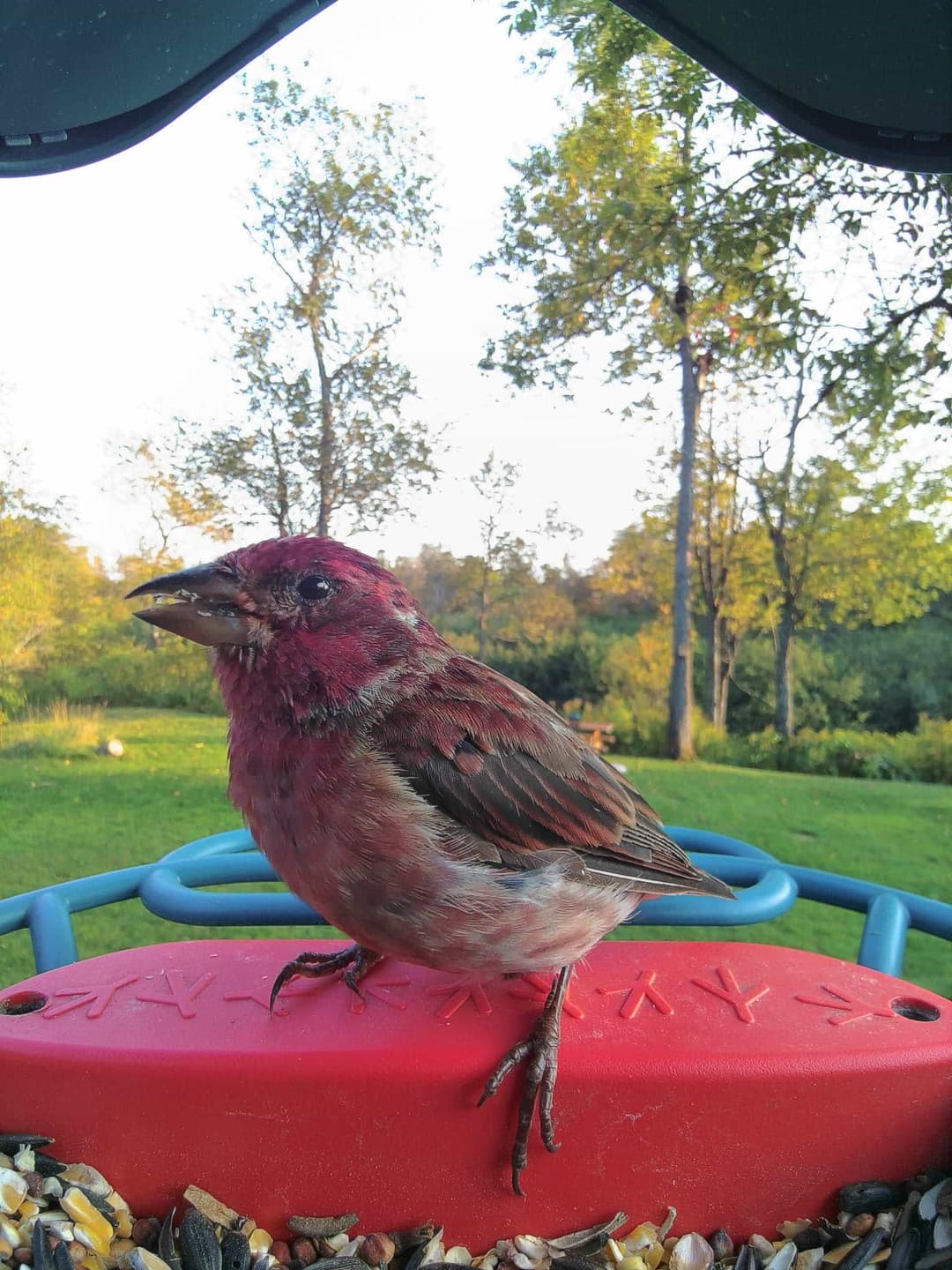
Pine Grosbeak vs Evening Grosbeak
Grosbeak vs [Select a bird]

[Select a bird]
Pick a bird to compare
Pine Grosbeak vs [Select a bird]
[Select a bird]
Pick a bird to compare