
Pine Grosbeak
Pine Grosbeak
Pinicola enucleator


Quick Identification guide
Quick Identification guide
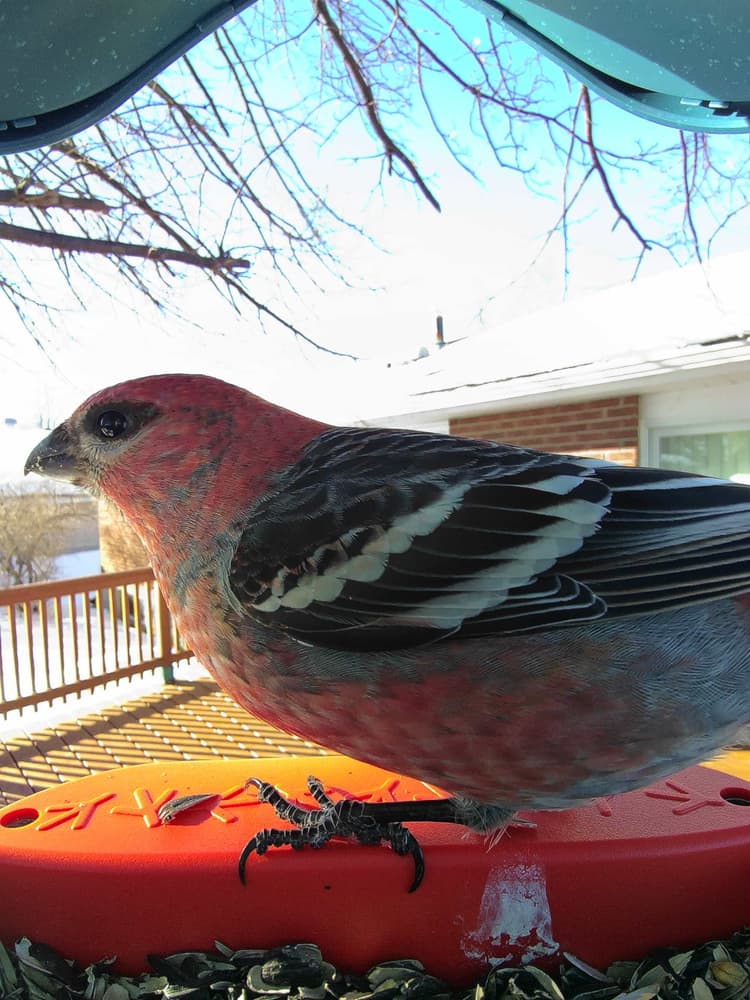
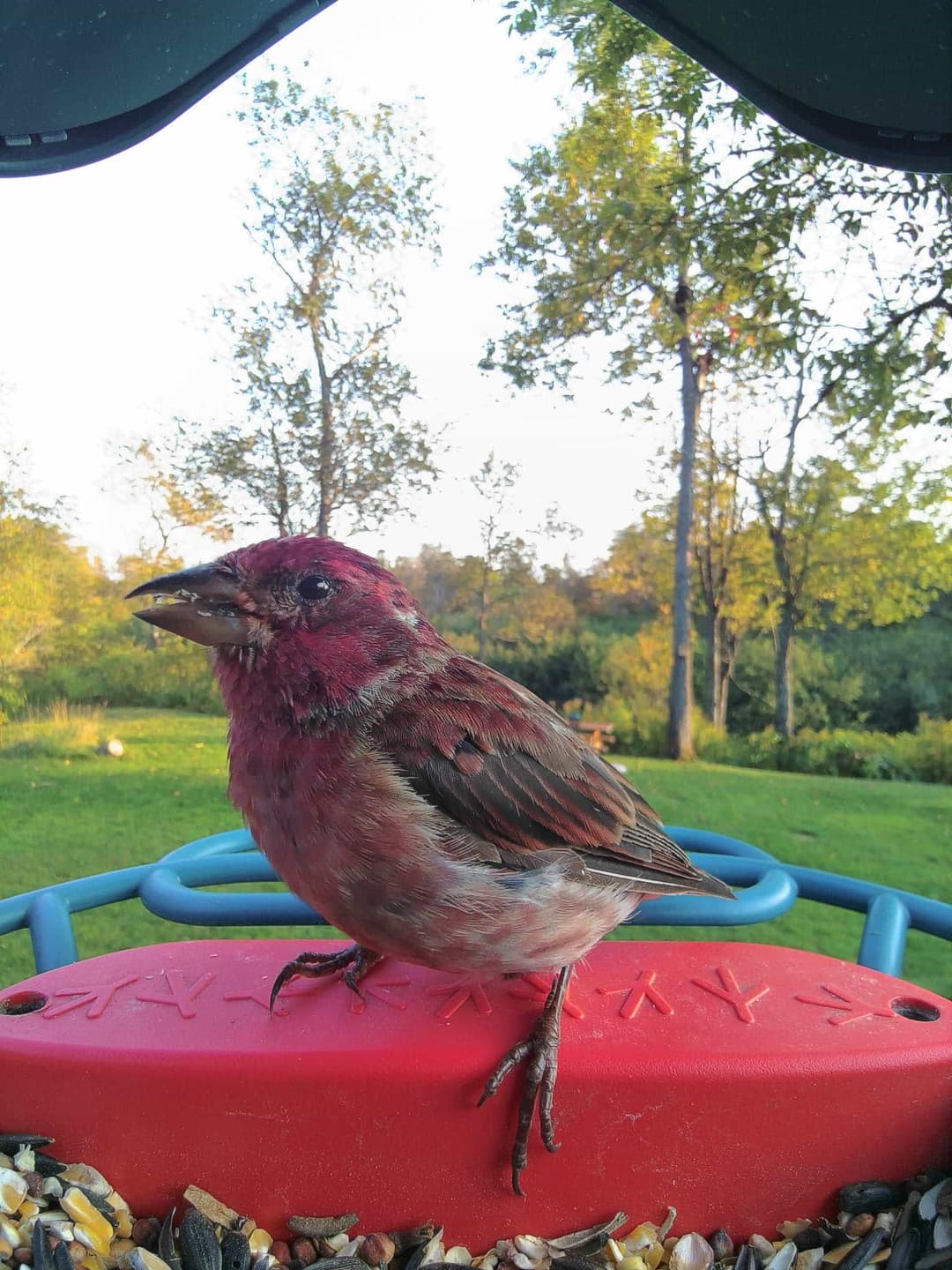
Male
- •
bright red body with dark wings and tail
- •
Large stout beak that is thick and conical
- •
Overall plump build with a long tail
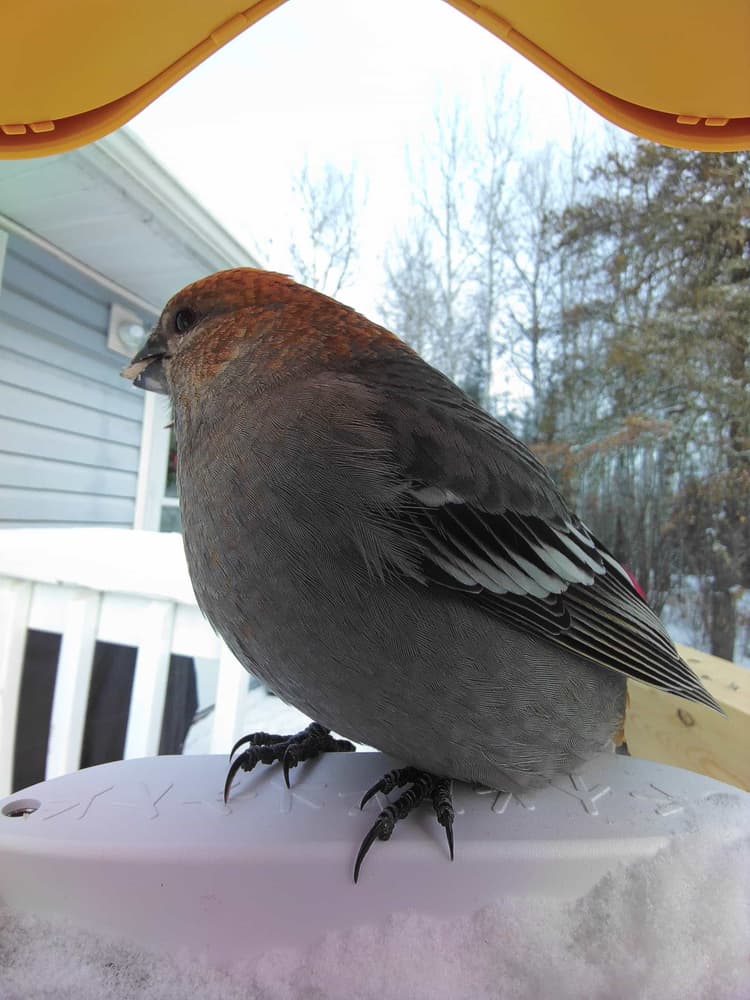
Female
- •
olive-gray body with areas of yellow or orange
- •
The same thick, conical beak as the male
- •
Sturdy body with a rounded appearance
What does a pine grosbeak sound like?
The Pine Grosbeak's vocalizations are characterized by a 3-note whistle similar to that of the Greater Yellowlegs. Its call pattern is complex, often transitioning between falling, flat, and undulating pitches. The bird employs diverse call types including chirps or chips, flute-like notes, trills, and whistles, crafting an intricate auditory landscape. This intricate pattern of sounds serves as the bird's primary form of communication.


Description
The pine grosbeak loves pines, as you can probably tell by its name. Its scientific name “pinicola” also means “pine dweller.” Fruit will also do. Winter flocks set up shop next to a fruit tree and don’t budge until they’ve eaten every last piece! They are the largest of the finches and apparently the slowest. They are so chill that Newfoundlanders affectionately call them mopes.
The pine grosbeak can weigh between 52to78grams and be from20to25.5centimeters tall.
The pine grosbeak typically has a lifespan of up to 9 years in the wild. Compared to its close relative, the house finch, which lives for about 11 years, the pine grosbeak has a slightly shorter lifespan. The pine grosbeak's lifespan is also shorter than the evening grosbeak which can live up to 15 years.
Did you know?
Most popular questions about pine grosbeak
How to recognise a pine grosbeak?
General appearance
The pine grosbeak is a large finch, about the size of a robin, measuring between 8-10 inches (20-25 cm). The bird has several distinctive features including a long tail, a stubby black bill, two wing-bars, and various colors. The wing shape is pointed and the tail shape varies from notched, rounded to a square tip.
Male vs female
Adult males and females display different colorations. While the adult male pine grosbeak is mostly pink and gray, the female is predominantly gray, with yellow or orange on her head. This differentiation helps in spotting and identifying the species in the wild.
Juvenile
Similar to adult females, juveniles are gray in color. However, they are distinguishable by the yellow or orange coloration on their heads. There may be a seasonal variation in appearance as these birds often change their plumage.
Often mistaken for
Red Crossbill vs Pine Grosbeak
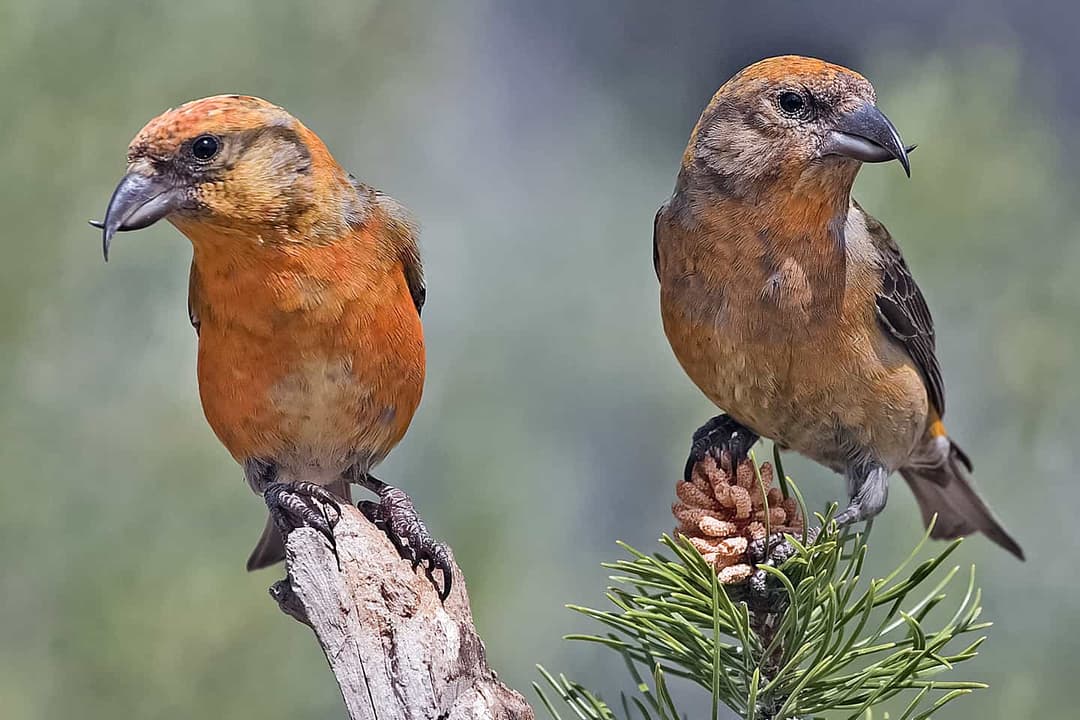
Pine Grosbeaks are larger with a more robust body and a thicker bill, whereas Red Crossbills have crossed tips on their bills. Pine Grosbeaks display more uniform coloration, while Red Crossbills often appear more mottled.
House Finch vs Pine Grosbeak
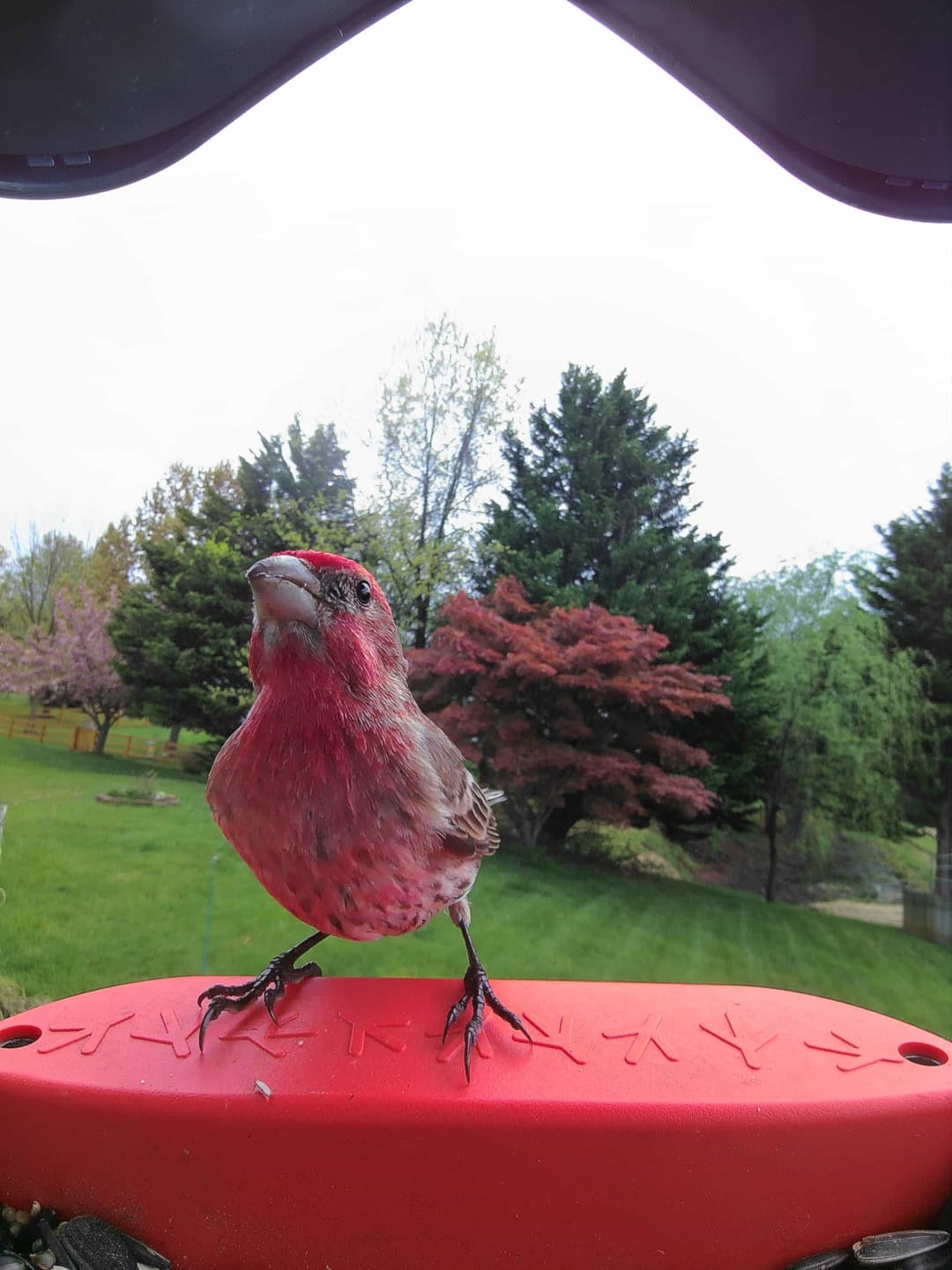
Pine Grosbeaks are larger and stockier. They have a more pronounced grayish hue on their back and wings compared to the streaked and slimmer House Finch. The House Finch's red coloration is usually more concentrated on the head and chest.
Purple Finch vs Pine Grosbeak
Pine Grosbeaks are larger with bulkier bodies and have a more muted red compared to the vivid raspberry of Purple Finches. Pine Grosbeaks also have more gray around the wings and tail.
Evening Grosbeak vs Pine Grosbeak
Evening Grosbeaks are more brightly colored with yellow and black markings, while Pine Grosbeaks are predominantly reddish or pinkish. Pine Grosbeaks are more uniformly colored without the vibrant contrasting patterns.

Breeding and nesting habits of the pine grosbeak
Mating behaviors
Male pine grosbeaks sing a mellow continuous warble to defend nesting territory and attract a mate. During courtship, the male feeds the female, which is a behavior that helps strengthen the pair bond.
Nesting details
Nests are constructed on horizontal branches or in forks of conifers like spruce or fir, typically 5-15 feet above the ground. They can also be found as low as 2 feet in shrubs or as high as 25 feet in trees. The nest is an open cup made of twigs, weeds, and rootlets, lined with fine grass, additional rootlets, lichens, and moss.
Eggs and chick-rearing
Pine grosbeaks lay a small clutch of eggs which the female incubates while the male provides food. After hatching, both parents are involved in feeding the chicks. They ensure that the young receive adequate nutrition until they are ready to fledge.
What does a pine grosbeak like to eat?
Berries
Flowers
Fruits
Insects
Plants
Seeds
Spiders
Natural diet
The pine grosbeak feeds chiefly on seeds, buds, berries, and insects. During winter, it primarily consumes vegetable matter, with a focus on seeds from conifers and other trees, as well as buds from various trees like maples. Other natural food sources include berries, wild fruits such as crabapples, and seeds from weeds and grasses.
Bird feeders
Pine grosbeaks occasionally visit bird feeders, where they are attracted to sunflower seeds and a variety of other offered items.
Knowing your pine grosbeak
The Pine Grosbeak is a beautiful bird known for its beautiful song and stunning color, especially the males who are a stunning red. They are found in boreal forests and, if you live in such areas, getting them to visit your yard is a delightful possibility.
Feeders and seeds
Pine Grosbeaks are not fussy eaters. However, they do love sunflower seeds, just like other grosbeaks. We recommend Bird Buddy seeds, as they are chosen by experts per the season and pistachios. For the feeder, a spacious tray feeder or a strong tube feeder would do.
Faithful morning-feeder
Pine Grosbeaks are early birds and would value a consistent morning feeding routine. Hence, make sure to fill your feeders first thing in the morning.
Natural environment
Pine Grosbeaks love crabapple and mountain ash trees. Plant them if you can or at least let them have access to these. Creating a bird-friendly habitat with trees, shrubs, and bird baths would also make your yard attractive.
Sing-along session
Pine Grosbeaks are described as 'peaceful' singers. One way to get their attention is to play soft bird songs or sounds in your yard. Who knows, they might join in for a sing-along!
Where can you find pine grosbeaks?
Primary habitat
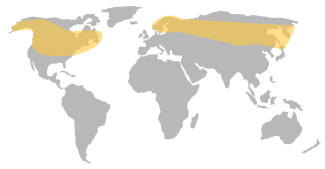
The pine grosbeak primarily breeds in open coniferous forest, especially spruce and fir trees. Contrary to its name, it is not often found in pines during summer.
Additional range
In winter, the pine grosbeak can be found in deciduous trees, notably fruiting trees such as mountain-ash or crabapple, and in groves of pines and other conifers.
Do they migrate?
The pine grosbeak, a large finch, is considered a permanent resident in many regions, maintaining its presence year-round primarily across the boreal forests of North America, Europe, and Asia. However, the species exhibits some migratory behavior. In the northernmost part of its breeding range, primarily in the subarctic and boreal zones, the pine grosbeak may withdraw when conditions become harsh, especially during winter when food becomes scarce. This withdrawal is not a long-distance migration typical of many bird species but rather a more localized movement. It sometimes results in small "invasions" or irruption events, where groups of pine grosbeaks move southward into more temperate regions. These movements are unpredictable and occur mainly due to food shortages in their northern habitats. During such irruptions, pine grosbeaks might be observed in more southern areas that are typically outside their normal range, such as parts of the northern United States, including states like Minnesota, Wisconsin, and New York. The timing of these movements is generally in late fall or early winter, coinciding with the depletion of food resources in their native northern ranges.
What is the role of pine grosbeaks in nature and how to protect them?
Conservation status
The pine grosbeak is widespread and fairly common, suggesting it is not currently vulnerable or endangered. While population trends are hard to measure, there is no indication of significant conservation concerns at present. Key conservation efforts are not prominently highlighted, implying that immediate threats are minimal compared to more at-risk species. However, ongoing habitat monitoring and preservation are essential to ensure its populations remain stable. Additionally, climate change and habitat loss could pose future risks, warranting continued attention from conservationists.
Ecological role of pine grosbeaks
Its role in the ecosystem
The Pine Grosbeak plays a significant role in its habitat by consuming a variety of food, mainly seeds, buds, berries, and insects. This helps to control the numbers of insects during the summer. They will also come to feeders for sunflower seeds and other items, indicating they can influence the distribution of bird feed seeds in domestic areas. The Grosbeak's feeding behavior of fruits, berries, and seeds contributes to seed dispersal in its ecosystem, which aids in the propagation and spread of several plant species. In addition, during the breeding season, they develop throat pouches which allow them to carry more food at once for their young, suggesting a significant parental role. Their nesting behavior also implies a contribution to the structure of their habitat, as they create nests on horizontal branches or forks of conifers.
How to help protect pine grosbeaks
Preservation tips
Habitat preservation strategies
To support the conservation of Pine Grosbeak, it is essential to maintain and preserve their natural habitats. This includes the enforcement of laws that prevent deforestation and illegal logging, especially in spruce and pine forests where these birds reside. Encouraging reforestation programs, particularly the planting of native forest trees, also helps. Another effective strategy is the protection of birds' migratory routes to assure their safe travel.
Community science initiatives
Utilizing community science is invaluable for the conservation of Pine Grosbeak. Encourage public participation in bird observation and data collection projects to increase awareness and understanding of the species. Promote local events, like 'Bird Watching Day' to engage community members. Additionally, disseminate educational materials about Pine Grosbeak, their habitat needs, and importance for ecosystem balance. Partnering with local schools and community groups for habitat cleanup and preservation activities can also be a beneficial initiative.