
Yellow Grosbeak
Yellow Grosbeak
Also known as: Mexican Yellow Grosbeak
Pheucticus chrysopeplus
Quick Identification guide
Quick Identification guide
Male
- •
Bright yellow plumage with contrasting black wings and tail
- •
Prominent thick, conical beak that is pale in color
- •
Large and robust body with white underparts and black streaks on wings
Female
- •
Olive-brown overall with subtle yellow tinge on the underparts
- •
Displays a thick, pale beak similar to the male's
- •
Less contrasting color pattern, with duller wing and tail markings
What does a yellow grosbeak sound like?
The Yellow Grosbeak is known for its captivating song, a series of clear, melodious whistles articulated in variable phrases. This song is often rendered as "sweet, sweet, sweeter, sweet". Its call is described as a sharp "spik" or "pik", often used when foraging or in flight. It may also produce softer "seep" or "tsip" notes, mainly noted during its nocturnal migration.
Description
Other than its striking yellow plumage, the way to recognise a yellow grosbeak is definitely by its big head. They may have a big head but they are not big-headed. These beautiful birds prefer to keep a low profile, searching for food either all alone or in pairs and doing so as quietly as a mouse.
The yellow grosbeak can weigh between 53to74grams and be from21to24centimeters tall.
The typical lifespan of the Yellow Grosbeak, a bird species native to Mexico and Central America, is unknown. For comparison, related species such as the Black-headed Grosbeak and Rose-breasted Grosbeak can live up to 13 years and 24 years, respectively. Such long lifespans are not guaranteed, as survival rates can be influenced by factors like predation, disease, and habitat loss.
Did you know?
Most popular questions about yellow grosbeak
How to recognise a yellow grosbeak?
General appearance
The Yellow Grosbeak, or Pheucticus chrysogaster, is a sizable bird with a heavy bill. Its most prominent feature is its bright yellow color, though it also flaunts black streaks which distinguish it further. It boasts a blue-gray colored bill and black wings with white patches. The tail of an adult yellow grosbeak is typically stippled with white highlights.
Male vs female
The colorful plumage of the male Yellow Grosbeak makes them quite noticeable, featuring vibrant, yellow feathers with black streaks. Females, although still bright, are less conspicuous. Their body is colored with a duller, olive-yellow, striped with brown on the back and sides, and their belly is often yellow-white. Both have similar sized robust bills.
Juvenile
Juveniles most resemble adult females but exhibit a duller color pattern. They are predominately a pale yellow or yellowish-brown and sport more prominent brown streaks. As they mature into adults, their colors will brighten and males will develop black streaks.
Often mistaken for
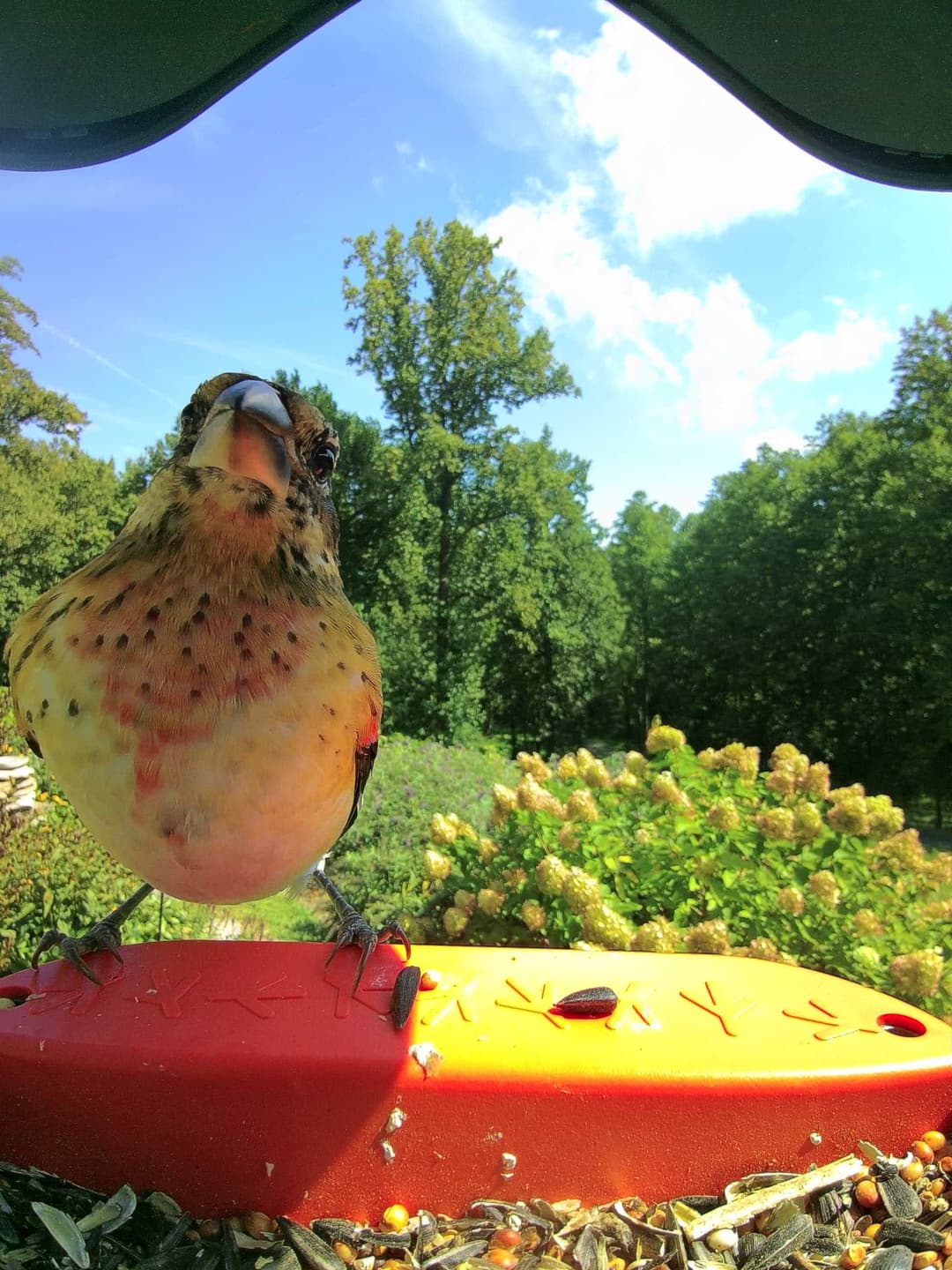
Rose-Breasted Grosbeak vs Yellow Grosbeak
While the Rose-Breasted Grosbeak shares a similar size and shape with the Yellow Grosbeak, it features distinct color differences. The male has a striking red breast with black and white plumage, contrasting the bright yellow of the Yellow Grosbeak.
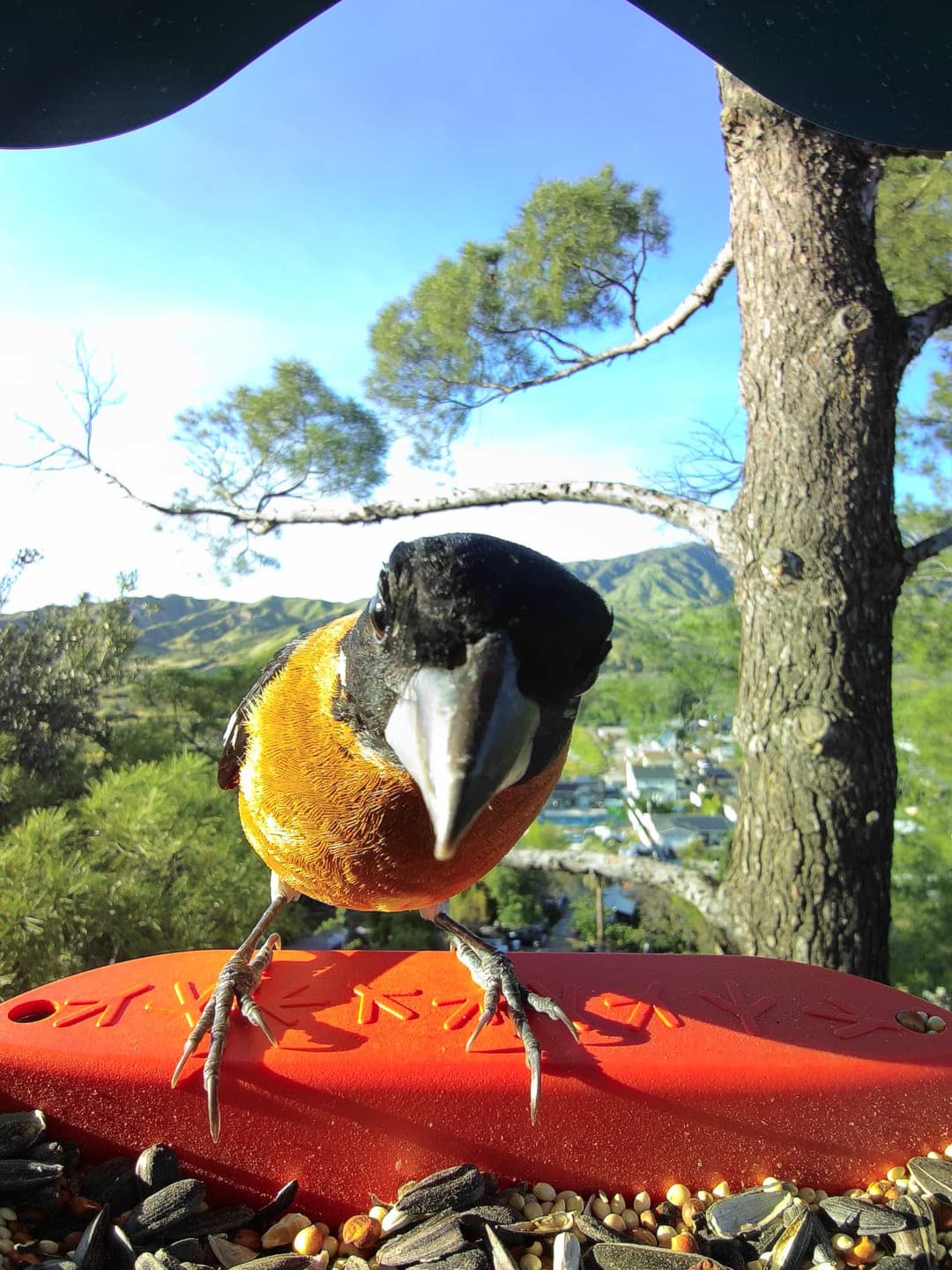
Black-Headed Grosbeak vs Yellow Grosbeak
The Black-Headed Grosbeak resembles the Yellow Grosbeak in size and build. However, its coloring includes a black head and a mixture of orange and brown feathers, differing significantly from the predominantly yellow plumage of the Yellow Grosbeak.
Evening Grosbeak vs Yellow Grosbeak
Evening Grosbeaks can be mistaken for Yellow Grosbeaks due to their similar size and stocky build. However, the Evening Grosbeak features a more muted yellow with gray and white wings, unlike the bright yellow of the Yellow Grosbeak.

Breeding and nesting habits of the yellow grosbeak
Mating behaviors
The yellow grosbeak engages in elaborate courtship displays involving vocalizations and visual signals. Males sing complex songs and display bright plumage to attract females. Pair bonds form quickly, leading to collaboration in nest building.
Nesting details
Nests are typically built in dense foliage or tree forks, using twigs, grass, and leaves. Preferred nesting sites include wooded areas and occasionally gardens with sufficient cover. To attract grosbeaks to gardens, maintain a variety of trees and shrubs for nesting and protection.
Eggs and chick-rearing
Females lay 3-4 speckled eggs, incubating them for about two weeks. Both parents feed the chicks a diet of insects and seeds. Chicks fledge within two to three weeks, though parents continue to support them as they learn to forage independently.
What does a yellow grosbeak like to eat?
Fruits
Seeds
Natural diet
The yellow grosbeak primarily feeds on a variety of seeds, fruits, and insects. This bird is particularly fond of eating seeds from trees and shrubs, such as those from sunflowers and other native flora. They also consume various berries, including wild cherries and raspberries, which provide essential nutrients. Insects are part of their diet as well, especially during the breeding season when additional protein is required.
Bird feeders
At bird feeders, yellow grosbeaks are attracted to sunflower seeds, which are a favorite. They also consume cracked corn and occasionally suet, especially in colder months when energy needs increase. Providing a mix of seeds in a sturdy feeder can encourage these birds to visit, and they may also appreciate fruit offerings like chopped apples or berries placed near the feeder.
Attracting the yellow grosbeak: food is the first step
Yellow Grosbeaks are particularly fond of sunflower seeds, which are their favorite snack. They also enjoy millet and cracked corn. Bird Buddy seeds are highly recommended as these seeds are expertly chosen for the season, ensuring they're of the best quality and most appealing to these delightful birds.
Choosing the right feeder to attract yellow grosbeaks
Setting up a bird feeder that suits the Yellow Grosbeak's feeding habits is key. Opt for a feeder that has large perching areas and can hold plenty of seeds. Hopper or tube feeders work best. Attach a tray underneath to catch any falling seeds and encourage ground-feeding birds to visit as well.
Fun tricks to encourage yellow grosbeaks to visit
Positioning your feeder in plain sight, but near cover like bushes or trees, can make the Yellow Grosbeak feel more secure. Yellow Grosbeaks are known to enjoy bathing, so why not add a bird bath? The water can serve as an added attraction. Remember to keep it clean and fresh. With a welcoming yard, you can enjoy the sweet sing-alongs of the Yellow Grosbeak in no time.
Where can you find yellow grosbeaks?

Primary habitat
The yellow grosbeak primarily inhabits subtropical or tropical dry forests in Mexico, and Central and South American regions.
Additional range
Unexpectedly, the yellow grosbeak can also be found in the American Southwest, especially in Arizona and New Mexico, due to a result of accidental ship-assisted passage.
Do they migrate?
The yellow grosbeak (Pheucticus chrysopeplus), native to Mexico and parts of Central America, is primarily non-migratory. This species resides year-round in its habitat, preferring subtropical or tropical dry forests, moist lowland forests, and areas that provide abundant tree cover and food sources. While it generally remains stationary, there might be some local movements in response to seasonal food availability or environmental conditions. These movements are not considered traditional migration and are usually limited to short distances within its range. In the higher elevations of Mexico, such as the Sierra Madre Occidental and along the Pacific slope, some populations may exhibit altitudinal movements, traveling to lower elevations during colder months. However, the yellow grosbeak does not engage in long-distance migration like many other North American birds. Overall, the yellow grosbeak’s relative stability in location throughout the year means it does not have an extensive documented migratory route or specific timing familiar to migratory birds. Its presence is mainly determined by local environmental conditions and habitat quality.
What is the role of yellow grosbeaks in nature and how to protect them?
Conservation status
The yellow grosbeak is generally considered a species of "Least Concern" due to its relatively large range and stable population. However, habitat destruction, particularly due to deforestation in its native regions like Mexico and Central America, poses a significant threat. Key conservation efforts focus on preserving its natural habitats through protected areas and sustainable land management practices. Despite some local declines, the species is still commonly found in suitable environments. Monitoring and continued habitat protection remain crucial to ensure its ongoing survival.
Ecological role of yellow grosbeaks
Its role in the ecosystem
The Yellow Grosbeak is a bird species that significantly contributes to the ecosystem. With a diet predominantly consisting of seeds, fruits, and insects, it plays a critical role in natural pest control. Its eating habits help keep the insect population low, thus assisting in the balance of species within its habitats. In terms of seed dispersion, the Yellow Grosbeak inadvertently aids in forest growth and propagation by eating fruits and later scattering their seeds into different spots via their droppings, thereby promoting plant diversity. Additionally, this bird's vibrant plumage and audio signals also enrich the quality and complexity of the biodiversity in its environment. The Yellow Grosbeak’s movement and behaviors can potentially serve as indicators of ecological changes, aiding scientific study of environment health.
How to help protect yellow grosbeaks
Preservation tips
Habitat preservation strategies for yellow grosbeak
Support land conservation initiatives to protect yellow grosbeak's native habitats. Advocate for sustainable agriculture and forestry practices that minimize habitat destruction. Participate in reforestation programs to restore their natural environments. Encourage regulations that control pesticide use, which can harm these birds directly or reduce their food sources.
Community science initiatives for yellow grosbeak conservation
Engage in citizen science bird monitoring programs like eBird to help track yellow grosbeak numbers and distributions. Report sightings to local wildlife agencies to aid in population tracking. Advocate for educational initiatives in schools and local communities to raise awareness about yellow grosbeak conservation. Participate in or organize local fundraisers to provide financial support for yellow grosbeak conservation projects.