
Evening Grosbeak
Evening Grosbeak
Hesperiphona vespertina


Quick Identification guide
Quick Identification guide
Male
- •
bright yellow body with contrasting dark head and white wing patches
- •
large, conical beak that is pale and powerful
- •
stocky build with a short tail
Female
- •
grayish-brown plumage with pale yellow highlights primarily on the neck and flanks
- •
large, pale beak similar to the male's
- •
sturdy body with less contrast compared to the male
What does an evening grosbeak sound like?
The evening grosbeak, a passerine bird, is known for its distinct vocalizations. The bird's common call consists of a piercing "cleer" or "peeer," often delivered in a series. Its song is a series of short warbling notes, interspersed with its characteristic calls. However, the evening grosbeak is not known for melodiousness, but more for the assertive, unmusical sharpness and consistency of its vocal communications.


Description
Evening grosbeaks don't have a sweet tooth; they have a salty tooth. Er... beak! Did you know that their name is derived from the French gros bec which means big beak? Well, you know what they say: big beak, bigger appetite! These guys can gobble up 96 sunflower seeds in just five minutes. The name might suggest otherwise but these guys are actually not related to the rose-breasted grosbeak. The collective noun for a group is, you guessed it, a gross!
The evening grosbeak can weigh between 53to74grams and be from16.5to18centimeters tall.
The evening grosbeak typically has a lifespan of around 15 years. While this is a considerable period for many bird species, it is shorter than that of some related species. For instance, the similar looking but distantly related Pine grosbeak can live up to 20 years. Despite these variations, the evening grosbeak's longevity is impressive, with most small bird species living less than 10 years.
Did you know?
Most popular questions about evening grosbeak
How to recognise an evening grosbeak?
General appearance
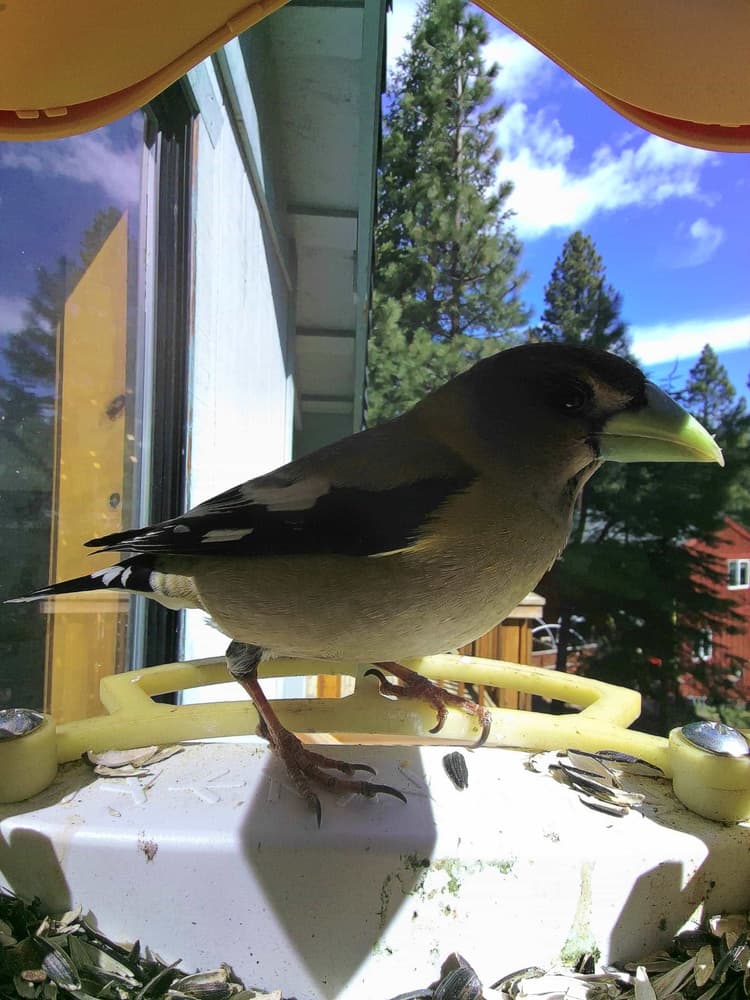
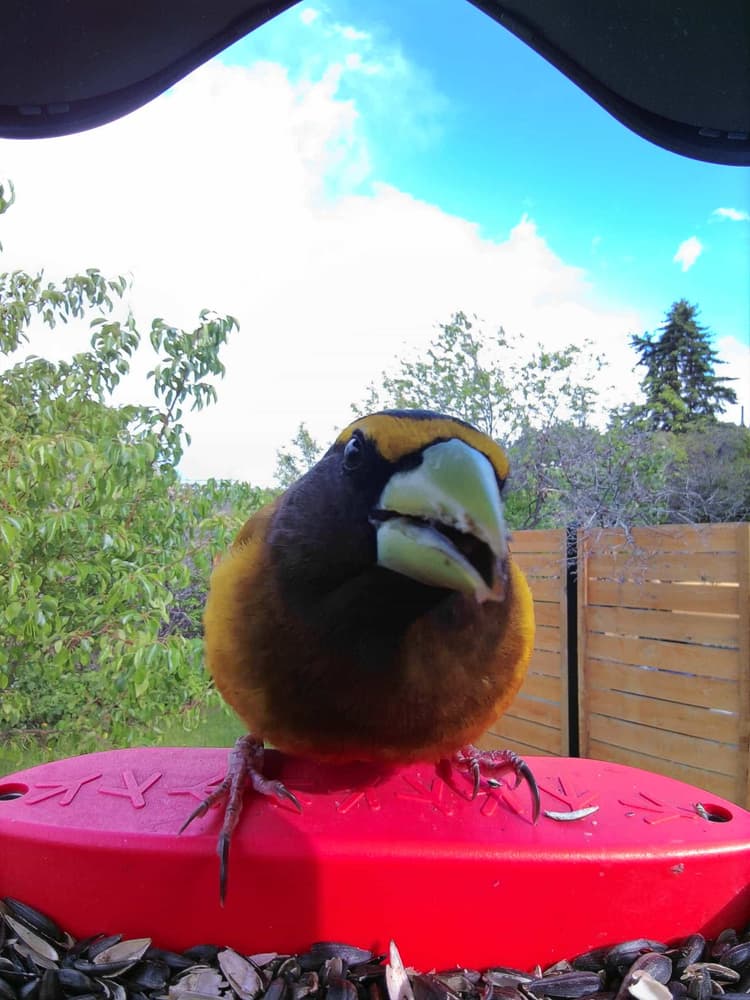
The Evening Grosbeak is a stocky bird with a thick, stout bill. Its coloration is primarily that of yellow and black, with the body appearing mostly yellow and wings and tail being marked with black. The bill is a pale color, often appearing nearly white.
Male vs female
Males and females display significant sexual dimorphism. Males are more brightly colored, with a vibrant yellow body, a brownish-black head, and black wings featuring striking white patches. Females, on the other hand, are less vibrant with more of a grey-brown body and white markings on the wings. Both genders share the feature of a pale, stout bill.
Juvenile
Juvenile Evening Grosbeaks appear similar to adult females, with more subdued coloration than males. As they age, they gradually acquire their adult colors, males becoming vibrant yellow and females settling into their more muted brown and white tones.
Often mistaken for
Pine Grosbeak vs Evening Grosbeak
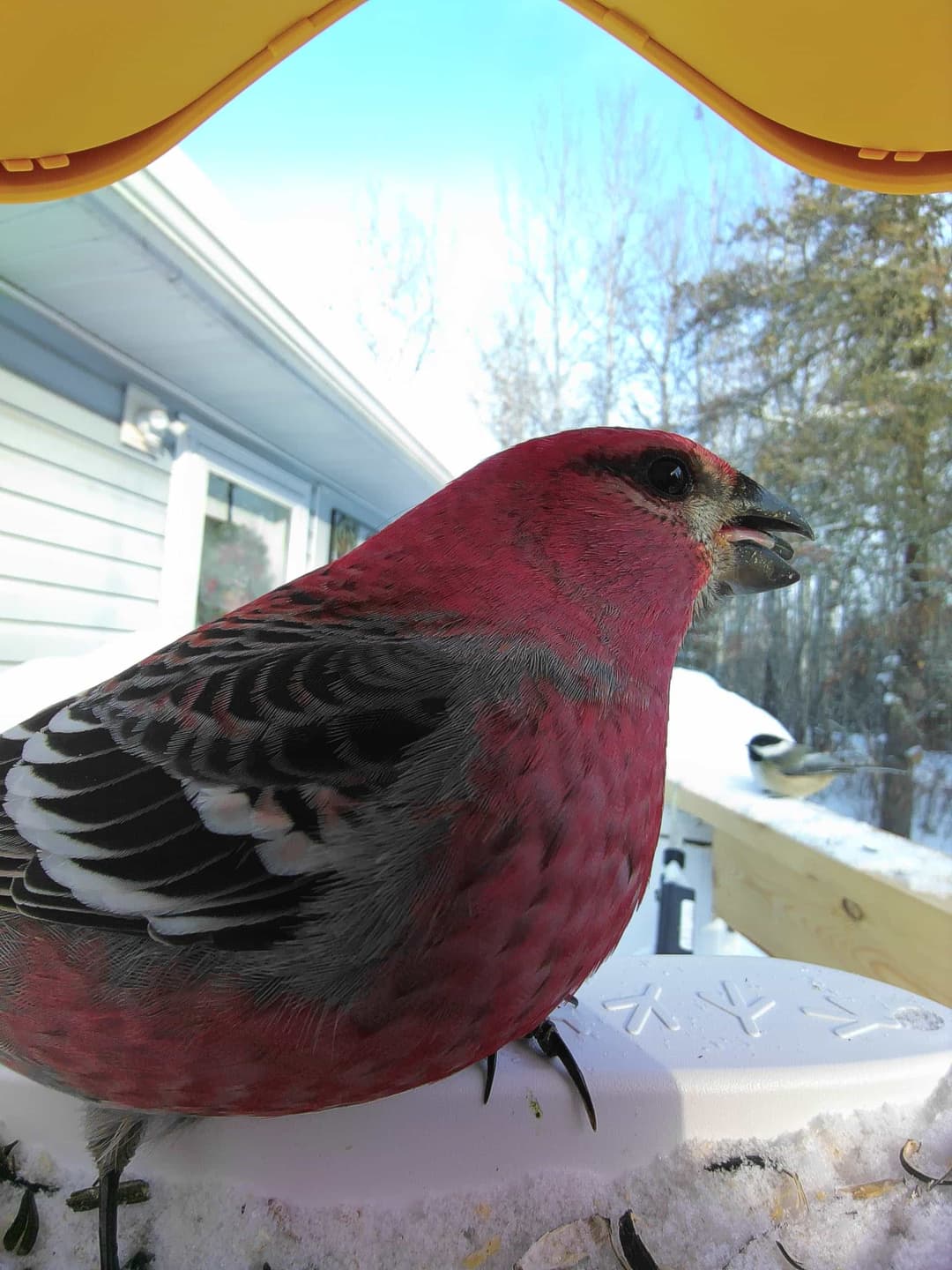
The Pine Grosbeak can be mistaken for the Evening Grosbeak, but it can be distinguished by its slender body, conical bill, and the males' brighter red coloration compared to the yellowish hue of the Evening Grosbeak.
Rose-Breasted Grosbeak vs Evening Grosbeak
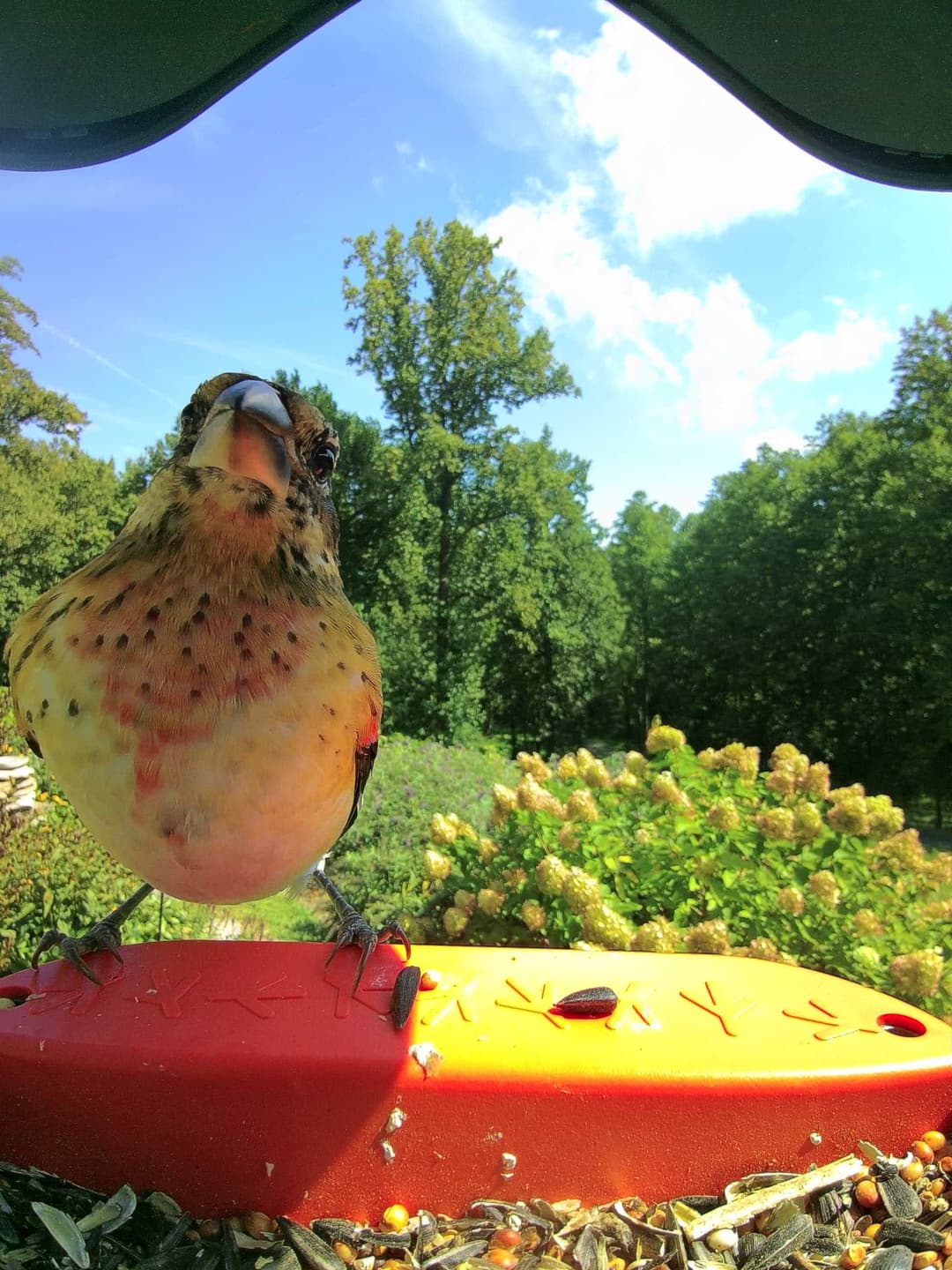
Although the Rose-Breasted Grosbeak shares a similar name, it has a distinct red triangle on its breast and a contrasting black head in males, unlike the yellow and black pattern of the Evening Grosbeak.
Black-Headed Grosbeak vs Evening Grosbeak
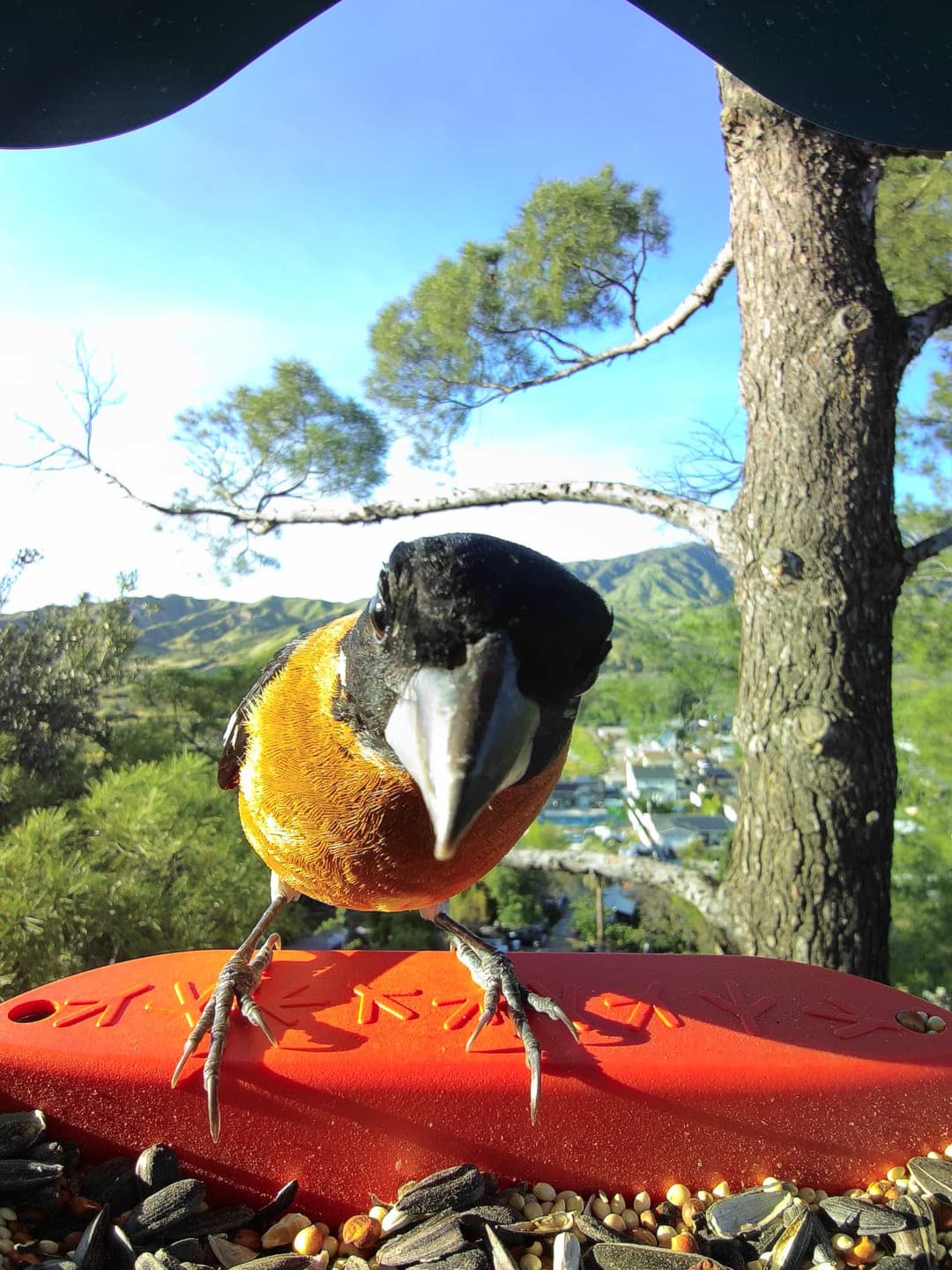
The Black-Headed Grosbeak also shares a similar name and size, but it has a rich orange color on its breast and a black head, which differentiates it from the yellow and white plumage of the Evening Grosbeak.
Yellow Grosbeak vs Evening Grosbeak
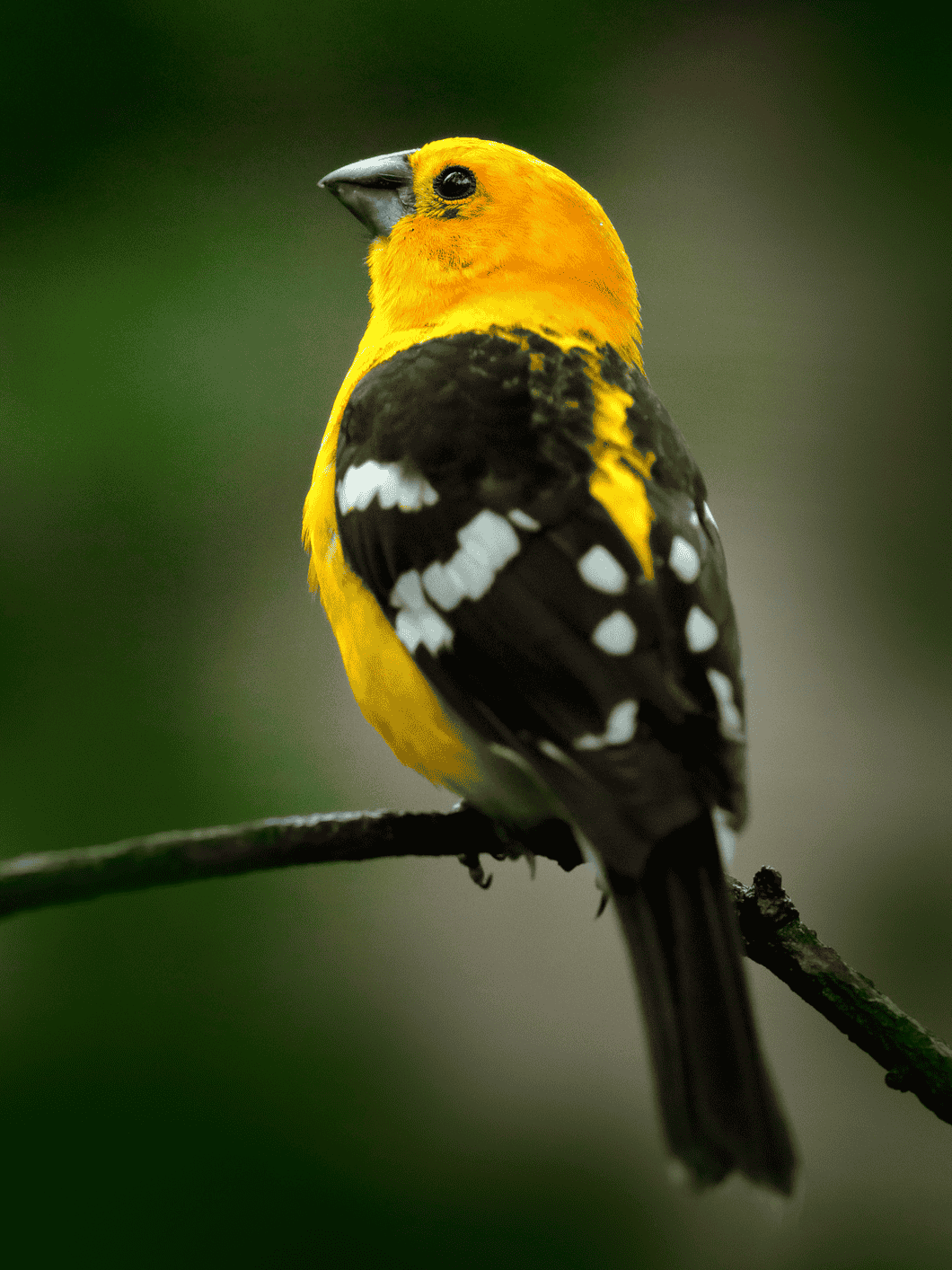
While the Yellow Grosbeak is also yellow, it has a heavier bill and lacks the Evening Grosbeak's bold black-and-white wing pattern.
Breeding and nesting habits of the evening grosbeak
Mating behaviors
Evening grosbeaks engage in courtship displays that include fluttering wings and vocalizations. Males may offer food to females as part of the bonding process.
Nesting details
Nests are usually built in coniferous or mixed forests, placed on horizontal branches away from the tree trunk. They are constructed from twigs, roots, and other plant materials.
Eggs and chick-rearing
Females lay 2-5 eggs, usually pale blue or green with brown spots. Incubation lasts about two weeks, after which both parents feed the chicks regurgitated food until they fledge in approximately 18 days.
What does an evening grosbeak like to eat?
Berries
Insects
Sap
Seeds
Natural diet
The evening grosbeak primarily feeds on seeds, berries, and insects. It often consumes seeds from trees such as maple, ash, pine, and spruce, along with a variety of berries including juneberries and elderberries. This bird also eats insects like caterpillars and beetles, especially during the breeding season when protein is essential for chick development.
Bird feeders
At bird feeders, evening grosbeaks commonly eat sunflower seeds, which are popular for their high fat content. They may also consume shelled peanuts and other mixed birdseed blends. Sometimes, they are attracted to feeders offering suet cakes containing seeds and nuts.
Create an inviting environment
The first step in attracting evening grosbeaks is to create an enticing environment. Ensure your yard is clean as a too messy one might discourage them from visiting. Provide enough trees or shrubs for coverage, as these birds enjoy such areas for rest and privacy.
Feeder and food preferences
Evening grosbeaks are fond of large, platform feeders. These birds also prefer seed feeders due to their extensive beaks, so invest in a sturdy one. Hang these feeders near windows to offer an easy escape route for these birds from predators. Evening grosbeaks are fond of sunflower seeds, particularly black oil sunflower seeds. Bird Buddy seeds are highly recommended as they are exclusively chosen by experts for different seasons to attract evening grosbeaks.
Fun tricks to encourage visits
Keep your yard's environment lively. Adding a birdbath or fountain is an excellent way to keep grosbeaks hydrated and clean. Playing bird sounds or songs can also attract these musical creatures. If you are patient and consistent, the evening grosbeaks might even join you for a sing-along!
Where can you find evening grosbeaks?

Primary habitat
The evening grosbeak prefers coniferous forests in Canada and the northern United States. They thrive in cool, temperate climates amidst pines, spruces, and firs.
Additional range
During winter, they may inhabit mixed woodlands, suburban areas, and occasionally venture into the southern U.S., adapting to varied environments for food availability.
Do they migrate?
The evening grosbeak is considered a partial migrator, with its movements largely influenced by food availability. In years when conifer seed crops are plentiful in their breeding range, they may remain in those areas. However, when food is scarce, they exhibit irruptive migration, moving southward and eastward in search of food. During irruptive years, their migration can extend from their breeding grounds in the western and northern parts of North America, including Canada and parts of the U.S. such as the Rocky Mountains and Pacific Northwest, to as far as the southern United States and occasionally northeastern U.S. states. They do not follow a fixed route, as their movements are dictated by food scarcity. The timing of these migrations typically occurs from late fall through winter, peaking from November to March. Key locations during these irruptions include areas with abundant fruit and seed sources, such as coniferous forests, deciduous woodlands, and urban parks. Overall, their migratory behavior is unpredictable, making the evening grosbeak an erratic visitor in regions outside their core breeding areas.
What is the role of evening grosbeaks in nature and how to protect them?
Conservation status
The evening grosbeak is currently listed as vulnerable, primarily due to habitat loss, climate change, and food supply reduction. Once common across North America, its population has significantly declined. Key conservation efforts focus on habitat preservation and restoration, along with monitoring population trends. Deforestation and changes in forest composition affect their breeding and feeding habitats, posing significant threats. Additionally, the decrease in spruce budworm outbreaks, a primary food source, contributes to their decline. Conservationists emphasize the importance of understanding ecosystem dynamics to support recovery efforts for this striking bird species.
Ecological role of evening grosbeaks
Its role in the ecosystem
The Evening Grosbeak plays an important role within its ecosystem both as a pest controller and seed disperser. As it consumes a variety of insects, it helps in maintaining a balance in the insect population and thus serves as a natural pest controller. In particular, it is known to control spruce budworm populations - a significant forest pest. Furthermore, the Evening Grosbeak plays a critical role in seed dispersal. It feeds on a range of seeds, particularly those from coniferous trees. After consumption, these seeds are later expelled in different areas through the bird's droppings, thus assisting in the propagation and dispersion of these plant species. This contribution to seed dispersal is particularly crucial in forested ecosystems where such seed dispersal helps maintain the diversity and broad spatial distribution of many plant species. Therefore, the ecological role of the Evening Grosbeak is significant and multifaceted.
How to help protect evening grosbeaks
Preservation tips
Habitat preservation strategies
Preserving the natural habitat of the evening grosbeak is crucial. This involves taking steps to maintain their primary habitats, which include forests and woodlands. Focus on sustainable forestry practices, minimizing deforestation, and supporting reforestation initiatives. Crabapples, boxelder, and other native plants that serve as their food source should be promoted.
Community science initiatives
Community involvement is essential for successful conservation. Create awareness about the role of the evening grosbeak in ecosystem balance by organizing educational programs. Engage local communities in birdwatching and nesting monitoring. Citizen science projects, like observing feeding behaviors and tracking migration patterns, not only encourage conservation efforts but also help collect valuable data for research.