Grosbeak or Rose-Breasted Grosbeak?
Here's how to tell the difference



Grosbeak
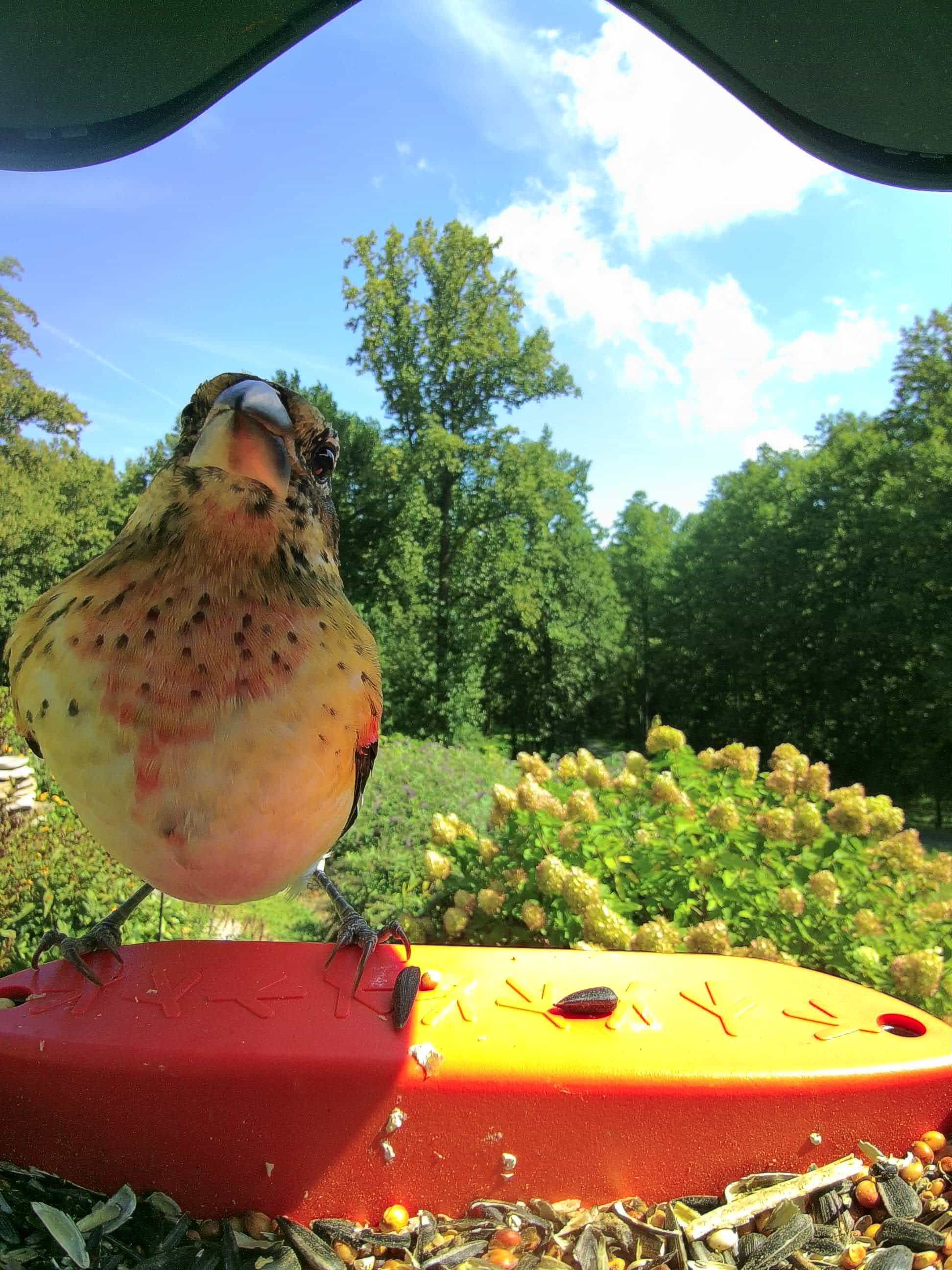


Rose-Breasted Grosbeak
Grosbeak
Pheuctictus
General appearance
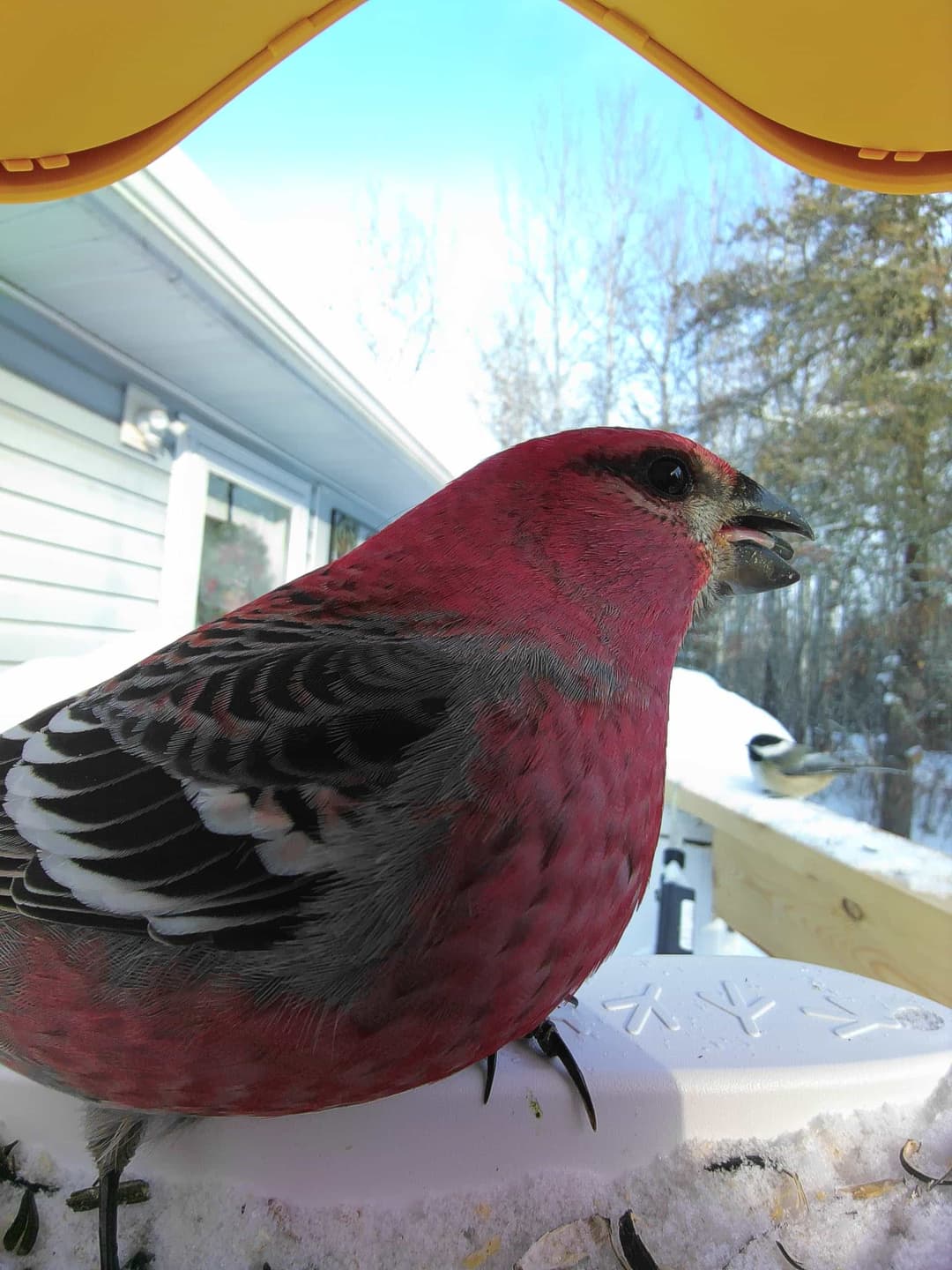
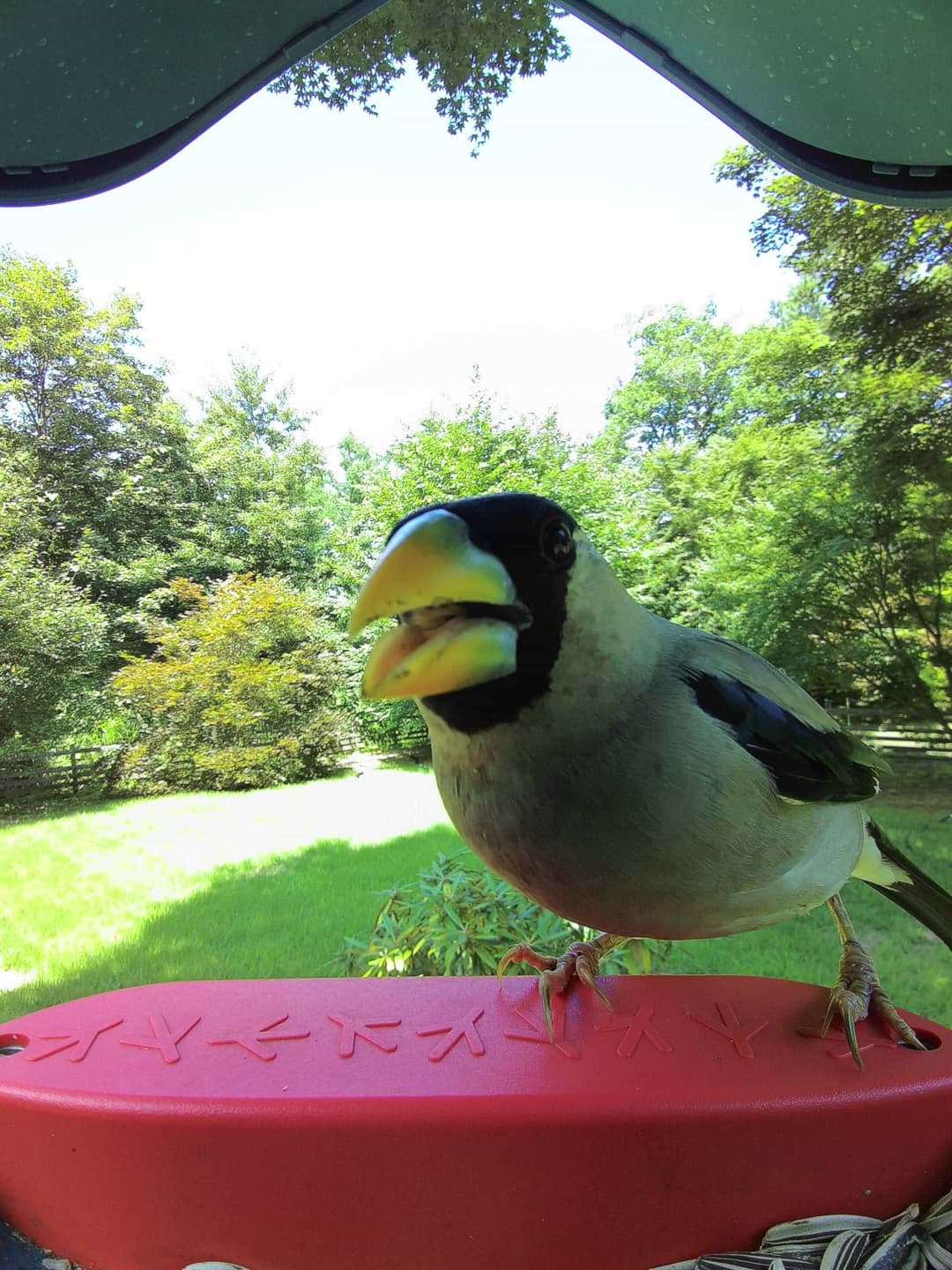
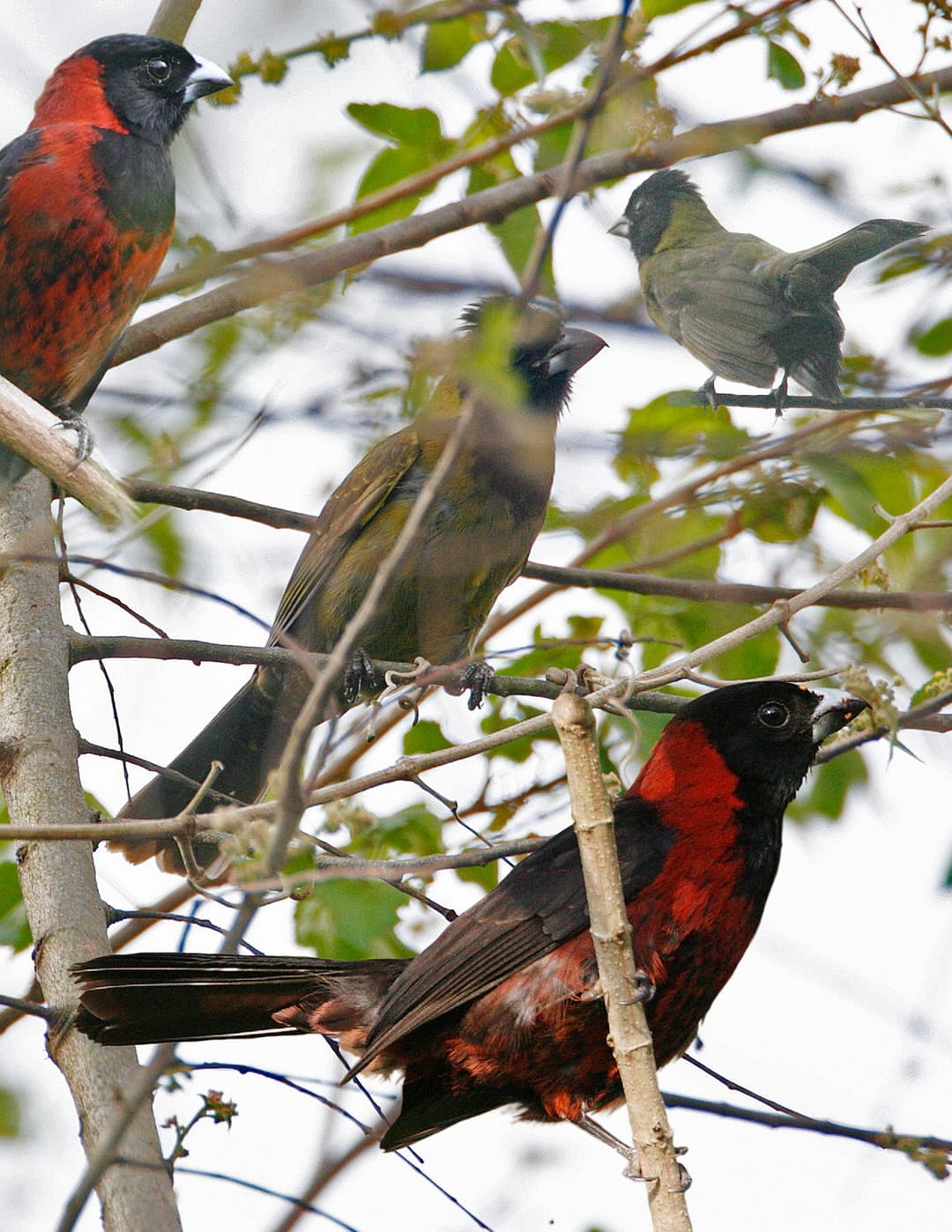
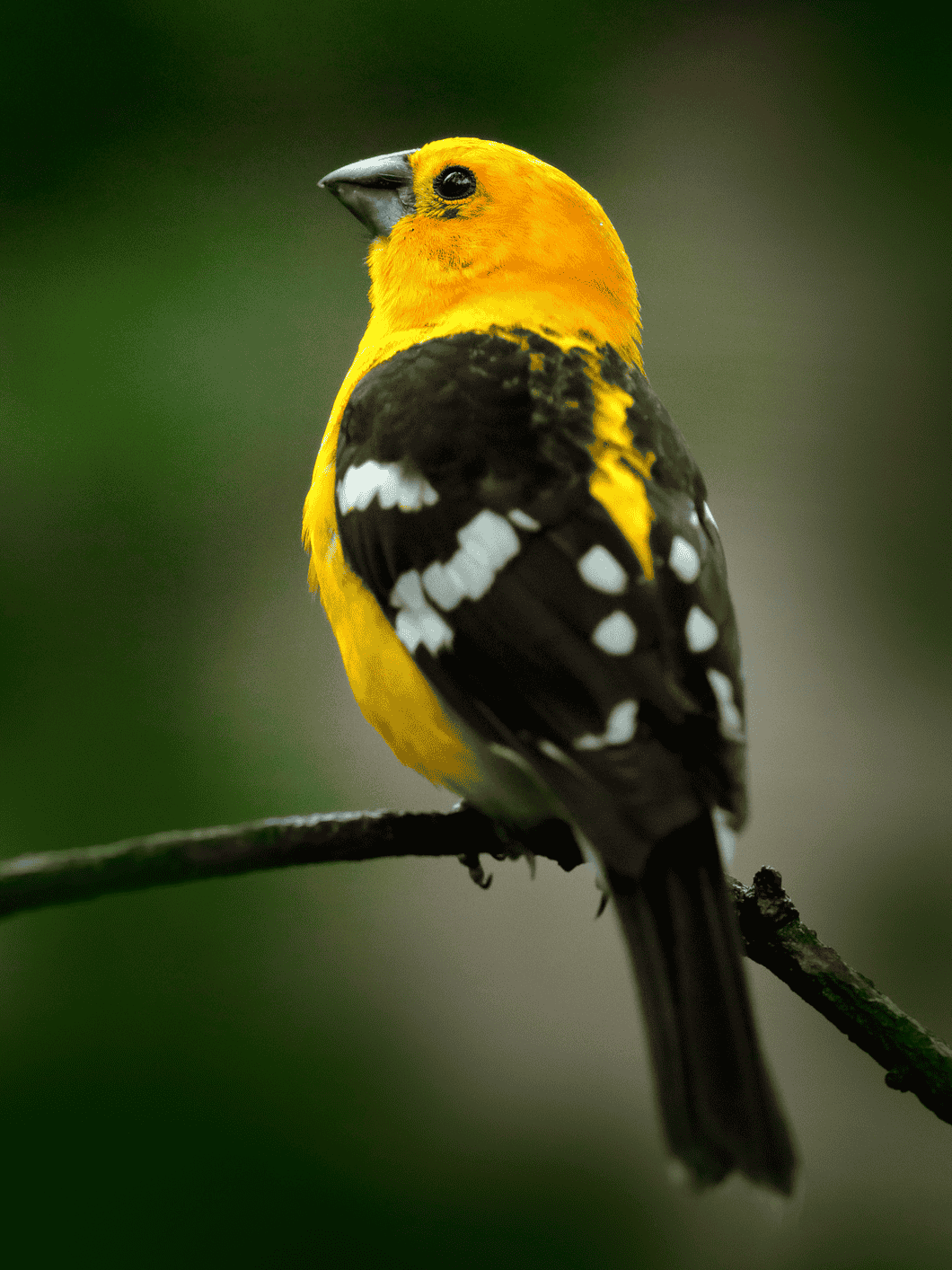
Grosbeaks are medium to large songbirds with large bills, perfect for cracking seeds. Their wings are generally pointed and they boast strong, stout bodies. The feathers contain shades of yellow, red, and black, with some species like the Pine Grosbeak bearing a pinkish-red hue while others like the Evening Grosbeak donning yellow and black.
Male vs female
Males exhibit brighter coloration consisting of a mix of vibrant red or yellow hues with a black or brown back. The male Rose-breasted Grosbeak, for example, displays a striking black-and-white pattern with a dashing rose-red badge, whereas the female one is streaked brown and white, with a prominent white eyebrow and usually no hint of rose. This sexual dimorphism makes it easier to spot the males in their environment.
Juvenile
Young grosbeaks take after the coloring of the adult females in their respective species, possessing less vibrant coloring as they develop over the first few months. Juveniles also feature a streaked underbelly, which is absent in adults. The juvenile coloring changes towards the end of the first summer, developing into the distinct adult plumage.
Size
7.1 - 9.4 in/1.2 - 2.7 oz
There's more to learn about Grosbeak
View full detailsRose-Breasted Grosbeak
Pheucticus ludovicianus
General appearance
The rose-breasted grosbeak is typically 20 cm in length, similar to the size of a robin. Their distinctive features include white spots in the wings, a heavy bill, and a strong face pattern. Their tail shapes could be notched, rounded, or square-tipped.
Male vs female
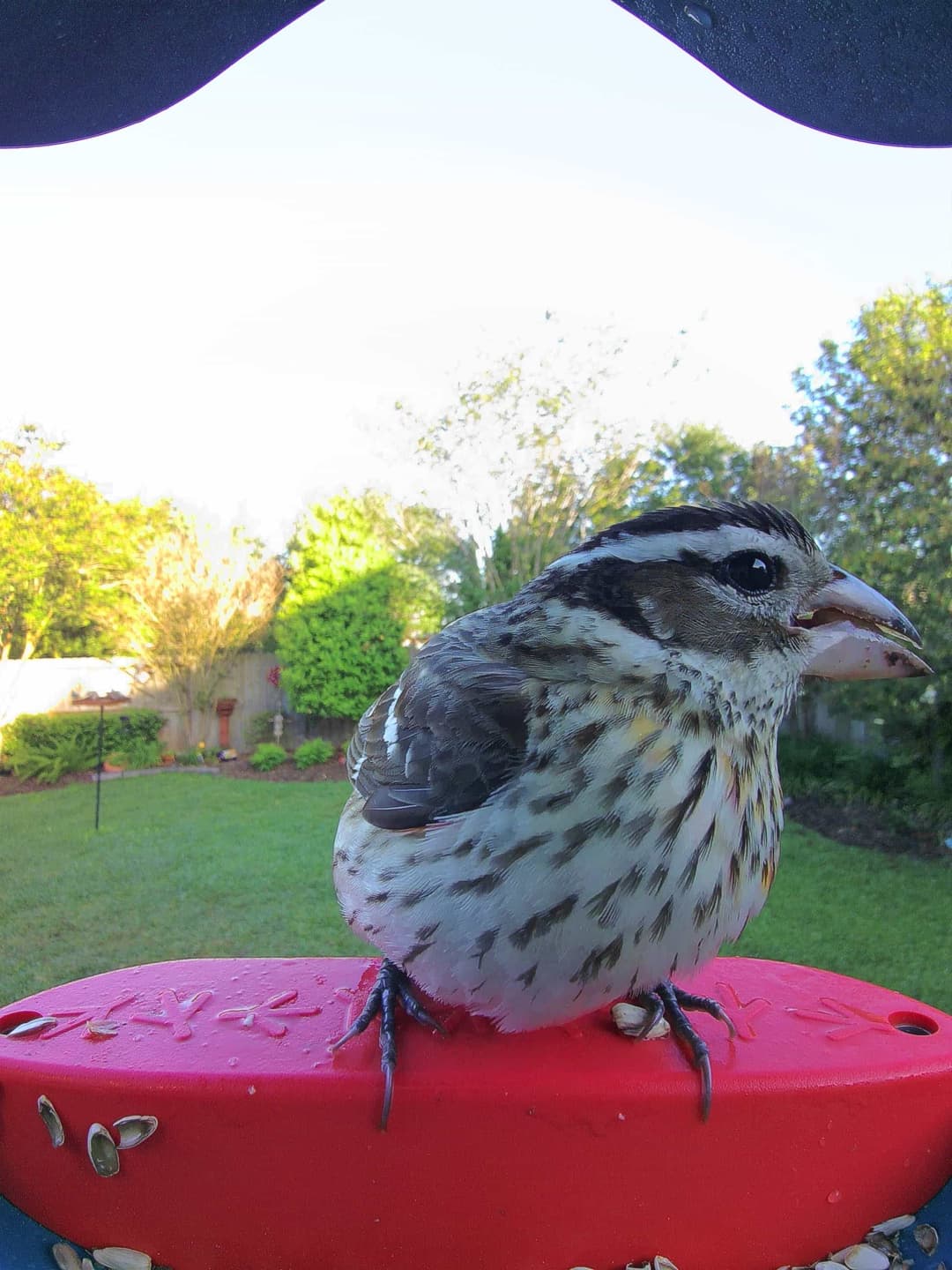
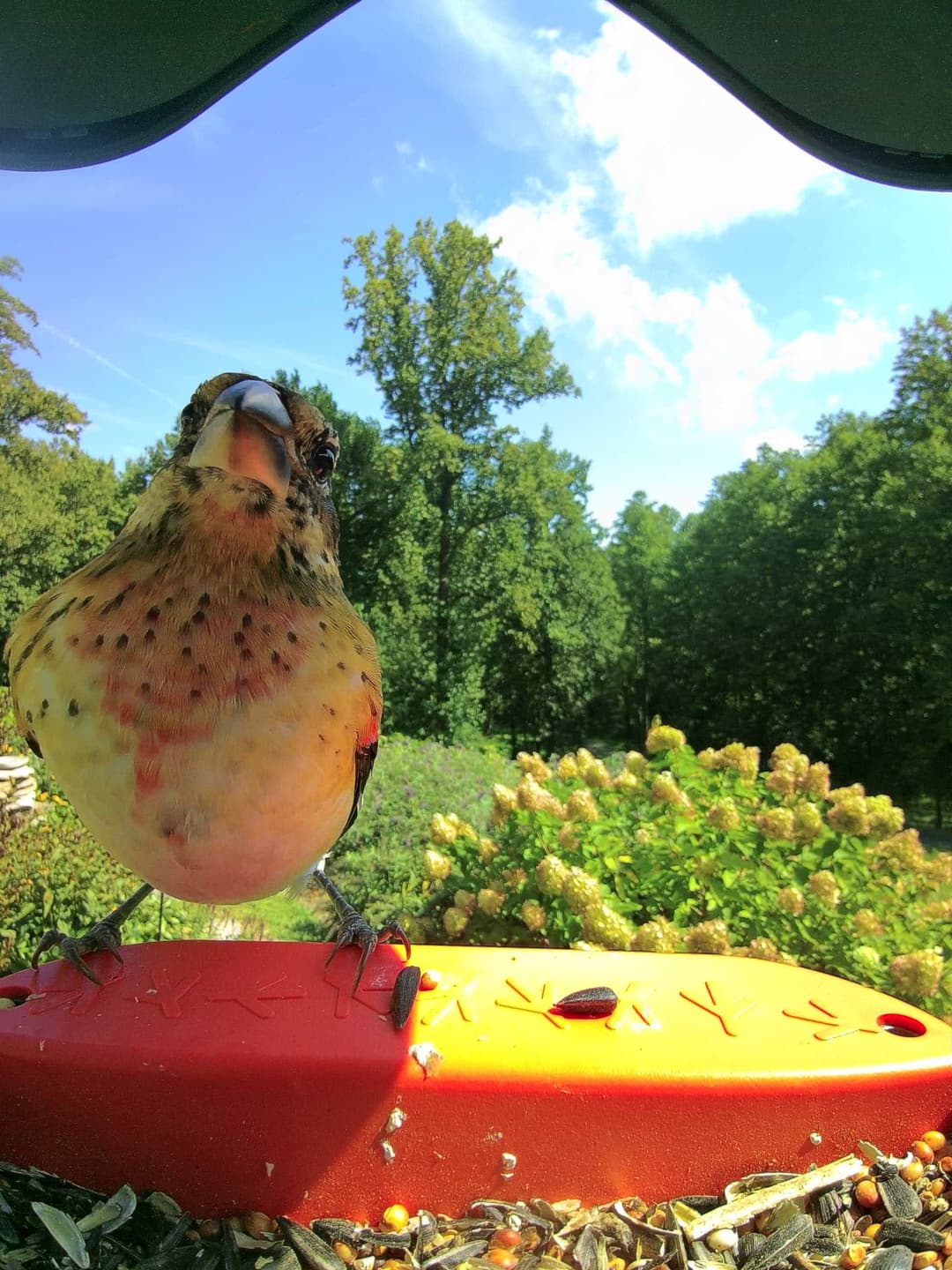
Male rose-breasted grosbeaks have a black head and a rosy triangle on the chest. Their wings bear large white spots which stand out against their black and orange coloring. Females, on the other hand, appear dark brown on the top, with stripes below. They resemble sparrows but can be distinguished by their heavy bill, bold white wings, and strong face pattern.
Juvenile
Young rose-breasted grosbeaks also look similar to sparrows, being dark brown above and striped below. However, they can be identified by their substantial bill, strong face pattern, and bold white wing markings. Their coloration may change with season, becoming notably brighter during the breeding period.
Size
7.1 - 7.9 in/1.4 - 1.7 oz
There's more to learn about Rose-Breasted Grosbeak
View full detailsHow to tell the Grosbeak from the Rose-Breasted Grosbeak
Visual differences
The key visual differences between Grosbeak species (Pheuctictus) and Rose-Breasted Grosbeak (Pheucticus ludovicianus) lie primarily in their coloration and prominent physical features. Rose-Breasted Grosbeak males display a striking black and white plumage with a rosy red patch on the chest, while Grosbeaks exhibit various vibrant colors like red, yellow, and black. The Rose-Breasted Grosbeak features distinctive white spots on the wings and a strong face pattern. Both species have similar size and heavy bills but differ in specific plumage and wing-marking details.
Key differences and behavior
Grosbeaks (Pheuctictus) and Rose-Breasted Grosbeaks (Pheucticus ludovicianus) differ behaviorally and ecologically, aiding field identification. Grosbeaks often keep a low profile, feeding alone or in pairs, whereas Rose-Breasted Grosbeaks are more vocal, with males singing even from nests. Grosbeaks inhabit diverse environments, including high-altitude forests, while Rose-Breasted Grosbeaks prefer open deciduous woods or edges. Both share incubation duties, but Rose-Breasted Grosbeak nests are notably fragile. Grosbeaks primarily eat seeds and fruits, whereas Rose-Breasted Grosbeaks have a more varied diet, consuming significant insects and berries. At feeders, both favor sunflower seeds but attract differently; Grosbeaks seek high-fat suet in winter while Rose-Breasted may also seek nectar. Grosbeaks weigh 1.2-2.7 oz and are 7.1-9.4 in, slightly larger than Rose-Breasted at 1.4-1.8 oz and 7.1-7.9 in, reflecting their discreet nature.
Still not sure? Here are more lookalikes!
Grosbeak vs Black-Headed Grosbeak

Grosbeak vs Evening Grosbeak

Rose-Breasted Grosbeak vs Black-Headed Grosbeak
Rose-Breasted Grosbeak vs Purple Finch
Grosbeak vs [Select a bird]

[Select a bird]
Pick a bird to compare
Rose-Breasted Grosbeak vs [Select a bird]
[Select a bird]
Pick a bird to compare