
Rose-Breasted Grosbeak
Rose-Breasted Grosbeak
Pheucticus ludovicianus


Quick Identification guide
Quick Identification guide
Male
- •
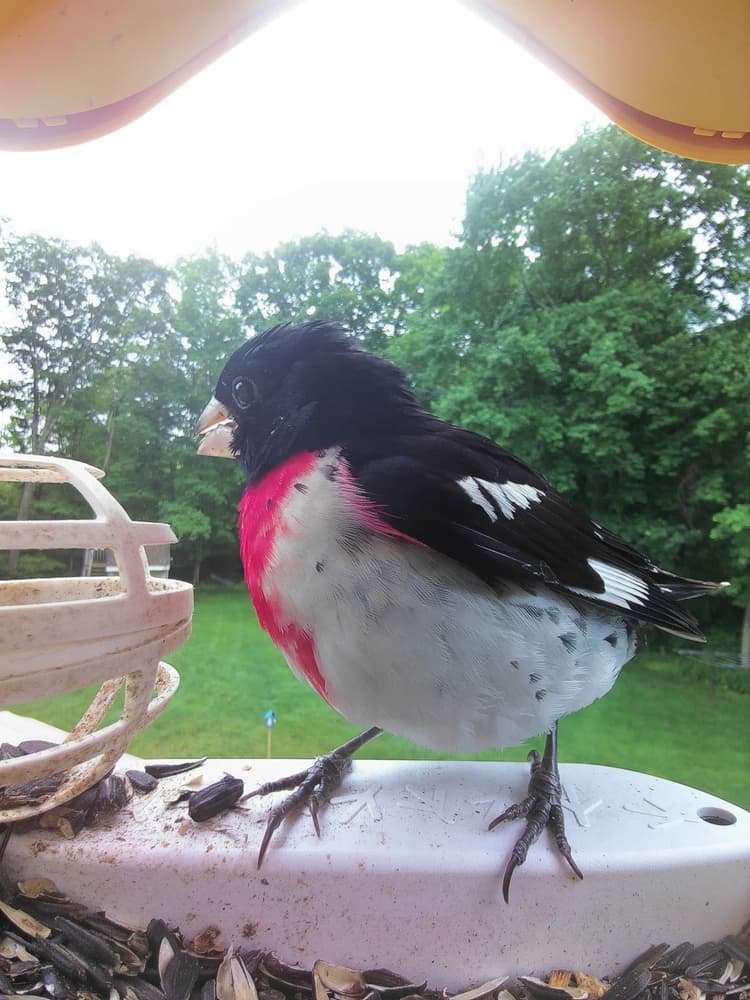
black head and back contrasting with a bright rose-red chest
- •
white underparts providing a clean separation from the dark upperparts
- •
A thick, conical bill suited for seed-eating
Female
- •
brown and white streaked plumage with a pale eyebrow stripe
- •
Underparts have a warm, buffy wash from breast to belly
- •
Shares the sturdy, conical bill similar to the male's design
What does a rose-breasted grosbeak sound like?
The rose-breasted grosbeak's vocalizations are varied and complex. Its distinctive call is a sharp, penetrating, metallic 'eek-eek', which is accompanied by a softer, more melodious song, similar to that of an American Robin. The grosbeak's call pattern is complex and undulating, including types that can be categorized as a chirp or chip, and flute-like or whistle sounds.


Description
Imagine if you got an American robin either drunk or just incredibly excited. The call you'd get would be that of a rose-breasted grosbeak. These songsters share incubating duties and sing sweet nothings to each other while switching shifts, and males will even sing while in the nest! These are so flimsy that you can sometimes see the eggs from below.
The rose-breasted grosbeak can weigh between 39to49grams and be from18to20centimeters tall.
The average lifespan of a rose-breasted grosbeak is about 7 years, although some have been known to live up to 12 years in the wild. Compared to similar species like the cardinal, which lives to around 15 years, the rose-breasted grosbeak has a slightly shorter lifespan. Factors influencing lifespan include predation and availability of food resources.
Did you know?
Most popular questions about rose-breasted grosbeak
How to recognise a rose-breasted grosbeak?
General appearance
The rose-breasted grosbeak is typically 20 cm in length, similar to the size of a robin. Their distinctive features include white spots in the wings, a heavy bill, and a strong face pattern. Their tail shapes could be notched, rounded, or square-tipped.
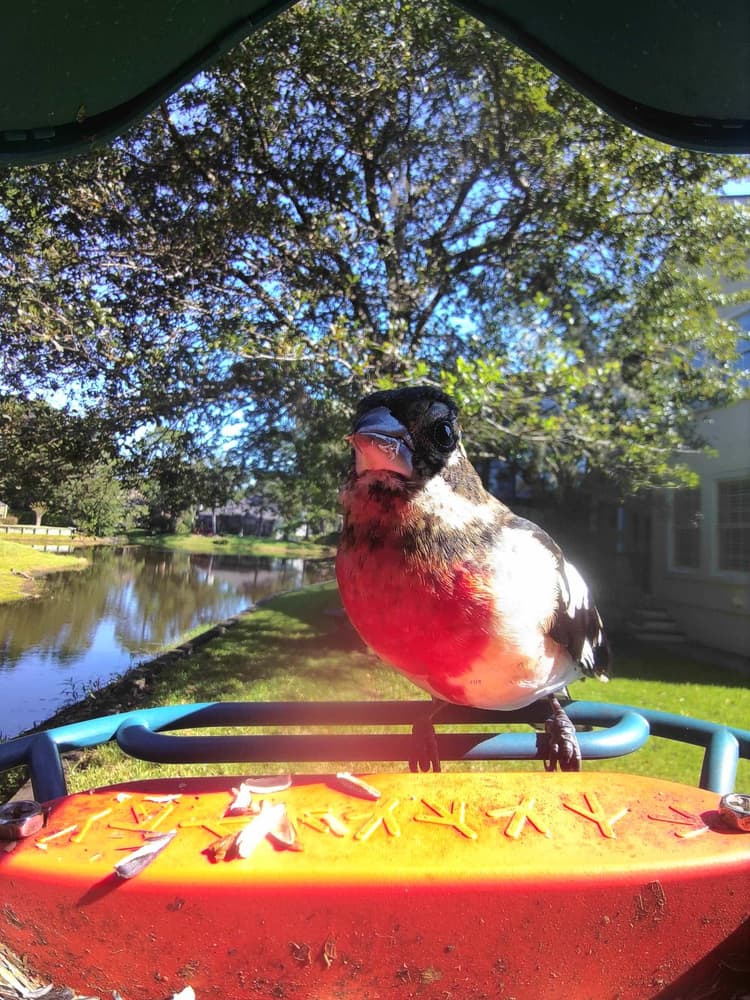
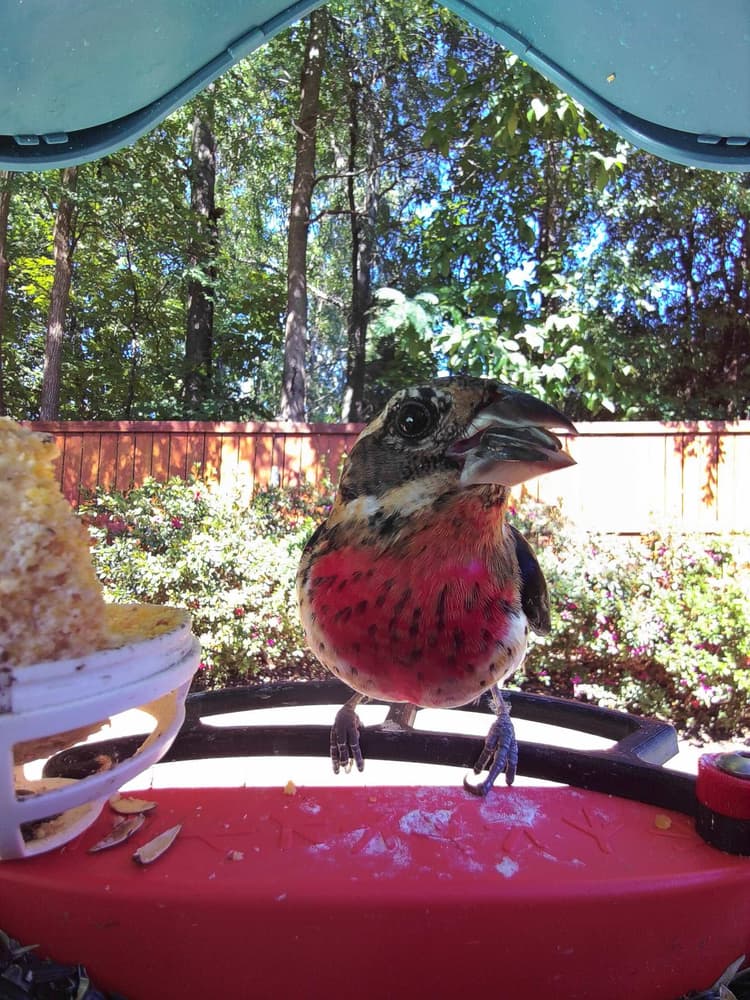
Male vs female
Male rose-breasted grosbeaks have a black head and a rosy triangle on the chest. Their wings bear large white spots which stand out against their black and orange coloring. Females, on the other hand, appear dark brown on the top, with stripes below. They resemble sparrows but can be distinguished by their heavy bill, bold white wings, and strong face pattern.
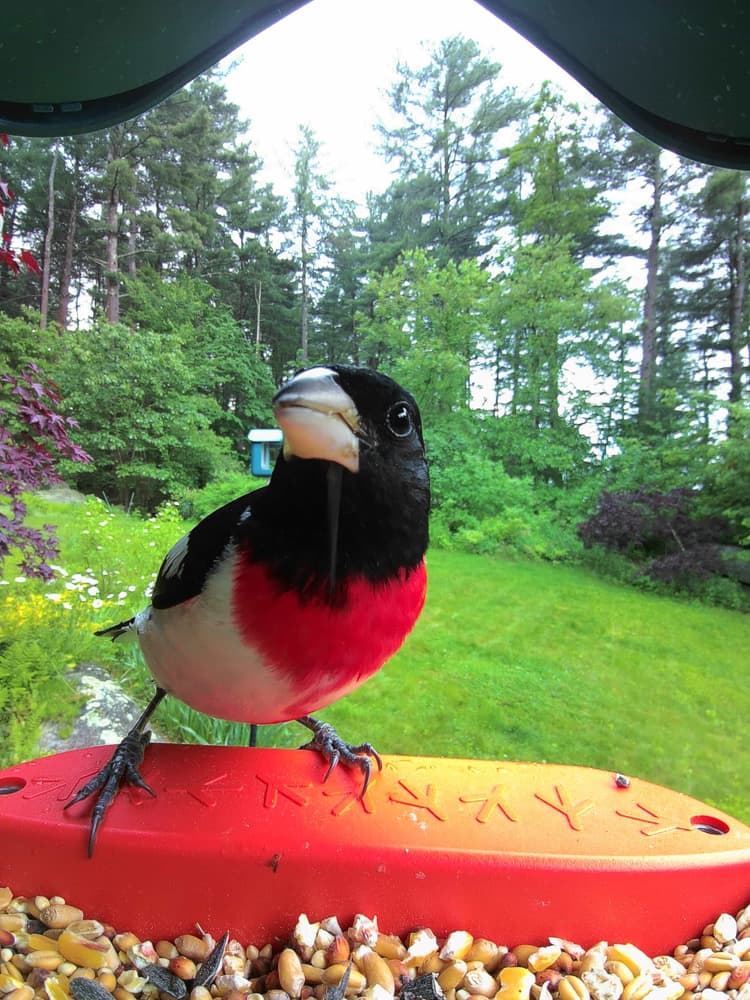
Male Rose-Breasted Grosbeak
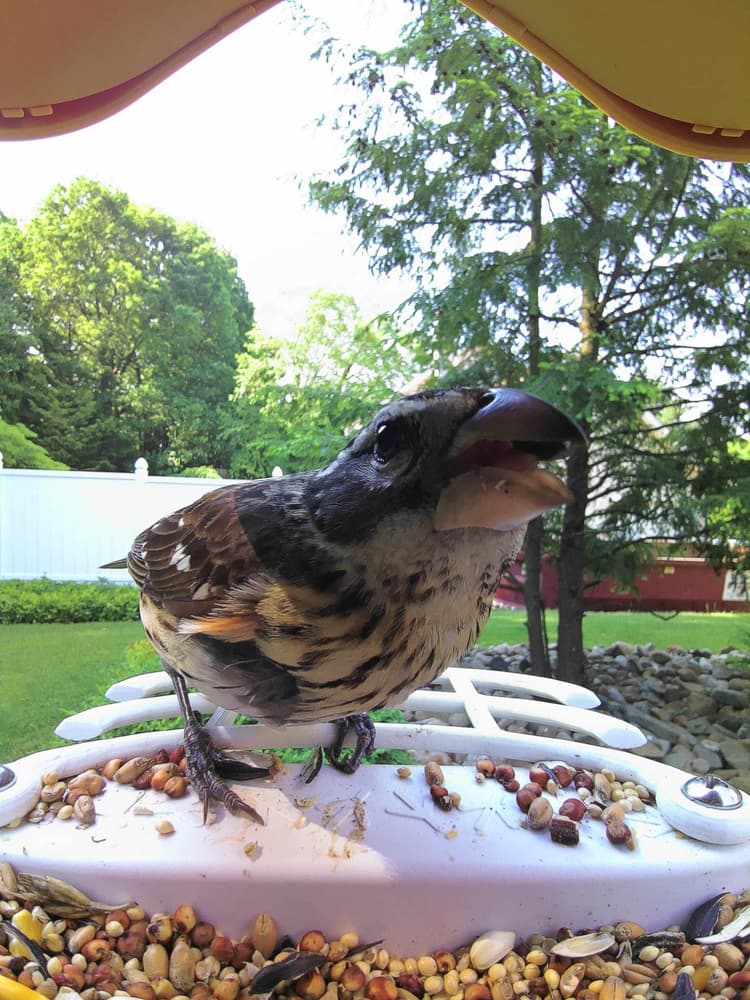
Female Rose-Breasted Grosbeak
Juvenile
Young rose-breasted grosbeaks also look similar to sparrows, being dark brown above and striped below. However, they can be identified by their substantial bill, strong face pattern, and bold white wing markings. Their coloration may change with season, becoming notably brighter during the breeding period.
Often mistaken for
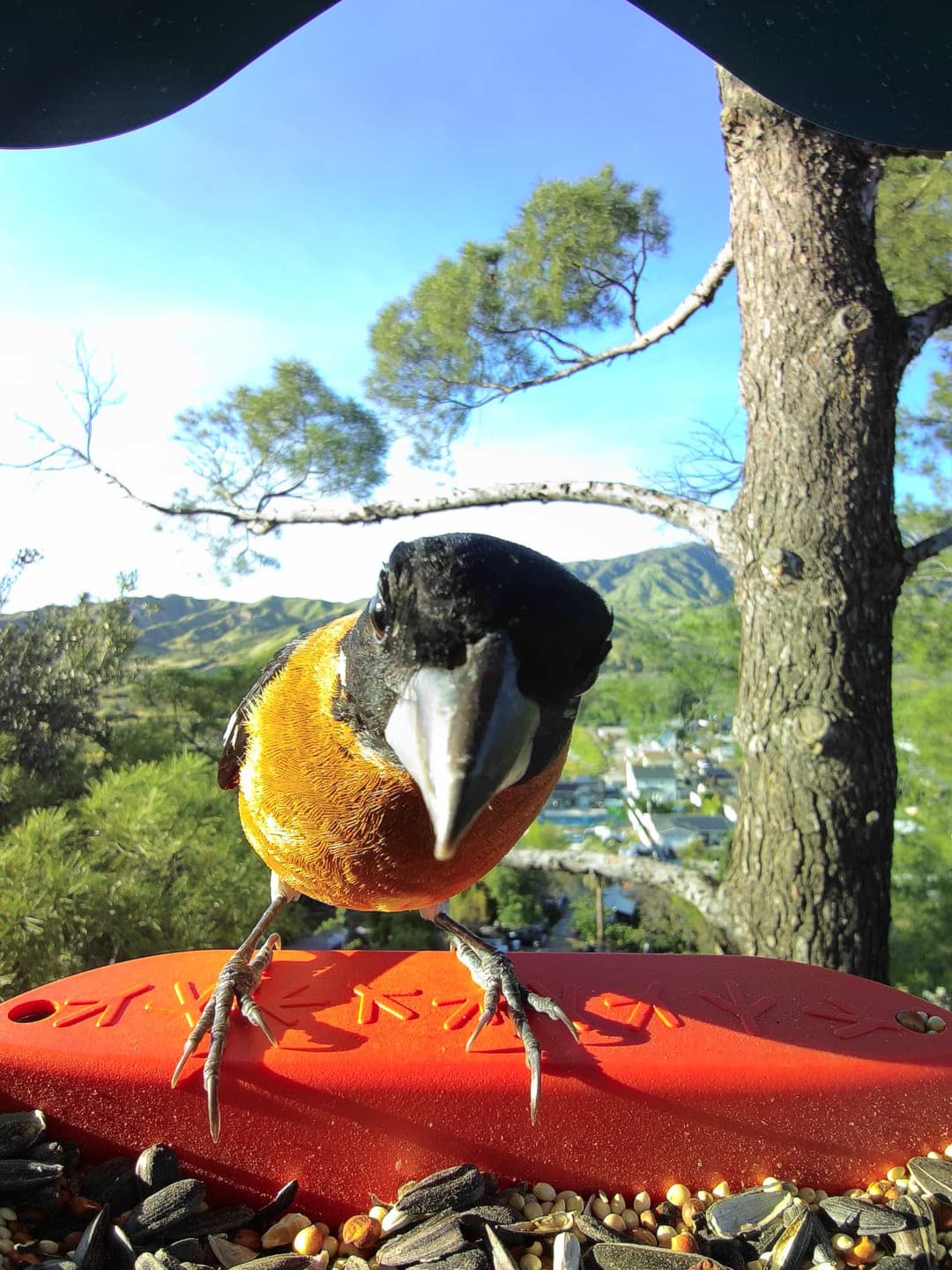
Black-Headed Grosbeak vs Rose-Breasted Grosbeak
Rose-Breasted Grosbeaks have a distinctive rose-red triangular patch on their breast, absent in Black-Headed Grosbeaks, which have an orange-brown breast. Grosbeak beaks are similar, but look for the contrasting black and white back on Rose-Breasted versus the more muted brown tones on the Black-Headed.
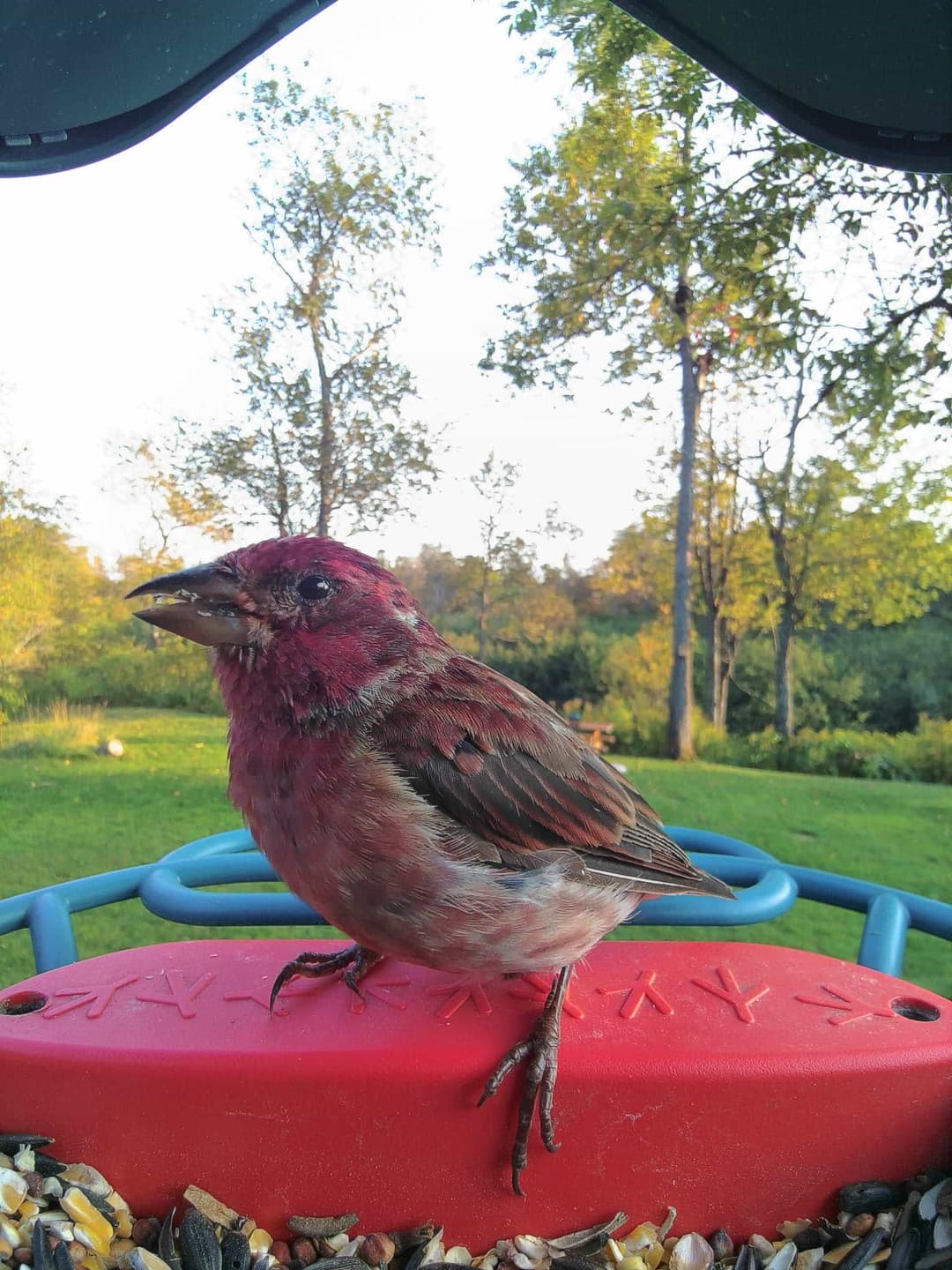
Purple Finch vs Rose-Breasted Grosbeak
Rose-Breasted Grosbeaks have a bold rose-red chest patch while Purple Finches are covered in a raspberry-red wash. Grosbeaks are larger with a thick, white beak, contrasting the smaller beak of Purple Finches. Note the distinct white belly on Rose-Breasted Grosbeaks, not seen in Purple Finches.
Breeding and nesting habits of the rose-breasted grosbeak
Mating behaviors
Male rose-breasted grosbeaks sing to defend their nesting territory and may engage in aggressive behavior toward intruding males. During courtship, the male performs displays such as partially spreading his wings and tail, drawing his head back, and approaching the female while singing.
Nesting details
The nests of rose-breasted grosbeaks are typically placed in deciduous trees or large shrubs, occasionally found in conifers, usually between 5 to 20 feet above the ground but sometimes higher. The female primarily builds the nest, which is an open and somewhat loose cup composed of twigs, weeds, and leaves, lined with finer materials like twigs, rootlets, and sometimes animal hair. These nests may be fragile enough that eggs are visible from below.
Eggs and chick-rearing
After the nest is completed, the female lays eggs, which are incubated in the fragile nest structure. Both male and female share responsibilities in rearing the chicks, from incubation to feeding and protecting them until they are ready to leave the nest.
What does a rose-breasted grosbeak like to eat?
Berries
Flowers
Fruits
Insects
Plants
Seeds
Natural diet
The rose-breasted grosbeak's diet is diverse, mainly consisting of insects, seeds, and berries. Around half of its annual intake consists of insects such as beetles, caterpillars, grasshoppers, and true bugs, along with spiders and snails. The bird consumes numerous seeds, including those from tree species like elms. In late summer and fall, it may consume substantial quantities of berries and small fruits. Young grosbeaks are predominantly fed insects, crucial for their growth.
Bird feeders
At bird feeders, rose-breasted grosbeaks often appreciate sunflower seeds. They may also be attracted to feeders offering suet or nectar, which provides a rich energy source. Given their natural preference for seeds and fruits, offering a variety of these foods can attract these birds to backyard feeders, especially in seasons when natural food sources may be less abundant.
Offer their favorite snacks
Rose-breasted Grosbeaks are fans of eating bugs, seeds, fruit, and grains. However, their topmost favorite is the black oil sunflower seeds. They cannot resist the high oil content and the easy-to-crack shells of these seeds. We recommend using Bird Buddy seeds. They are expertly chosen for the season to provide the best nutrition and are proven to show the best results.
Select a suitable feeder
Set up platform or tray feeders in your yard. Rose-breasted Grosbeaks prefer to feed from large, flat surfaces where they can easily scan their surroundings for predators. Make sure the feeder is sturdy enough to hold these fairly large birds.
Keep a clean environment
These birds do not like dirty feeders. Regularly clean and disinfect the feeders to ensure they stay disease-free. A clean environment will significantly increase the chances of a visit from these particular birds.
Provide a water source
Having a clean, fresh water source in your yard can be a big draw for Rose-breasted Grosbeaks. This can be a bird bath or even a shallow container filled with clean water.
Invite them for a sing-along
Known for their sweet melodious song, providing a quiet and peaceful environment can make them stay longer in your yard, allowing you to enjoy a lovely sing-along.
Where can you find rose-breasted grosbeaks?
Based on Birdbuddy sighting data. The heatmap shows where Birdbuddy users have spotted this species.
Embed this map
This map shows the full native range based on scientific range data.
Primary habitat
The rose-breasted grosbeak primarily resides in open deciduous woods, orchards, and groves. It favors locations with a mix of shrubs and tall trees on the edges of the woods or in openings, rather than a dense, unbroken forest.
Additional range
During migration, the bird can be found in any wooded or semi-open areas. It winters in the tropics, often at the edge of the forest or in regions with second-growth woods in lowlands and foothills.
Do they migrate?
The rose-breasted grosbeak is a migratory bird. It tends to migrate relatively late in the spring and early in the fall. These birds primarily migrate during the night. In spring, they travel from their wintering grounds in Central and South America, including countries such as Mexico, Guatemala, and as far south as northern South America, up to their breeding grounds in the eastern and central parts of North America. This encompasses areas from the northeastern United States and southern Canada, expanding westward to the eastern portions of the plains states. During their fall migration, rose-breasted grosbeaks make their way back to their winter habitats in a similar reverse route. The migration is a long journey across extensive geographical regions, primarily following westerly and southwesterly routes. In spring and fall, stray rose-breasted grosbeaks can occasionally be spotted far west from their usual migration path, showing up in parts of the western United States. Key stopover locations often include woodlands and forest edges where they can find abundant food sources. Their nocturnal migration strategy helps them avoid predators and take advantage of cooler, calmer air conditions.
What is the role of rose-breasted grosbeaks in nature and how to protect them?
Conservation status
The rose-breasted grosbeak is currently considered stable in number, indicating that it is relatively common and not immediately at risk of becoming endangered. However, it could become vulnerable due to potential habitat loss, which is a significant threat to the species. Conservation efforts would likely focus on habitat preservation to prevent any future decline. Although the species is not presently endangered, continued monitoring and habitat protection are crucial to ensure its long-term stability.
Ecological role of rose-breasted grosbeaks
Its role in the ecosystem
The Rose-breasted Grosbeak plays a crucial role in maintaining the balance of the ecosystem. Their diet primarily includes insects, some of which may be pests, thus aiding in natural pest control. Beetles, caterpillars, grasshoppers, bugs, spiders, and snails are all part of their diet. In other words, they help regulate the insect population, reducing the need for chemical pesticides. Another important part of their diet includes berries and seeds. By consuming fruits and subsequently dispersing seeds, they play a critical role in the propagation of various plants that animals and humans depend on for food. This seed dispersal process can also help with reforestation or vegetation coverage. Lastly, their nesting habits indicate they might lend a hand in the decomposition of organic materials, contributing to soil fertility. The Rose-breasted Grosbeak, therefore, plays numerous roles in maintaining a healthy ecosystem.
How to help protect rose-breasted grosbeaks
Preservation tips
Habitat preservation strategies
Prioritize protection of natural areas such as deciduous forests and mixed woodlands which are crucial for the rose-breasted grosbeak. Develop and enforce laws to prevent deforestation and maintain the integrity of these habitats. Support efforts for reforestation where the bird's natural habitat has been lost. Promote sustainable use of natural resources to reduce habitat degradation.
Community science initiatives
Support and participate in bird counting initiatives like the Christmas Bird Count and the Great Backyard Bird Count, which provide valuable data on bird populations. Encourage local schools and community groups to get involved in these citizen science projects. Promote public education about the rose-breasted grosbeak, emphasizing its role in the ecosystem and the importance of its conservation.