Grosbeak or Crimson-Collared Grosbeak?
Here's how to tell the difference



Grosbeak

Crimson-Collared Grosbeak
Grosbeak
Pheuctictus
General appearance
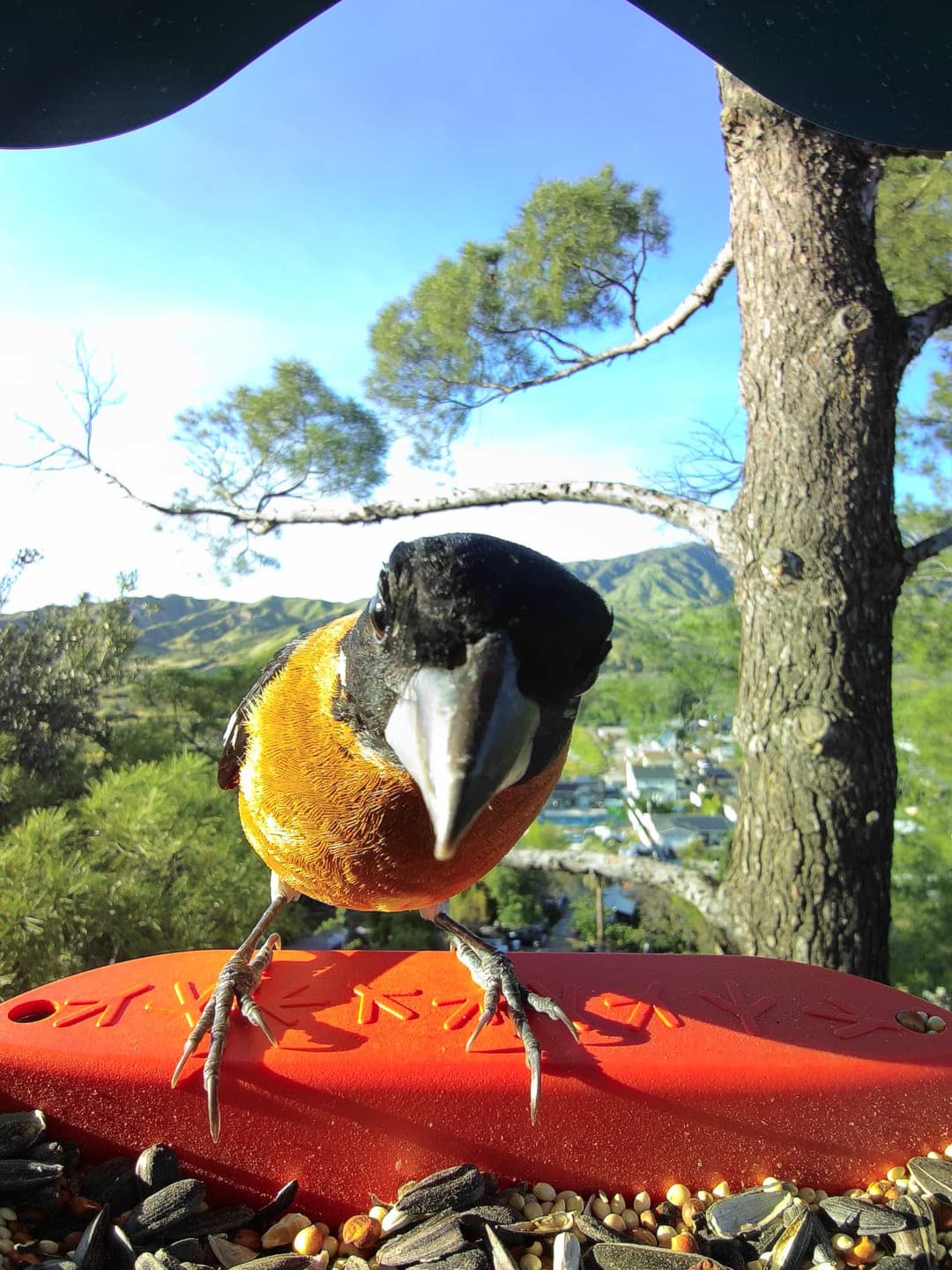
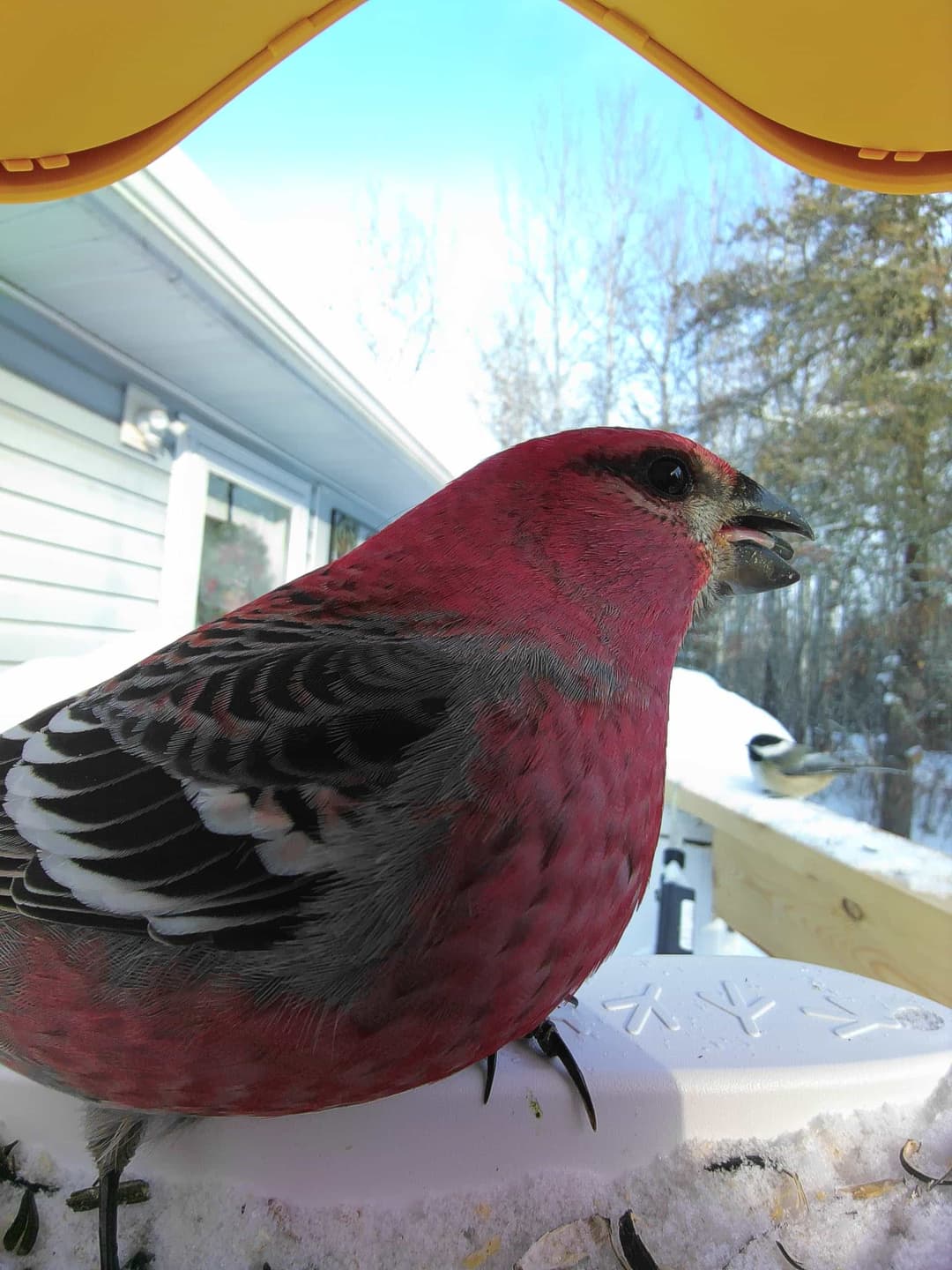
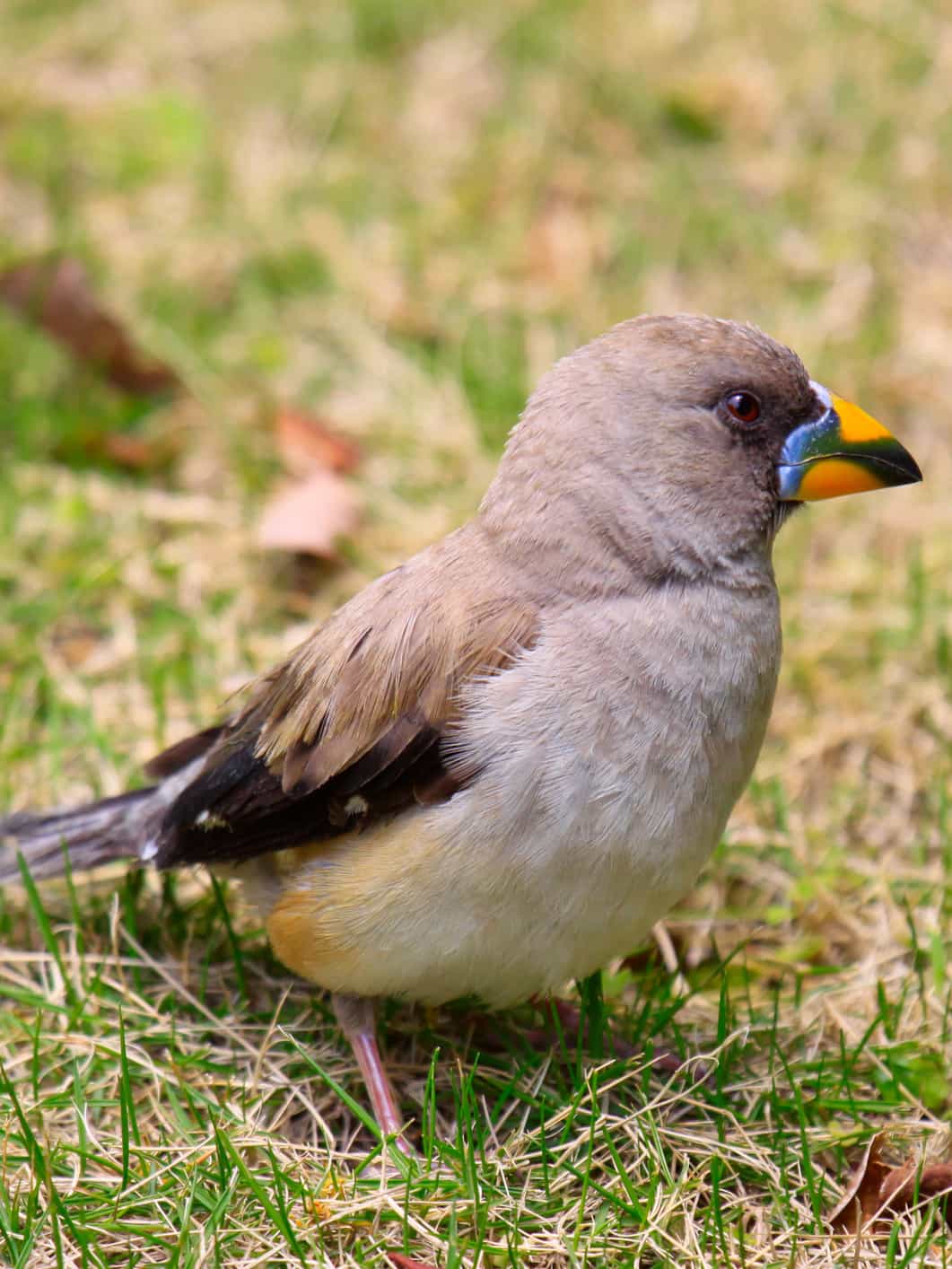
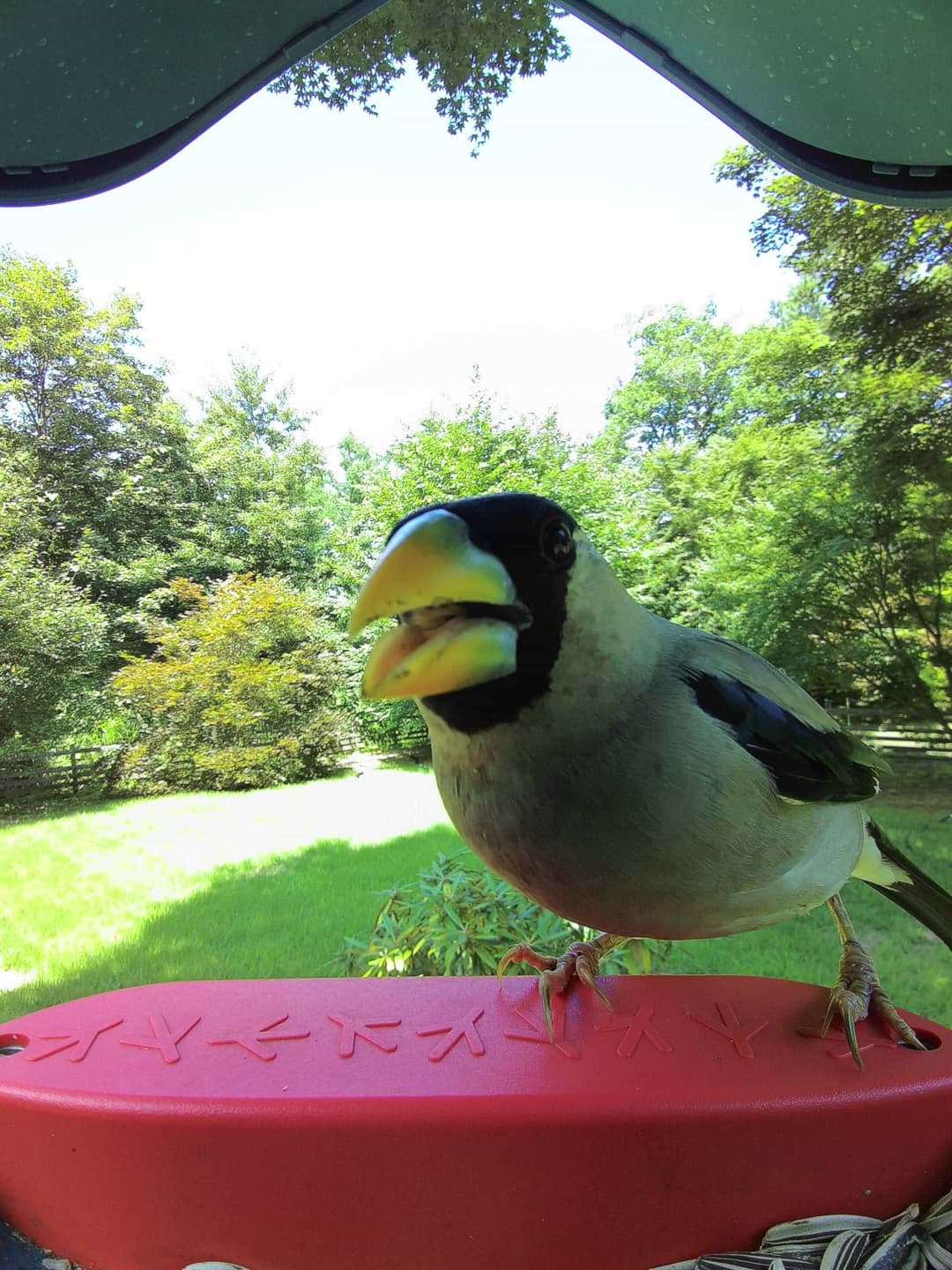
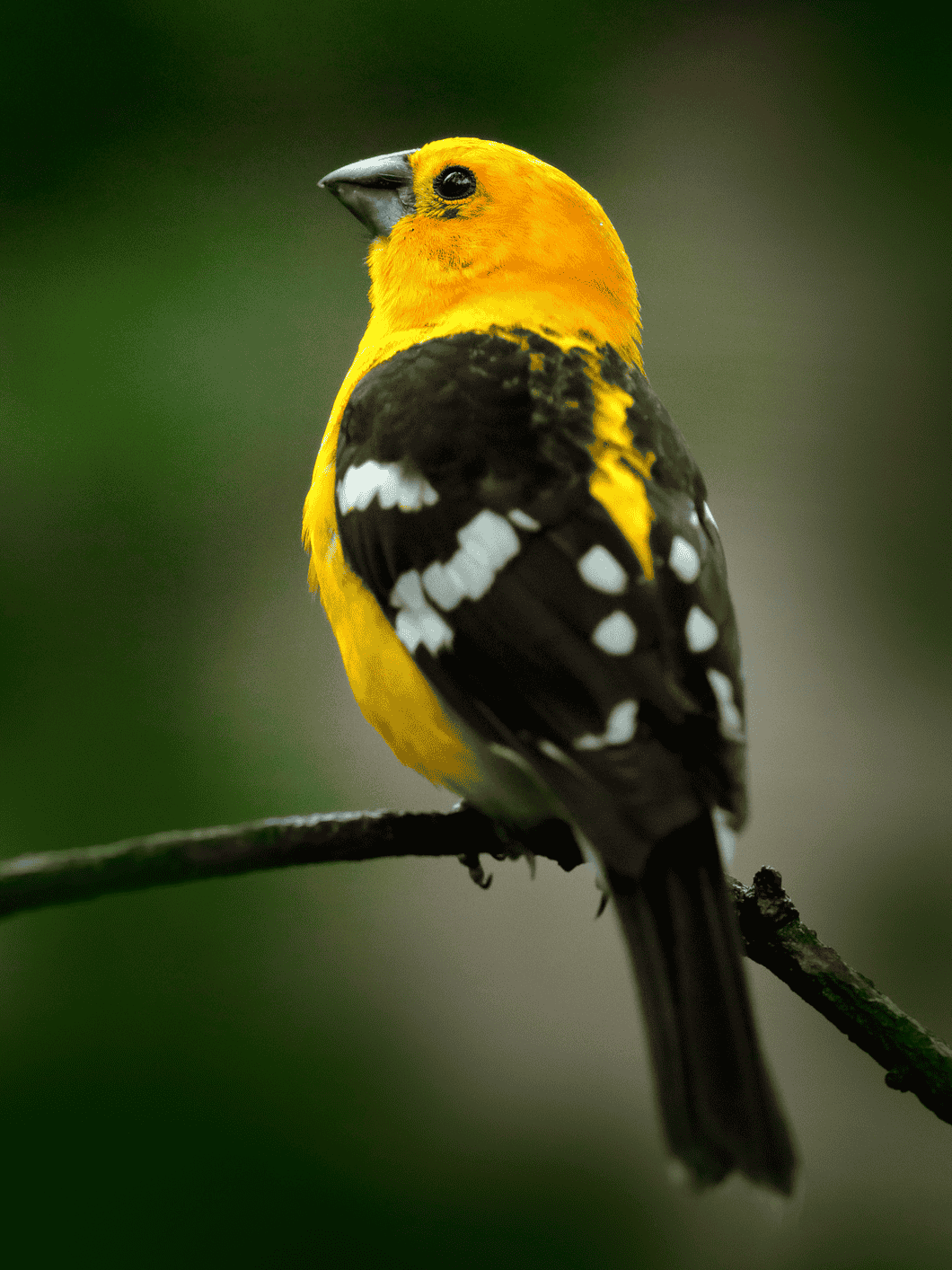
Grosbeaks are medium to large songbirds with large bills, perfect for cracking seeds. Their wings are generally pointed and they boast strong, stout bodies. The feathers contain shades of yellow, red, and black, with some species like the Pine Grosbeak bearing a pinkish-red hue while others like the Evening Grosbeak donning yellow and black.
Male vs female
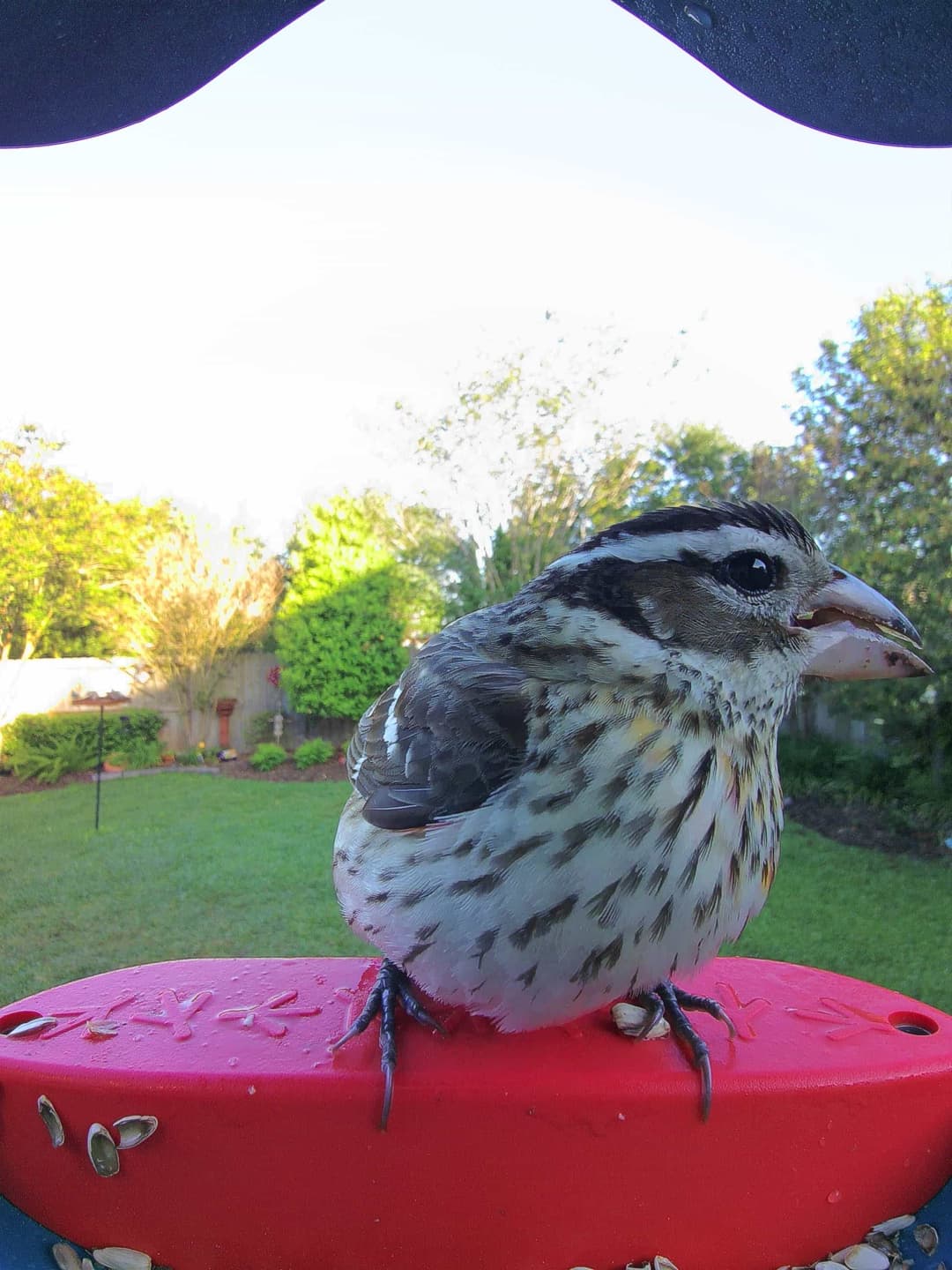
Males exhibit brighter coloration consisting of a mix of vibrant red or yellow hues with a black or brown back. The male Rose-breasted Grosbeak, for example, displays a striking black-and-white pattern with a dashing rose-red badge, whereas the female one is streaked brown and white, with a prominent white eyebrow and usually no hint of rose. This sexual dimorphism makes it easier to spot the males in their environment.
Juvenile
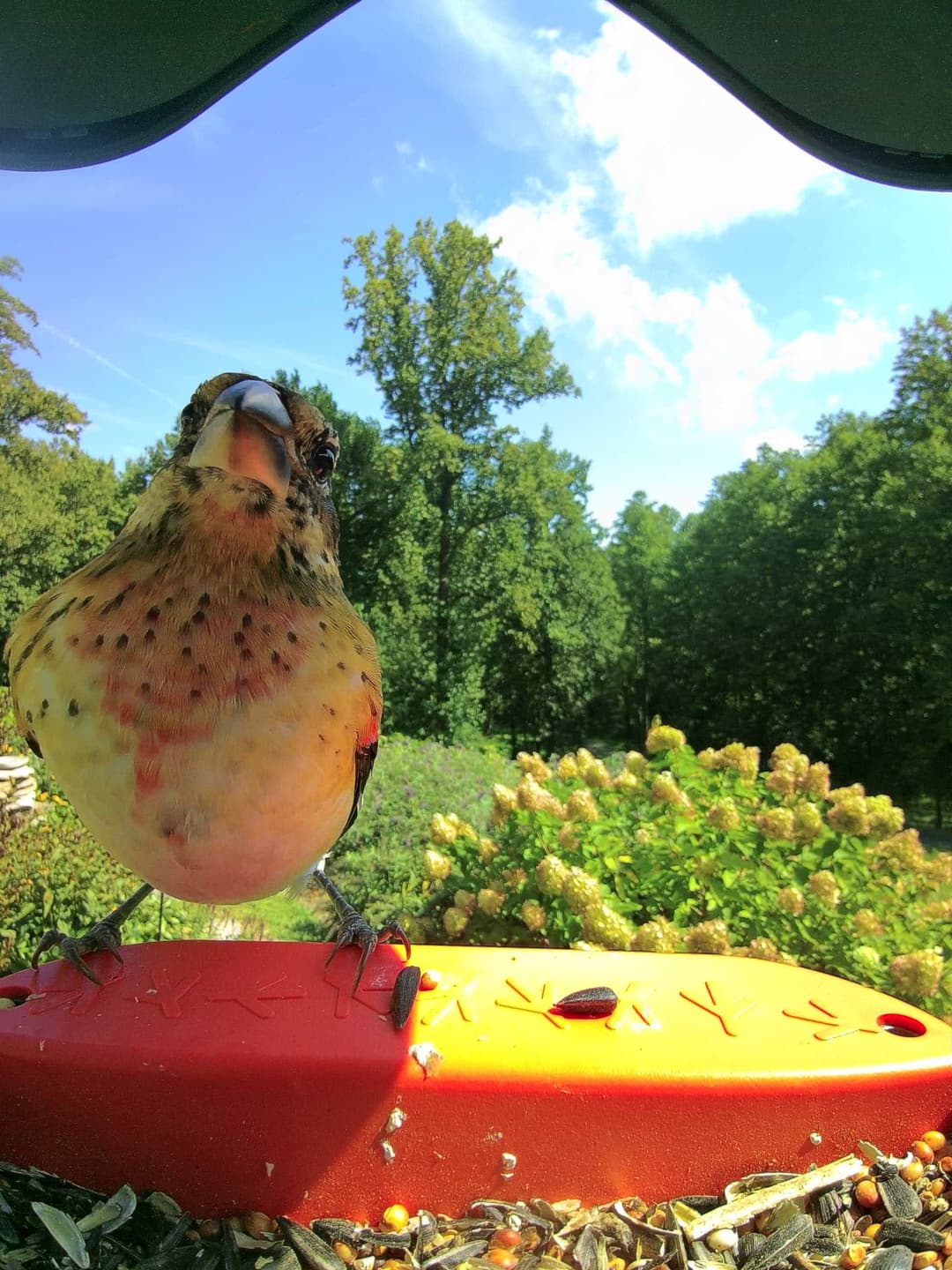
Young grosbeaks take after the coloring of the adult females in their respective species, possessing less vibrant coloring as they develop over the first few months. Juveniles also feature a streaked underbelly, which is absent in adults. The juvenile coloring changes towards the end of the first summer, developing into the distinct adult plumage.
Size
7.1 - 9.4 in/1.2 - 2.7 oz
There's more to learn about Grosbeak
View full detailsCrimson-Collared Grosbeak
Rhodothraupis celaeno
General appearance
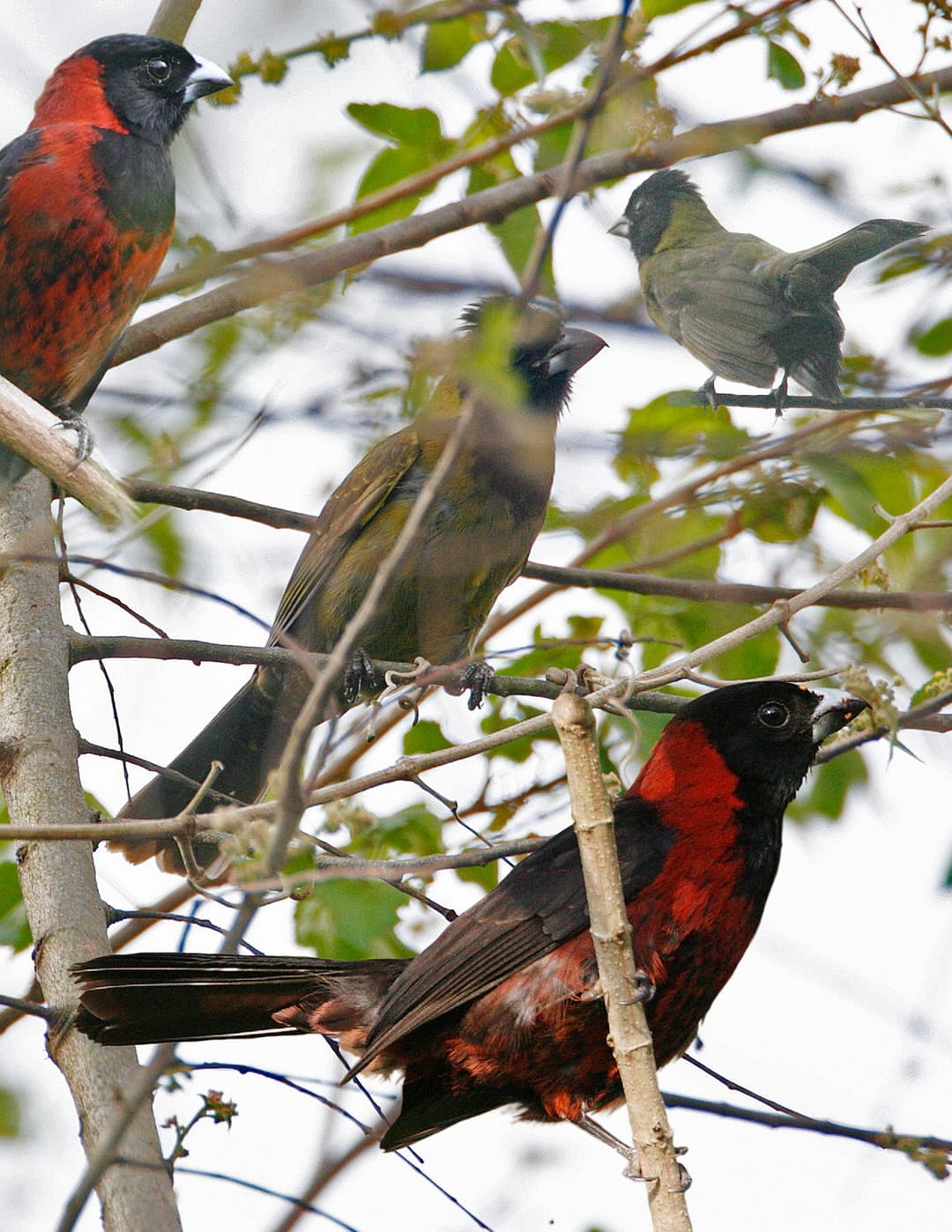
The crimson-collared grosbeak is a medium-sized bird characterized by a striking black and crimson plumage. Its distinctive features include a broad, conical bill and bright red collar, crown, and underparts, contrasting with a black head, back, and wings. The bird's robust build and bright coloration make it easily identifiable.
Male vs female
Males are more vividly colored compared to females with more defined crimson areas. Females, while similar in pattern, possess slightly duller tones of red and black, aiding in camouflage while nesting. Both sexes share the same basic color pattern, aiding easy identification as a pair within their habitat.
Juvenile
Juveniles show a more muted plumage compared to adults, with a mixture of brownish and duller red tones replacing the stark crimson-black contrast seen in mature birds. As they mature, their plumage gradually shifts to the vivid adult coloration. Juveniles lack the full intensity of color seen in adults, blending more easily with their surroundings.
Size
8.3 - 8.7 in/1.5 - 2.1 oz
There's more to learn about Crimson-Collared Grosbeak
View full detailsHow to tell the Grosbeak from the Crimson-Collared Grosbeak
Visual differences
The Grosbeak (Pheuctictus) is generally larger, with a length of 7-9.5 inches and a broader range of plumage, including yellow, red, and black hues. In contrast, the Crimson-Collared Grosbeak (Rhodothraupis celaeno), measuring 8.3-8.7 inches, boasts a distinct crimson collar, crown, and underparts contrasted against a black head, back, and wings. Both have large, conical bills, but the Grosbeak's plumage can be more varied, with some species exhibiting pinkish-red or yellow highlights absent in the uniform black-crimson pattern of the Crimson-Collared Grosbeak.
Key differences and behavior
The Grosbeak and Crimson-Collared Grosbeak exhibit distinct behaviors. Grosbeaks, found in North America's woodlands and urban areas, prefer a solitary or paired lifestyle, foraging quietly for seeds, berries, and insects. They are granivorous, often visiting bird feeders in winter. Their breeding involves vibrant displays and melodic songs, with both parents feeding the chicks. In contrast, the Crimson-Collared Grosbeak, inhabiting tropical forests from Mexico to Panama, is secretive and solitary or in pairs, foraging for fruits, seeds, and insects. Its breeding includes elaborate courtship displays, with both parents sharing incubation duties. Unlike the Grosbeak, the Crimson-Collared tends to avoid feeders in non-native ranges. Both species are attracted to sunflower seeds, but the Crimson-Collared is more adaptable, occasionally spotted in southeastern Texas, often influenced by tropical plant availability.
Still not sure? Here are more lookalikes!
Grosbeak vs Rose-Breasted Grosbeak
Grosbeak vs Black-Headed Grosbeak
Grosbeak vs Evening Grosbeak

Crimson-Collared Grosbeak vs Rose-Breasted Grosbeak
Crimson-Collared Grosbeak vs Black-Headed Grosbeak
Grosbeak vs [Select a bird]

[Select a bird]
Pick a bird to compare
Crimson-Collared Grosbeak vs [Select a bird]
[Select a bird]
Pick a bird to compare