
Black-Headed Grosbeak
Black-Headed Grosbeak
Pheucticus melanocephalus


Quick Identification guide
Quick Identification guide
Male
- •
Rich cinnamon-orange breast contrasting with a bold black head and white patches
- •
Distinctive thick, conical beak perfect for seed cracking
- •
Black wings and tail with striking white patches
Female
- •
Warm brown upperparts with streaked buff underparts
- •
Noticeably thick, yellowish beak like the male
- •
Displays faint streaking on the crown and back, lacking the stark black of the male
What does a black-headed grosbeak sound like?
The black-headed grosbeak produces vocalizations reminiscent of a robin but are faster, softer, and sweeter. These vocals include a richly warble song and a distinct call note, characterized by an emphatic, slightly metallic 'tick.' The bird's call patterns fall, rise, or undulate, giving its vocals a unique sound. The grosbeak typically produces sounds like chirps, chips, flutes, rattles, and whistles.


Description
Did you know that their scientific name is derived from either the Greek pheucticus meaning shy or phycticus meaning painted with cosmetics? Either way, both are true! These showy birds are actually pretty good dads and pull their weight when it comes to incubating and feeding. Maybe because females can sing male songs and trick them into thinking there's competition nearby, so the dads will stay close to the nest!
The black-headed grosbeak can weigh between 40to50grams and be from18to19centimeters tall.
The Black-headed Grosbeak typically lives around 10 years. While maximum lifespan in the wild reaches up to 13.8 years, most birds die during their first year of life due to predation and harsh conditions. This lifespan is an average within the cardinal grosbeak family, compared to the Rose-breasted Grosbeak that may live up to 24 years. However, this estimated lifespan may be influenced by individual birds' capabilities to survive harsh conditions.
Did you know?
Most popular questions about black-headed grosbeak
How to recognise a black-headed grosbeak?
General appearance
The black-headed grosbeak is a roughly robin-sized bird, measuring around 7 1/2 inches (19 cm). It displays characteristic colors such as black, brown, orange, tan, and white. Its wings are rounded, while its tail can be shaped, notched, squared, or rounded. The bird's notable features include markedly vibrant coloration and size.
Male vs female
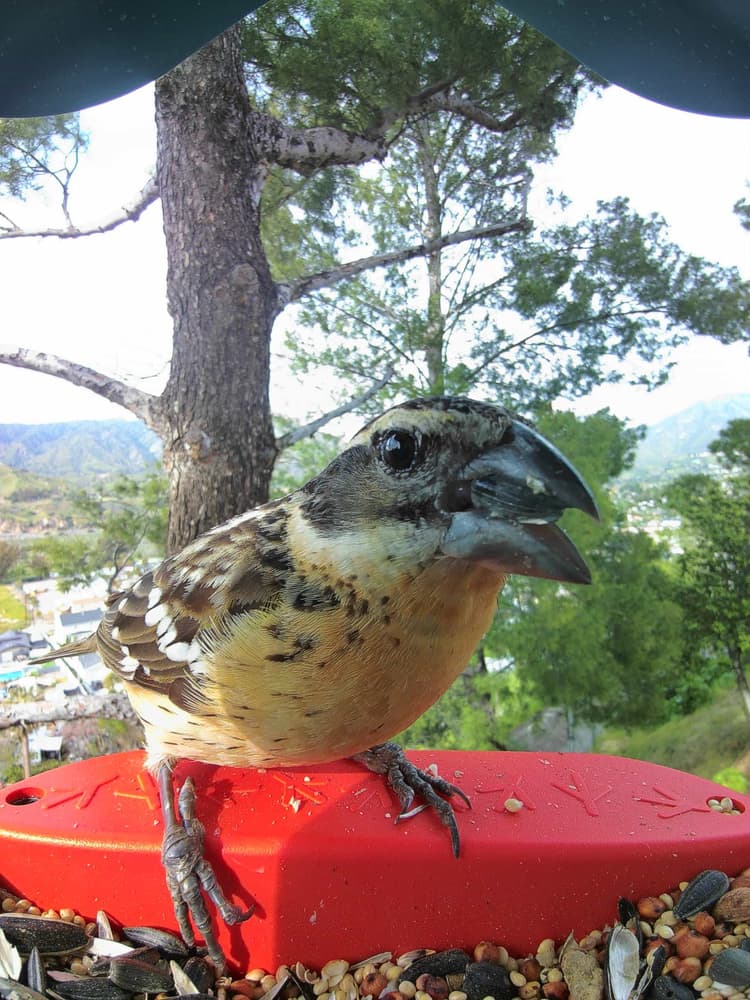
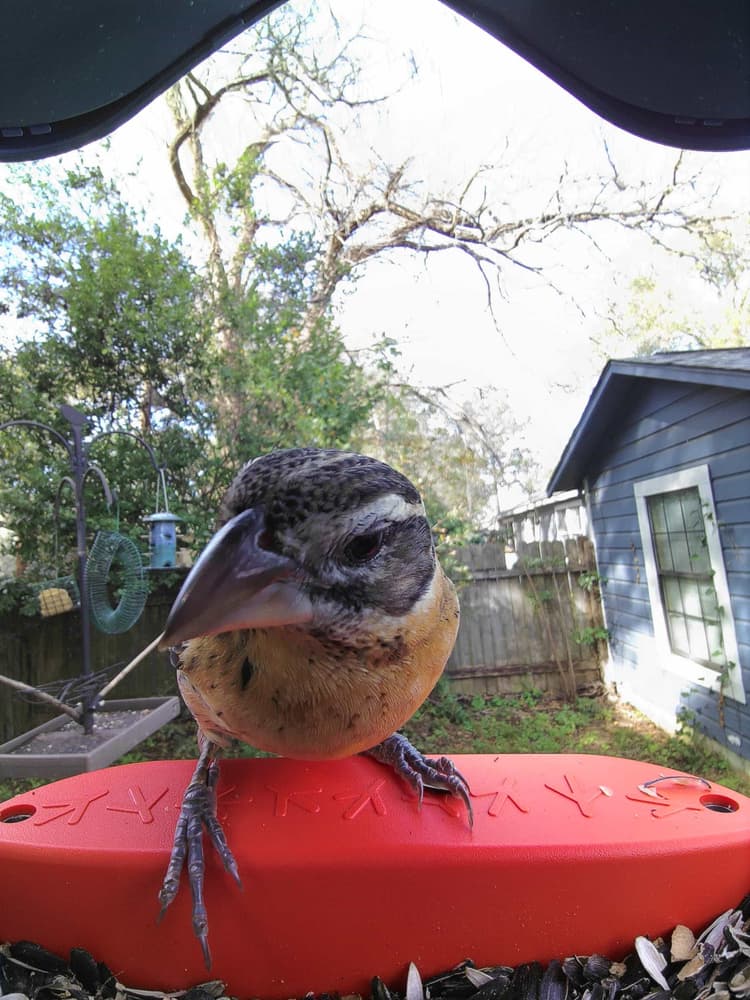
For the black-headed grosbeak, the males tend to be dull orange-brown in color with a black head and black-and-white wings. On the other hand, females feature colors and patterns similar to the Rose-breasted Grosbeak but have more pronounced orange undertones beneath and less streaking. In addition, the females often have a darker bill.
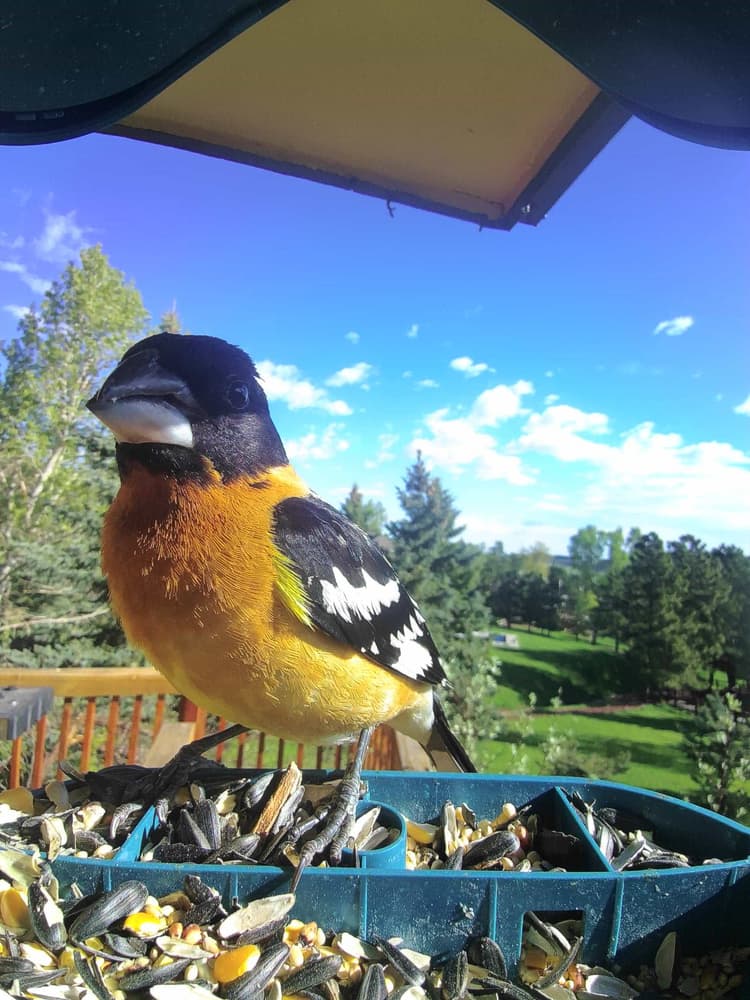
Male Black-Headed Grosbeak
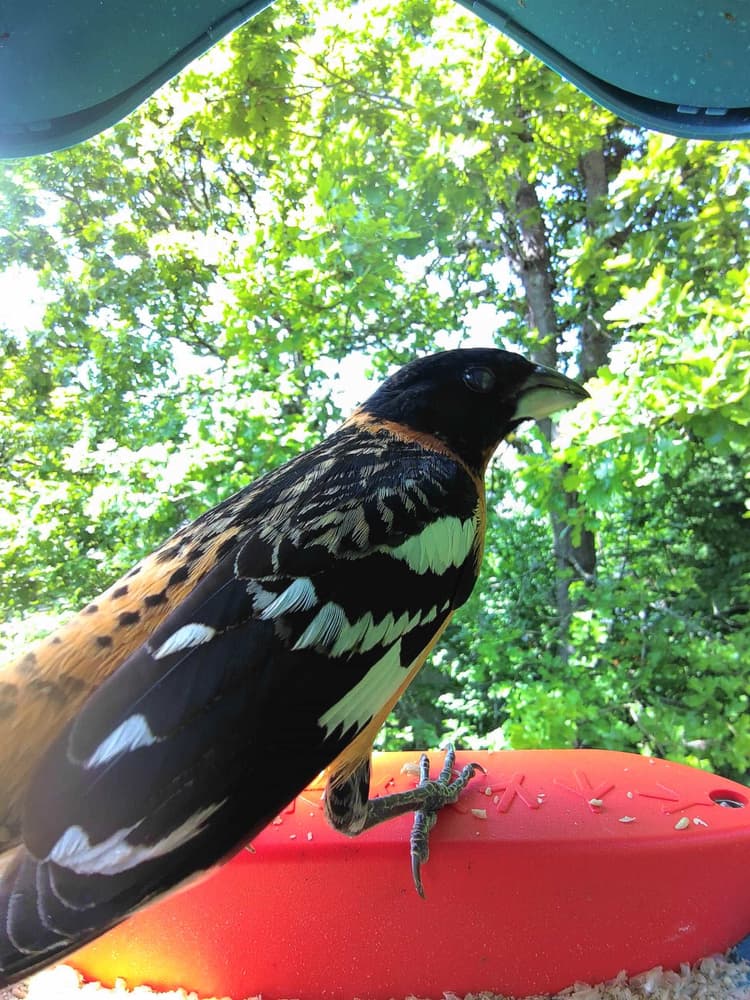
Male Black-Headed Grosbeak
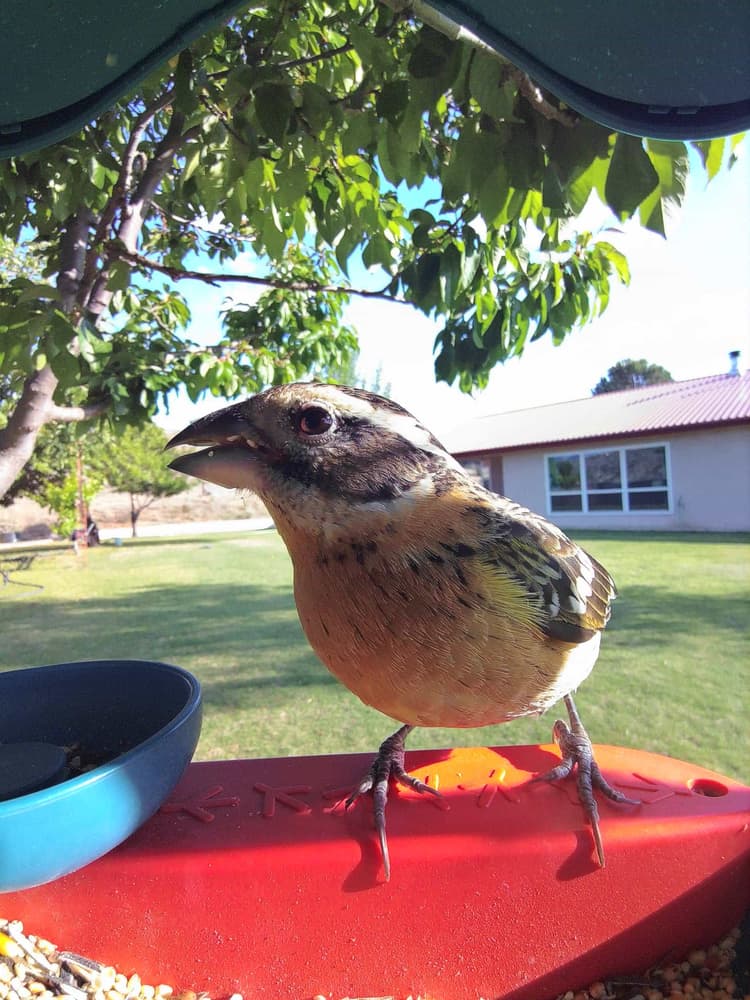
Female Black-Headed Grosbeak
Juvenile
Juvenile black-headed grosbeaks resemble the female but are tinged orange below, showing less streaking than their adult counterparts. They also have a bill that is often darker than the adults. Juveniles may experience a change in coloration during the season's transition.
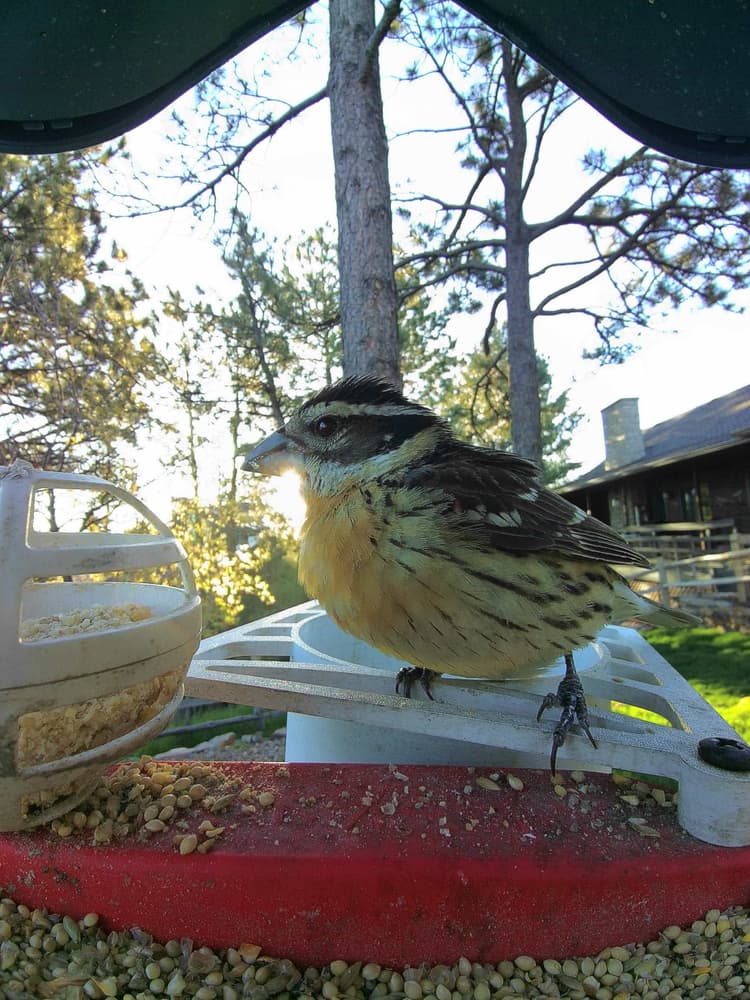
Often mistaken for
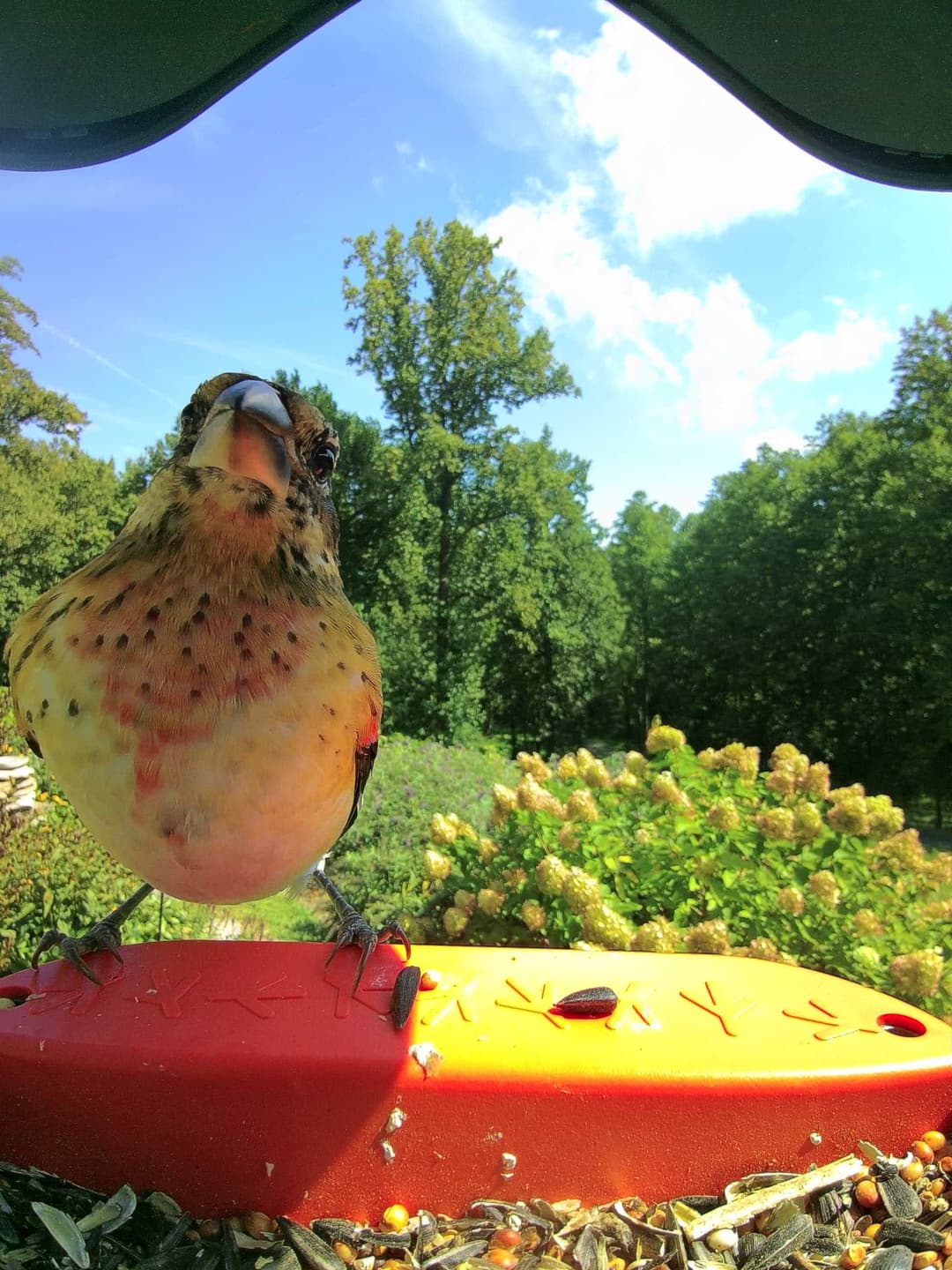
Rose-Breasted Grosbeak vs Black-Headed Grosbeak
The Black-Headed Grosbeak has an orange-breast, whereas the Rose-Breasted Grosbeak sports a bright red triangle on its chest. Males of both species have black and white wings, but the Black-Headed Grosbeak has a striking black head.
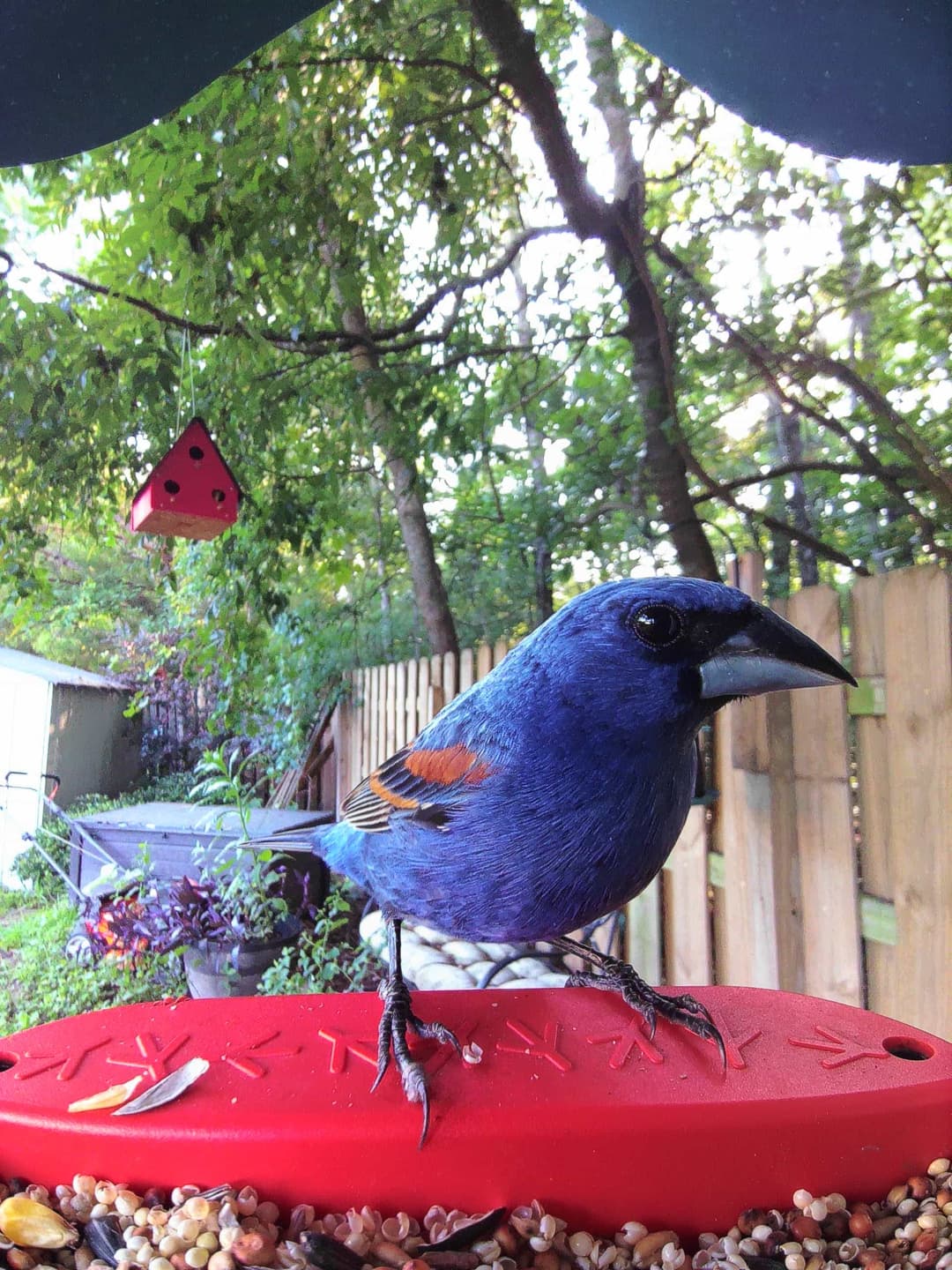
Blue Grosbeak vs Black-Headed Grosbeak
Male Blue Grosbeaks are uniformly deep blue with two rust-colored wing bars, while Black-Headed Grosbeaks have orange underparts and a black head. Female Blue Grosbeaks are brown with less contrast.
Spotted Towhee vs Black-Headed Grosbeak
The Spotted Towhee has a black hood, reddish sides, and white spots on its wings and back. In contrast, the Black-Headed Grosbeak is more uniformly orange on the breast with a black head.

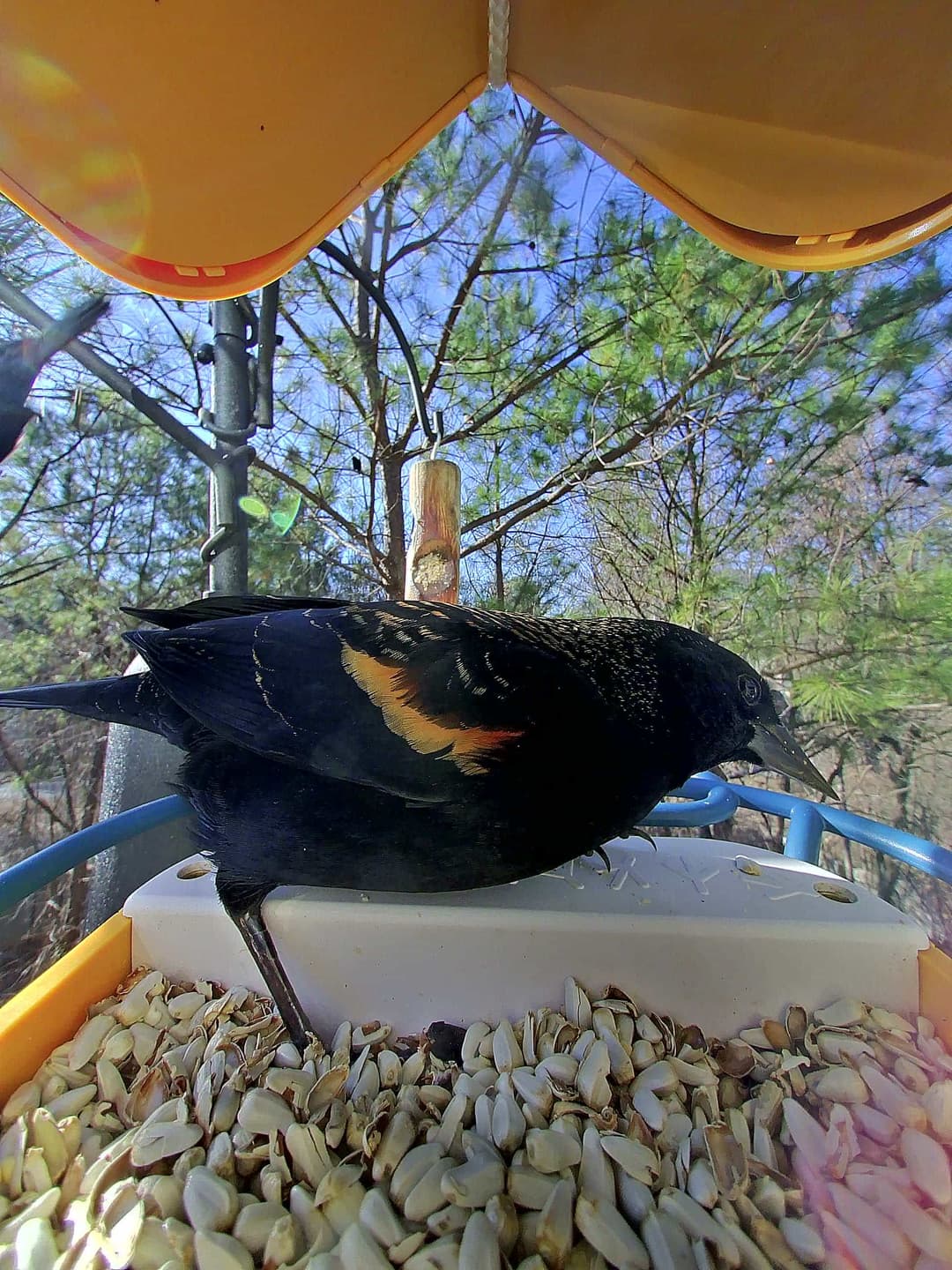
Red-Winged Blackbird vs Black-Headed Grosbeak
Red-Winged Blackbirds have a distinctive red and yellow shoulder patch, while Black-Headed Grosbeaks feature orange underparts and distinct black heads. Females of both species differ markedly in color and pattern.
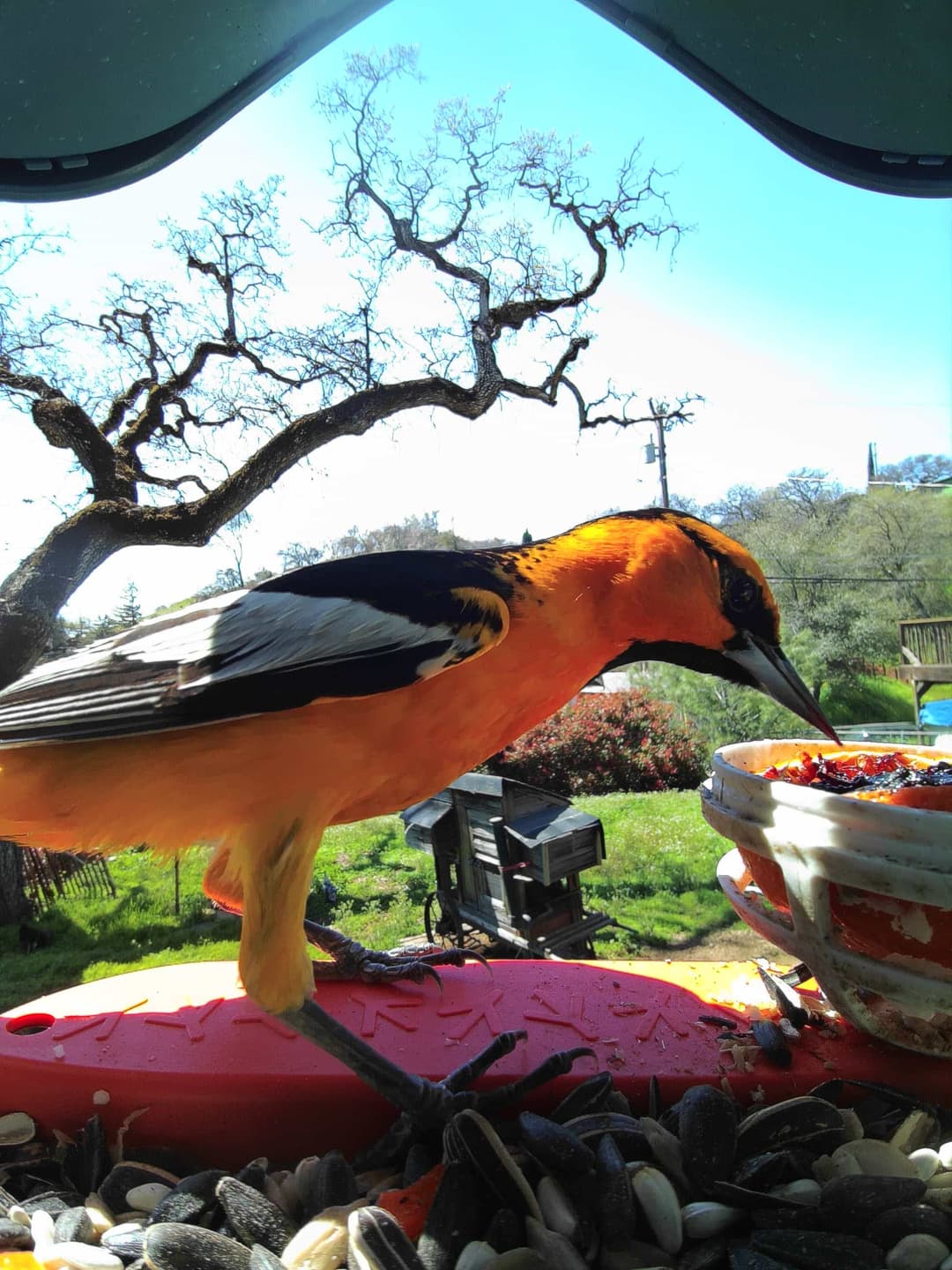
Bullock’s Oriole vs Black-Headed Grosbeak
Bullock’s Orioles have a brighter, more vivid orange body with a black line through the eye, whereas Black-Headed Grosbeaks have a thicker body and more extensive black head and wings.
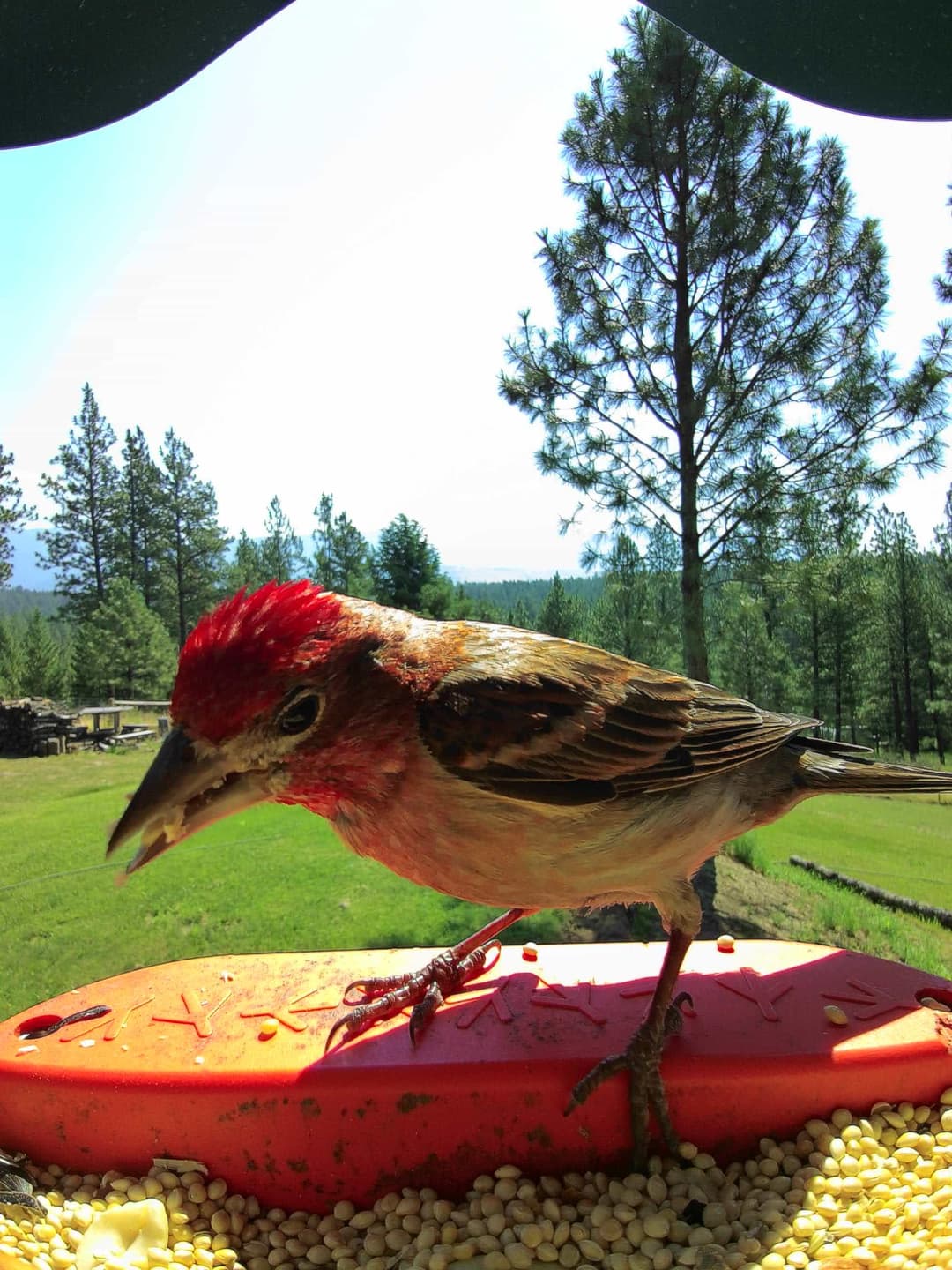
Cassin’s Finch vs Black-Headed Grosbeak
Cassin’s Finches are smaller, have a brownish back, and lack the strong color contrast of Black-Headed Grosbeaks. Males have a red forehead but the black head and orange breast of grosbeaks are distinctive.
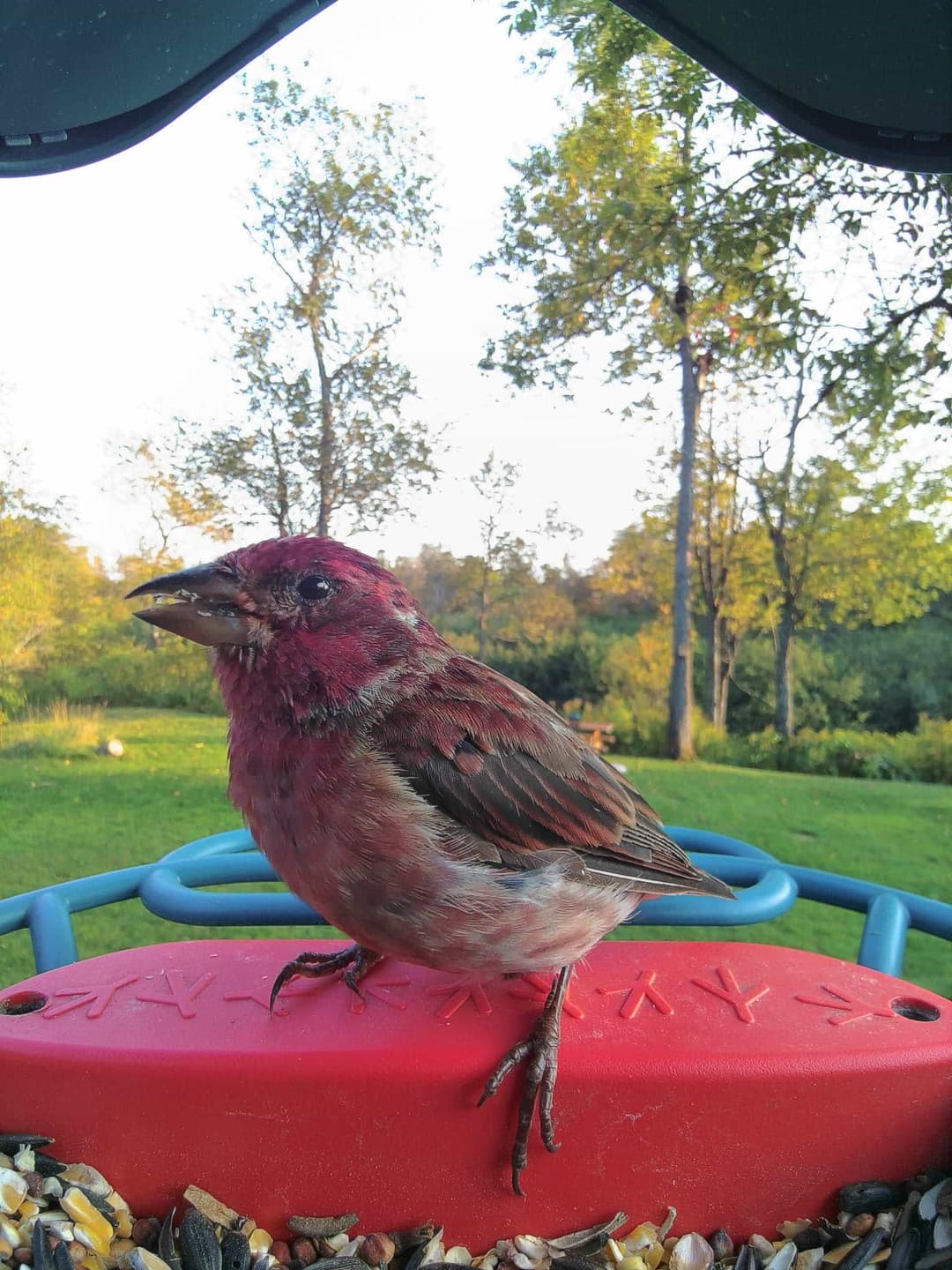
Purple Finch vs Black-Headed Grosbeak
Male Purple Finches have a raspberry red color, unlike the orange tones of Black-Headed Grosbeaks. Female Purple Finches are brown-streaked, whereas female grosbeaks are a buffy orange with streaking.
Breeding and nesting habits of the black-headed grosbeak
Mating behaviors
Male black-headed grosbeak sings to defend its nesting territory. During courtship, the male engages in song flights above the female, displaying with its wings and tail fully spread while singing continuously.
Nesting details
Nests are located in trees or large shrubs, typically deciduous, positioned 3-25 feet above ground, usually around 10-12 feet. The female constructs an open cup nest, loosely built and bulky, using twigs, weeds, rootlets, pine needles, lined with fine plant fibers, rootlets, and animal hair.
Eggs and chick-rearing
Female lays eggs in the crafted nest, maintaining them until hatching. Both parents partake in feeding and rearing the chicks. In gardens, a suitable habitat can be fostered by ensuring the presence of deciduous trees or large shrubs that provide adequate cover and protection for nesting.
What does a black-headed grosbeak like to eat?
Berries
Fruits
Insects
Seeds
Snails
Spiders
Natural diet
The black-headed grosbeak primarily feeds on a variety of insects, seeds, and berries. During the summer, it consumes numerous insects such as beetles, caterpillars, wasps, bees, and flies, as well as spiders and snails. The bird eats seeds from various weeds and berries from many plant sources, including mistletoe and poison oak, along with some cultivated fruits. Young grosbeaks are largely fed insects initially to support their growth.
Bird feeders
At bird feeders, the black-headed grosbeak may be attracted to a range of offerings, including sunflower seeds and suet. These high-energy food sources provide suitable nutrition for the bird outside of its natural diet.
Invite black-headed grosbeak to your yard
Attracting a black-headed grosbeak to your yard or feeder can be a delightful experience. These birds appreciate a feeder that is comfortable and full of their favorite treats. Platform feeders and hopper feeders are known to be preferred by these species. Live in a cozy environment with lots of shrubs and trees? You're in luck, as these birds love such habitats!
Favorite snacks of black-headed grosbeak
Black-headed grosbeaks enjoy a diet rich in seeds, fruits, and insects. Their favorite snacks include sunflower seeds, poppy seeds, cherries, raspberries, insects, and beneficial Bird Buddy seeds. Created by bird experts and tailored to the change of seasons, Bird Buddy seeds have proven to be loved by black-headed grosbeaks, bringing them back for more!
Fun tricks to tempt these songbirds
These birds are songbirds and will be attracted to other sounding songbirds. Having a bird feeder with a bird song recording can lure them into your space. Apart from that, maintaining a quiet and safe environment around your feeder will encourage them to drop by and maybe even stay for a sing-along!
Expert-approved bird seeds
Bird Buddy seeds come highly recommended for tempting black-headed grosbeaks into your yard. These seeds are expertly chosen to meet the dietary requirements of these birds, regardless of the season. With Bird Buddy seeds, every season feels like a feast to black-headed grosbeaks, making your yard or feeder their favorite drop-in spot.
Where can you find black-headed grosbeaks?

Primary habitat
The Black-headed Grosbeak primarily breeds in oak woodland, streamside cottonwood and willow groves, pine-oak woods, and pinyon-juniper woodland. It seldom occupies purely coniferous forests.
Additional range
During migration, it can be found in open woods, streamside trees, suburbs, mesquite groves, desert washes. It winters in the open woods and brush of the tropics, ranging from lowlands to mountains.
Do they migrate?
The black-headed grosbeak is a migratory bird rather than a year-round resident in one area. This species typically migrates late in spring and early in fall. Come mid-July, some individuals begin leaving their nesting areas, marking the start of their migration period. The migration route primarily spans between North America and Central America. During migration, black-headed grosbeaks breed in the western parts of North America, ranging from southern Canada through the western United States, including regions like California and the Pacific Northwest. As fall approaches, they travel south towards their wintering grounds, which extend to central and southern Mexico. While strays have been occasionally observed along the Atlantic Coast, these instances are rare and usually occur in late fall or winter. Migration for these birds generally involves following inland routes rather than coastal ones. The birds are known for their ability to cover significant distances between their breeding and wintering territories, utilizing a variety of habitats along their journey, including open woodlands, forest edges, and shrublands. Their flexible diet of insects and fruits allows them to adapt well during their migratory passage.
What is the role of black-headed grosbeaks in nature and how to protect them?
Conservation status
The black-headed grosbeak is considered common and widespread, with stable population numbers. It is not classified as vulnerable or endangered. There are no significant conservation efforts specifically targeting this species due to its stable status. However, general conservation practices that protect habitats and promote biodiversity indirectly benefit the grosbeak. While the species currently faces no major threats, ongoing habitat preservation is essential to maintaining its stable population.
Ecological role of black-headed grosbeaks
Its role in the ecosystem
The Black-Headed Grosbeak contributes significantly to the ecosystem. One of its prominent roles is as a controller of insect populations. During summer, its diet mainly includes a variety of insects such as beetles, caterpillars, wasps, bees, flies, spiders, snails, and many others. This feeding behavior naturally regulates the numbers of these insects, potentially reducing the risks of infestations that could harm vegetation. This bird is also a propagator of seeds. Its diet includes seeds of weeds and berries of many plants including mistletoe, poison oak, and cultivated fruits. By eating and later depositing these seeds in different locations, the Black-Headed Grosbeak contributes to plant dispersion and diversification. Furthermore, the nestlings are cared for and fed mostly by both parents which may also control other bird populations, either through competition for resources or predation. Overall, the Black-Headed Grosbeak plays significant roles in pest control, seed dispersal, and maintaining balance within bird populations.
How to help protect black-headed grosbeaks
Preservation tips
Habitat preservation strategies
To help conserve the black-headed grosbeak, proactive steps toward habitat preservation are essential. Prioritize the protection of mature hardwood and mixed woodlands as they are critical for the bird's survival. Promote sustainable forestry practices including long rotation periods and the conservation of core areas. Advocate for legislation against deforestation and introduce replantation initiatives, as these can help maintain or increase the space available for these birds.
Community science initiatives
Engage the local community in science initiatives to create awareness and partnerships. Citizens can participate in bird counting exercises helping in monitoring the black-headed grosbeak population and providing essential data for conservation planning. Citizen science projects such as nest monitoring or habitat quality surveys could also assist in gathering valuable information. Furthermore, educational seminars can be organized to raise awareness about the importance of maintaining biodiversity and the role of the black-headed grosbeak in the ecosystem.