
Red Crossbill
Red Crossbill
Also known as: Common Crossbill
Loxia curvirostra
Quick Identification guide
Quick Identification guide
- •
Features a thick, crossed beak perfect for extracting seeds from cones
- •
Displays reddish plumage with males showing more vibrant red tones, while females tend to have olive-yellow coloring
- •
Wings display a darker brown color with no wing bars, contrasting the overall body hue
What does a common crossbill sound like?
The Red Crossbill produces a range of sounds, including songs and calls. Its song resembles the phrases "chipa-chipa-chipa" and "chee-chee-chee-chee." Additionally, it makes sharp "kip-kip-kip" sounds. The bird's call pattern is typically flat with undulating variations, characterized by types such as buzz, chirp or chip, hi, and whistle. Notably, these vocalizations can differ based on the bird's specific environment and activities.
Description
What a funky beak you have there! Did you know it's an adaptation to remove seeds from coniferous cones? Lots of birds eat them, but crossbills get first dibs because they can pry them open long before they fall to the ground and open naturally. Beaks come in different shapes and have an effect on their calls, leading to a total of eight different flight call types.
The common crossbill can weigh between 23.7to45.4grams and be from15to17centimeters tall.
The red crossbill typically lives for about 8 years. This lifespan is comparable to related species like the white-winged crossbill, which lives up to 9 years. Both species average lifespans are longer than other finches but shorter than larger bird species.
Did you know?
Most popular questions about common crossbill
How to recognise a common crossbill?
General appearance
The red crossbill is approximately 5 1/4-6 1/2 inches in size, comparable in size to a robin or sparrow. It boasts a distinctive brick-red hue in most males. The wings and tail are generally darker. Its unique crossed bill, although rather difficult to discern from a distance, marks a distinctive trait. The wings are pointed in shape, while the tail is notched.
Male vs female
There are noticeable color distinctions between males and females in this species. While many males are characterized by a dull brick-red coloration, the females and some males exhibit a dull yellow hue. The difference in coloration serves as the primary distinction between males and females in the species.
Juvenile
The information provided does not include specific details regarding the appearance of red crossbill juveniles. However, recognizing the species in the wild can be aided by noting its flocking and feeding behaviors. Careful observation may also reveal up to nine different species of crossbills, with slight variations in their call notes and bill shapes.
Often mistaken for
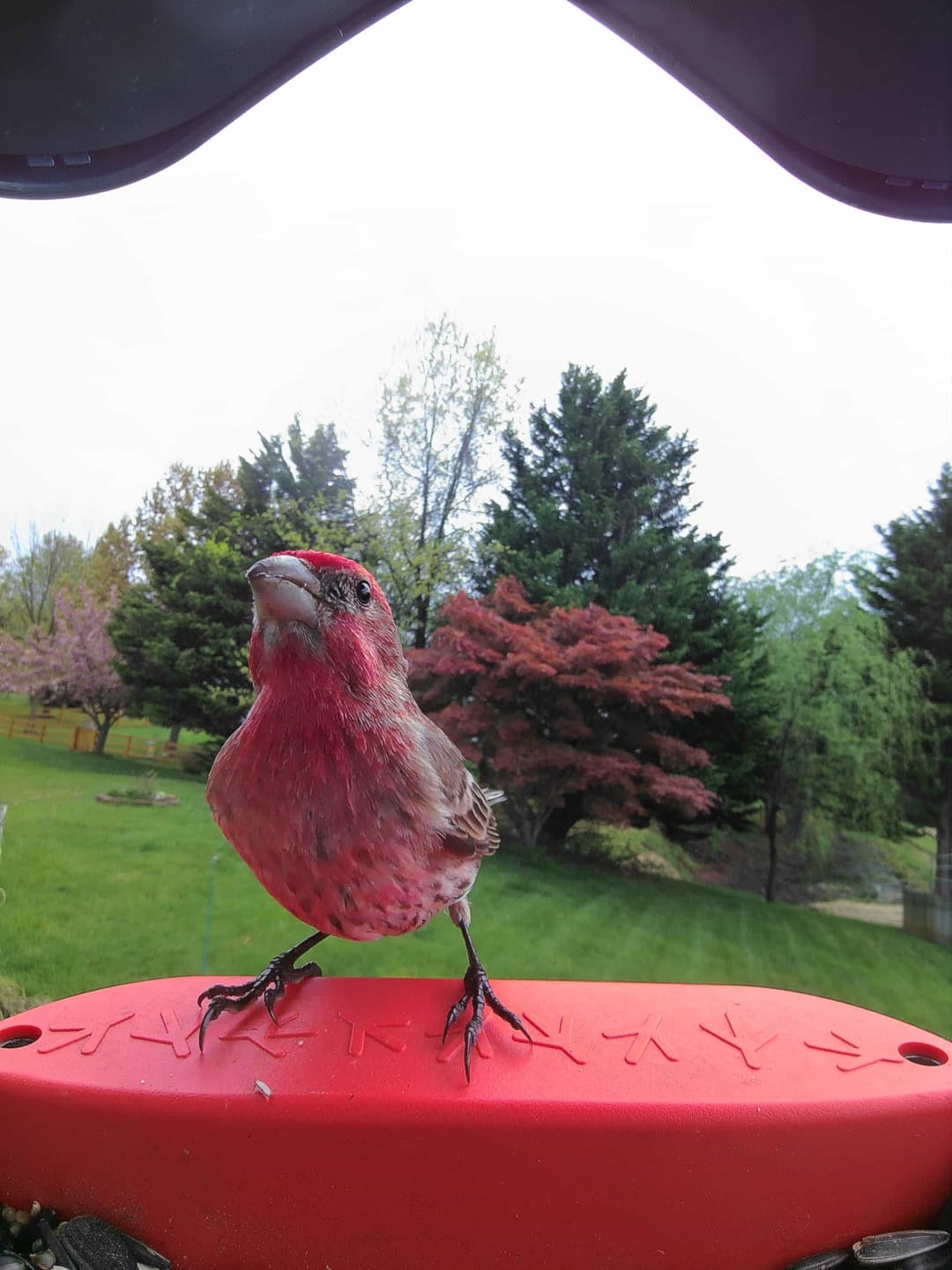
House Finch vs Red Crossbill
Red Crossbills are larger and have a distinctive crossed bill, while House Finches have straight bills. Male Red Crossbills have more uniformly reddish plumage, unlike the streaked appearance of House Finches. Red Crossbills are often found in coniferous forests, whereas House Finches are more common in urban and suburban areas.
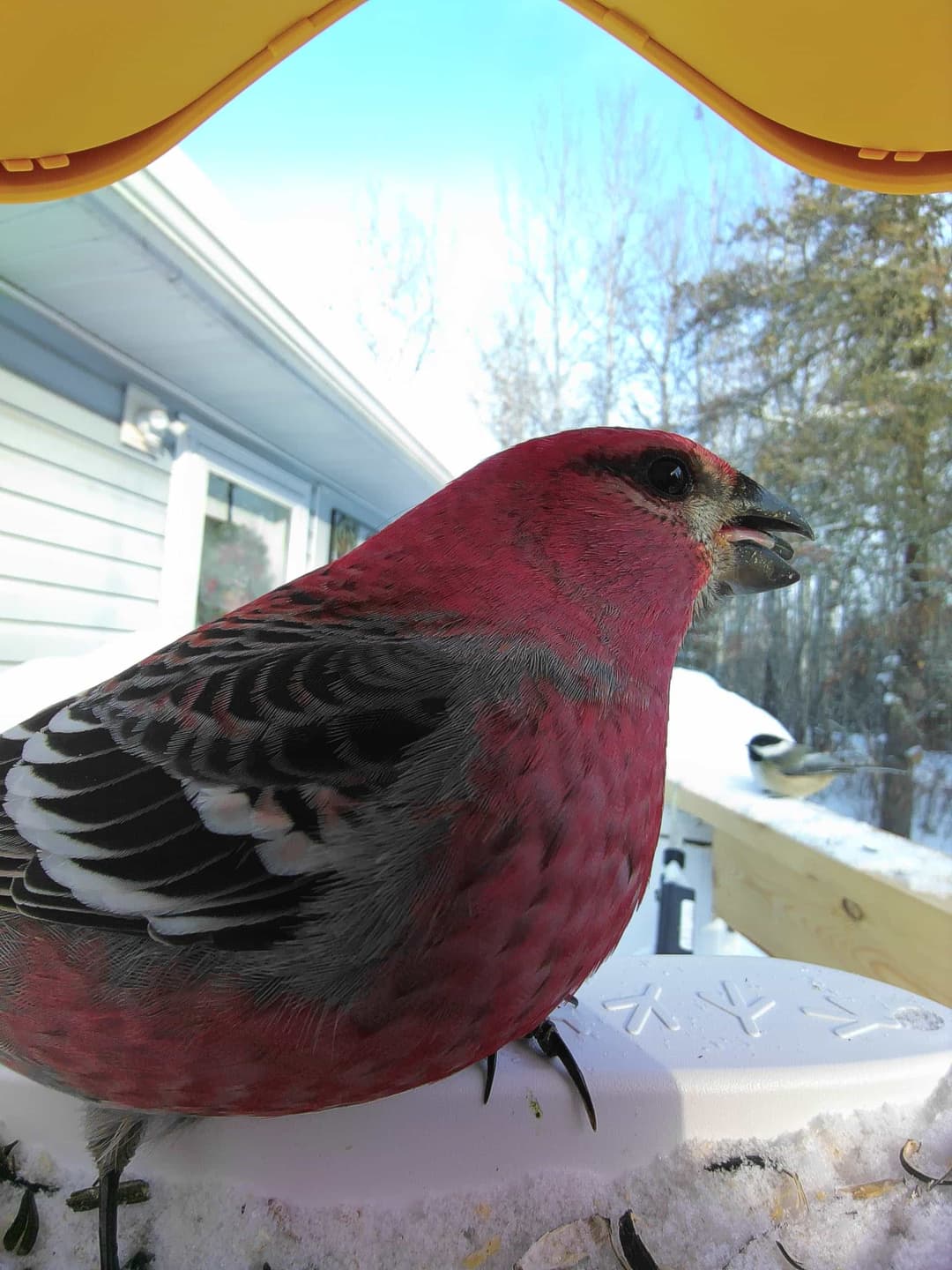
Pine Grosbeak vs Red Crossbill
Red Crossbills are generally smaller with a notable crossed bill, while Pine Grosbeaks have a thicker, straight bill. The plumage of male Red Crossbills is brighter red compared to the rosy pink of male Pine Grosbeaks. Red Crossbills are more active and often seen in flocks, while Pine Grosbeaks are more solitary and sluggish.
Breeding and nesting habits of the common crossbill
Mating behaviors
During courtship, male red crossbills may perform a flight song display to attract a mate. They may also feed the female as part of their courtship ritual, which helps to strengthen pair bonds and prepare for the nesting period.
Nesting details
Nesting for red crossbills is quite irregular and can occur during any season except mid to late fall, depending on the availability of cone crops. Nests are placed on horizontal branches of conifers, often a considerable distance from trunks. They are generally located 10-40 feet above the ground, although variations occur. Nests are bulky open cups made of twigs, bark strips, grass, rootlets, and wood chips, and are lined with fine grass, moss, lichens, feathers, and hair.
Eggs and chick-rearing
Details about eggs and chick-rearing practices specifically for red crossbills have not been provided. Therefore, general information on finch species indicates that females incubate the eggs while males may help by providing food. The collaboration continues post-hatching, ensuring the chicks are fed and kept safe until they fledge.
What does a common crossbill like to eat?
Fruits
Insects
Plants
Seeds
Natural diet
Red crossbills primarily eat seeds, favoring those from conifers such as pines. They also consume buds of various trees, seeds of weeds and deciduous trees, and some berries. Insects are included in their diet as well. They are notably attracted to salt, which can be found naturally in certain environments.
Bird feeders
Red crossbills are less commonly seen at bird feeders compared to other species as they primarily rely on natural food sources. However, they may occasionally visit feeders, especially those offering conifer seeds or seeds from deciduous trees.
Setting right food for red crossbill
Red Crossbills love conifer seeds. However, they are also attracted to sunflower seeds and peanuts. Therefore, a mix of these seeds could be an excellent snack for them. In such case, Bird Buddy seeds come highly recommended because they have been seasonally chosen by experts, ensuring the best results.
Choosing the suitable feeder
Red Crossbills have a unique beak shape that helps them extract seeds from cones. Hence, suitable feeders for Red Crossbills are those which allow easy access to the seeds. Choose platform or hopper feeders and fill them up with the preferred seeds. It's also a good idea to have a water source nearby like a birdbath.
Creating a safe environment
Position your feeders in a quiet, safe and visible space, preferable near coniferous trees as Red Crossbills are likely to take protective refuge in them. Make sure your yard is free of predators and hazards. A safe and friendly environment will encourage them to visit more often.
Fun tricks for attracting red crossbills
Playing bird songs may attract Red Crossbills. Their call is a loud 'kip-kip-kip'. Try playing the songs quietly so as not to disturb or annoy the birds but enough to pique their interest. And who knows, you might be lucky to get a 'sing-along' from these beautiful birds on your next feeding day!
Where can you find red crossbills?

Primary habitat
The red crossbill primarily inhabits conifer forests and groves, breeding mostly in evergreen trees such as pines, spruce, hemlock, or Douglas-fir, depending on the region.
Additional range
Unexpectedly, wandering flocks may appear in planted conifers in parks or suburbs well away from their usual range, denoting adaptability in their habitat preference.
Do they migrate?
The red crossbill does not engage in regular migration. Instead, it exhibits nomadic behavior, moving about in response to changes in food availability, particularly conifer seeds. This species lacks a consistent migratory route or timing, as its movements are dictated by the periodicity and location of its food supply, which varies annually. Red crossbills undertake irregular movements, usually traversing by day. They are highly adaptable, traveling to regions where their preferred food sources are abundant. In some years, they may remain in one area for extended periods if food is plentiful. In contrast, in other years, they may be more transient, shifting locations as they exploit different seed crops. During winter, red crossbills are noted for appearing in more southern and lowland areas, especially in the western parts of their range, as these locations provide suitable feeding grounds when food supplies in northern or higher elevation areas diminish. These movement patterns are opportunistic rather than part of a defined migratory cycle, demonstrating the crossbill's flexibility in responding to ecological conditions rather than following a set migratory path.
What is the role of red crossbills in nature and how to protect them?
Conservation status
The Red Crossbill is generally widespread and common, but certain forms are localized and vulnerable due to habitat loss. These specialized forms face significant threats when their specific habitats are degraded or lost. While the species as a whole is not endangered, conservation efforts focus on preserving critical habitats to protect vulnerable populations. Key threats include deforestation and habitat fragmentation. Conservation initiatives are vital to maintaining the diversity within the species, ensuring that localized forms continue to thrive and avoid becoming endangered.
Ecological role of red crossbills
Its role in the ecosystem
The Red Crossbill plays a vital role in seed dispersal, contributing to the propagation of conifer species. As they feed primarily on seeds from pines and other conifers, they inadvertently spread these seeds around, aiding in forest regeneration. These birds show a strong preference for larger cones, which could also help select for a stronger, more resilient tree population. The Red Crossbill also consumes various insects, providing a form of natural pest control. Additionally, their feeding habits benefit the ecosystem by controlling the overgrowth of certain plant species and promoting biodiversity. In irregular nesting times, especially in good cone crop seasons, crossbills could influence conifer sowing seasons. Furthermore, their nests, constructed on conifer branches, offer homes and breeding grounds for various other species once deserted. All of these factors combined make the Red Crossbills an important thumbtack species in the conifer forest ecosystems. The presence and well-being of Red Crossbills can provide insightful information about the overall health and biodiversity of their habitats and ecosystems.
How to help protect red crossbills
Preservation tips
Habitat preservation strategies
Preserve and manage mature coniferous forests, the primary habitat of the red crossbill. Promote selective logging activities over clear-cutting and preclude land conversion activities in these areas. Encourage growing mixed tree species to ensure a year-round food supply. Implement strategies to reduce pest outbreaks like spruce budworm that can negatively affect food resources.
Community science initiatives
Foster community involvement in bird monitoring and data collection programs such as bird counts and nest monitoring. Promote educational programs on crossbill identification and the importance of their conservation. Encourage local people to plant coniferous trees in their properties. Advocate for local ordinances restricting disruptive human activities during nesting seasons.