Evening Grosbeak or Pine Grosbeak?
Here's how to tell the difference
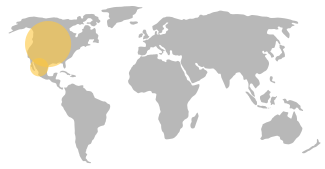
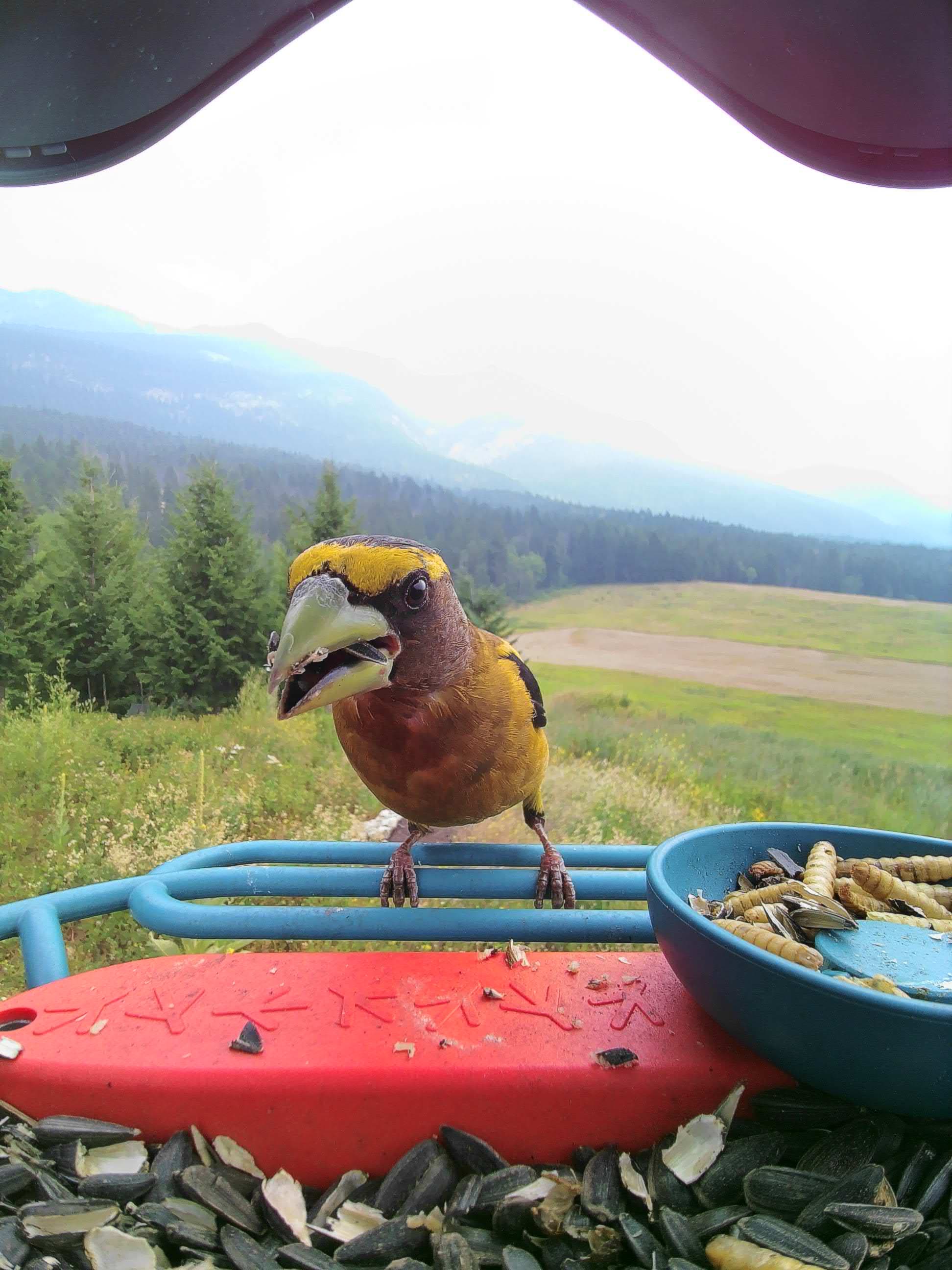


Evening Grosbeak
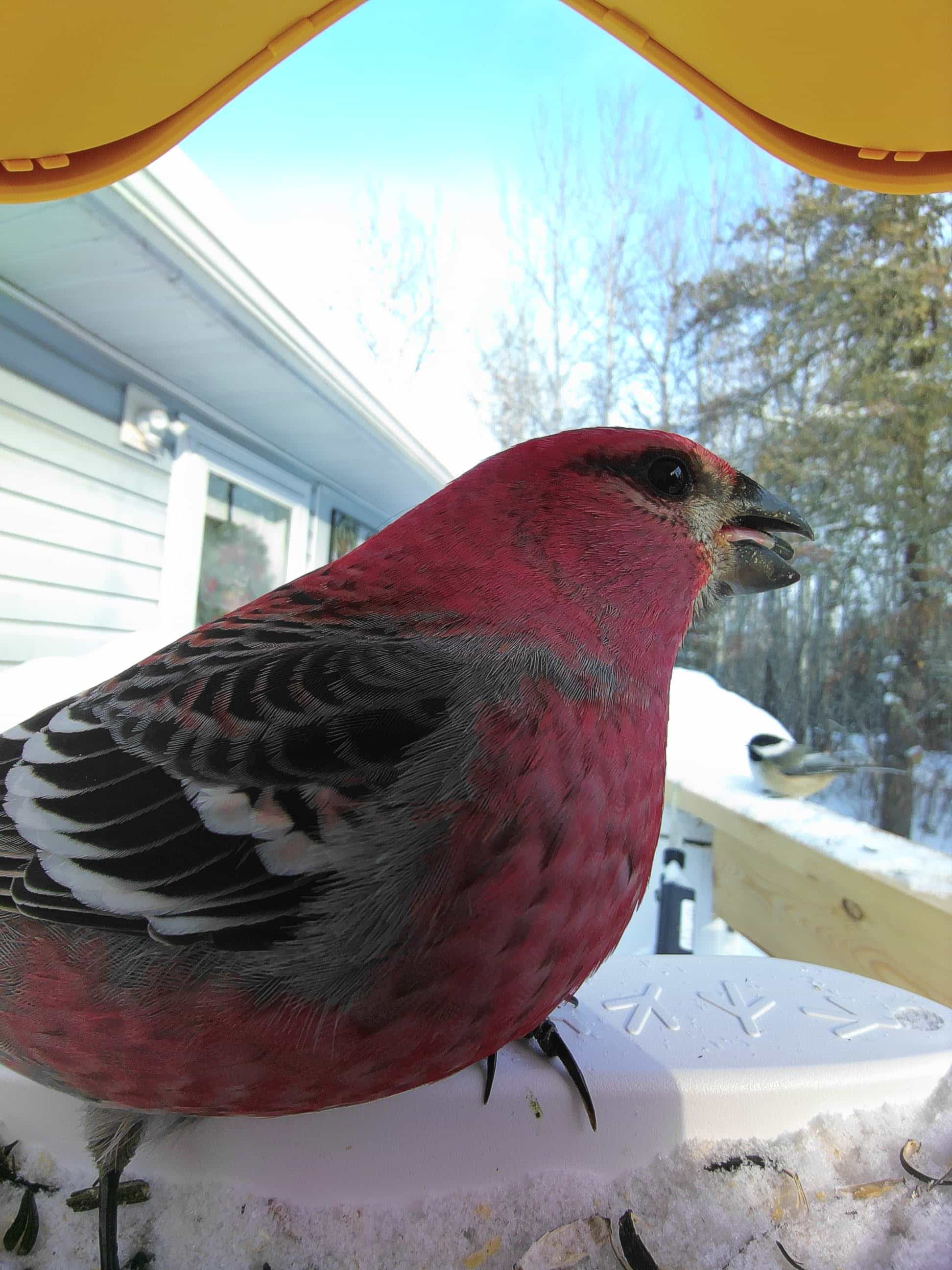


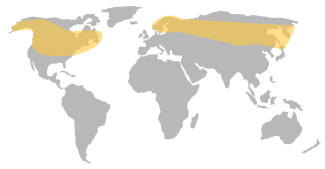
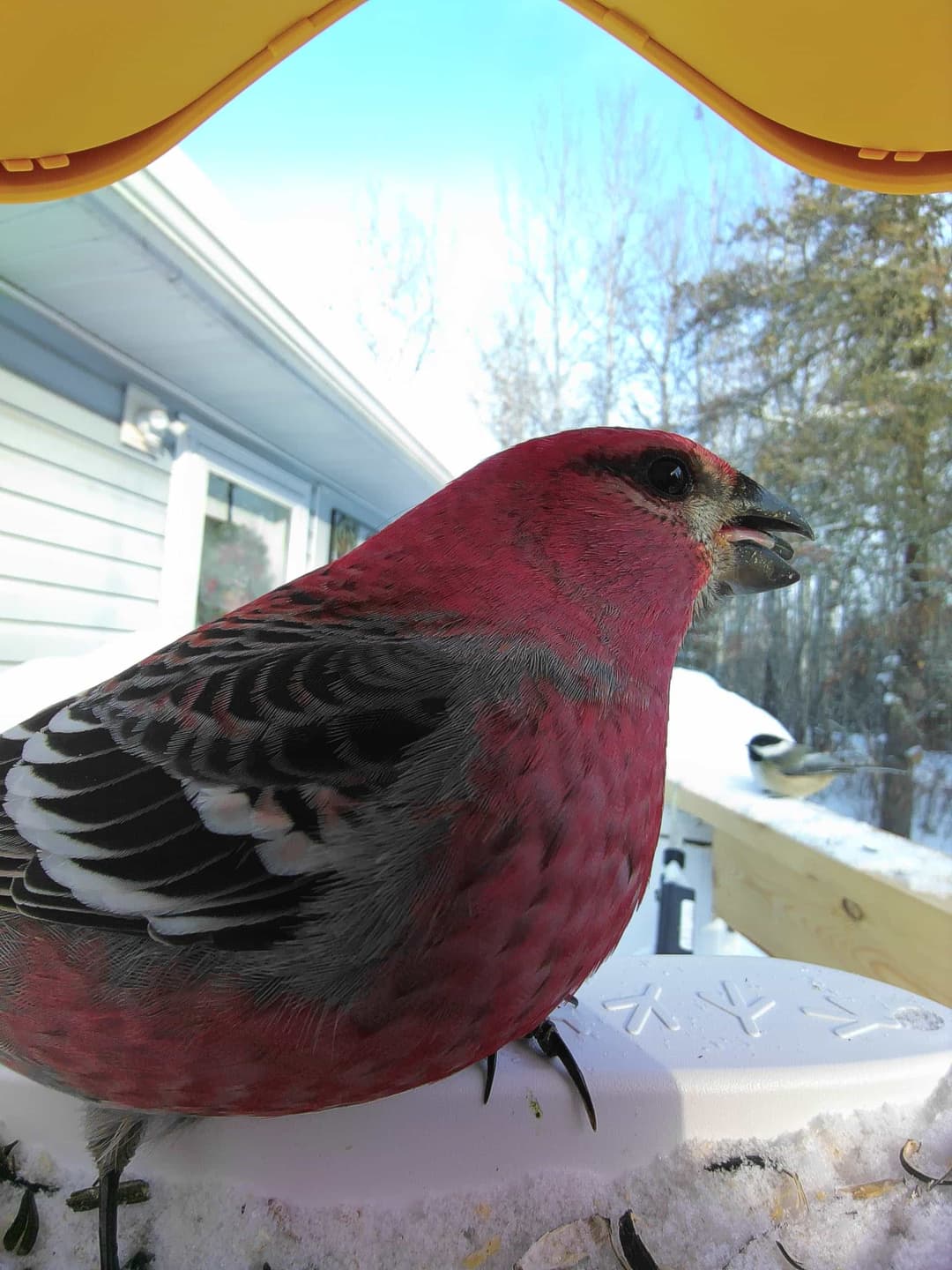
Pine Grosbeak
Evening Grosbeak
Hesperiphona vespertina
General appearance
The Evening Grosbeak is a stocky bird with a thick, stout bill. Its coloration is primarily that of yellow and black, with the body appearing mostly yellow and wings and tail being marked with black. The bill is a pale color, often appearing nearly white.
Male vs female
Males and females display significant sexual dimorphism. Males are more brightly colored, with a vibrant yellow body, a brownish-black head, and black wings featuring striking white patches. Females, on the other hand, are less vibrant with more of a grey-brown body and white markings on the wings. Both genders share the feature of a pale, stout bill.
Juvenile
Juvenile Evening Grosbeaks appear similar to adult females, with more subdued coloration than males. As they age, they gradually acquire their adult colors, males becoming vibrant yellow and females settling into their more muted brown and white tones.
Size
6.5 - 7.1 in/1.9 - 2.6 oz
There's more to learn about Evening Grosbeak
View full detailsPine Grosbeak
Pinicola enucleator
General appearance
The pine grosbeak is a large finch, about the size of a robin, measuring between 8-10 inches (20-25 cm). The bird has several distinctive features including a long tail, a stubby black bill, two wing-bars, and various colors. The wing shape is pointed and the tail shape varies from notched, rounded to a square tip.
Male vs female
Adult males and females display different colorations. While the adult male pine grosbeak is mostly pink and gray, the female is predominantly gray, with yellow or orange on her head. This differentiation helps in spotting and identifying the species in the wild.
Juvenile
Similar to adult females, juveniles are gray in color. However, they are distinguishable by the yellow or orange coloration on their heads. There may be a seasonal variation in appearance as these birds often change their plumage.
Size
7.9 - 10.0 in/1.8 - 2.8 oz
There's more to learn about Pine Grosbeak
View full detailsHow to tell the Evening Grosbeak from the Pine Grosbeak
Visual differences
The Evening Grosbeak is 6.5-7 inches long and the Pine Grosbeak, larger at 8-10 inches. Evening Grosbeaks have a striking yellow and black plumage, with males sporting a vivid yellow body and black wings with white patches. Pine Grosbeak males are pink and gray, while females are gray with yellow or orange on their heads. Evening Grosbeaks have a thick, pale beak, contrasting with the Pine Grosbeak's black, stubby beak. Evening Grosbeaks possess a stocky build, while Pine Grosbeaks have long tails and two wing-bars.
Key differences and behavior
The Evening Grosbeak and Pine Grosbeak differ notably in behavior and ecology. Evening Grosbeaks (6.5-7 inches, 1.9-2.6 oz) are bold seed eaters, with a preference for sunflower seeds, consuming up to 96 in five minutes. They inhabit coniferous forests in the northern U.S. and Canada and move south in winter, where they adapt to diverse environments. Their mating involves dynamic displays and food sharing. In contrast, Pine Grosbeaks (8-10 inches, 1.8-2.7 oz) are more laid-back, feeding on fruits and seeds, especially from fruiting trees. They remain in northern coniferous forests year-round, less mobile than their counterparts. During courtship, males serenade with mellow songs and provide food. Their nests, like those of Evening Grosbeaks, are in conifers but differ in height and materials used, emphasizing ecological and behavioral adaptations unique to each species.
Still not sure? Here are more lookalikes!
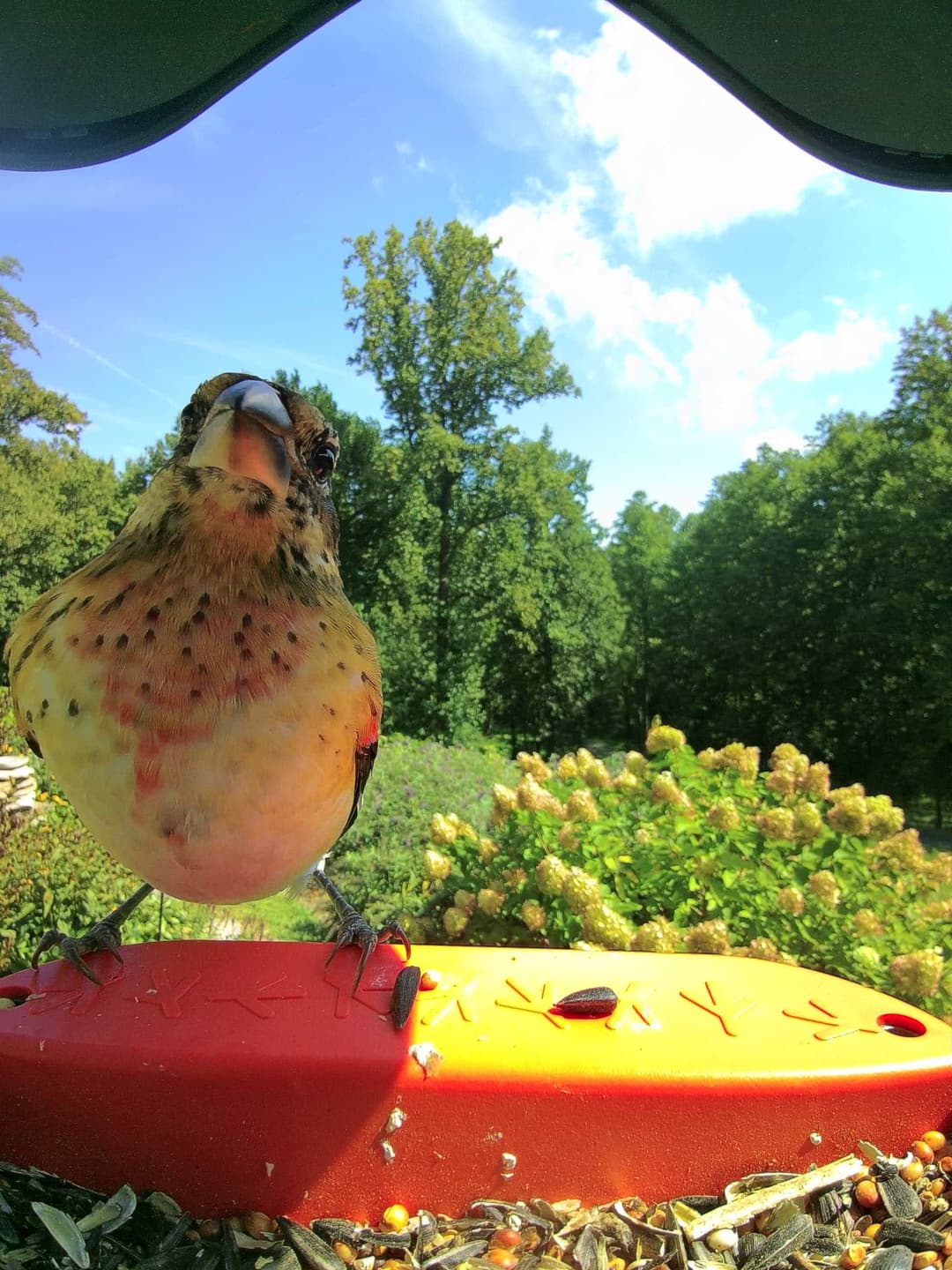
Evening Grosbeak vs Rose-Breasted Grosbeak

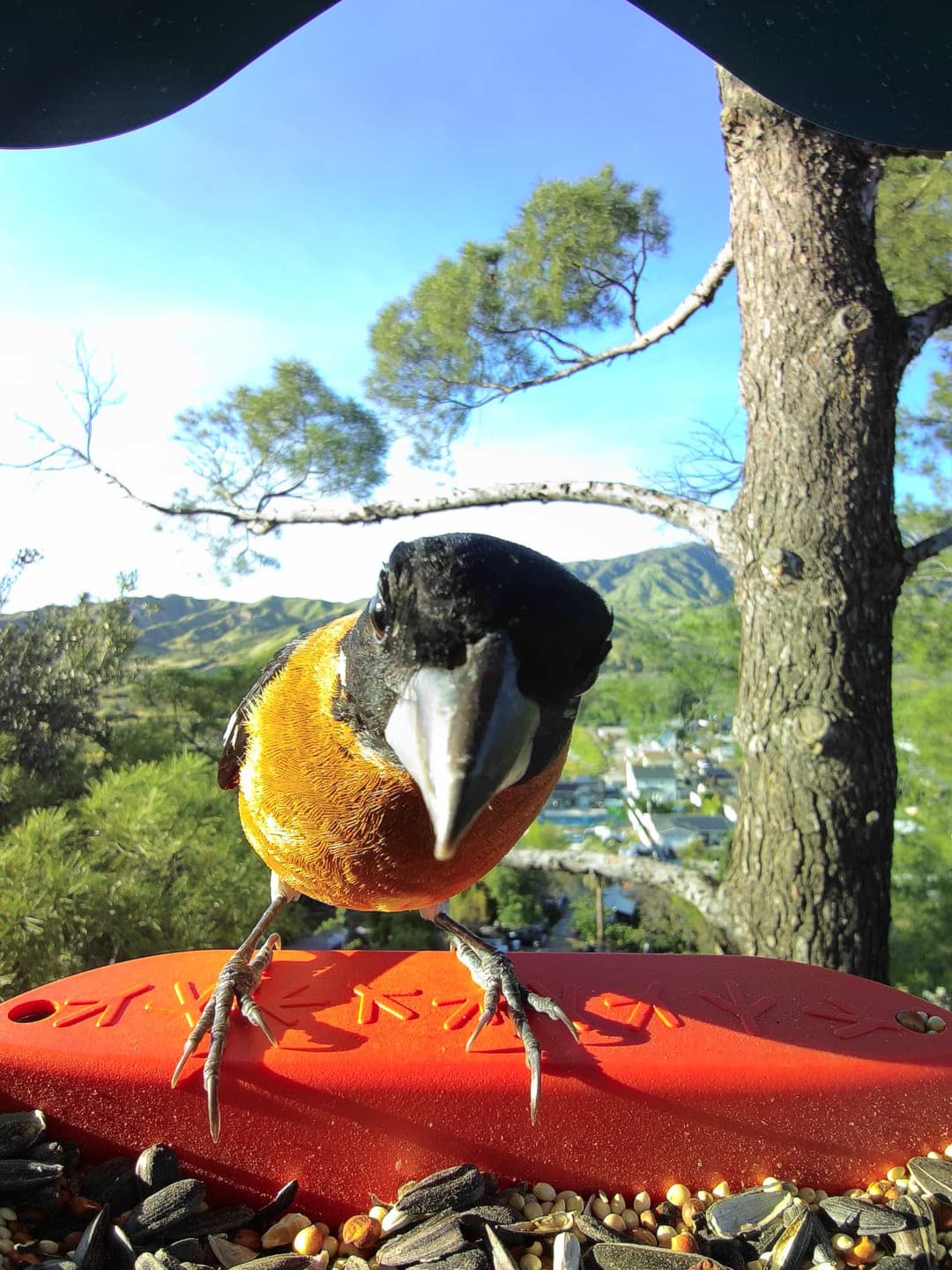
Evening Grosbeak vs Black-Headed Grosbeak
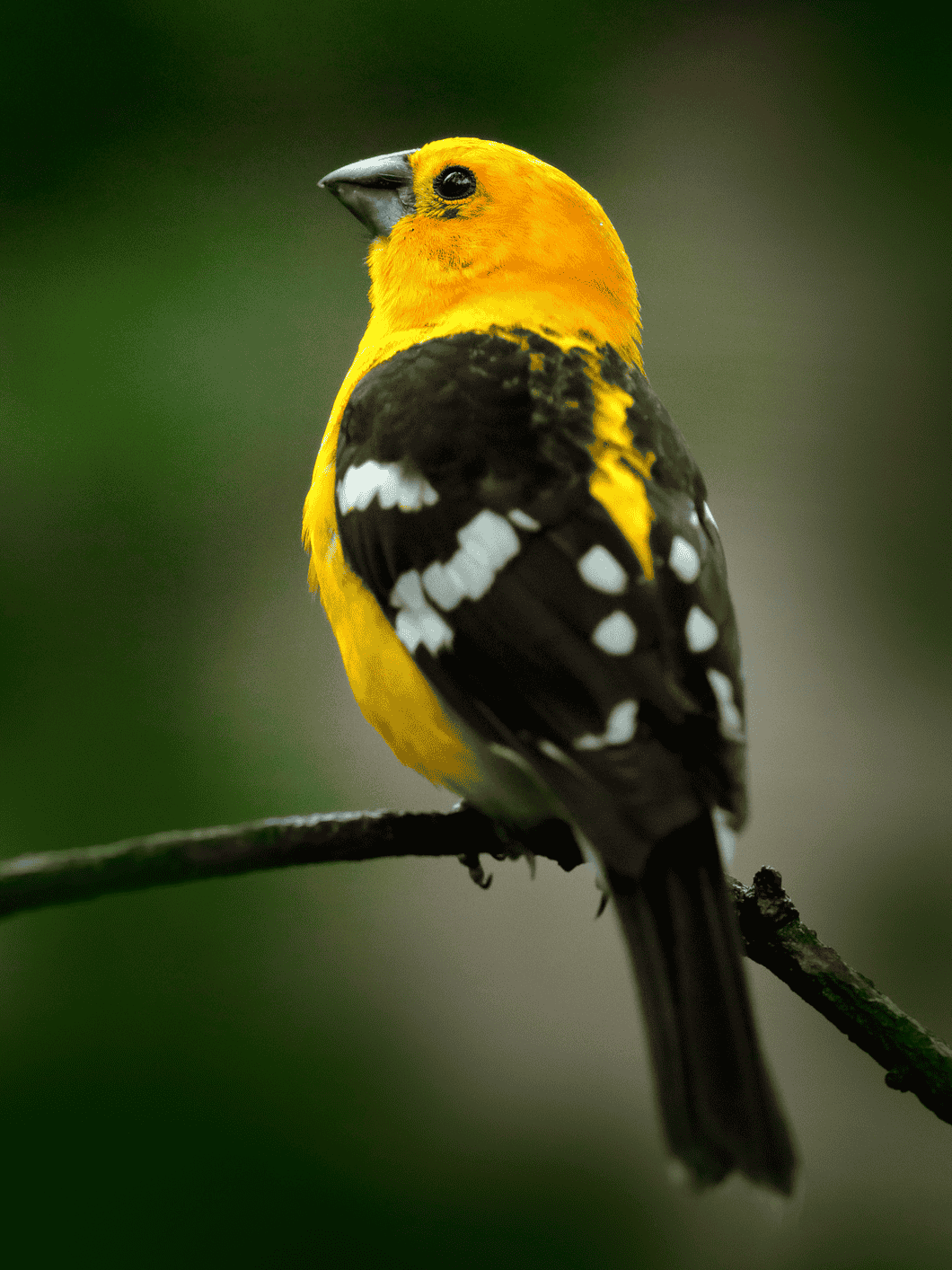
Evening Grosbeak vs Yellow Grosbeak
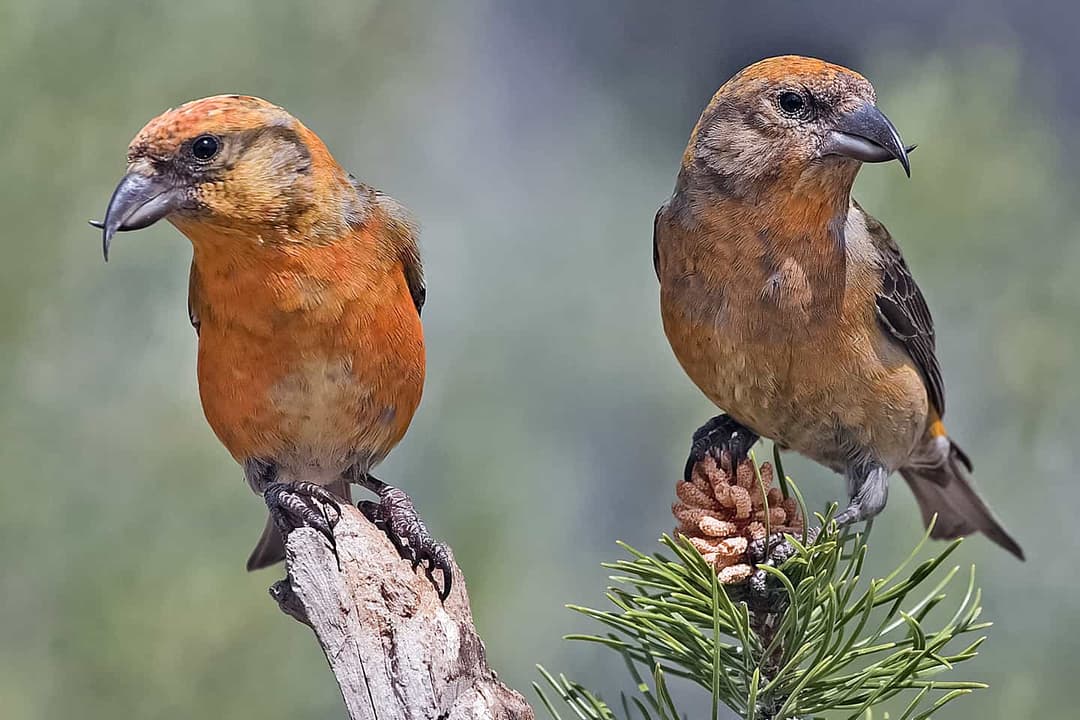
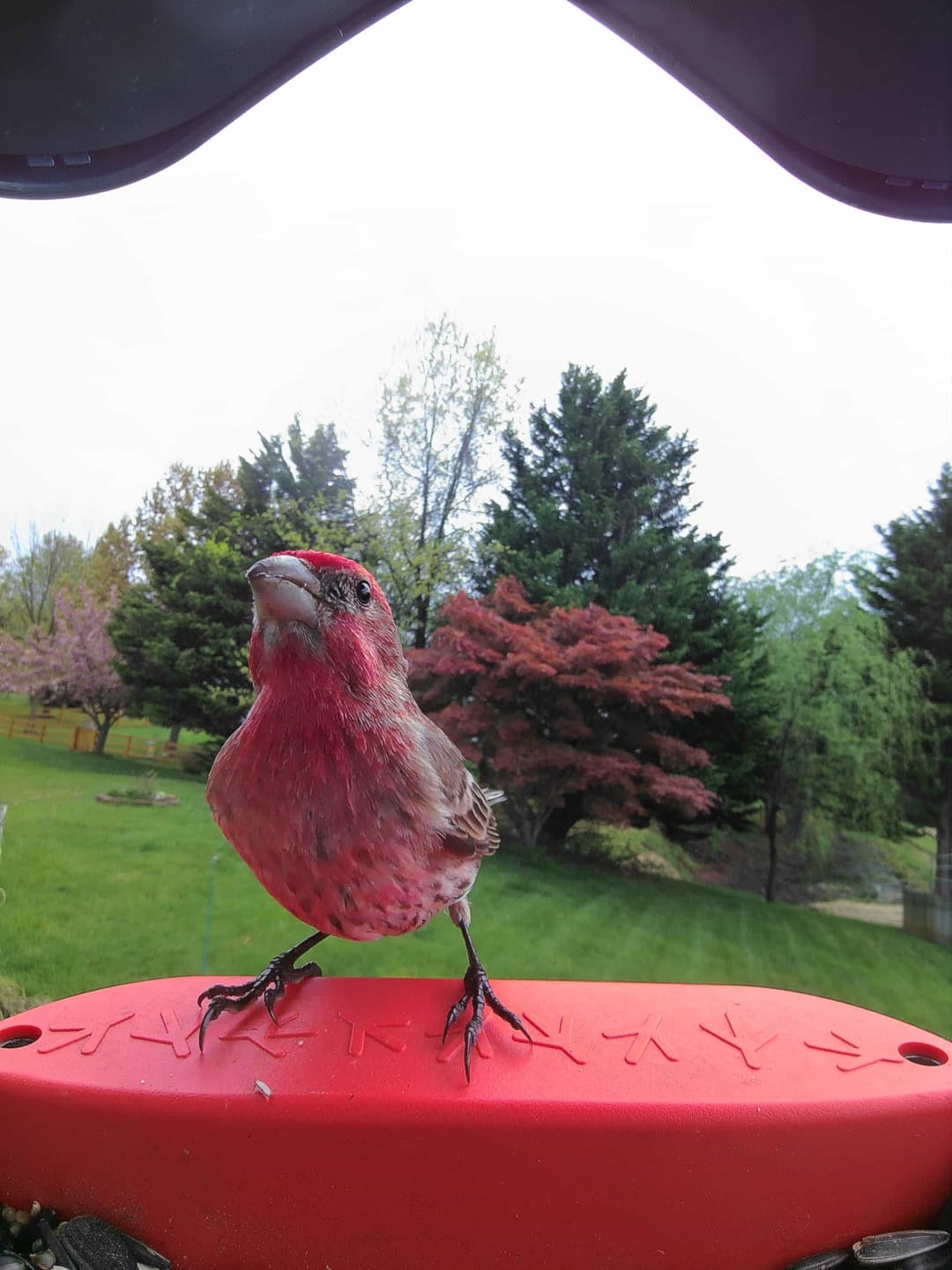
Pine Grosbeak vs House Finch
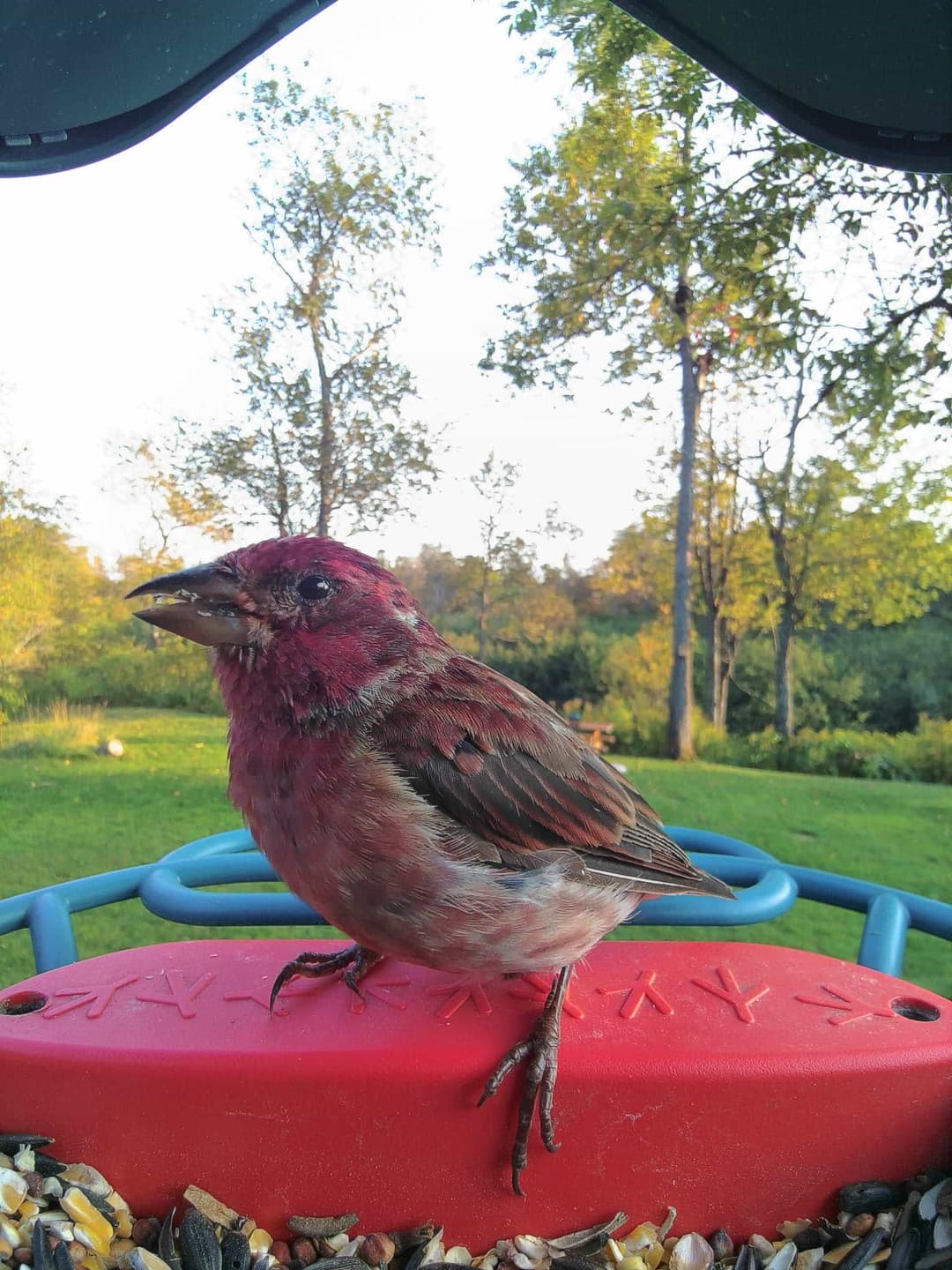
Pine Grosbeak vs Purple Finch
Evening Grosbeak vs [Select a bird]

[Select a bird]
Pick a bird to compare
Pine Grosbeak vs [Select a bird]
[Select a bird]
Pick a bird to compare