Blue Grosbeak or Brown-Headed Cowbird?
Here's how to tell the difference


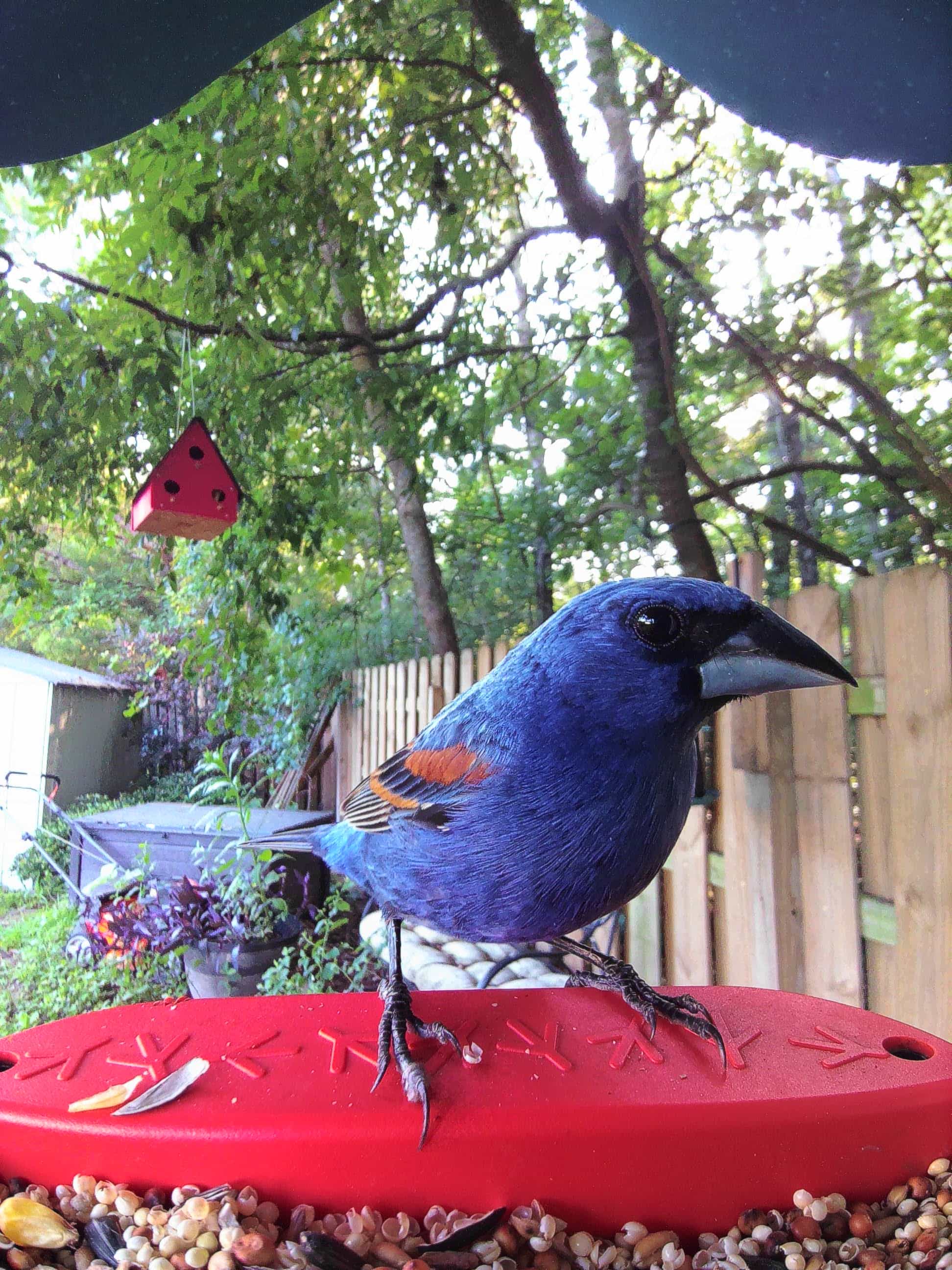


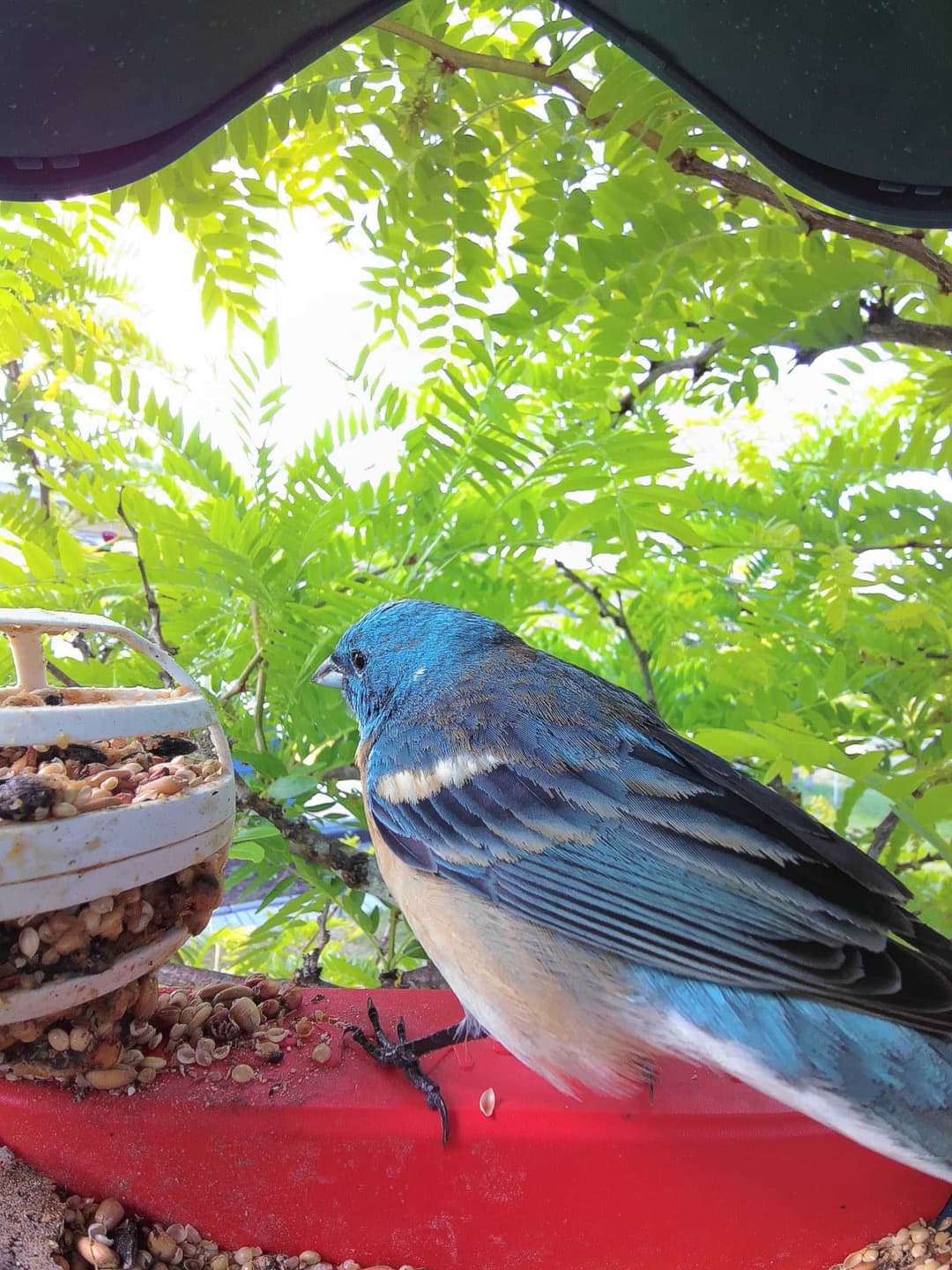
Blue Grosbeak
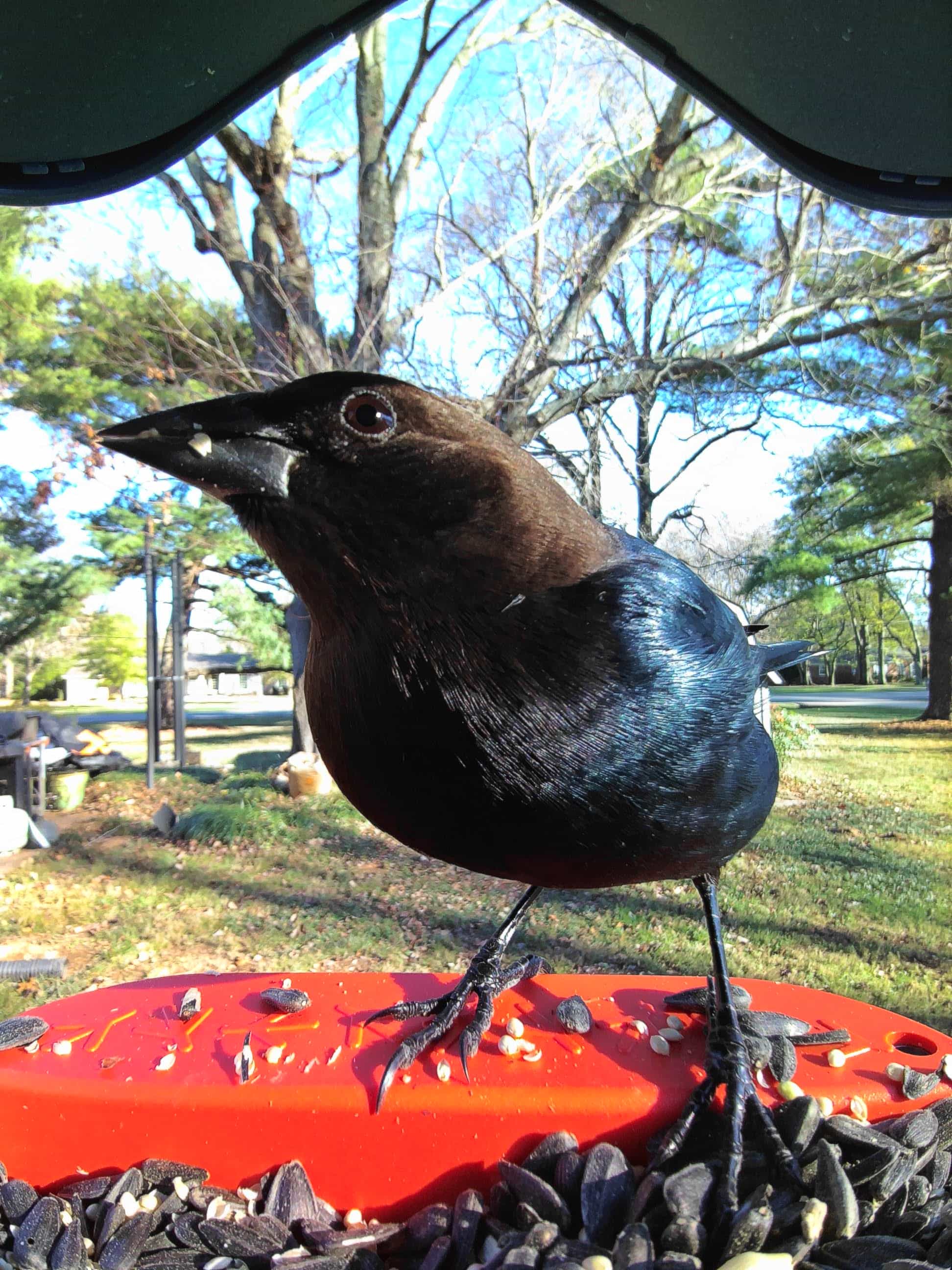


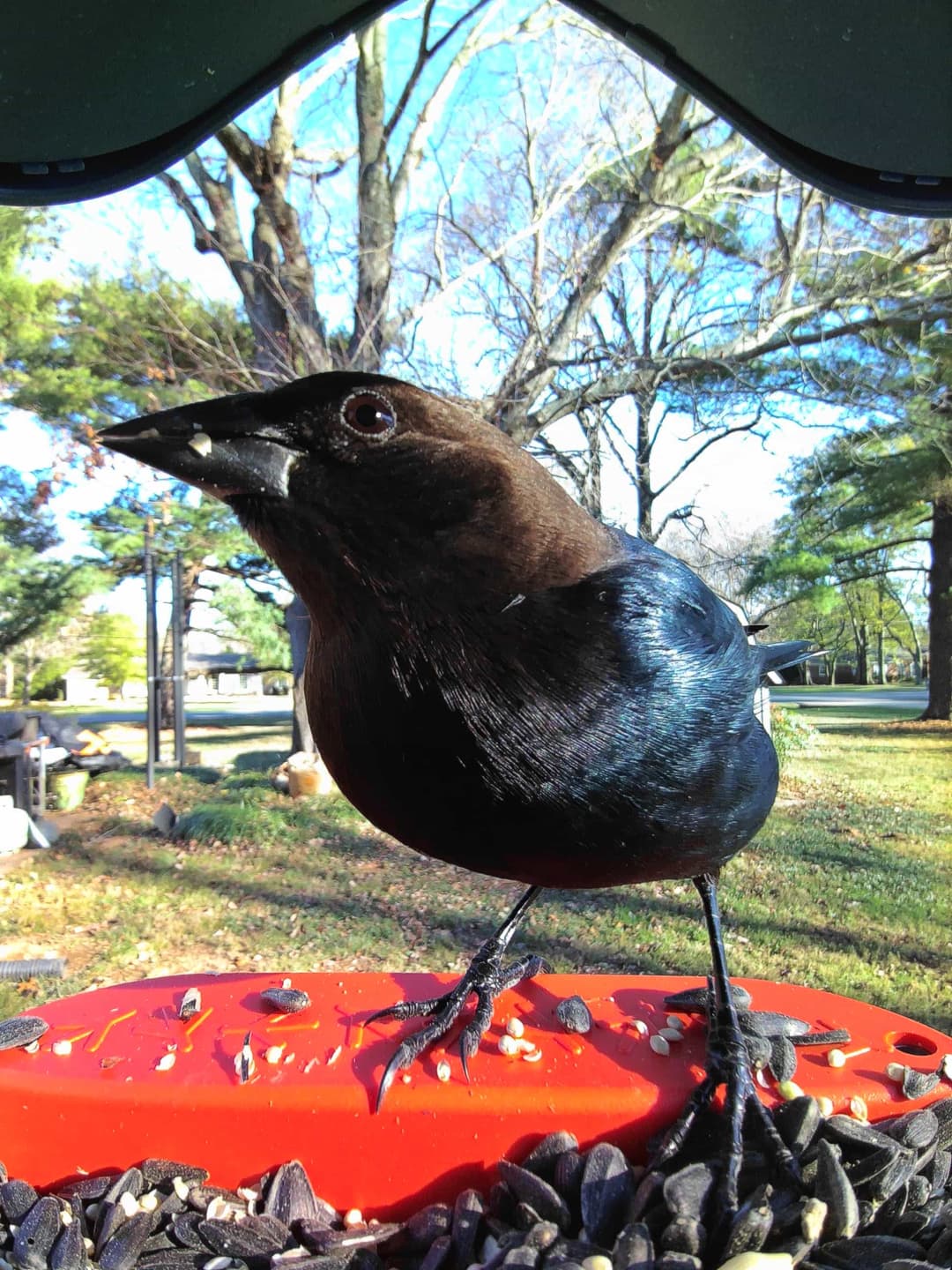
Brown-Headed Cowbird
Blue Grosbeak
Passerina caerulea
General appearance
The blue grosbeak is a medium-sized songbird renowned for its striking coloration. It exhibits a robust build with a large, conical bill apt for seed-cracking. Typically, the species displays rich blue plumage that stands out due to its vibrant hue. Observed mostly in habitats like thickets and forest edges, they are often recognized by their melodic song composed of rich warbles and trills.
Male vs female
The male blue grosbeak is distinguished by its deep, bright blue plumage with chestnut-brown wing bars, making it more visually striking compared to the female. In contrast, females exhibit a more subdued coloration, primarily rich brown with subtle hints of blue in their wings and tail, aiding in camouflage. Both sexes, however, share the characteristic stout bill and are similarly sized.
Juvenile
Juvenile blue grosbeaks resemble the adult female more closely, with overall brownish plumage. Unlike adults, juveniles lack the pronounced blue tones and wing bars. As they mature, young males gradually acquire their signature blue coloring during their first fall molt. Seasonal variations are mostly evident in males, accentuating their iridescent blue during the breeding season.
Size
5.9 - 6.3 in/0.9 - 1.1 oz
There's more to learn about Blue Grosbeak
View full detailsBrown-Headed Cowbird
Molothrus ater
General appearance
The brown-headed cowbird is a medium-sized bird, approximately the size of a robin or sparrow, measuring between 6-8 inches or 15-20 cm. Its wing shape is broad and the tail is either rounded or square-tipped. The bird's coloration includes hues of black, brown, green, and tan.
Male vs female
In terms of gender differences, male brown-headed cowbirds are glossy black and sport a contrasting brown head. On the other hand, females have a different appearance, with a plain dusty brown color and a darker sparrowlike bill.
Juvenile
Juvenile brown-headed cowbirds have a unique appearance that changes as they mature. Initially, they are streaked and tend to resemble female adults but their coloration grows darker as they age. Further observation is needed to note if this pattern is consistent across all seasons.
Size
6.3 - 7.9 in/1.1 - 1.8 oz
There's more to learn about Brown-Headed Cowbird
View full detailsHow to tell the Blue Grosbeak from the Brown-Headed Cowbird
Visual differences
The Blue Grosbeak is a medium-sized songbird (1.0-1.2 oz, 6-6.3 in) with vibrant blue plumage and chestnut wing bars, featuring a robust build and large conical bill. Males are bright blue, while females are rich brown with subtle blue hints. In contrast, the Brown-Headed Cowbird is slightly larger (1.1-1.8 oz, 6-8 in) with glossy black plumage and a distinctive brown head in males. Females are plain dusty brown with a sparrowlike bill. The Blue Grosbeak's bright blue color is a key differentiator from the Cowbird's darker, more somber tones.
Key differences and behavior
Blue Grosbeaks and Brown-Headed Cowbirds exhibit distinct behavioral differences despite both being seed and insect eaters. Blue Grosbeaks forage awkwardly on the ground in habitat edges like thickets and roadside brush, singing primarily by males to establish territory. In contrast, Brown-Headed Cowbirds follow livestock in open areas like prairies, opportunistically feeding on insects disturbed by grazing animals. While Blue Grosbeaks build their nests creatively with materials like snakeskin, Cowbirds engage in brood parasitism, laying eggs in others' nests, leaving incubation to the host. Grosbeaks are sociable, gathering in flocks, whereas Cowbirds display with puffed feathers and group songs to attract mates, exhibiting no parental care. Both frequent feeders for seeds, with Cowbirds more likely present in wider habitats including agricultural areas. Blue Grosbeaks maximize proximity to water, unlike Cowbirds that prefer open countryside.
Still not sure? Here are more lookalikes!
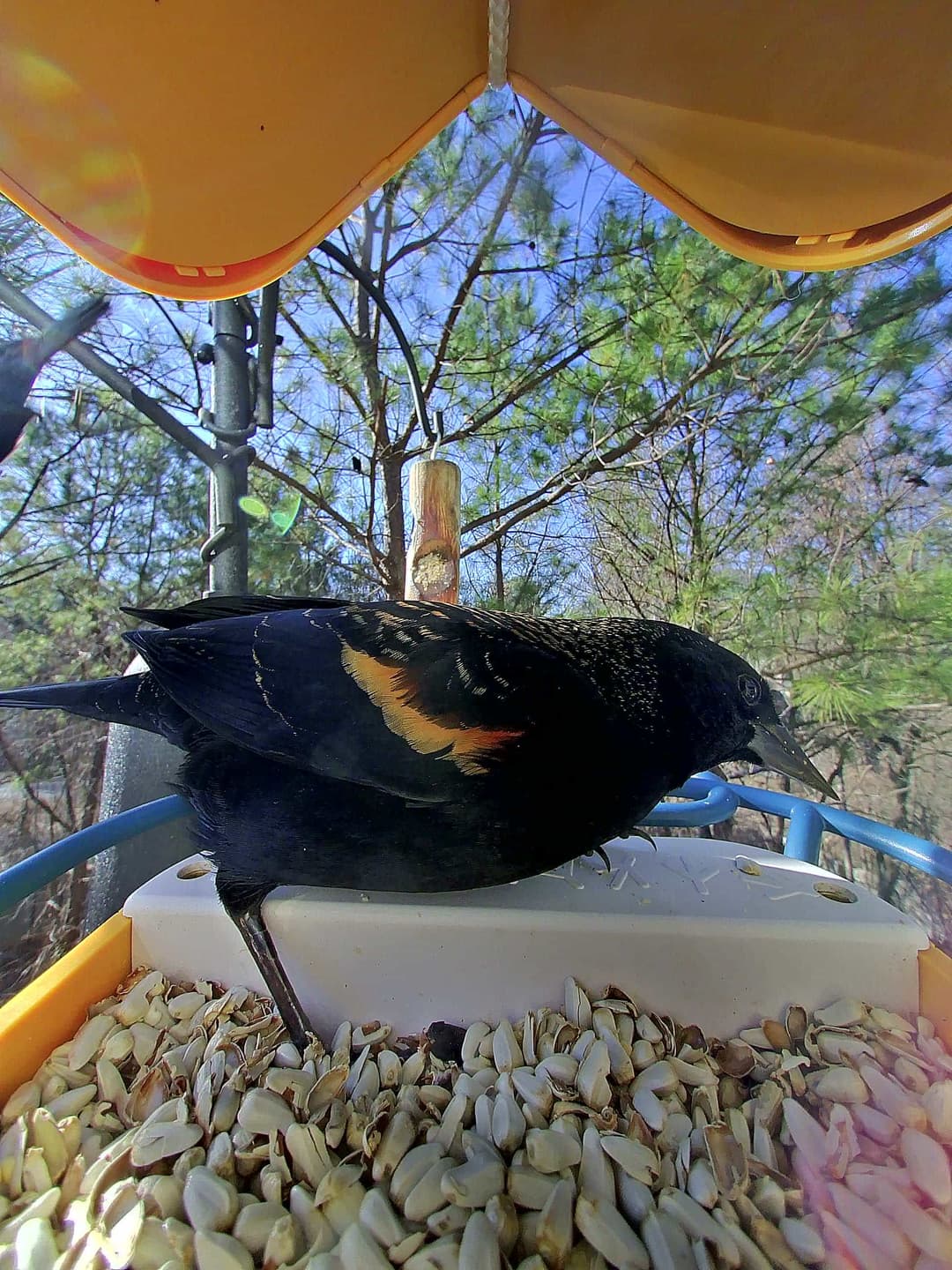
Brown-Headed Cowbird vs Red-Winged Blackbird
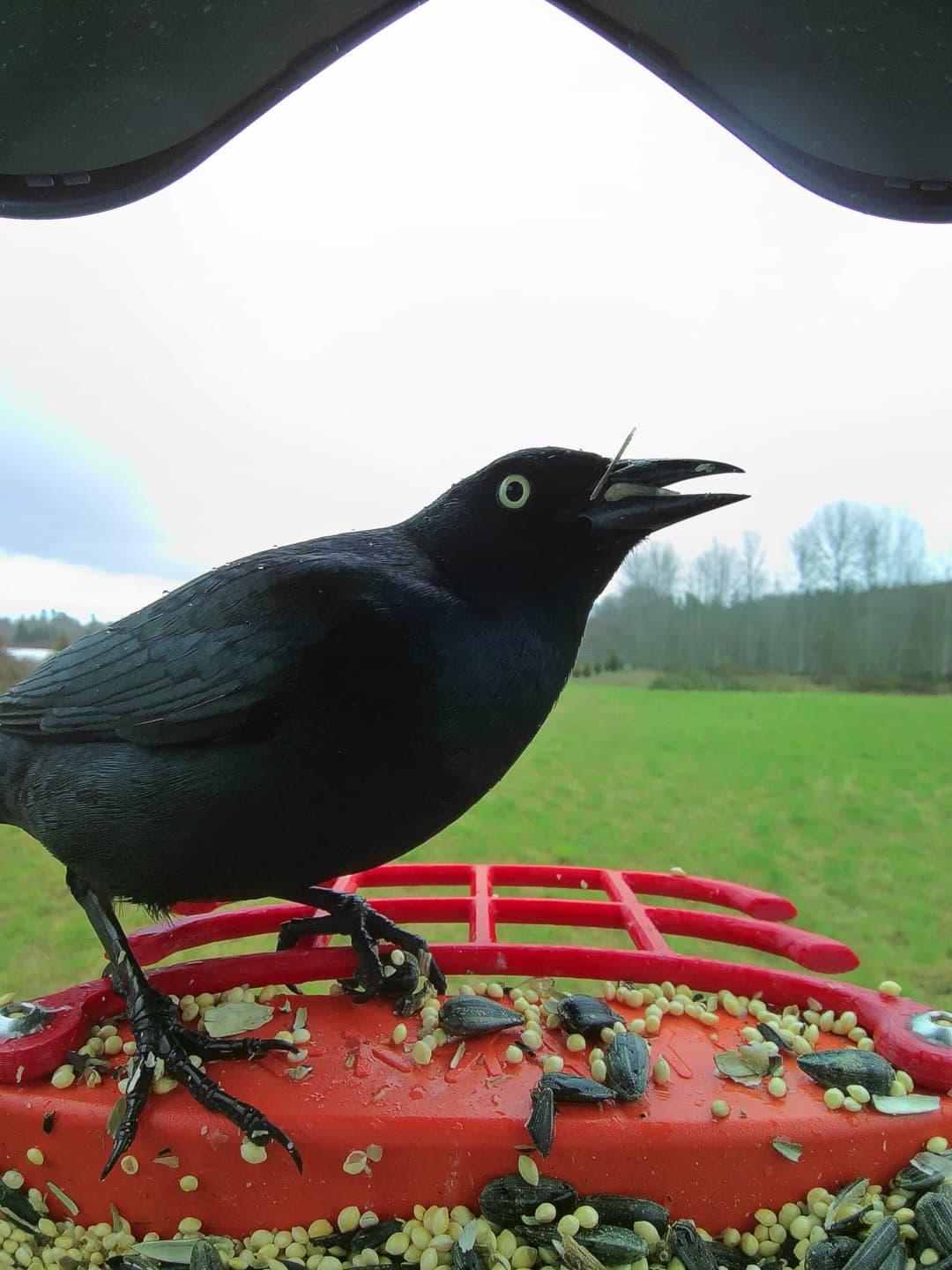
Brown-Headed Cowbird vs Brewer’s Blackbird
Brown-Headed Cowbird vs Common Grackle

Brown-Headed Cowbird vs Bronzed Cowbird
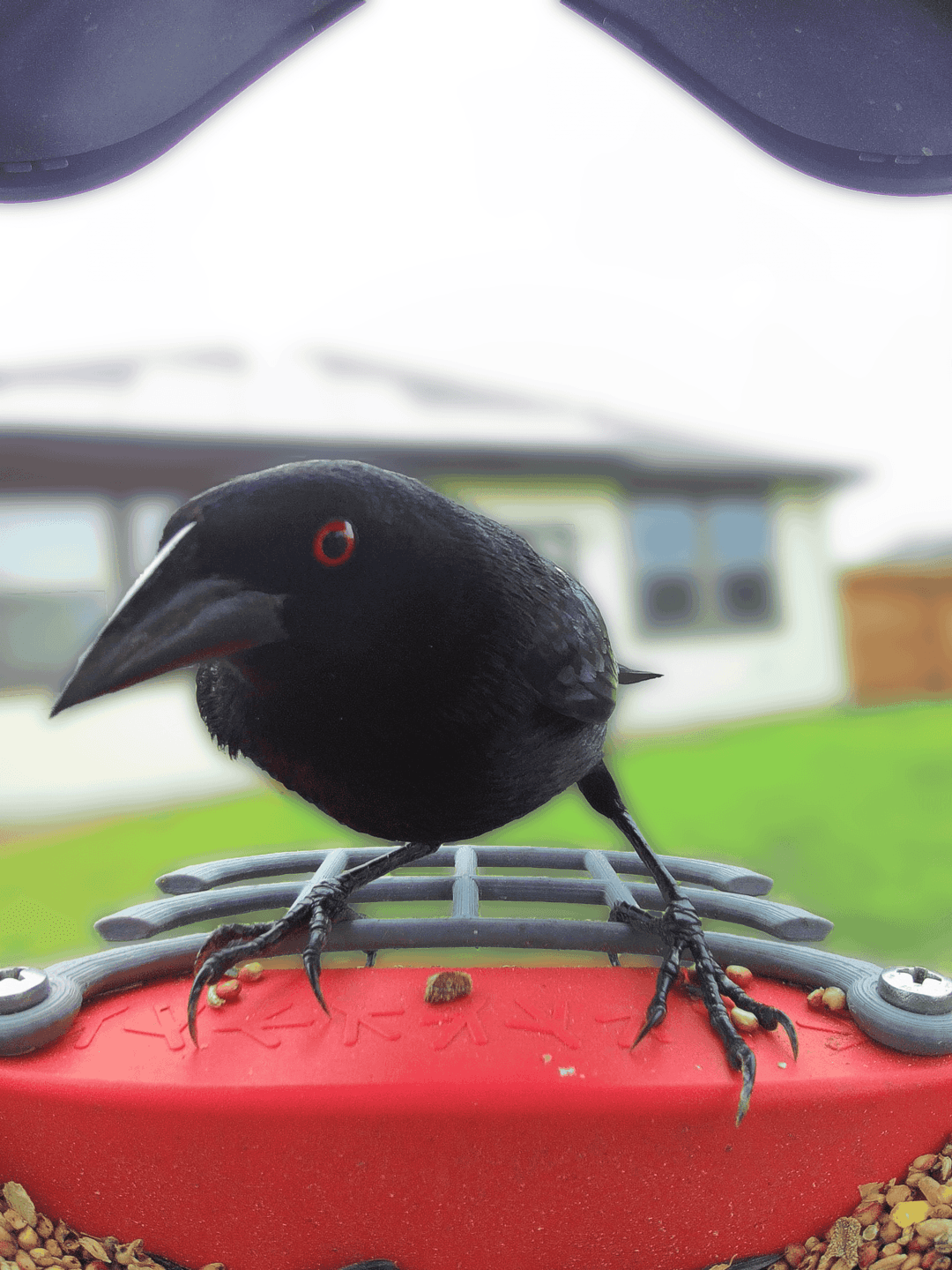
Brown-Headed Cowbird vs Shiny Cowbird
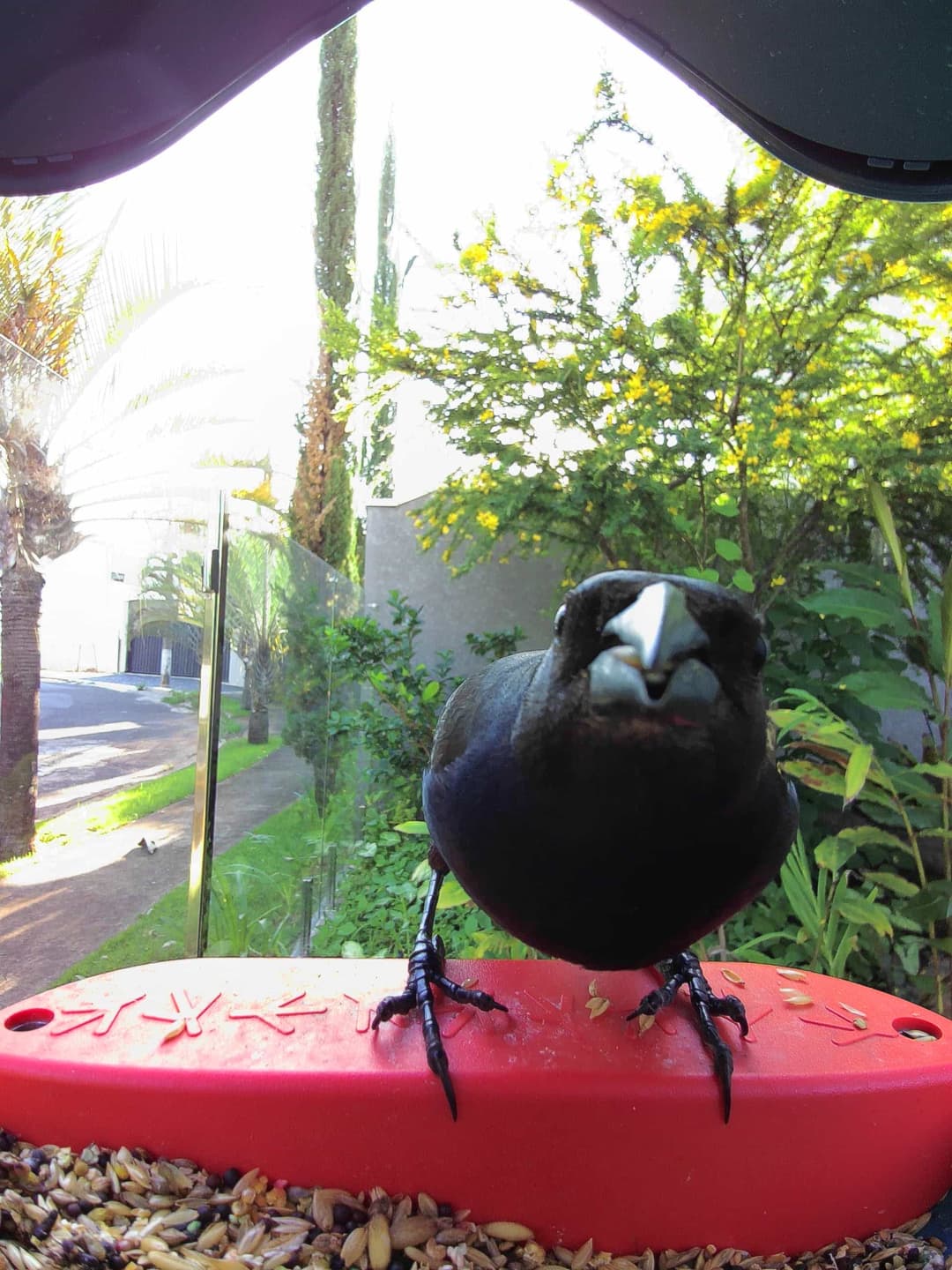
Blue Grosbeak vs [Select a bird]

[Select a bird]
Pick a bird to compare
Brown-Headed Cowbird vs [Select a bird]
[Select a bird]
Pick a bird to compare