Vermillion Flycatcher or House Finch?
Here's how to tell the difference
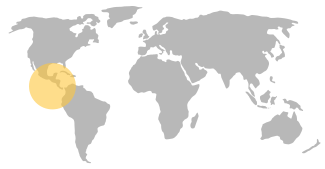
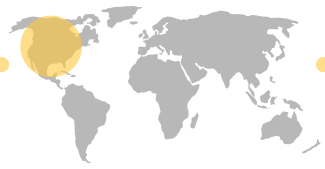

Vermillion Flycatcher
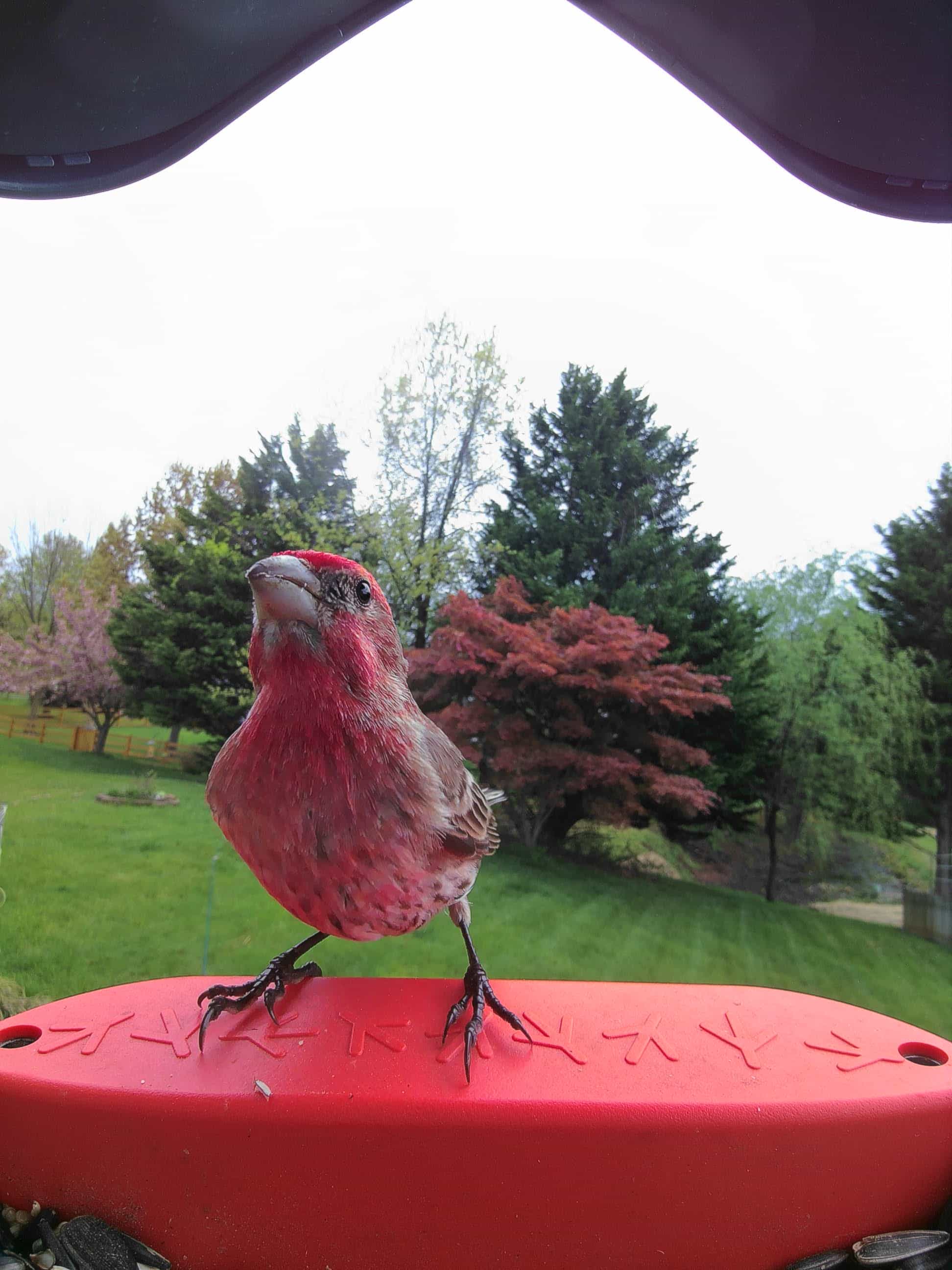


House Finch
Vermillion Flycatcher
Pyrocephalus obscurus
General Appearance
The Vermillion Flycatcher is a small striking bird easily recognized by its vivid coloration and compact size. The adult males display a dazzling bright red body with contrasting black wings and tail, which makes them stand out in open habitats. The head is vibrant red as well and is set off by a dark-colored bill. Their tail and wings possess a distinctive black shade, creating a charming contrast that enhances their red plumage, making them highly visible in their natural environment.
Male vs Female
Males have more striking coloration compared to females. While males boast a bright red plumage that stands out, females are more subdued in appearance. Female Vermillion Flycatchers exhibit a grayish-brown color on the dorsal side with paler or creamy underparts. This muted coloration acts as camouflage, beneficial for nest protection. Females have a softer, less conspicuous tint, with hints of salmon orange on their belly, significantly different from the males' vivid red.
Juvenile
Juveniles differ from adults in both sex as they lack the bright red plumage seen in mature males. Young birds typically display a brownish appearance similar to females but with even softer tones. They have a streaked or spotted pattern which gradually fades as they mature, developing the more distinct adult coloring after a series of molts. The subdued tones serve as excellent concealment, helping them remain undetectable to predators.
Size
5.1 - 5.5 in/0.4 - 0.5 oz
There's more to learn about Vermillion Flycatcher
View full detailsHouse Finch
Haemorhous mexicanus
General appearance
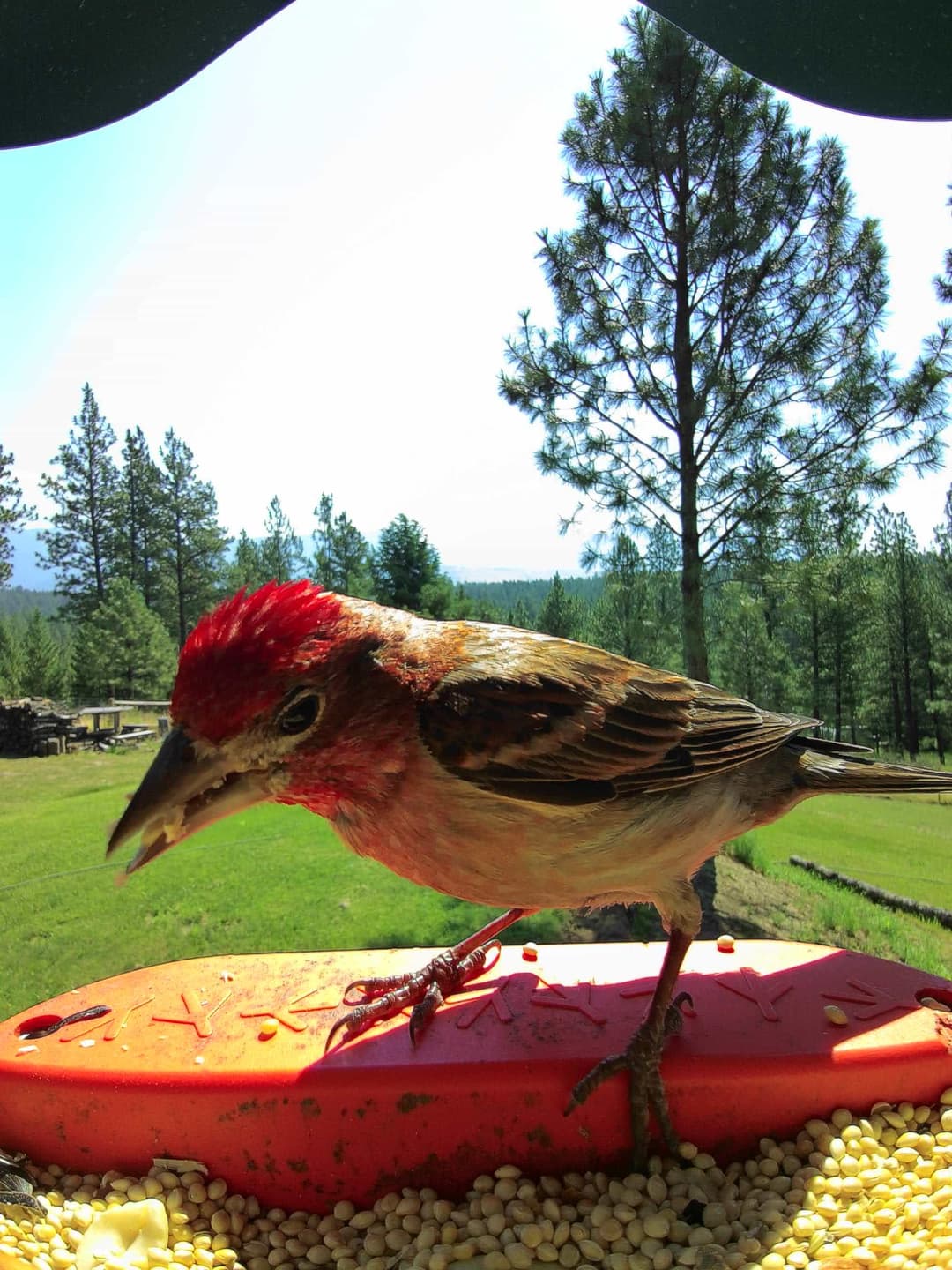
House finches are about the size of a sparrow at 5-6 inches long (13-15 cm). They possess a rounded wing shape and a notched, square-tipped tail. The prominent colorations include brown, orange, red, and white. Their underparts are pale with blurry stripes all over, and sides feature dark stripes.
Male vs female
Female and young house finches flaunt a rather plain brown face, creating a stark contrast with the males who showcase a red eyebrow and forehead that contrasts with a brown cap. The males also have a red throat and chest, with their lower underparts being whitish. The red coloration in some males can be replaced by orange or yellow which adds to their distinctive appearance.
Juvenile
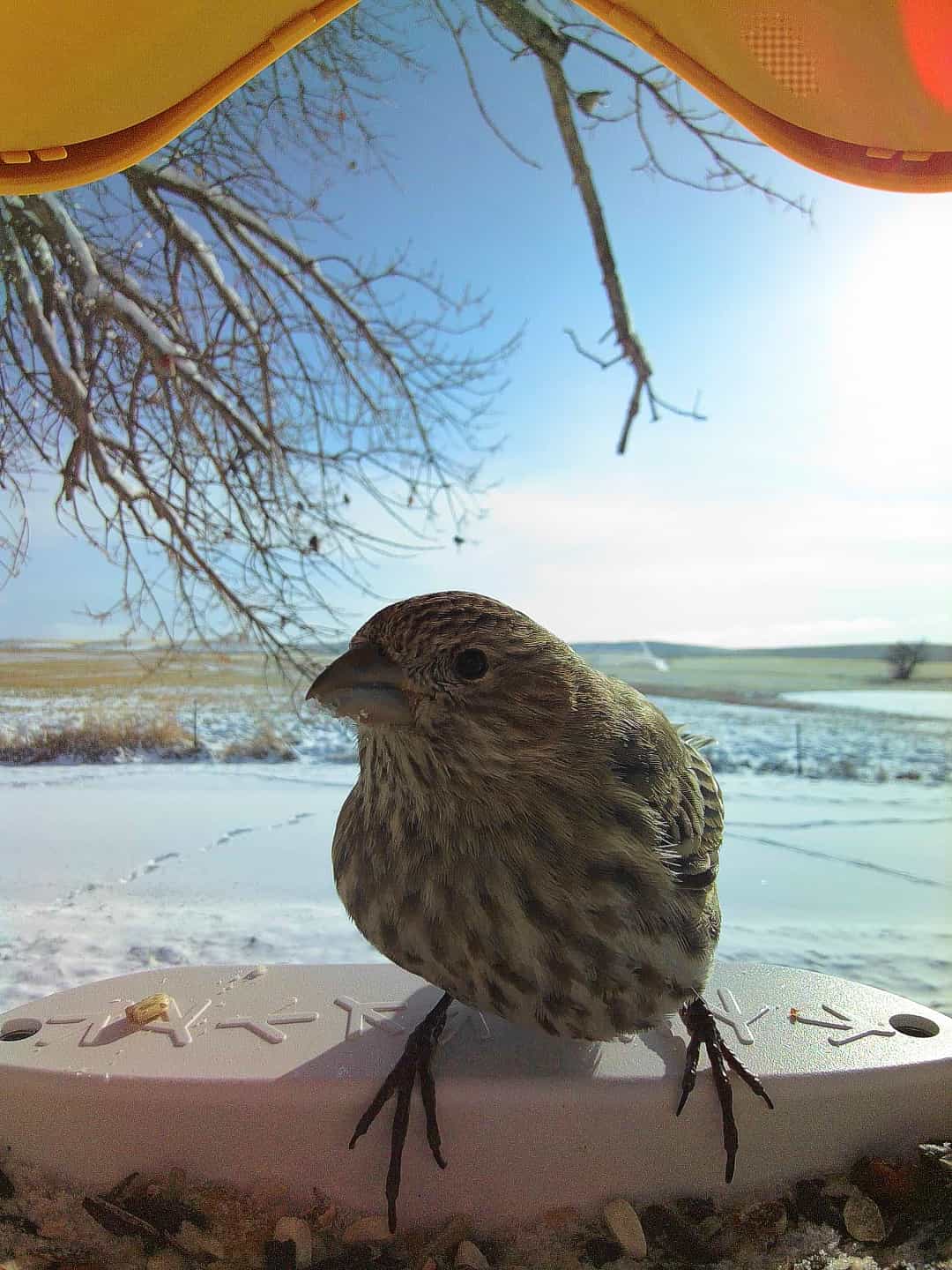
Young house finches, similar to females, display a plain brown face. However, they display sharper stripes all over their pale underparts. This provides a distinctive mark to identify juveniles from adults. These birds also lack the stripes of house sparrows and different patterns of native sparrows.
Size
4.9 - 5.9 in/0.7 - 0.8 oz
There's more to learn about House Finch
View full detailsHow to tell the Vermillion Flycatcher from the House Finch
Visual differences
The Vermillion Flycatcher is smaller, weighing 0.4-0.5 oz and measuring 5.1-5.5 inches in length. Males are vivid red with contrasting dark brown wings and tail. Their beak is short and pointed. Conversely, the House Finch is slightly heavier, weighing 0.7-0.8 oz and measuring 5-6 inches. Males are mostly brown with red, orange, or yellow tints on the forehead, chest, and rump, featuring a more conical beak. Females and juveniles of both species are brown, but the House Finch has sharper underpart striping.
Key differences and behavior
The Vermillion Flycatcher and House Finch differ notably in behavior and habitat preferences. Vermillion Flycatchers inhabit arid, open areas like deserts and are solitary outside breeding. They engage in vivid aerial courtship and are mainly insectivorous, occasionally supplementing with fruits. In contrast, House Finches thrive in human-modified environments, like cities and suburbs, forming pairs and singing year-round. They primarily consume vegetable matter, favoring seeds, and frequently visit bird feeders. Vermillion Flycatchers build nests in sparse trees in open areas, while House Finches nest in a variety of urban structures. Notably, Vermillion Flycatchers exhibit brood parasitism within their species, unlike House Finches.
Still not sure? Here are more lookalikes!
Vermillion Flycatcher vs Painted Bunting

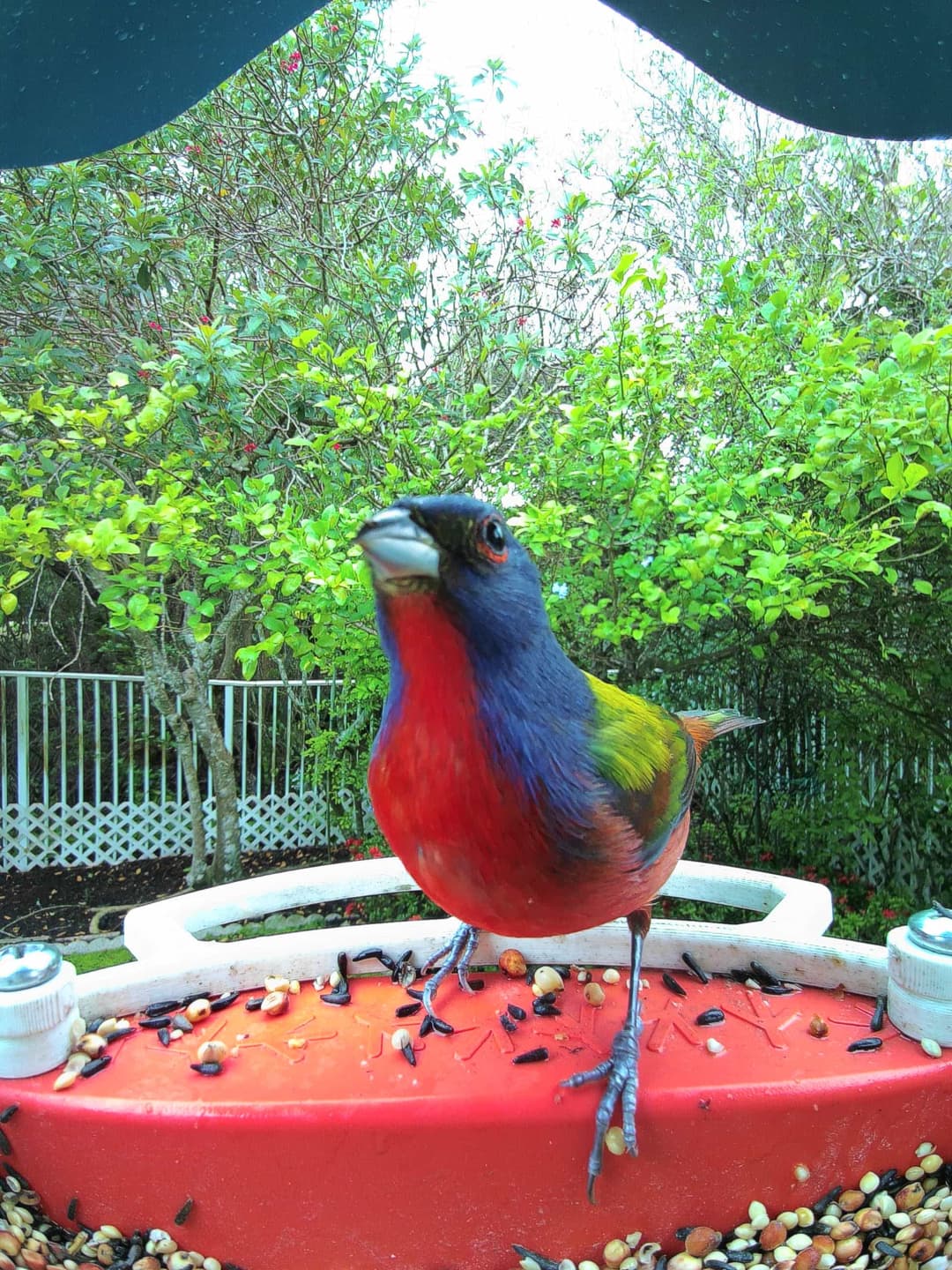
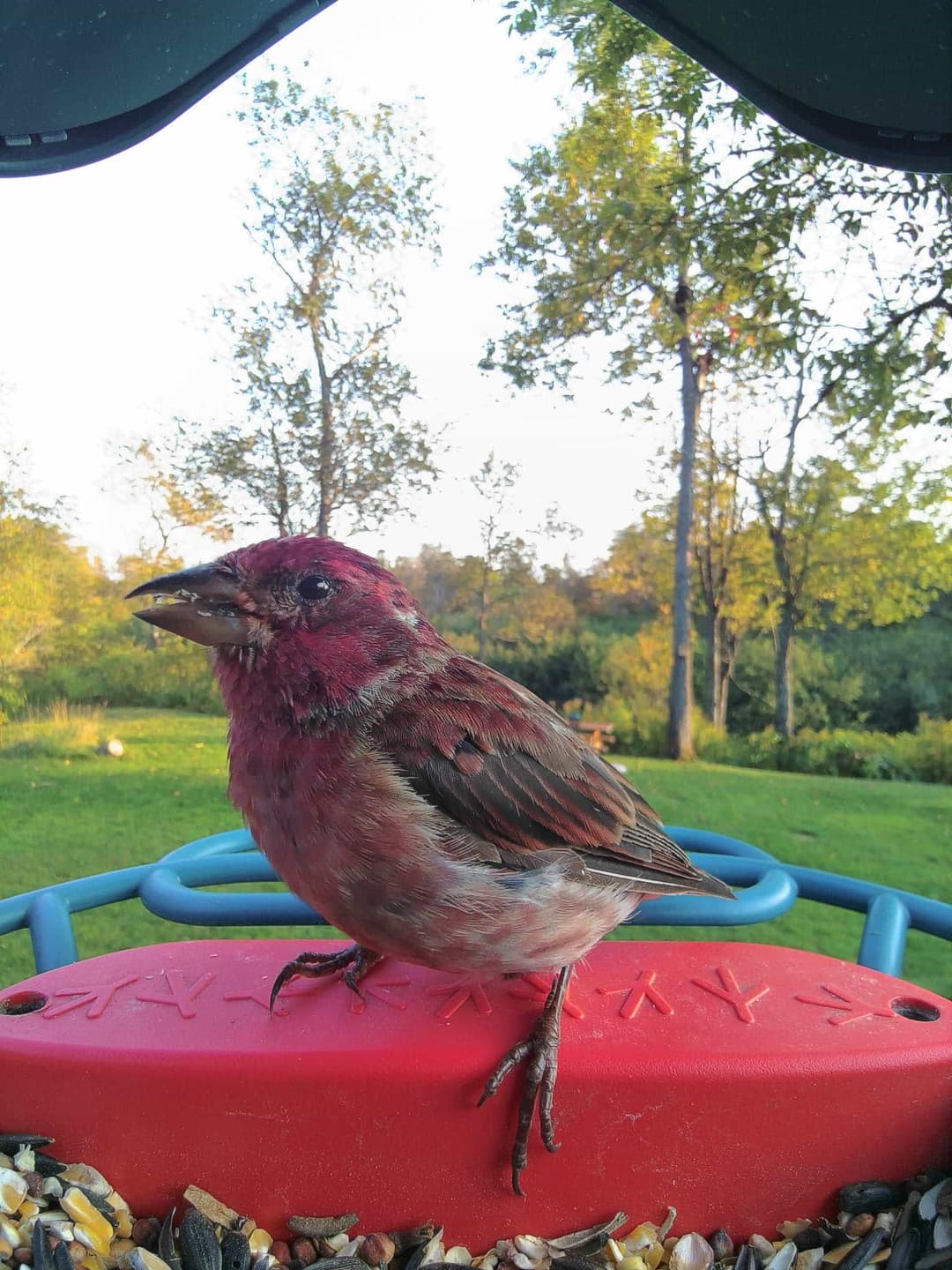
Vermillion Flycatcher vs Purple Finch
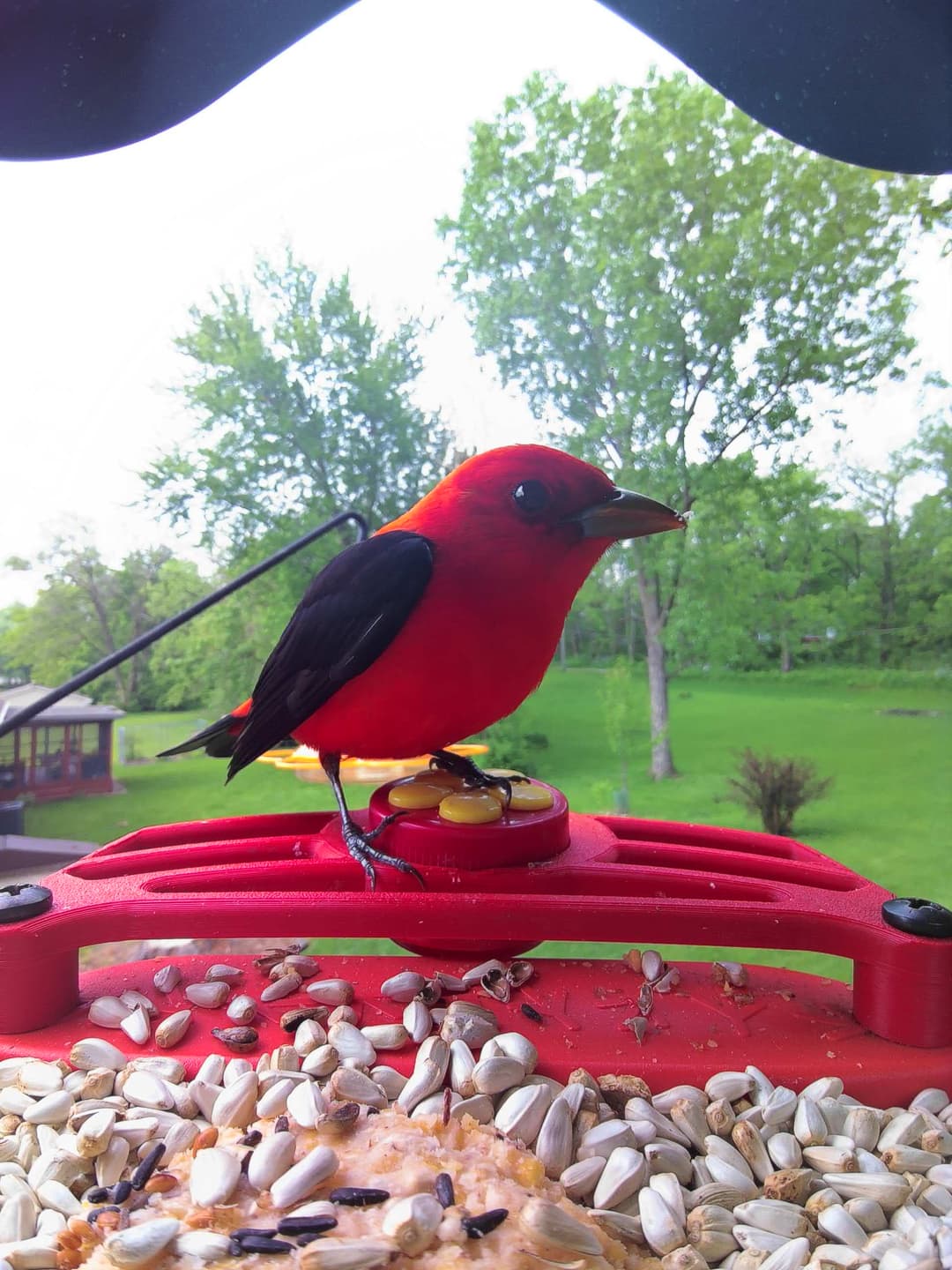
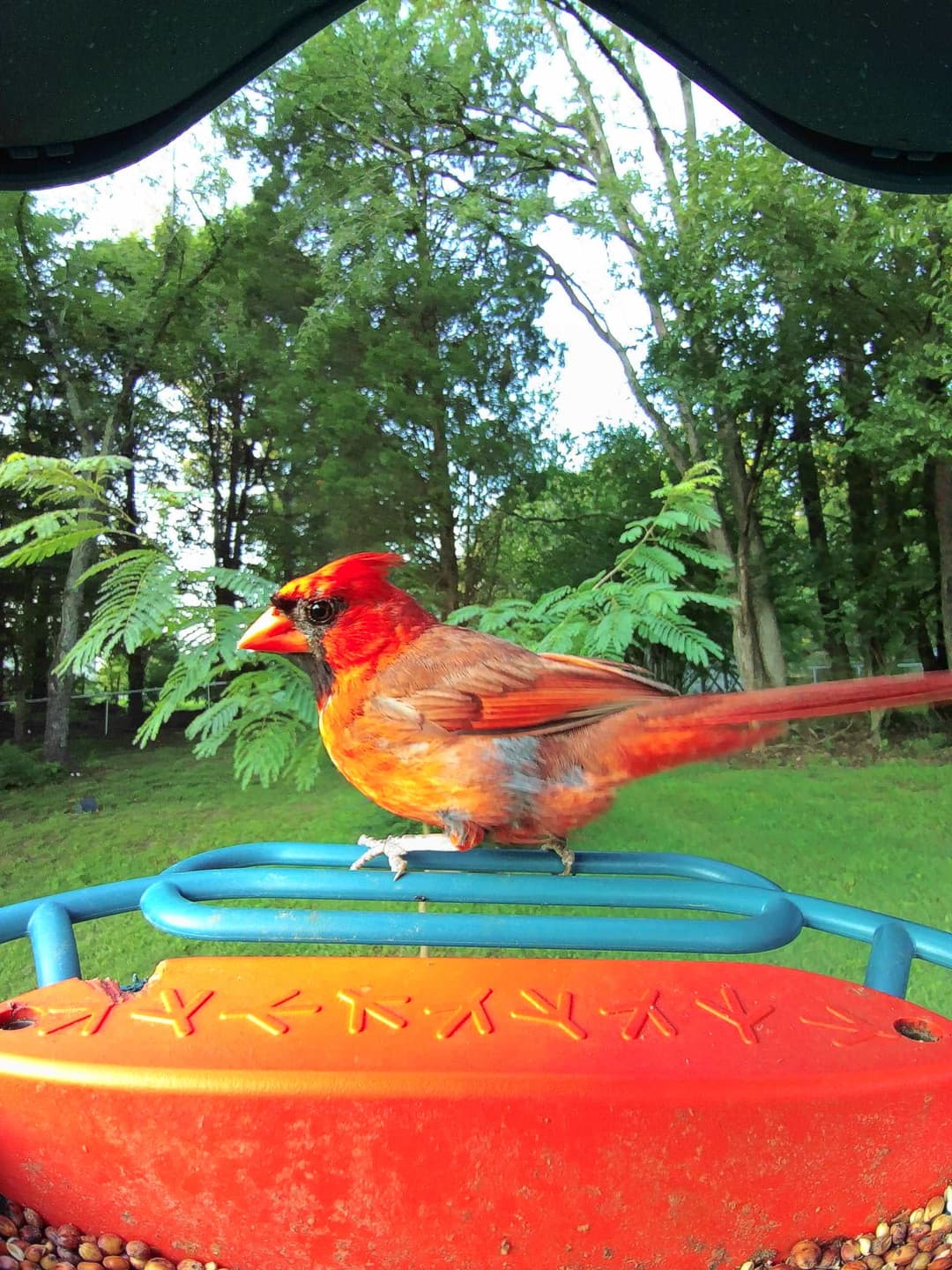
Vermillion Flycatcher vs Northern Cardinal
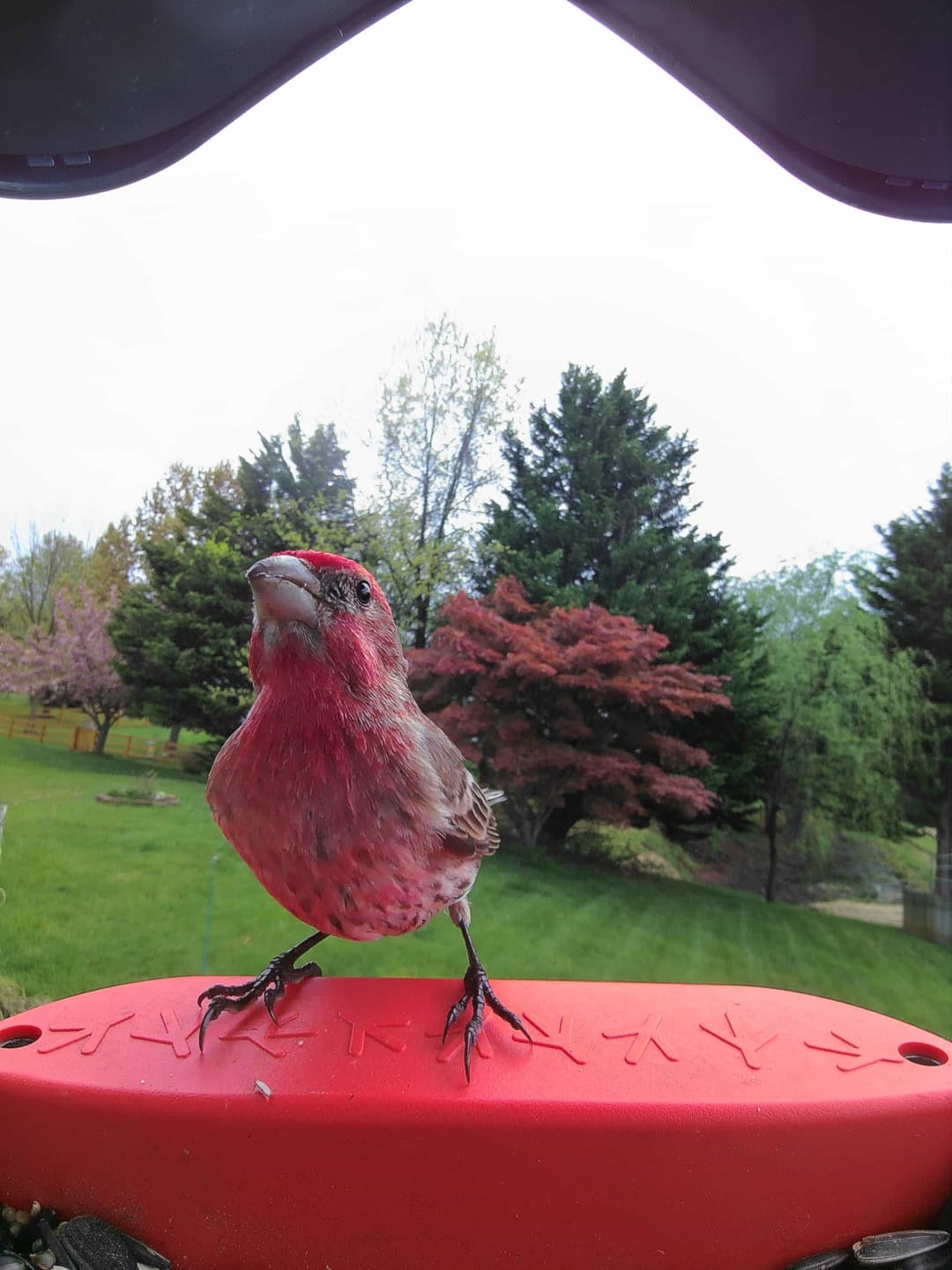
House Finch vs Purple Finch
House Finch vs Cassin’s Finch
House Finch vs Pine Siskin
Vermillion Flycatcher vs [Select a bird]

[Select a bird]
Pick a bird to compare
House Finch vs [Select a bird]
[Select a bird]
Pick a bird to compare