
Scarlet Tanager
Scarlet Tanager
Piranga olivacea


Quick Identification guide
Quick Identification guide
- •
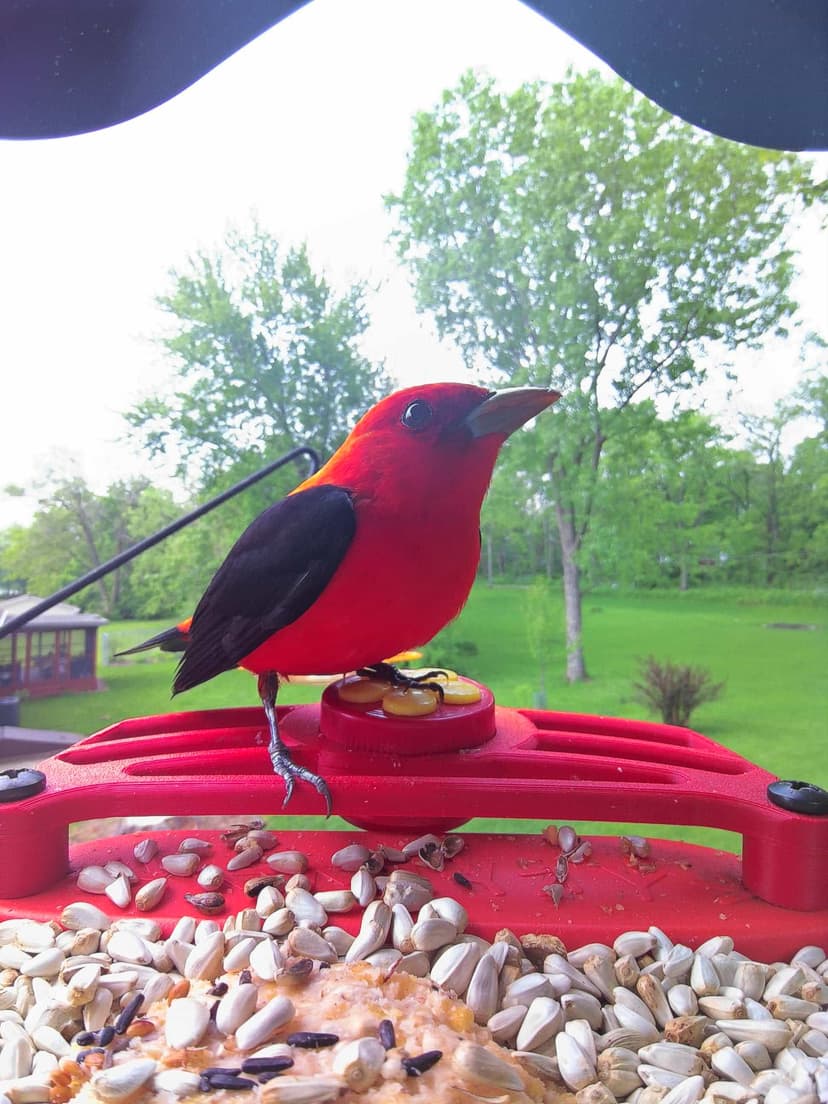
The male Scarlet Tanager is known for its brilliant red plumage and jet-black wings and tail during the breeding season
- •
Females and non-breeding males display an olive-yellow body contrasted with darker wings and tail
- •
Both sexes feature a sturdy, slightly thick bill that complements their robust build
What does a scarlet tanager sound like?
The Scarlet Tanager's vocalizations are characterized by a hurried, repetitive warble, slightly resembling a Robin's. It has a specific call note that is emphatic and nasal, referred to as "chip-bang." The call patterns alter between falling and rising. The calls are typically described as a buzz, chirp/chip, or whistle.


Description
Scarlet tanagers are beautiful birds but tough to spot as their favourite hangouts are the tops of tree canopies. They are easily heard, though. Males are known for their raspy, robin-like song and females for a softer version of it. She usually sings to answer the male and while she gathers nesting material. When they choose a mate, they are monogamous but only for that year! The next, they switch it up and pair with somebody else.
The scarlet tanager can weigh between 23to33grams and be from16to17centimeters tall.
Scarlet Tanagers typically live up to 12 years. This fits within the expected lifespan range for small passerine birds, though it's less than the maximum lifespan of some closely related species like the Blue Jay or Northern Cardinal. Factors influencing their survival include predation, disease, and habitat destruction.
Did you know?
Most popular questions about scarlet tanager
How to recognise a scarlet tanager?
General appearance
The scarlet tanager is roughly the size of a robin or sparrow, measuring in at 7 1/2" (19 cm). The bird's wings are rounded and the tail shape can be either notched, rounded, or square-tipped. The most common colours for the bird include black, green, red, and yellow.
Male vs female
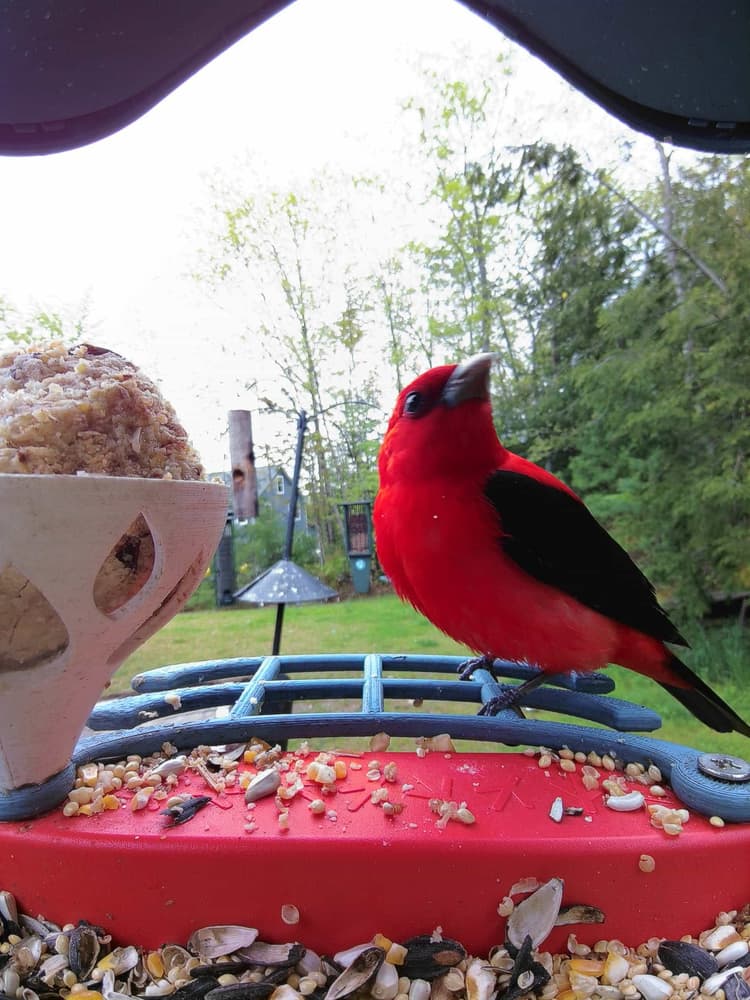
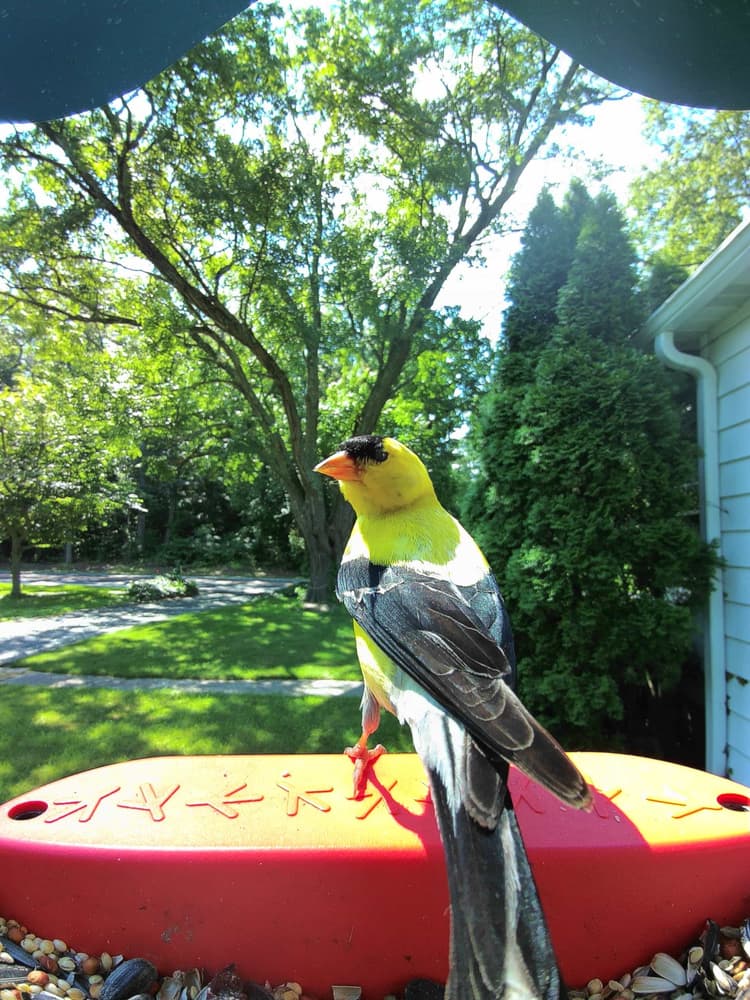
In spring and summer, the male scarlet tanager is the only bird boasting a brilliant red body with contrasting black wings and tail. In winter, the male's plumage becomes a greenish hue, with black wings. On the other hand, female are a dull yellow-green colour, with darker wings. A thick bill and sluggish behaviour are also notable characteristics of the female tanager.
Juvenile
Juvenile tanagers have similar colouration to adults, but it is less vivid and their shape and size is smaller. They may also exhibit more greenish hues, similar to the adult's winter plumage. As they mature, their coloration deepens, especially in males.
Often mistaken for
Summer Tanager vs Scarlet Tanager
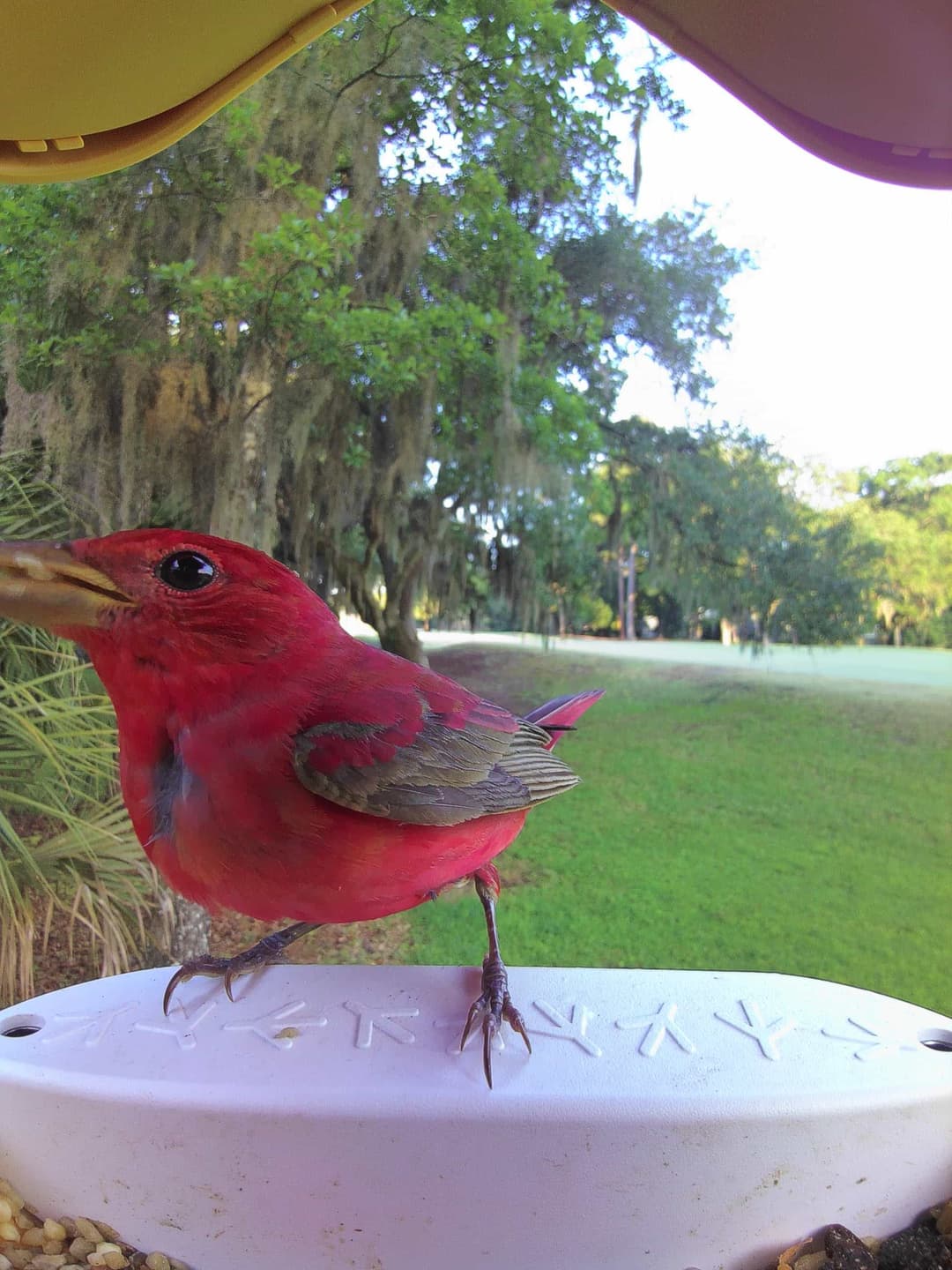
Scarlet Tanager males are bright red with black wings and tail, while Summer Tanagers are all red and lack black wings. Females of both species are yellow but Scarlet females have darker wings. Look for contrasting dark wings to identify a Scarlet Tanager.
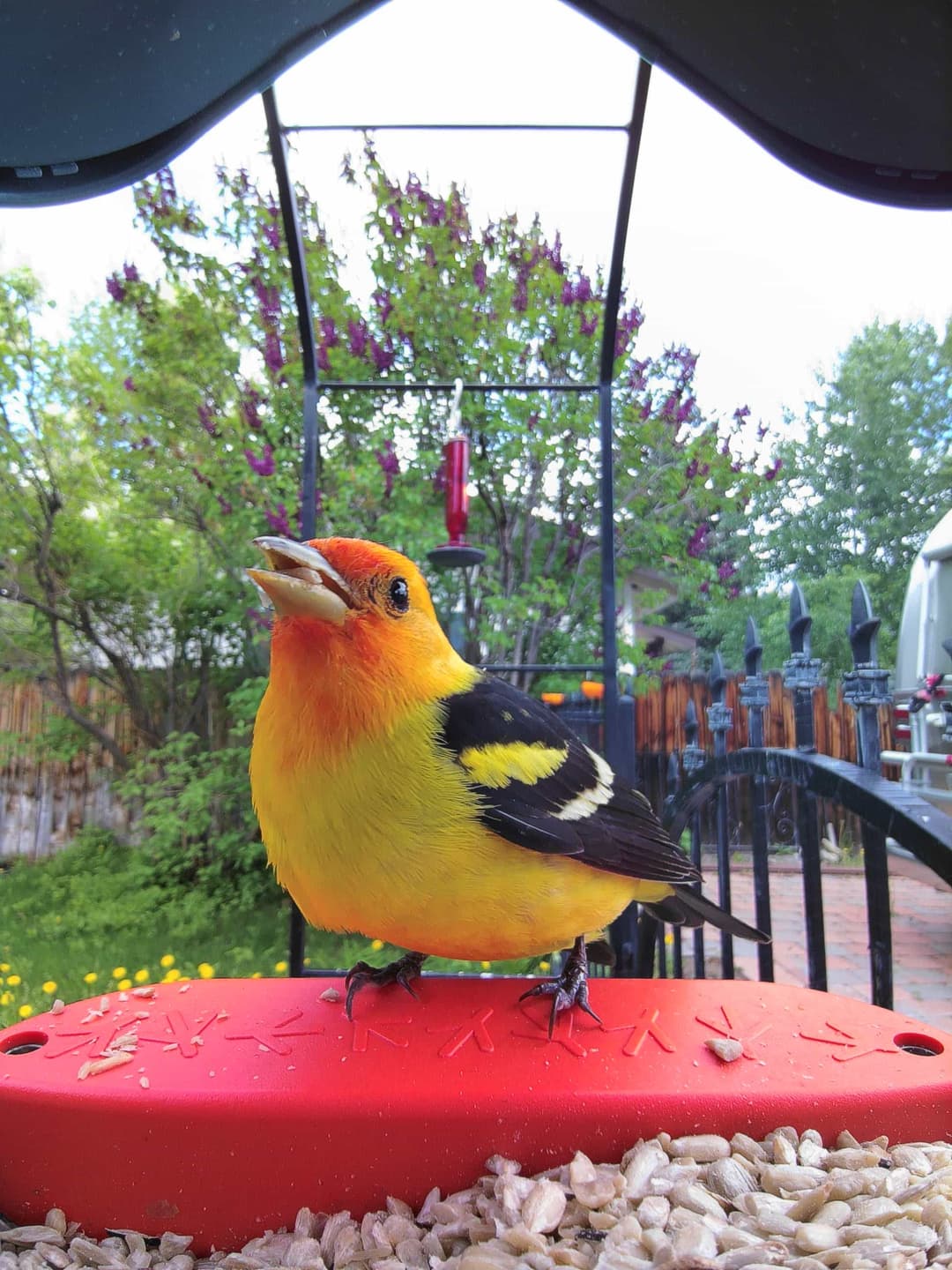
Western Tanager vs Scarlet Tanager
Western Tanagers have a vibrant red head, yellow body, and black back. In contrast, Scarlet Tanagers are entirely red with black wings. Check for a yellow body and red head pattern to distinguish a Western Tanager.
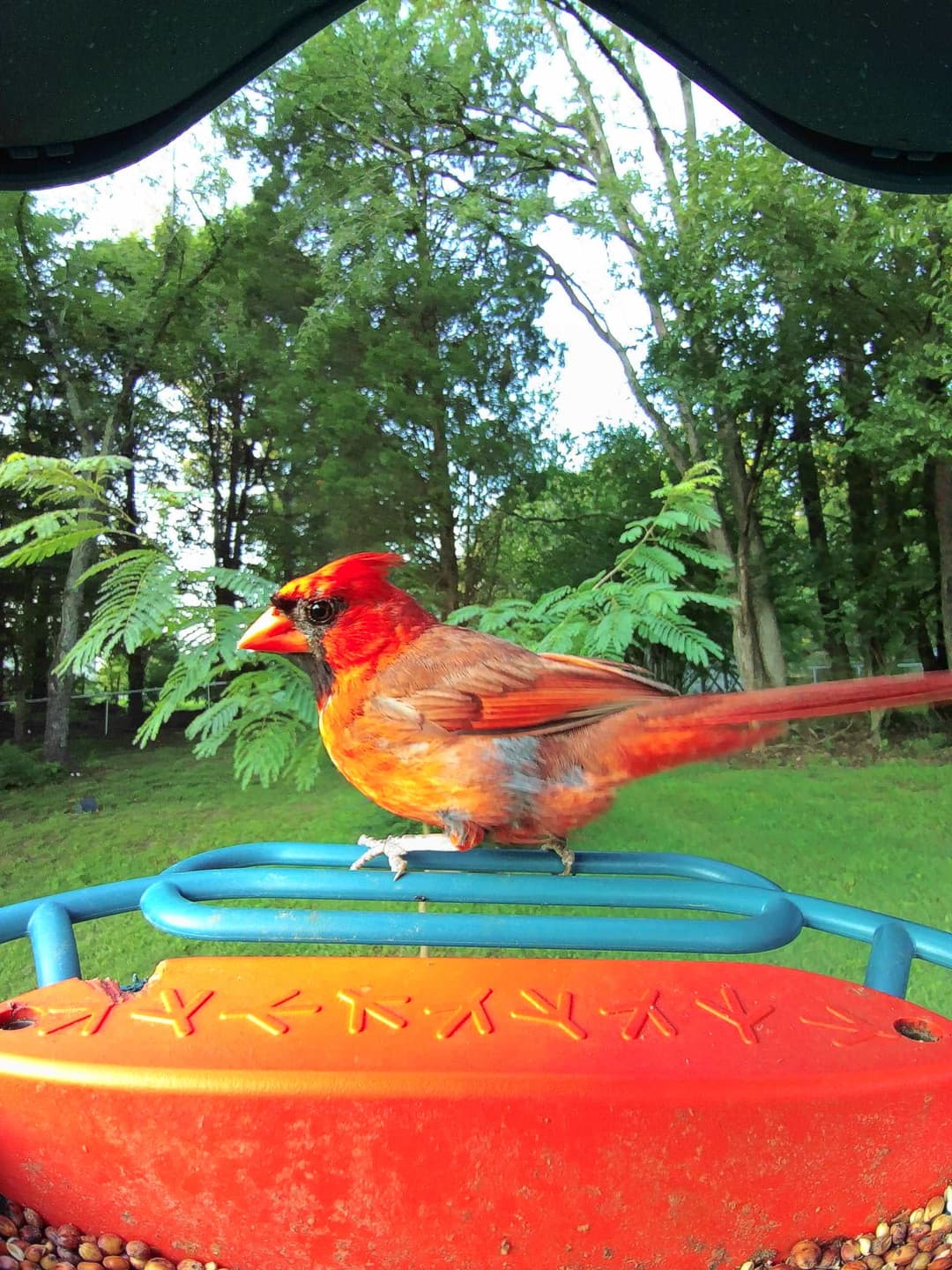
Northern Cardinal vs Scarlet Tanager
Northern Cardinals are bright red with a distinctive crest and a black face mask around the beak. Scarlet Tanagers lack a crest and have completely black wings. Look for the crest and black face to separate a Cardinal from a Scarlet Tanager.
Breeding and nesting habits of the scarlet tanager
Mating behaviors
The male scarlet tanager performs a striking display, showcasing his vivid red plumage to attract females. Courtship involves singing to demonstrate territory and suitability as a mate. Pair bonding occurs shortly after arrival at breeding grounds.
Nesting details
Scarlet tanagers prefer deciduous forests for nesting. Nests are built primarily in trees, often 20-30 feet above ground, using twigs, grasses, and rootlets. These shallow cup-shaped nests blend well into surroundings, providing camouflage from predators.
Eggs and chick-rearing
The female lays 3-5 eggs, which are incubated for about 13-14 days. Both parents participate in feeding chicks, who fledge approximately 9-15 days post-hatching. In gardens, maintain native trees and avoid using pesticides to support nesting and provide food sources.
What does a scarlet tanager like to eat?
Berries
Fruits
Insects
Nectar
Plants
Spiders
Worms
Natural diet
The scarlet tanager primarily feeds on insects during the breeding season, including beetles, caterpillars, grasshoppers, and ants. It also consumes fruits and berries, such as mulberries and blackberries, especially in the late summer and fall.
Bird feeders
While scarlet tanagers do not frequently visit bird feeders, they may occasionally eat suet or mealworms provided in backyards. During migration or when natural food sources are scarce, they might be attracted to feeders offering fruit or jelly.
Foods to attract the scarlet tanager
Scarlet Tanagers adore fresh fruits, primarily oranges and apples. Consider cutting the fruit into halves and hang them onto the branches. They're also a huge fan of insects, so encouraging the presence of caterpillars, spiders, and beetles in your yard will make it an appealing place for these birds. However, for a hassle-free approach, use Bird Buddy seeds as these are specially chosen by experts for each season. They're proven to attract Scarlet Tanagers effectively.
Best feeder types for scarlet tanager
The feeder you choose to attract Scarlet Tanager should be robust and easy to clean. Bird feeders such as platform feeders or hopper feeders would work best. These types allow the birds to easily perch and pick the seeds. Also, they provide a good view of the birds when they come to feed. Make sure they are well-stocked with Bird Buddy seeds to ensure maximum attraction.
Fun tricks to attract scarlet tanager
Make your garden a desirable habitat by incorporating native plants that attract the bugs the Scarlet Tanager likes to eat. Consider adding a water feature, like a bird bath or a fountain, as these birds like water sources. Position your bird feeders and fruits near a quiet, sheltered area to offer them a safe space to eat and rest. With these tips, your yard will become a regular stopping point for these beautiful birds, and maybe even a place for them to sing you a song or two!
Where can you find scarlet tanagers?

Primary habitat
The scarlet tanager primarily inhabits deciduous forests rich in oaks, but they can also thrive in forests with maple, beech, and other trees. Pine-oak woods and coniferous woods dominated by pine or hemlock are occasionally occupied.
Additional range
During the winter, the scarlet tanager moves to tropical rain forests in the lowlands just east of the Andes.
Do they migrate?
The scarlet tanager is a migratory bird, known for its vibrant red plumage in males during the breeding season. It undertakes a significant migration journey each year. Scarlet tanagers breed in deciduous and mixed forests across the eastern United States and southern Canada. In the fall, they migrate to their wintering grounds in northwestern South America, primarily in countries like Colombia, Ecuador, Peru, and Bolivia. The migration route of the scarlet tanager involves traveling substantial distances. In the spring, most individuals enter their breeding areas by flying north across the Gulf of Mexico, aligning with the nocturnal migration patterns of many other songbirds. This migration, primarily conducted at night, helps the birds avoid predators and take advantage of cooler temperatures. They typically arrive on their breeding grounds in late April to early May. During the fall migration, which begins around late August to early September, scarlet tanagers again traverse the Gulf of Mexico, flying back south to reach their winter habitats. Key stopover locations along their migration route include forested regions where they can rest and refuel by feeding on insects and fruits.
What is the role of scarlet tanagers in nature and how to protect them?
Conservation status
The scarlet tanager is considered vulnerable due to habitat loss on both its summer and winter ranges. It breeds in large forested areas and struggles to thrive in fragmented forests, where it often falls prey to cowbird parasitism. Conservation efforts focus on preserving large tracts of contiguous forest to support their breeding needs and minimize threats. Currently, the species is not classified as endangered, but continued habitat degradation would increase its risk. Key conservation strategies include promoting sustainable forestry practices and protecting large forest habitats from further fragmentation.
Ecological role of scarlet tanagers
Its role in the ecosystem
The scarlet tanager, with its diet predominantly consisting of insects, plays a crucial role in pest control within its ecosystem. It consumes a wide range of invertebrates including caterpillars, moths, beetles, wasps, bees, aphids, and more, contributing significantly to the control of these populations. This helps in maintaining the balance in the food chain and preventing infestations from these insects. In addition, the scarlet tanager’s diet also comprises wild fruits and berries. By feeding on these, the bird plays a role in seed dispersal which is essential for plant propagation. The fact that it forages in tall trees and also in low shrubs or on the ground, shows its adaptability and importance in multiple layers of the ecosystem. Their nesting behavior, especially the selection of locations 20-30' above the ground, usually on horizontal branches away from tree trunks, can also influence the distribution of certain tree species through aiding in their seed dispersal.
How to help protect scarlet tanagers
Preservation tips
Habitat preservation strategies
Support scarlet tanager preservation by conserving large contiguous forest tracts suitable for breeding. Avoid fragmenting these tracts since they tend to create habitats that favor nest predators and parasites. Promote mature, deciduous and mixed forests. Resist harmful land-use practices like clearcutting and high-grading.
Community science initiatives
Join or organize local bird watching or bird counting initiatives. Participate in citizen-science initiatives like the Great Backyard Bird Count or the Christmas Bird Count. Share data with organizations such as eBird platform that collect and analyze global bird population trends. Providing consistent data helps track population changes and informs future conservation action.