
Northern Cardinal
Northern Cardinal
Also known as: Redbird, Common Cardinal, Red Cardinal, Cardinal
Cardinalis cardinalis


What does a northern cardinal sound like?
The Northern Cardinal's vocalizations include varied phrases like rich "what-cheer, cheer, cheer", a gentle "purty-purty-purty-purty" or pleasing "sweet-sweet-sweet-sweet", often reflected in a falling call pattern. Its distinctive calls can be categorized into chirps, chips or whistle types. A metallic chip sound is also part of this bird's repertoire.


Description
Did you know northern cardinal pairs share song phrases? In this case, it is the female whose song is longer and more complex. In wintertime, camouflage definitely isn't their primary aim, as they keep their distinctive red plumage even in the colder months. They are well-loved, as evidenced by the fact they are the state bird of seven states! The oldest recorded northern cardinal was a female that was 15 years and 9 months old.
The northern cardinal can weigh between 42to48grams and be from21to23.5centimeters tall.
The Northern Cardinal's lifespan typically spans around 15 years in the wild. This is relatively long when compared to other songbird species, which usually live for 2-3 years. However, cardinals in captivity can live up to 28 years due to protection from predators and access to consistent food supplies. Their lifespan often varies depending on factors such as habitat, diet, and exposure to disease.
Did you know?
Most popular questions about northern cardinal
How to recognise a northern cardinal?
General appearance
The Northern Cardinal averages 8 to 9 inches (20 to 23 cm) in length, equivalent to a Robin. It has a rounded wing shape and tail that can appear notched, rounded, or square-tipped. The bird's most distinguishing feature is its massive pink bill.
Male vs female
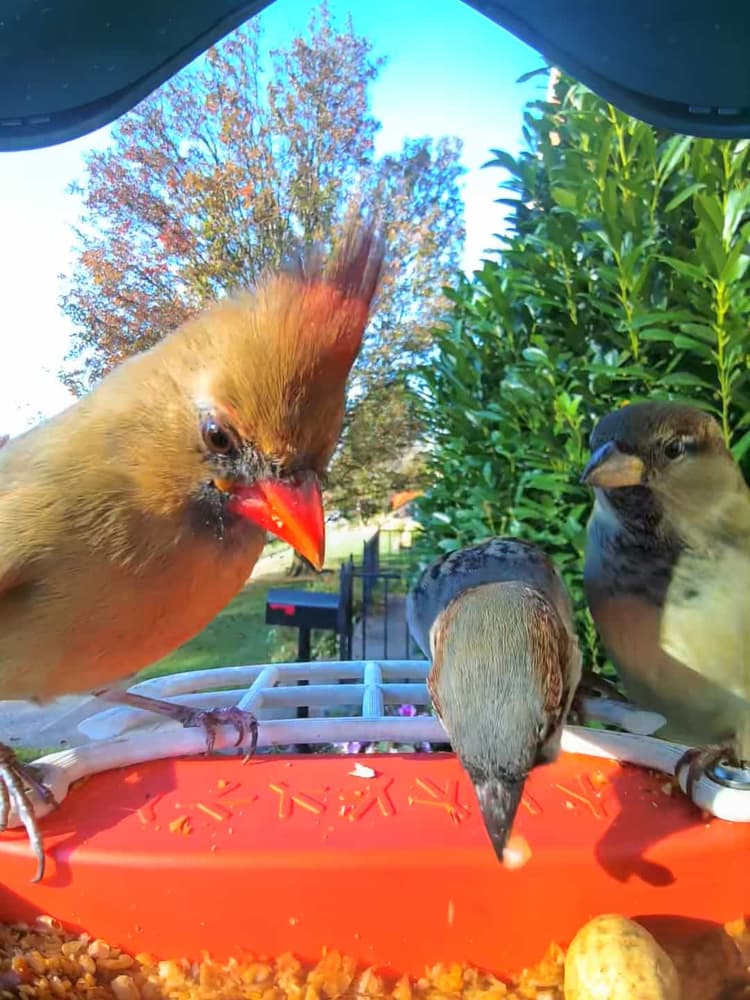
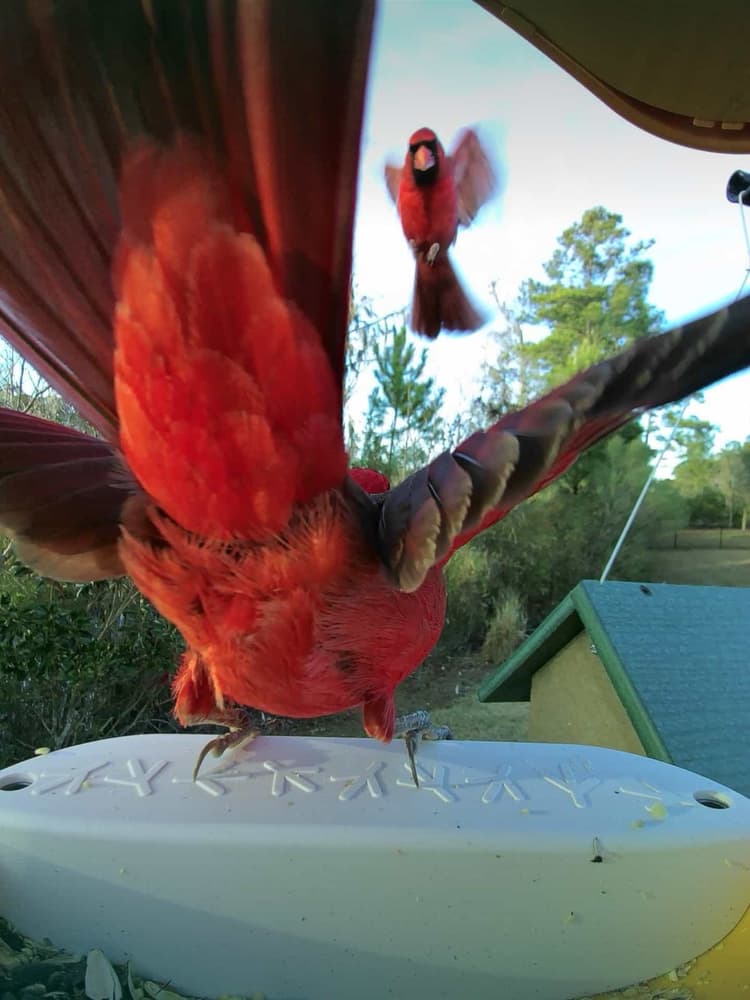
The male Northern Cardinal is our only red bird with a crest and is quite striking in appearance. On the other hand, the female is less vibrant, duller in color, encompassing hues of black, brown, gray, green, and tan, yet shares the crest and the distinctively large pink bill.
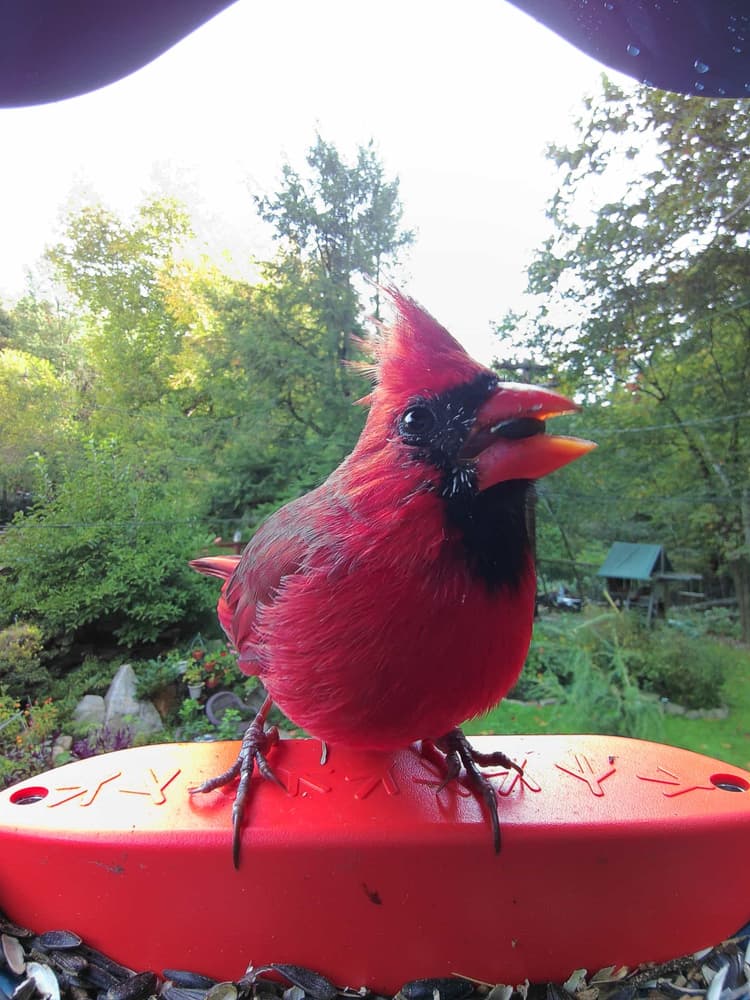
Male Northern Cardinal
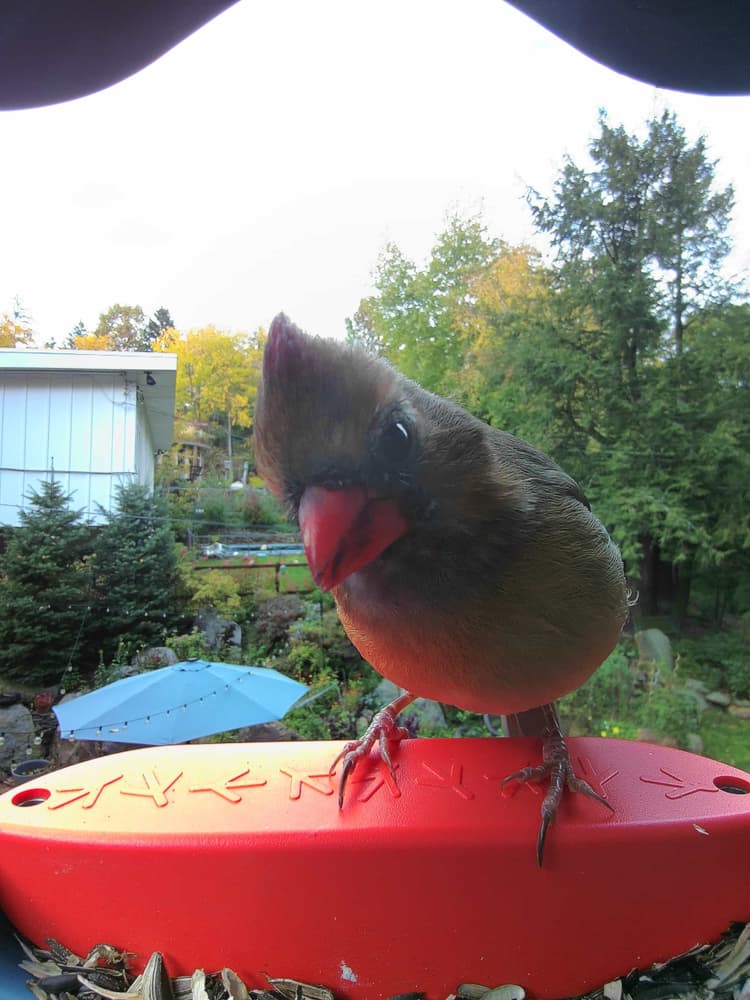
Female Northern Cardinal
Juvenile
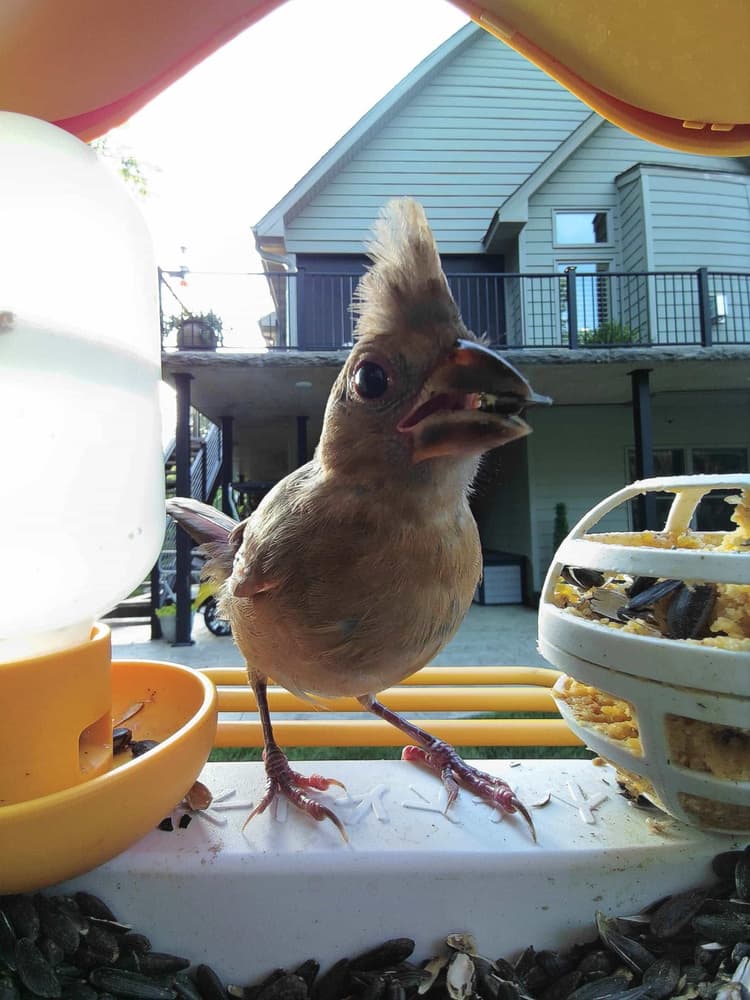
Juveniles of this species initially have a black bill, differentiating them from the adults. As they mature, their bill turns from black to the characteristic pink, and they inherit the crest from their parents, although their coloration may range from tan to red, depending on their sex.
Often mistaken for
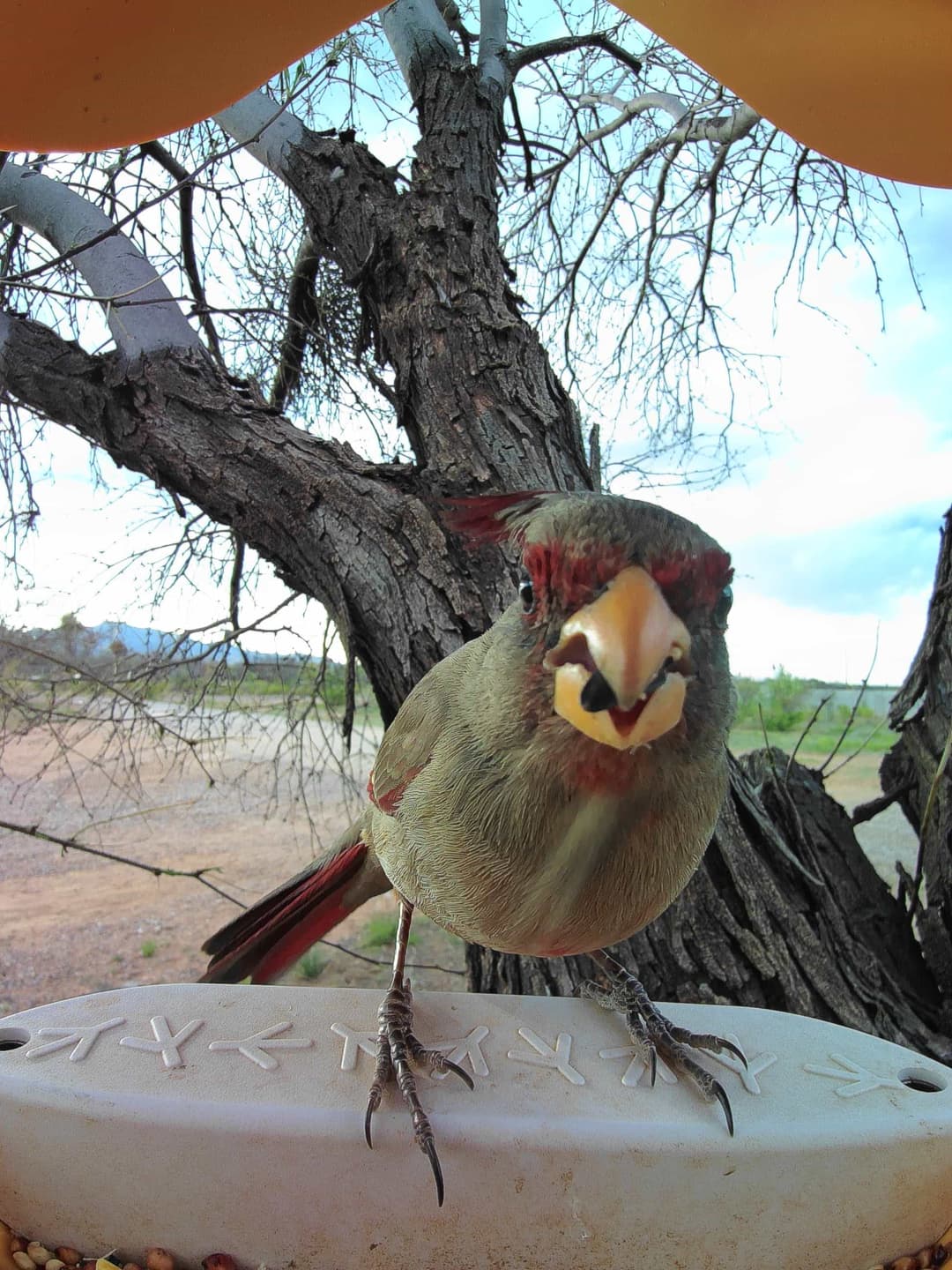
Pyrrhuloxia vs Northern Cardinal
The Northern Cardinal is bright red with a black face mask, while the Pyrrhuloxia is gray with a red face and chest. Cardinals have a distinct crest and a more robust build. Look for the Cardinal's all-red plumage compared to the Pyrrhuloxia's more muted tones.
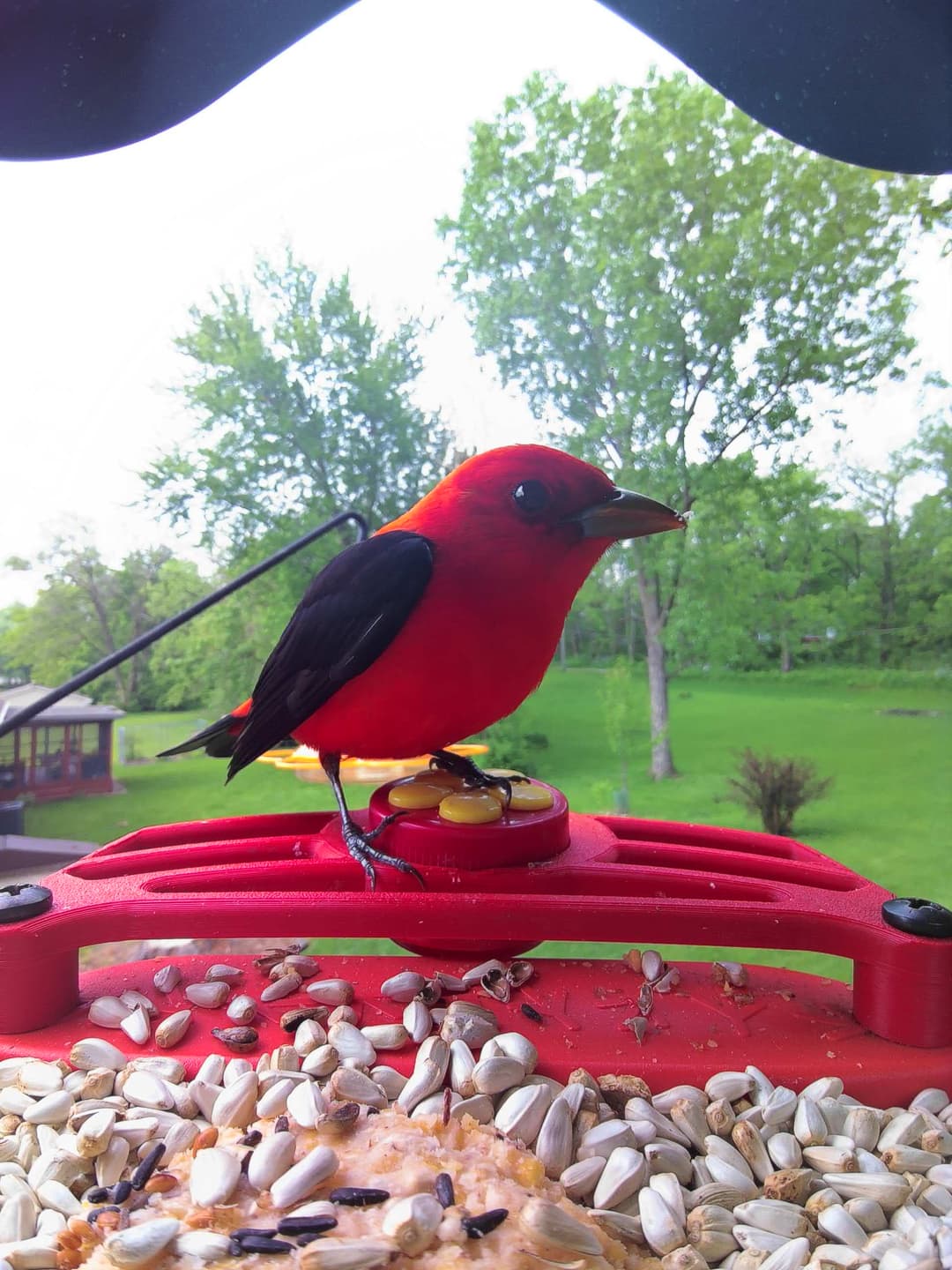
Scarlet Tanager vs Northern Cardinal
The male Northern Cardinal is red all over, whereas the Scarlet Tanager has a black tail and wings. Tanagers lack the Cardinal's crest and have a softer orange-red color. Remember, Cardinals are more crested and vibrant red.
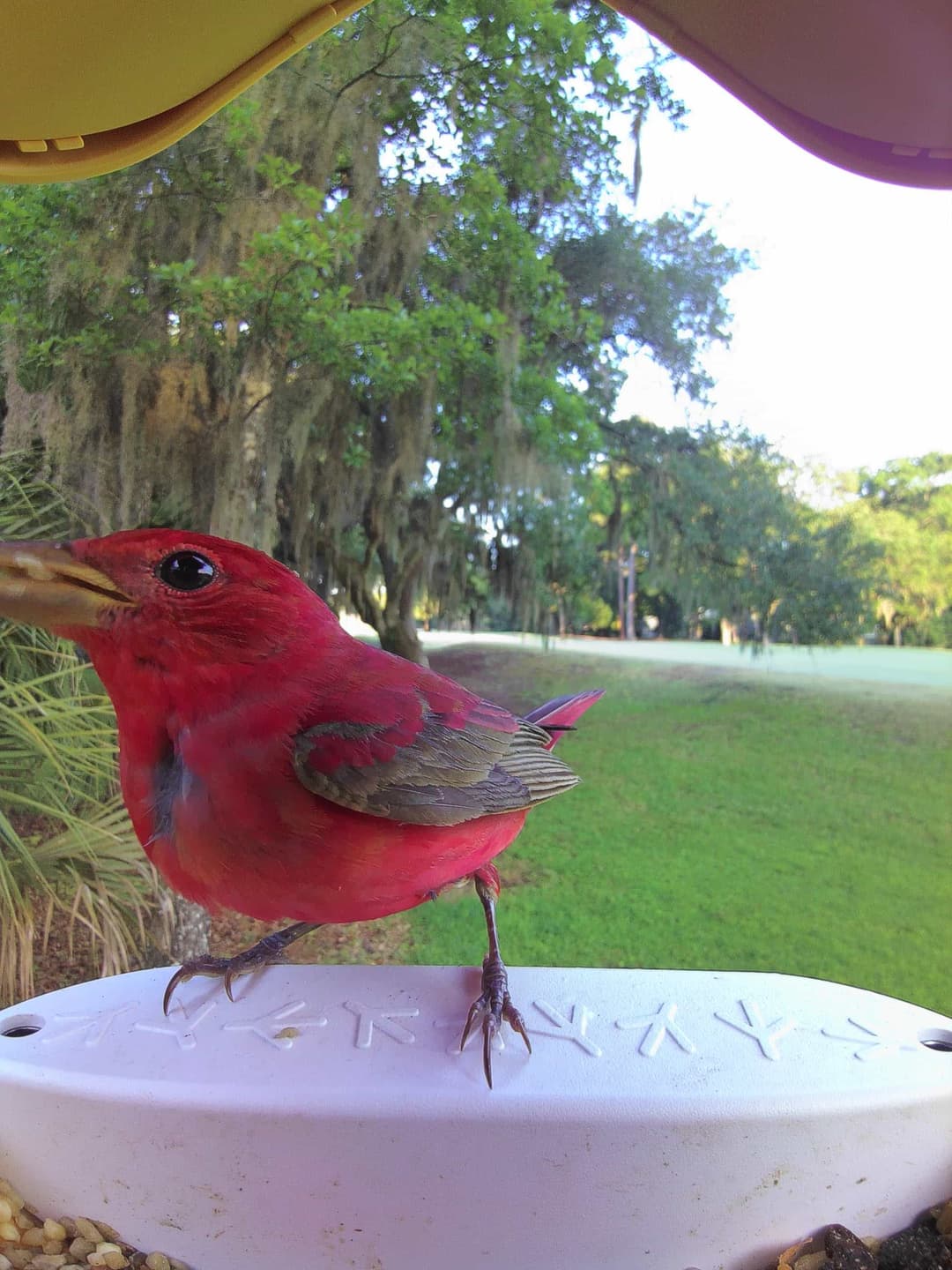
Summer Tanager vs Northern Cardinal
The Northern Cardinal features a black mask, prominent crest, and a bright red color, whereas the male Summer Tanager is a more uniform red and lacks a crest. Female Tanagers are mustard-colored, unlike female Cardinals' brown color with reddish tinges.
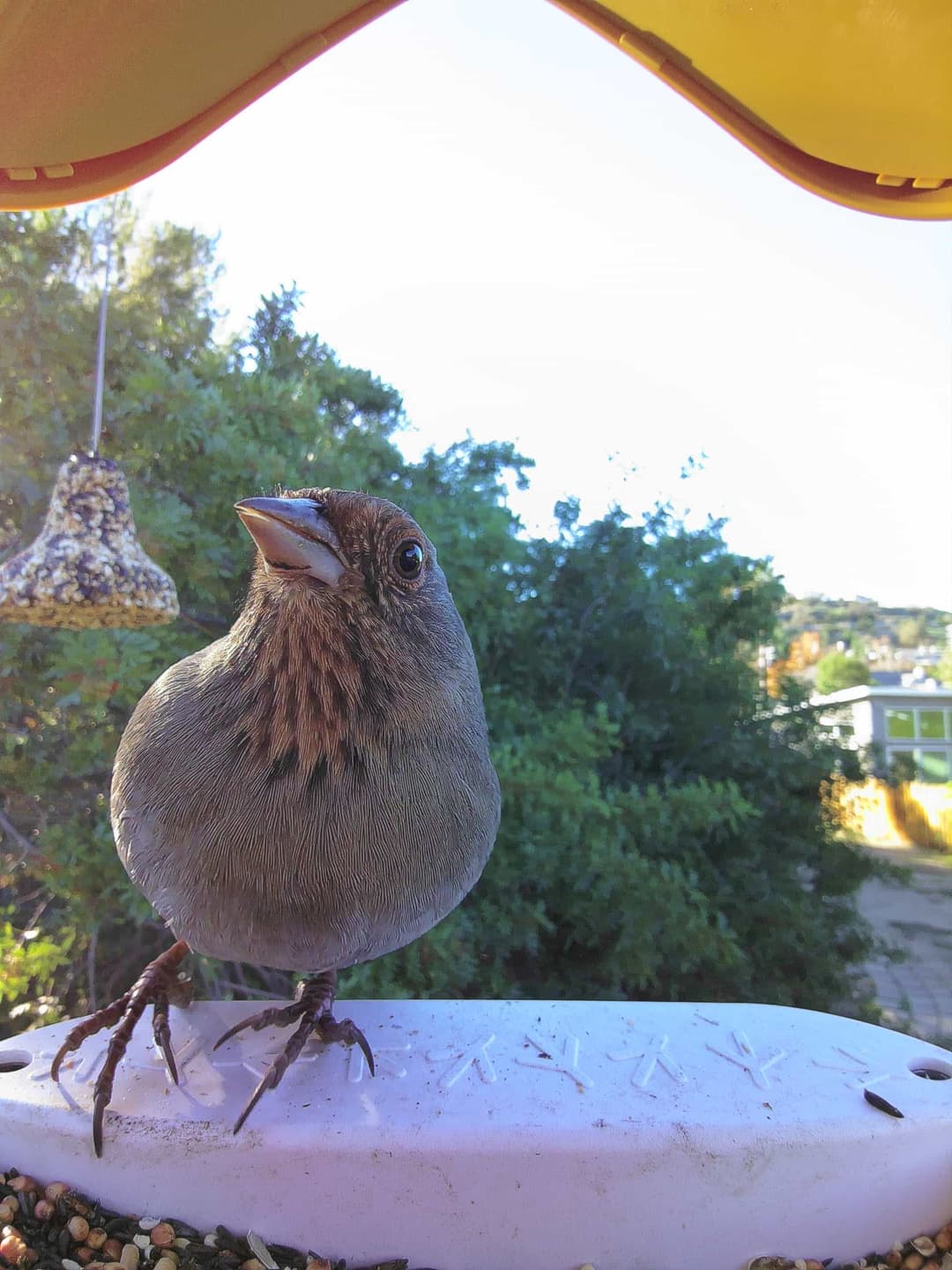
California Towhee vs Northern Cardinal
The Northern Cardinal is bright red with a crest and black mask, while the California Towhee is brown with no crest. Cardinals stand out with their striking red color and crested head, unlike the duller Towhee.
Breeding and nesting habits of the northern cardinal
Mating behaviors
During courtship, the male northern cardinal sings to defend its nesting territory, engaging in confrontations with other males and even its reflection. Both males and females participate in a display where they raise their heads high and sway while singing softly. The male often feeds the female during the early breeding season.
Nesting details
Nests are typically hidden in dense shrubs, vines, or low trees, ranging from 3-10 feet above the ground. The female builds an open cup-shaped nest using twigs, weeds, grass, bark strips, leaves, and rootlets, lined with fine grass or hair.
Eggs and chick-rearing
Female cardinals primarily sing in spring before nesting begins. The nests provide a secure environment for laying eggs and rearing chicks. If nesting in gardens, providing dense shrubbery or low trees can attract cardinals. Ensuring materials like twigs and grass are available can facilitate nesting.
What does a northern cardinal like to eat?
Berries
Fruits
Insects
Plants
Seeds
Snails
Spiders
Natural diet
The northern cardinal's diet is diverse, consisting mainly of seeds, insects, and berries. It consumes a wide variety of insects, such as beetles, true bugs, grasshoppers, caterpillars, ants, flies, spiders, centipedes, and snails. The major part of its diet is made up of vegetable matter, including seeds from weeds and grasses, waste grain, leaf buds, flowers, and numerous berries and wild fruits. The young are fed predominantly insects to support their growth.
Bird feeders
At bird feeders, northern cardinals are commonly attracted to sunflower seeds, millet, and cracked corn. These foods complement their natural diet and provide easy access to significant energy sources, particularly during the colder months when natural food sources may be less available.
Favorite snacks
Northern cardinals adore sunflower seeds. Ensure you have plenty of those around. Additionally, try Bird Buddy seeds. They are favored by cardinals and have the stamp of expert approval for the season.
Ideal feeders
Cardinals are more likely to visit feeders that are near the ground or in low bushes, although they can sometimes be tempted higher up into trees. Readily accessible and easy-to-hop onto feeders are the best choices to attract these vibrant birds.
Fun tricks
Create a little cardinal-friendly environment by having a variety of low bushes and leafy trees in your yard. This mirrors their natural foraging habitats and might just tempt them to stay longer, maybe even for a melodious sing-along.
Where can you find northern cardinals?
Based on Birdbuddy sighting data. The heatmap shows where Birdbuddy users have spotted this species.
Embed this map
This map shows the full native range based on scientific range data.
Primary habitat
The Northern cardinal thrives in brushy or semi-open environments. This includes woodland edges, thickets, suburban gardens, forest clearings, and city parks with dense bushes for nesting.
Additional range
In addition to the dominant east coast habitat, they are locally found in the Southwest in tall brush, streamside thickets, and mesquite groves in the desert
Do they migrate?
The northern cardinal is a permanent resident throughout its range, meaning it does not migrate and stays in one place all year. These birds are typically found in the eastern and central parts of North America. Unlike many bird species that migrate to warmer climates during colder months, northern cardinals have adapted to reside in their established habitats year-round. Their range includes regions with a variety of environments such as woodlands, gardens, shrublands, wetlands, and residential areas. The northern cardinal's vibrant plumage, especially the males' striking red coloration, remains a familiar sight in backyards and parks across its range regardless of the season. These birds rely on their keen adaptability to changing resources throughout the year, foraging for seeds, fruits, and insects. This lifestyle enables them to remain in their territories, defending them from rivals and continuing their life cycle without the need to undertake the long and energy-intensive journeys typical of migratory species.
What is the role of northern cardinals in nature and how to protect them?
Conservation status
The northern cardinal is common and has experienced a range expansion over the past century, with its population currently stable. It is not considered vulnerable or endangered. There are no significant conservation efforts specifically targeting this species, as it is not under threat. The northern cardinal's adaptability to diverse habitats, including suburban areas, has aided in maintaining its population. Although habitat loss and climate change can affect bird populations, the northern cardinal does not face immediate threats and remains widespread and abundant across its range.
Ecological role of northern cardinals
Its role in the ecosystem
The Northern Cardinal plays a significant role in the ecosystems it inhabits. Its diverse diet of seeds, insects, berries, and wild fruits makes it a key agent of seed dispersal, thus aiding in the propagation of various plant species. Furthermore, consuming insects such as beetles, grasshoppers, caterpillars, ants, and flies, the cardinal contributes to natural pest control, thereby preserving the balance within its habitat. Moreover, its breeding habit of creating multiple broods per year and the female's solitary incubation adds to its resilience, ensuring greater continuance of its species and maintaining its ecological roles. Lastly, the Northern Cardinal's predilection to bird feeders helps maintain the equilibrium of local bird populations by potentially preventing overpopulation of other species.
How to help protect northern cardinals
Preservation tips
Habitat preservation strategies
To conserve the Northern Cardinal, focus on creating habitats in urban and suburban environments. Plant native shrubs, small trees and thickets. Include seed-bearing plants and fruit trees to provide food. Create protected nest places by letting a part of your garden grow wild or by placing birdhouses.
Community science initiatives
Engage individuals and communities in citizen science projects. Participate in bird observation and counting initiatives, such as The Great Backyard Bird Count or eBird. Such initiatives collect valuable data about bird populations and distribution. Encourage the use of bird-friendly building materials to minimize birds' collision deaths. Promote education about northern cardinals and the importance of biodiversity.