Hepatic Tanager or Northern Cardinal?
Here's how to tell the difference
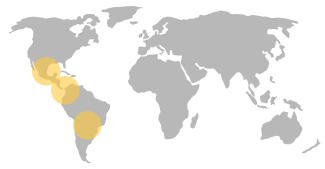
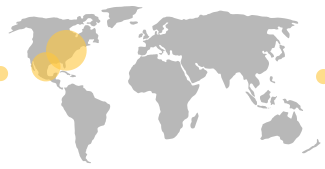
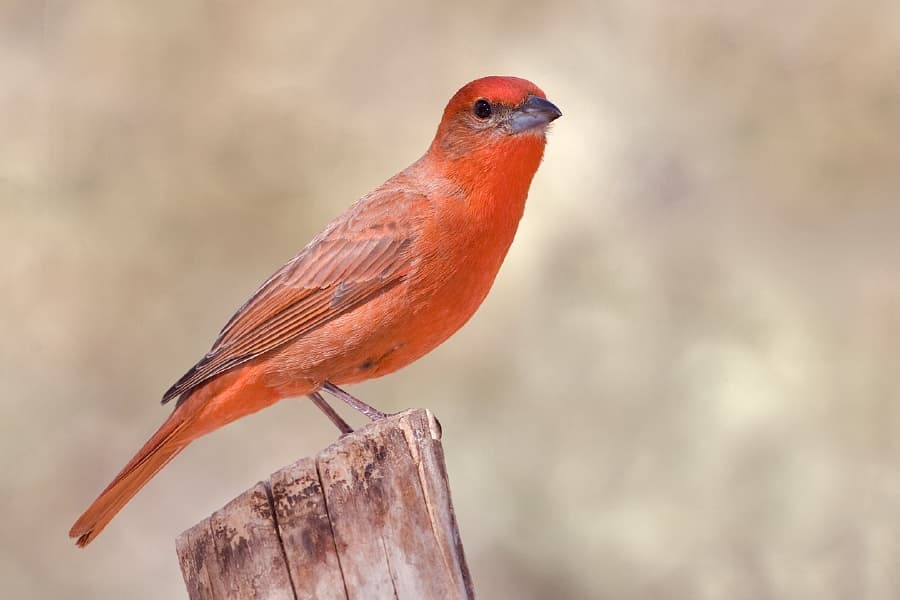
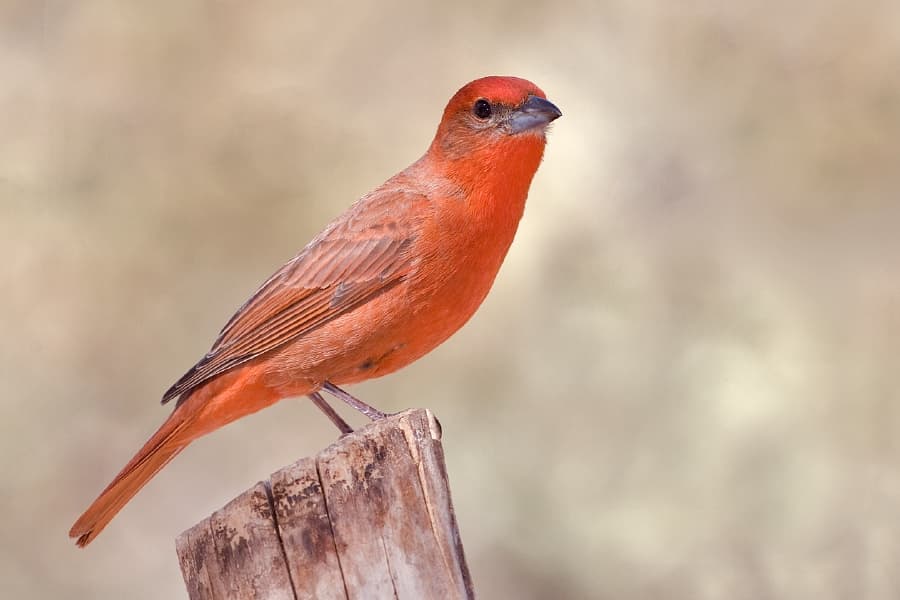
Hepatic Tanager
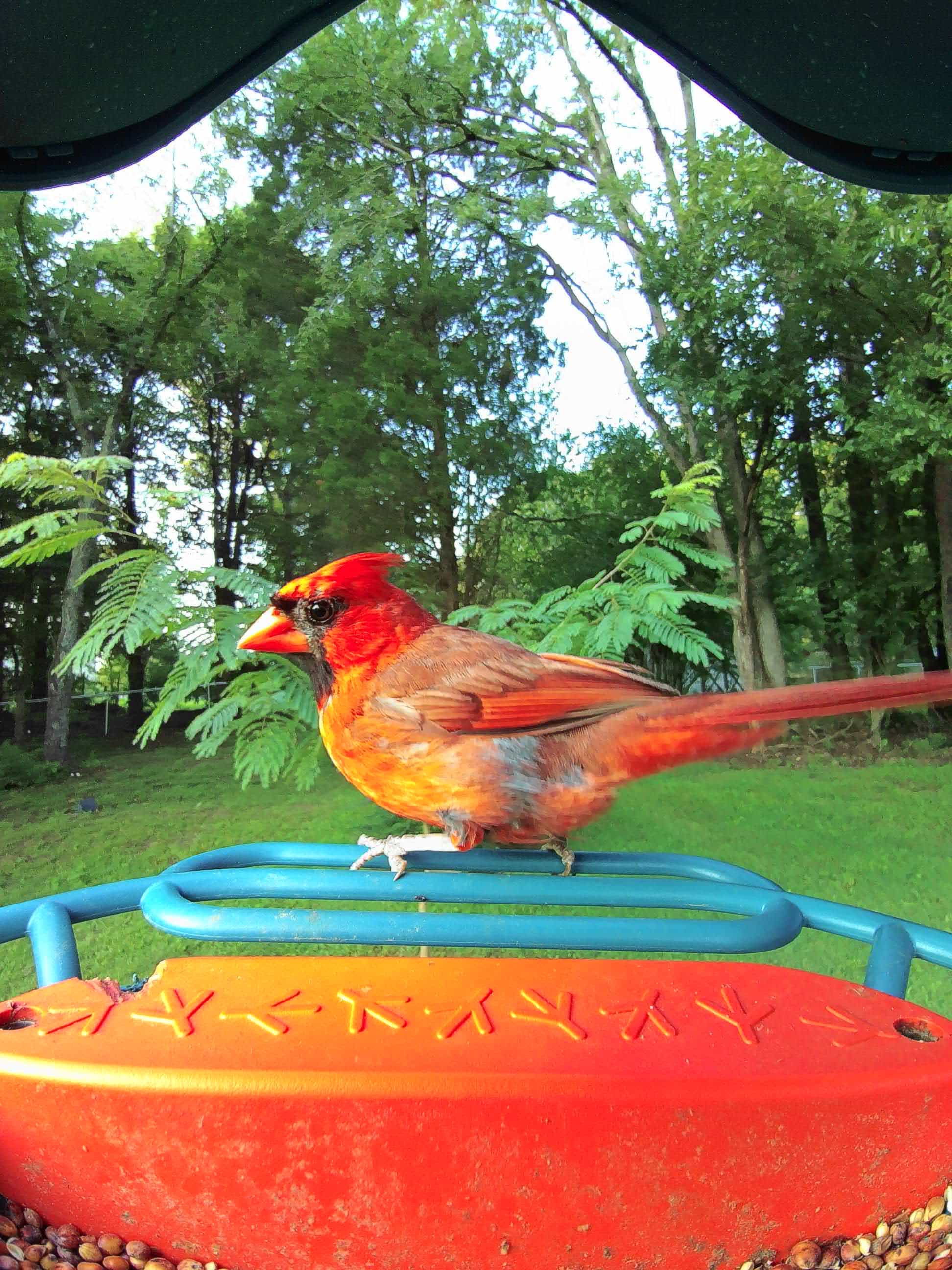


Northern Cardinal
Hepatic Tanager
Piranga flava
General appearance
The hepatic tanager generally exhibits a size range of 7-8 inches (18-20 cm) with a distinctive brick-red, orange-red, or mustard-yellow coloration. They sport rounded wings, a tail that can be notched, rounded, or square-tipped, and usually a darker bill. The cheeks of the bird contrast with their predominant color and are typically gray. The bird is similar in size to a Robin or a Sparrow.
Male vs female
Sexual dimorphism is prevalent in the hepatic tanager. Males primarily boast a brick-red or orange-red plumage. In comparison, females predominantly flaunt a mustard-yellow coloration, providing an easy method for differentiating the two.
Juvenile
Young or juvenile hepatic tanagers share similar characteristics with adult females, chiefly the mustard-yellow coloration. This similarity aids in camouflage, offering protection to the young from predators until they reach adult size and coloration.
Size
3.9 - 7.9 in/0.8 - 1.7 oz
There's more to learn about Hepatic Tanager
View full detailsNorthern Cardinal
Cardinalis cardinalis
Also known as: Redbird, Common Cardinal, Red Cardinal, Cardinal
General appearance
The Northern Cardinal averages 8 to 9 inches (20 to 23 cm) in length, equivalent to a Robin. It has a rounded wing shape and tail that can appear notched, rounded, or square-tipped. The bird's most distinguishing feature is its massive pink bill.
Male vs female
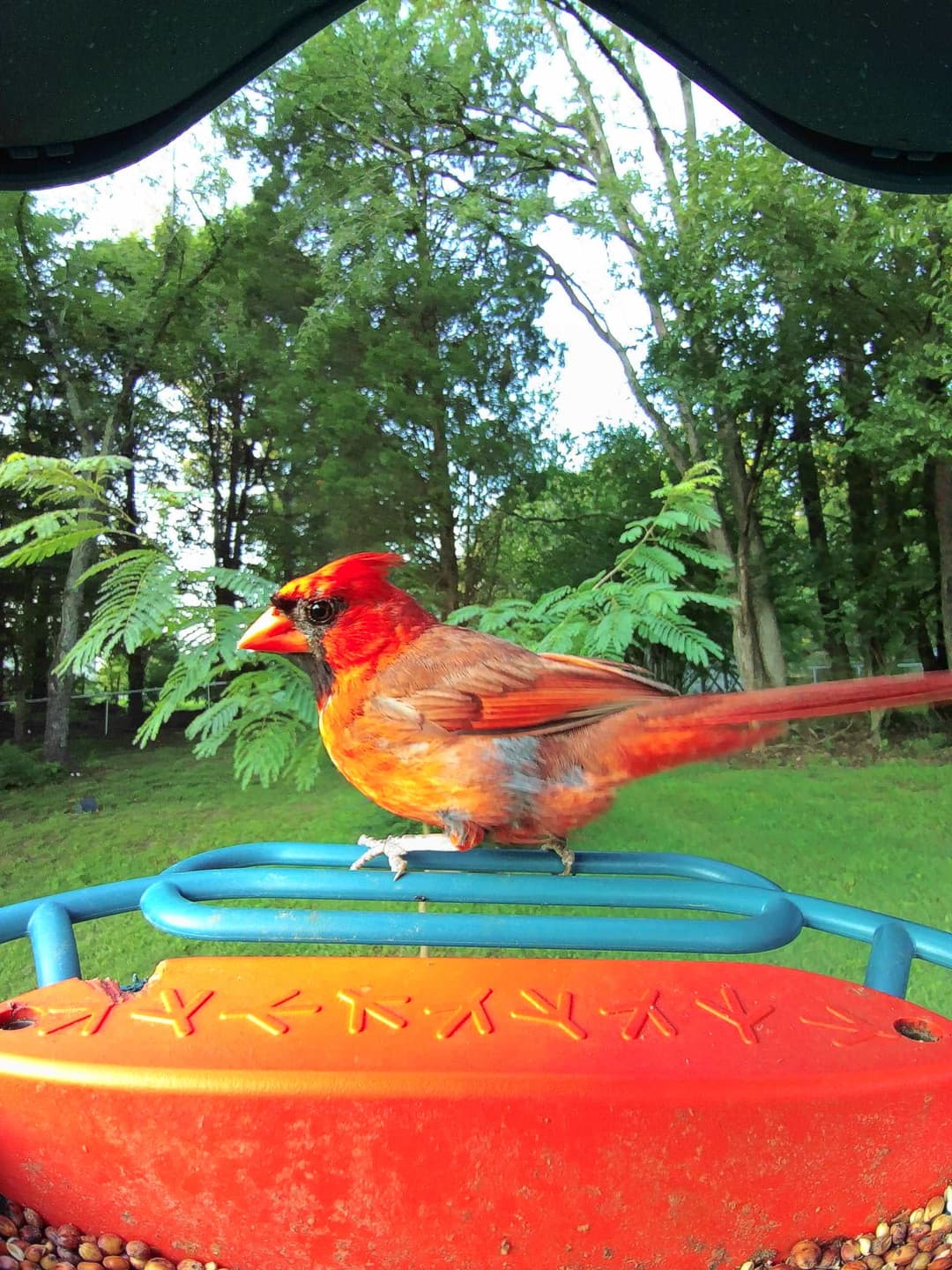
The male Northern Cardinal is our only red bird with a crest and is quite striking in appearance. On the other hand, the female is less vibrant, duller in color, encompassing hues of black, brown, gray, green, and tan, yet shares the crest and the distinctively large pink bill.
Juvenile
Juveniles of this species initially have a black bill, differentiating them from the adults. As they mature, their bill turns from black to the characteristic pink, and they inherit the crest from their parents, although their coloration may range from tan to red, depending on their sex.
Size
8.3 - 9.3 in/1.5 - 1.7 oz
There's more to learn about Northern Cardinal
View full detailsHow to tell the Hepatic Tanager from the Northern Cardinal
Visual differences
The Hepatic Tanager (7-8 inches) is slightly smaller than the Northern Cardinal (8-9 inches). The male Tanager has brick-red or orange-red plumage with gray cheeks, while the male Cardinal is uniformly bright red with a distinct crest and massive pink bill. Female Tanagers are mustard-yellow, contrasting with the female Cardinal's dull brown with some red tinges. Juvenile Cardinals have a black bill initially. The Cardinal also has a notable crest absent in Tanagers. Both birds have rounded wings and varied tail shapes, but the Cardinal's bill is larger and pink.
Key differences and behavior
Hepatic Tanagers and Northern Cardinals exhibit distinct behaviors and habitat preferences. Hepatic Tanagers, preferring open mountain forests with oaks and pines, establish large breeding territories and engage in elaborate courtship displays. They primarily feed on insects and fruits like wild grapes, rarely visiting bird feeders. Conversely, Northern Cardinals thrive in brushy areas and suburban gardens, readily visiting feeders for seeds. Cardinals use their songs for territory defense and mutual display, with males often feeding females. Tanager nests are built higher, while Cardinals prefer denser, lower shrubs. Both species feature strong sexual dimorphism, but the Tanager’s individuals communicate extensively within families, notably through parent-chick calls. Insects form a major part of the diet for both, but Cardinals have a broader palate, including diverse plant matter.
Still not sure? Here are more lookalikes!
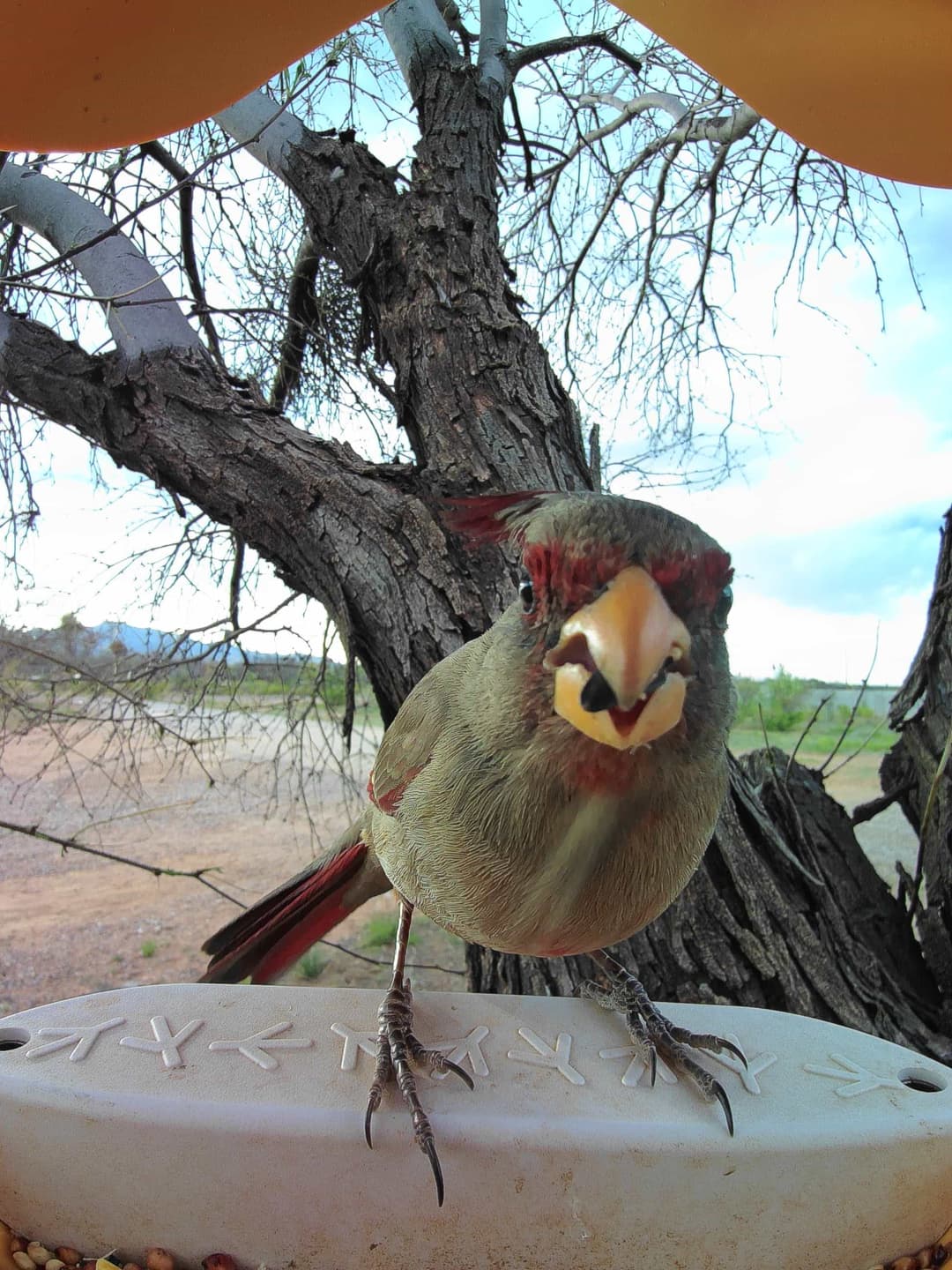
Northern Cardinal vs Pyrrhuloxia
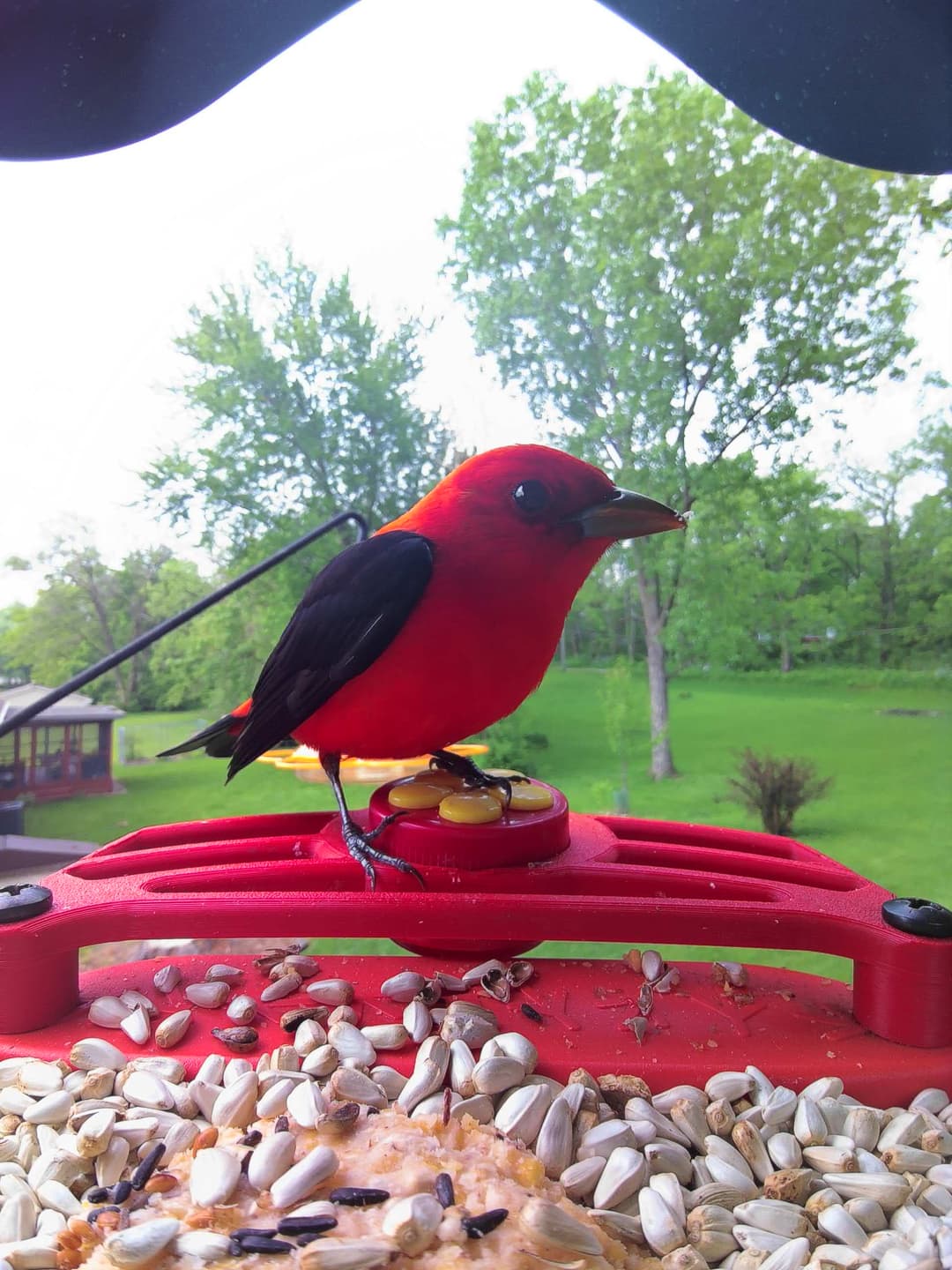
Northern Cardinal vs Scarlet Tanager
Northern Cardinal vs Summer Tanager
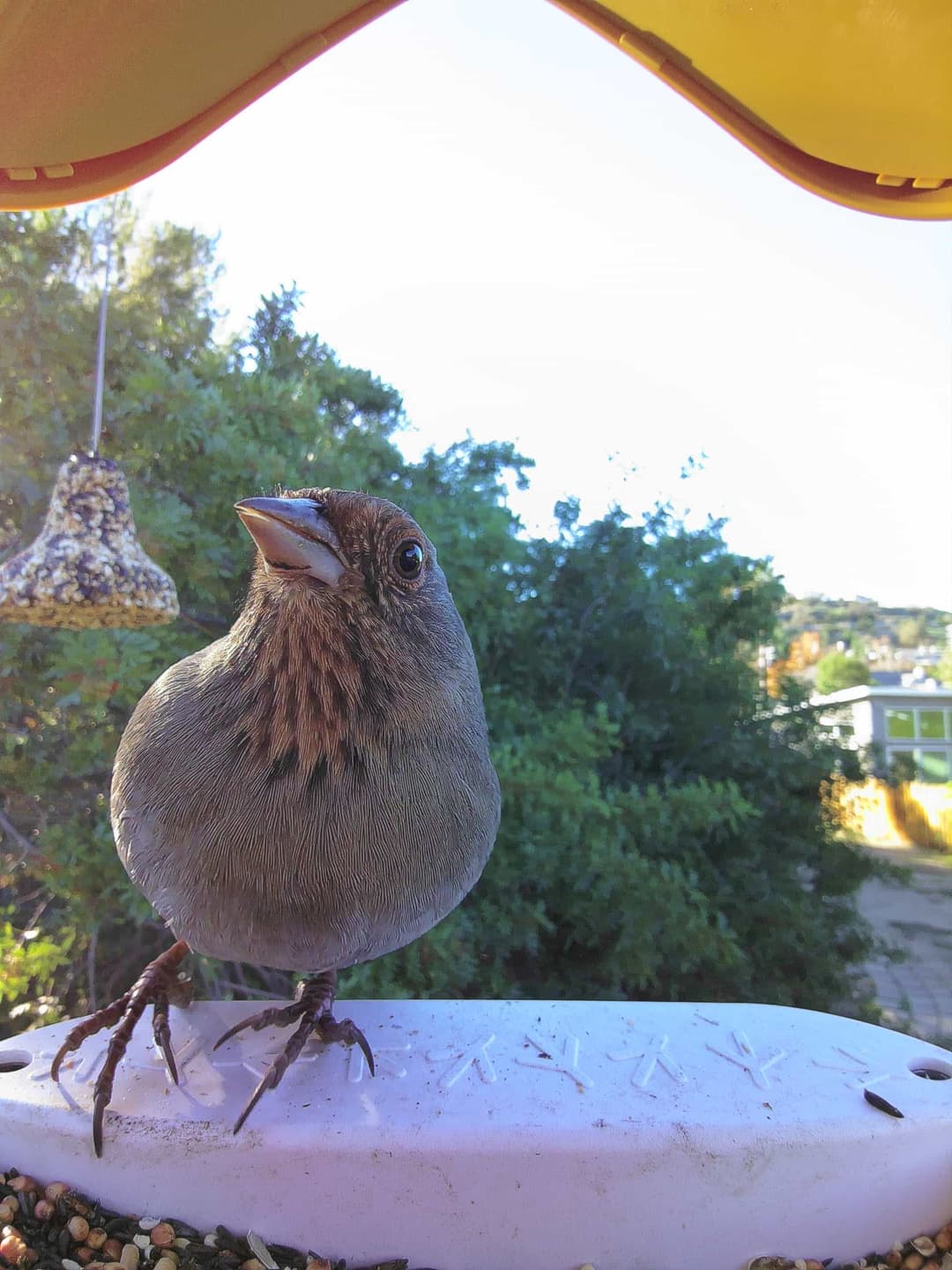
Northern Cardinal vs California Towhee
Hepatic Tanager vs [Select a bird]

[Select a bird]
Pick a bird to compare
Northern Cardinal vs [Select a bird]
[Select a bird]
Pick a bird to compare