
California Towhee
California Towhee
Melozone crissalis


Quick Identification guide
Quick Identification guide
- •
The uniformly brown body with subtle rust-colored undertones on wings and tail makes the California Towhee distinctive
- •
Features a stout, conical beak perfect for seed consumption, complementing its sparrow-like appearance
- •
Overall plain plumage with a slightly rounded tail and a lack of strong markings enhances its nondescript look
What does a California towhee sound like?
The California towhee's vocalizations feature a series of squeaky chips on a consistent pitch, increasing into a rapid trill. The song pattern, however, shows variation depending on the geographical area. The Towhee's calls consist of a sharp 'chink' and a thin 'tseeee’ sound. The call pattern of the bird is mostly flat and can be classified as a chirp or chip.


Description
California towhees mean business and are quick to fight – even themselves! These territorial and feisty birds have even been known to get upset at their own reflection. They hop backwards and forwards to unearth delicious seeds and insects. The collective nouns for a group of towhees are a tangling and a teapot.
The California towhee can weigh between 37to67grams and be from21to25centimeters tall.
The California towhee typically lives for around 11 years. This lifespan is comparable to other varieties of towhees, such as the Eastern towhee, which has a similar average lifespan. However, the longevity of the California towhee is notably more than the comparatively short-lived Green-tailed towhee, which generally survives for only a few years.
Did you know?
Most popular questions about California towhee
How to recognise a California towhee?
General appearance
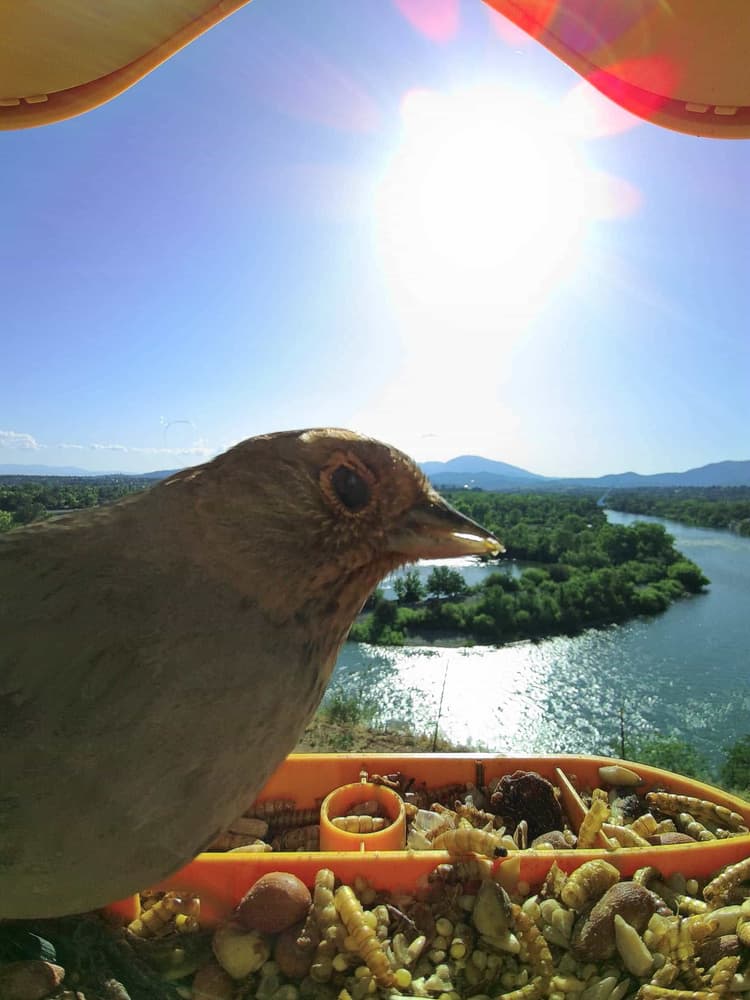
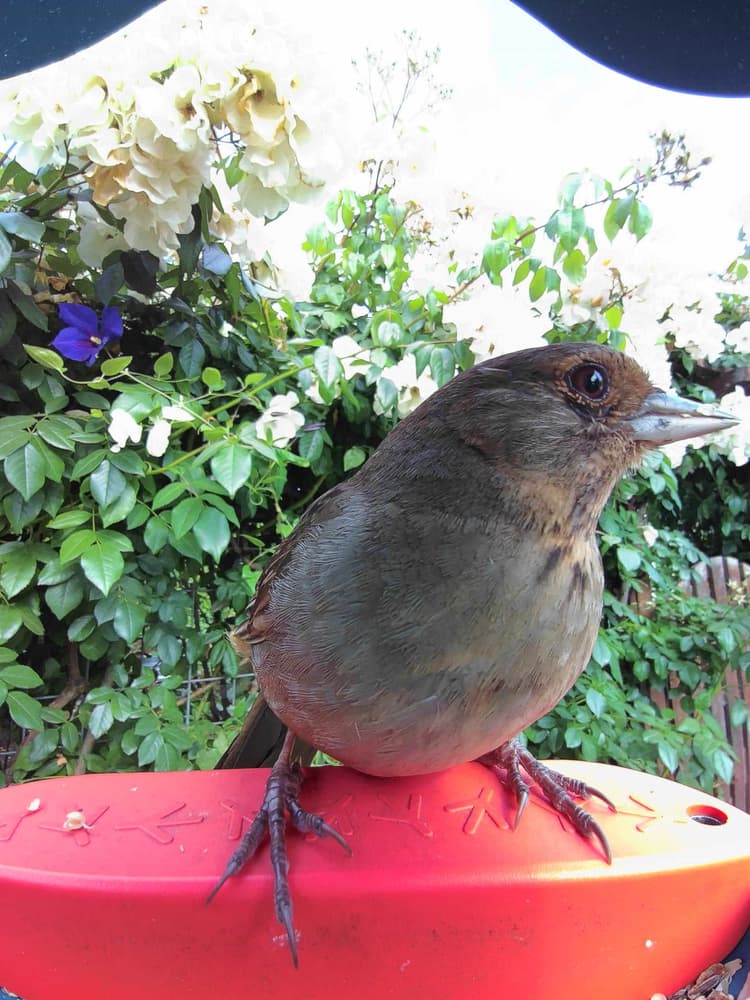
The California towhee is a medium-sized sparrow with a robust body, long tail, and short, thick bill. It has a plain brown appearance with a slightly reddish-brown or rust-colored undertail and facial area. Its overall plumage is nondescript with a subtle warmth, often appearing drab or plain at a distance. Typical adult length ranges from 8 to 10 inches with a wingspan of around 11 inches.
Male vs female
There is minimal sexual dimorphism in the California towhee, meaning males and females look alike. Both have the same brown coloration, though individuals may vary slightly in shade. Identification between sexes typically requires behavioral observation rather than plumage differences, as both sexes are similar in size and coloration.
Juvenile
Juveniles resemble adults but are slightly paler and may lack the more distinct rusty undertail coverts and facial areas found in adults. Their plumage might also appear fluffier and less defined. As they mature, their plumage gradually darkens and develops the characteristic undertail and facial reddish-brown tinge.
Often mistaken for
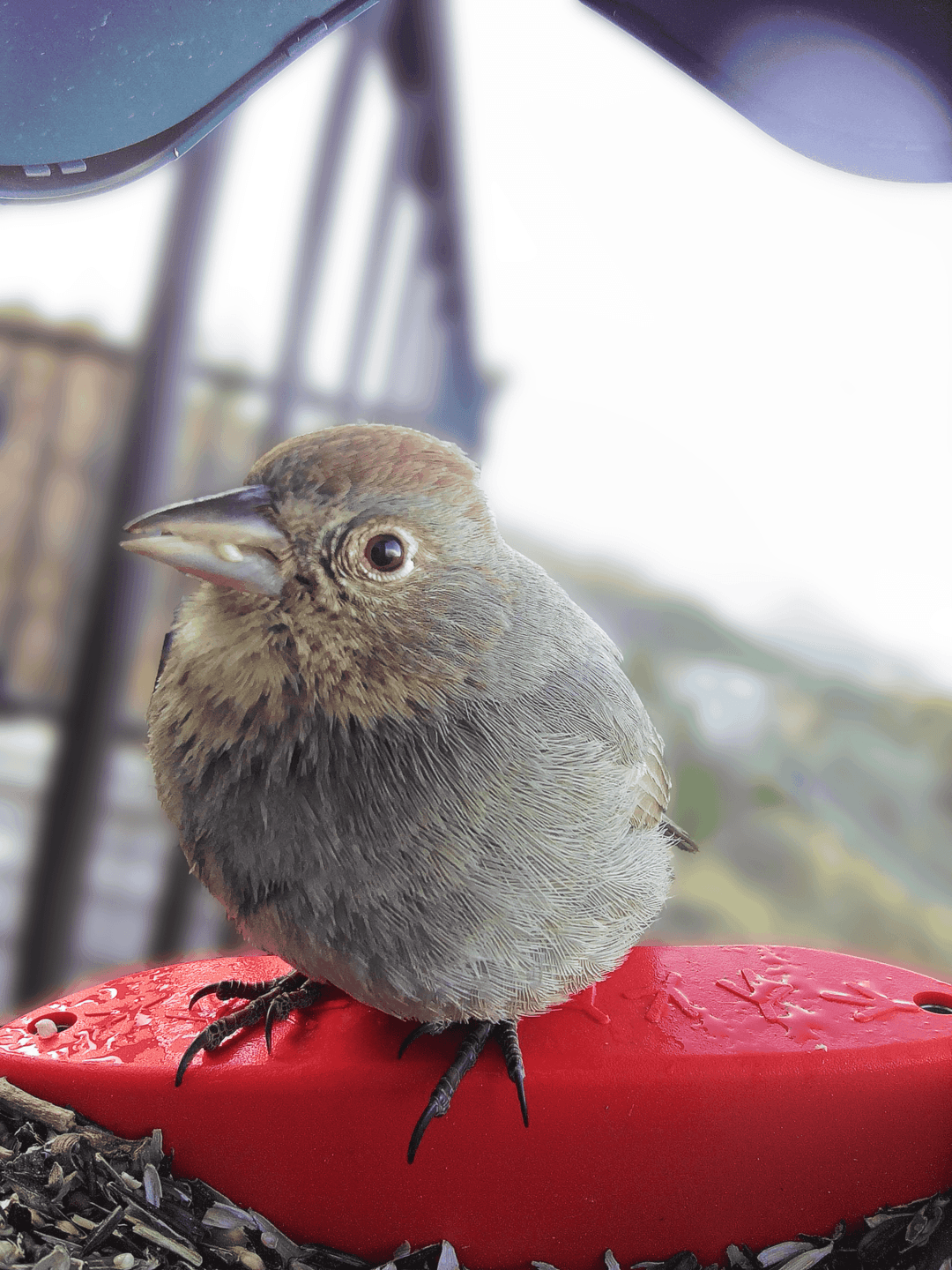
Canyon Towhee vs California Towhee
California Towhee is uniformly brown, while Canyon Towhee has a grayer hue with a buffy undertail coverts. California Towhees are found mostly in coastal California, favoring scrubby areas, while Canyon Towhees inhabit the southwestern U.S. and Mexico, preferring arid environments.
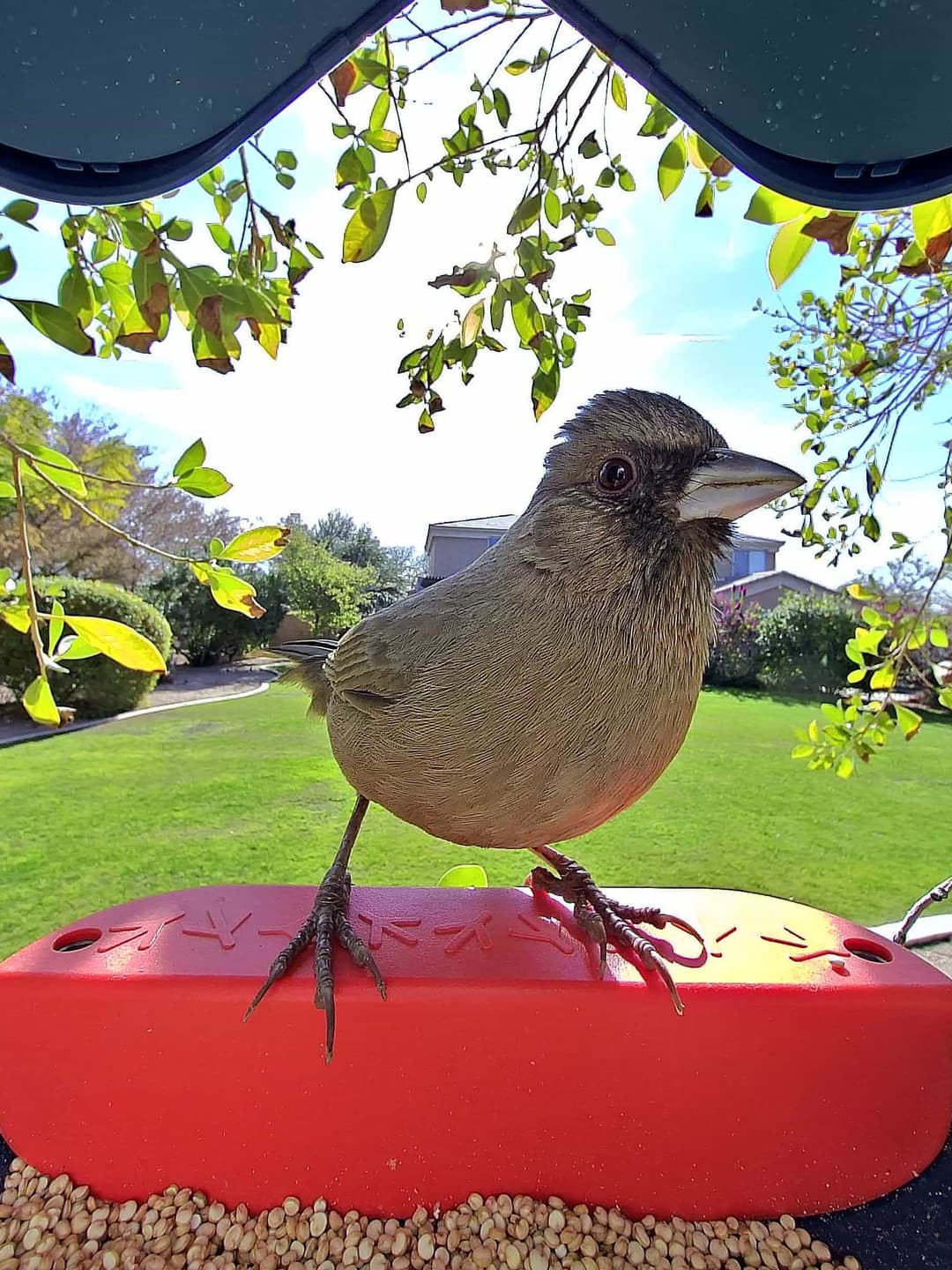
Abert’s Towhee vs California Towhee
Abert’s Towhee is slightly larger with a longer tail and has a more uniform pinkish-brown color compared to the gray-brown California Towhee. Abert’s Towhee is primarily found in Arizona and surrounding states, in riparian corridors unlike the more widespread California Towhee.
California Thrasher vs California Towhee
California Thrasher is noticeably larger with a long, down-curved bill and a distinct face pattern with a dark eyeline. In contrast, California Towhee has a uniform brown appearance without striking features. Thrashers prefer dense chaparral, while Towhees can be found in more open areas.
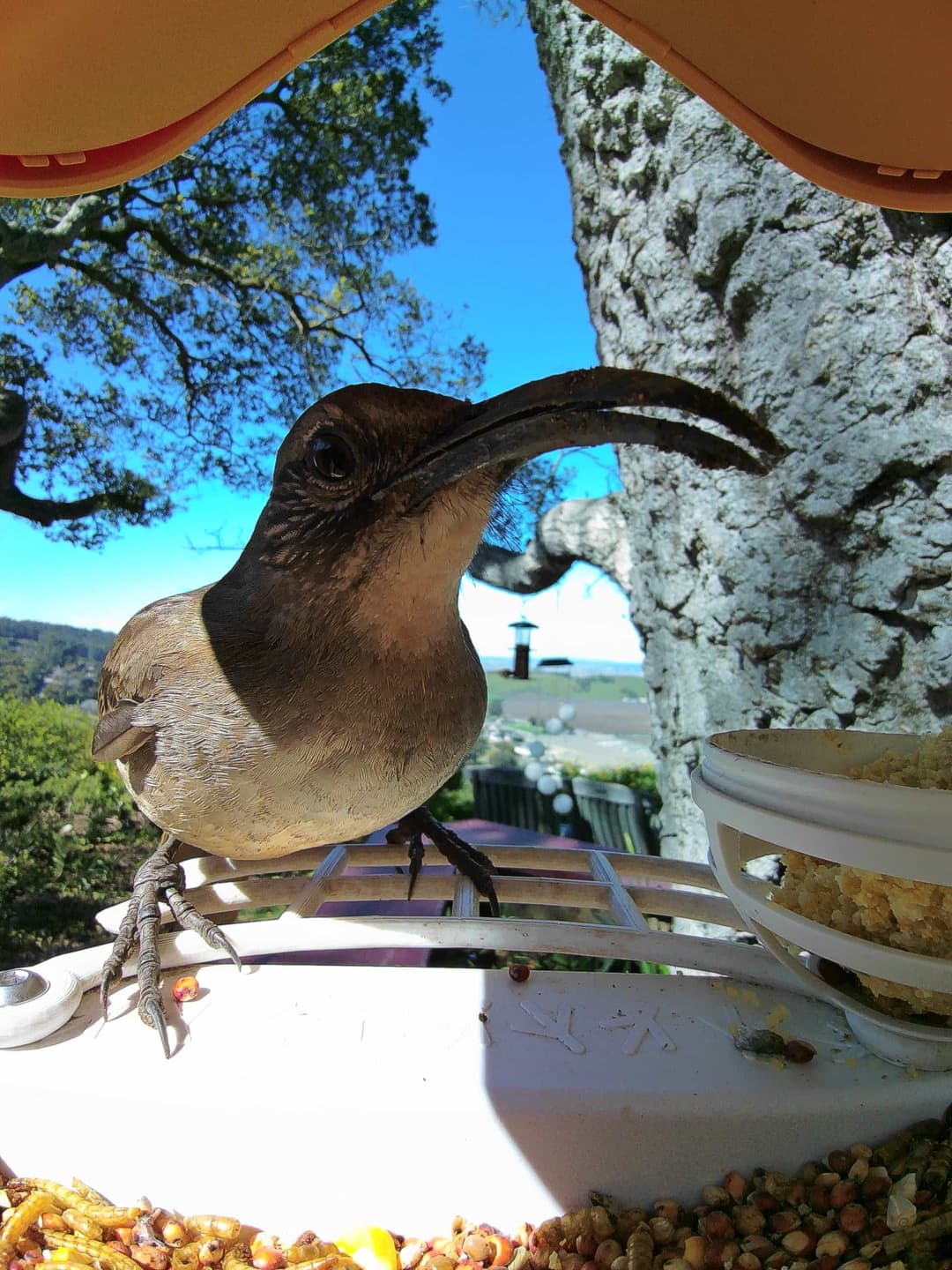
Spotted Towhee vs California Towhee
Spotted Towhee is easily differentiated by its black head, white spots on the wings, and rusty sides, whereas California Towhee lacks any spots and is uniformly brown. Spotted Towhees tend to inhabit thicker brush compared to the California Towhee’s preference for open, scrubby areas.

Breeding and nesting habits of the California towhee
Mating behaviors
California towhees may mate for life, and pairs often remain together on their breeding territory throughout the year. The male is notably aggressive in defending the territory, actively attacking intruding males or even his own reflection.
Nesting details
Nesting sites are typically located in dense shrubs or low trees, often 4-12 feet above the ground, but they can vary from being on the ground to as high as 30 feet. Nests are a bulky, open cup shape, composed of twigs, grass, weeds, strips of bark, and lined with finer grass, rootlets, and animal hair. In gardens, enhancing bushy vegetation can provide ideal nesting sites.
Eggs and chick-rearing
Both parents are involved in the incubation of eggs and care of the chicks. The specifics about the number of eggs or duration of chick-rearing were not provided, but having dense shrubs for nesting and a supply of natural materials can aid in their successful breeding.
What does a California towhee like to eat?
Berries
Fruits
Insects
Nuts
Plants
Seeds
Snails
Natural diet
The California towhee primarily feeds on the ground, consuming a variety of natural food sources. Its diet mainly consists of seeds, grains, and small fruits. It often eats seeds of grasses and weeds, as well as berries from native shrubs like elderberry and toyon. In addition to plant matter, the towhee may consume insects and other small invertebrates, especially during the breeding season when protein requirements are higher. This includes ants, beetles, caterpillars, and spiders.
Bird feeders
At bird feeders, the California towhee can be attracted by offerings similar to its natural diet. It is known to eat birdseed mixes, particularly those containing millet and cracked corn. The towhee might also consume sunflower seeds if provided. While it generally forages on the ground, it will visit low platform feeders or spillages beneath feeders. The bird’s adaptability helps it thrive around residential areas where these food sources are accessible.
Draw in the california towhee with nutritious snacks
Tempting the California towhee to visit your yard or feeder can be an extraordinary joy. One surefire way to draw them in is to provide the snacks they love. These birds are particularly fond of small fruits, seeds, and insects. Our recommendation is to use Bird Buddy seeds as they are selected by experts suitable for every season, ensuring best results.
Choose the right type of feeders
California towhees are ground feeders which mean they prefer feeding on flat surfaces. Create an inviting environment by setting up wide tray feeders or scattering seeds on a raised platform.
Tips and tricks for a friendly environment
To persuade these birds to stay a while, consider planting native shrubs and trees, which offer natural food sources and shelter. Leave leaf litter and fallen fruit on the ground as these provide perfect foraging opportunities for towhees. And, don't forget to fill your yard with gentle bird songs. Not only will this make your yard a small sanctuary, but it will also create the perfect setup for a bird sing-along!
Where can you find California towhees?
Based on Birdbuddy sighting data. The heatmap shows where Birdbuddy users have spotted this species.
Embed this map
This map shows the full native range based on scientific range data.
Primary habitat
The California towhee prefers dense low habitats, including chaparral, pinyon-juniper woods, coastal sage scrub, and semi-desert scrub.
Additional range
They are often found in unexpected environments such as well-vegetated gardens, city parks, and areas with edges and openings in oak woodland.
Do they migrate?
The California towhee is a permanent resident, indicating that it stays in one place all year round and does not migrate. It is known for its sedentary behavior, rarely moving even short distances away from its nesting areas. This bird species is typically found in the brushy habitats of the California chaparral, oak woodlands, and urban gardens. Since it is non-migratory, there is no specific route, timing, or key locations associated with migration. Instead, the California towhee is adapted to its local environment and survives year-round in its established territory. Its ability to remain in the same place throughout the year is largely due to its adaptability to different habitats within its range and its diet, which consists of seeds, insects, and fruits that are available year-round. By not migrating, the California towhee can maximize its energy by staying close to familiar resources and nesting sites.
What is the role of California towhees in nature and how to protect them?
Conservation status
The California towhee is still very common across much of its range, though it may have locally declined due to increasing urbanization and development along the California coast. The species is not considered vulnerable or endangered. However, habitat loss due to development poses a significant threat. Key conservation efforts should focus on preserving natural habitats and mitigating the impact of urban expansion. Maintaining a balance between development and conservation is essential to ensure this bird remains abundant in its native areas.
Ecological role of California towhees
Its role in the ecosystem
The California Towhee species play a significant role in its ecosystem. Having a diet that consists mostly of seeds and insects makes it critical for the biological control of pests, like caterpillars and beetles. In the winter season, when the majority of their diet consists of seeds, they help mitigate weed growth as they consume seeds of weeds and grasses. This also leads to seed dispersal, which is a crucial factor in the propagation of plant species and contributes to the biodiversity of their habitats. Additionally, the robust nesting behavior of towhees, including multiple broods per year and an extended stay of young birds with parents, also contributes to maintaining their population numbers. This, in turn, aids in their role in pest management and seed dispersion. It is also noteworthy that they are protector species, often aggressively defending their territories. Overall, California Towhees actively contribute to maintaining the ecological balance in their environments.
How to help protect California towhees
Preservation tips
California towhee habitat preservation
To aid California Towhee conservation, focus on preserving their primary habitat: shrublands and chaparral. This involves supporting land use policies that protect these areas from development. Participate in the restoration of degraded habitats by planting native shrubs and trees. Furthermore, limit the use of pesticides, which may indirectly harm these birds. Encourage local authorities to implement regulations that take into account Towhee's behavioral needs, such as for foraging and nesting.
Community science initiatives
Engage in community science initiatives like bird counts to gather data on towhee population trends. Encourage neighbors and local schools to participate since they require a large number of volunteers. Log sightings and behaviors into apps like eBird to add to overall scientific knowledge. Raise awareness about the towhee's role in local ecosystems and teach others how to create bird-friendly spaces in local gardens. This involvement not only aids in data collection but also fosters a stronger attachment to local wildlife, inspiring further conservation efforts.