
Western Tanager
Western Tanager
Piranga ludoviciana


Quick Identification guide
Quick Identification guide
- •
Exhibits a striking bright yellow body with contrasting black wings and tail
- •
The brilliant red-orange head and face make the male easily distinguishable during breeding season
- •
Females and non-breeding males have a more subdued yellowish-green body with grayish wings, lacking the vibrant red of males
What does a western tanager sound like?
The Western Tanager's song can be likened to a robin's, marked by short, flute-like phrases relayed with a distinctive pause in-between. However, its voice quality is noticeably hoarser. The call of this bird is recognised as a dry 'pit-r-ick' sound. The call pattern of the Western Tanager is undulating, and they typically tweet using chirp or chip sounds and whistles.


Description
Tis the season! Did you know that the collective noun for a group of tanagers is a season? Western tanagers breed further north than any of their tropical cousins. They were first recorded during the Lewis and Clark expedition that explored the US. Birds don't produce red pigment, so the stunning reds you see on their faces are actually a result of their diet!
The western tanager can weigh between 24to36grams and be from16.5to19centimeters tall.
The western tanager typically lives up to 8 years in the wild. Compared to other members of the tanager family, western tanagers have a relatively average lifespan. For instance, summer tanagers live roughly the same, while scarlet tanagers usually live up to 10 years. It is also above average compared to songbirds as a group, which often live up to 5 years.
Did you know?
Most popular questions about western tanager
How to recognise a western tanager?
General appearance
The Western Tanager is a medium-sized bird, roughly the size of a Robin or Sparrow, measuring 6-7.5 inches (15-19 cm). Typically, the bird features a notched, rounded, or square-tipped tail. Its wings are pointed in shape and its bill is thicker than that of female orioles, making it strong and distinctive.
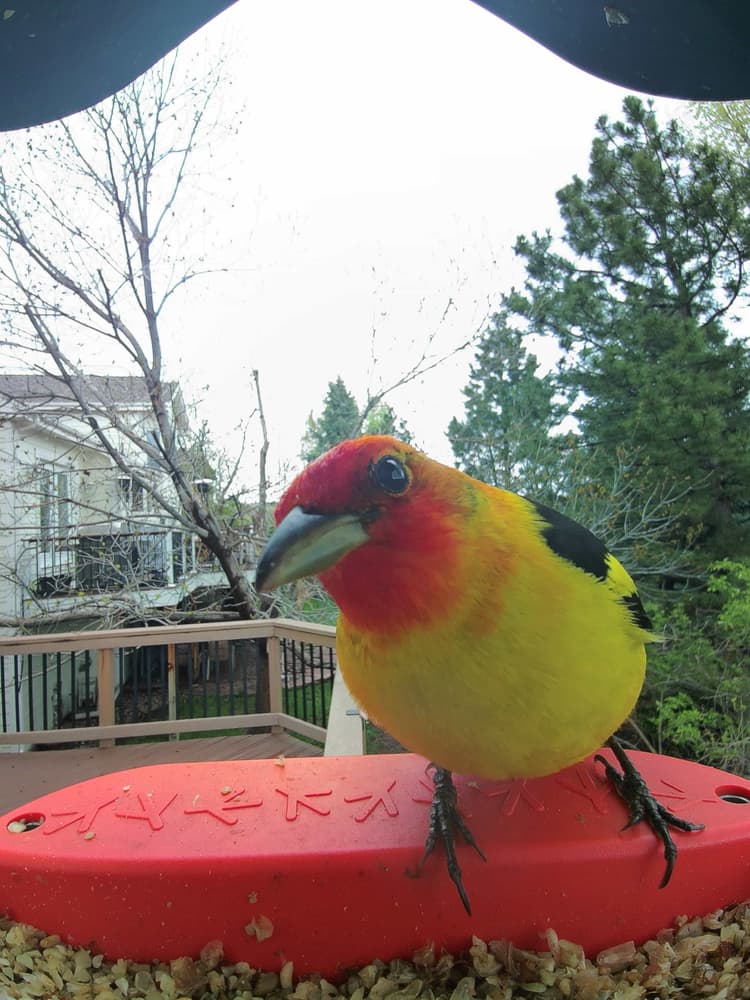
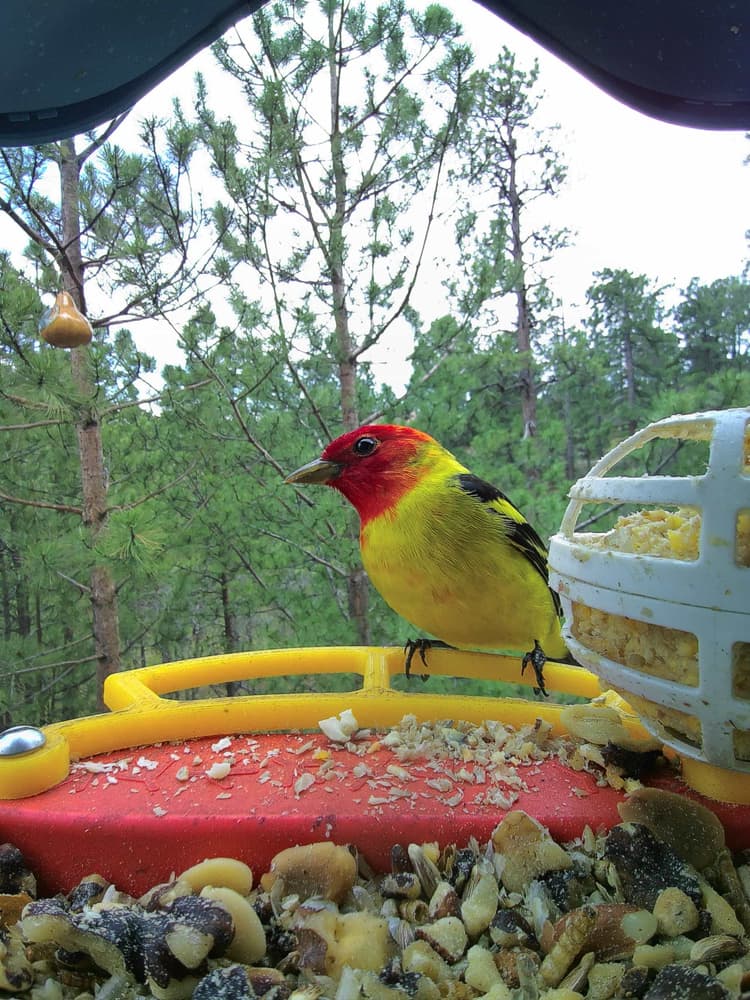
Male vs female
There exists a noticeable difference in physical traits between males and females. Male Western Tanagers boast brilliant colors, with a primarily yellow body, a black back and wings, and a unique red face. On the other hand, females are less vibrant. They display a duller yellow body with a grayish tone on their back and wings, but they do show two wing bars just like the males.
Juvenile
Juvenile Western Tanagers, similar to adult females, sport a dull yellow color. Their wings and back take on a gray shade, giving them a more subdued appearance than the brightly colored adult males. As they mature, their colors adjust to match their respective gender distinctions.
Often mistaken for
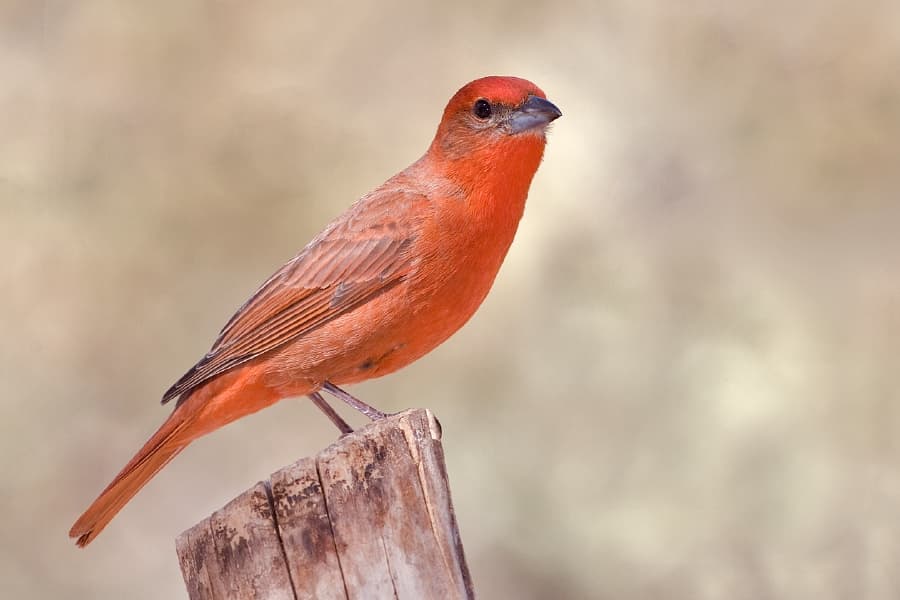
Hepatic Tanager vs Western Tanager
The Western Tanager has a brighter yellow body and black wings with white wing bars, while the Hepatic Tanager has a more subdued yellowish to gray body and lacks wing bars. The male Hepatic is red all over in some regions, which can cause confusion.
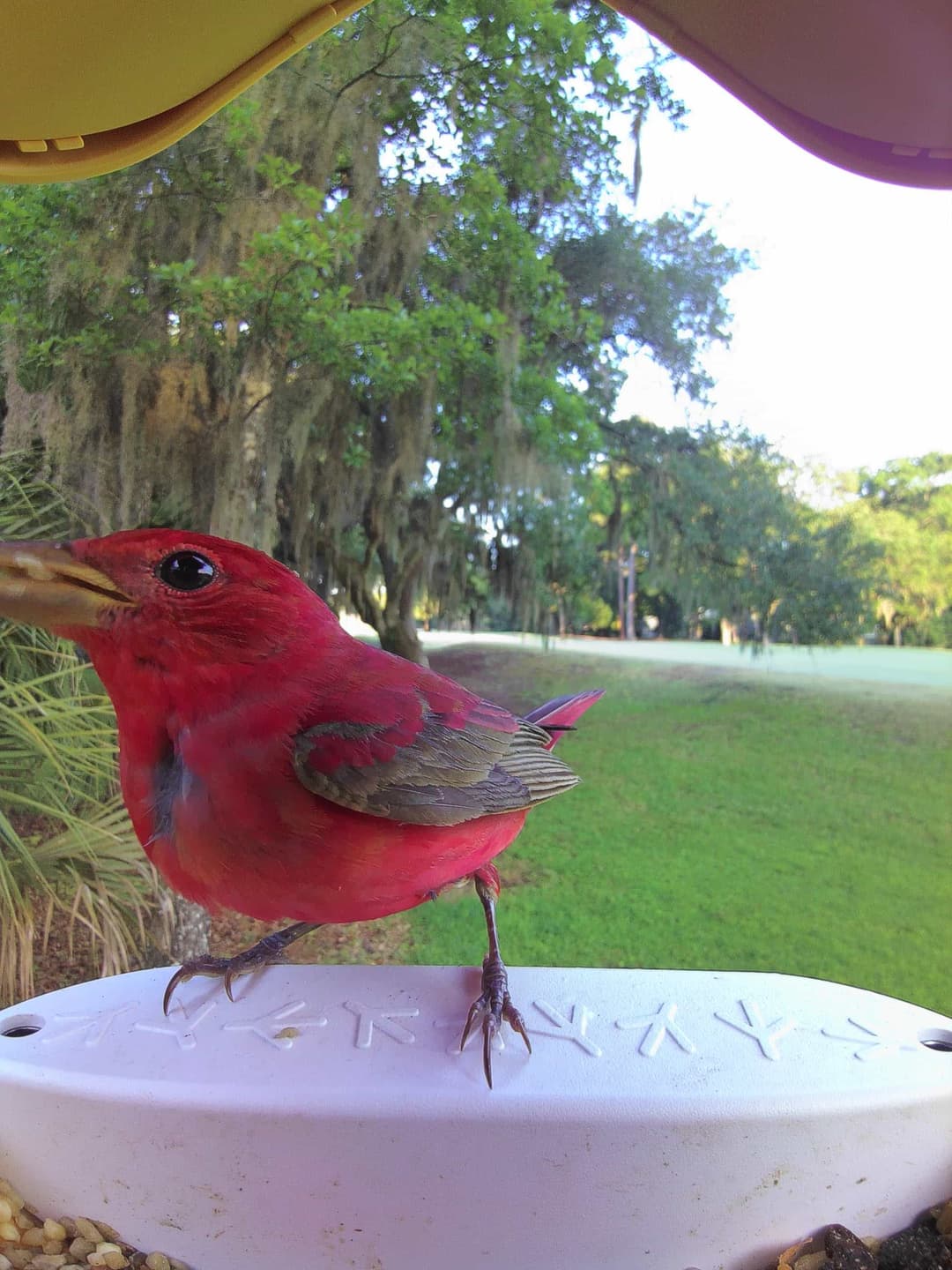
Summer Tanager vs Western Tanager
Male Western Tanagers have a vibrant red head, while male Summer Tanagers are entirely reddish. Females of both species are yellow, but the female Western Tanager has wing bars which the Summer lacks.
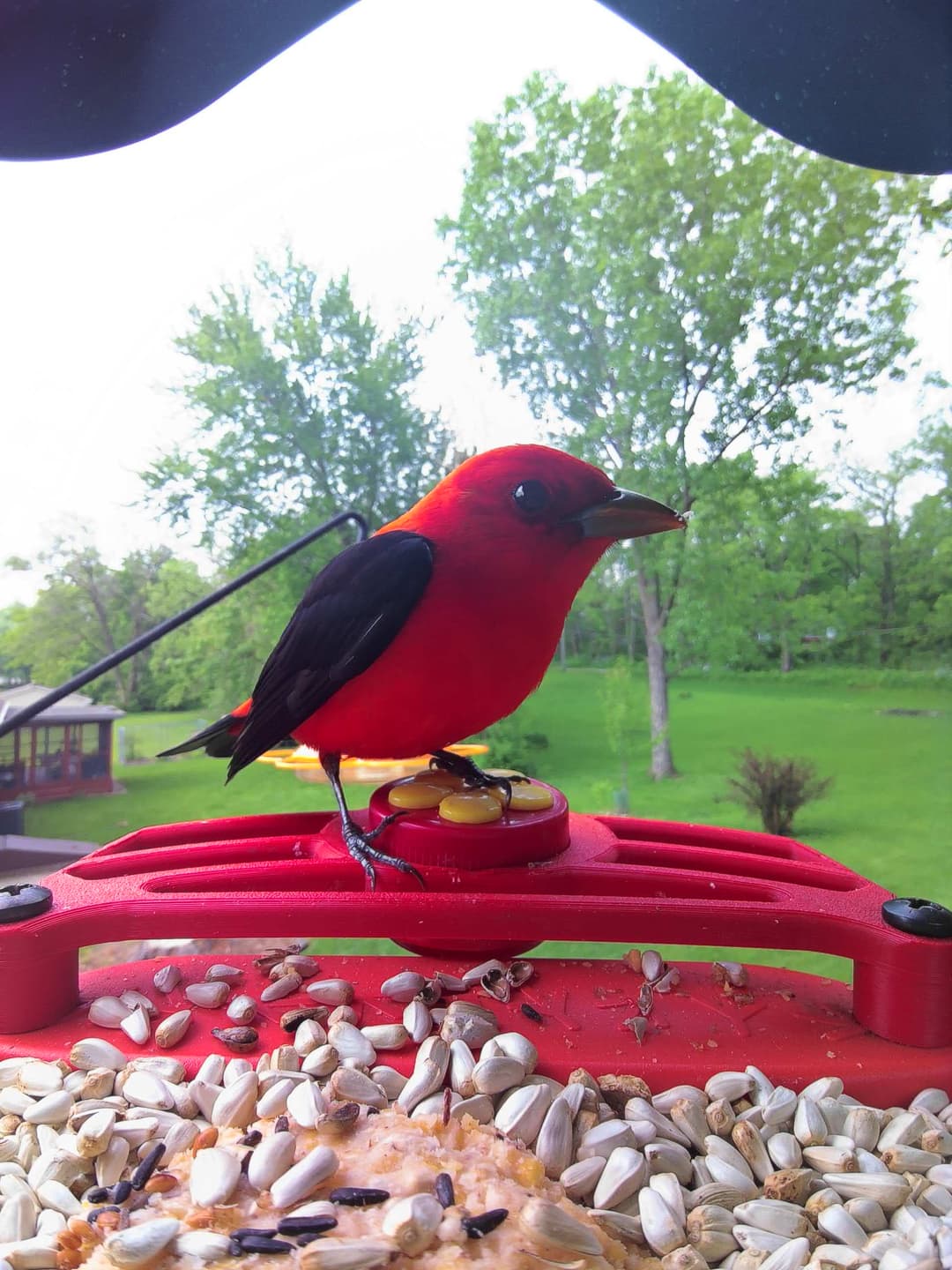
Scarlet Tanager vs Western Tanager
The Scarlet Tanager has a strikingly red body with black wings and tail. In contrast, the Western Tanager has a yellow body with black wings and white wing bars, and its face is red only in males.
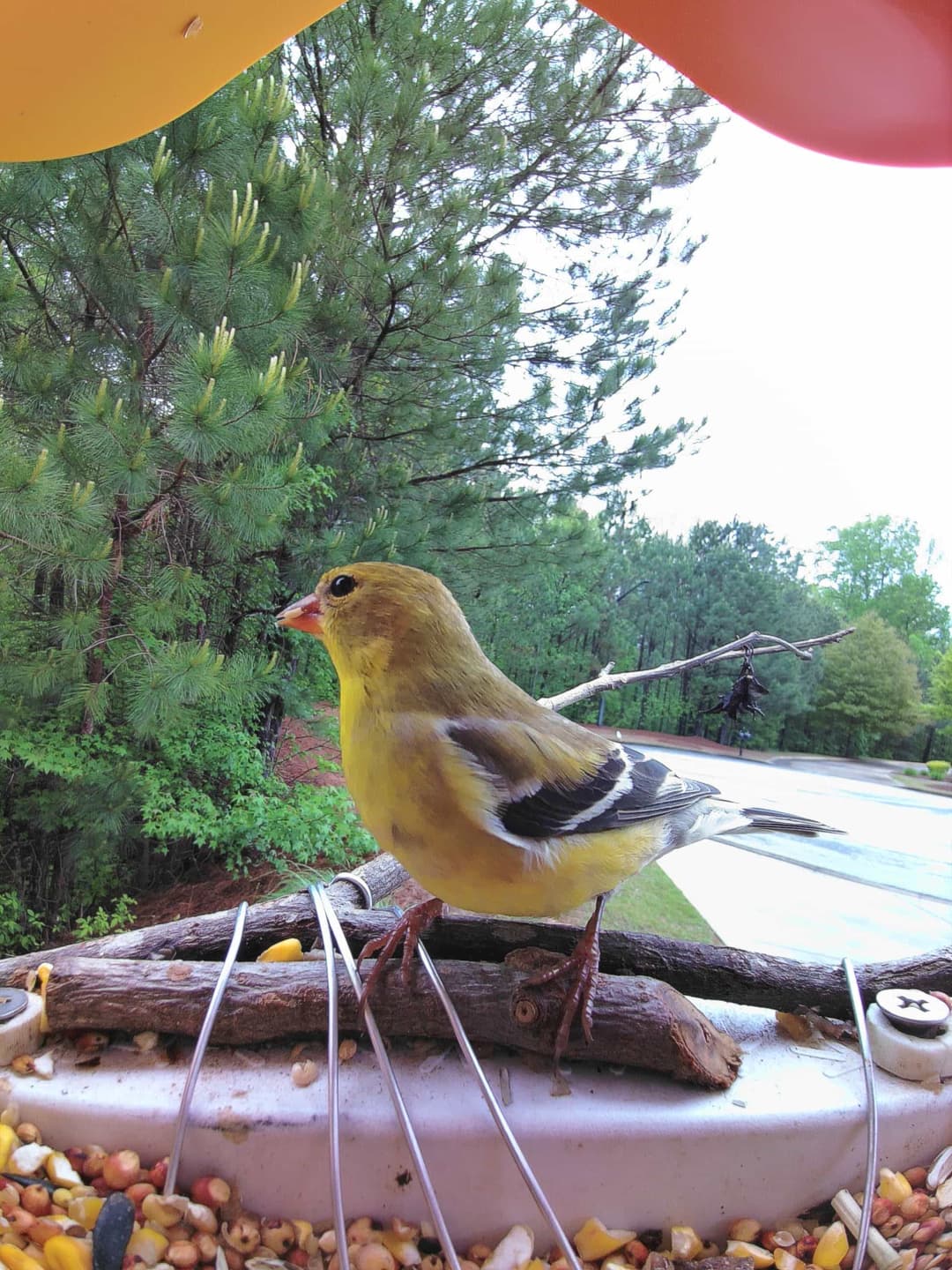
American Goldfinch vs Western Tanager
The American Goldfinch is smaller, with a bright yellow body and black wings but no red on the face. The Western Tanager is larger and features a distinct red face in males and prominent wing bars.
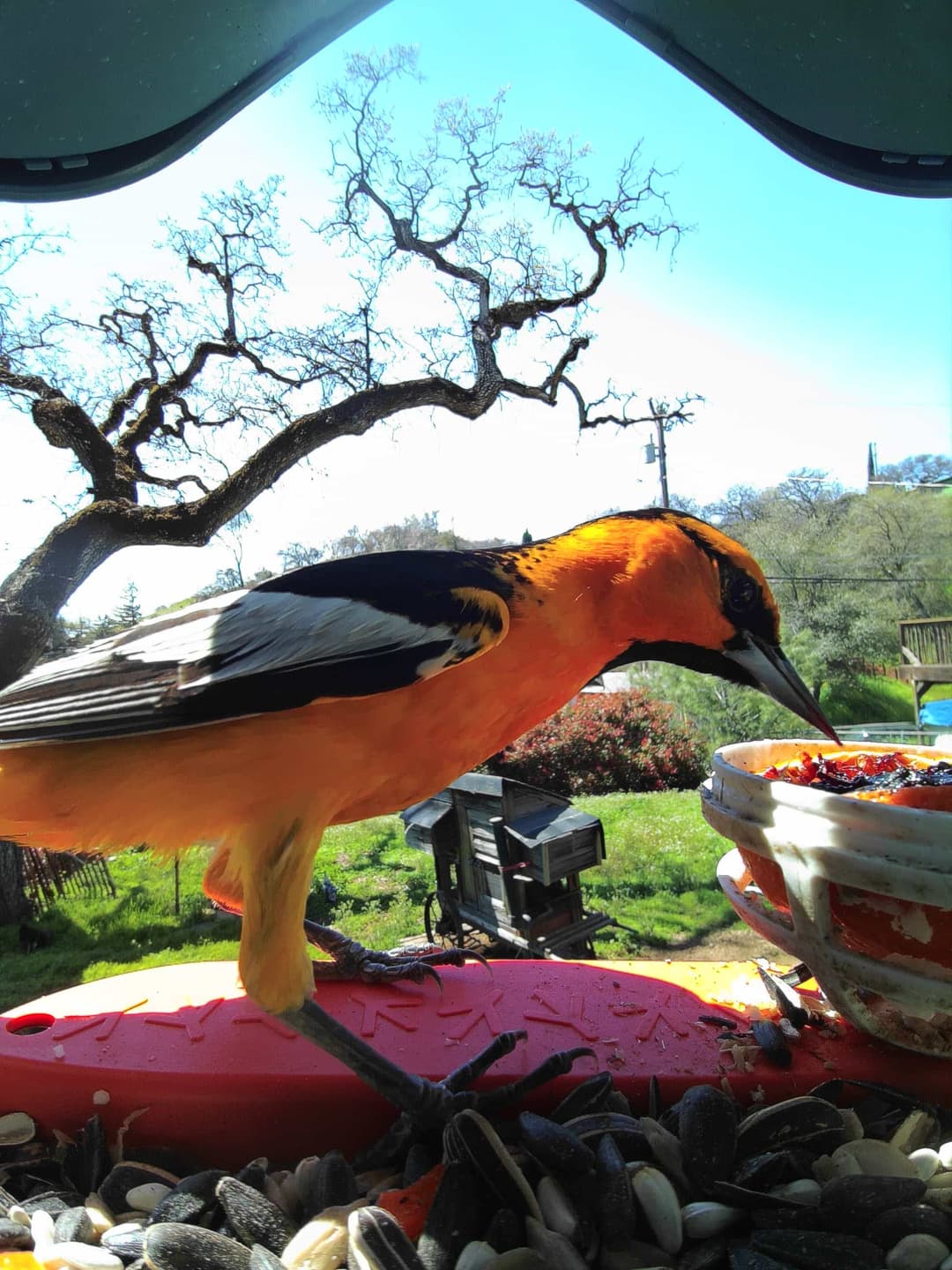
Bullock’s Oriole vs Western Tanager
Bullock's Oriole has an orange face and black eye line, whereas the Western Tanager has a red face in males and bold, contrasting wing bars that the Oriole lacks.
Breeding and nesting habits of the western tanager
Mating behaviors
During late spring and summer, males sing to defend nesting territory. Courtship involves the male chasing the female among trees.
Nesting details
Nests are usually found in coniferous trees like fir or pine, and occasionally in aspen, oak, or other deciduous trees, placed 15-65 feet above the ground. The female likely builds the nest, a shallow open cup made of twigs, grass, and rootlets, lined with animal hair and fine rootlets.
Eggs and chick-rearing
Details about the eggs and how chicks are reared were not provided. To support nesting, provide coniferous or deciduous trees like fir, pine, aspen, and oak in your garden.
What does a western tanager like to eat?
Berries
Fruits
Insects
Natural diet
The western tanager primarily consumes insects, which include wasps, bees, ants, beetles, grasshoppers, termites, and cicadas. In addition to insects, this bird's diet is supplemented with various berries such as mulberries and elderberries. Occasionally, it also consumes some cultivated fruits found in its habitat.
Bird feeders
Western tanagers may visit bird feeders, particularly those offering fruits and berries similar to those found in their natural diet, such as raisins or other dried fruits.
Attracting the western tanager: feeder types
To attract a western tanager, you will need a bird feeder that is sturdily built and has a large feeding area. Platform feeders or hopper feeders are the ideal choice since these birds like flat surfaces where they can comfortably pick the seeds.
Favorite snacks of the western tanager
When it comes to meals, the western tanager loves a mix of fruits and insects. However, they are particularly attracted to sunflower seeds available with Bird Buddy, which are experts' choice for the seasons.
Fun tricks to encourage visits
Hang your feeders near a flower garden or shrubs where insects that tanagers love are abundant. Keeping a birdbath or a fountain in your yard can also draw them in for a refreshing drink and bath. Lastly, a calm and quiet environment is most appealing to these birds.
Make it a regular habit
Once the western tanager has discovered your yard or feeder, maintain a consistent feeding schedule. Replenish the seeds every day preferably with Bird Buddy seeds, for the best results. With time, these beautiful birds will consider your yard as a dependable food source.
Bird song sing-along
Lastly to ensure a lively sing-along, play soft bird songs during early morning hours. Birds are most active during these hours and this just might turn your yard into a popular go-to place for the western tanagers and other songbirds.
Where can you find western tanagers?
Primary habitat
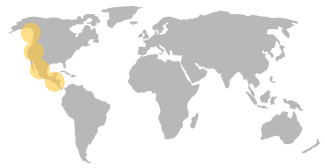
The western tanager mainly inhabits open conifer or mixed forests. It breeds in high mountains or the North, in forests of spruce, fir, pine, aspen, and occasionally in lower elevation oak woods.
Additional range
During migration, it can be found in various habitats even deserts. It winters typically in tropical pine-oak woods, forest edges, or in California's eucalyptus groves.
Do they migrate?
The Western Tanager (Piranga ludoviciana) is a migratory bird species, known for its vibrant plumage and distinct seasonal movements. Its migration route spans from its breeding grounds in the coniferous forests of western North America, particularly in regions such as the Pacific Northwest, the Rocky Mountains, and parts of western Canada, to its wintering habitats in Mexico and Central America. Migration for the Western Tanager typically begins in the fall, often commencing in early September. However, some individuals might be observed leaving breeding areas as early as July, indicating early migratory behavior. The southbound journey occurs primarily through the inland western U.S. states, avoiding expansive desert regions and preferring wooded areas for stopovers. Key locations during migration include forested river valleys and mountain ridges conducive to rest and refueling. In the spring, the reverse migration takes place, with these birds typically arriving at their breeding grounds from April to early June. Observations have noted that some birds may still be traveling to or residing in non-breeding areas as late as mid-June. Overall, the Western Tanager's migration is a well-defined annual journey guided by the availability of food resources and suitable habitats.
What is the role of western tanagers in nature and how to protect them?
Conservation status
The western tanager is currently widespread and common, with no signs of declining numbers, indicating a stable conservation status. It is not considered vulnerable or endangered. Key conservation efforts focus on maintaining its natural habitat, particularly during breeding and migration. While the species doesn't face immediate threats, habitat loss and fragmentation due to urbanization and deforestation could pose future risks. Continued monitoring and habitat preservation are essential to ensure its long-term stability.
Ecological role of western tanagers
Its role in the ecosystem
The Western Tanager plays a multifaceted role in the ecosystem. Its diet primarily consists of insects, including wasps, bees, ants, beetles, grasshoppers, termites, cicadas, thereby making it a significant player in pest control. By controlling the population of these insects, it ensures a balanced ecosystem, preventing any particular species from outnumbering others and damaging the ecological equilibrium. Furthermore, the Western Tanager also contributes to the ecosystem through seed dispersal. It feeds on a variety of berries, such as mulberries and elderberries, as well as cultivated fruits. Its feeding activity results in the dispersion of seeds from these plants, aiding in plant propagation and the expanding of plant populations. So, the Western Tanager not only contributes to pest regulation but also promotes plant growth and distribution.
How to help protect western tanagers
Preservation tips
Habitat preservation strategies for western tanager
Promote and engage in reforestation efforts, as Western Tanagers prefer coniferous forests or mixed woodlands. Support land management policies that back varied-aged forest systems. Resist destructive land use practices like overgrazing, indiscriminate logging and development in native habitats of the Tanager. Rigorously control invasive plant species that threaten forest ecosystem.
Community science initiatives for western tanager conservation
Participate in bird count events and community science projects like the Audubon Society’s Christmas Bird Count or the Great Backyard Bird Count. These initiatives help collect data on bird populations and contribute valuable information for conservation strategies. Engage with local environmental clubs and schools to raise awareness about the importance of protecting the Western Tanager and its habitat.