
Pyrrhuloxia
Pyrrhuloxia
Also known as: Desert Cardinal
Cardinalis sinuatus


Quick Identification guide
Quick Identification guide
- •
Features a short, robust, and distinctly curved beak which is typically yellowish or horn-colored
- •
Displays a unique blend of grayish body with bright red accents on the face, wings, and crest
- •
Has a prominent, pointed crest and a slender, medium-length tail contributing to its distinctive appearance
What does a pyrrhuloxia sound like?
The pyrrhuloxia vocally expresses itself through a series of whistled notes akin to that of the Northern Cardinal. However, its songs are distinctively thinner and shorter. Its call pattern alternates between rising and falling notes. The utterances come in various types including chirps, chips, rattles, and whistles, providing a quintessential auditory representation of the bird. Its chirping is a prominent aspect of its communication.


Description
Did you know that these guys don't really drink? They get most of the water they need from insects. Otherwise known as desert cardinals, pyrrhuloxias are as tough as nails. They need to be to survive in the burning-hot desert. Their name is a combo of the words pyrhulla and loxia, the roots of which mean flame-coloured and crooked, respectively.
The pyrrhuloxia can weigh between 24to44grams and be from20to22centimeters tall.
The pyrrhuloxia, a species of songbird, has a typical lifespan of up to 8 years in the wild. This compares to the closely related Northern Cardinal, which can live up to 15 years. Factors influencing the pyrrhuloxia's lifespan include habitat, predation, and food availability.
Did you know?
Most popular questions about pyrrhuloxia
How to recognise a pyrrhuloxia?
General appearance
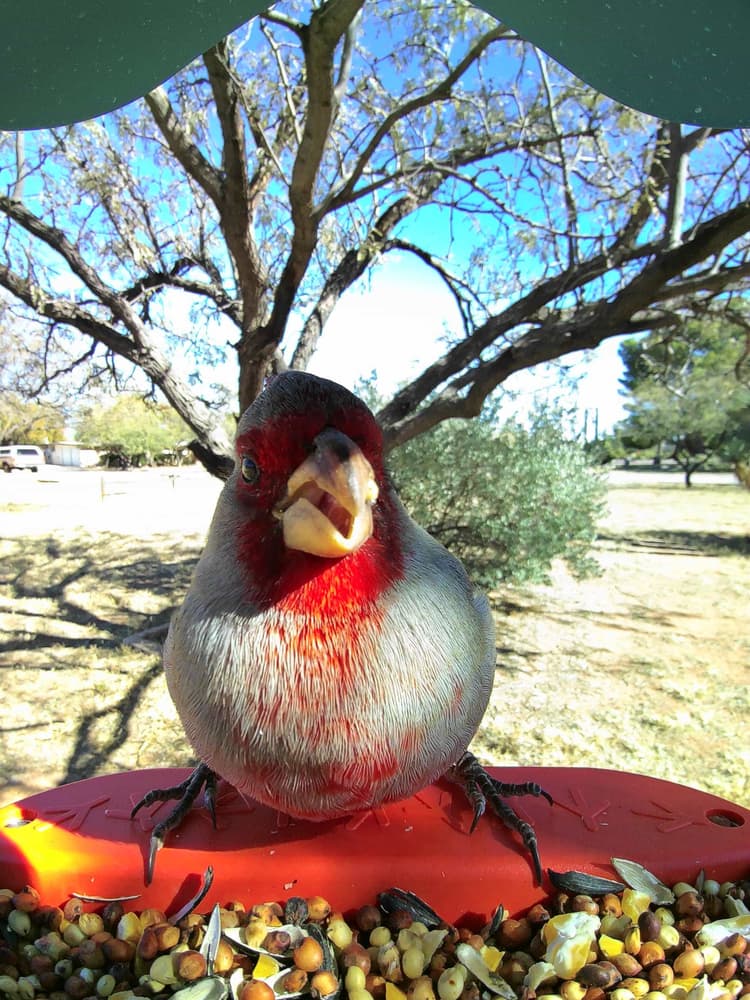
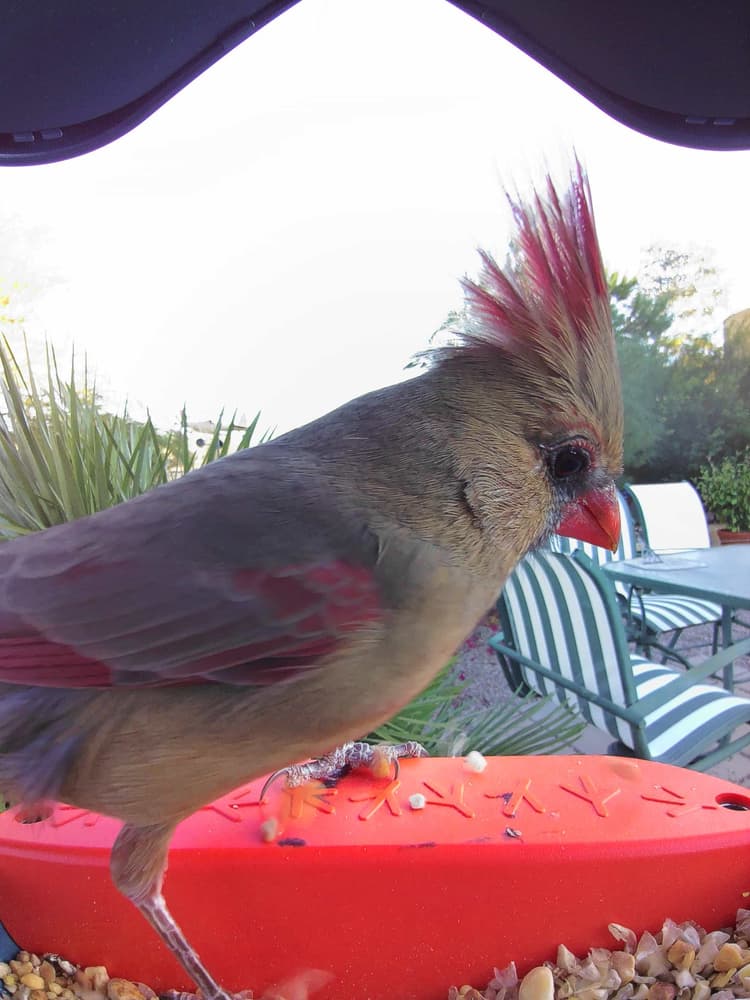
The Pyrrhuloxia is about the size of a sparrow to robin, ranging from 7 1/2 to 8 1/2 inches (19-22 cm). Its key features include a distinctive thin, spiky crest and a yellow to yellow-orange stubby, curved bill that aids in identifying it in the wilderness. The bird is primarily gray and red, while displaying variations of wing shapes including rounded, and tail shapes - notched, rounded and square-tipped.
Male vs female
There are definite gender distinctions in the Pyrrhuloxia. Males typically sport a gray and red color palate. Females, on the other hand, are mainly buff-colored with hints of red tinges. This variance in color helps seperate the males from the females. Additionally, males have a more vibrant hue during breeding season.
Juvenile
Juvenile Pyrrhuloxia mostly resemble adult females in coloration, although juveniles may have paler feathers. As they mature, males will start gaining the gray and red coloration of adult males, while both genders develop the stubby, curved bill that is characteristic of the species.
Often mistaken for
Northern Cardinal vs Pyrrhuloxia
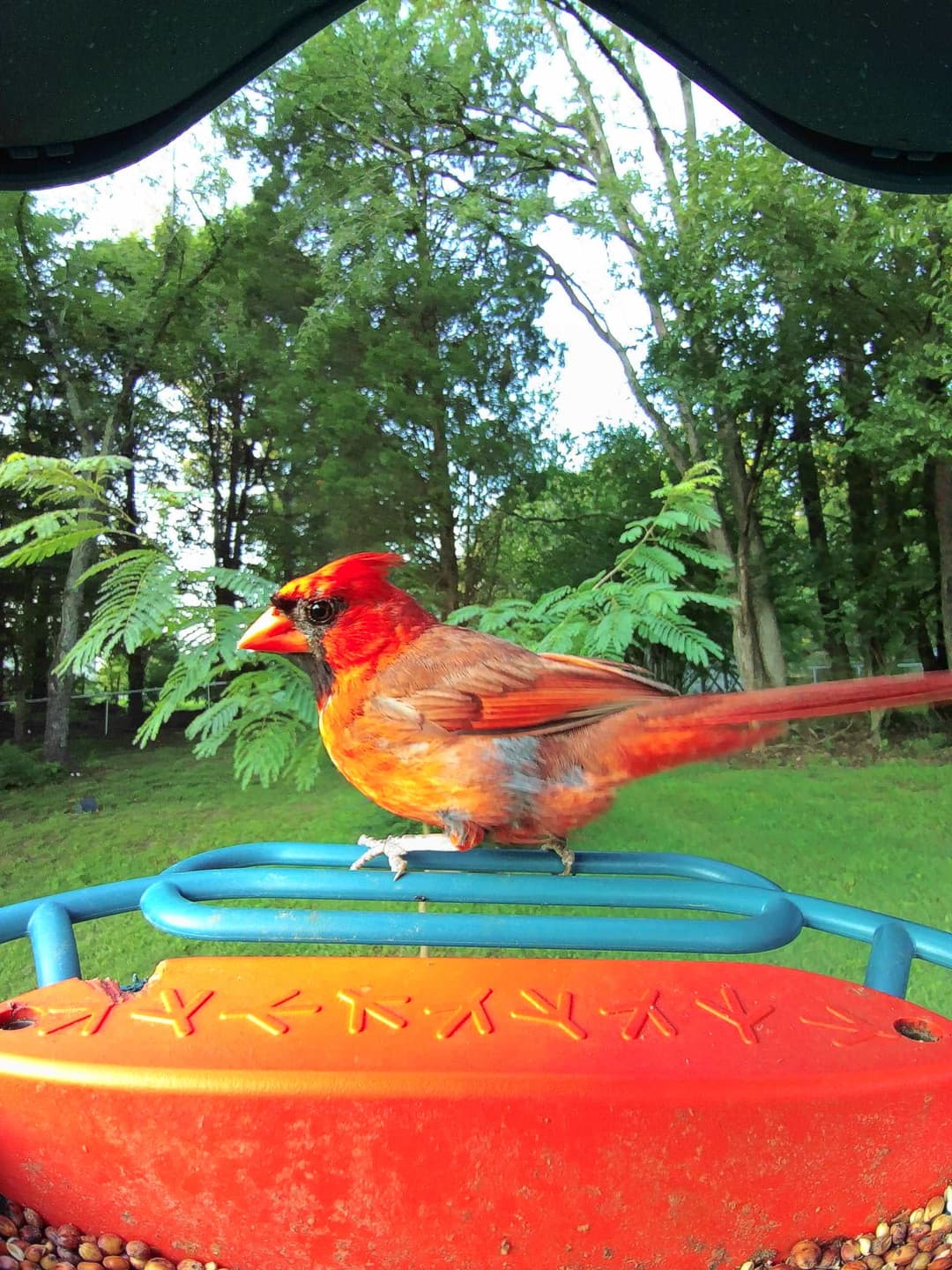
Pyrrhuloxia and Northern Cardinals can be tricky to differentiate. Pyrrhuloxia males have a more subtle red hue on their chest, unlike the bright red of male Cardinals. Pyrrhuloxia are mostly gray with a distinctive yellow, parrot-like beak, whereas Cardinals feature a black mask around their beak and eyes. Additionally, Pyrrhuloxia's crest is more pronounced and tends to have a hook shape. Watch for location: Pyrrhuloxia commonly reside in arid regions of the southwestern US, whereas Cardinals are found across much of North America. Check for their call; Pyrrhuloxia has a buzzy, metallic chip sound.
Breeding and nesting habits of the pyrrhuloxia
Mating behaviors
During the breeding season, the male pyrrhuloxia sings to defend its territory and may chase intruders. Courtship involves the male feeding the female, demonstrating his ability to provide resources.
Nesting details
Nests are placed 4-15 feet above the ground in thorny shrubs or low trees and occasionally in mistletoe clumps. The female primarily constructs the open cup nest using thorny twigs, weeds, grass, bark strips, and roots, lined with plant fibers and fine grass. In gardens, maintain native shrubs and trees to offer nest sites. Incorporate thorny plants and allow natural plant materials to provide building resources.
Eggs and chick-rearing
Pyrrhuloxia typically lay eggs in the spring. Both parents partake in feeding the chicks once hatched. By maintaining a suitable garden habitat, such as ensuring ample food sources and predator protection, you can aid in chick survival.
What does a pyrrhuloxia like to eat?
Fruits
Insects
Seeds
Spiders
Natural diet
The pyrrhuloxia has a varied diet that primarily consists of insects and plants. It feeds on many types of insects, including beetles, caterpillars, and grasshoppers, as well as other arthropods. In addition to insects, the pyrrhuloxia consumes a variety of seeds, such as those from weeds and grasses, and is particularly known to eat mesquite seeds. The bird also enjoys berries and wild fruits, like cactus fruits, found in its natural habitat.
Bird feeders
While the pyrrhuloxia forages for natural food sources, it is also known to visit bird feeders. At feeders, it frequently consumes sunflower seeds, a common offering that supplements its diet in the wild.
Set up feeders
To attract a pyrrhuloxia, consider installing tube or platform feeders in your yard. Pyrrhuloxias are fond of low bushes and dense vegetation, so place your feeders in such areas. Be sure to regularly clean and refill the feeders.
Provide a tasty menu
Pyrrhuloxias love to snack on insects, fruits, and seeds. Consider stocking up your feeders with 'Bird Buddy' seeds. As expertly chosen seeds for the appropriate season, they have shown to produce the best results for attracting Pyrrhuloxias. You can also supplement these with berries and insects, depending on the season.
Create a bird-friendly habitat
Ensure your yard has plenty of shade and water sources for the pyrrhuloxia. Bird baths or small fountains can serve as excellent water sources. Creating a layered landscape with different heights of shrubs and trees may also attract more birds.
The sing-along
Playing soft bird sounds could potentially invite the melodic pyrrhuloxia to join in for a sing-along. Remember, this should be done in moderation and in a manner that does not cause stress to the birds.
Where can you find pyrrhuloxias?

Primary habitat
The pyrrhuloxia inhabits dense brush in mesquite groves, desert washes, arid canyons, and dry plains with mesquite and acacia scrub, showing a preference for extremely dry climates.
Additional range
In winter, it also ventures into unlike environments like open woods, forest edges, and hedgerows in farming regions.
Do they migrate?
The pyrrhuloxia, also known as the desert cardinal, is not truly migratory. However, it does exhibit some seasonal movements that might resemble partial migration. During fall and winter, individual birds or flocks often stray outside their typical breeding ranges. This behavior results in the appearance of pyrrhuloxias in areas not occupied during the nesting season. These wanderings are not long-distance migrations typical of many bird species but rather localized movements in search of food and suitable habitats when conditions change, particularly related to food availability. Though detailed routes and specific locations for these movements are not well-documented due to their irregular nature, the birds primarily occupy the southwestern United States and northern Mexico. During winter, they may be found in areas slightly beyond these regions. The key locations remain within the general range of the species, such as the desert scrub and mesquite habitats typical of their environment. This behavior allows the pyrrhuloxia to exploit different resources throughout the year without the extensive long-range migrations seen in other bird species.
What is the role of pyrrhuloxias in nature and how to protect them?
Conservation status
The pyrrhuloxia is widespread and common, though surveys show slight population declines likely due to habitat loss. While not considered vulnerable or endangered, the slight declines underscore the necessity of monitoring habitat changes and implementing conservation efforts focused on preserving desert and brushland environments, which are crucial for their survival. Proactive habitat conservation and management are essential to prevent future population threats.
Ecological role of pyrrhuloxias
Its role in the ecosystem
The Pyrrhuloxia plays a vital role in the ecosystem, contributing to pest control, seed dispersal, and functioning as a prey species for larger predators. Mainly feeding on insects such as beetles, caterpillars, grasshoppers, and other arthropods, the Pyrrhuloxia helps in controlling these insect populations, preventing them from becoming pests. Its diet also includes various seeds, including weed and grass seeds, and mesquite seeds. By consuming and later excreting these, it assists in seed dispersal, hence playing a role in plant propagation. It also feeds on berries and wild fruits, including cactus fruits, which is another way it contributes to seed dispersal. Apart from this, it affects the local bird populations as it competes with them for nesting space and food resources. Therefore, the Pyrrhuloxia is an integral part of its ecosystem due to its role in pest control, seed dispersal, and as a participant in the food chain.
How to help protect pyrrhuloxias
Preservation tips
Habitat preservation strategies
To help conserve the pyrrhuloxia, first ensure the preservation and restoration of its desert scrub and mesquite bosque habitats. This involves opposing destructive land development, advocating for the protection of these ecosystems, and participating in reforestation initiatives with native desert plants. Special focus should also be given to maintain a healthy population of insects, seeds and fruits which constitute the bird’s diet.
Community science initiatives
Engage in community science initiatives like the Audubon’s Christmas Bird Count and eBird to help scientists track pyrrhuloxia populations and understand their needs better. Encourage local schools to incorporate birdwatching in their curriculum. Organize public talks and workshops to raise awareness about the pyrrhuloxia’s conservation and involve more people in their protection. Additionally, reporting sightings to local wildlife agencies can help them better monitor and manage pyrrhuloxia populations.