
Summer Tanager
Summer Tanager
Piranga rubra


Quick Identification guide
Quick Identification guide
- •
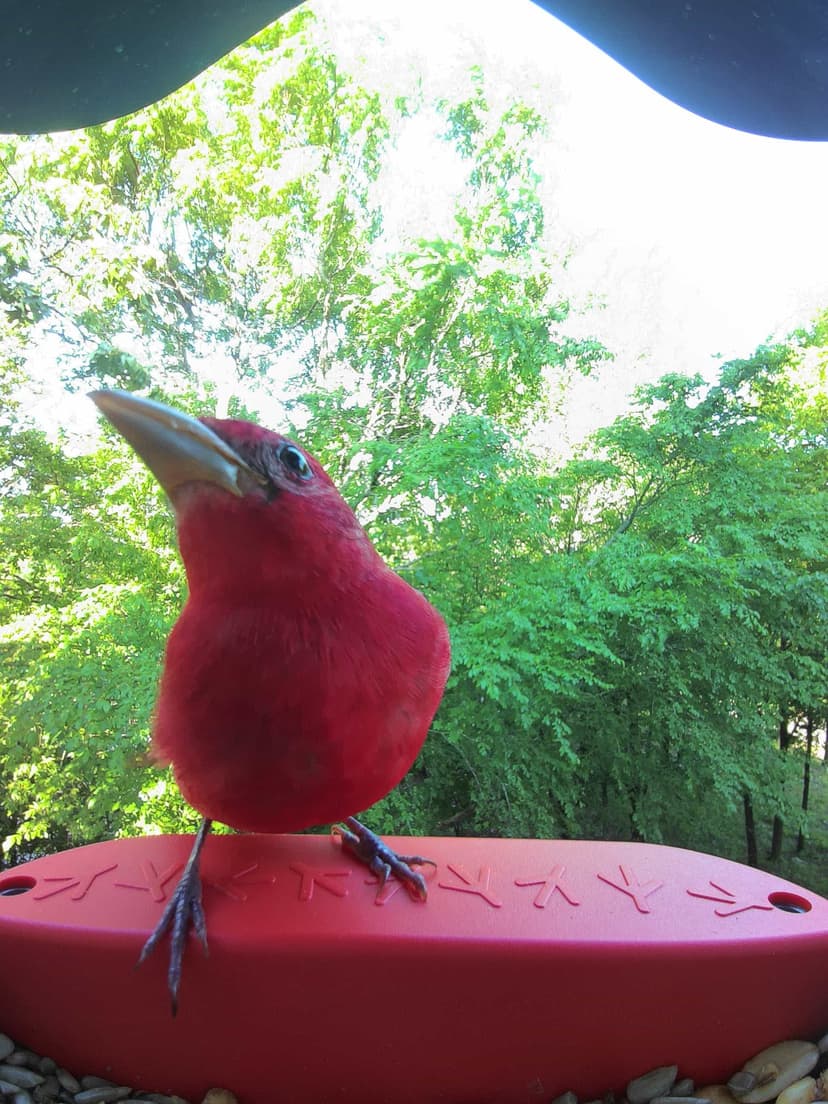
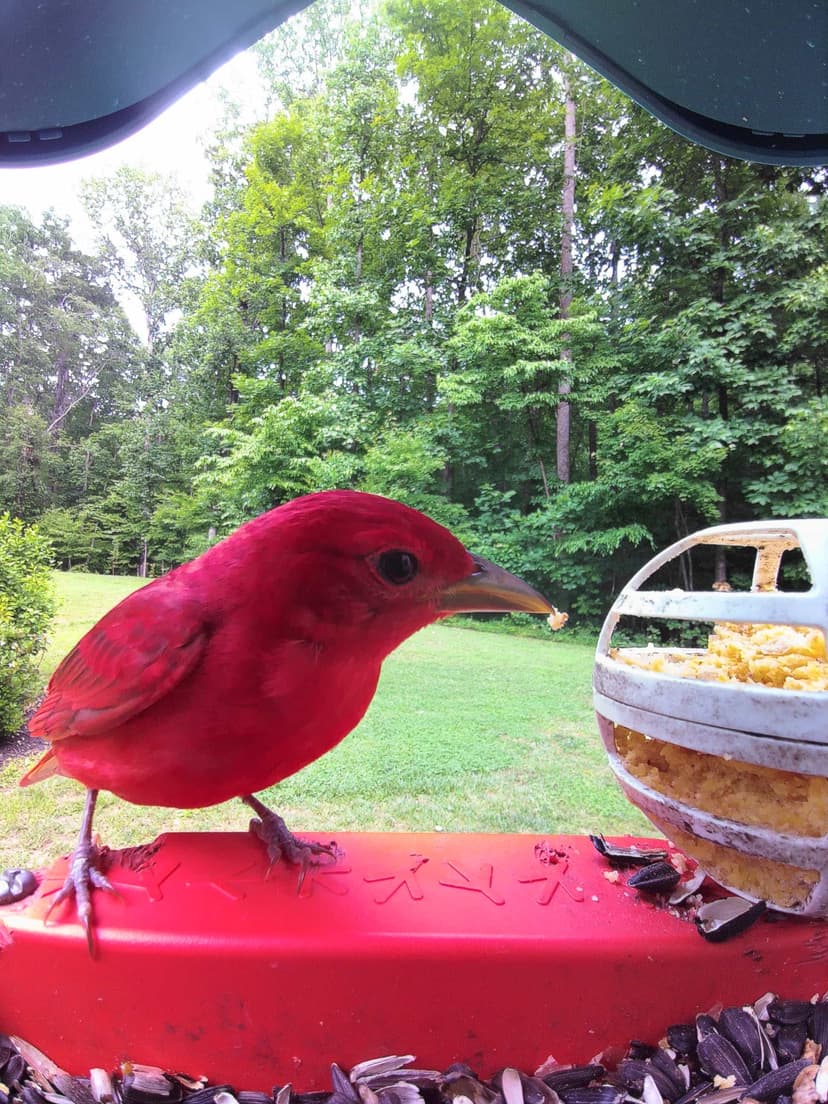
The male exhibits a striking entirely red plumage, with no wing bars or contrasting colors
- •
Females and juveniles are clad in a soft, yellowish-olive color, distinctly lacking the red hue of males
- •
Both sexes have a stout, pointed beak and lack any crest, presenting a smooth head profile
What does a summer tanager sound like?
The Summer Tanager’s vocalizations are melodious and complex. Its song is reminiscent of an American Robin's, but comes across as softer and sweeter. Its call possesses a distinctive rattling noise represented as "chick-tucky-tuck". The call pattern is dynamic, encompassing falling, rising, and undulating tones. It typically communicates through chirping or chipping sounds as well as whistles.


Description
Summer tanagers are the only completely red bird in North America and they are also completely rad! If you catch them before migrating, they'll be adorably plump as they tend to get really fat before their trip. But there's absolutely nothing cute about them if you happen to be a bee or a wasp. They catch these insects in flight and beat them to death against a branch!
The summer tanager can weigh between 29to31grams and be from16to18centimeters tall.
The Summer Tanager typically lives up to 2-5 years. Lifespan varies depending on factors such as predation and disease. In comparison, related species like the Scarlet Tanager live approximately 7-8 years while the Hepatic Tanager can often live up to 9 years. However, like the Summer Tanager, these lifespans can be influenced by various environmental and biological conditions.
Did you know?
Most popular questions about summer tanager
How to recognise a summer tanager?
General appearance
The summer tanager is around 7-8 inches or 18-20 centimeters, similar to a robin or sparrow. Its body is colorful with black, green, red, and yellow hues. Its wings are rounded, and the tail showcases notched, rounded, or square-tipped characteristics. Furthermore, the summer tanager is notable for its large light-colored bill and non-patterned wings.
Male vs female
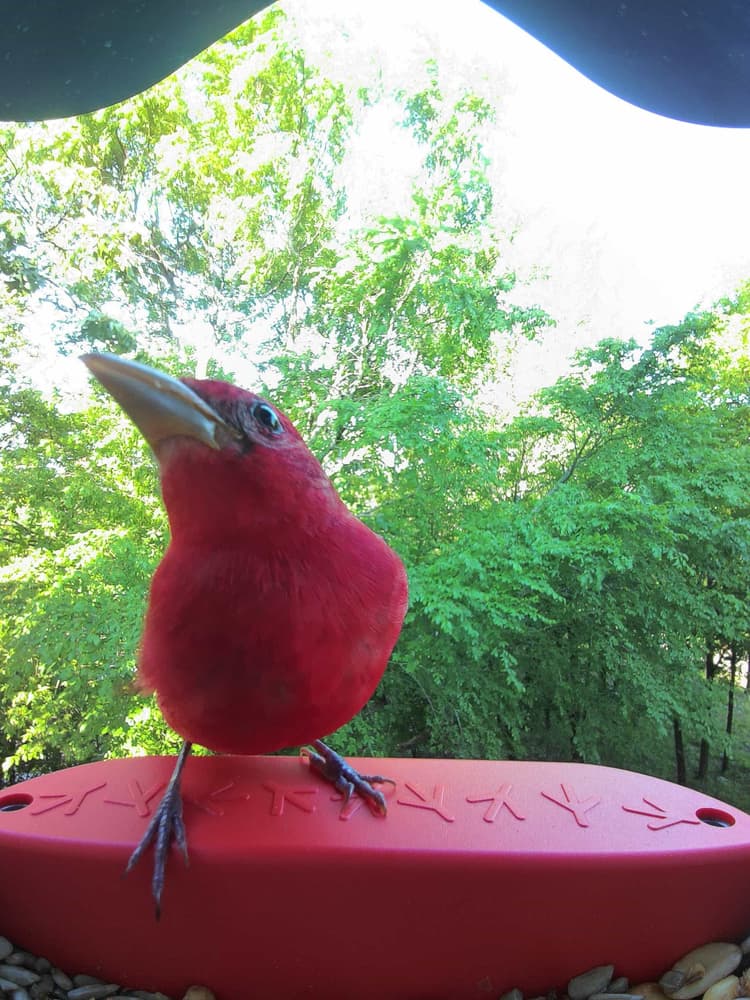
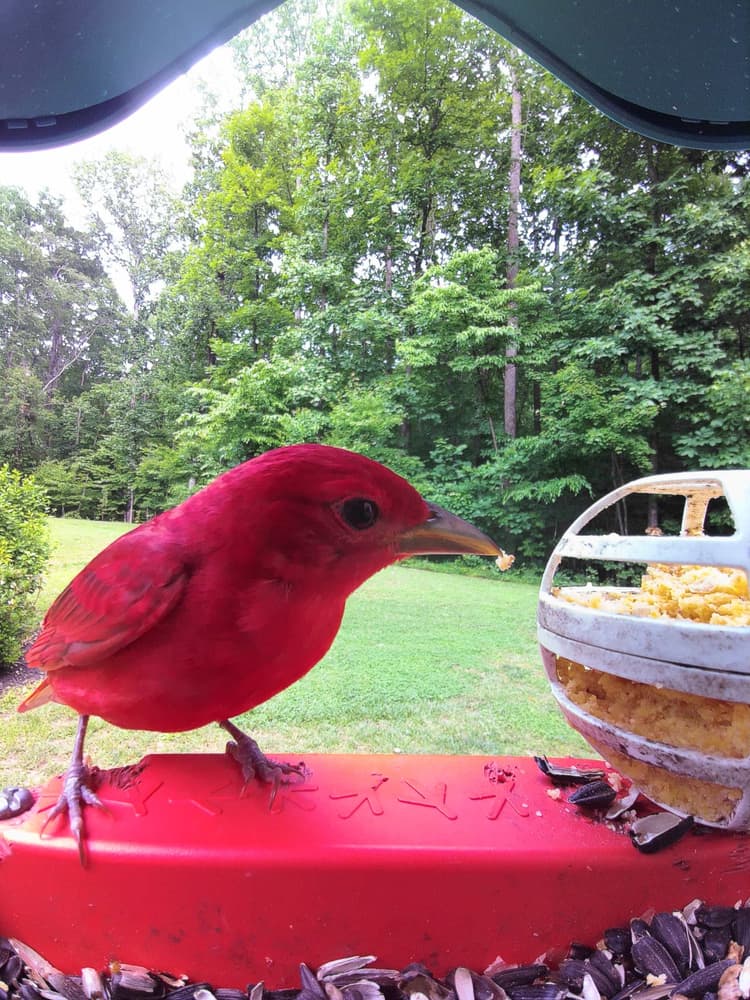
A prominent distinction exists between male and female summer tanagers. Adult males possess an exquisite rosy red color that remains consistent throughout the year, while females have a rich yellow coloration, which is less greenish compared to the female Scarlet tanager. The other distinctive trait of females is the paler and proportionately bigger bill.
Juvenile
Young males, or juvenile summer tanagers, exhibit a slightly different appearance than adults. They may appear patchy yellow and red rather than a uniform rosy red. These color variations can serve as a visual cue to differentiate between adults and juveniles in the wild.
Often mistaken for
Scarlet Tanager vs Summer Tanager
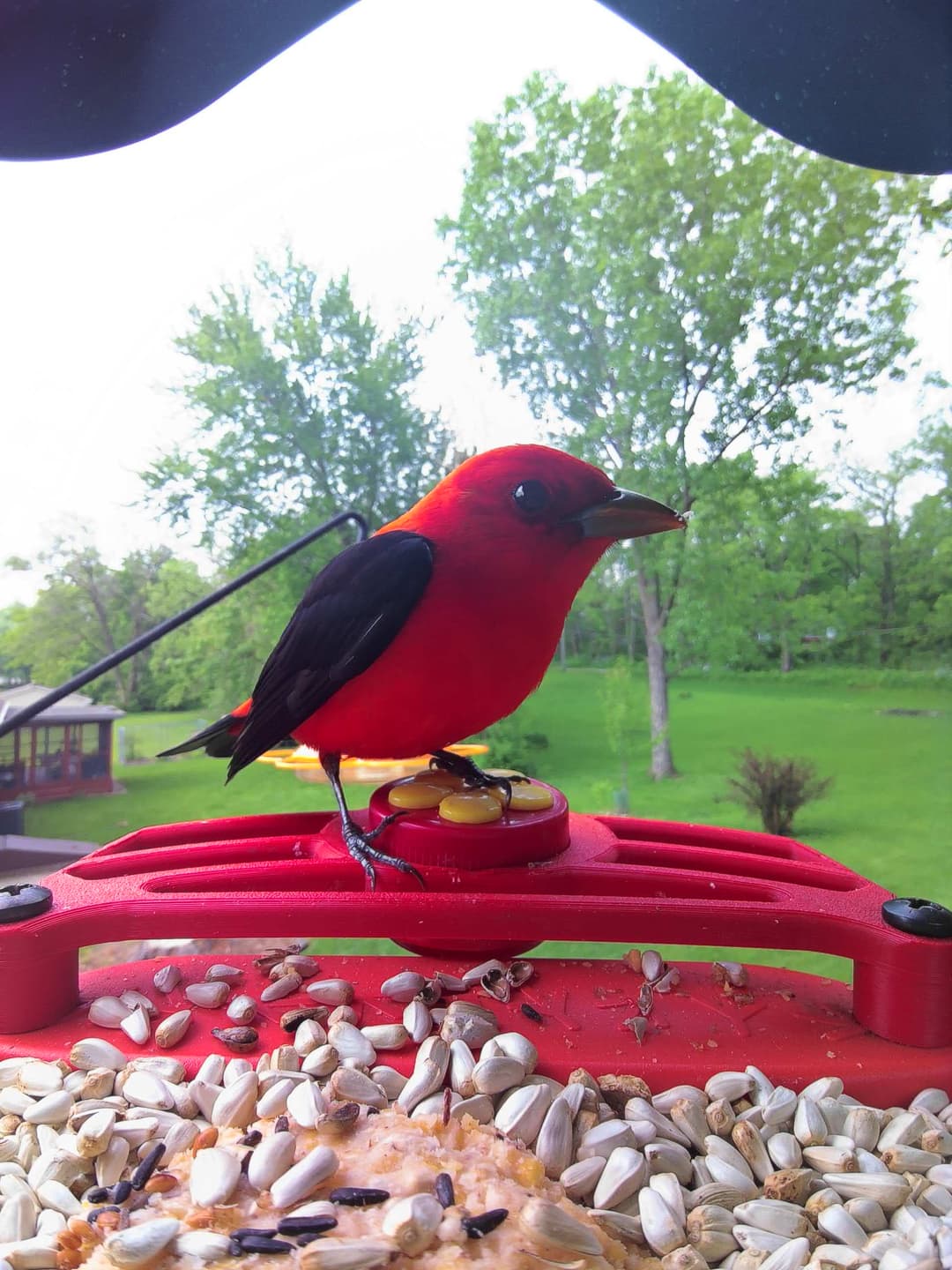
Summer Tanagers are all red with no black wings, unlike Scarlet Tanagers which have striking black wings and tail. Remember, Scarlet Tanager males are brighter, while females are yellowish-green.
Western Tanager vs Summer Tanager
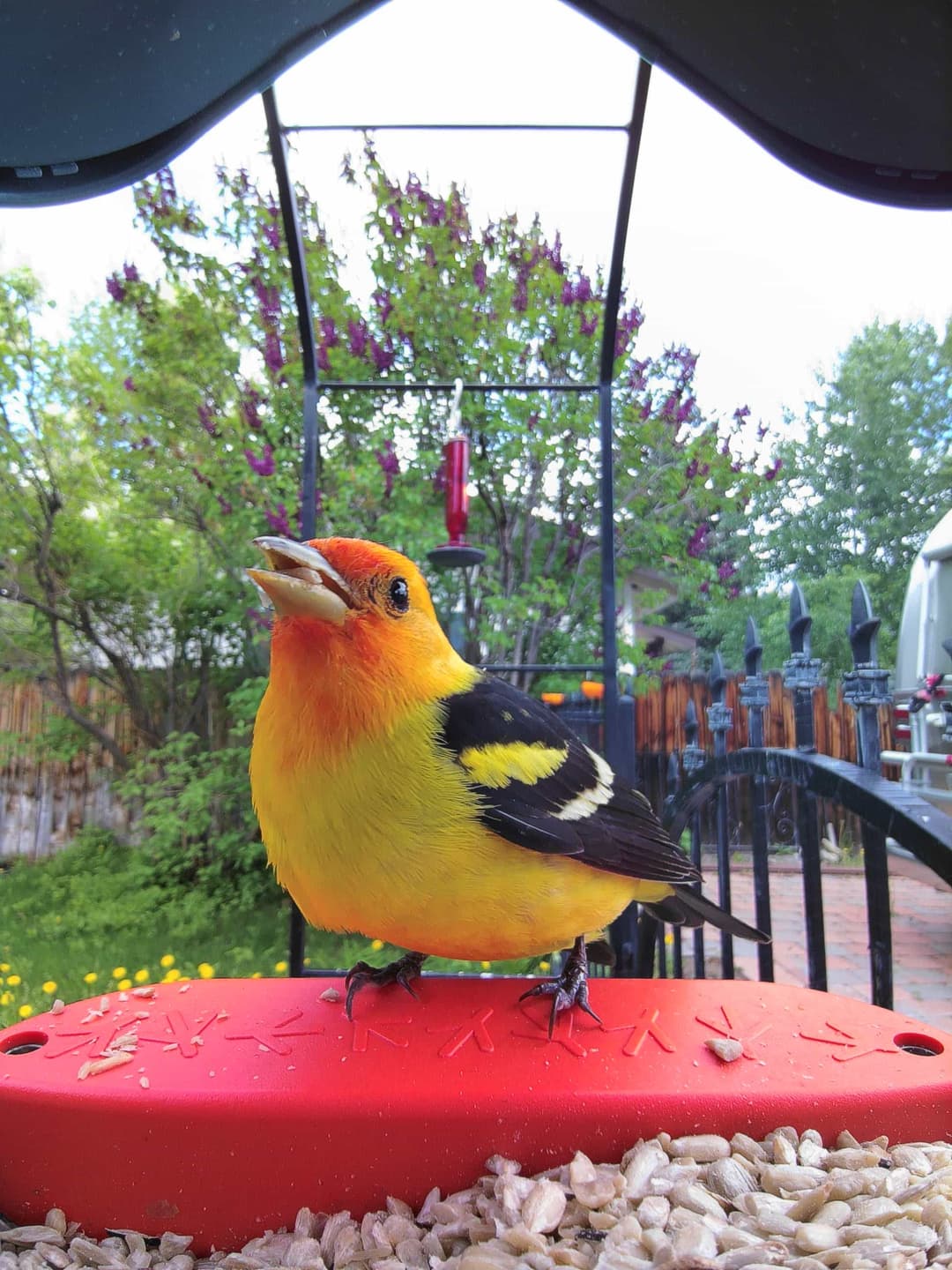
Western Tanagers have a distinctive yellow body with black wings and a red-orange head. Summer Tanagers are completely red without wing patterns, making them easy to distinguish.
Hepatic Tanager vs Summer Tanager
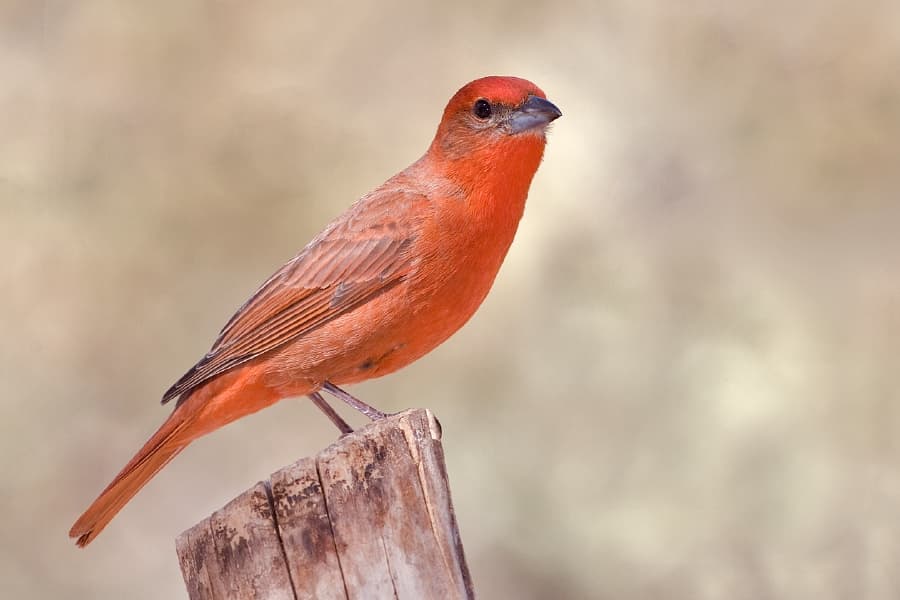
Both male Hepatic and Summer Tanagers are reddish, but Hepatic shows a grayer hue. Females of both are yellowish; note Hepatic females are dusky on the back and wings, unlike the clearer summer female.
Northern Cardinal vs Summer Tanager
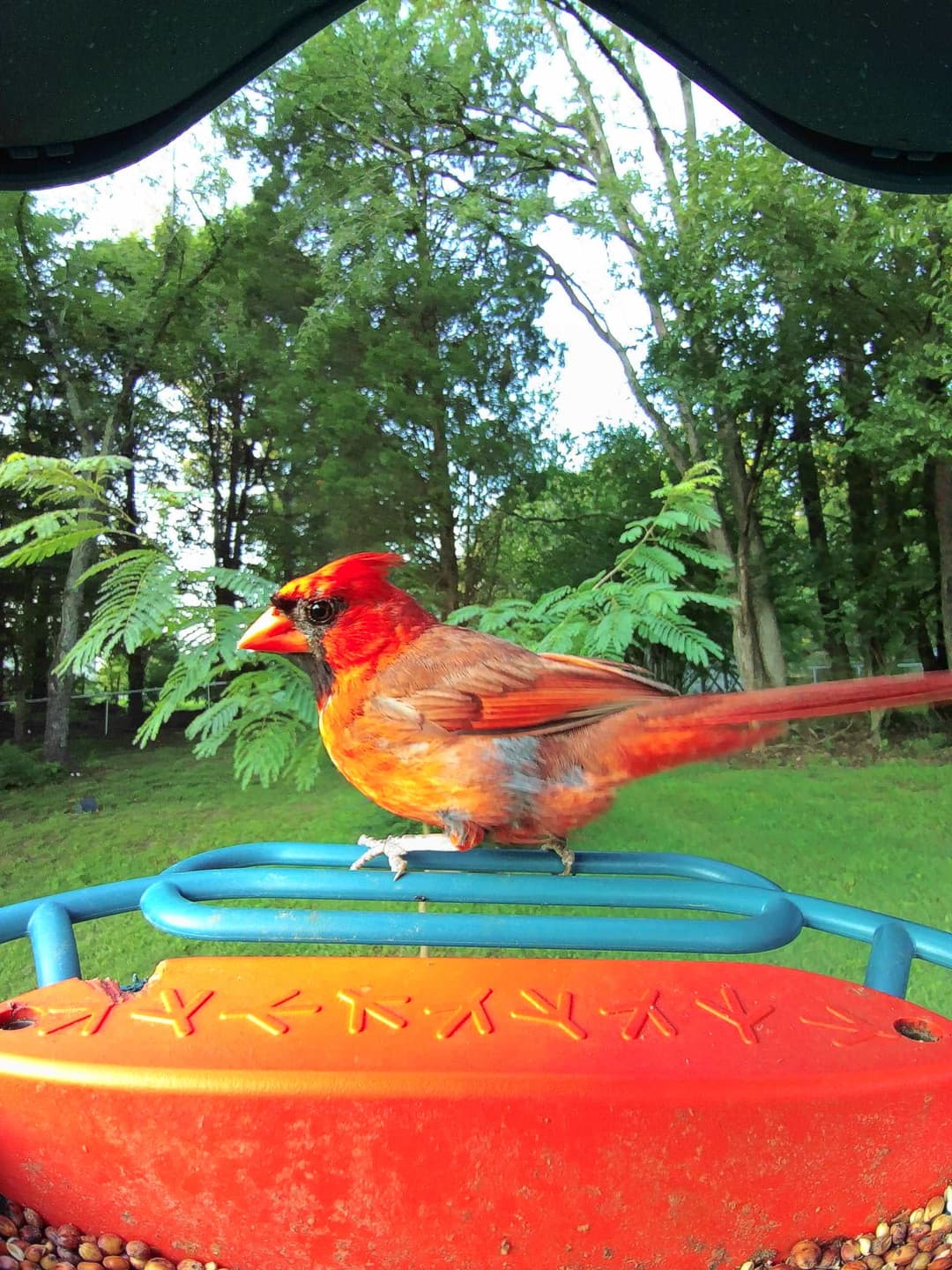
Northern Cardinals sport a black mask around the bill and a pronounced crest, absent in Summer Tanagers. Cardinals are also more robust and prefer more open, urban areas.
Breeding and nesting habits of the summer tanager
Mating behaviors
Summer tanagers engage in courtship displays where males sing to attract females. Courtship behaviors may include males showcasing their bright plumage and performing flight displays to demonstrate fitness.
Nesting details
Nests are cup-shaped, typically built by females using materials like twigs, grasses, and leaves. They are often located on horizontal tree branches, 10-30 feet above the ground, in open woodlands or forest edges. In gardens, create a suitable habitat by planting native trees and shrubs to provide nesting sites and food sources.
Eggs and chick-rearing
Females lay 3-5 pale blue eggs with brown spots, incubating them for about 12 days. Upon hatching, both parents feed chicks with insects and berries. Chicks fledge approximately 10-12 days after hatching and are continued to be fed by parents until they become independent.
What does a summer tanager like to eat?
Berries
Fruits
Insects
Spiders
Natural diet
The summer tanager primarily feeds on insects during the summer. Its diet includes bees, wasps, beetles, cicadas, caterpillars, grasshoppers, bugs, flies, and a variety of other insects. It complements its insect diet by eating some spiders. Additionally, the summer tanager consumes berries and small fruits occasionally.
Bird feeders
While the summer tanager's natural diet consists mainly of insects and some fruits, it may occasionally visit bird feeders that offer fruits or insect-based foods. However, its visits to common seed feeders are rare, as its diet is not based on seeds.
Tempting the summer tanager with tasty treats
Summer Tanagers are prone to enjoy a variety of fruits, especially oranges. Cut an orange into halves and hang it on a tree branch or bird feeder pole. They are also fond of various insects, so supplementing their diet with mealworms can encourage them to visit. For year-round feeding, we recommend Bird Buddy seeds. Specially chosen by experts for seasonal appeal, these seeds help draw the Summer Tanagers towards your yard.
Creating the perfect feeder space for summer tanagers
These bright birds prefer hanging feeders that swing freely in the wind, similar to the way fruits would dangle from trees in their natural habitat. Safety is important for these birds, so make sure the feeder is at least 5 to 6 feet off the ground and away from squirrels or cats. Adding a water feature nearby like a bird bath can also be a huge draw for these thirsty creatures and encourage them to visit and stay longer.
Fun tricks to attract summer tanagers
Playing recordings of Summer Tanager's call can sometimes attract these birds, as they're drawn to the sounds of their own species. However, remember to use this method responsibly and not too often to avoid disrupting the bird's normal behaviour. Also, making your yard more bird-friendly by cultivating native plants, trees and bushes can create a more natural and enticing environment for the Summer Tanagers.
Where can you find summer tanagers?
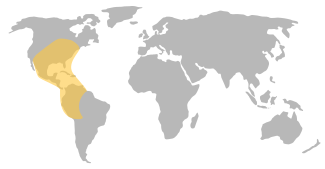
Primary habitat
Summer tanagers breed in dry open woods, especially those of oak, hickory, or pine in the Southeast, and in cottonwood-willow forests along streams in the Southwest.
Additional range
They winter in the tropics, mainly in lowlands but also up to middle elevations in mountains, both in solid forest and in edges and clearings with scattered trees.
Do they migrate?
The summer tanager is a migratory bird that does not stay in one place year-round. During the breeding season, it is found across the southern United States, ranging from roughly Pennsylvania to Texas. As the weather cools, the summer tanager undertakes a significant migration to its wintering grounds, which are surprisingly extensive and include regions from central Mexico to as far south as Bolivia and Brazil. The migration occurs on a broad front. Some summer tanagers cross the Gulf of Mexico directly, taking a more expedited route over open water. Others choose an overland path, traveling through the mainland of Central America. This migration typically begins in mid to late summer, with the birds departing from their breeding territories as early as August and typically arriving in their winter quarters by October. The return journey northward begins in late winter to early spring. The tanagers start moving back to their breeding grounds as early as March, aiming to coincide their arrival with the warmer conditions and increased availability of insects, which are a primary food source during the breeding season. This migratory pattern ensures that they exploit optimal conditions in both their breeding and wintering habitats.
What is the role of summer tanagers in nature and how to protect them?
Conservation status
The summer tanager is generally common and widespread, though its numbers have sharply declined along the lower Colorado River and a few other localities, suggesting localized vulnerability. Key conservation efforts focus on habitat preservation and monitoring population trends. Major threats include habitat loss due to urbanization and changes in river ecosystems. While not currently endangered, continued monitoring and habitat protection are essential to prevent further declines in specific areas.
Ecological role of summer tanagers
Its role in the ecosystem
The Summer Tanager plays a substantial role in ecosystem maintenance and health. Primarily, it contributes significantly to pest control. With insects constituting the major part of their diet, Summer Tanagers feed on bees, wasps, beetles, cicadas, caterpillars, grasshoppers, bugs, flies, and spiders. More notably, the bird is known for breaking into wasp nests to eat the larvae, thus controlling the population of wasps. Moreover, their feeding habits extend to berries and small fruits. This shows their role in seed dispersal, which is crucial for plant reproduction and the expansion of plant species. Further, their nesting practices, using a wide variety of materials, and preference for tree tops contribute to their niche as an upper-level, forest-dwelling species. By this, they are helping to maintain a balanced tree ecology. Finally, the Summer Tanager's breeding behavior, including the male's territorial singing and nesting rituals, forms an integral part of the behavioral biodiversity in their habitat.
How to help protect summer tanagers
Preservation tips
Habitat preservation strategies
To support conservation of the summer tanager, ensure preservation of their habitats, mainly forested areas. Participate in tree-planting programs to restore their environments and oppose deforestation activities that destroy these habitats. Advocate for policies safeguarding these areas and enforce stricter laws against illegal logging.
Community science initiatives
Engage in community science initiatives promoting awareness and interest in the conservation of the summer tanager. Share information about tanager's importance to the ecosystem and threats facing them. Participate in birdwatching groups tracking summer tanagers and report sightings to relevant local birding organizations. This information contributes greatly to scientific research and aids efforts to monitor and protect the species.