
Hepatic Tanager
Hepatic Tanager
Piranga flava
Quick Identification guide
Quick Identification guide
- •
Males exhibit a striking bright red-orange plumage with duller wings and tail
- •
Females and juveniles are generally olive-yellow with hints of red, making them less vivid than males
- •
Both sexes feature a heavy, broad-based bill and have a sturdy, medium-sized body
What does a hepatic tanager sound like?
The hepatic tanager's vocalization consists of strong, short phrases whistled at even intervals, in a vireo-like fashion. These phrases can rise, fall, or stay on the same tone. Its typical calls include a low "chup" and a curious "wheet" sound. The bird's call patterns are characterized as both falling and rising, with its call types being chirp/chip and whistle.
Description
Did you know that the hepatic in the name references the liver-like dark red of the male? Though tanagers, these guys are unrelated to Central and South American tanagers! Communication is always important in a family, which is why you'll hear parents and their chicks calling back and forth. They like to establish spacious breeding territories during breeding season, which can measure up to three acres.
The hepatic tanager can weigh between 23to47grams and be from10to20centimeters tall.
The hepatic tanager commonly lives for 5 years. This mid-sized songbird's lifespan is shorter compared to its close relative, the Scarlet Tanager, which can live up to 9 years.
Did you know?
Most popular questions about hepatic tanager
How to recognise a hepatic tanager?
General appearance
The hepatic tanager generally exhibits a size range of 7-8 inches (18-20 cm) with a distinctive brick-red, orange-red, or mustard-yellow coloration. They sport rounded wings, a tail that can be notched, rounded, or square-tipped, and usually a darker bill. The cheeks of the bird contrast with their predominant color and are typically gray. The bird is similar in size to a Robin or a Sparrow.
Male vs female
Sexual dimorphism is prevalent in the hepatic tanager. Males primarily boast a brick-red or orange-red plumage. In comparison, females predominantly flaunt a mustard-yellow coloration, providing an easy method for differentiating the two.
Juvenile
Young or juvenile hepatic tanagers share similar characteristics with adult females, chiefly the mustard-yellow coloration. This similarity aids in camouflage, offering protection to the young from predators until they reach adult size and coloration.
Often mistaken for
Summer Tanager vs Hepatic Tanager
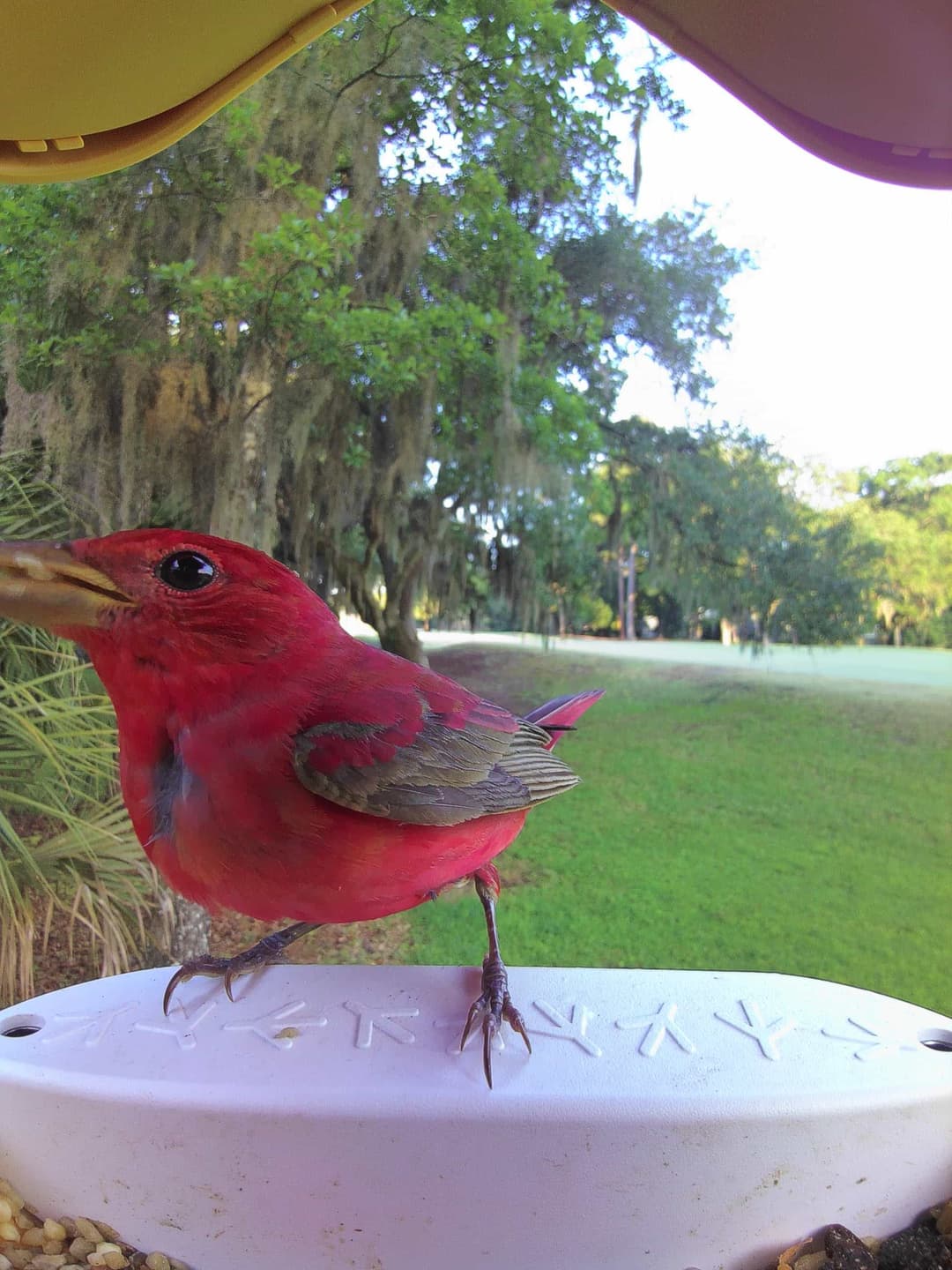
The Hepatic Tanager has a more subdued red coloration compared to the bright, uniform red of the Summer Tanager. The male Hepatic has a grayish wash and darker wings, whereas females are more muted yellow with gray tones compared to the Summer’s vibrant orange-yellow. Hepatic Tanagers generally have a more slender bill.
Western Tanager vs Hepatic Tanager
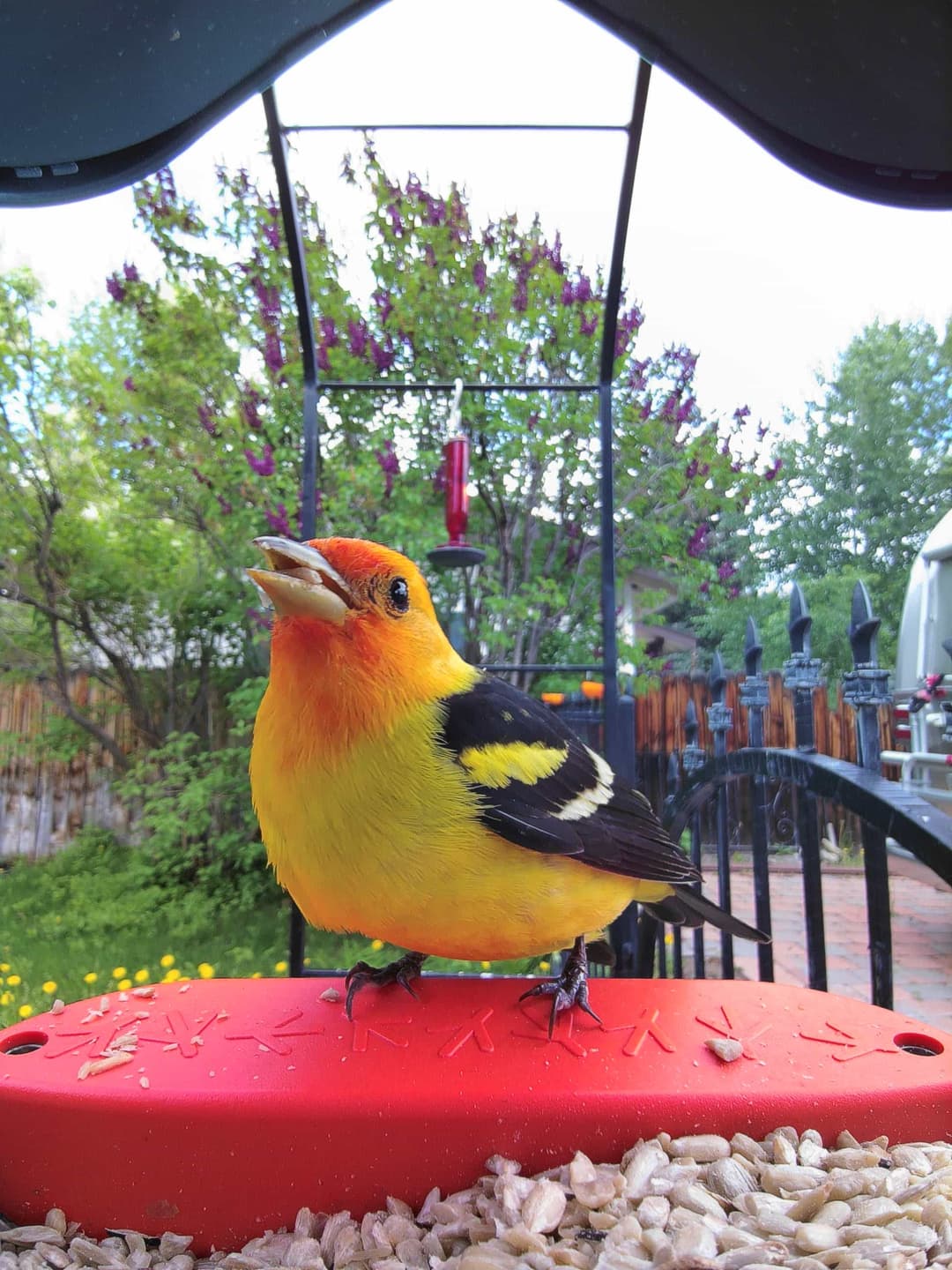
Male Hepatic Tanagers differ with their reddish hues being less vibrant than the Western’s bright yellow body and red or orange head. Females have a duller olive hue, not the Western's brighter yellow body. Hepatics also lack the bold wing bars seen on the Western Tanager.
Northern Cardinal vs Hepatic Tanager
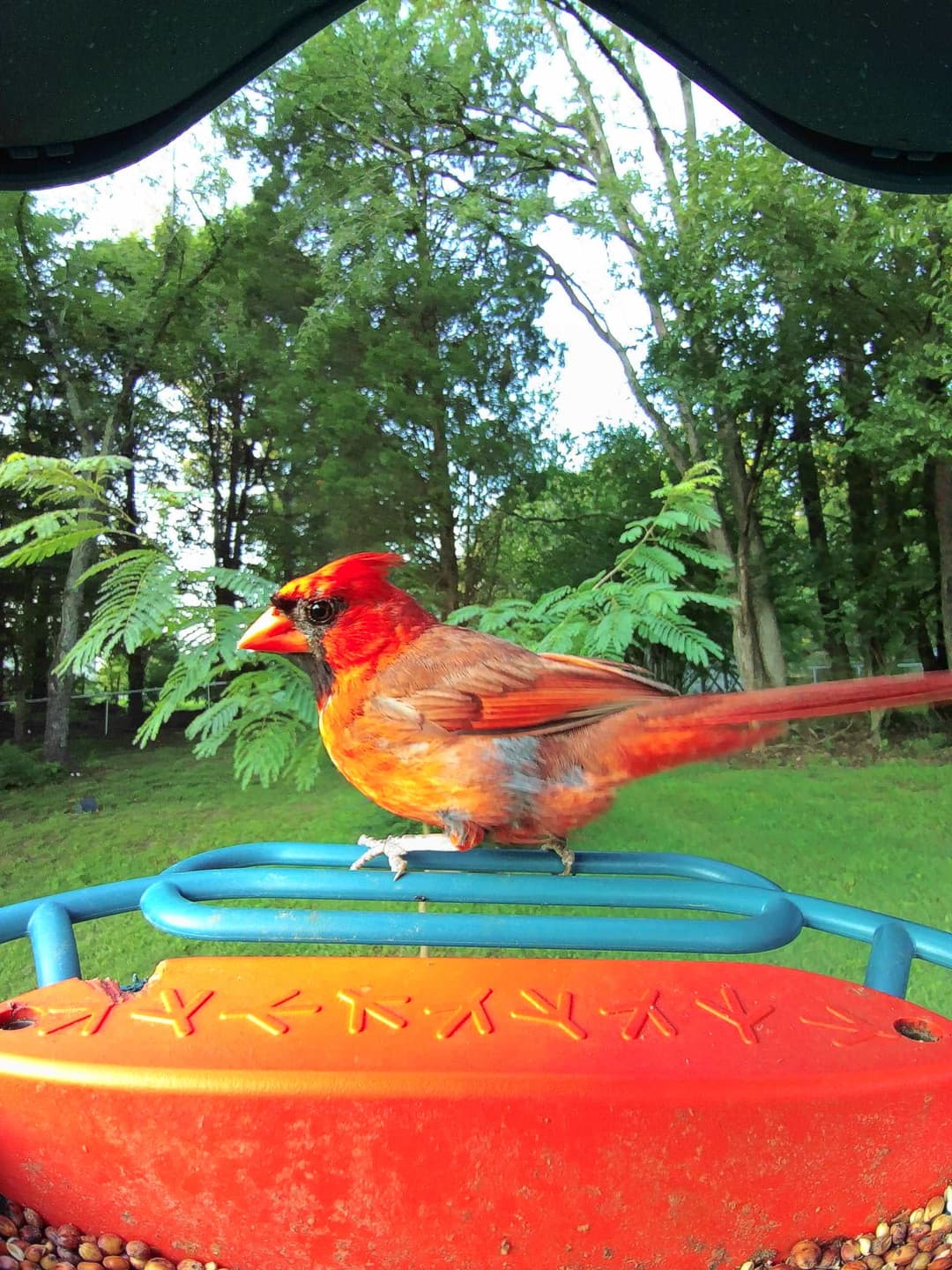
Hepatic Tanagers are less vivid than Northern Cardinals, with males displaying a brick-red color versus the Cardinal’s bright red. Cardinals have a distinctive crest and a black mask around their face which the Hepatic lacks. Hepatics also have a more slender, pointed bill compared to the Cardinal's thick, cone-shaped bill.
Breeding and nesting habits of the hepatic tanager
Mating behaviors
Hepatic tanagers engage in elaborate courtship displays, including singing and vibrantly colored plumage presentation. Males perform flutter flights to attract females.
Nesting details
Nests are typically cup-shaped and located in trees, preferably oaks or pines, at heights ranging from 5 to 50 feet. They use twigs, grasses, and other plant materials to construct these nests, ensuring they are well camouflaged.
Eggs and chick-rearing
The female lays 3 to 4 pale blue eggs, which she incubates for about 12 to 14 days. Both parents feed the hatchlings a diet of insects and fruit, and the chicks fledge within two weeks. To attract tanagers to gardens, plant native species that offer cover and supply a mix of insects and berries for food.
What does a hepatic tanager like to eat?
Fruits
Insects
Nectar
Spiders
Natural diet
The hepatic tanager primarily feeds on insects, with a significant portion of its diet comprising caterpillars and beetles. It likely consumes various other insect types as part of its natural dietary habits. In addition to insects, this bird also eats berries and small fruits. Wild grapes are among the fruits consumed, especially during the late summer when these resources become more abundant.
Bird feeders
Hepatic tanagers are not commonly reported at bird feeders; thus, little is known about their preferences in such settings. They primarily rely on natural food sources that provide the necessary nutrients and energy they require.
Attracting hepatic tanagers to your yard
Attracting the hepatic tanager, a beautiful red bird found commonly in the southwest, is easier than you might think. They are known to be attracted to fruit, so setting out oranges or apples can be a great way to draw them in. They can also be attracted to insects, so a garden with plenty of insects can be a bonus to encourage their visit. But, don't forget bird seeds! Tanagers love bird seeds, especially Bird Buddy seeds chosen by experts for each season.
Choosing the right feeders for hepatic tanagers
When it comes to choosing feeders, Hepatic Tanagers are not particularly picky. However, they seem to prefer platform or tray feeders where their favorite foods can be spread out. Hanging feeders should also work if you don’t have pesky squirrels. Once your feeder is up, filled with Bird Buddy seeds, just enjoy the wait. These vibrant visitors may not only delight your eyes but give you a sweet birdsong concert.
Fun facts and tricks to encourage hepatic tanagers' visit
A fun trick to encourage Hepatic Tanagers to visit is to play their songs or calls, which can be found online. Hearing the song can sometimes make these birds curious enough to visit. Another tip is to keep your yard or garden quiet and less disturbed which they appreciate. With a little patience and the right setup, it won't be long until these feathered friends are regular visitors in your yard!
Where can you find hepatic tanagers?
Primary habitat
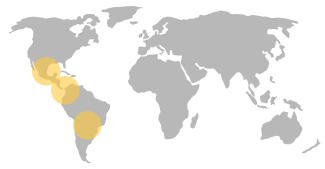
The hepatic tanager primarily resides in open mountain forests featuring oaks and tall pines. It typically breeds at middle elevations in mountains and canyons.
Additional range
Unexpectedly, the bird may inhabit low pinyon pine woods that have a scattering of taller trees. In tropical regions, while favoring the mountains, it can be found in lowland pine savanna.
Do they migrate?
The hepatic tanager is likely a short-distance migrant rather than a bird that remains in one place year-round. In the fall, these birds typically retreat into Mexico from their breeding grounds in the United States. This indicates a southward movement as they seek more favorable conditions during the winter months. A few individuals might remain in southern Arizona during the winter season, demonstrating some variability in their migratory behavior. Occasionally, strays reach the California coast, with some even wintering there, thus extending their range slightly westward beyond their usual migratory route. Key locations involved in their migration include their breeding areas in parts of the southwestern United States and their wintering grounds in Mexico. While comprehensive details on specific migratory pathways and exact timing are less documented, the general pattern suggests a migration beginning in the fall, aligning with typical seasonal changes in habitat suitability. The presence of some individuals wintering in both southern Arizona and sporadically along the California coast highlights a degree of flexibility and adaptability in their migratory and wintering behaviors.
What is the role of hepatic tanagers in nature and how to protect them?
Conservation status
The hepatic tanager is considered relatively common, though it has likely declined in some areas of the Southwest in recent decades. A key threat to the species is nest parasitism by cowbirds, which can impact breeding success. While not classified as vulnerable or endangered, monitoring and conservation efforts focus on preserving its habitat and mitigating the effects of cowbird parasitism to ensure stable populations. Efforts also include habitat restoration to address areas where declines have been noted.
Ecological role of hepatic tanagers
Its role in the ecosystem
The hepatic tanager plays a crucial role within its ecosystem. Firstly, it acts as a natural pest control, by feeding largely on insects such as caterpillars and beetles which can cause substantial damage to both forests and agricultural crops. The bird's unique foraging behavior, which includes both ground and aerial feeding, means it can access pests in various locations. Secondly, the hepatic tanager contributes to seed dispersal, an important process for plant reproduction and biodiversity. It consumes berries and small fruits, especially in late summer, including wild grapes. During digestion, the seeds from these fruits are often passed out of the bird's body and dispersed over a wider area. This facilitates the growth of new plants and helps to ensure the survival of these species. The tanager's nesting behavior also provides benefits to the ecosystem. By building nests in tall trees, it can help to increase tree-layer biodiversity and provides a habitat for other species. Hence, the hepatic tanager contributes significantly to its environment through pest control, seed dispersal, and habitat provision.
How to help protect hepatic tanagers
Preservation tips
Habitat preservation
Preserving and expanding existing habitats of Hepatic Tanagers is vital. Protect open woodlands, especially pine and oak forests where they predominantly live. Resist deforestation and promote sustainable forestry practices. Encourage planting of native trees species to support their feeding and breeding habits.
Community science
Engagement in citizen science initiatives such as bird counting events and monitoring programs aids in tracking population trends. Raise awareness about the hepatic tanager at schools, communities, and through local media. Report sightings to local wildlife or ornithology associations, and use platforms like eBird to share data. Promote responsible birdwatching to minimize disturbance.