Rook or American Crow?
Here's how to tell the difference


Rook


American Crow
Rook
Corvus frugilegus
General appearance
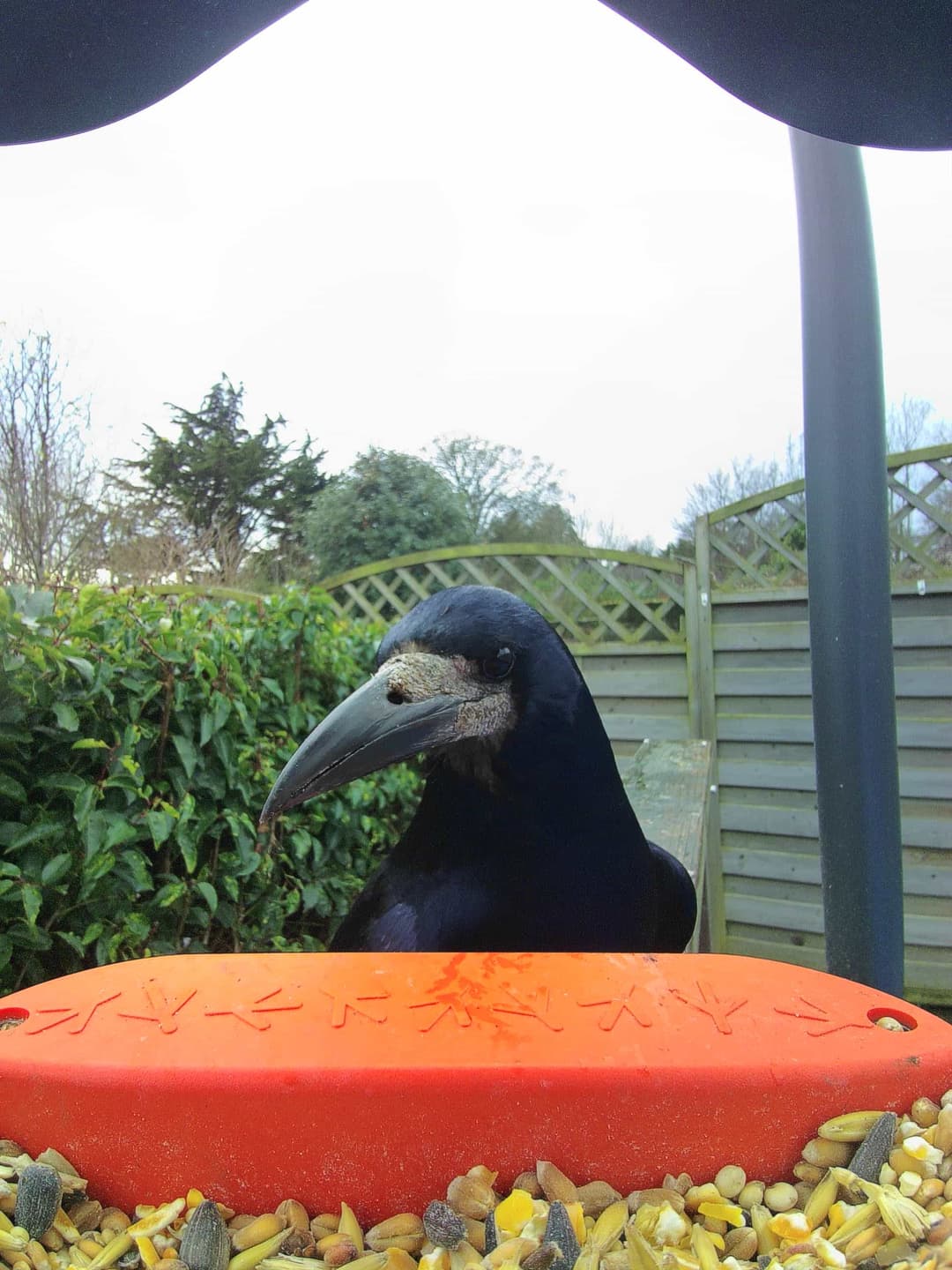
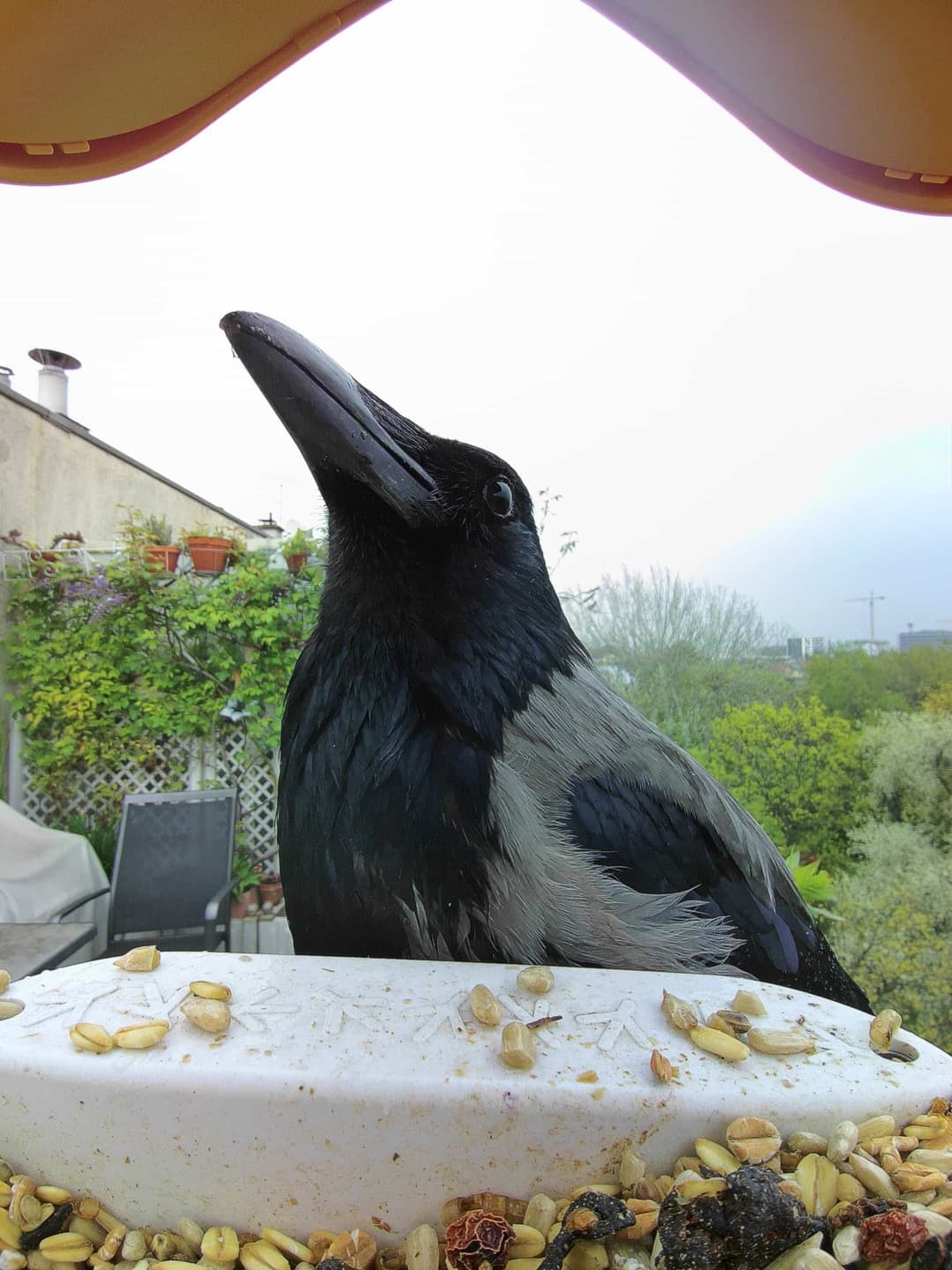
Rooks are generally about 45-47 cm in length, with dark feathery coloration, often appearing black with a purple or blue sheen in sunlight. They exhibit a prominent bare area around the base of their beak and on their face, which is grey-white in color. The bird also has uniquely fringed thigh feathers, long pointed wings, and a wedge-shaped tail.
Male vs female
Sexual dimorphism is not significant in rooks, making it difficult to distinguish males from females by appearance alone. Both genders share the same coloration and size. Behavioral observations during the breeding season may provide clues, as males tend to display more assertive posturing and are known to engage in aerial shows of acrobatics to attract mates.
Juvenile
Juveniles are similar in size to adults, but they can be distinguished by their fully feathered faces. This feature differentiates them from mature rooks, who have developed the distinctive bare patch. Juveniles may also exhibit lighter, more brownish feather coloration, transitioning to the adult's glossier black as they mature.
Size
17.3 - 18.1 in/11.5 - 20.1 oz
There's more to learn about Rook
View full detailsAmerican Crow
Corvus brachyrhynchos
General appearance
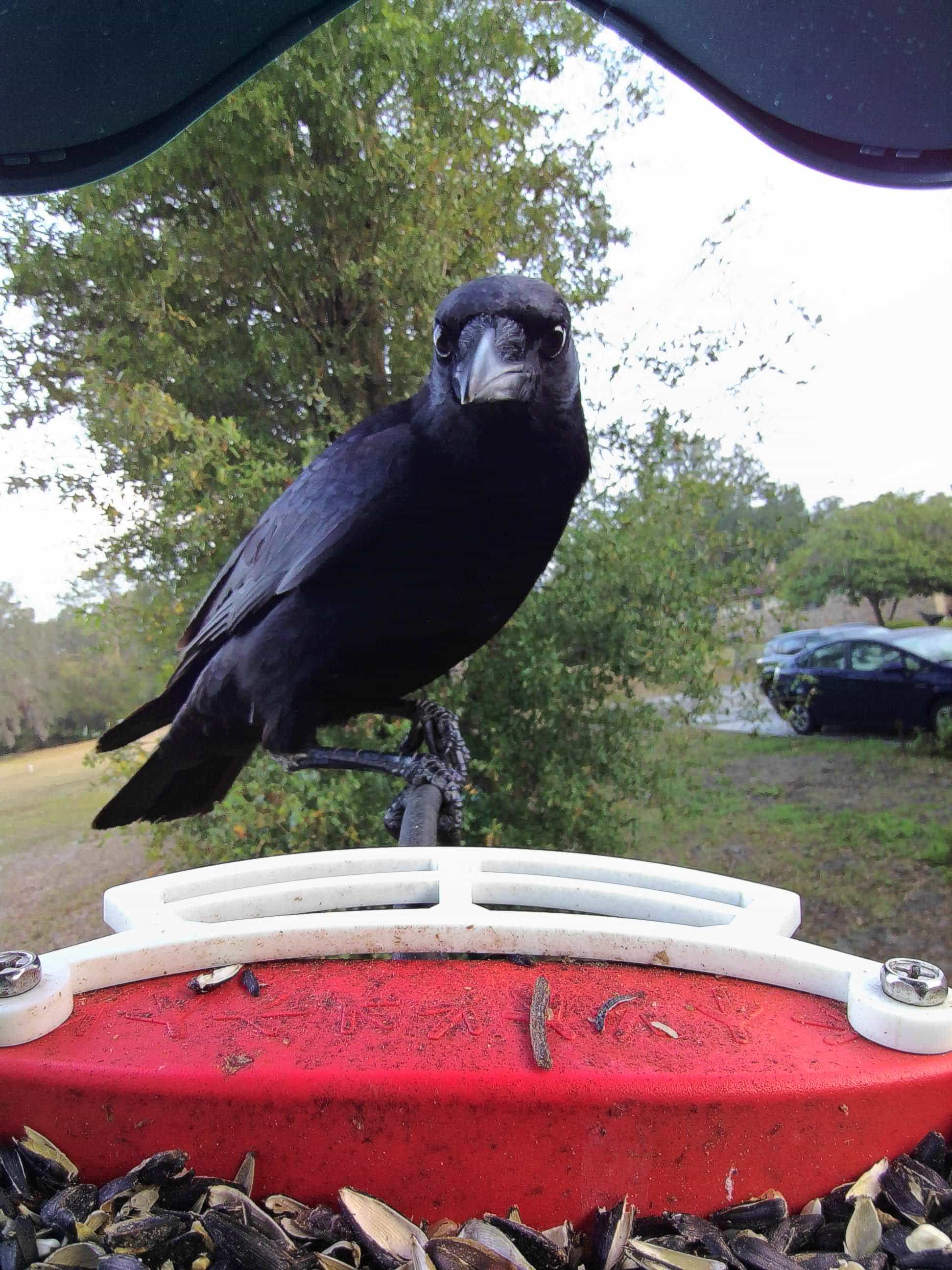
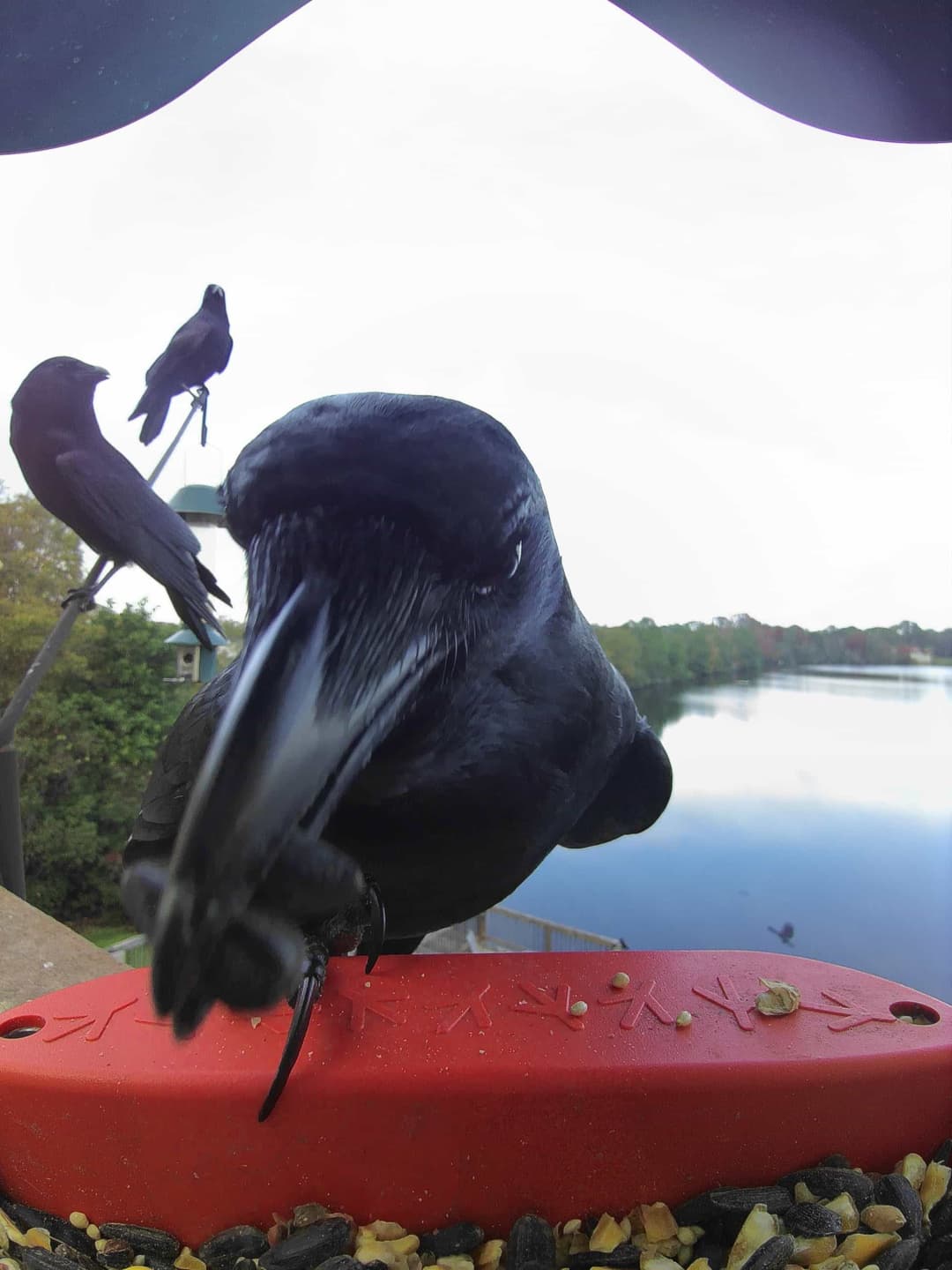
The American Crow is a bird measuring 17-21 inches, or 43-53 centimeters, in length. It is easily identifiable by its complete black pigmentation and robust beak. Characteristic tail is rather short, ending in a shape close to a square when not in flight. In flight, the wings take a broad, fingered yet rounded shape. This species is noticeably larger compared to other members of the blackbird family.
Male vs female
Males and females are monomorphic, meaning they share similar appearances. Both sexes show the same strong all-black coloration from beak to feet and also share the same size, making it difficult to differentiate between them based on visual characteristics alone. They are both larger than other members of the blackbird family.
Juvenile
Juvenile crows bear a resemblance to the adults but can be identified by their slightly different voices and shapes. However, as they mature, these differences become less recognizable, and they assume full characteristics of the adults.
Size
16.9 - 20.9 in/11.1 - 20.3 oz
There's more to learn about American Crow
View full detailsHow to tell the Rook from the American Crow
Visual differences
Visually, Rooks (17-18 inches) and American Crows (17-21 inches) are similar in size but differ in features. Rooks have a distinctive grey-white bare patch around their beak, while American Crows are fully black from beak to feet. Rooks exhibit fringed thigh feathers, pointed wings, and a wedge-shaped tail, whereas American Crows have a robust beak, broad wings in flight, and a square-shaped tail when not in flight. Rooks may have a purplish or blue sheen, unlike the uniformly black American Crows.
Key differences and behavior
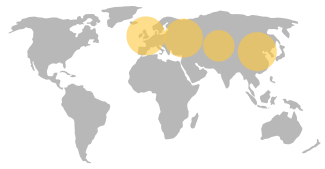
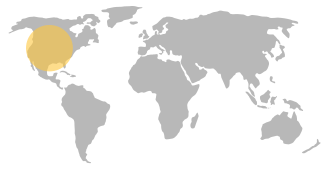
Rooks and American Crows differ significantly in their social structures, habitats, and behaviors. Rooks prefer larger breeding colonies known as rookeries, with 20-30 nests in tall trees, highlighting their gregarious nature, while American Crows form smaller family groups often involving multiple generations. Both species are omnivorous, but rooks tend to probe the ground for invertebrates, whereas crows are more opportunistic, consuming a wider array of foods, including garbage. Rooks thrive in both rural and urban environments across Europe and parts of Asia, whereas American Crows prefer semi-open areas but avoid deserts, thriving in North America's towns and cities. During mating, rooks perform aerial displays, while crows exhibit elaborate courtship rituals and cooperative breeding.
Still not sure? Here are more lookalikes!



Rook vs [Select a bird]

[Select a bird]
Pick a bird to compare
American Crow vs [Select a bird]
[Select a bird]
Pick a bird to compare