
Italian Sparrow
Italian Sparrow
Also known as: Cisalpine Sparrow
Passer italiae


Quick Identification guide
Quick Identification guide
- •
Displays a chestnut crown and pale grey cheeks, setting it apart from other sparrows
- •
Exhibits a black bib at the throat, with brown upperparts and grey underparts
- •
Features a stout, conical beak that is typical of seed-eating birds
What does an Italian sparrow sound like?
The Italian sparrow has a chirpy and melodic song similar to the house sparrow, with repeated cheep sounds used for calling. Its song lacks the house sparrow's persistent chirr segment and often involves a fast sequence of repeated single notes. Alarm calls are strident and chattering. The vocalization pattern of the Italian Sparrow helps to mark their territory and attract mates.


Description
Did you know that the black patch on a sparrow's throat and chest is called a bib or a badge? Italian sparrows have lived alongside humans for a long, long time – frescoes of them were even found in Pompeii! These social birds are also known as Cisalpine sparrows and are, like the house sparrow, biological indicators of pollution!
The Italian sparrow can weigh between 23to30grams and be from14to16centimeters tall.
The Italian sparrow typically lives for around 3-5 years. This lifespan is roughly comparable to other small old world sparrows such as the house sparrow, which also usually lives for about 3 years. Other closely related species such as the Eurasian tree sparrow can live for up to 13 years, indicating a potential for greater longevity in certain conditions or environments.
Did you know?
Most popular questions about Italian sparrow
How to recognise an Italian sparrow?
General appearance
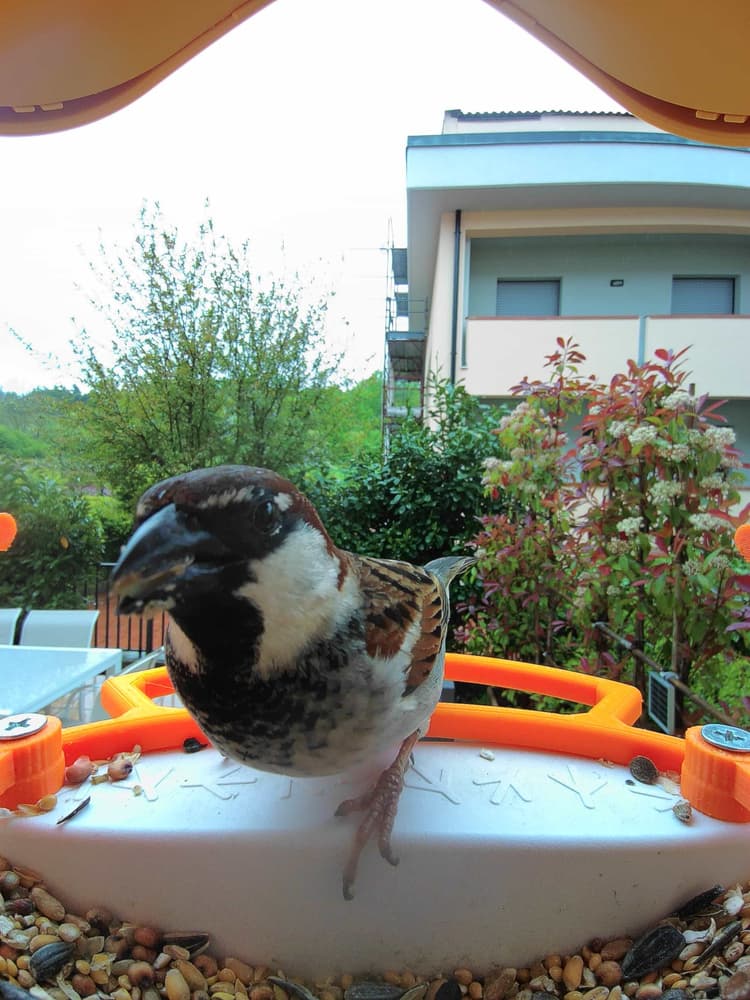
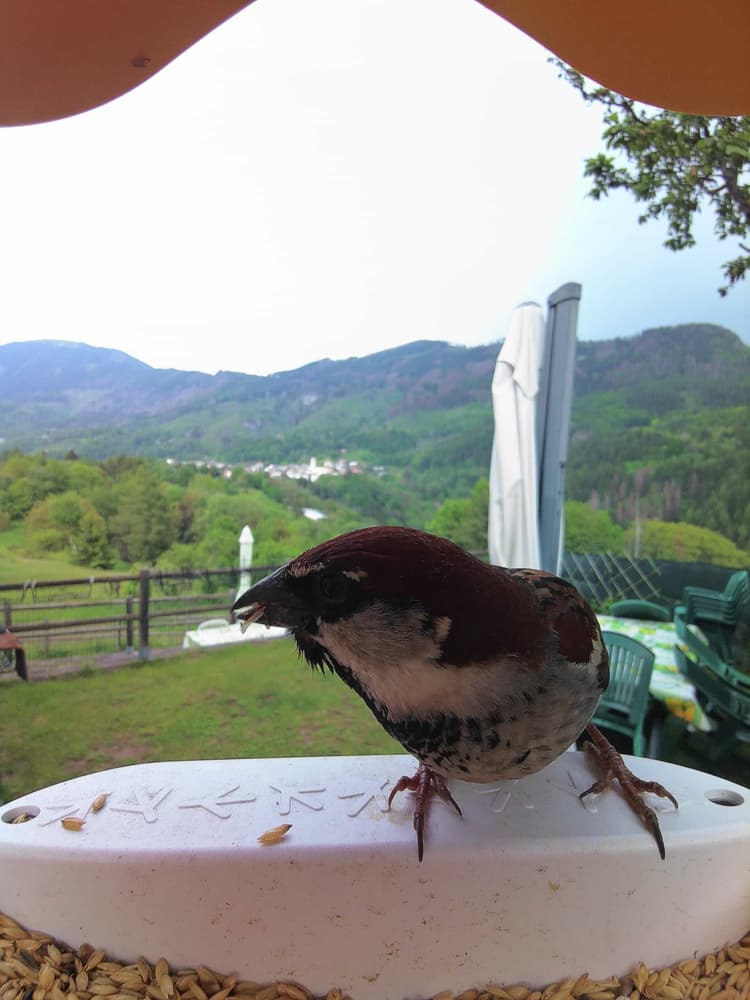
The Italian sparrow (Passer italiae) is compact and robust, measuring between 14 to 16cm with a wingspan of 23–28cm. It showcases a combination of a chestnut crown and nape, grey cheeks and a typical sparrow-patterned brown back. Males tend to be more colorful than females.
Male vs female
Males have brighter colors, with their underparts and collar marked in a more intense black, while their crown shows deep chestnut hues contrasting to the slate-grey patch on their temples. Females, on the other hand, have less striking colors featuring a dull brown back, pale grey underparts and lack the contrastive facial markings seen in males.
Juvenile
Juvenile Italian sparrows share similarities with adult females, although juveniles display more uniform coloration, having less pronounced browns, pale streaks in the crown and nape, and lack the sharp facial contrasts. As they age into their first year, they gradually obtain adult-like features.
Often mistaken for
House Sparrow vs Italian Sparrow
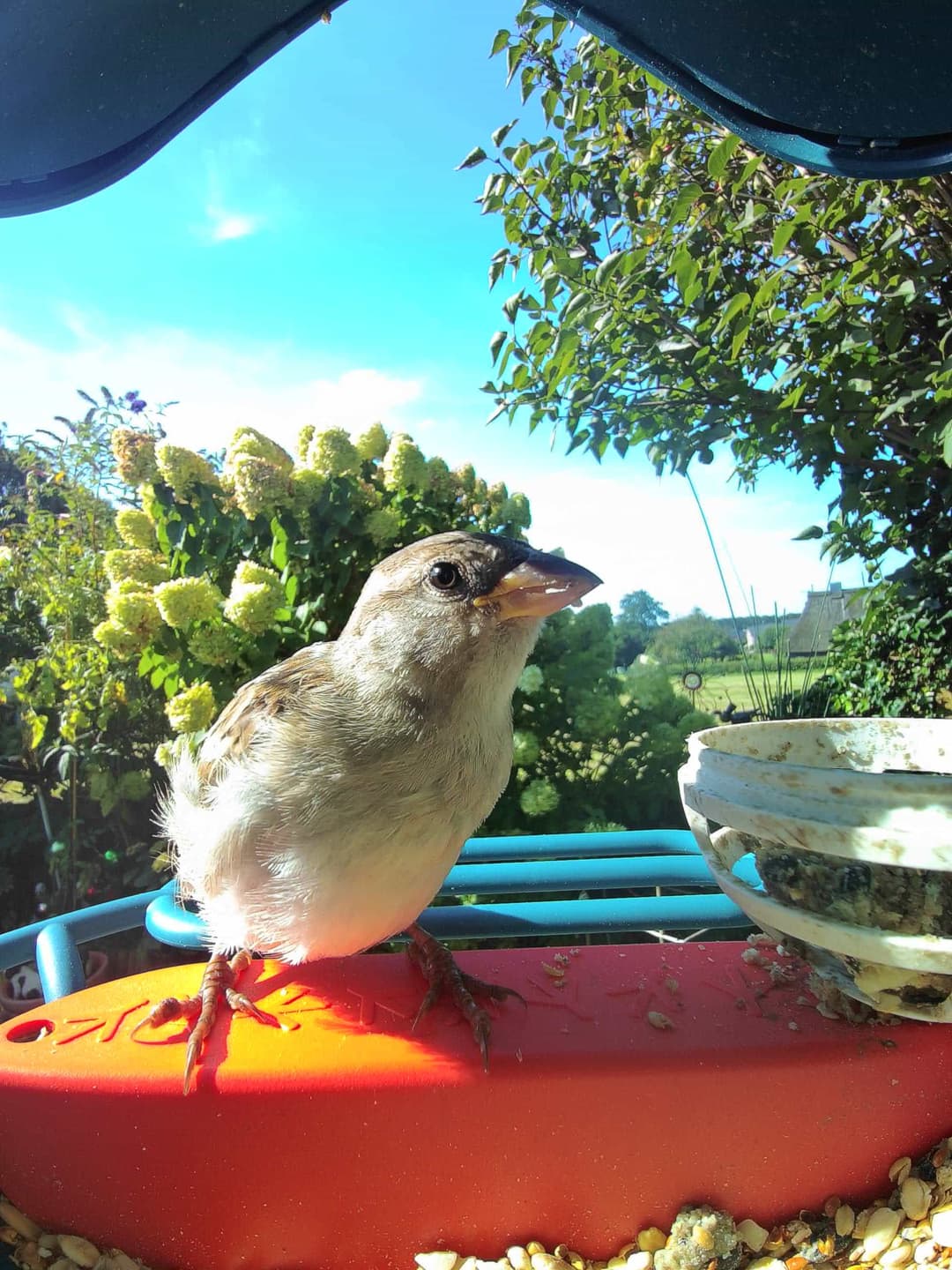
The Italian Sparrow and the House Sparrow are similar in appearance, but the House Sparrow typically has a more uniform brown upper body and lacks the distinct black bib found on the Italian Sparrow.
Spanish Sparrow vs Italian Sparrow
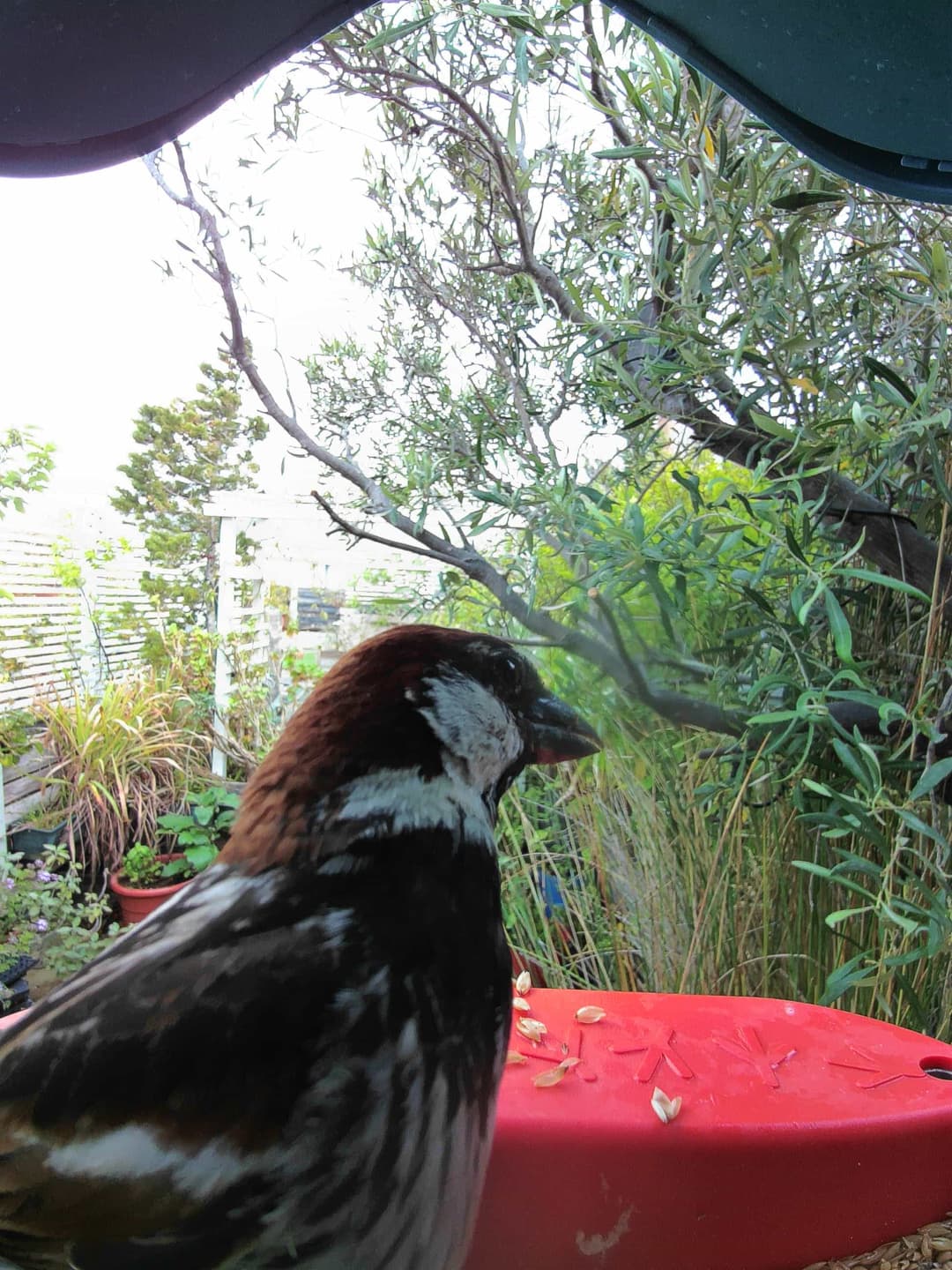
The Spanish Sparrow is similar to the Italian Sparrow but can be distinguished by the chestnut cap and presence of fine streaking on the chest.
Breeding and nesting habits of the Italian sparrow
Mating behaviors
Italian sparrows engage in lively courtship displays, where males attract females with a combination of song and physical displays, such as puffing up their feathers and hopping energetically around the female.
Nesting details
These sparrows prefer nesting in sheltered locations like the eaves of buildings or dense shrubs. They construct their nests using materials such as grass, feathers, and twigs. In gardens, ensuring dense vegetation or providing nest boxes can attract them.
Eggs and chick-rearing
A typical clutch consists of 3-5 eggs, which both parents incubate for about two weeks. After hatching, both parents are involved in feeding and caring for the chicks, which fledge approximately two weeks after hatching.
What does an Italian sparrow like to eat?
Insects
Scraps
Seeds
Natural diet
The Italian sparrow primarily feeds on seeds and grains found in agricultural fields, grasslands, and forests. Its diet includes seeds of wild grasses, cereals such as wheat and oats, and various weeds. Additionally, it consumes small insects, spiders, and other invertebrates, especially during the breeding season when it requires extra protein for raising its young. Fruits and berries are also part of its diet, providing essential vitamins and nutrients.
Bird feeders
At bird feeders, the Italian sparrow is often attracted to a variety of seeds and grains such as sunflower seeds, cracked corn, and millet. Suet and peanuts may also be consumed, especially in winter when natural food sources are scarce. It is adaptable and may be seen foraging for crumbs and food scraps around human habitation where feeders are not available.
Feed the right snacks
The quickest way to the Italian Sparrow's heart is through its stomach! These birds are especially fond of seeds, insects, and berries. Providing a consistent supply of these favorites is a sure-fire way to attract them. We highly recommend Bird Buddy seeds - expertly chosen for the season, these seeds offer the best results.
Choose the right feeder
Not all feeders are created equal when it comes to attracting Italian Sparrows. Opt for feeders that allow these small birds to perch comfortably while they snack. They also appreciate feeders with generous space to accommodate their social nature.
Create sparrow-friendly spaces
Italian Sparrows are drawn to areas that provide ample cover from predators. Plan your landscaping with these needs in mind. Dense shrubbery, vine-covered fences, or nest boxes can create attractive hiding spots for these petite birds.
Turn up the 'tunes'
A yard with a gentle symphony of natural sounds can be very inviting to a sparrow. The trickling noise of a water feature or the rustle of leaves in the wind can provide a sense of security and naturalness that Italian Sparrows find very appealing. Pop in some sounds of their own to excite their curiosity and entice a visit... and perhaps a sing-along.
Where can you find Italian sparrows?
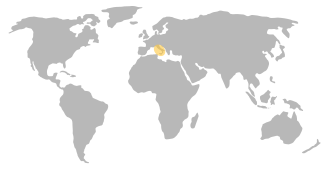
Primary habitat
The Italian Sparrow primarily occupies Mediterranean environments in Italy and Switzerland, favoring warm climates.
Additional range
Unexpectedly, this bird also frequents human settlements including farmland and city centers.
Do they migrate?
The Italian sparrow is generally a sedentary bird, meaning it tends to stay in one place throughout the year rather than migrating. This species is largely confined to Italy and surrounding regions, including parts of Switzerland, France, and Slovenia. While most Italian sparrows do not migrate, there may be some local movement in search of food or more favorable conditions, especially in response to severe weather or changes in habitat. However, any such movements are not comparable to long-distance migrations seen in some other bird species. During winter, Italian sparrows might move to lower altitudes or slightly different areas within their range to escape harsh weather conditions, but these shifts are limited and do not involve crossing international borders or vast distances. In summary, the Italian sparrow does not have a defined migratory route as many other birds do, and its seasonal movements, if any, are localized and minimal. This lifestyle allows them to exploit the temperate climate and stable habitats of their range in the Mediterranean region.
What is the role of Italian sparrows in nature and how to protect them?
Conservation status
The Italian sparrow is generally considered to be of least concern, implying it is relatively common and not currently at risk of becoming endangered. However, like many bird species, it faces threats from habitat loss, urbanization, and agricultural changes. Conservation efforts primarily focus on habitat preservation and monitoring population trends to ensure its stability. Protecting nesting sites and maintaining rural landscapes can help mitigate the impact of these threats. The species benefits from general bird conservation programs that address environmental challenges affecting a wide array of avian populations.
Ecological role of Italian sparrows
Its role in the ecosystem
The Italian Sparrow (Passer italiae), a bird found mainly in Italy and in certain parts of France and Switzerland, plays an important role in the ecosystem. It consumes various types of insects making it an effective agent of pest control, contributing to maintaining the balance of insect populations and indirectly promoting plant growth and health. Besides, the Italian Sparrow is also a seed disperser that aids in the propagation of various plant species. This bird consumes seeds and disposes of them in different areas through their droppings, leading to the growth of new plants in these spots. This way, it helps maintain plant diversity and contributes to housekeeping the ecosystem by controlling pests and promoting plant propagation.
How to help protect Italian sparrows
Preservation tips
Habitat preservation strategies
Preserving the habitat of the Italian Sparrow involves maintaining the balance between urbanization and na ture. Implementation of stricter regulations on urban development and agricultural practices is crucial, particularly in areas where the bird thrives. Preserve mature olive groves and vineyards which are preferred habitats. Encourage organic farming to limit pesticide usage that can harm their food sources.
Community science initiatives
Involving the community in conservation efforts can yield significant results. Promote citizen science projects that monitor the Italian Sparrow population, and share findings with conservation bodies. Educate the community on the importance of the species and simple ways to aid their survival, like providing bird feeders. Advocate for local stewardship of habitats, creating 'sparrow-friendly' urban spaces, and endorsing protective legislation.