Common Myna or Common Starling?
Here's how to tell the difference
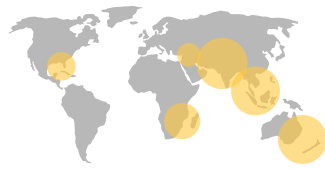
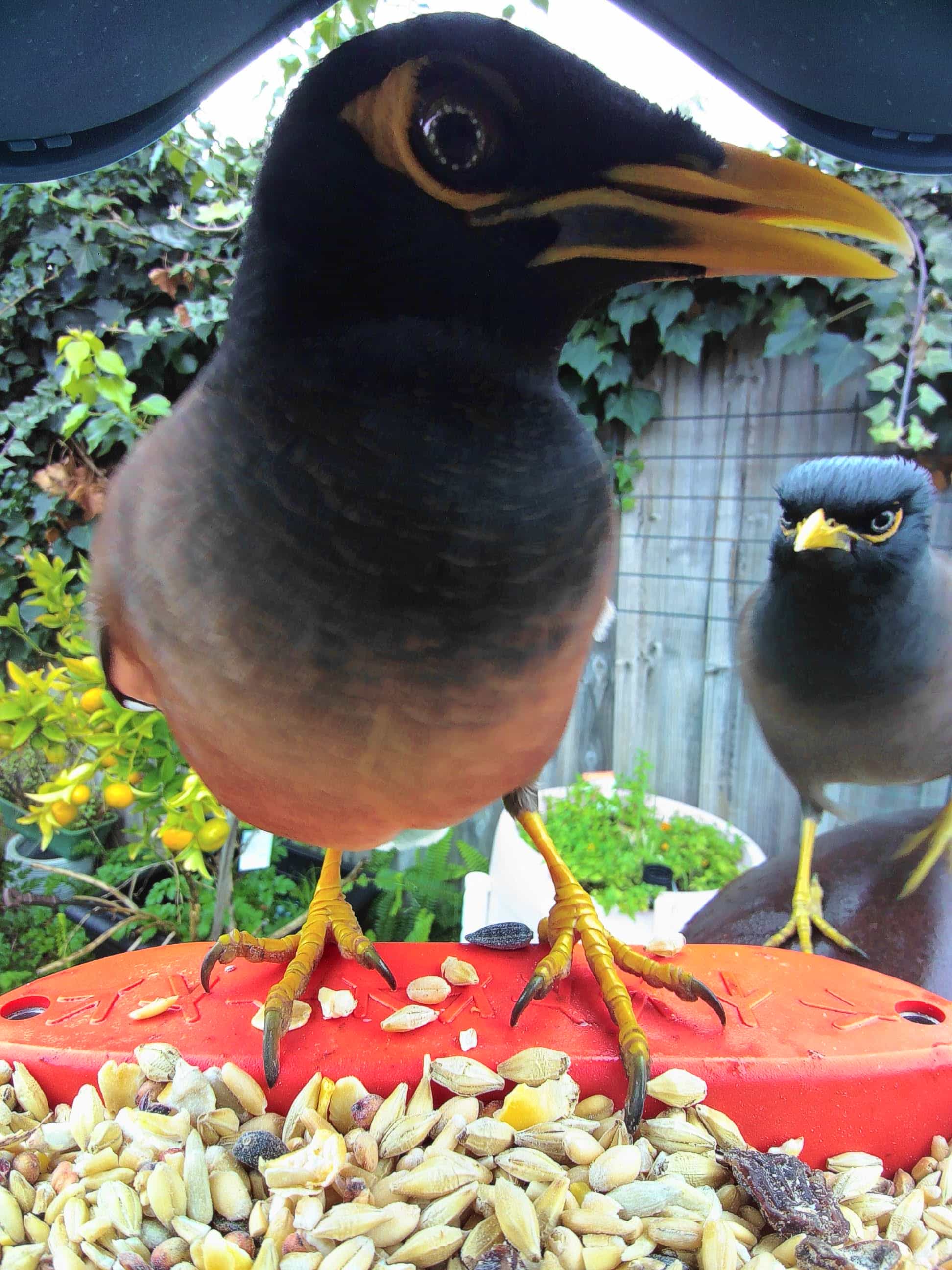


Common Myna
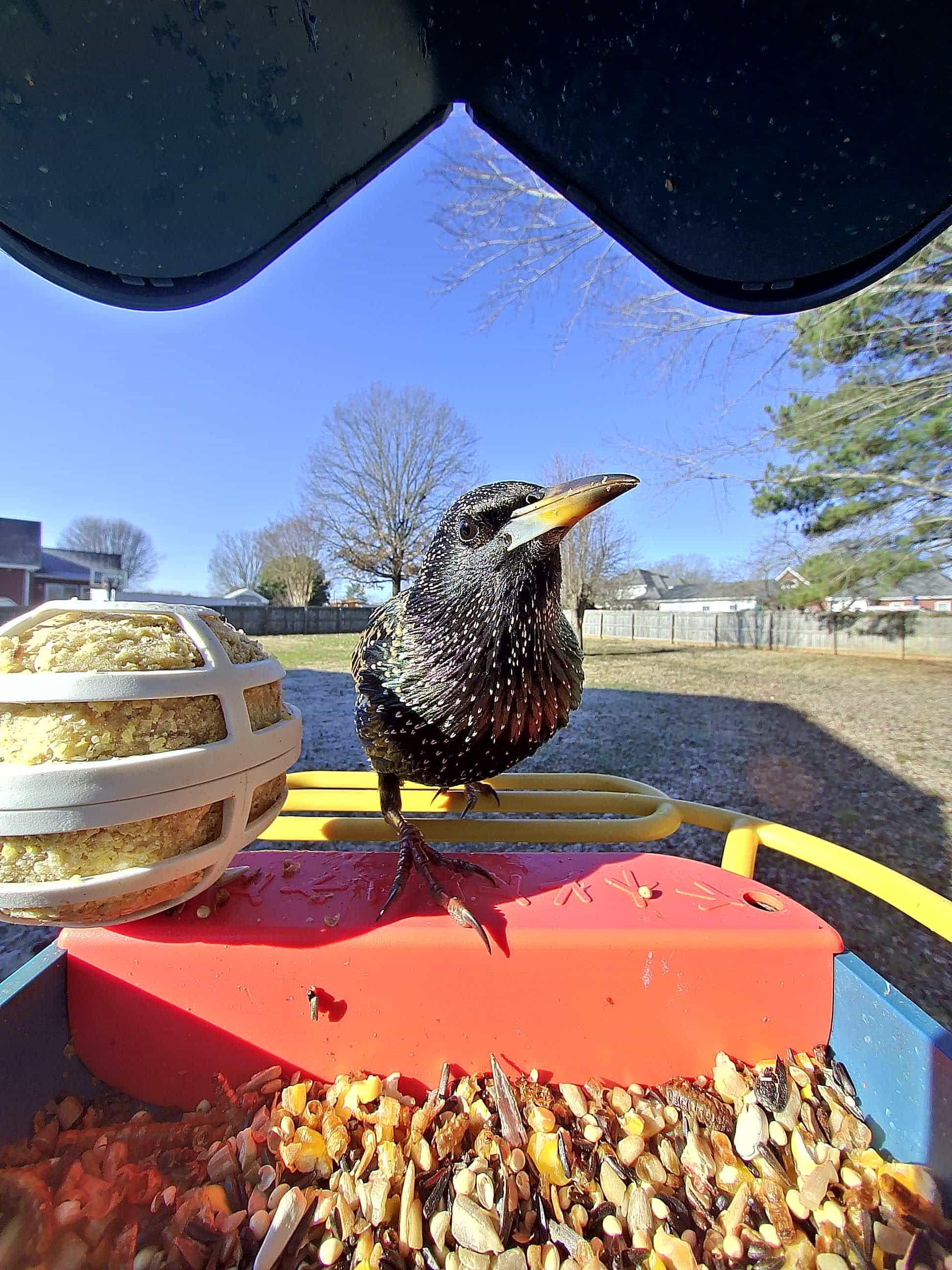


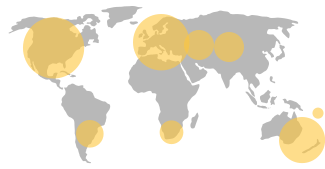
Common Starling
Common Myna
Acridotheres tristis
Also known as: Indian Myna
General appearance
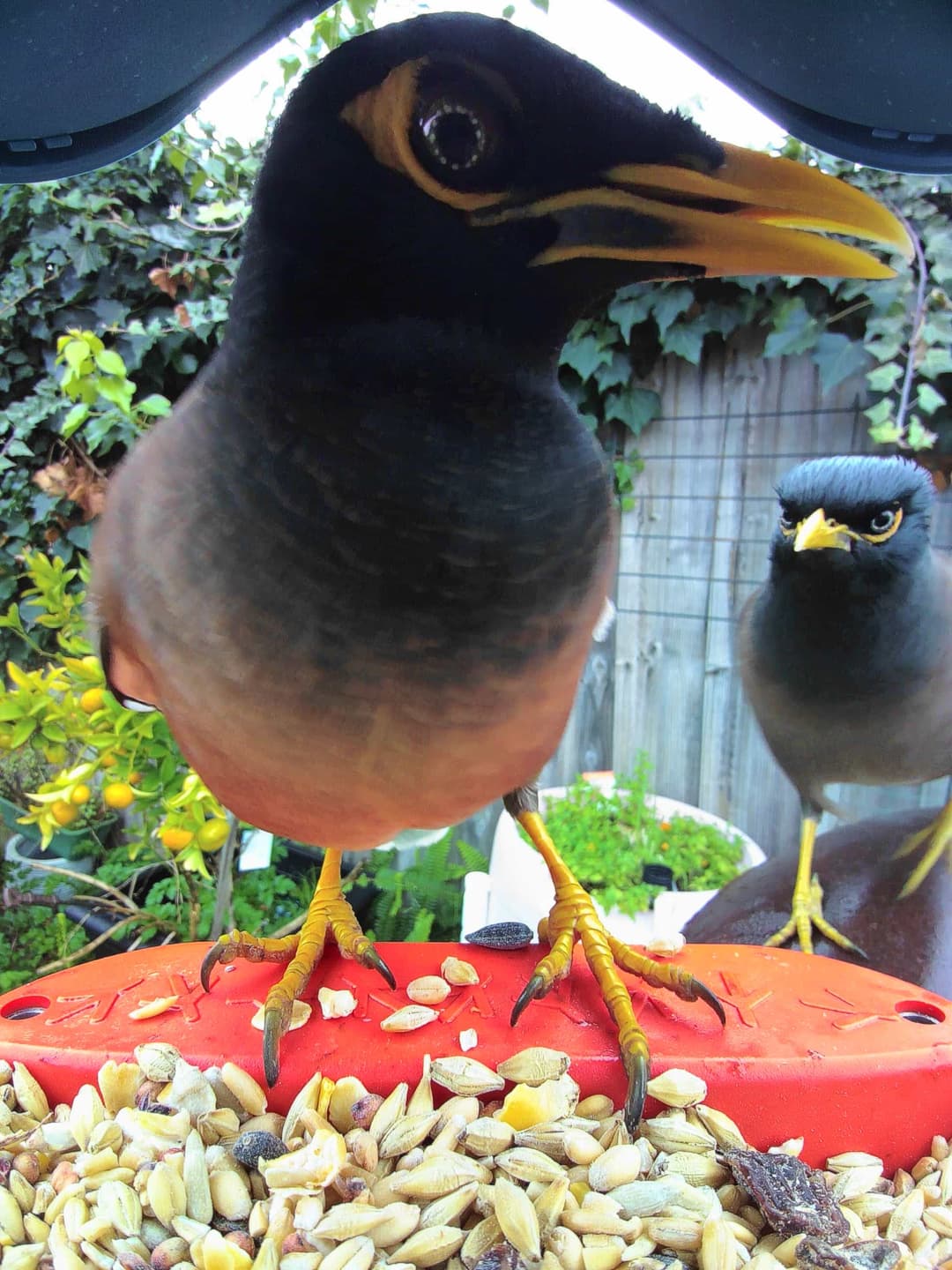
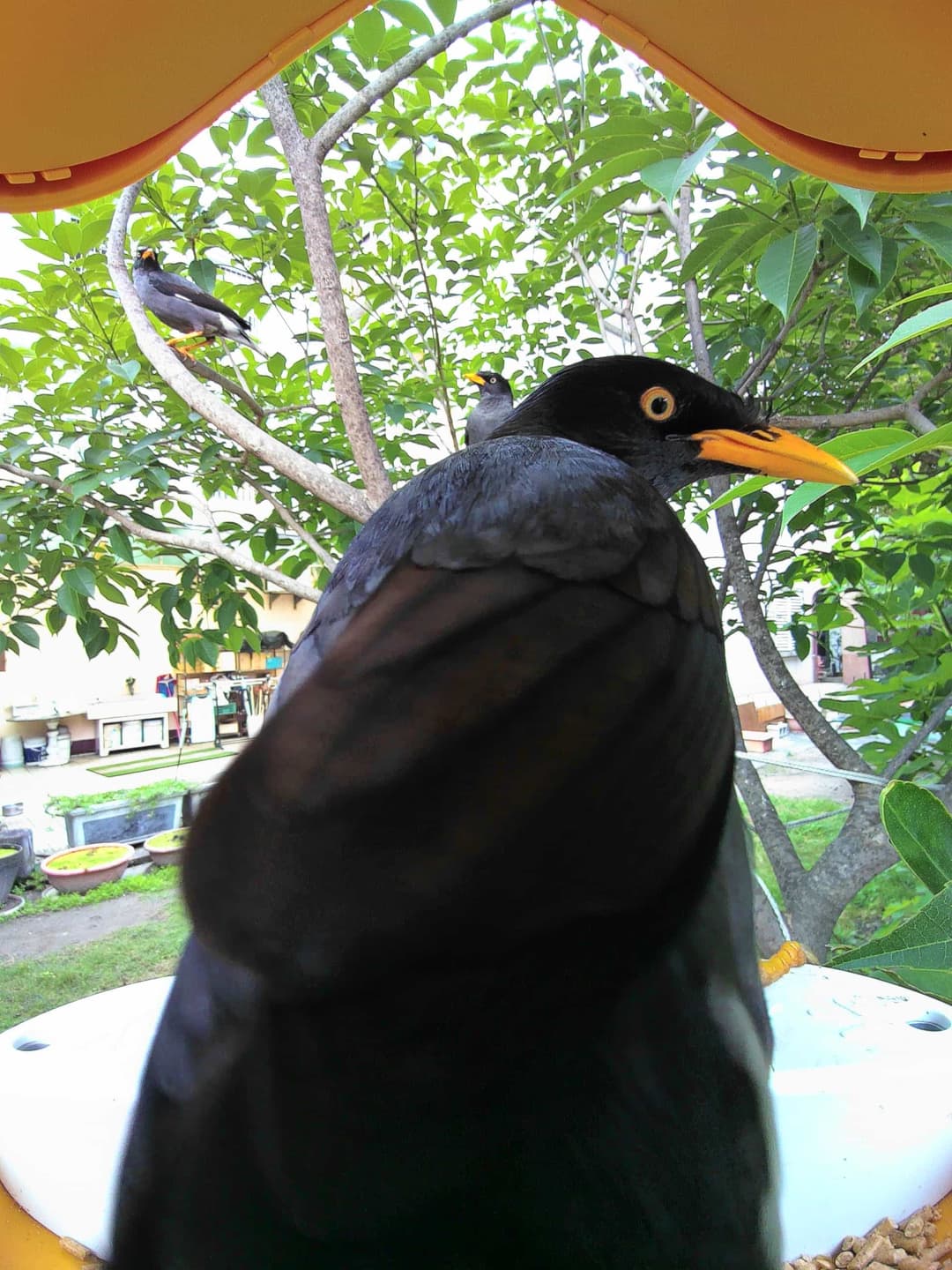
The common myna is a chunky bird of about 23-26 cm long, about the size of a robin. It has a short square-tipped tail, a yellow bill and bare yellow facial skin. The bird is dark brown in color with a black hood. It has rounded wings with white underparts and a white-tipped tail - both become very visible during flight.
Male vs female
It's challenging to determine sex visually as there is no marked dimorphism between males and females common mynas. Both sport similar plumage making it tough to discern sex by just looking at them.
Juvenile
Juvenile common mynas typically display similar physical traits and coloration to adults but may be slightly less vibrant in color. As they age, these colors will deepen, and the distinctive black hood will become more pronounced.
Size
9.1 - 10.2 in/2.9 - 5.0 oz
There's more to learn about Common Myna
View full detailsCommon Starling
Sturnus vulgaris
Also known as: European Starling, Starling
General appearance
The common starling is about the size of a robin, measuring 8 1/2 inches (22 cm) in length. It possesses a short tail and a thin straight bill. Its plumage changes with the seasons, appearing black with glimmers of purple and green in spring and summer. It is speckled with white in the fall, which wear off during winter.
Male vs female
The bills of both sexes change color throughout the year - bright yellow during the breeding season. The base of the lower mandible takes a different hue, with males displaying a blue color and females, a pink one. The bills are duller during other seasons.
Juvenile
Juvenile common starlings, often seen in flocks in summer, differ greatly in appearance from the adults. Their plumage is dusty gray, and their bills are dark.
Size
7.9 - 9.1 in/1.9 - 3.6 oz
There's more to learn about Common Starling
View full detailsHow to tell the Common Myna from the Common Starling
Visual differences
Common Mynas (9-10 inches, 3-5 oz) are larger and heavier than Common Starlings (8.5 inches, 2-3.5 oz). Mynas have dark brown plumage with a distinctive black hood, white-tipped short tails, and yellow facial skin and bill. Common Starlings have seasonal plumage: black with iridescent purple/green in spring and summer, white-speckled in fall, with their thin bills turning bright yellow during mating season. Starlings’ juveniles appear drab gray, while Mynas’ juveniles resemble adults but less vibrant. Both birds are similar in size to a robin.
Key differences and behavior
The Common Myna and Common Starling exhibit distinct behavioral traits. Mynas thrive in urban environments and are highly adaptable, often seen in pairs with a strong monogamous bond and mutual preening. They prefer nesting in various cavities, including tree hollows and building structures, and both parents incubate and feed their young. Common Mynas have a varied diet that includes insects, fruits, and scraps. Conversely, Starlings are known for their mesmerizing murmurations and inhabit cities, farms, and open fields. They often have multiple mates and establish territories before attracting partners. Their diet also covers a wide range of insects and fruits, but they notably enjoy suet and sunflower seeds at feeders. While both birds are opportunistic feeders, their courtship and feeding behaviors offer useful field identification clues.
Still not sure? Here are more lookalikes!
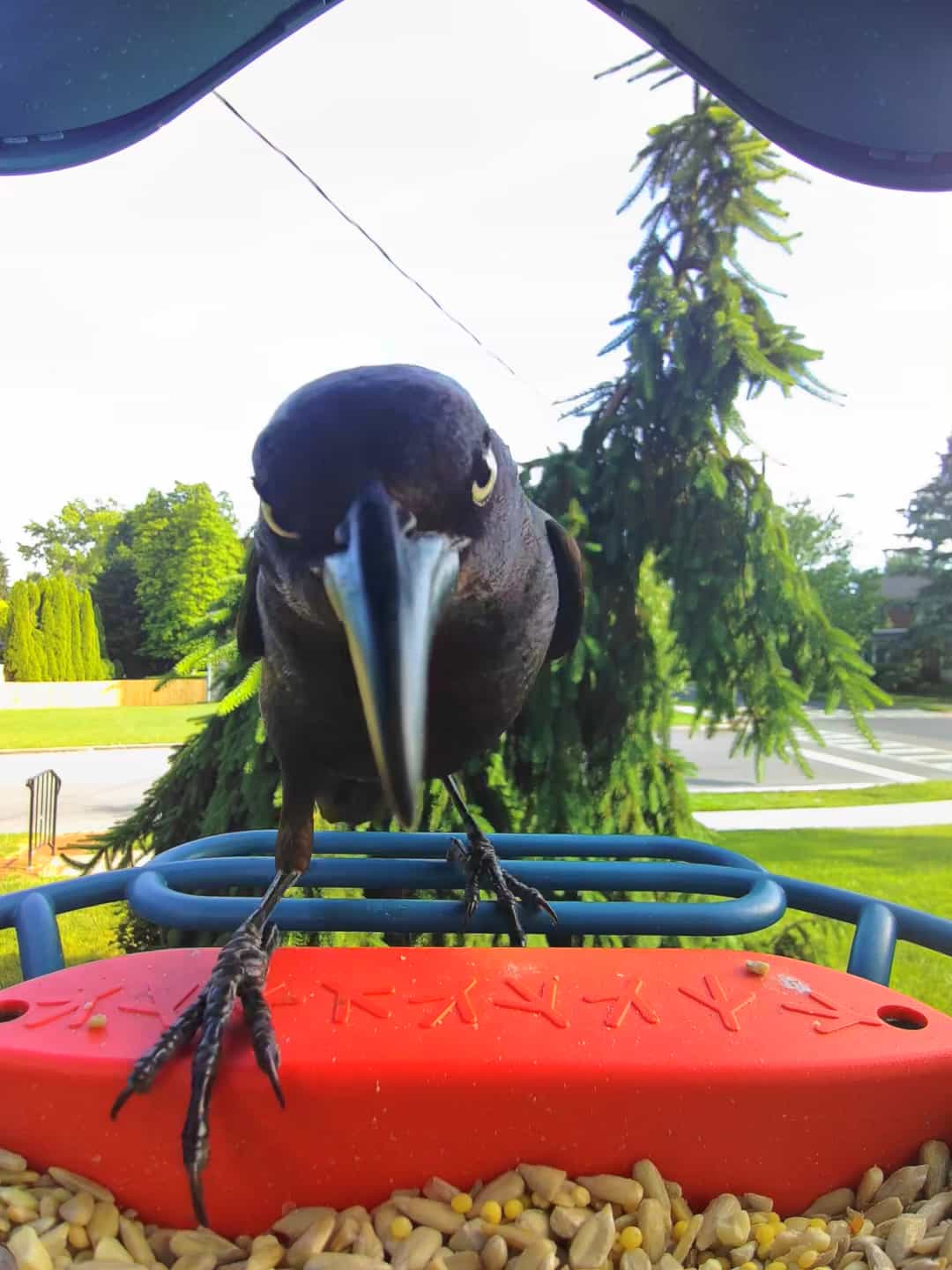
Common Myna vs Common Grackle
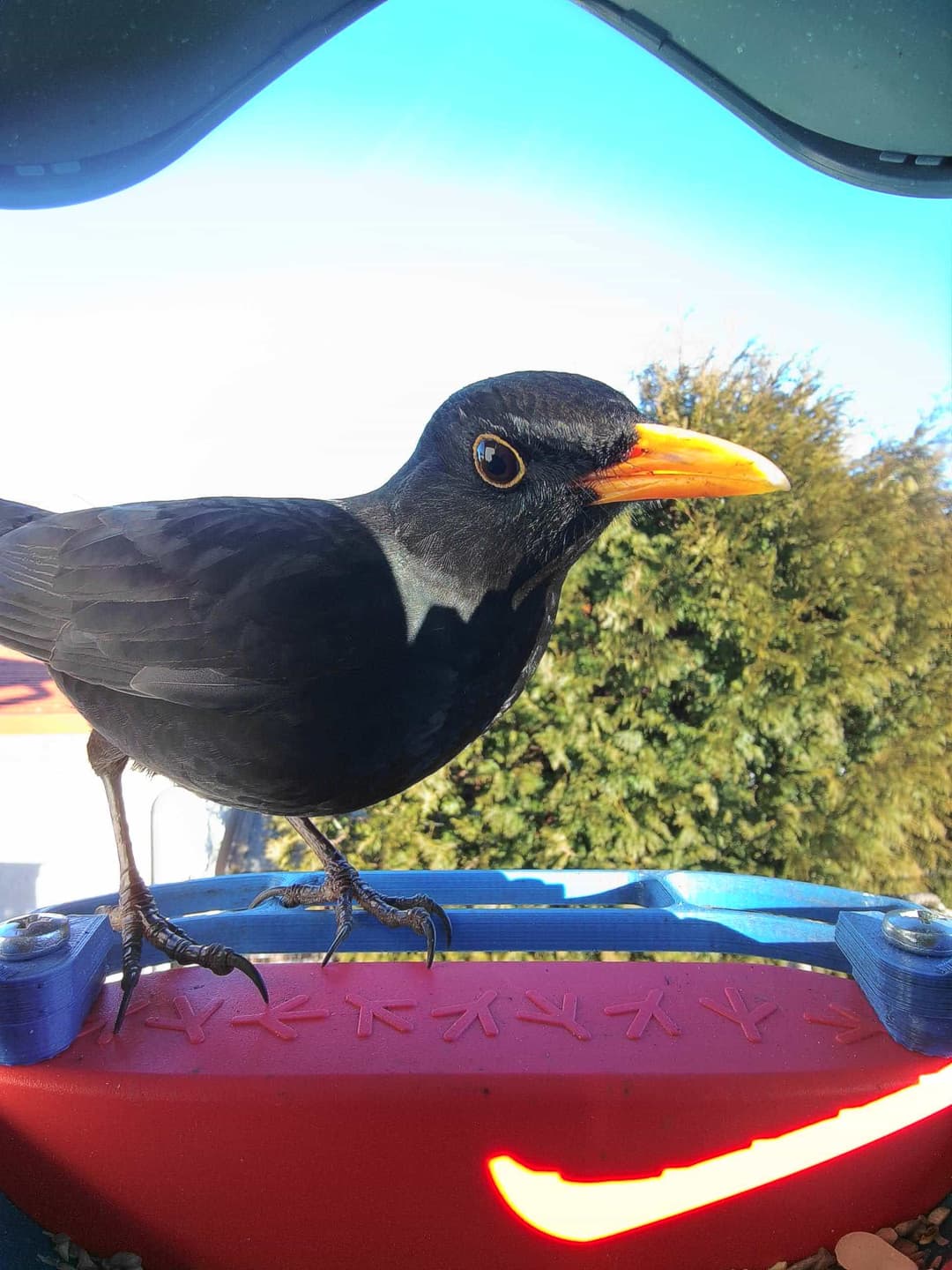
Common Myna vs Common Blackbird
Common Starling vs Common Grackle
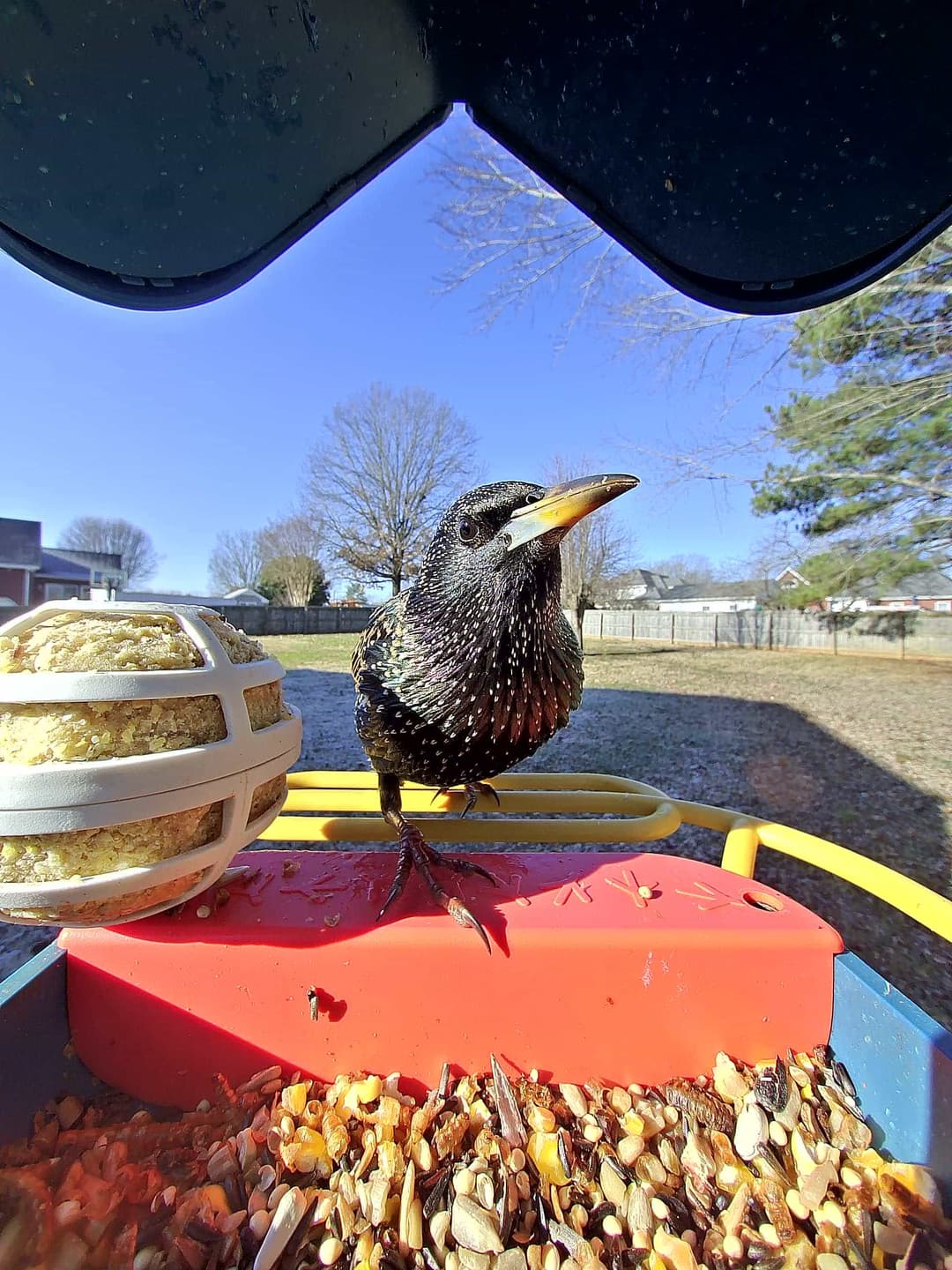
Common Starling vs Brewer’s Blackbird
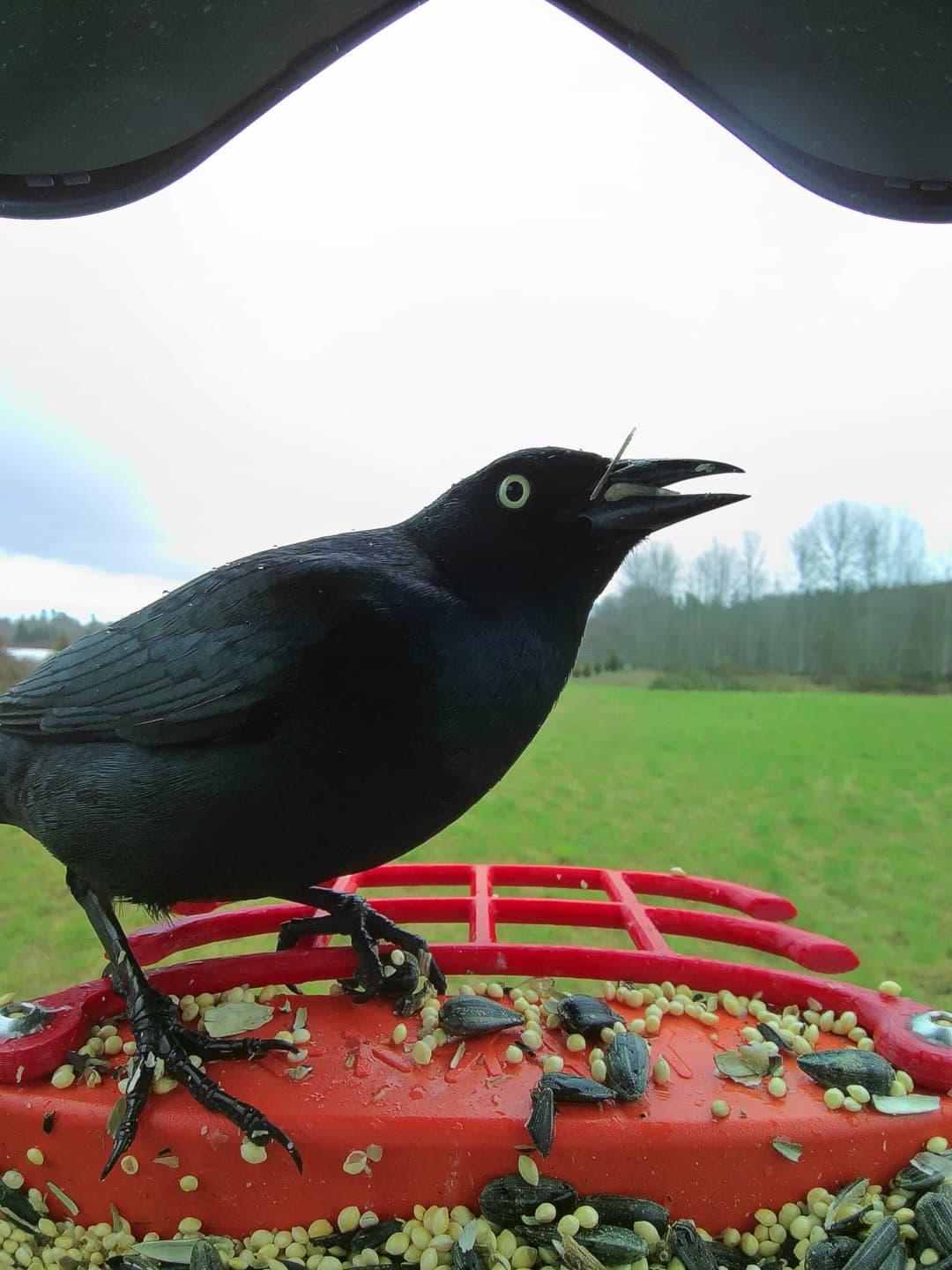
Common Starling vs Rusty Blackbird
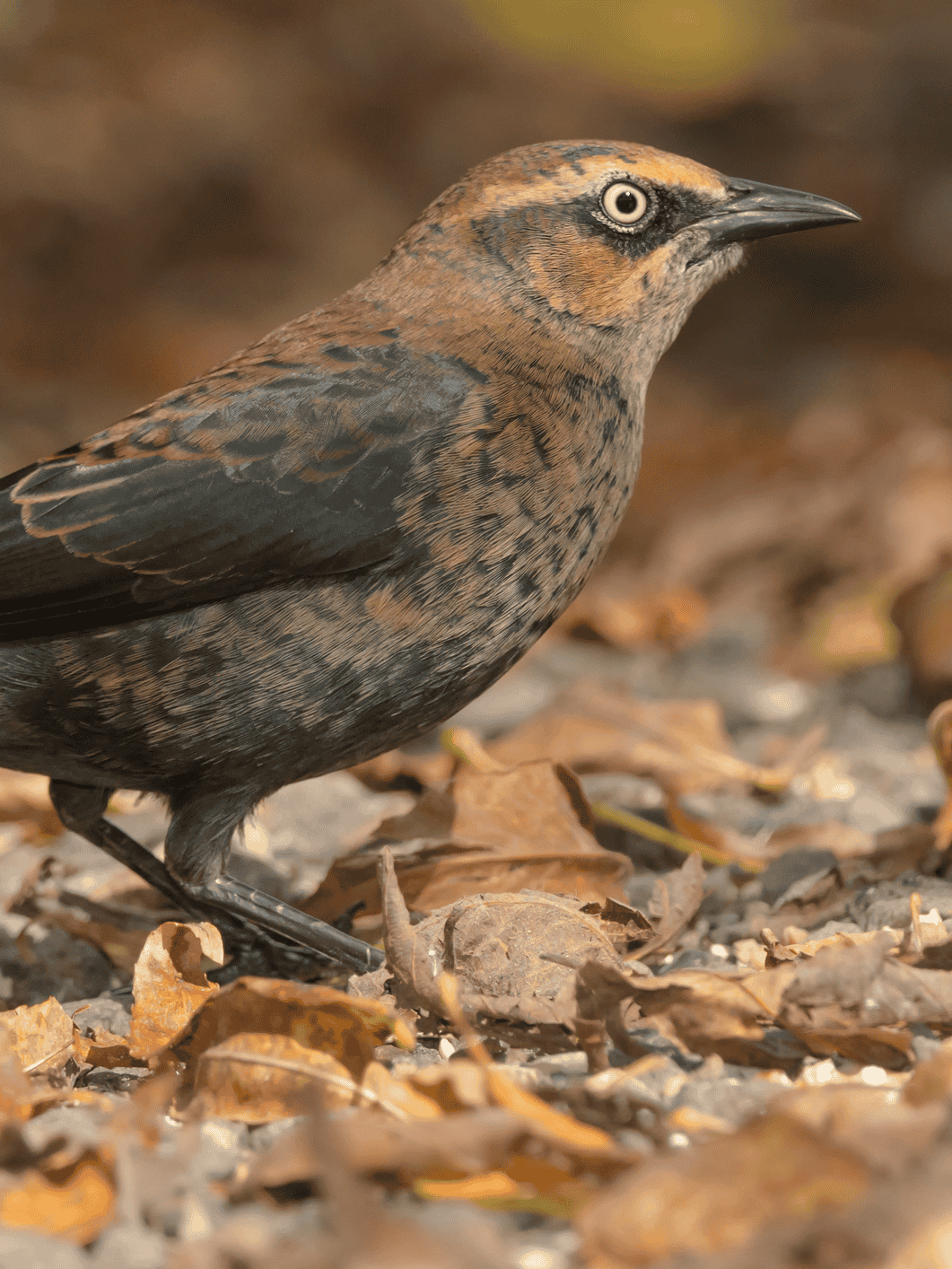
Common Starling vs Red-Winged Blackbird
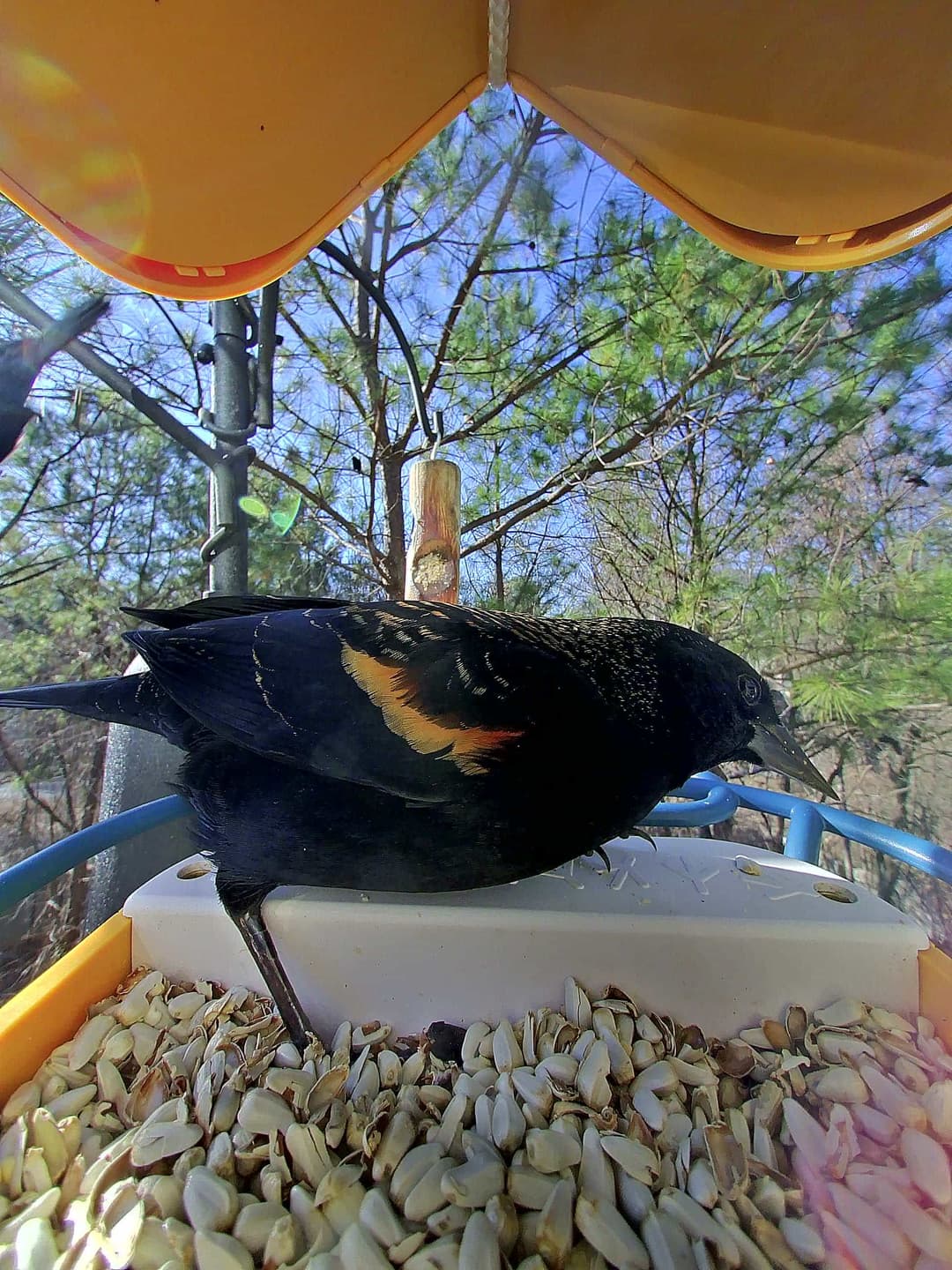
Common Starling vs Brown-Headed Cowbird
Common Myna vs [Select a bird]

[Select a bird]
Pick a bird to compare
Common Starling vs [Select a bird]
[Select a bird]
Pick a bird to compare