
Common Myna
Common Myna
Also known as: Indian Myna
Acridotheres tristis


Quick Identification guide
Quick Identification guide
- •
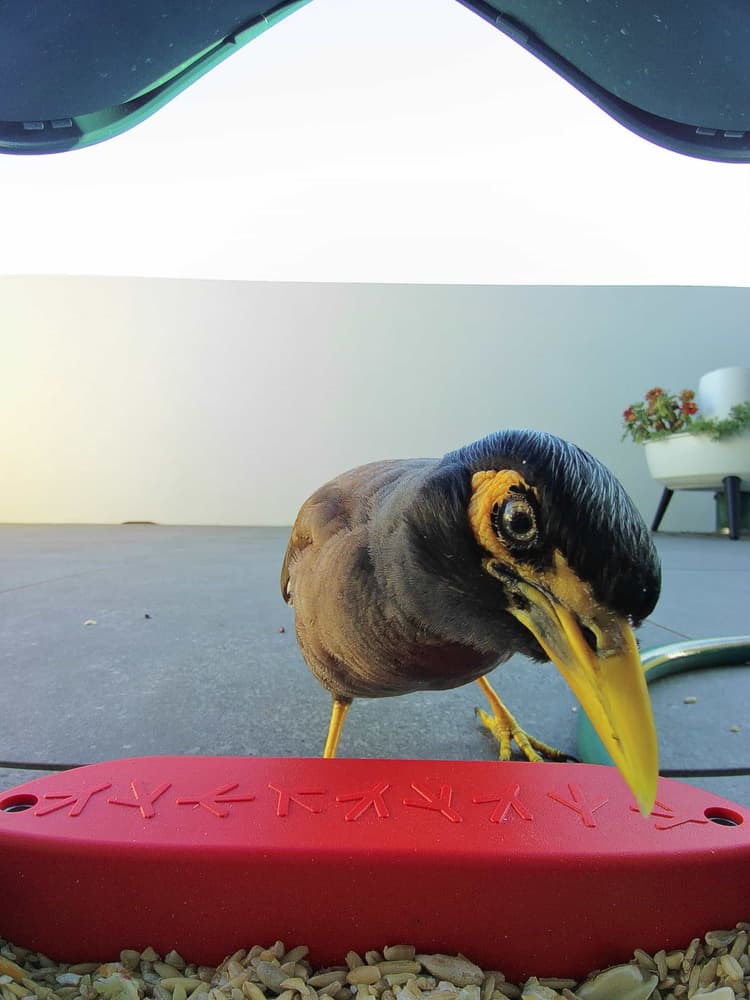
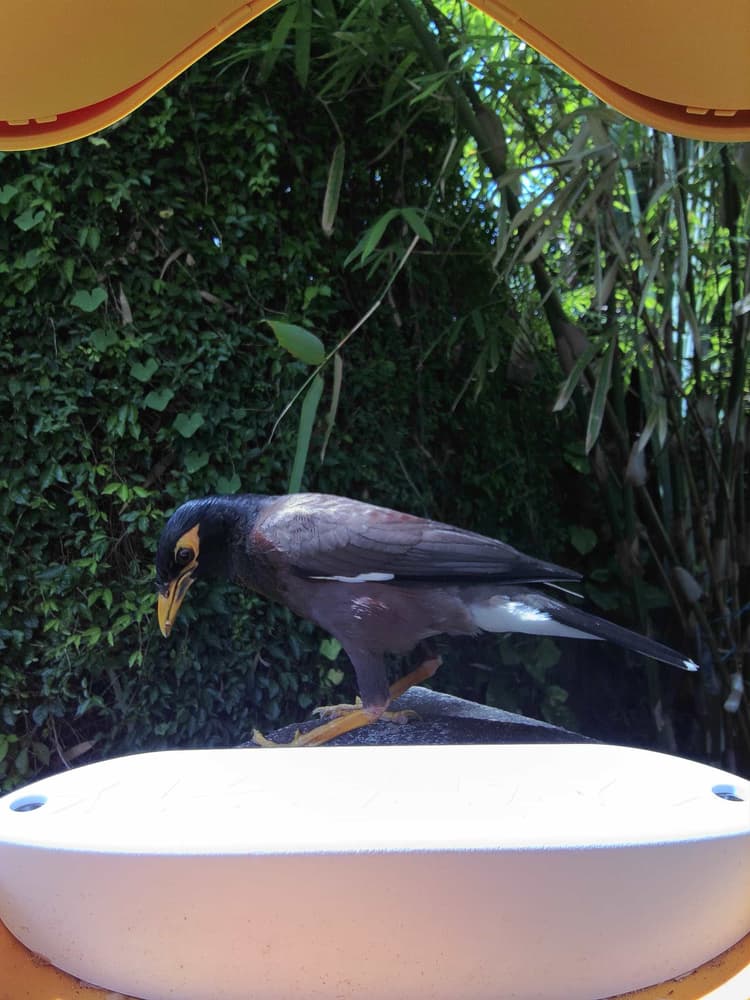
Notable for its brown body with a distinct black hooded head
- •
Features bright yellow eye-patches and thin, sharp beak
- •
Displays white wing patches and broad white-tipped tail when in flight
What does a common myna sound like?
The common myna's vocalizations encompass a broad range of high-pitched chattering notes. It has an identifiable loud, scolding call that repeatedly sounds like "radio-radio-radio." The myna's call pattern varies and can be falling, flat, rising, or undulating. It employs different call types such as chatter, chirp, chip, hi, or trill. These varied and expressive sounds contribute to the myna's notoriety as a skilled mimic among birds.


Description
Common mynas are part of the starling family and were originally from Central, South and Southeast Asia. In the 19th century, they were introduced into Australia and New Zealand as a form of pest control. Ironically, they ended up becoming considered pests themselves! These birds have a serious sweet tooth and flocks will raid entire orchards.
The common myna can weigh between 82to143grams and be from23to26centimeters tall.
The common myna typically lives up to 5 to 7 years in the wild, although in captivity it can reach up to 20 years. This lifespan is similar to those of related starling birds, many of which also live between 5 to 8 years in the wild. Compared to other common birds, like sparrows with lifespans of around 4-5 years, mynas tend to live slightly longer.
Did you know?
Most popular questions about common myna
How to recognise a common myna?
General appearance
The common myna is a chunky bird of about 23-26 cm long, about the size of a robin. It has a short square-tipped tail, a yellow bill and bare yellow facial skin. The bird is dark brown in color with a black hood. It has rounded wings with white underparts and a white-tipped tail - both become very visible during flight.
Male vs female
It's challenging to determine sex visually as there is no marked dimorphism between males and females common mynas. Both sport similar plumage making it tough to discern sex by just looking at them.
Juvenile
Juvenile common mynas typically display similar physical traits and coloration to adults but may be slightly less vibrant in color. As they age, these colors will deepen, and the distinctive black hood will become more pronounced.
Often mistaken for
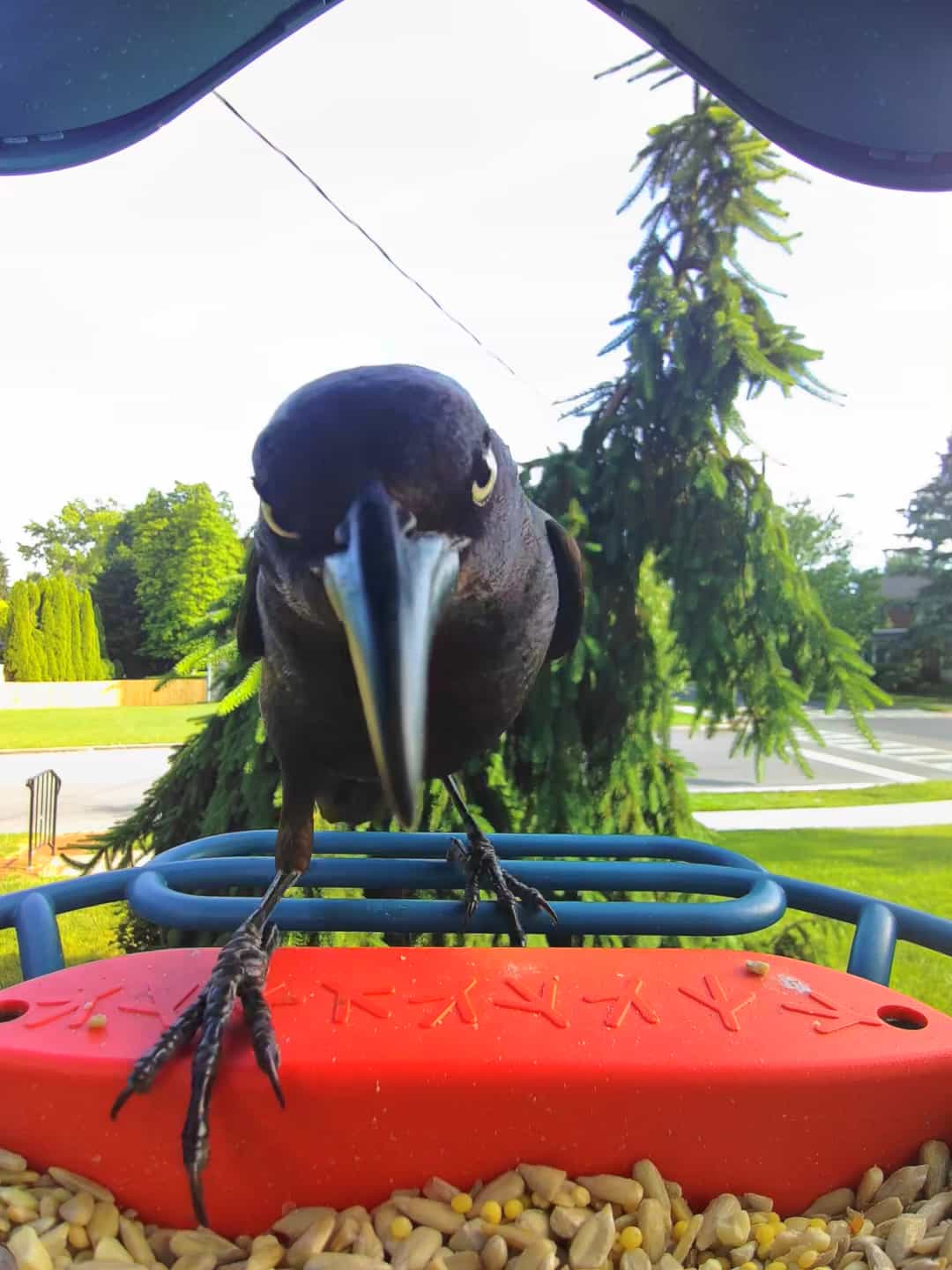
Common Grackle vs Common Myna
The Common Grackle is larger than the Common Myna, with a longer tail and more iridescent black plumage. The Common Myna has a more uniform brown body with a distinctive yellow patch behind its eye.
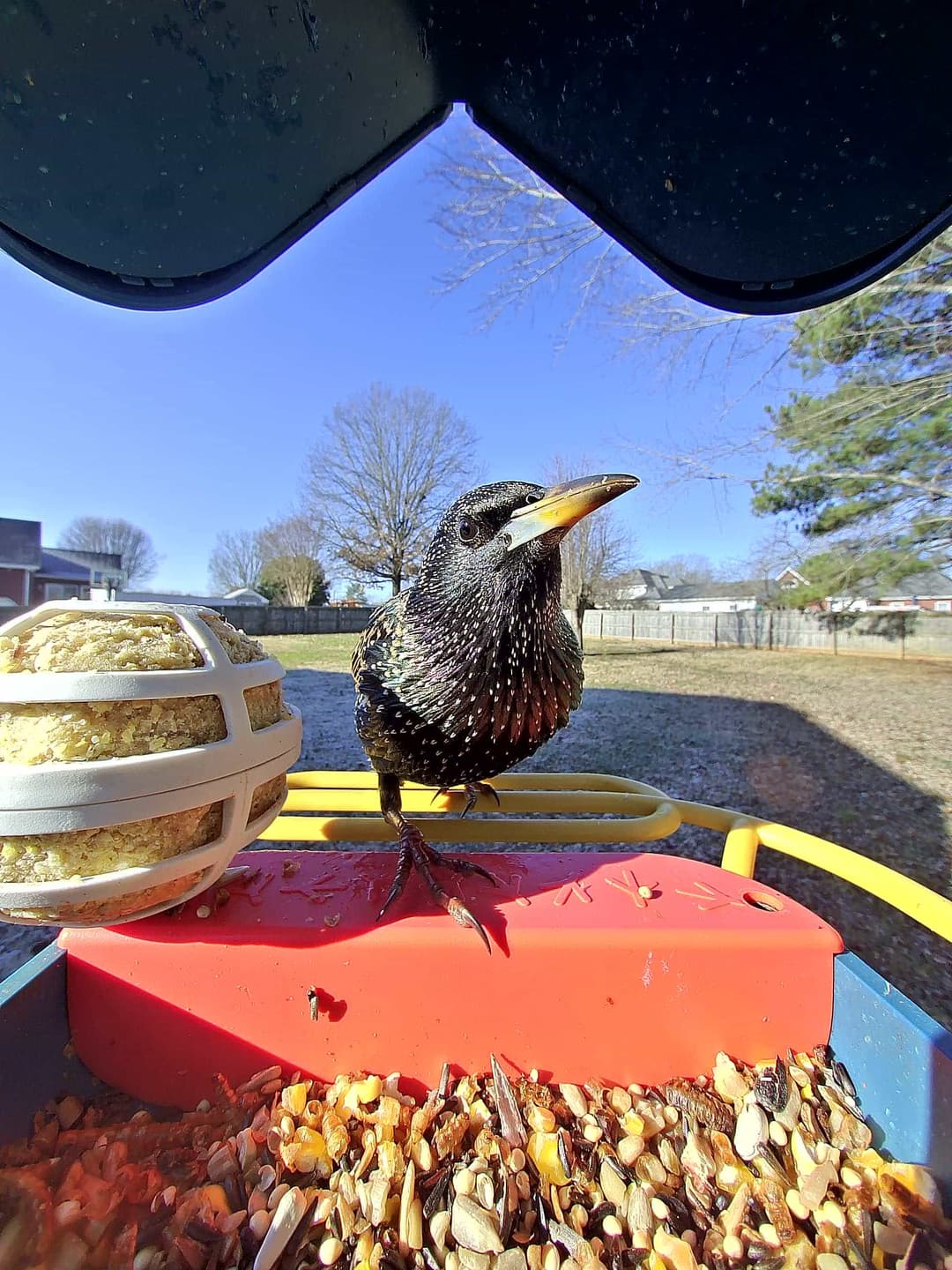
Common Starling vs Common Myna
The Common Starling is similar in size to the Common Myna but has a more pointed beak and iridescent black plumage with white speckles. The Common Myna has a brown body and distinctive yellow markings around the eyes.
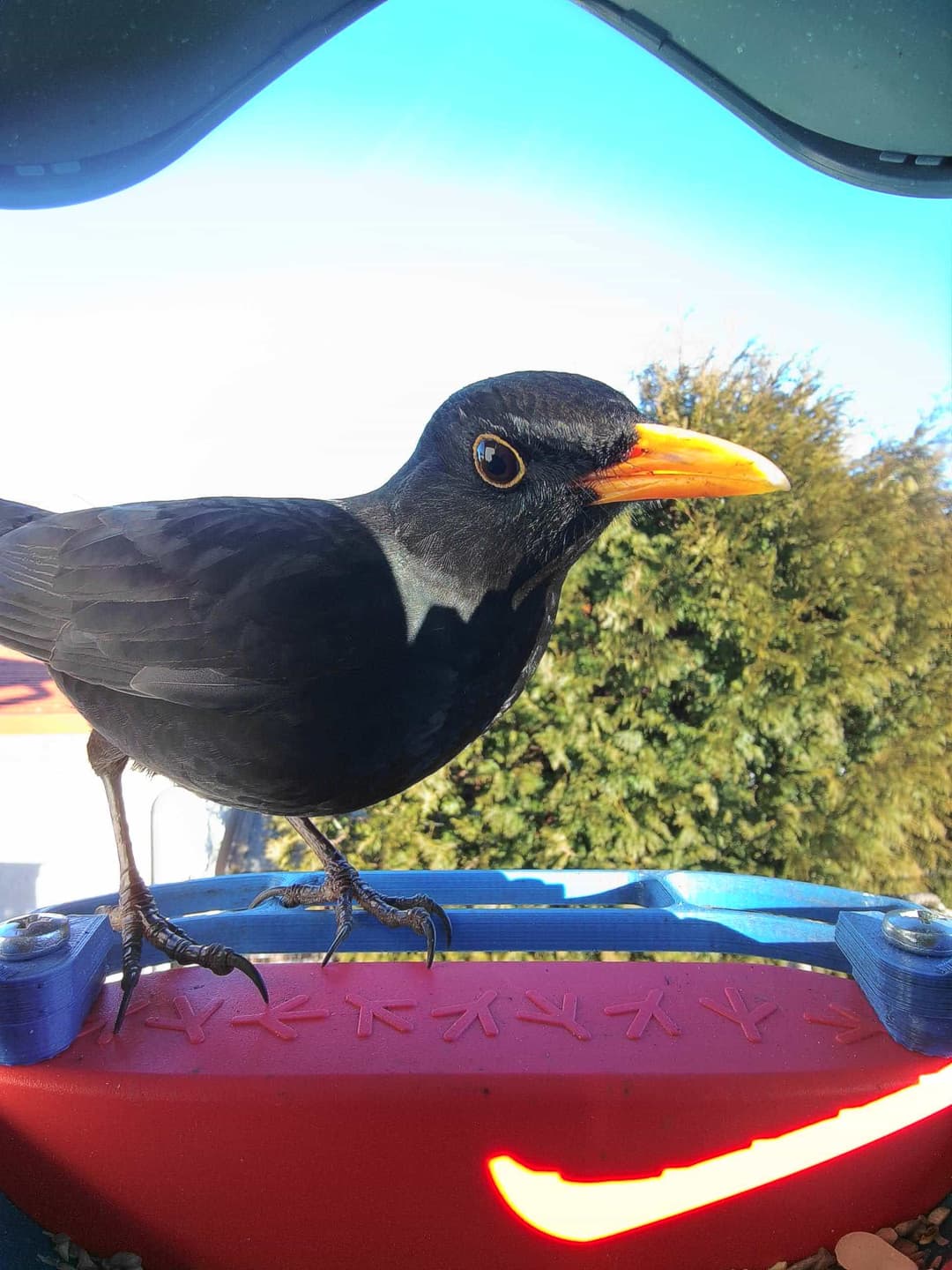
Common Blackbird vs Common Myna
The Common Blackbird is smaller than the Common Myna with a more rounded shape and all-black plumage. The Common Myna has a brown body, yellow eye patches, and a more upright posture.
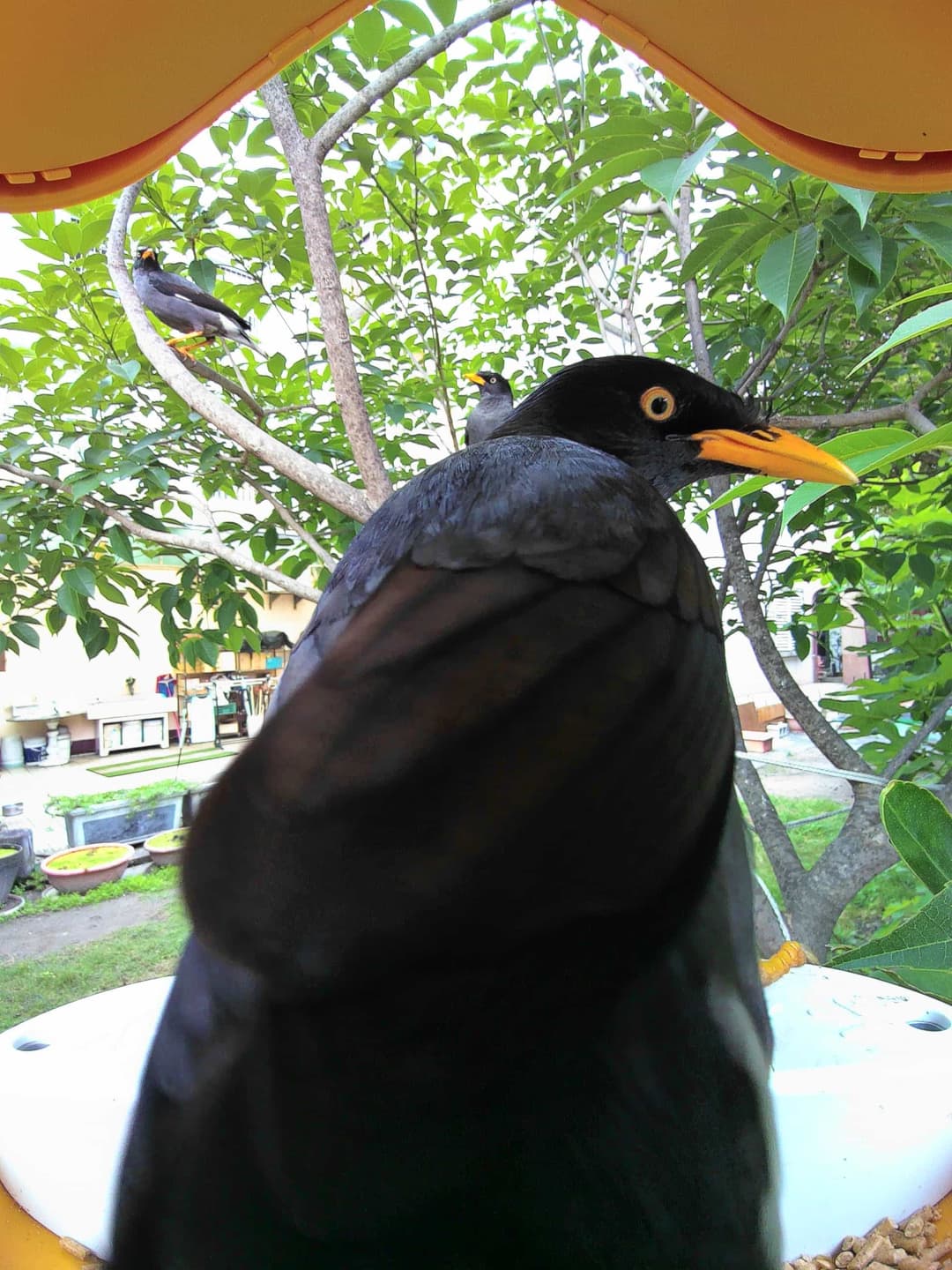
Javan Myna vs Common Myna
The Javan Myna is often mistaken for the Common Myna due to similar size and shape but can be distinguished by its darker plumage and absence of the yellow eye patches that the Common Myna has.
Breeding and nesting habits of the common myna
Mating behaviors
Common mynas engage in vocal courtship displays with males often performing distinct songs and dances to attract females. Pair bonding is strong and monogamous for the breeding season, with frequent mutual preening observed.
Nesting details
Mynas typically nest in tree hollows, building structures, or rooftops, using materials like twigs, paper, and grass. They often adapt to gardens, where providing dense shrubs or birdhouses can encourage nesting.
Eggs and chick-rearing
Females lay 4-6 eggs, which are pale blue or green in color. Both parents incubate the eggs for around 13-15 days. After hatching, chicks are fed a diet of insects and soft fruits until they fledge, usually within 3 weeks.
What does a common myna like to eat?
Berries
Bird eggs
Flowers
Fruits
Insects
Nectar
Scraps
Seeds
Small animals
Natural diet
The common myna primarily consumes a diverse diet consisting of insects such as grasshoppers, caterpillars, and beetles. They also eat fruits, such as berries and figs, and seeds. In coastal areas, their diet may include small marine invertebrates. Mynas are adaptive and may feed on food scraps and waste when available.
Bird feeders
At bird feeders, common mynas are often attracted to foods like bread crumbs, cooked rice, and fruit pieces. They may also consume commercial bird seed mixes, particularly those containing sunflower seeds and millet. Their opportunistic feeding habits make them frequent visitors to backyard feeders providing these food types.
Choose the right seeds
Common mynas are fans of a range of food, but they particularly enjoy Bird Buddy seeds. These seeds are carefully selected by experts for the current season, providing the mynas with a food source that's both appealing and nutritious. Spreading these seeds in your feeder or around your yard is sure to tempt any mynas in the vicinity.
Select the right feeder
Mynas are an adaptable breed and can feed from various feeder types. However, they tend to prefer open-style feeders they can fly onto from any side. A platform feeder or a big dish with low sides is an excellent choice. Make sure to position the feeder in a quiet and safe place away from predators.
Provide a safe environment
Common mynas will be more likely to visit your yard if they feel safe. It's important to ensure a clear line of sight for the birds while they're eating so they can watch out for predators. Consider placing the feeder high off the ground and away from hiding places for cats and other predators.
Sing-along fun
Mynas are known for their mimicry skills, and playing some soft, bird-friendly sounds or music can encourage them to stay longer in your yard. They may even engage in a delightful 'sing-along', providing a fun, natural spectacle.
Where can you find common mynas?
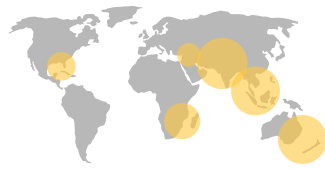
Primary habitat
The common myna originates from Asia, comfortable in urban and suburban settings and commonly found around human habitation.
Additional range
It has adapted well to new environments, spreading globally to habitats including Australia, South Africa, and North America. They tolerate a wide range of climates but mostly prefer temperate conditions.
Do they migrate?
The common myna is typically a non-migratory bird, meaning it generally stays in one place year-round. Native to South Asia, this species has been widely introduced to many parts of the world, including the Middle East, Southeast Asia, Australia, South Africa, and various Pacific islands. In these regions, the common myna tends to establish itself in urban, suburban, and rural areas, adapting well to human-altered environments. While the common myna does not undertake long-distance migrations, it may engage in local movements in response to food availability or environmental conditions. In agricultural areas, for example, flocks might travel short distances to exploit seasonal food resources such as ripening crops or insect swarms. These movements are relatively limited compared to true migratory birds, involving short-range flights rather than extensive migratory routes. Overall, the common myna's adaptability and lack of long-distance migratory behavior have contributed to its success as an invasive species in many non-native areas, where it often competes with or displaces local wildlife.
What is the role of common mynas in nature and how to protect them?
Conservation status
The common myna is classified as "least concern" by the IUCN, indicating it is not currently at risk of extinction. Widespread across South Asia and introduced to various other regions, the species thrives in urban and agricultural areas. Key threats include competition with native birds, habitat loss, and control efforts in regions where it is invasive. Despite these challenges, the species remains abundant globally. Conservation efforts primarily focus on managing the impact of common mynas in non-native regions to protect local biodiversity rather than on preserving the species itself.
Ecological role of common mynas
Its role in the ecosystem
The common myna (Acridotheres tristis), a species of starling native to Asia, has various ecological roles. On one hand, it functions as a pest control agent by consuming insects, spiders, and other small invertebrates that could potentially harm crops and plant life. From an ecological standpoint, the common myna is also a significant seed disperser, contributing to the growth and spread of plants in the ecosystems where they live. They eat a variety of fruits and, in the process, pass the seeds through their digestive system, depositing them in new locations. However, the species is adaptive and can also thrive in urban environments, where its roles can be more disruptive. In these settings, the common myna can outcompete native birds for resources and nest sites. Overall, while the myna has a role in pest control and seed dispersal, it is frequently seen as invasive and can pose a threat to biodiversity.
How to help protect common mynas
Preservation tips
Habitat preservation strategies for common myna
Common mynas thrive in open environments. They need trees for roosting and small insects for food. Protect these habitats by regulating land development and maintaining greeneries. Establish local ordinances prohibiting deforestation and promoting urban greenspaces. Vigilance against invasive species that disrupt the mynas' food chain is a must. Also, propagate native plants which attract the insects mynas feed on.
Community science initiatives
Community engagement is vital in conservation efforts. Organize educational campaigns about the significance of mynas and their habitats. Encourage community members to participate in bird watching events and citizen science programs which monitor myna population trends. Provide platforms for reporting sightings of mynas or their nests. Involve local schools by integrating these activities in their biology or environmental science modules.