
Rusty Blackbird
Rusty Blackbird
Euphagus carolinus


Quick Identification guide
Quick Identification guide
- •
Recognizable by its glossy black plumage in males, which often shows a rusty or bronze tint
- •
Females and juveniles display a softer, grayish-brown color with slight streaking, lacking the male's sheen
- •
Possesses a slender, slightly curved black beak and pale yellow eyes that stand out against its dark feathers
What does a rusty blackbird sound like?
The Rusty Blackbird produces distinctive vocalizations similar to the squeaks of a rusty gate. Its sharp call note, referred to as a "check", varies in pattern: sometimes falling, sometimes rising. The vocal types of this bird are diverse, encompassing a variety of sounds such as buzzes, chatters, chirps or chips, trills, and whistles. This range makes its calls and songs unique and easily recognizable.


Description
Rusty blackbirds are, unfortunately, one of North America's most rapidly declining species and nobody can pinpoint exactly why that is. These birds, recognisable by their rusty feathers and pallid eyes, travel in small flocks. Interestingly, they have been known to kill and eat other birds.
The rusty blackbird can weigh between 46to80grams and be from21to25centimeters tall.
The typical lifespan of a rusty blackbird is about 11 years, one of the longest among blackbirds. Comparable species, like the red-winged blackbird, live for an average of only 2-3 years. Factors influencing the rusty blackbird's lifespan include predation, habitat loss, and climate change.
Did you know?
Most popular questions about rusty blackbird
How to recognise a rusty blackbird?
General appearance
Rusty Blackbirds are medium-sized blackbirds with striking seasonal changes in plumage. In winter, they exhibit a distinctive rusty-edged appearance with rusty or rufous edges to their dark feathers, and pale yellow eyes. In summer, their feathers become mostly black or dark brown, losing the rusty edges. They have slender, slightly curved bills and relatively long tails, which are typical traits of blackbirds.
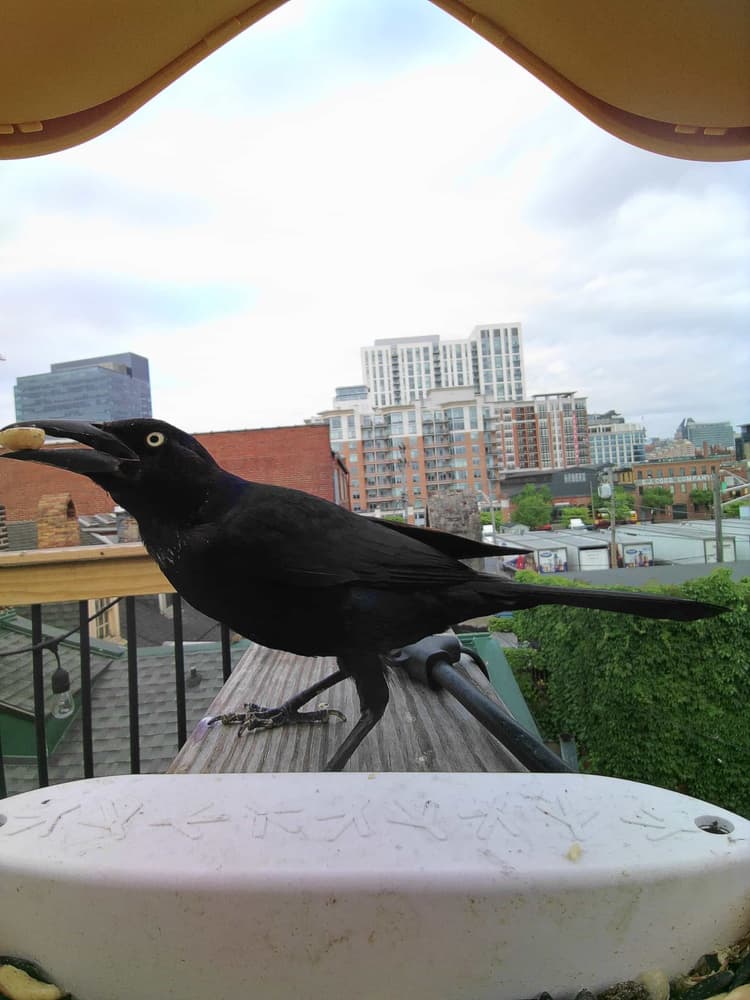
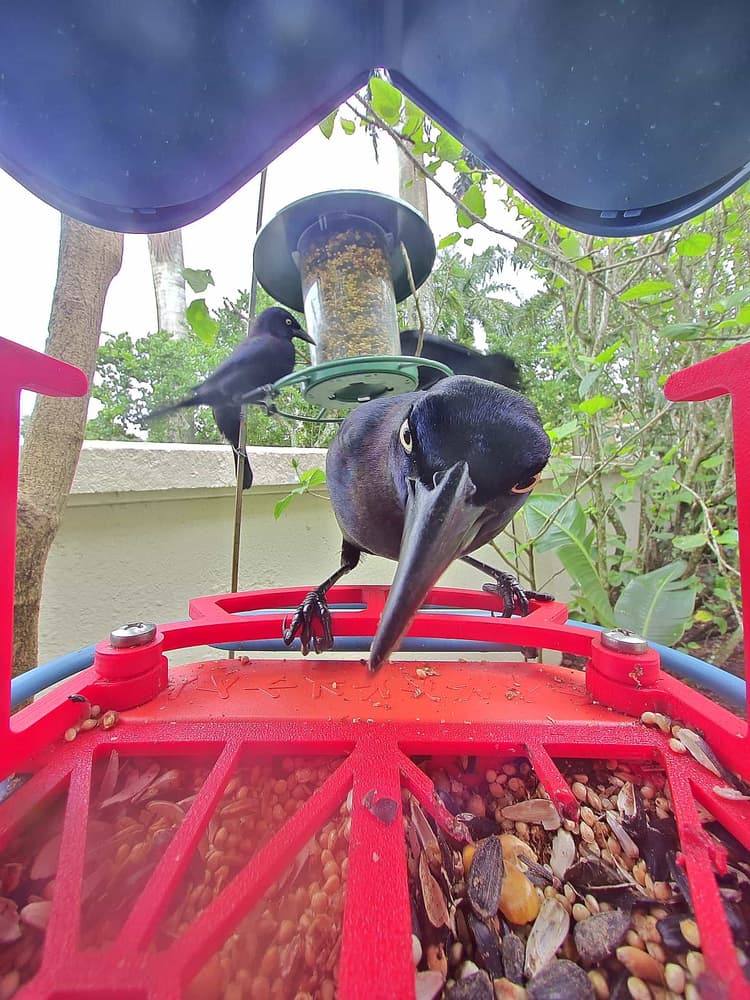
Male vs female
Males in breeding plumage are glossy black with greenish or bluish iridescence, whereas females are more subdued with dark gray or brownish plumage. During the non-breeding season, both sexes look similar with rust-colored feather edges; however, males often display richer, darker hues than females, who maintain a slightly browner overall appearance.
Juvenile
Juvenile Rusty Blackbirds have a more uniformly brown coloration compared to adults, lacking the glossy adult sheen. They are primarily a dull brown with streaked underparts and dark eyes, distinguishing them from adults whose eyes are pale yellow. As they mature, juveniles gradually acquire the adult plumage patterns and eye color.
Often mistaken for
Brewer’s Blackbird vs Rusty Blackbird
Rusty Blackbirds have a rust-colored wash over their back and wings, especially in fall and winter, unlike Brewer’s Blackbird, which has a uniform glossy black body. The Rusty’s eyes are strikingly pale, almost white, in contrast to the Brewer’s yellow eyes.
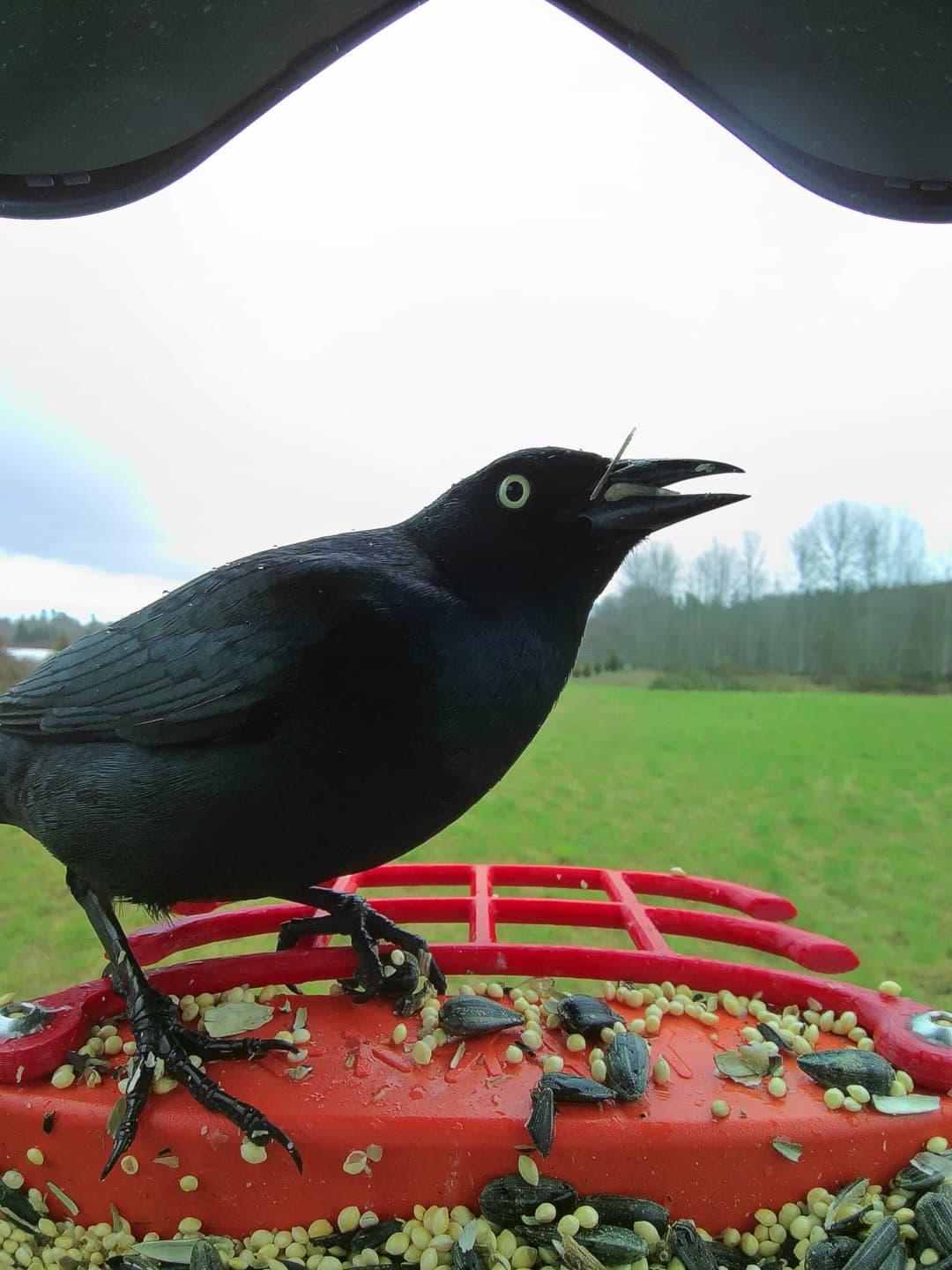
Common Grackle vs Rusty Blackbird
Rusty Blackbirds are smaller with a thinner bill compared to the larger and more robust Common Grackle. Rusty Blackbirds have a distinct rusty coloring in certain seasons, while Grackles have an iridescent blue or purple sheen and long tails.
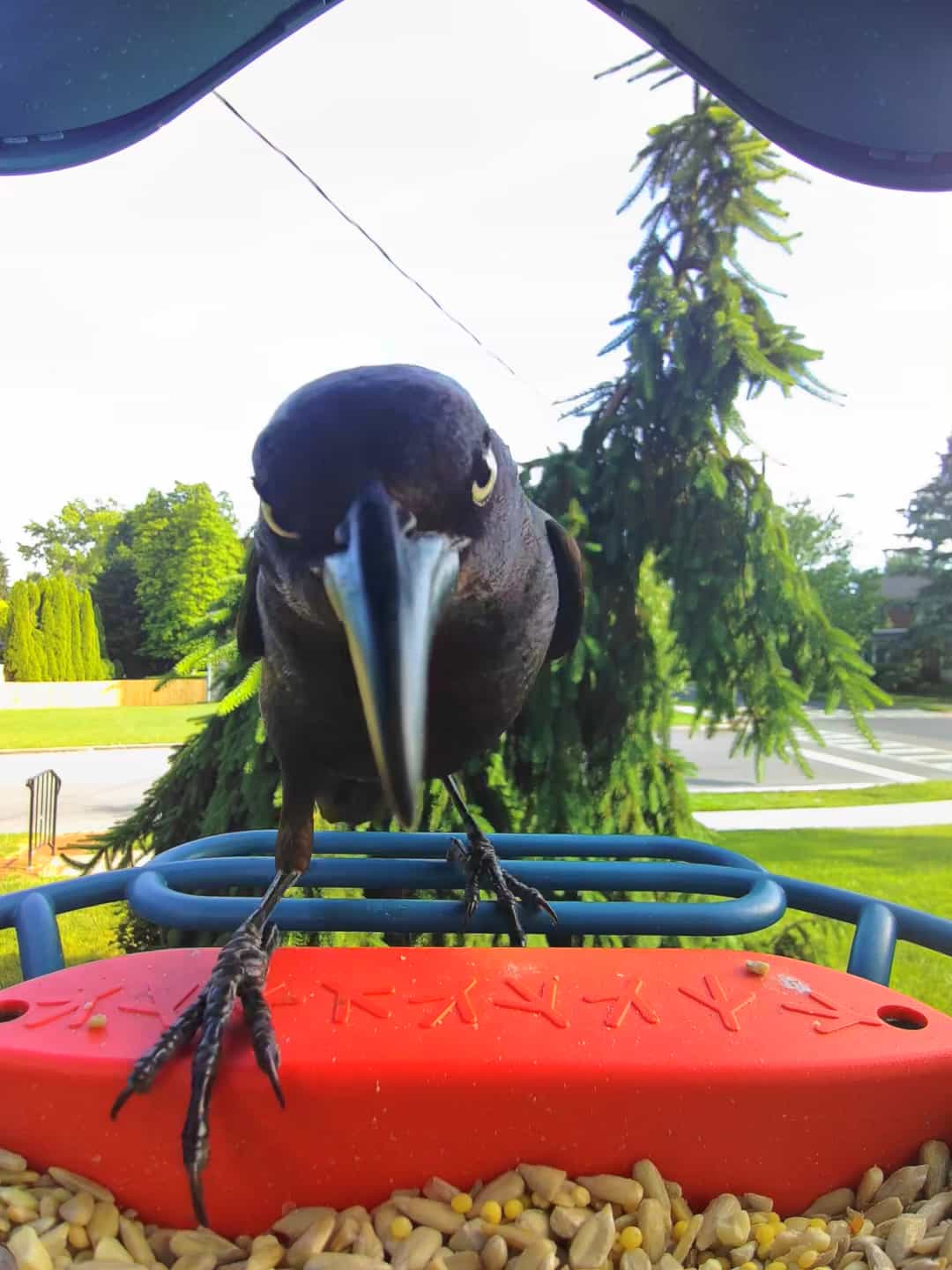
Red-Winged Blackbird vs Rusty Blackbird
Male Rusty Blackbirds lack the distinct bright red and yellow shoulder patches of Red-Winged Blackbirds. Females differ as well; Rusty females have a lighter, more streaked appearance compared to the more uniform brown-red appearance of female Red-Winged.
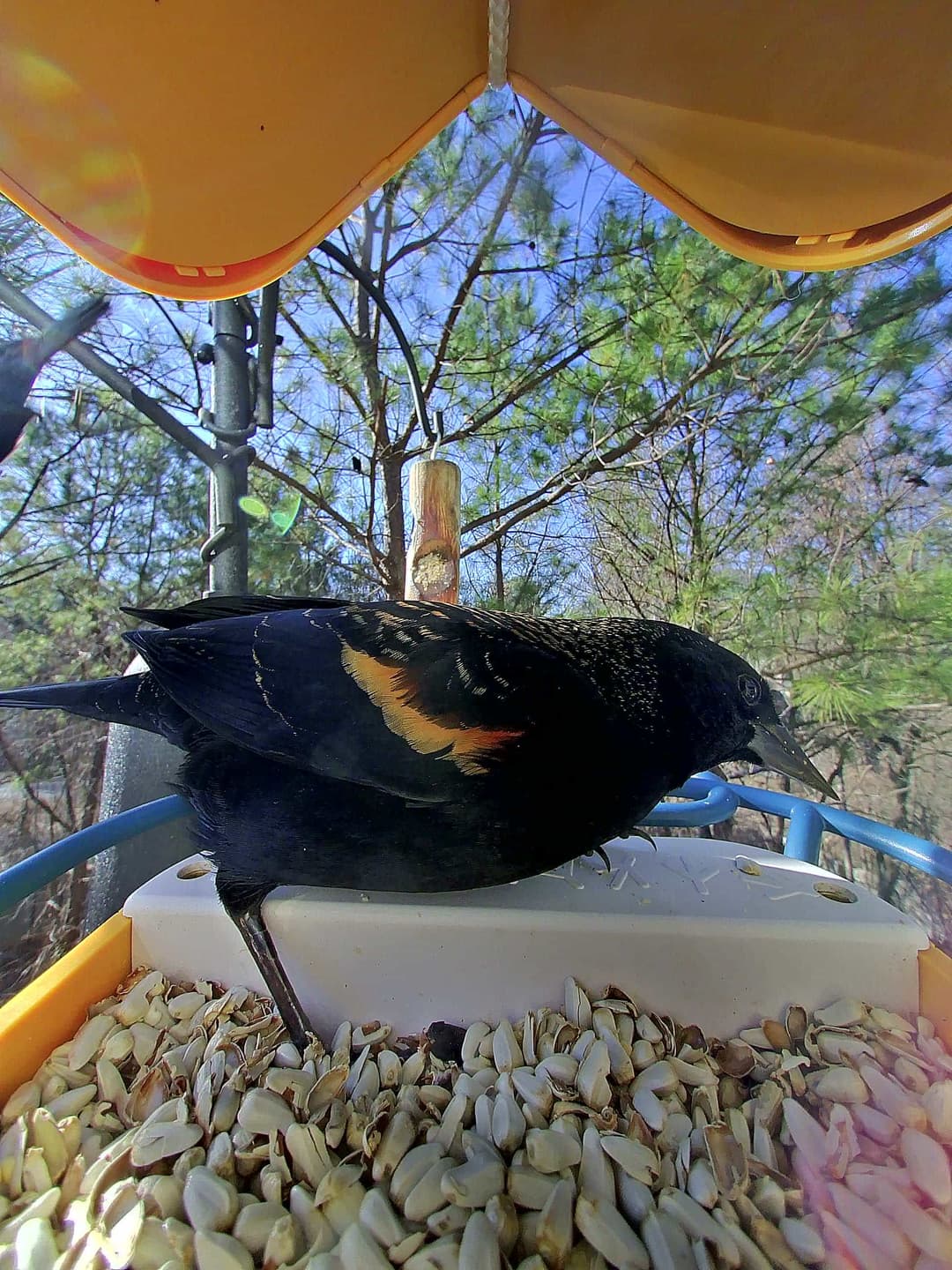
Brown-Headed Cowbird vs Rusty Blackbird
Rusty Blackbirds differ from Brown-Headed Cowbirds by having pale, contrasting eyes and a rusty or dark feather coloration. Cowbirds have a distinct brown head which is absent in Rusty Blackbirds and exhibit a more uniformly dark plumage.
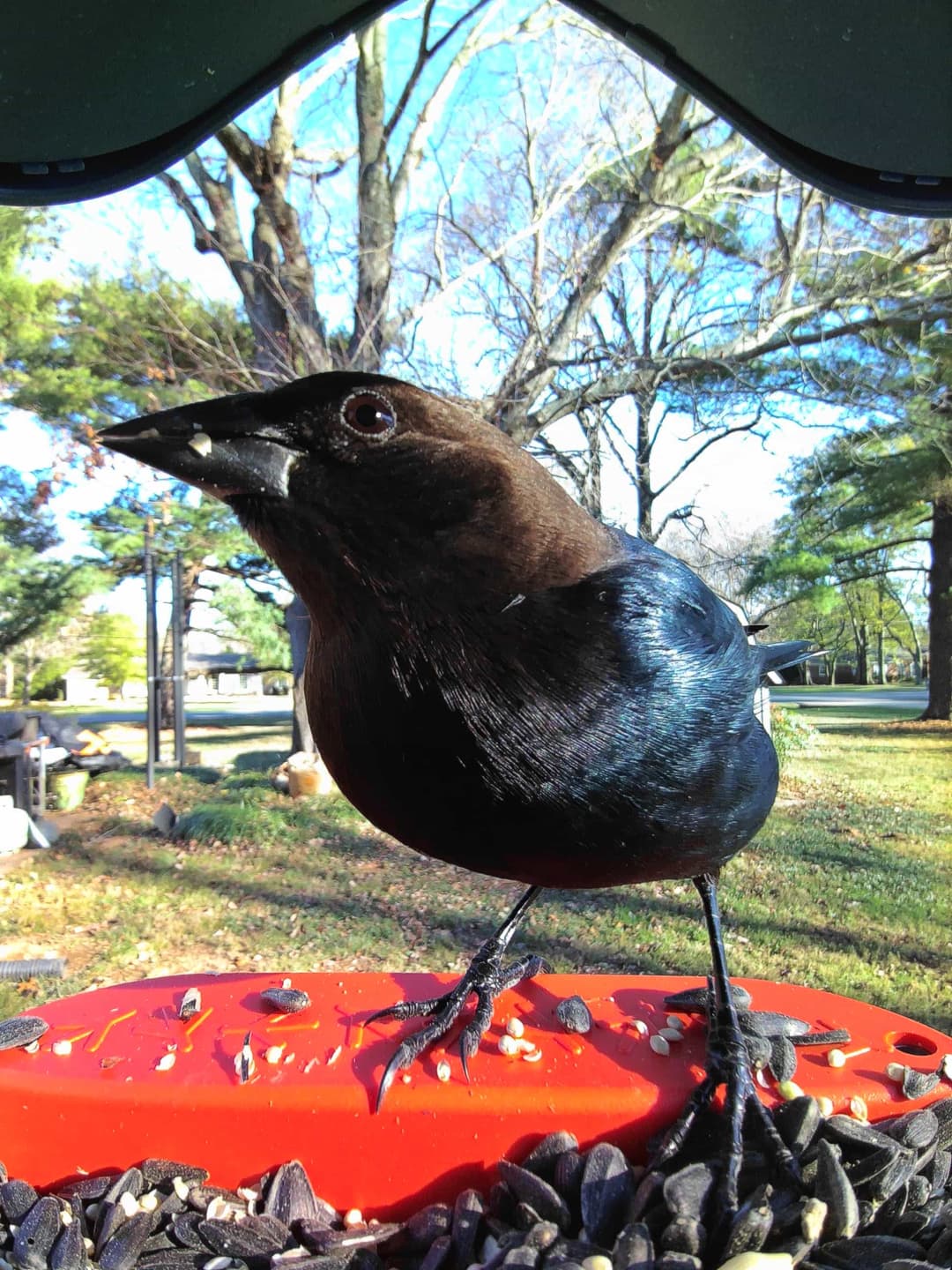
Breeding and nesting habits of the rusty blackbird
Mating behaviors
The male rusty blackbird uses a harsh, grating song during the spring to establish nesting territory or attract a mate. Pairs typically nest in isolation, though occasionally they form small, loose colonies.
Nesting details
Rusty blackbirds build nests in dense cover, often in conifers or shrubs above water. Nests are placed very low, usually just a few feet off the ground or water, though they can be up to 20 feet high in coniferous trees. Nests are bulky open cups made of twigs, grass, and Usnea lichens, with an inner bowl of decaying plant material lined with fine grass.
Eggs and chick-rearing
The female is responsible for crafting the nest and lays a clutch of eggs within the constructed bowl. While specific details on chick-rearing are limited, like many bird species, it is likely that both parents contribute to feeding and caring for the hatchlings until they are ready to fledge.
What does a rusty blackbird like to eat?
Aquatic animals
Berries
Birds
Insects
Nuts
Plants
Seeds
Small animals
Snails
Spiders
Natural diet
The rusty blackbird primarily consumes insects and seeds. Its diet mainly includes insects like aquatic caddisflies, mayflies, dragonflies, and water beetles, as well as land insects such as grasshoppers. Additionally, it eats snails, crustaceans, small fish, and small salamanders. It also feeds on seeds and waste grain, particularly in winter months, and occasionally berries.
Bird feeders
Rusty blackbirds are not frequent visitors to bird feeders. When they do visit, they may eat seeds and grains found in common bird food mixes.
Attracting rusty blackbirds: favorite snacks
Rusty Blackbirds love a variety of insects and seeds, but their particular favorites are grubs, beetles, sunflower seeds and corn. Try stocking your feeder with Bird Buddy seeds. Expertly chosen for the season, these seeds are sure to attract your feathered friends.
Preferred feeders and setup
Rusty Blackbirds are not picky about their feeder, but they do need a clear line of sight to feel safe. Try placing your feeder away from dense foliage where predators could hide. They are also ground feeders, so occasionally scatter the Bird Buddy seeds on the ground under the feeders.
Fun tricks for a rusty blackbird visit
Adding a water source like a birdbath could encourage Rusty Blackbirds to drop by. Try placing shiny objects around your yard, as these birds are known to be attracted to shiny things. Don't forget to maintain a peaceful and quiet environment to make your yard a desirable hangout.
Where can you find rusty blackbirds?

Primary habitat
The rusty blackbird primarily prefers wet northern coniferous forests with many lakes and bogs, and muskeg regions, particularly during breeding season.
Additional range
In migration and winter, it frequents areas with trees near water, such as wooded swamps and river groves. Unexpectedly, it can also be found foraging in open fields and cattle feedlots alongside other blackbirds.
Do they migrate?
The rusty blackbird is a migratory bird that does not remain in one place all year. It migrates relatively late in the fall and early in the spring. The primary breeding grounds for the rusty blackbird are in the boreal forests across Alaska and Canada. As autumn approaches, they begin their southward migration slightly later than many other bird species, heading toward their wintering territories in the eastern and southeastern United States. During migration, strays or individuals that deviate from the typical migratory path often appear in the western and southwestern regions of the United States, predominantly in late fall. The timing of their journey is later in both fall and spring compared to many other migratory birds, often leading to observations of stragglers or isolated groups appearing in unusual locations. Key locations throughout their migration include wetland areas, river corridors, and flooded fields which provide essential food sources and roosting sites. Conservation efforts are crucial as the rusty blackbird population has been declining, making understanding their migratory patterns and habitat requirements important for their preservation.
What is the role of rusty blackbirds in nature and how to protect them?
Conservation status
The rusty blackbird is considered vulnerable, with its population declining by over 80% in recent decades. Key threats to this species include habitat loss due to deforestation, wetland drainage, and climate change. Conservation efforts focus on habitat protection and restoration, particularly in its breeding and wintering grounds. Collaborative initiatives are underway to monitor population trends and understand the ecological needs of the rusty blackbird, aiming to mitigate further declines and ensure the species' survival.
Ecological role of rusty blackbirds
Its role in the ecosystem
The Rusty Blackbird, a species of blackbird, plays a significant role in the ecosystem. As a consumer of insects, the Rusty Blackbird contributes to natural pest control by eating a variety of flies, beetles, and grasshoppers, some of which may pose a threat to certain crops and vegetation. In addition, their dietary consumption of small fish and salamanders contributes to the regulation of these species in their shared habitats, maintaining a balanced ecosystem. Rusty Blackbirds also contribute to seed dispersal due to their intake of seeds and berries. The seeds consumed may later be dispersed in different areas through the bird's droppings, aiding in plant proliferation and diversification. Their nesting behaviors, particularly their use of material from the forest floor and fine grass for lining, contribute to nutrient cycling within the ecosystem. In general, the Rusty Blackbird significantly contributes to maintaining balanced ecosystems through their feeding and nesting habits.
How to help protect rusty blackbirds
Preservation tips
Habitat protection for rusty blackbird
Conserving the Rusty Blackbird requires preservation of its preferred breeding and wintering habitats of wetlands and forested wetlands. This involves reducing industrial activities leading to forest degradation and discouraging land-use practices that destroy swamps and marshes. Public entities should enable policies that encourage protection of these habitats.
Community science initiatives
Involving the community in Rusty Blackbird conservation can tremendously help track population trends and raise awareness. Initiatives could include organising periodic bird counting drives or creating Apps for reporting sightings. Educating students at the school level about the importance of biodiversity and the role of blackbirds in the ecosystem also makes a big impact in conservation efforts.