
Common Starling
Common Starling
Also known as: European Starling, Starling
Sturnus vulgaris


Quick Identification guide
Quick Identification guide
- •
Displays an iridescent black plumage with hints of green and purple sheen, especially noticeable in direct light
- •
Possesses a short, yellow beak that is slender and slightly pointed
- •
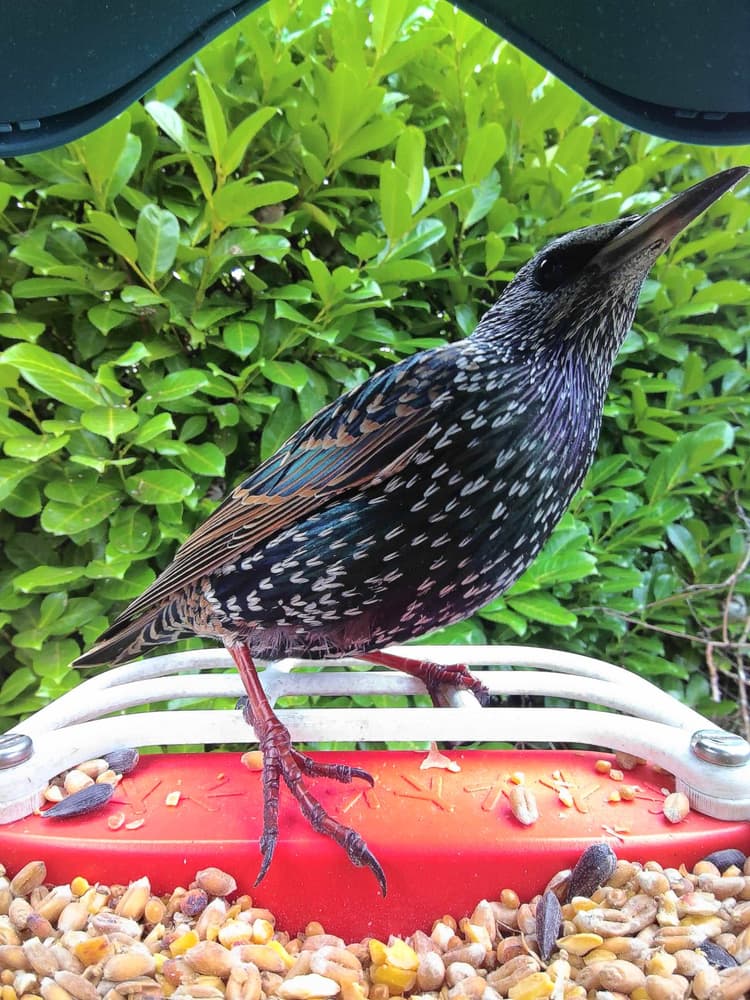
Compact with a stocky body, and during the non-breeding season, appears covered with small white speckles on its feathers
What does a common starling sound like?
The common starling produces a series of discordant, musical, squeaky, and rasping notes, often mimicking other birds' calls. Its distinctive marking call is a descending whee-ee, with a call pattern that is falling, flat, rising, and undulating. The varied call types include trills, whistles, and screams, as well as chirps or chips.


Description
Chances are you've seen big, spectacular moving clouds of birds flying in breath-taking formations. They were probably starlings and that manoeuvre is called a murmuration. They perform them before roosting. These European birds were brought to New York in the 1890s by Eugene Schieffelin and his friends, who released hundreds of birds in an attempt to introduce all the species mentioned in Shakespeare's works.
The common starling can weigh between 55to101grams and be from20to23centimeters tall.
The common starling typically lives for an average of 2-3 years, although some have been known to live up to 22 years. Their lifespan is relatively long compared to other small birds, yet shorter than larger, related species such as crows, which can live over 20 years. Lifespan in starlings is highly dependent on environmental factors and predation.
Did you know?
Most popular questions about common starling
How to recognise a common starling?
General appearance
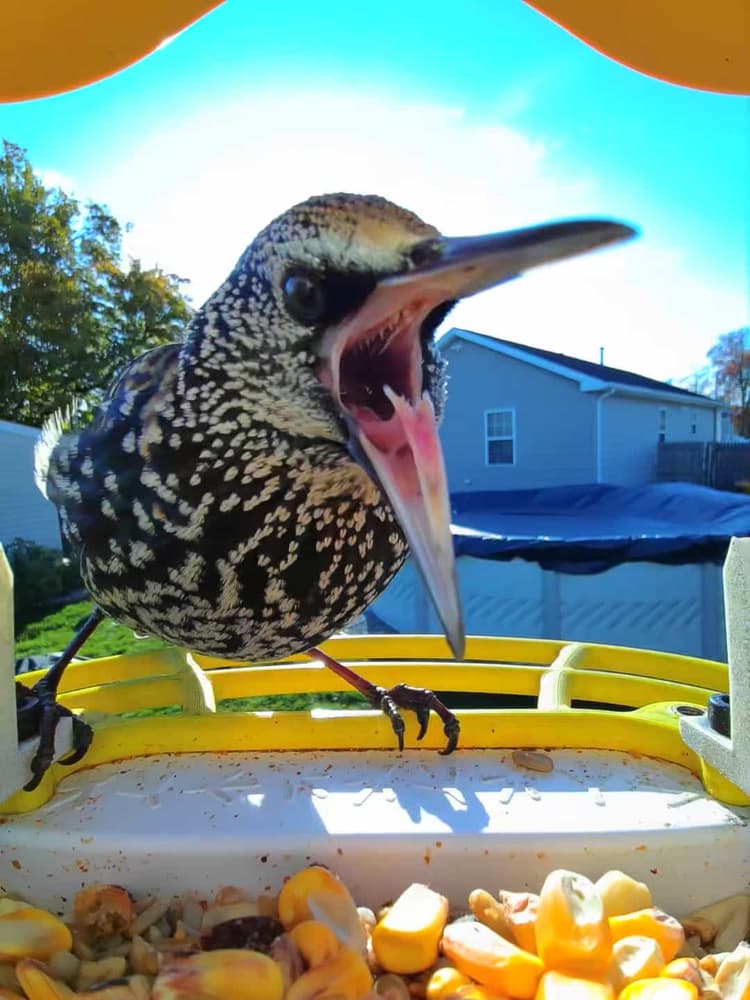
The common starling is about the size of a robin, measuring 8 1/2 inches (22 cm) in length. It possesses a short tail and a thin straight bill. Its plumage changes with the seasons, appearing black with glimmers of purple and green in spring and summer. It is speckled with white in the fall, which wear off during winter.
Male vs female
The bills of both sexes change color throughout the year - bright yellow during the breeding season. The base of the lower mandible takes a different hue, with males displaying a blue color and females, a pink one. The bills are duller during other seasons.

Male Common Starling
Juvenile
Juvenile common starlings, often seen in flocks in summer, differ greatly in appearance from the adults. Their plumage is dusty gray, and their bills are dark.

Often mistaken for
Common Grackle vs Common Starling
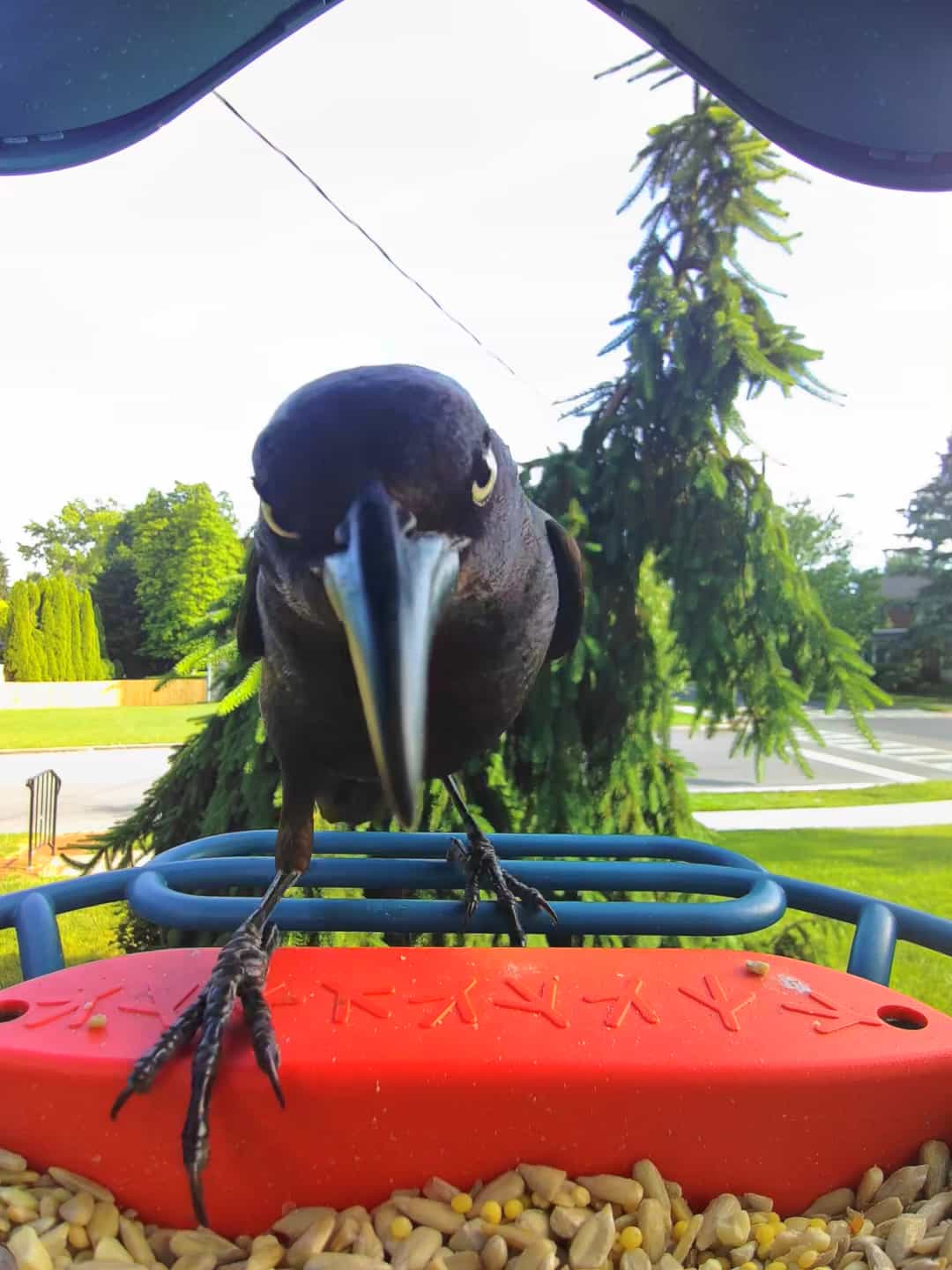
Common Starlings have a speckled appearance with a greenish sheen and shorter tails. Grackles are larger, with long tails and a more uniform, glossy black color. Starlings often have a more varied, high-pitched song compared to the Grackle's harsher tones.
Brewer’s Blackbird vs Common Starling
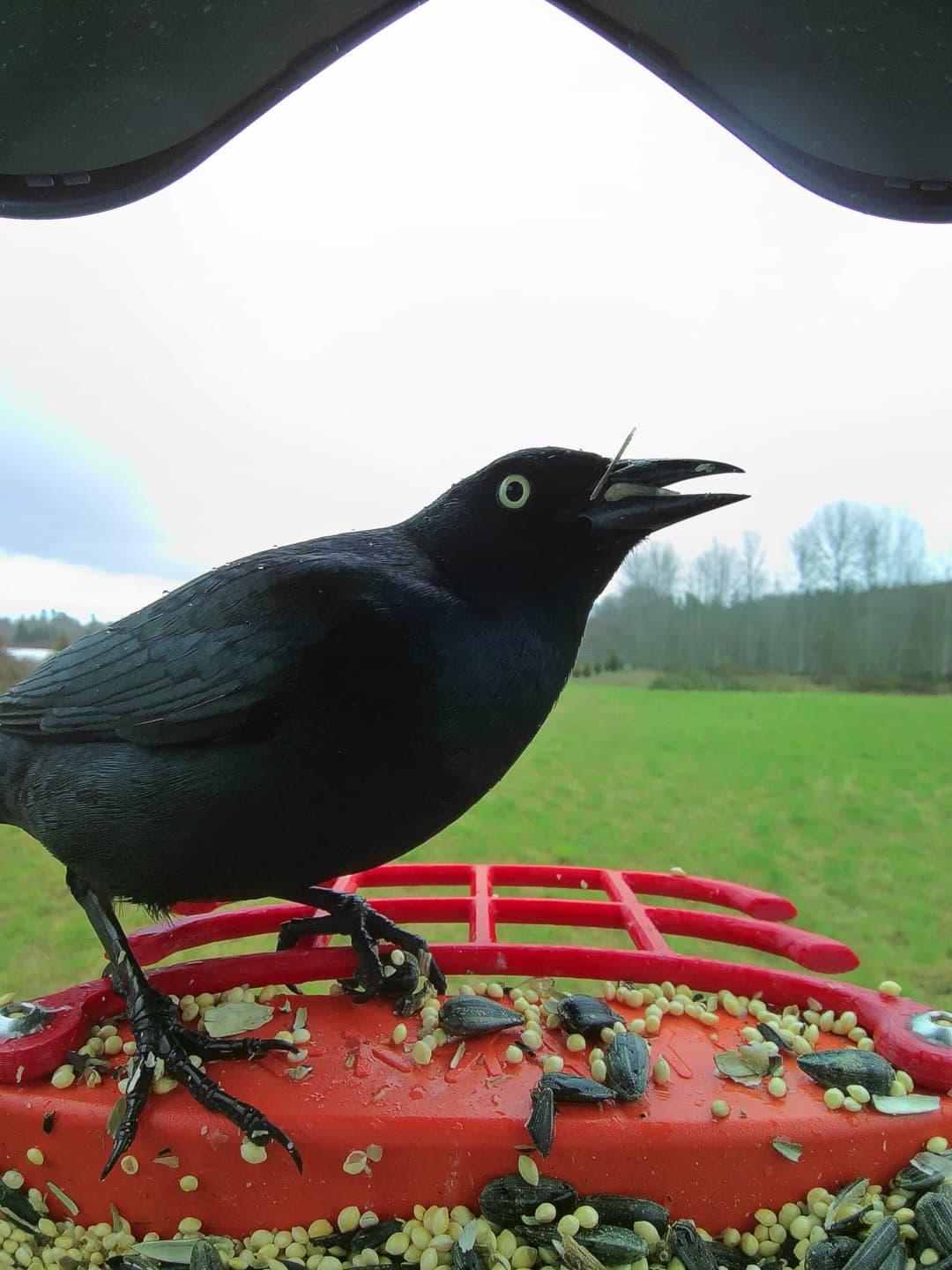
Brewer’s Blackbirds are more uniformly glossy with a purplish head in males. Female Brewer's are brownish. Starlings display a distinct iridescence with spots in non-breeding plumage. Brewer's sing less complex songs compared to the Starling's diverse repertoire.
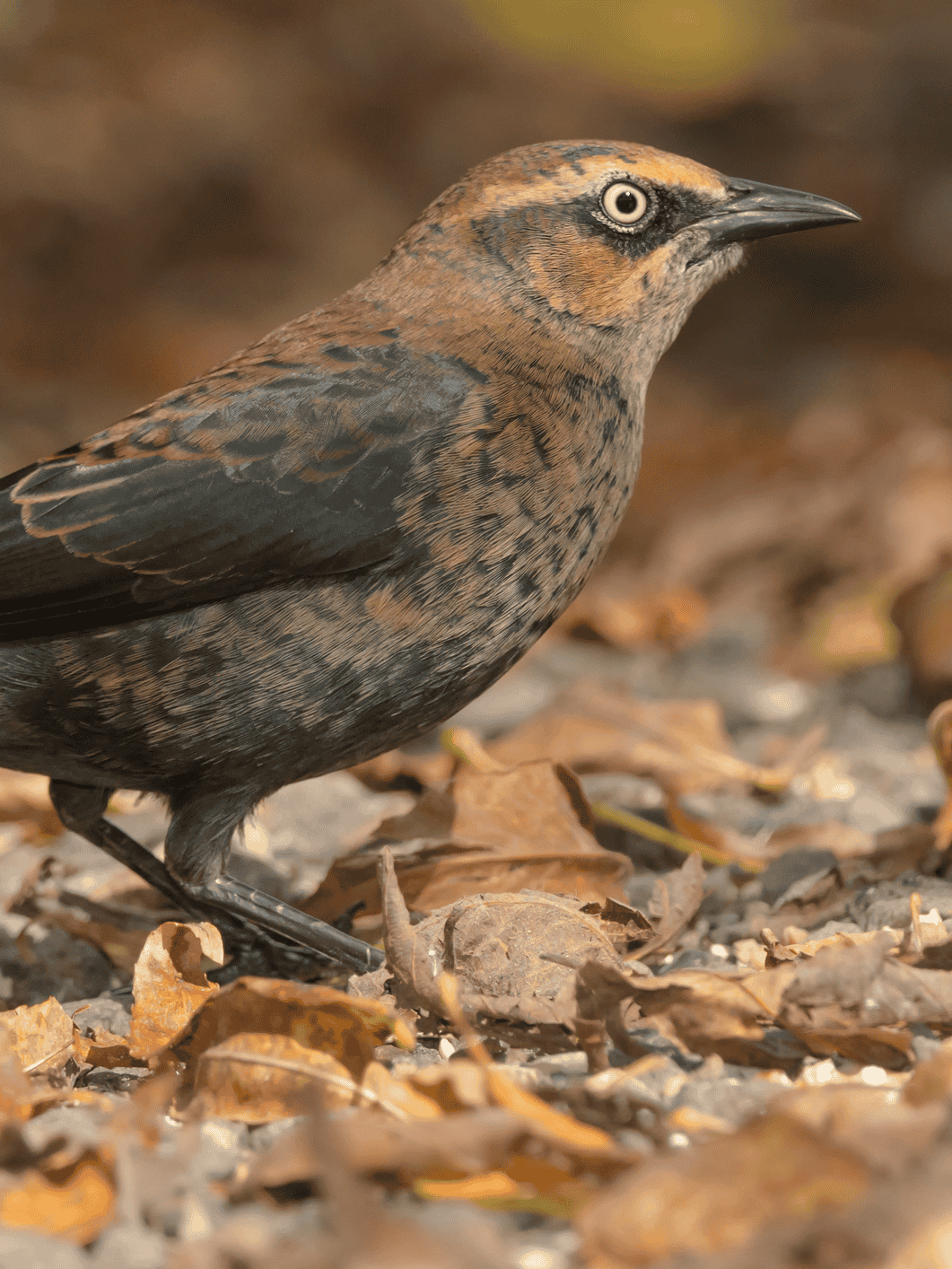
Rusty Blackbird vs Common Starling
Rusty Blackbirds exhibit rust-colored feathers in winter; they are slimmer with slight bills. Starlings, in non-breeding season, display white spots. The vocalizations of the Rusty Blackbird are softer and less varied than the Starling's.
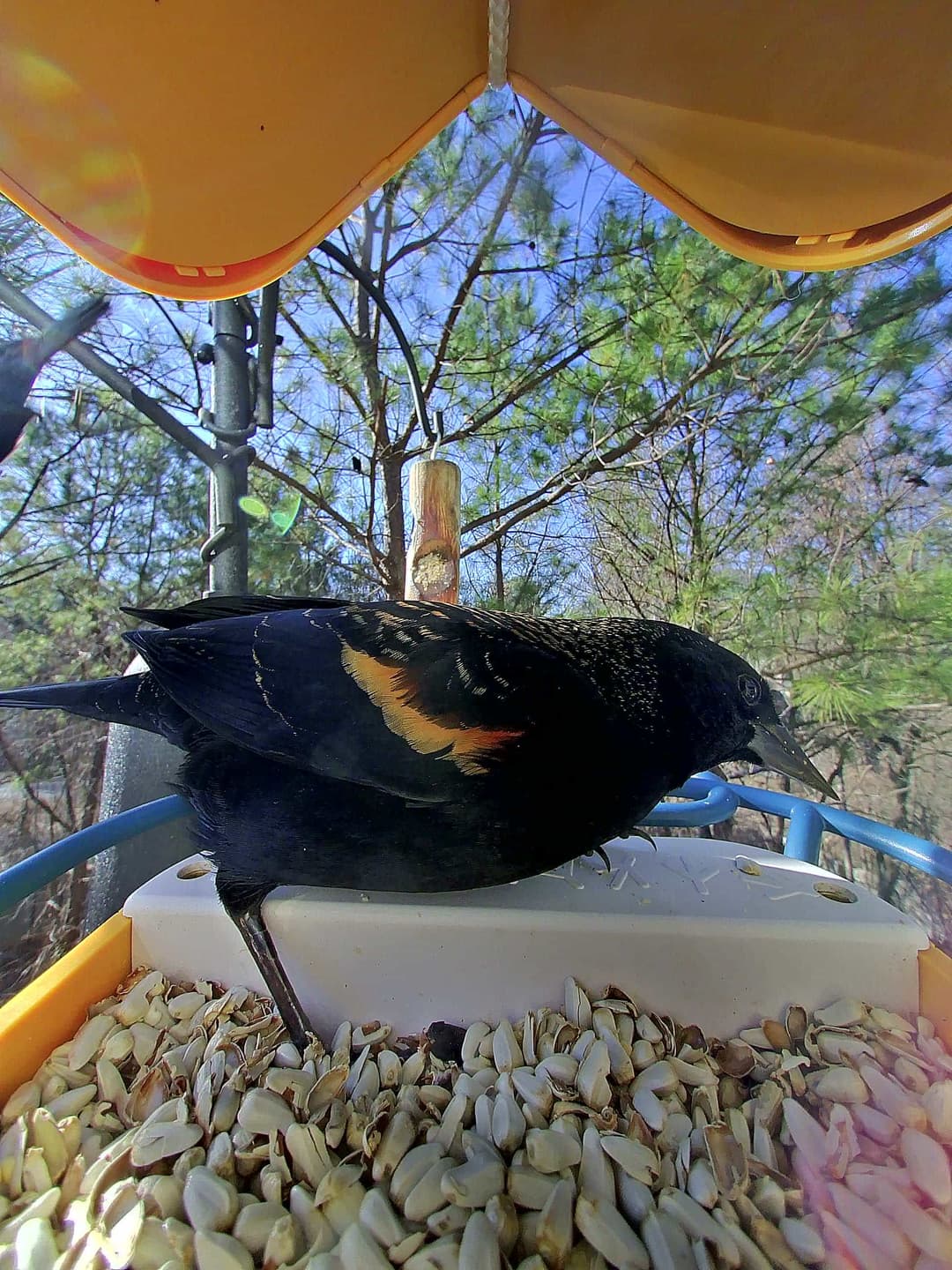
Red-Winged Blackbird vs Common Starling
Male Red-Winged Blackbirds are unmistakable with red shoulder patches; females are streaky brown. Starlings exhibit iridescence and speckles. Their calls differ; Red-Winged has a distinct, conk-la-ree song unlike the Starling's mimicry.
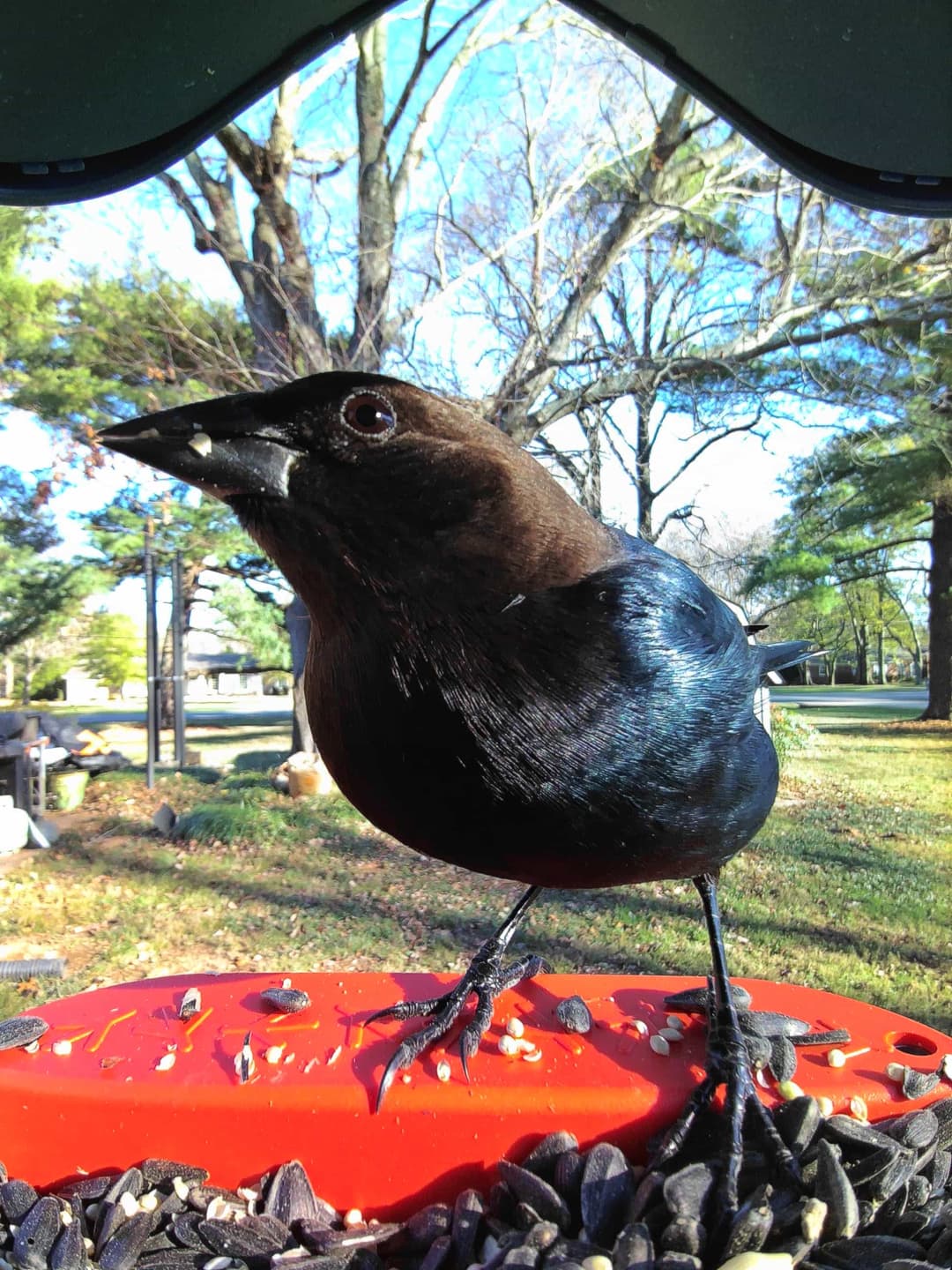
Brown-Headed Cowbird vs Common Starling
Cowbirds are smaller, males have brown heads, females are drab brown. Starlings are iridescent with various speckles. Cowbirds have a flute-like song, whereas Starlings can mimic other birds and sounds.
Breeding and nesting habits of the common starling
Mating behaviors
Male starlings establish territory and select a nesting site, attracting a mate with song. When a female arrives, the male sings while perching near the site, occasionally waving his wings. Males may have multiple mates.
Nesting details
Starlings choose nesting sites in any cavity, typically natural hollows, woodpecker holes in trees, birdhouses, or in the southwest, holes in cacti. They may also nest in building crevices. Nests begin with male-placed twigs, weeds, and other materials, completed by the female. Homeowners can provide birdhouses to attract them.
Eggs and chick-rearing
Nests have a loose mass with a depression for eggs. Females lay the eggs, and both parents partake in feeding and caring for the chicks once hatched.
What does a common starling like to eat?
Berries
Fruits
Insects
Plants
Seeds
Small animals
Snails
Spiders
Worms
Natural diet
The common starling's natural diet is diverse and includes a variety of insects and invertebrates such as beetles, grasshoppers, spiders, and earthworms. They are also known to feed on fruits and berries, including cherries, plums, and blackberries, particularly in the late summer and fall.
Bird feeders
At bird feeders, common starlings often consume suet, sunflower seeds, peanuts, and mealworms. They are attracted to suet cakes and balls, which provide high-energy food, especially in colder weather. Starlings are also known to eat breadcrumbs and other food scraps provided at feeders.
Attracting starlings: foods and snacks
Starlings will be tempted to visit your yard or feeder with the right choice of food. They are particularly fond of snacks like oats, cooked rice, and peanuts. Moreover, they love fruits such as apples, cherries, and grapes. Try offering them favorite snacks in a dish or a tray feeder. Among all types of bird seeds, Bird Buddy seeds yield the best results as they are selected by experts specifically for the season.
Feeder types and tricks for attracting starlings
Another factor to entice starlings into your yard is the choice of a feeder. Starlings prefer open flat feeders that have plenty of room for them to move around. The feeder should be sturdy enough to hold the starling's weight, as they are heavier than many other birds. If it's possible, place your feeder near a water source like a birdbath or a pond. Beyond this, one fun trick might be to play starling sounds or bird's songs from a speaker near the feeder. This might encourage them to drop by, stay for a sing-along, and ultimately make your yard their favorite spot!
Where can you find common starlings?
Based on Birdbuddy sighting data. The heatmap shows where Birdbuddy users have spotted this species.
Embed this map
This map shows the full native range based on scientific range data.
Primary habitat
The common starling predominantly inhabits cities, parks, farms, open groves, and fields, being most numerous in farm country and suburban areas.
Additional range
Though usually scarce in wild forest, scrub, or desert areas, starlings are known to breed around buildings or settlements within these environments.
Do they migrate?
The common starling exhibits varied migratory behaviors depending on its geographic location. In Europe, northern populations of the common starling typically migrate southward in the fall as the temperature drops. These migratory birds may travel from regions like Scandinavia and Russia to winter in milder areas of Western and Southern Europe, including the British Isles, France, Spain, and Portugal. This movement generally occurs from September to November, with the return journey happening in early spring as they head back to their breeding grounds. In contrast, southern populations of common starlings, such as those found in parts of Western Europe, the British Isles, and Southern Europe, often remain as permanent residents throughout the year. They do not undertake long migrations due to the relatively mild climate that supports their year-round presence. During migration, starlings typically fly during the day in large, noisy flocks. Key stopover locations are characterized by abundant food sources like agricultural fields, urban areas, and woodlands. Their ability to adapt to diverse environments facilitates their success both as migrants and as permanent residents across various regions.
What is the role of common starlings in nature and how to protect them?
Conservation status
The common starling is classified as a common species, not vulnerable or endangered. They are widespread and thrive in various habitats, including urban areas. However, their presence in some regions negatively impacts native hole-nesting birds like bluebirds and Red-headed Woodpeckers, as they compete for nesting sites. Key conservation efforts focus on managing their populations to protect native species, often by controlling their numbers and preserving natural habitats for indigenous birds. Despite their success as a species, their impact on local ecosystems poses significant ecological concerns.
Ecological role of common starlings
Its role in the ecosystem
The common starling plays a significant ecological role in pest control due to its diet, which consists mainly of insects, including destructive species like beetles, grasshoppers, flies, and caterpillars. Thus, these birds help to control the populations of these pests and maintain a balance in the ecosystem. Additionally, starlings contribute to seed dispersal via feeding on a variety of berries, fruits, and seeds, particularly in the fall and winter. They visit different environments looking for food and therefore, seeds eaten and later excreted by starlings can be spread across wide areas, facilitating plant propagation. Despite being seen by some as a nuisance species, starlings, like many other birds, serve important ecological roles that contribute to the health and functioning of their ecosystems.
How to help protect common starlings
Preservation tips
Habitat preservation strategies
Preserving the common starling's habitat is crucial for their survival. Focus on protecting and restoring urban green spaces, forest edges, and grasslands which they commonly inhabit. Resist overdevelopment and deforestation in these areas. Encourage the planting of native plants which can support the starling's diet of insects and fruits.
Community science initiatives
Engage local communities in birdwatching programs and data collection on starling populations. This grassroots participation in science can increase awareness and garner support for the starlings' conservation. Promote educational campaigns that highlight the bird's ecological importance. Advocate for policies that protect common starlings and their habitats.