
Javan Myna
Javan Myna
Also known as: White-Vented Myna
Acridotheres javanicus


Quick Identification guide
Quick Identification guide
Male
- •
Uniform dark grey-brown plumage with paler underparts
- •
Yellowish-orange bare skin around the eyes
- •
A straight, stout yellow beak
Female
- •
Similarly dark grey-brown plumage with slight variation
- •
Yellow-tinged bare skin around the eyes as in males
- •
Stout yellow beak, consistent with males


Description
It's the city life for Javan mynas! These bold birds are a common sight in urban areas and don't seem to mind humans one bit! Where there’s one, there are bound to be more, as they generally prefer to hang about in large groups. When scavenging, a member of the group is awarded the all-important job of lookout. If anybody is seen approaching, he gives a signal and off they all go!
The Javan myna can weigh between 82to143grams and be from21to25centimeters tall.
The Javan myna typically lives up to 20 years. Compared to other related species such as the Common myna with a lifespan of 12-25 years, the Javan myna has an average lifespan. Other related Starling species have similar lifespans; European starlings commonly live up to 15 years, while the lifespan of Rosy Starlings is about 12 years.
Did you know?
Most popular questions about Javan myna
How to recognise a Javan myna?
General appearance
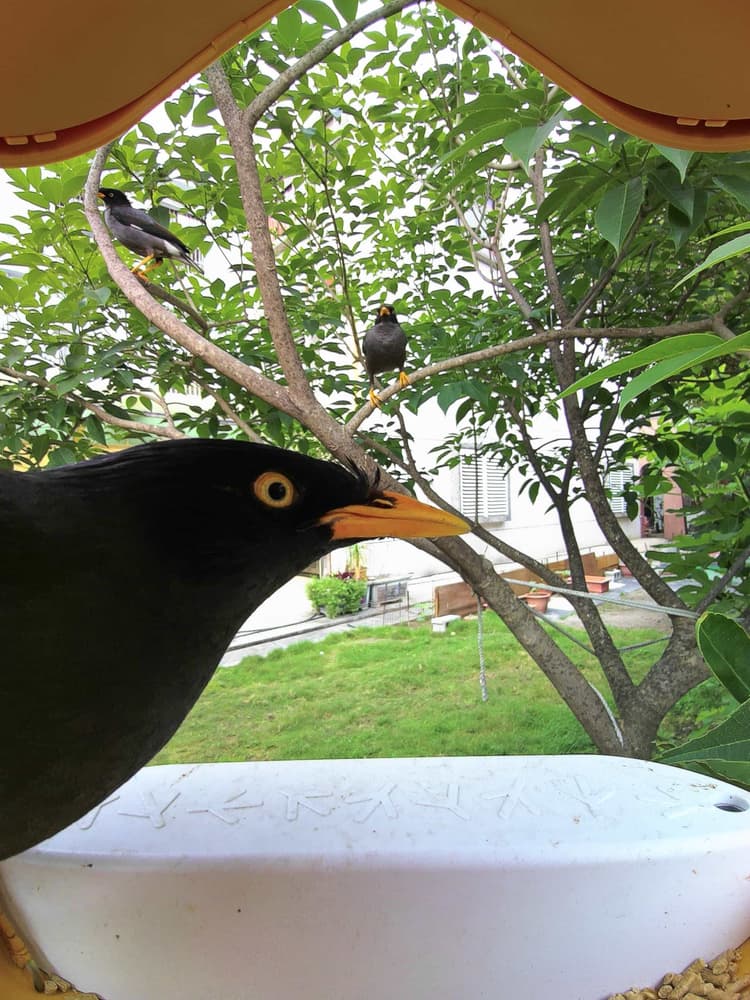
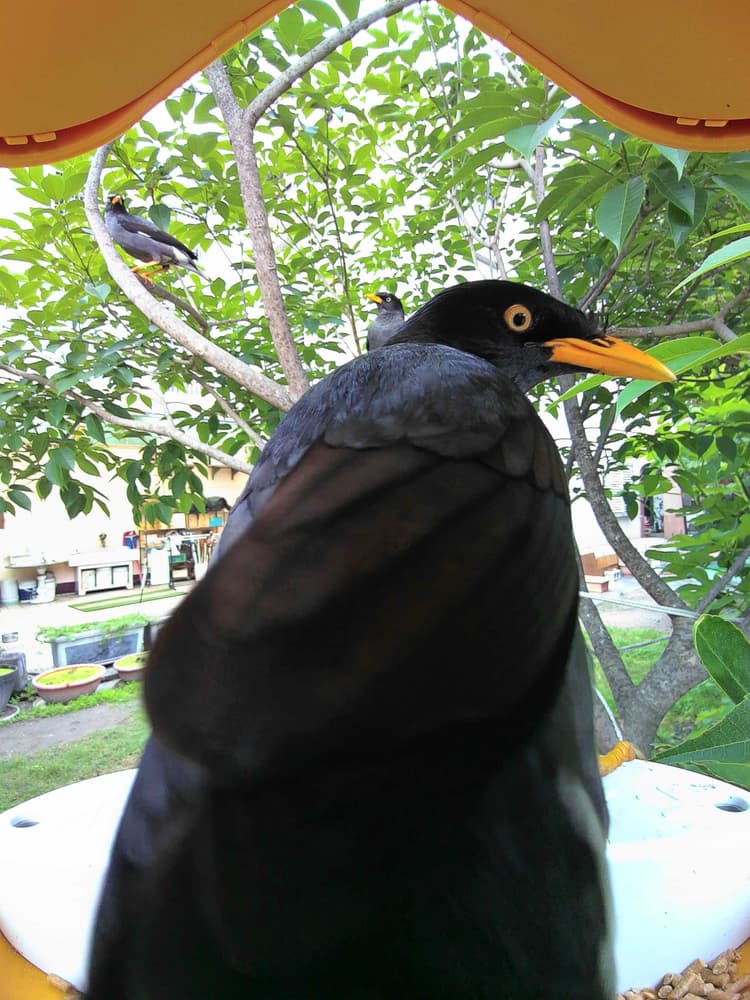
Javan myna or Acridotheres javanicus is an ostentatious bird with a predominantly black body and white underbelly. It is characterized by a strong black beak, yellow eye patches, and sturdy yellow legs. Its wings show prominent white wing patches, especially noticeable during flight.
Male vs female
There is no sexual dimorphism in this bird species meaning that males and females have virtually identical physical characteristics. Both genders share the same striking black coloration with a white underbelly, strong beak, and yellow eye patches which make gender determination challenging.
Juvenile
Juvenile Javan mynas are similar in appearance to adults but with less glossy feathers, and they lack the prominent white wing patch. The eye patches are brown in juveniles but brighten to yellow as they mature. With age, the color of their body deepens to its black hue.
Breeding and nesting habits of the Javan myna
Mating behaviors
Javan mynas engage in lively courtship displays, with males singing and performing aerial displays to attract females. Pairs form monogamous bonds during the breeding season and are often seen foraging together.
Nesting details
Nesting occurs in urban areas, trees, and human-made structures. Javan mynas use twigs, leaves, and grass to build cup-shaped nests. They also accept nest boxes in gardens. Providing sheltered areas with these materials enhances nesting opportunities.
Eggs and chick-rearing
Females lay 3-5 eggs, which both parents incubate for about two weeks. After hatching, both parents feed the chicks a diet of insects and fruit. Chicks fledge approximately three weeks post-hatching, remaining dependent on parents for food for a short period.
What does a Javan myna like to eat?
Berries
Fruits
Insects
Nectar
Scraps
Seeds
Worms
Natural diet
The Javan myna's natural diet primarily consists of insects, fruits, and seeds. They are known to forage on the ground for insects such as ants, beetles, and grasshoppers. Fruits like berries, figs, and small cultivated fruits are regularly consumed. They also eat a variety of seeds and grains found in their natural habitat.
Bird feeders
At bird feeders, Javan mynas are attracted to offerings such as bread crumbs, cooked rice, and pieces of fruit. They may also consume commercial bird feed that includes grains and seeds. Their adaptable nature allows them to thrive near human habitations where these supplemental food sources are available.
Attracting javan mynas: overview
Inviting the Javan myna to your yard can be a delightful experience. With the right snacks, feeders, and some fun tricks, you'll soon have these beautiful creatures stopping by for a visit, and perhaps even a delightful sing-along!
Favorite snacks for javan mynas
To tempt the Javan myna, it's important to feed them their favorites. These birds typically love fruits, insects, and kitchen scraps. A particularly recommended product is Bird Buddy seeds. Chosen by experts specifically for the season, Bird Buddy seeds have consistently shown great results in attracting Javan mynas.
Best feeders for javan mynas
When choosing a feeder for Javan mynas, go for a sturdy, wide platform or tray feeder. This will allow the birds to easily access the food and comfortably perch. Make sure to place the feeder in a quiet and safe location, away from predators and busy foot traffic.
Fun tricks to encourage visits
Using some fun tricks can help make your yard a favorite stop for Javan mynas. Play bird songs to attract them, as these birds have a keen sense of hearing and love to respond to calls. Additionally, providing a fresh source of water for them to drink and splash in can be a definite plus.
Where can you find Javan mynas?
Primary habitat
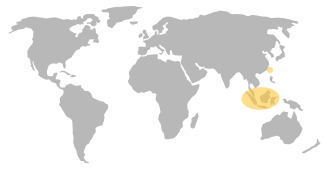
The Javan myna primarily inhabits urban areas and lower land forests of Indonesia, Singapore, and Malaysia.
Additional range
With an adaptable nature, they also exist in a wide range of climates, including unexpected environments like city parks and gardens.
Do they migrate?
The Javan myna typically does not migrate and is generally considered a resident bird. It remains in one place throughout the year, primarily in its native range, which includes Java and Bali in Indonesia. Over time, the Javan myna has also been introduced to other regions across Southeast Asia, including Singapore, Malaysia, and parts of Thailand. In these areas, the Javan myna is known for its adaptability to urban and suburban environments. It frequents cities, towns, and agricultural areas, where it can easily find food and nesting sites. Its non-migratory behavior is complemented by its opportunistic and omnivorous diet, which includes insects, fruits, and urban scraps. There are no known migratory patterns or significant seasonal movements for this species. Instead, the species may expand its range opportunistically, following human-altered landscapes. While it’s an effective colonizer in non-native areas, this adaptability often leads to the myna being considered invasive, particularly where it competes with native bird species for resources.
What is the role of Javan mynas in nature and how to protect them?
Conservation status
The Javan myna is considered common and is not currently listed as vulnerable or endangered. It thrives in urban areas across its native and non-native ranges, often outcompeting local species. Key conservation efforts focus on managing its population in regions where it is considered invasive. Significant threats to local biodiversity arise from its aggressive behavior and adaptability, which can disrupt native ecosystems. Conservationists stress the importance of monitoring its spread and implementing control measures to protect native species and maintain ecological balance in affected areas.
Ecological role of Javan mynas
Its role in the ecosystem
The Javan Myna plays a vital role in the functioning of its ecosystem due to its diverse diet. It is a significant pest controller, consuming a large variety of insects, thereby aiding in maintaining the insect population. Its omnivorous diet also includes fruits/seeds which contributes to its role in seed dispersal. By eating the fruits and excreting the seeds in different locations, the Javan Myna aids in the proliferation of a multitude of plant species, fostering biodiversity. However, its tendencies to adapt and thrive in urban environments often leads it to be considered a pest species as its adaptive skills make it a potential threat to endemic species. Yet, its various roles illustrate a practical illustration of how highly adaptive species contribute to the ecological processes through their interactions with the environment.
How to help protect Javan mynas
Preservation tips
Habitat preservation
Support local government's initiatives to establish and protect green spaces, including parks and gardens, where Javan myna can thrive. Encourage sustainable agricultural practices to ensure their food sources like insects are not depleted. Resist urban sprawl to guard their nesting areas from destruction. Support reforestation projects, reducing the impact of deforestation on their habitats.
Community science initiatives
Enhance community awareness on the importance of Javan myna in the ecosystem. Conduct local educational programs about their conservation. Promote the role of citizen science initiatives in logging sightings and creating habitat maps. Share real-time data with local wildlife protection agencies to monitor or control invasive species' impact on Javan myna populations.