Chipping Sparrow or Field Sparrow?
Here's how to tell the difference
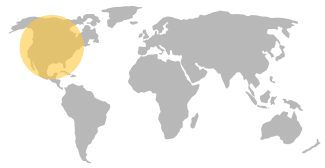
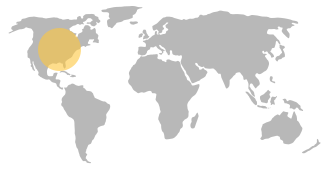
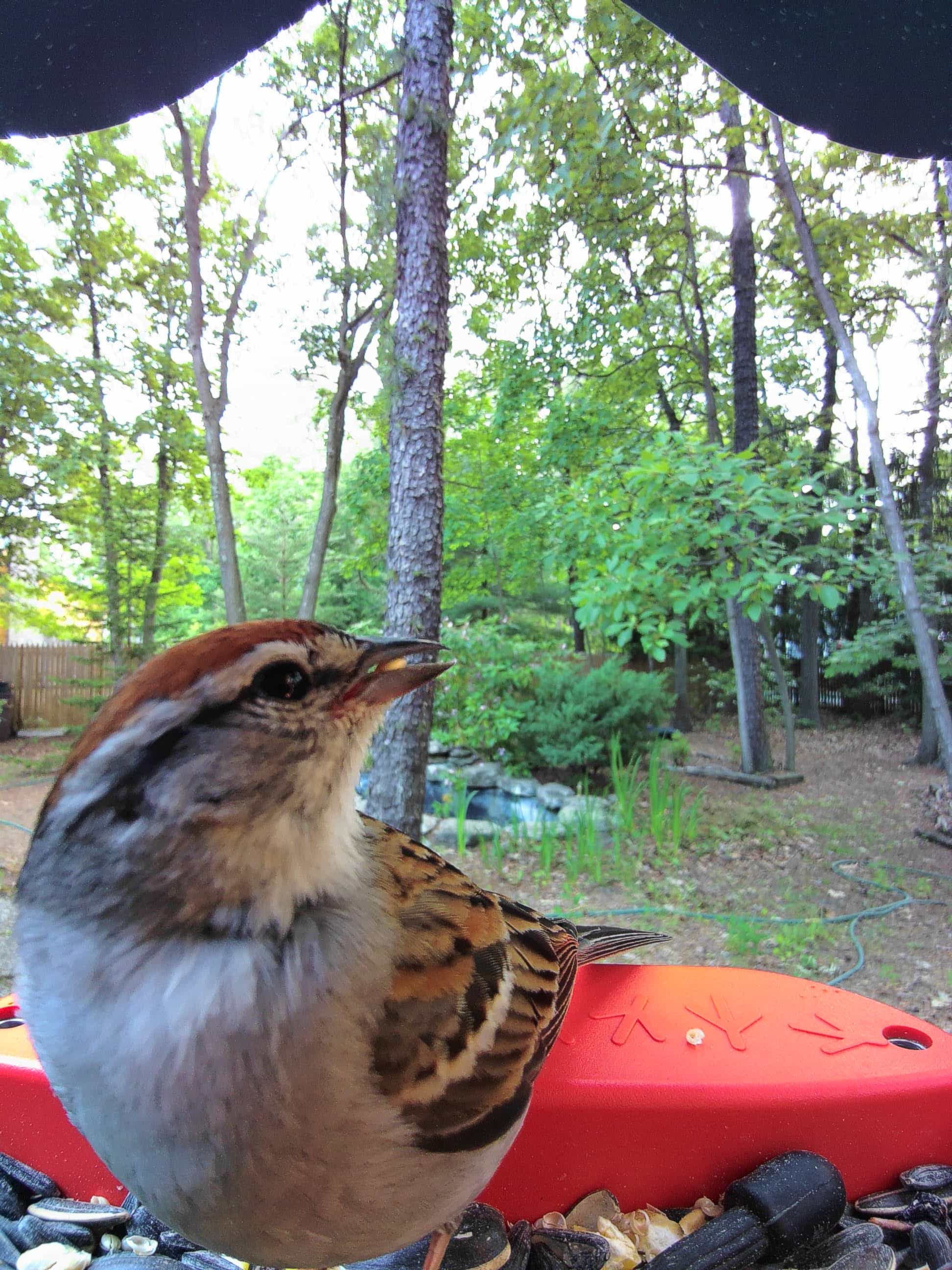


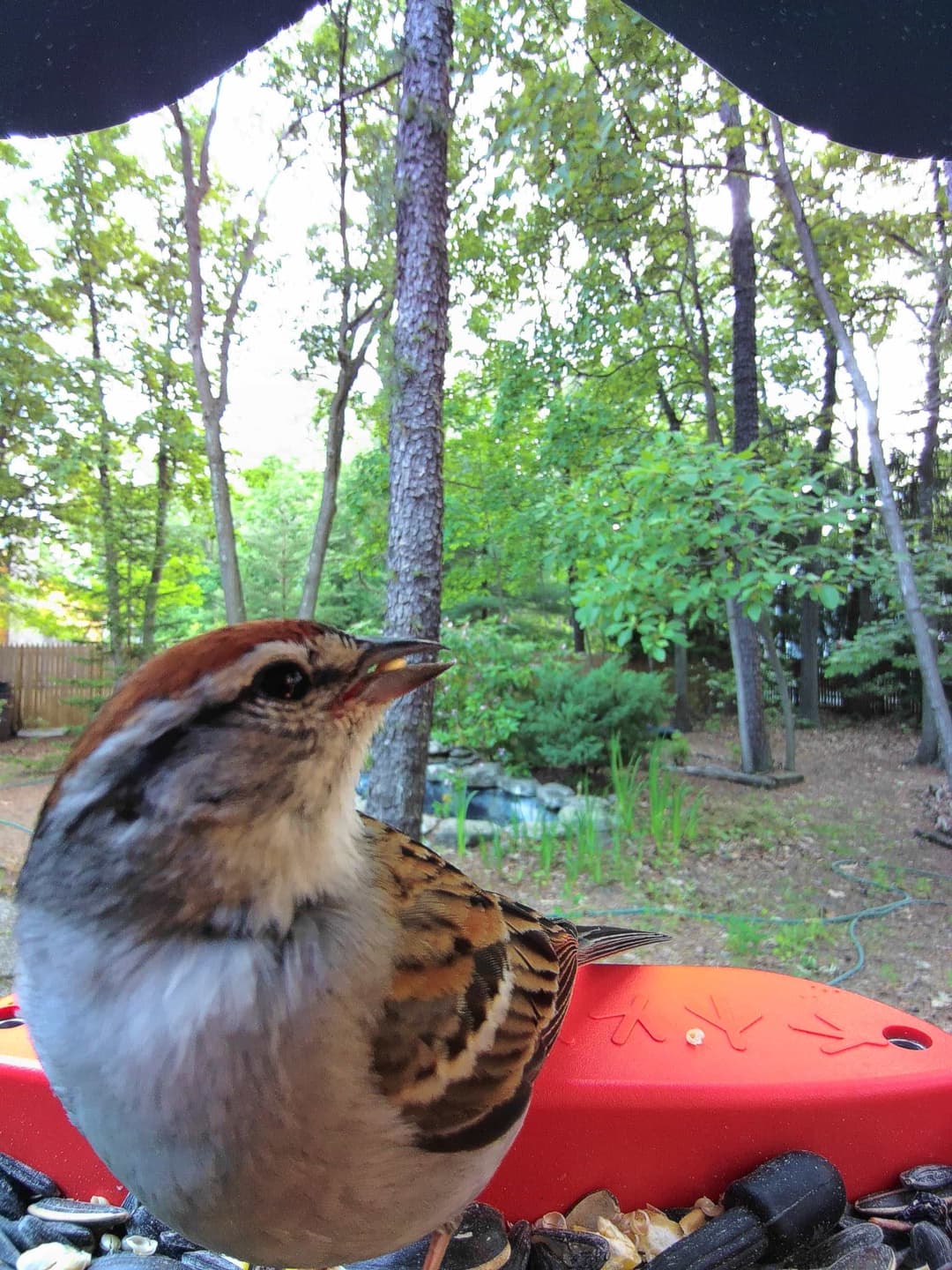
Chipping Sparrow
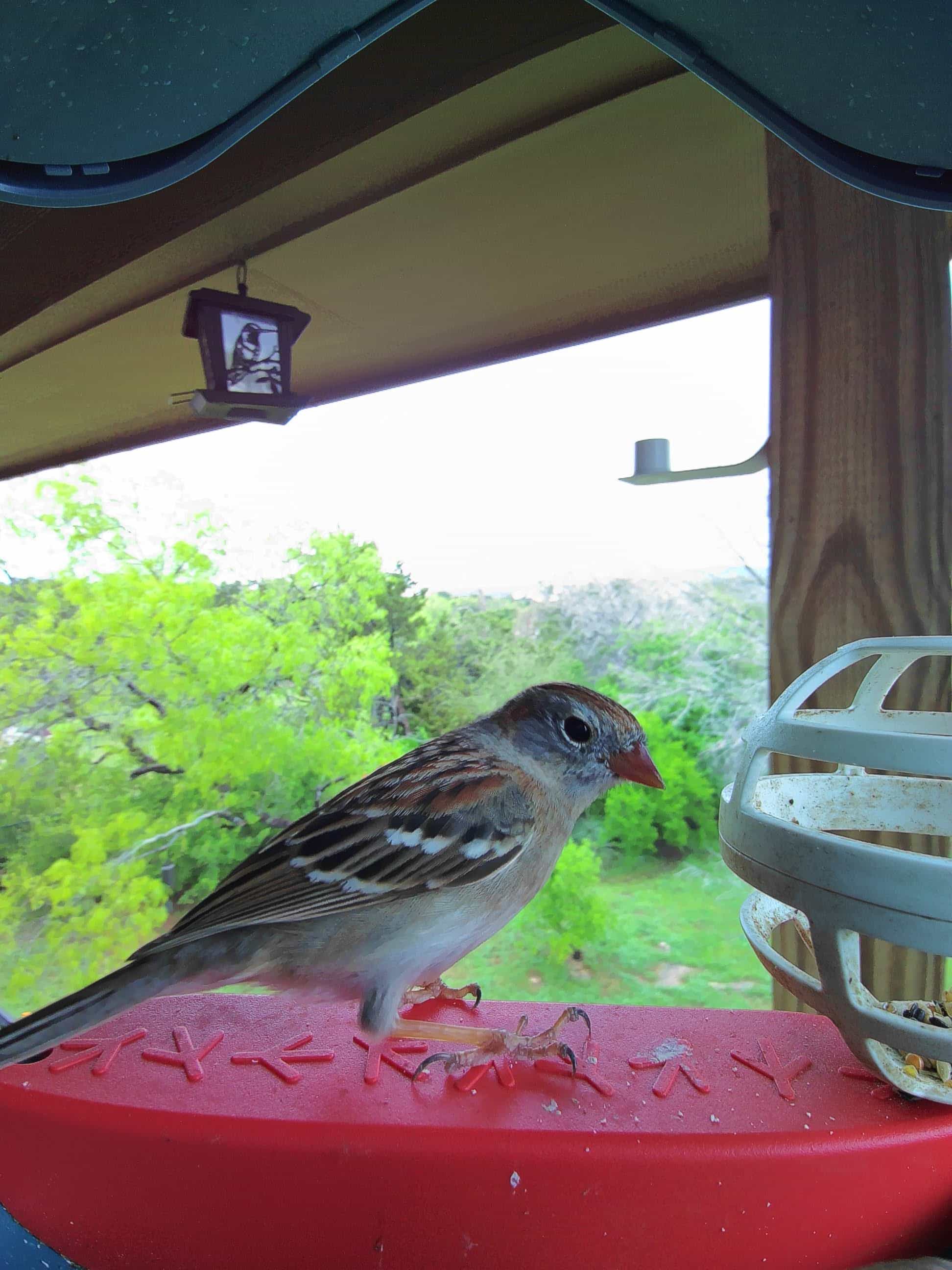


Field Sparrow
Chipping Sparrow
Spizella passerina
General appearance
The Chipping Sparrow is a small 5-5 1/2 inch bird, equivalent to 13-14 cm. Sporting a blend of black, brown, gray, red, and white colors, it has a distinctive chestnut cap, white eyebrow, and black eyeline. Its wings are broad and the tail shape varies from notched, rounded to square-tipped. The bird's rump is gray, distinguishing it from Clay-Colored and Brewer's Sparrows that have brown rumps.
Male vs female
The Chipping Sparrow doesn't exhibit significant sexual dimorphism, meaning males and females have similar appearance. They both have less contrast in winter with their chestnut color partly obscured.
Juvenile
Young Chipping Sparrows are initially streaky and retain some of these streaks into fall. Dull fall juveniles can suggest Clay-Colored Sparrow and Brewer's Sparrow, but the gray rump identifies them as Chipping Sparrows. As they age, they acquire the characteristic colors and patterns of adult Chipping Sparrows.
Size
4.7 - 5.9 in/0.4 - 0.6 oz
There's more to learn about Chipping Sparrow
View full detailsField Sparrow
Spizella pusilla
General appearance
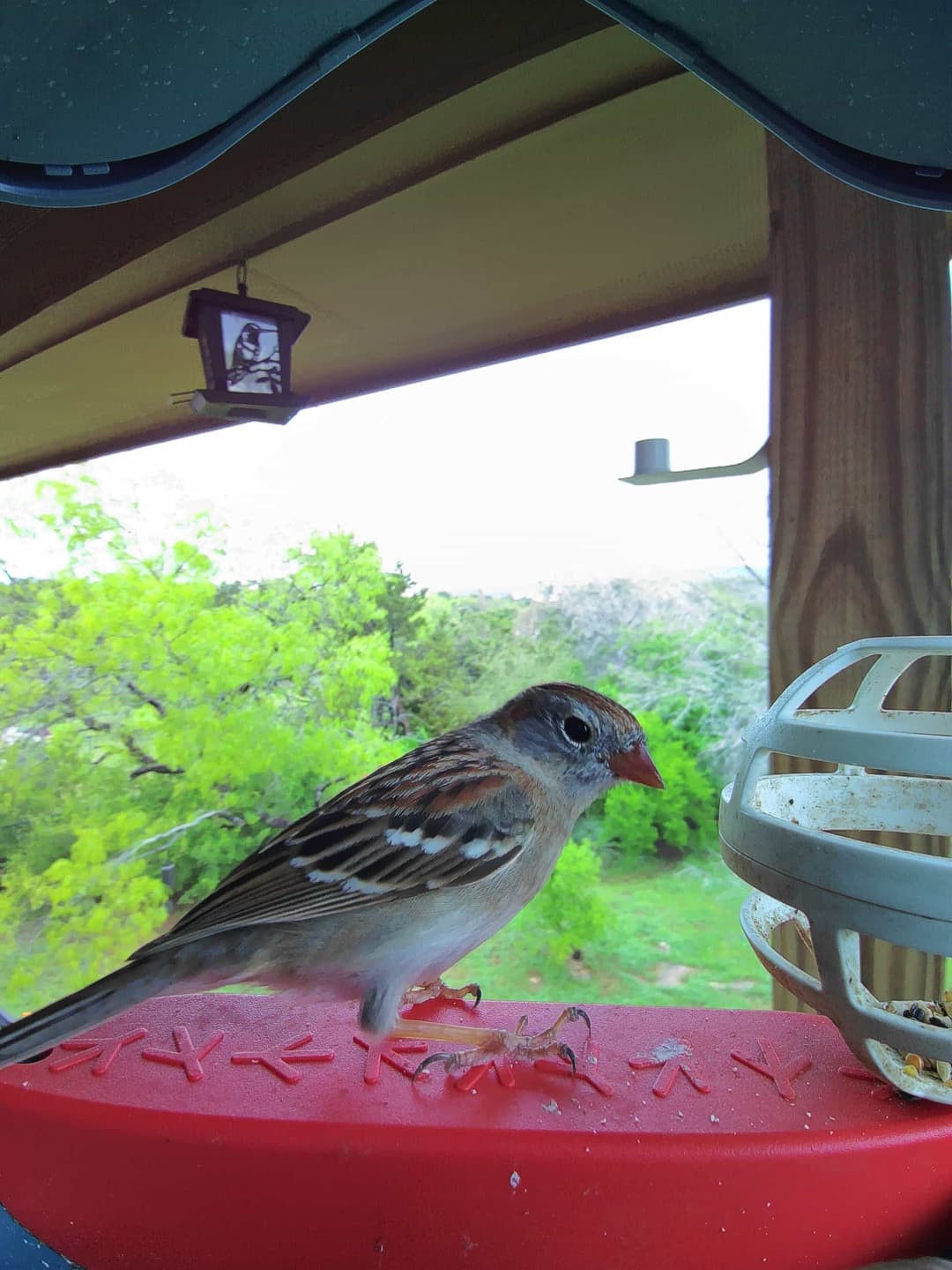
The field sparrow measures approximately 5 1/4 inches or 13 cm. It has a rusty cap and a pink bill. The bird sports a faint whitish eye-ring and a pale rusty eyeline. The plain face gives it an innocent expression. This bird seems long-tailed for its size. Its coloration includes black, brown, gray, pink, red, tan, and white. The sparrow's wings are broad while its tail can be notched, rounded, or square-tipped.
Male vs female
There is no information available distinguishing between the appearances of male and female field sparrows. Often with sparrows, such differences are subtle or nonexistent.
Juvenile
The description provided does not differentiate between the appearances of adult and juvenile field sparrows. For many bird species, juveniles can have muted coloration compared to adults, but more specific information would be needed to accurately describe a juvenile field sparrow. In winter, it can be confused with the chipping sparrow, which may also have a pink bill but exhibits a more prominent dark eyeline.
Size
4.9 - 5.9 in/0.4 - 0.5 oz
There's more to learn about Field Sparrow
View full detailsHow to tell the Chipping Sparrow from the Field Sparrow
Visual differences
The Chipping Sparrow, measuring 5-5½ inches, has a distinctive chestnut cap, black eyeline, and gray rump. In contrast, the Field Sparrow is slightly longer at 5¼ inches, featuring a rusty cap, pink bill, and a faint whitish eye-ring with a pale rusty eyeline. The Field Sparrow’s plain face gives an innocent look, and it often looks longer-tailed. While both display similar overall colors—black, brown, gray—the Chipping Sparrow’s bold head pattern contrasts with the Field Sparrow's softer facial features and pink-toned bill.
Key differences and behavior
Chipping Sparrows and Field Sparrows show distinct behaviors that aid identification. Chipping Sparrows typically inhabit open woods and adapted urban environments, while Field Sparrows prefer bushy pastures and open country with sparse shrubs. In breeding, Chipping Sparrows display some polygamy with varied nest heights up to 60 feet, mainly in trees. Field Sparrows consistently build progressive nests higher each time within seasonal growths, starting near ground level. Chipping Sparrows feed on insects primarily in summer and seeds in winter, often visiting feeders for sunflower seeds and cracked corn. Conversely, Field Sparrows' diet is over 90% seeds in winter but shifts to mostly insects in summer, favoring grass seeds and mimicking these choices at feeders. Lastly, male Field Sparrows are persistent singers during courtship, increasing nest defense, while polygamous Chipping Sparrows court by showcasing themselves.
Still not sure? Here are more lookalikes!
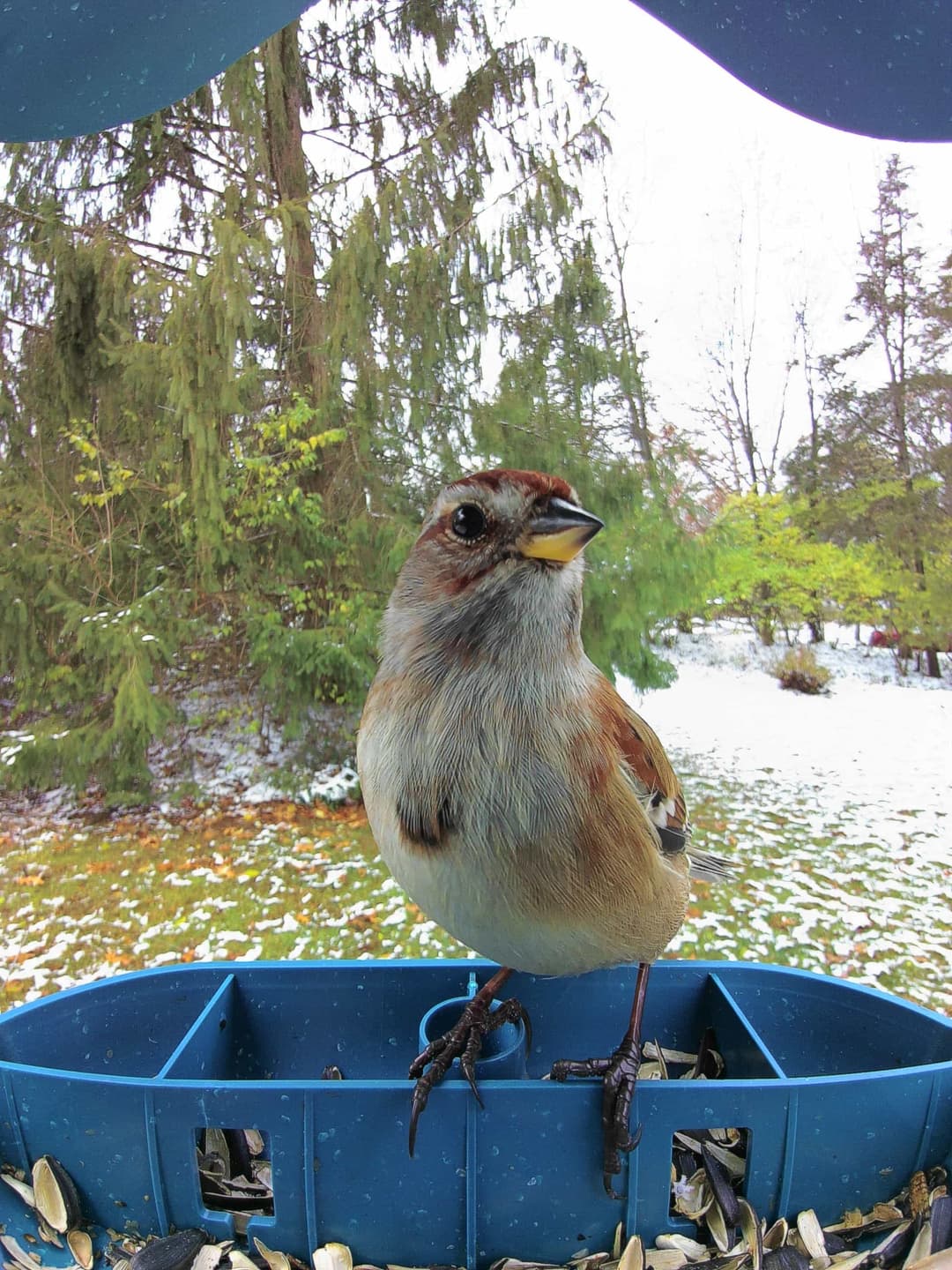
Chipping Sparrow vs American Tree Sparrow
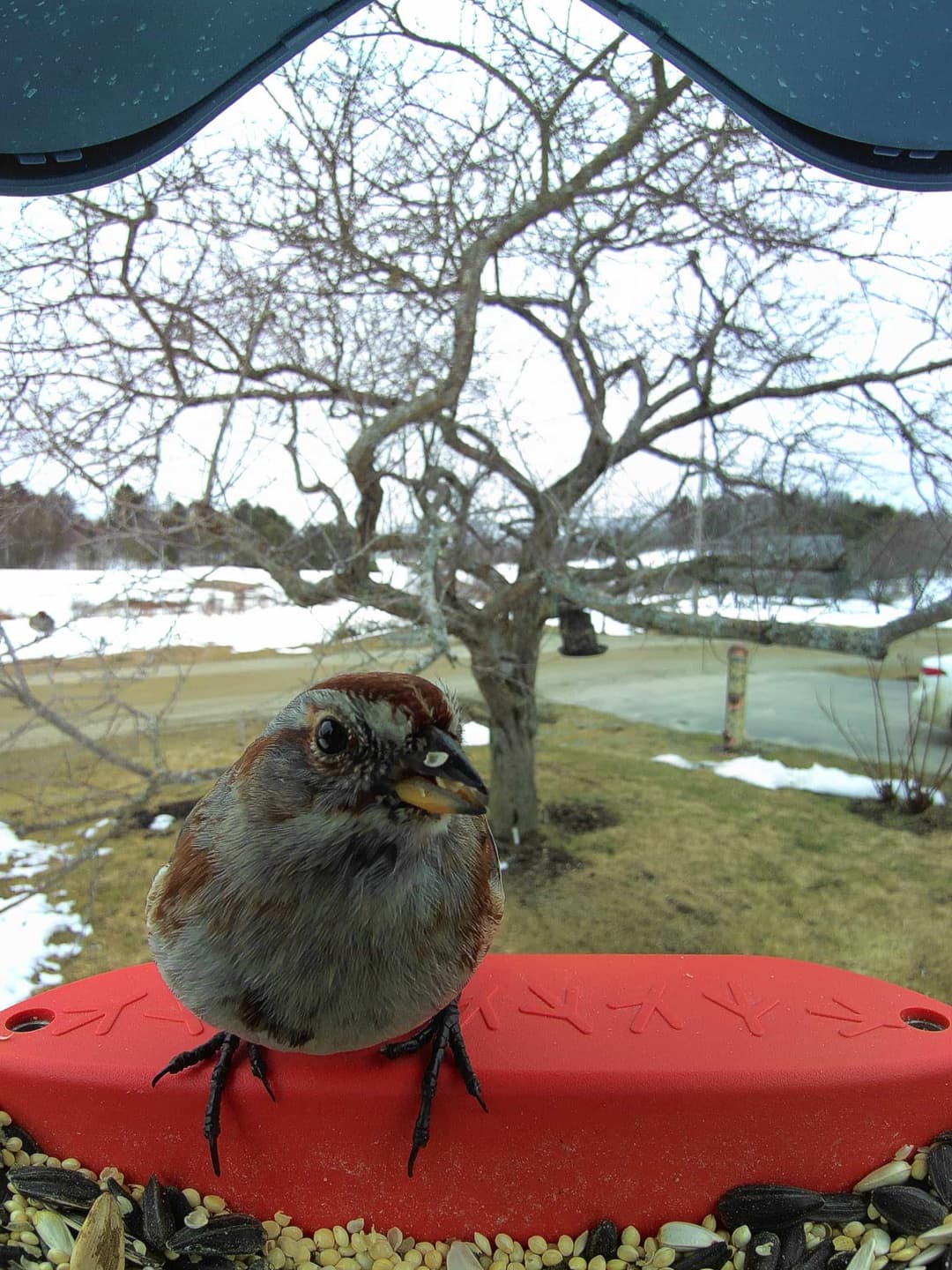
Field Sparrow vs American Tree Sparrow
Field Sparrow vs White-Crowned Sparrow

Chipping Sparrow vs [Select a bird]

[Select a bird]
Pick a bird to compare
Field Sparrow vs [Select a bird]
[Select a bird]
Pick a bird to compare