Tufted Titmouse or Black-Capped Chickadee?
Here's how to tell the difference

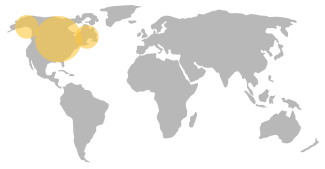
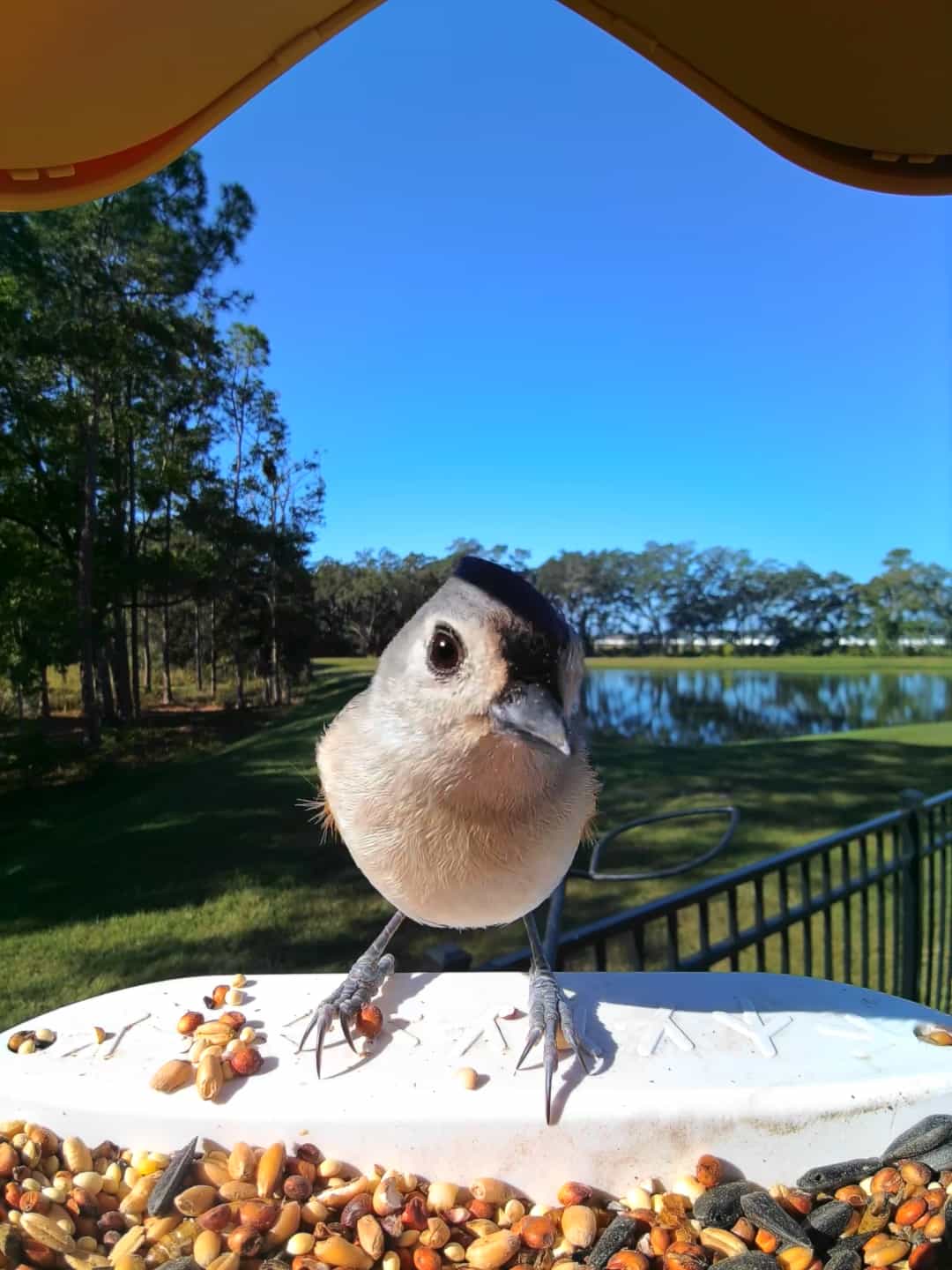


Tufted Titmouse
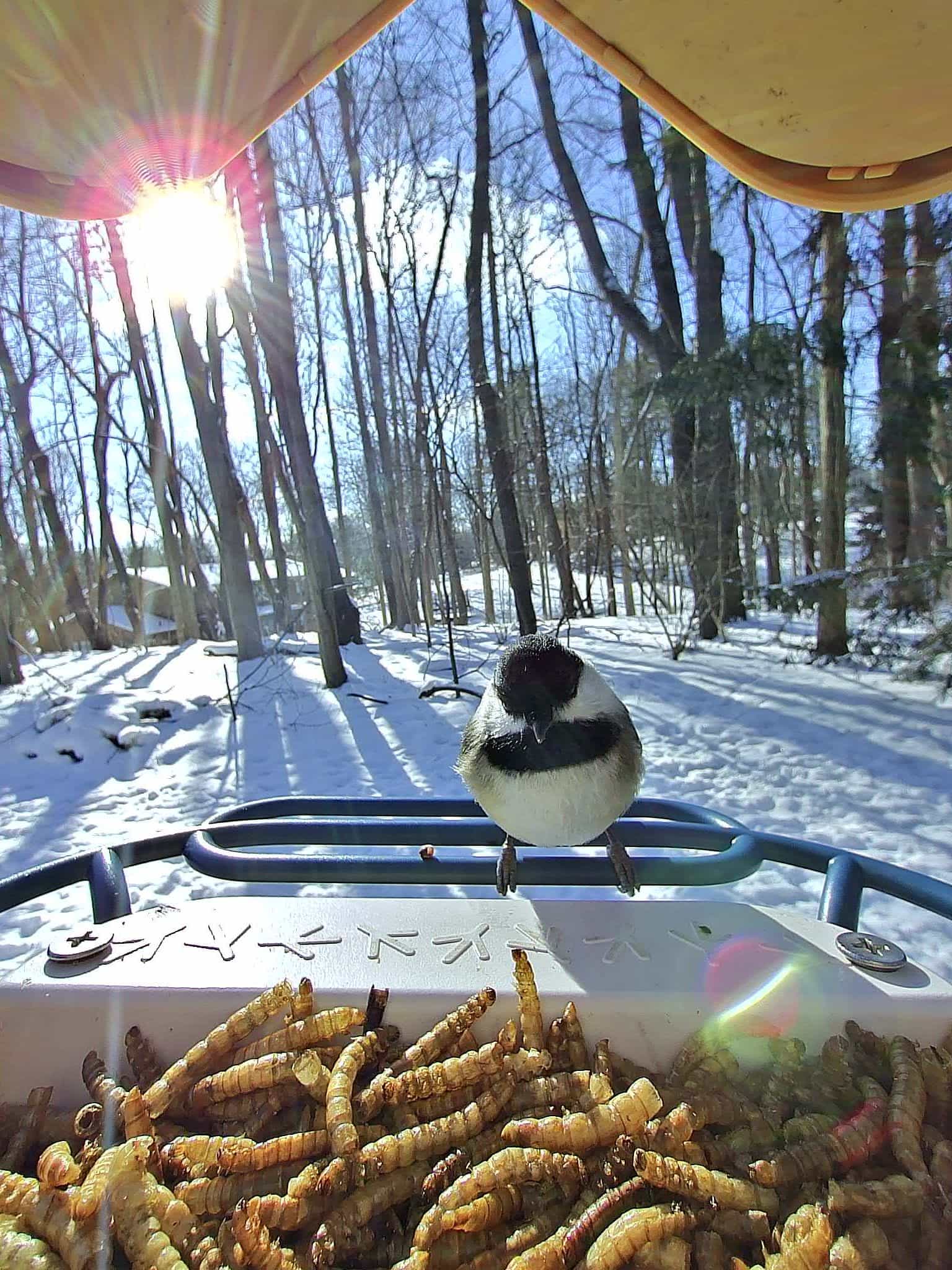


Black-Capped Chickadee
Tufted Titmouse
Baeolophus bicolor
General appearance
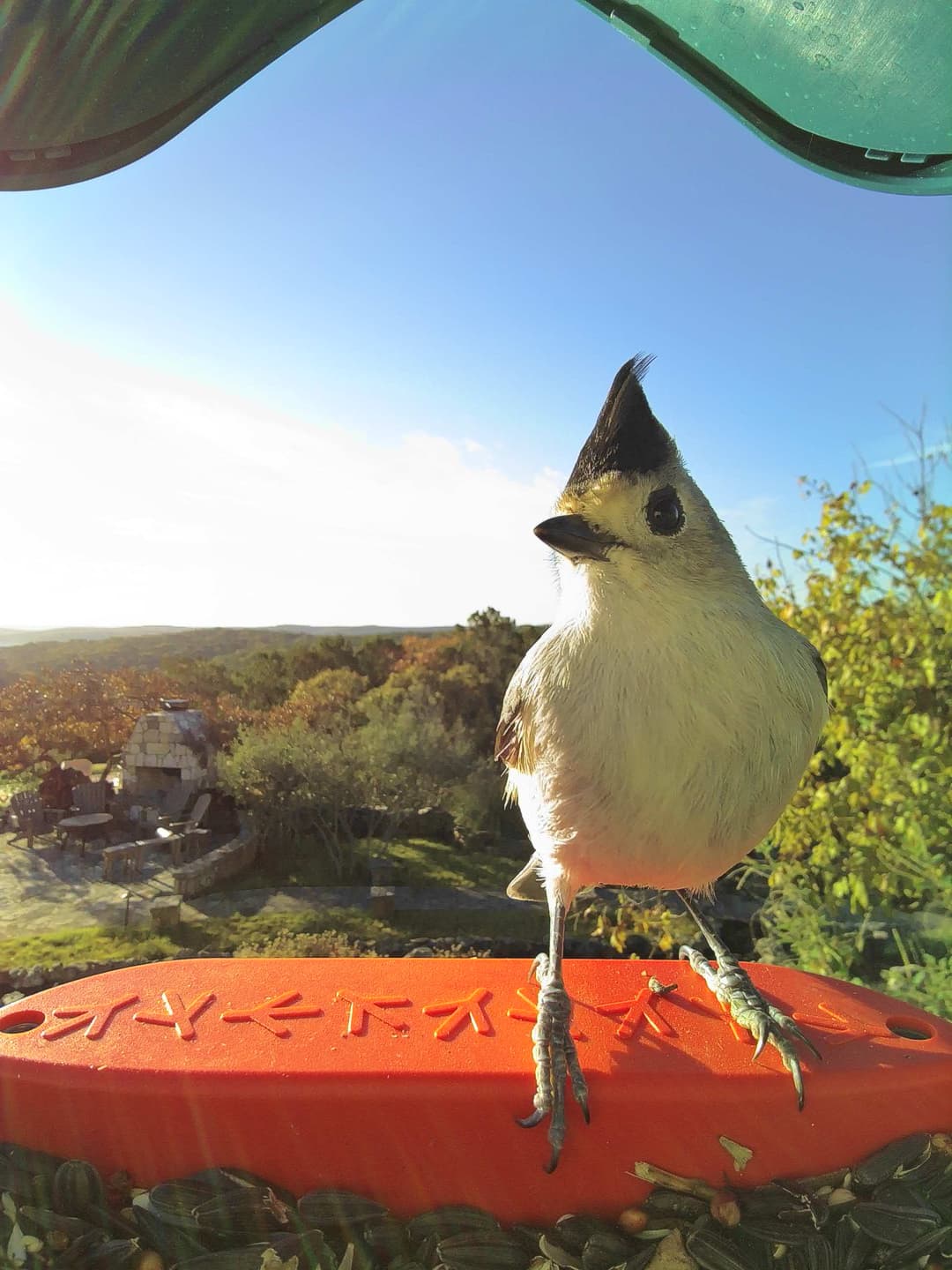
The tufted titmouse exhibits a general length of 6 inches or approximately 15 cm. It is predominantly recognizable by its gray and white coloration, complemented with black on the forehead. A distinguishing feature is its perky crest, along with a pale face and rusty sides. It is of similar size to a robin or a sparrow. In terms of shape, both its wings and tail are rounded, with the tail also being square-tipped.
Male vs female
There are no significant noticeable differences between the males and females in terms of coloration and physical traits. Both sexes of the tufted titmouse exhibit similar features including the characteristic crest, pale face, and black forehead. This makes it challenging to differentiate between the genders in the wild purely based on appearance.
Juvenile
Juvenile tufted titmice are generally similar to adults in appearance. However, their coloration might be slightly less vivid, and their foreheads may not be as boldly black. Over time, as they mature, these subtle variations gradually fade, making them resemble the adult birds more closely. It's important to note that these differences may not be very conspicuous and require close observation to spot.
Size
5.5 - 6.3 in/0.6 - 0.9 oz
There's more to learn about Tufted Titmouse
View full detailsBlack-Capped Chickadee
Poecile atricapillus
General appearance
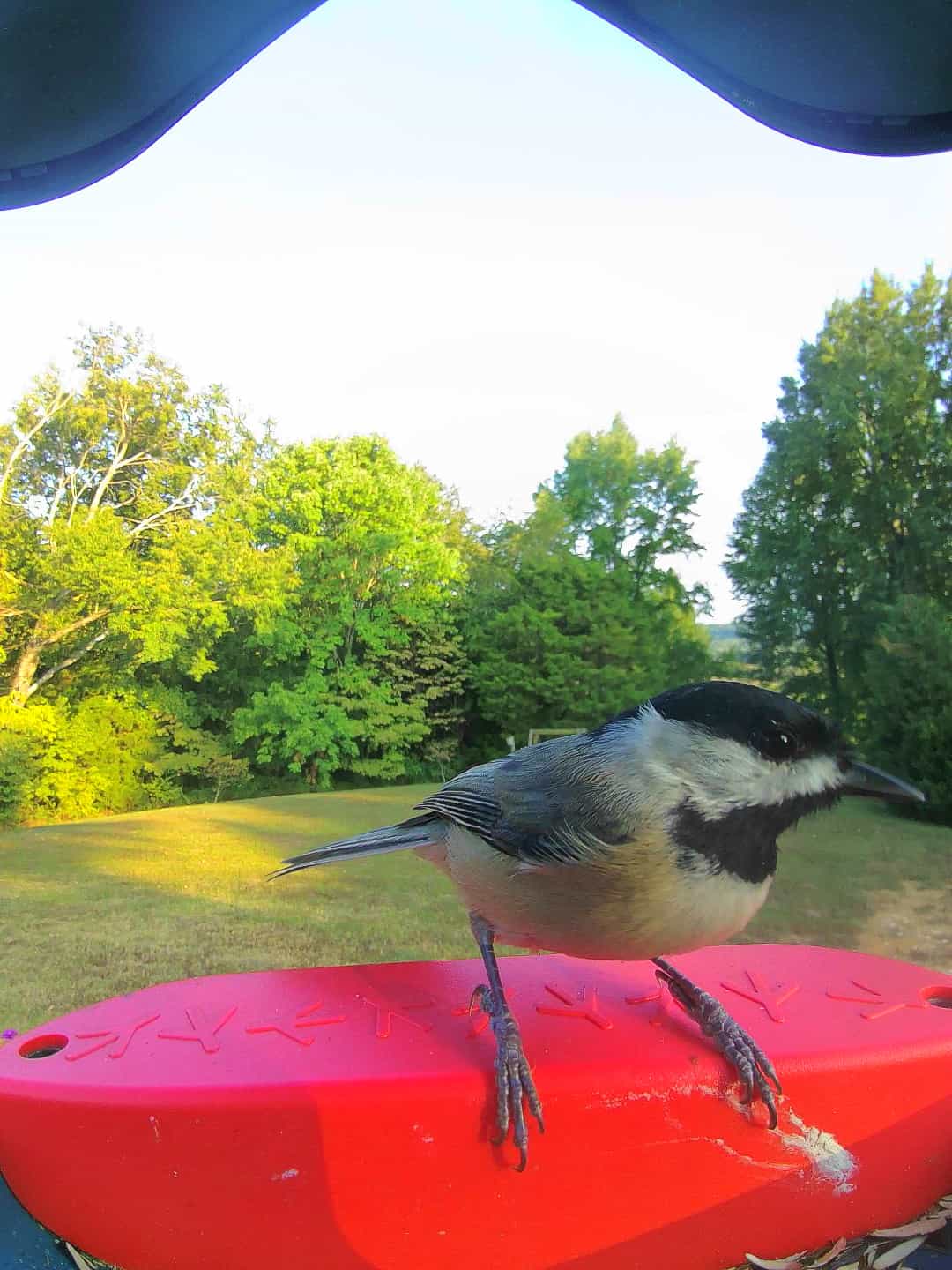
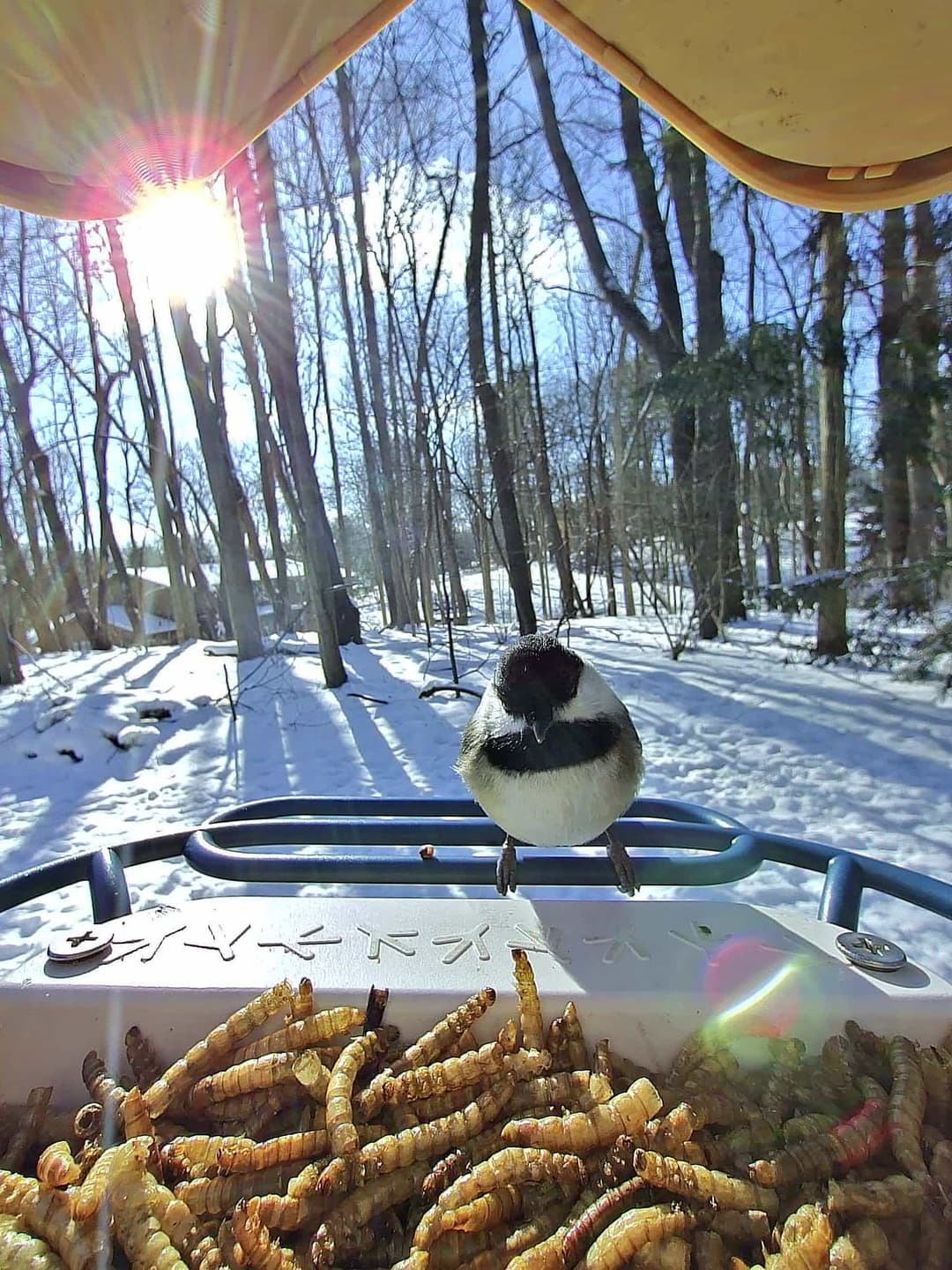
The black-capped chickadee is a small, plump bird with a distinctive black cap and bib, contrasting sharply with its white cheeks. Its back is soft gray, and it has subtle, buffy flanks. Its bill is short and pointed, and its wings and tail have white edges. The bird exhibits an acrobatic flight, often flitting around trees and feeders.
Male vs female
Males and females are visually similar, making it challenging to differentiate based on appearance. Both share the same black cap, bib, and white cheek pattern. However, males may appear slightly larger and have a more vibrant coloration, specifically noted during mating displays, though generally, such differences are subtle.
Juvenile
Juvenile black-capped chickadees resemble adults but with duller plumage. The black cap and bib are less pronounced, and their flanks may appear a lighter shade. As they mature, juveniles attain the crisp black and white patterning typical of adults. In juveniles, the bill base remains slightly flesh-colored before turning fully black.
Size
4.7 - 5.9 in/0.4 - 0.5 oz
There's more to learn about Black-Capped Chickadee
View full detailsHow to tell the Tufted Titmouse from the Black-Capped Chickadee
Visual differences
The Tufted Titmouse, measuring about 6 inches, is larger than the Black-Capped Chickadee, which is 4.7-5.9 inches. The Titmouse displays a gray and white body with a distinctive black forehead and a perky crest, while the Chickadee features a black cap and bib with white cheeks and buffy flanks. The Titmouse has rounded wings and a square-tipped tail, whereas the Chickadee's wings and tail are edged in white. Both have short, pointed beaks, but the Chickadee looks slightly plumper and more "masked" due to its black facial markings.
Key differences and behavior
Tufted Titmice and Black-Capped Chickadees exhibit distinct behaviors and habitats. Titmice, weighing 0.6-0.9 oz, are larger than Chickadees, who weigh 0.35-0.5 oz. Titmice prefer deciduous forests but also frequent human-made environments like parks, whereas Chickadees favor mixed woods and avoid pure coniferous forests. Both feed on insects, seeds, and berries, with Titmice consuming more insects annually. While Tufted Titmice hold seeds with their feet, Chickadees exhibit a hierarchical social structure and acrobatic flight. Both species are monogamous, with Titmouse males feeding females during incubation, while Chickadees share nesting duties. Both use cavities for nests, but Chickadees actively excavate.
Still not sure? Here are more lookalikes!
Tufted Titmouse vs Black-Crested Titmouse
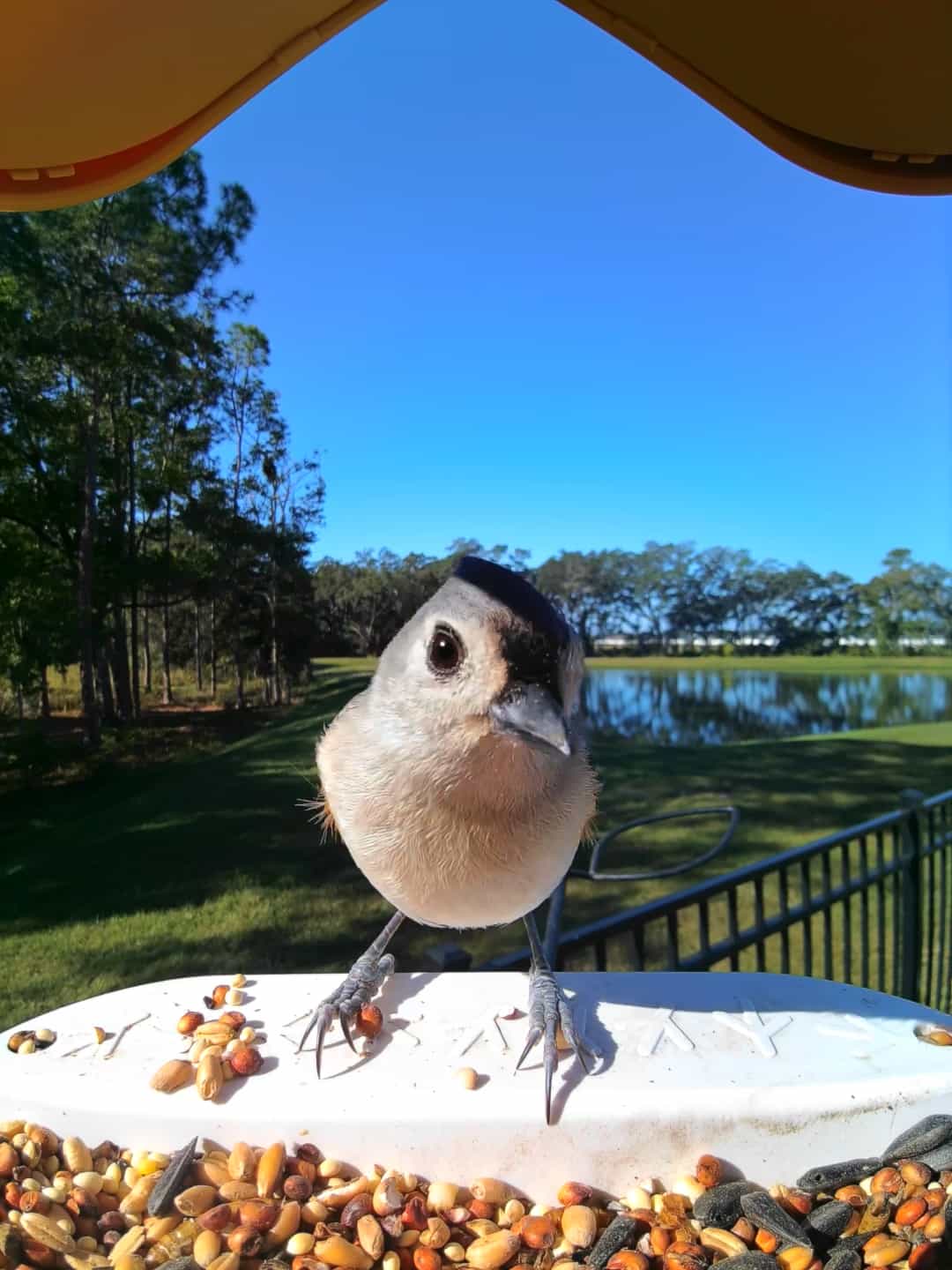
Tufted Titmouse vs Carolina Chickadee
Black-Capped Chickadee vs Carolina Chickadee
Black-Capped Chickadee vs Mountain Chickadee
Black-Capped Chickadee vs Boreal Chickadee
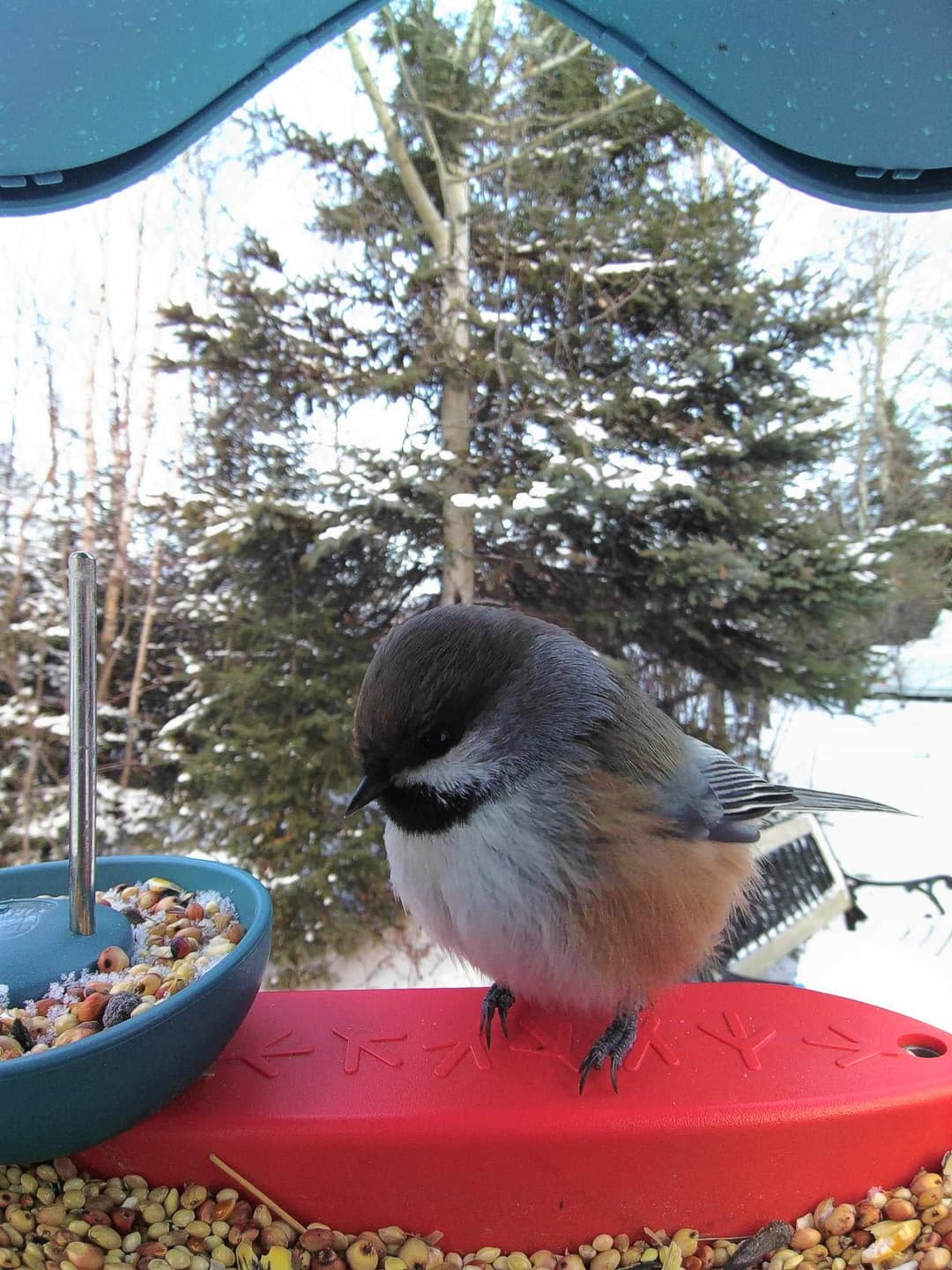
Black-Capped Chickadee vs Chestnut-Backed Chickadee
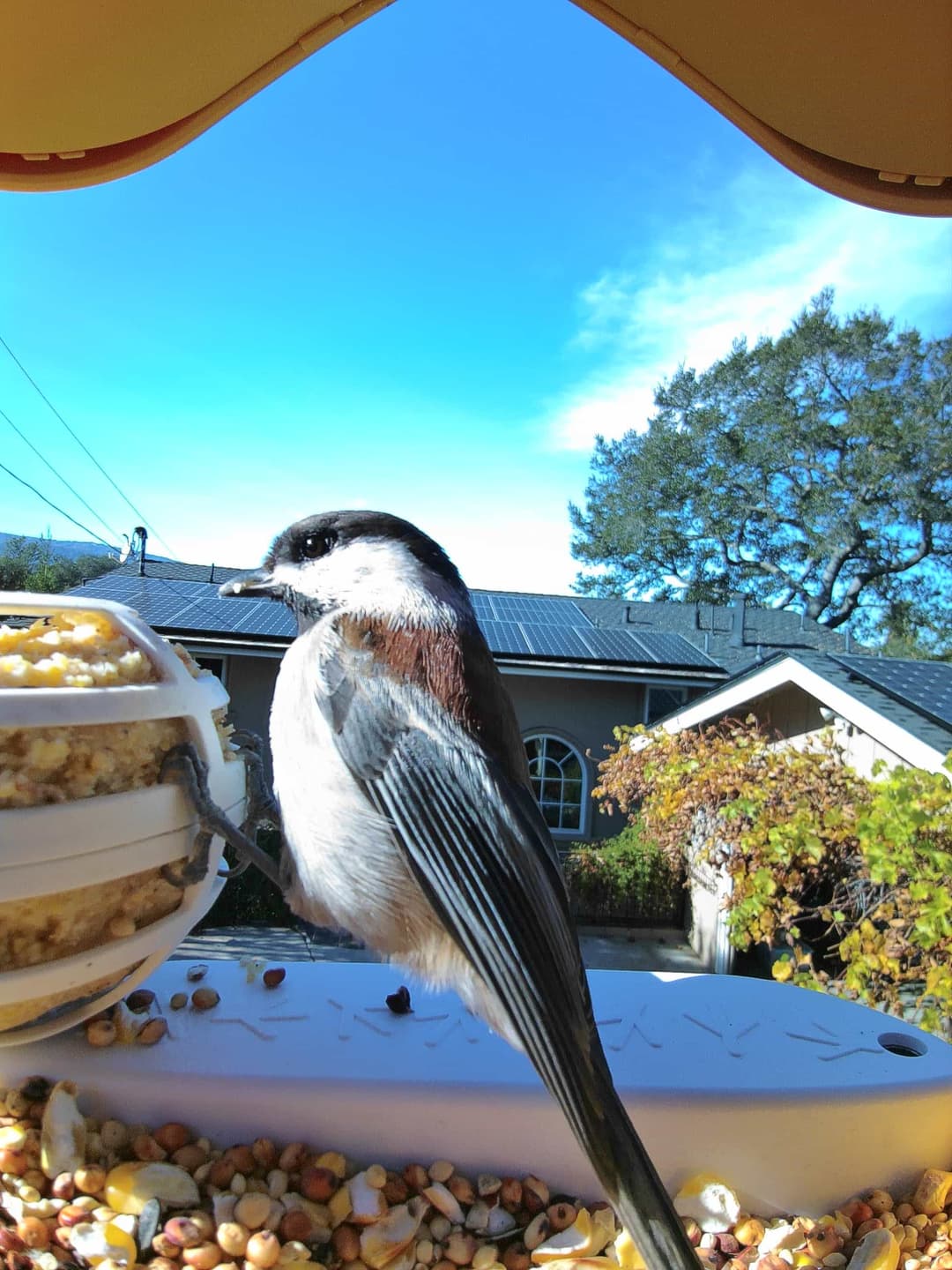
Black-Capped Chickadee vs White-Breasted Nuthatch
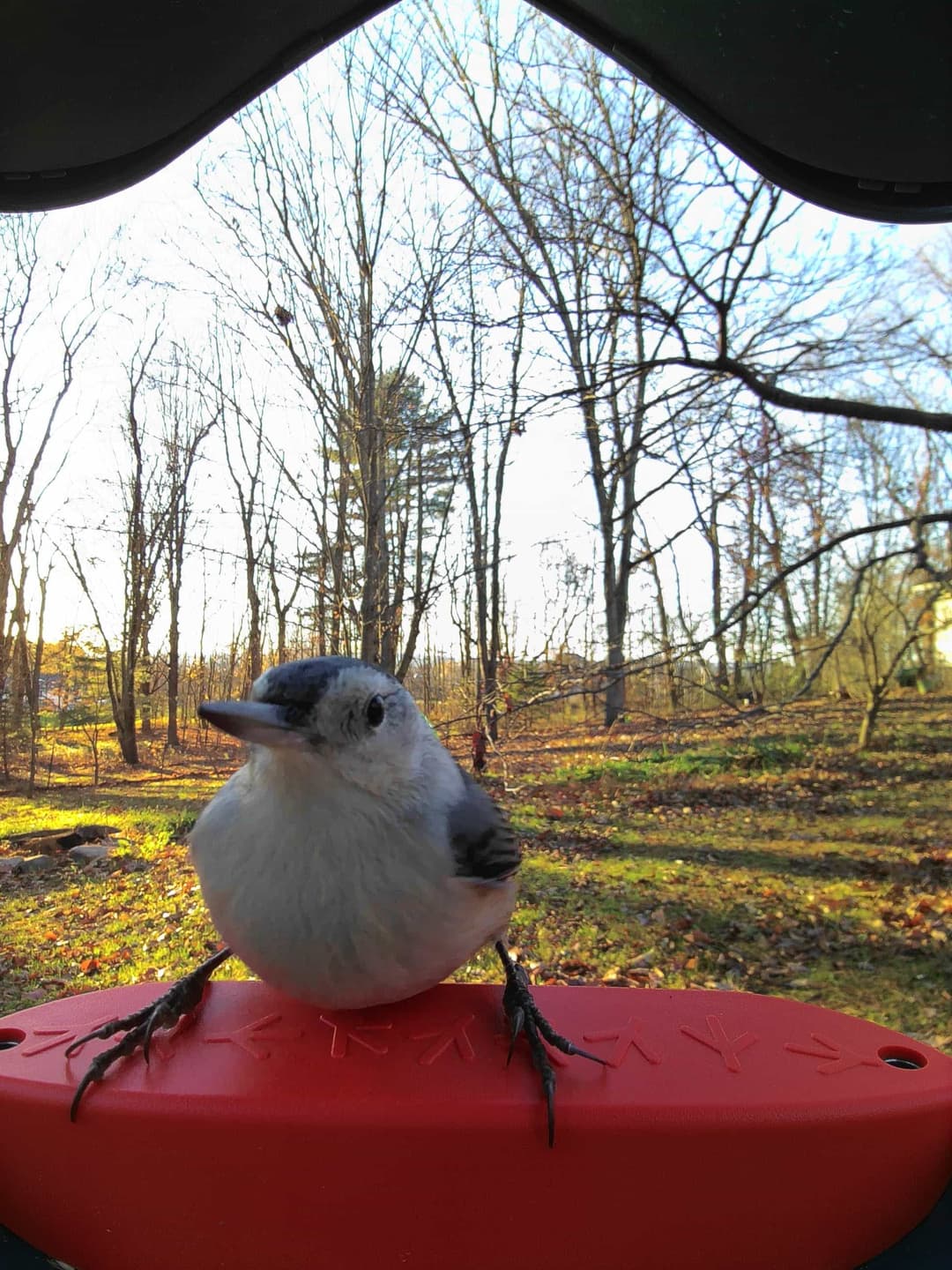
Tufted Titmouse vs [Select a bird]

[Select a bird]
Pick a bird to compare
Black-Capped Chickadee vs [Select a bird]
[Select a bird]
Pick a bird to compare