
Black-Crested Titmouse
Black-Crested Titmouse
Also known as: Mexican Titmouse
Baeolophus atricristatus


Quick Identification guide
Quick Identification guide
Male
- •
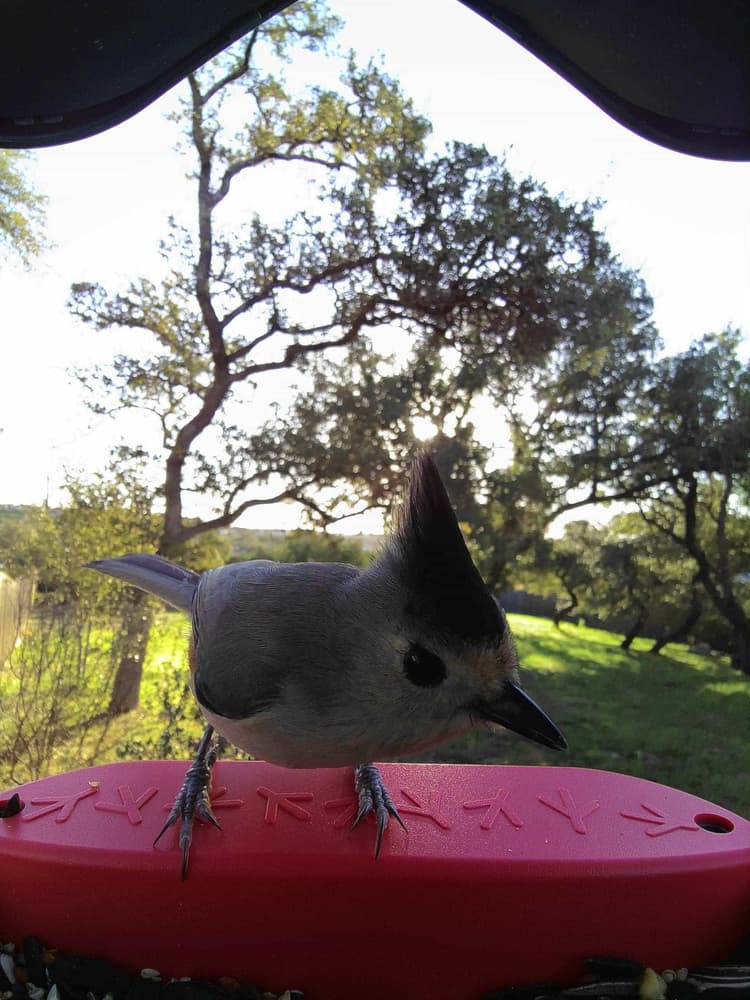
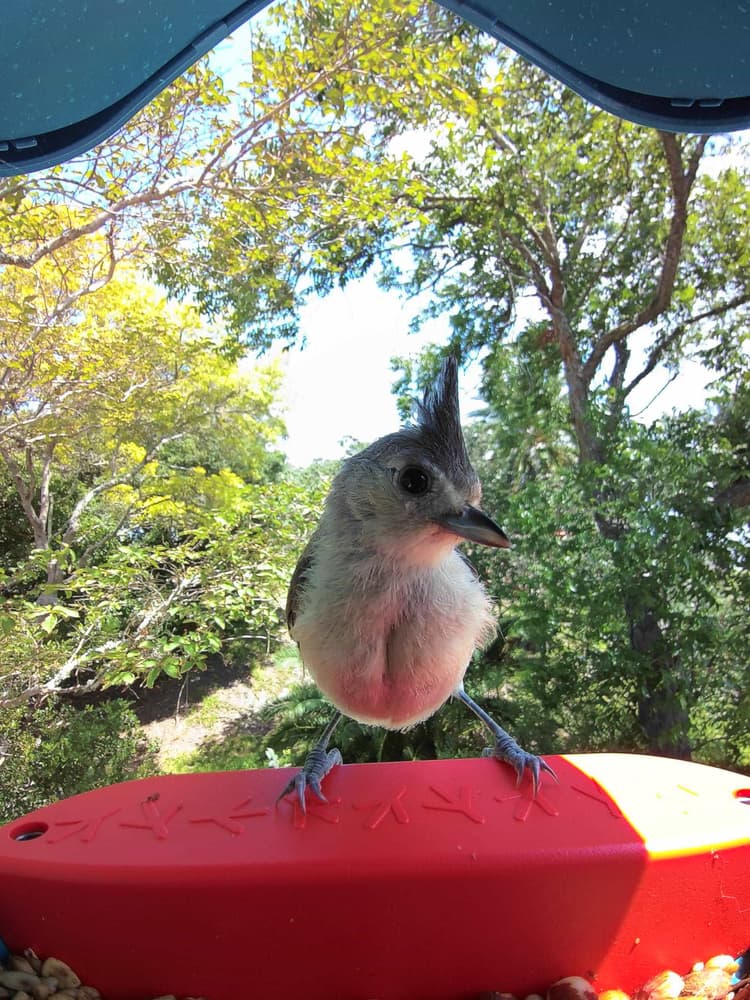
gray overall coloration with a distinctive black crest
- •
A small, sturdy body and a short, stout bill
- •
white face contrasted by the black forecrown and crest
Female
- •
gray plumage similar to the male but with a less pronounced black crest
- •
Shares the same short, stout bill
- •
dull facial pattern compared to the male
What does a black-crested titmouse sound like?
The black-crested titmouse's vocalization closely resembles the song of the Tufted Titmouse, often repeating the phrase 'peter-peter-peter'. However, it more commonly sings a one-noted song compared to the Tufted Titmouse. The call patterns of the black-crested titmouse typically decrease in pitch, with its call types being described as a buzz, chirp, chip, or whistle.


Description
Sounds like that black-crested titmouse is leaving... Or is it? When there's a predator nearby, these birds let out an alarm call that starts off loud and then fades away. They're pretty resourceful birds! When liquid water is not available, they have also been known to drink snow. Did you know that their crests are actually dark grey?
The black-crested titmouse can weigh between 15.2to18.4grams and be from14to15centimeters tall.
The black-crested titmouse typically lives up to 2.1 years. However, in some circumstances, individuals have been known to live up to 13 years in the wild. It is a small songbird related to the tufted titmouse, which has a similar average lifespan of 2.1 years and a maximum recorded lifespan of 13 years as well.
Did you know?
Most popular questions about black-crested titmouse
How to recognise a black-crested titmouse?
General appearance
The black-crested titmouse is a small bird sized approximately 6 inches or 15 cm, similar to a sparrow or a robin. It exhibits a mostly gray and white coloration adorned with a distinct white forehead and a black crest. Subtle orange tinge can be seen on its flanks. Its wings and tail are characterized by a rounded and square-tipped shape.
Male vs female
There is little sexual dimorphism in the black-crested titmouse, signifying both males and females have similar appearances. They both display the iconic black crest suggesting that it might not be a sexually selected feature. However, sometimes, when their range meets that of Tufted Titmouse, they interbreed, and the resultant offspring may exhibit intermediate markings.
Juvenile
Juvenile black-crested titmice resemble the adult birds in terms of size and coloration but may lack the distinctive black crest, may have less vivid coloring, or exhibit some other slight deviations in markings. Details on the precise differences between juvenile and adult titmice often vary, as aspects of plumage can change with age and also vary seasonally.
Often mistaken for
Bridled Titmouse vs Black-Crested Titmouse
The Black-Crested Titmouse has a distinctive black crest, which the Bridled Titmouse lacks, instead having a black and white facial pattern. The Black-Crested Titmouse is mostly found in central and southern Texas, while Bridled Titmice are located in the southwestern United States. Pay attention to the sleek black crest and the absence of a facial pattern on the Black-Crested.

Tufted Titmouse vs Black-Crested Titmouse
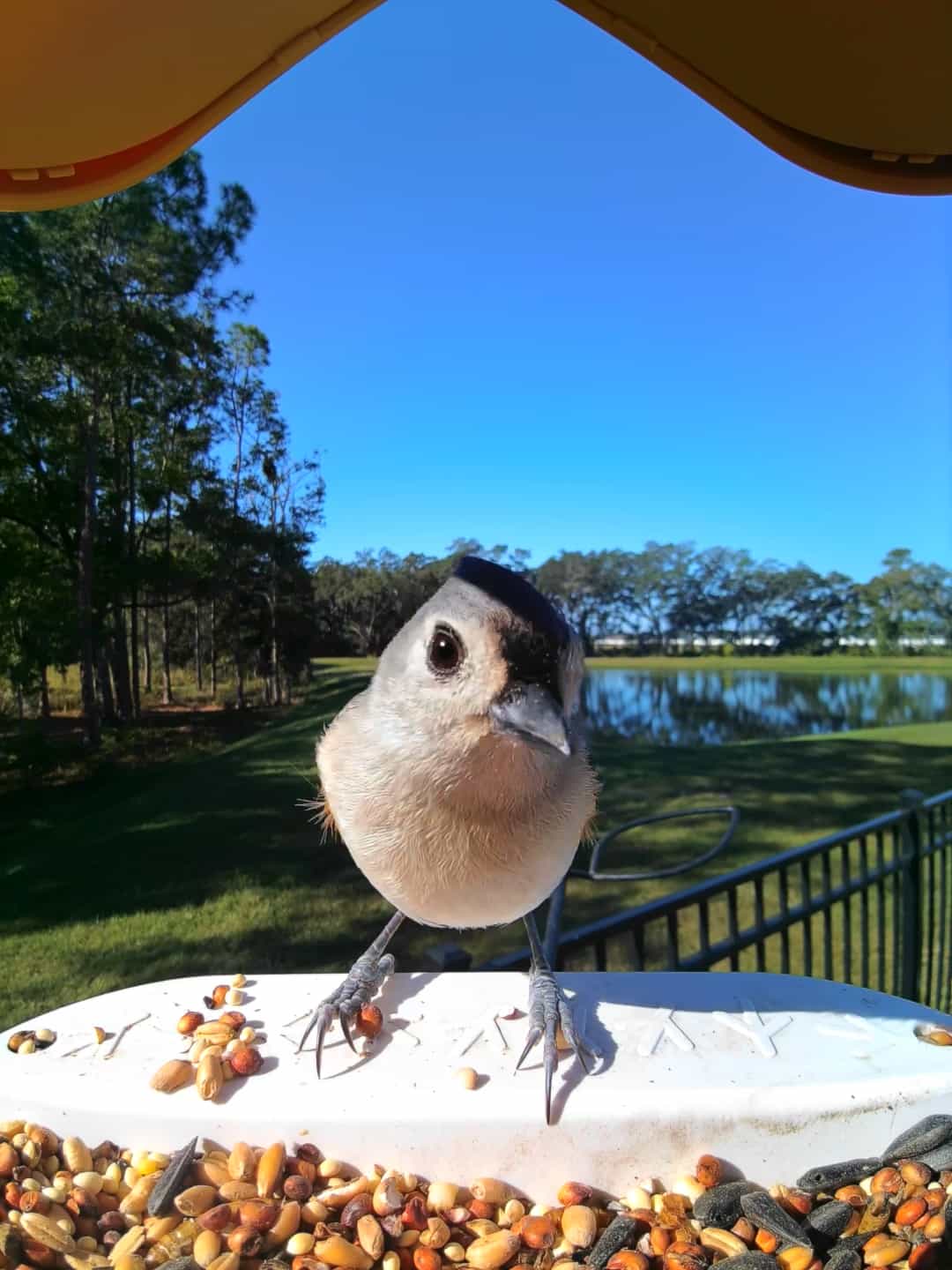
The Black-Crested Titmouse sports a striking black crest contrast, whereas the Tufted Titmouse has a gray crest. The Black-Crested often shows a pale forehead patch, missing in the Tufted. Spot the Black-Crested primarily in Texas habitats. Note their geographic range—Black-Crested are mainly Texan; Tufted span Eastern and Southeastern U.S.
Breeding and nesting habits of the black-crested titmouse
Mating behaviors
The black-crested titmouse typically remains with its mate throughout the year. They join mixed flocks in winter, which disband in late winter as pairs establish nesting territories.
Nesting details
They prefer nesting in tree holes, utilizing natural cavities or old woodpecker holes, generally 3 to 20 feet above ground. They will also use nest boxes. Nests are primarily constructed by the female using a base of grass, moss, leaves, and bark strips, lined with soft materials like animal hair.
Eggs and chick-rearing
After constructing the nest, the female lays eggs, which she incubates until they hatch. Both parents participate in feeding and caring for the chicks until they can fend for themselves. In garden settings, providing nest boxes can support this behavior, ensuring suitable nesting sites and a safe breeding environment.
What does a black-crested titmouse like to eat?
Fruits
Insects
Nuts
Seeds
Snails
Spiders
Suet
Natural diet
The black-crested titmouse primarily consumes insects and seeds. Its diet mainly consists of insects, with caterpillars being especially important in the summer. It also eats a wide variety of other insects such as wasps, bees, beetles, true bugs, as well as many insect eggs and pupae. In addition, it consumes spiders and snails. During winter, seeds, nuts, berries, and small fruits become a significant part of its diet.
Bird feeders
The black-crested titmouse is often attracted to bird feeders, where it commonly feeds on sunflower seeds, suet, peanuts, and other nuts. It may also take dried fruits offered at feeders.
Invite black-crested titmice with selected feeder types
Black-crested Titmice love to peck at tube feeders or hop on tray feeders. Choose a feeder with large enough holes to accommodate sunflower seeds but small enough to keep out larger birds. Hang your feeders near a tree or a bush to give these birds a safe place to fly back and forth.
Titmice's favorite snacks to attract them to your yard
Black-crested Titmice adore a wide variety of seeds, but their absolute favorites are sunflower seeds. They are also particularly fond of suet, peanuts and mealworms. For the best results, try Bird Buddy seeds - they are chosen by experts for the season and are sure to be a hit with these delightful little birds.
Fun tricks to keep titmice around longer
Birdsong CDs or apps can lure Black-crested Titmice into your yard for longer periods. Also, these birds appreciate nesting boxes. If you supply a box with the proper dimensions, you could have a family of Titmice visiting your yard regularly! And don't forget clean birdbaths – they love to bathe and preen their feathers.
Where can you find black-crested titmouses?

Primary habitat
The black-crested titmouse is commonly found in brushlands, woods, and riverside groves. It especially prefers taller trees along rivers.
Additional range
This bird appears widely across South Texas brush country, and can also be found in well-wooded suburbs and parks within its range.
Do they migrate?
The black-crested titmouse is a permanent resident, meaning it stays in the same place throughout the year and does not migrate. This bird, primarily found in areas such as Texas, Oklahoma, and northeastern Mexico, typically inhabits woodlands, parks, and gardens. As a non-migratory species, the black-crested titmouse remains in its chosen habitat year-round, utilizing local resources for survival and reproduction. Since it does not engage in migratory behaviors, there are no specific migration routes, timings, or key locations associated with the species. Instead, the black-crested titmouse tends to stick to its local territory, adapting to seasonal changes by adjusting its diet and activity patterns accordingly. By remaining in a consistent environment, these birds can become highly familiar with the area, which aids in foraging, predator avoidance, and nesting. Overall, the black-crested titmouse demonstrates the characteristics of a species well-suited to stable local environments where resources are reliable throughout the year.
What is the role of black-crested titmouses in nature and how to protect them?
Conservation status
The black-crested titmouse is common in its U.S. range, with its population numbers appearing stable. It is not considered vulnerable or endangered. Key conservation efforts are generally not required for this species due to its stable population. Significant threats are minimal, although habitat loss could become an issue if deforestation or urban expansion increases. Continued monitoring of its habitat is essential to ensure the population remains stable and common across its range.
Ecological role of black-crested titmouses
Its role in the ecosystem
The black-crested titmouse plays a key role in the ecosystem by helping to control insect and pest populations. Its diet primarily consists of insects such as wasps, bees, beetles, bugs, and caterpillars, acting as a natural form of pest management and thus promoting plant health and biodiversity. The bird also feeds on seeds, nuts, berries, and small fruits, especially during winter. In the process of feeding, the titmouse aids in seed dispersal, contributing to plant propagation and the distribution of plant species across the landscape. Additionally, it uses holes in trees or old woodpecker holes for nesting, sometimes even occupying nest boxes. This suggests that the black-crested titmouse has a role in maintaining the health of tree communities, possibly benefiting other species that also exhibit cavity-nesting behaviors. Therefore, the black-crested titmouse contributes significantly to ecosystem health and balance by participating in pest control, seed dispersal, and potentially impacting other species' habitats.
How to help protect black-crested titmouses
Preservation tips
Preserving habitats
To support the conservation of the Black-crested Titmouse, preserve and restore their natural habitats- the deciduous and mixed woodlands. Avoid activities that result in deforestation. Limb trimming or total removal of old trees should be minimized as they serve as nesting sites. Also, maintain a diverse understory of shrubs for foraging.
Community science initiatives
Engage in community science initiatives such as bird counts and habitat assessments that monitor the population and health of the species. Educate the community about the importance of the Black-crested Titmouse and their role in the ecosystem. Initiate tree-planting programs and support legislations that protect the bird's habitats.