
Mountain Chickadee
Mountain Chickadee
Poecile gambeli


Quick Identification guide
Quick Identification guide
- •
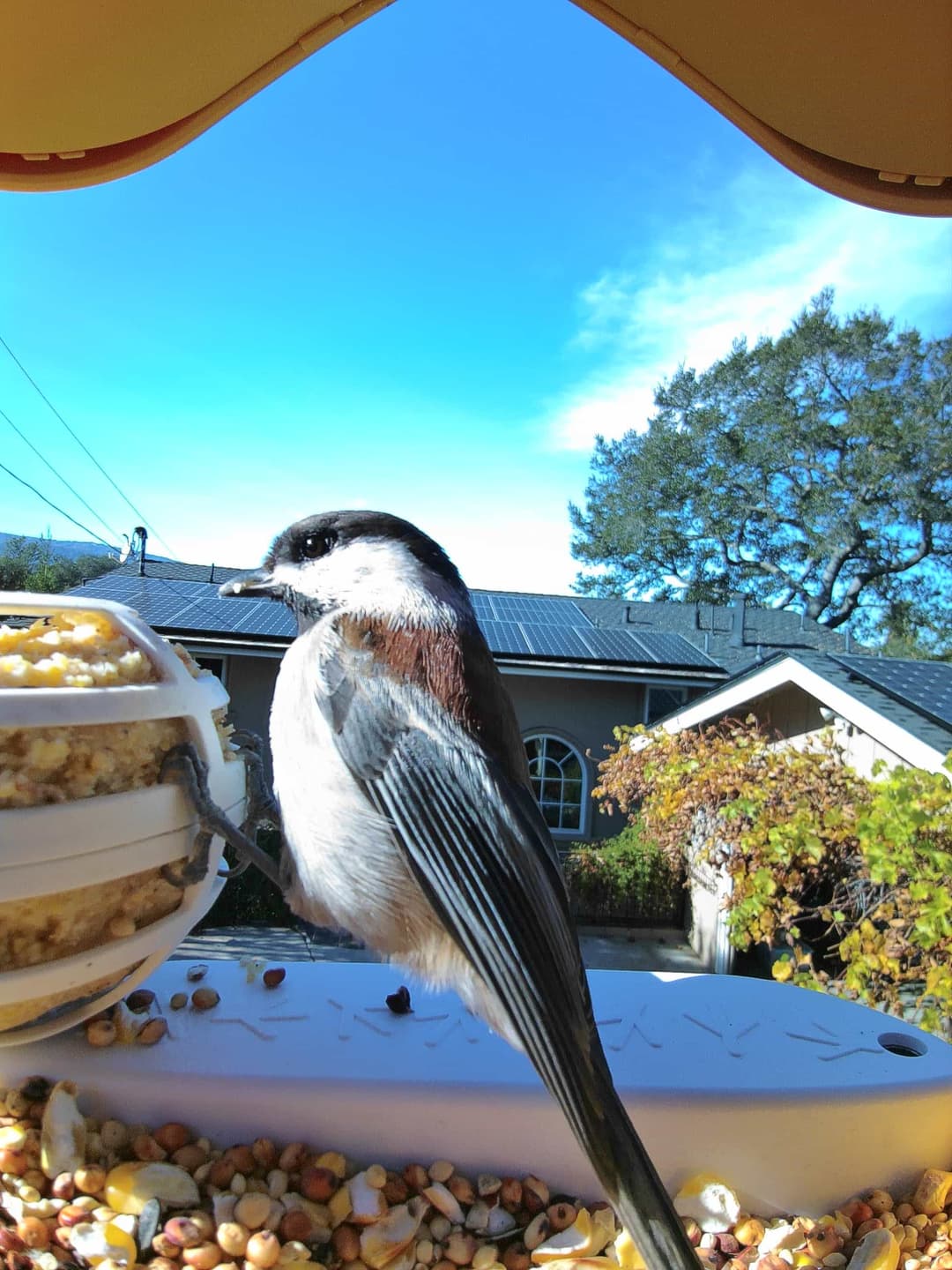
Features a black cap and throat contrasting with its white face, providing a distinctive facial pattern
- •
Displays gray upperparts and lighter gray underparts, creating a subtle two-toned appearance
- •
Possesses a small, sturdy straight beak suited for its feeding habits
What does a mountain chickadee sound like?
The mountain chickadee communicates through various vocalizations including a hoarse chick-a-zee-zee, zee that exudes a spring-time feel similar to the Black-capped Chickadee's melody. It also produces a distinctive 3-noted call pattern: fee-bee-bee, with the bevocalizations sounding at a lower pitch. Its calls encompass a unique blend of falling, flat sounds that can be categorized into buzzes, chirps or chips, trills, and whistles.


Description
Did you know that a 14-gramme mountain chickadee needs to ingest 10 calories a day to survive? That's about as much as 1.5 grammes of peanut butter. These little birds are quite the athletes, hanging upside down from branches to pluck their lunch out of the tree. They shell seeds by holding them with their feet and breaking them apart with their beak.
The mountain chickadee can weigh between 9to14grams and be from12to15centimeters tall.
The typical lifespan of a Mountain Chickadee is around 8 years. This is similar to that of its close relative, the Black-Capped Chickadee, which usually lives for about 10-11 years. Comparatively, the Carolina Chickadee has a shorter average lifespan of around 3-5 years. It's noteworthy that these lifespans represent examples in ideal conditions and actual lifespans may vary significantly due to factors such as predation and habitat loss.
Did you know?
Most popular questions about mountain chickadee
How to recognise a mountain chickadee?
General appearance
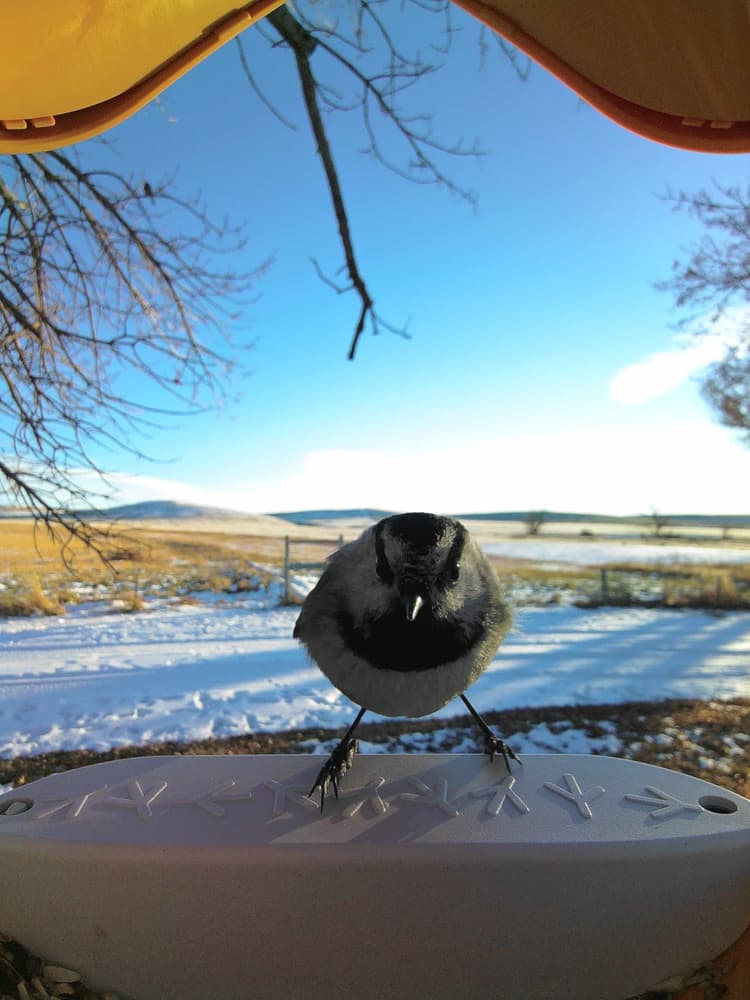
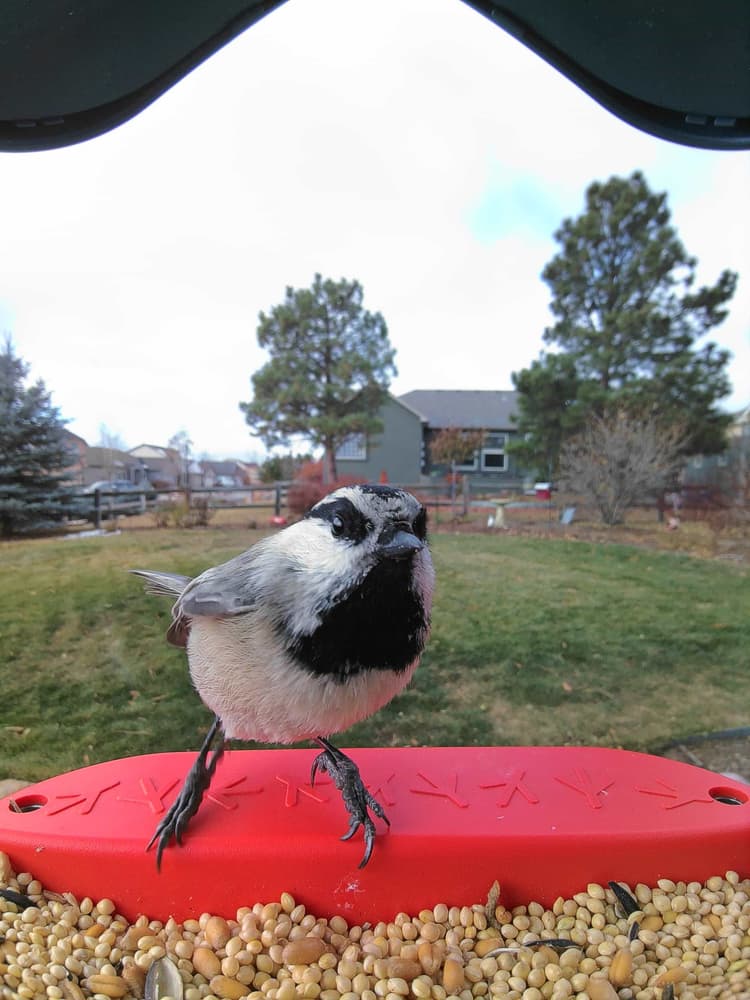
The mountain chickadee is approximately 5-5 3/4 inches (13-15 cm) long, roughly the size of a sparrow. Its characteristic features include a black cap and bib. A distinctive white eyebrow, which may be broad or narrow, breaks the black cap. Their wings are rounded while the tail shape varies from notched to rounded or square-tipped. They sport the colors of nature: black, gray, and white.
Male vs female
Males and females of the mountain chickadee species are identical in their physical appearance and there are no significant size or color variations between the two. They both sport the same black cap, whites eyebrow, and gray body coloration.
Juvenile
Young mountain chickadees resemble adults, but their plumages may be less vibrant and the distinct white eyebrow may be difficult to make out. Depending on the season, the plumage of all mountain chickadees, including juveniles, may be in worn condition, making the white eyebrow particularly difficult to see.
Often mistaken for
Black-Capped Chickadee vs Mountain Chickadee
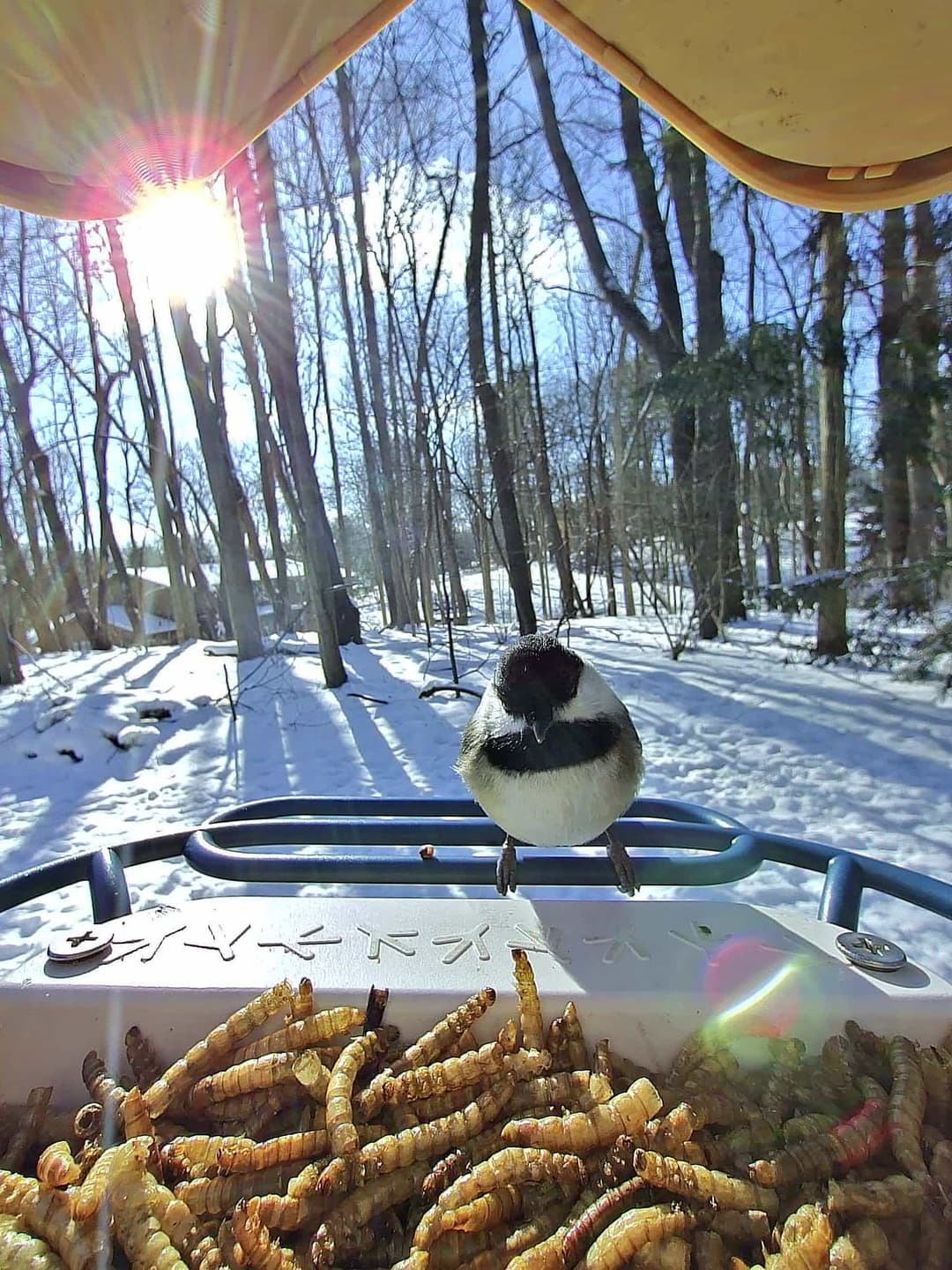
The Mountain Chickadee has a distinctive white eyebrow that the Black-Capped lacks. Also, Mountain Chickadees are usually found in higher elevations and drier climates.
Bridled Titmouse vs Mountain Chickadee
Mountain Chickadees have a more subtle coloration and lack the bold facial pattern of the Bridled Titmouse. Look for the Mountain’s white eyebrow as a key distinguishing feature.

Boreal Chickadee vs Mountain Chickadee
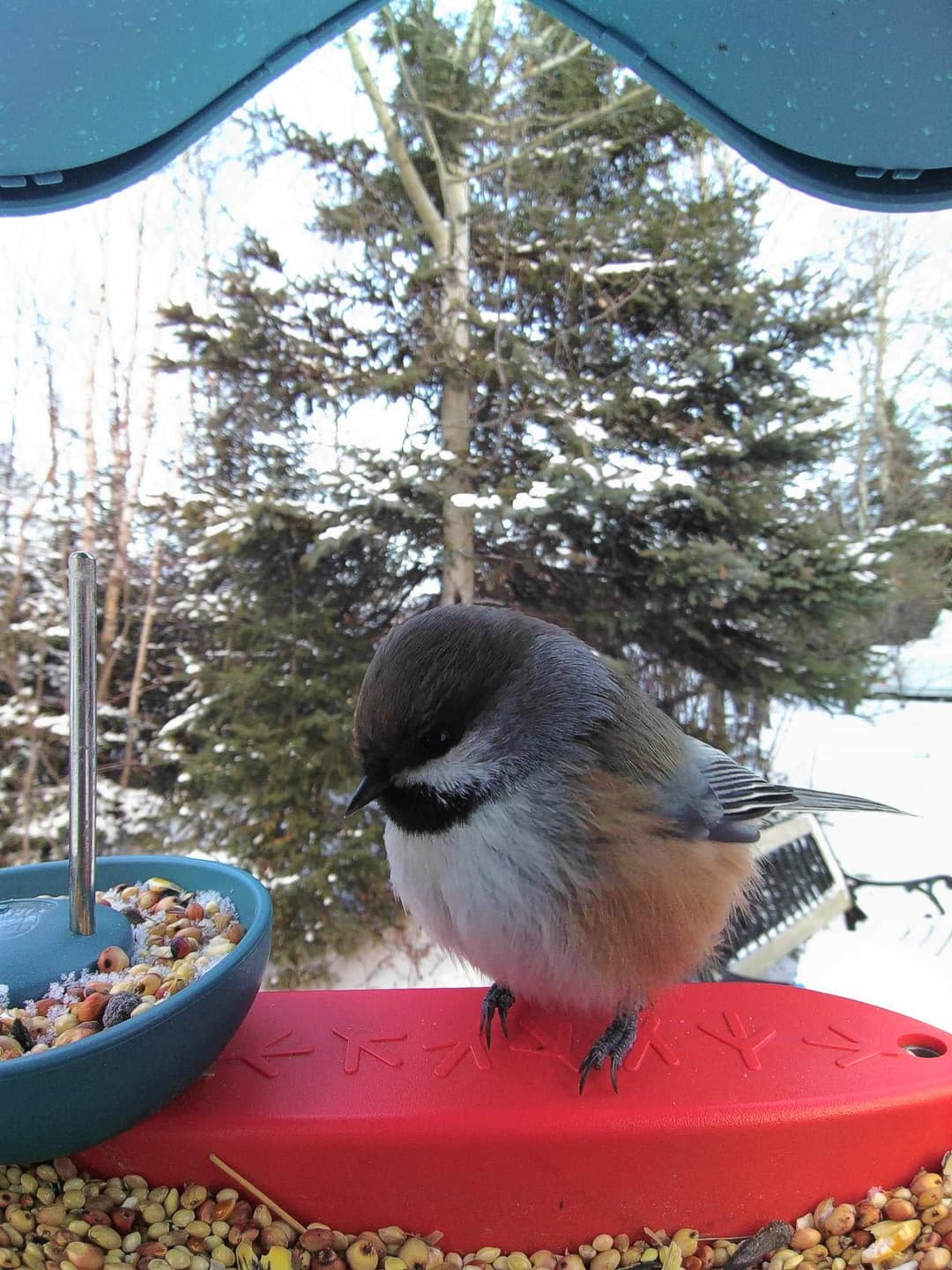
The Boreal Chickadee lacks the Mountain Chickadee’s white eyebrow and has a more brownish tone overall. Habitat can also be a guide, with Mountains preferring coniferous forests.
Chestnut-Backed Chickadee vs Mountain Chickadee
Chestnut-Backed has a rich chestnut coloration on its back, unlike the Mountain Chickadee. The Mountain’s white eyebrow is absent in the Chestnut-Backed.
Carolina Chickadee vs Mountain Chickadee
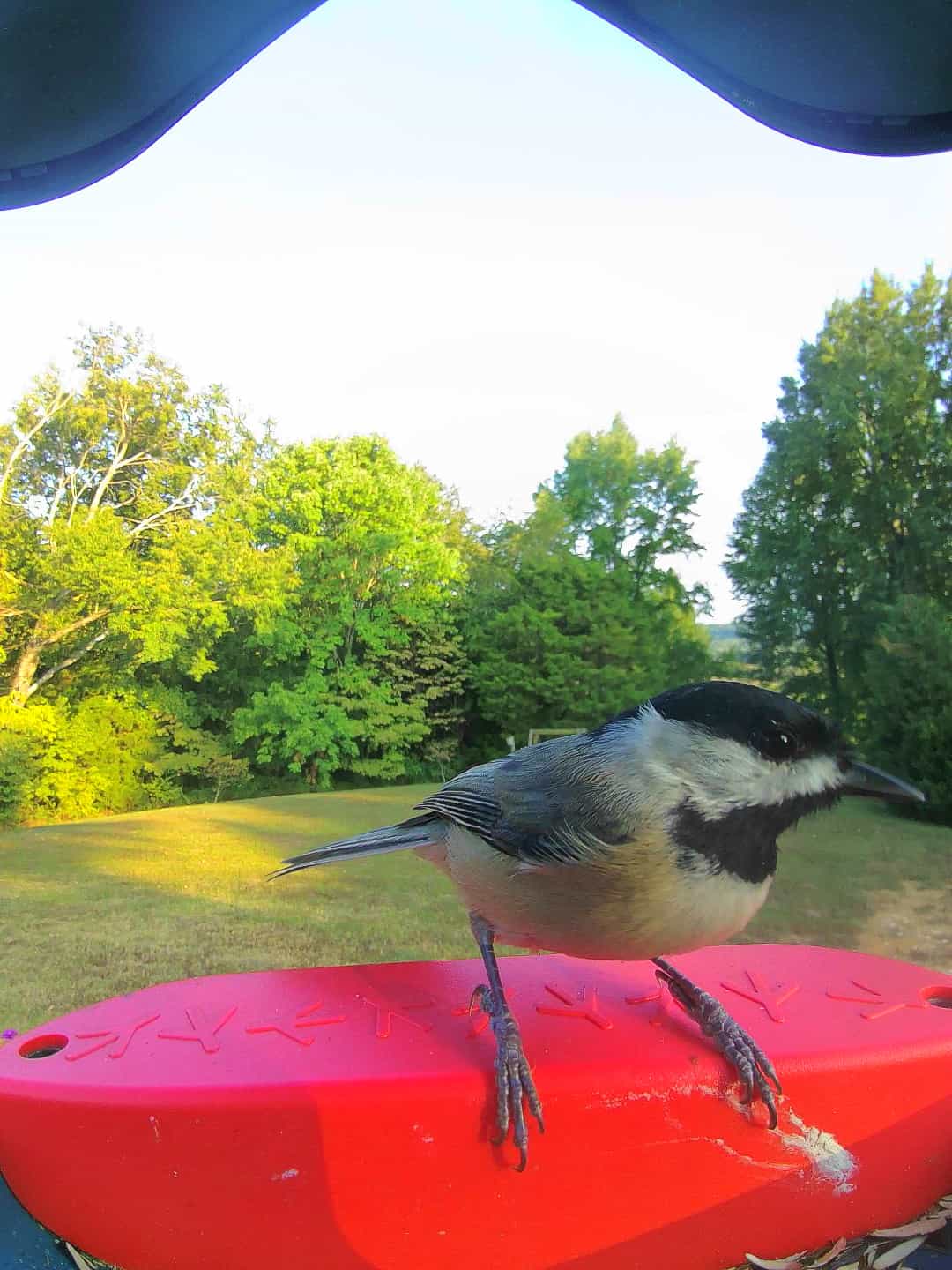
Carolina Chickadee lacks the Mountain’s prominent white eyebrow stripe and typically dwells in warmer southeastern regions compared to Mountain Chickadee’s western habitat.
Breeding and nesting habits of the mountain chickadee
Mating behaviors
Mountain chickadees typically engage in mutual preening and feeding as part of their courtship rituals. Both males and females may participate in selecting a suitable nesting site, which aids in pair bonding.
Nesting details
Chickadees prefer nesting in tree cavities, often using natural holes, old woodpecker cavities, or ones they enlarge or excavate themselves. These nests are generally 5-25' above the ground, but sometimes in lower stumps or even underground holes. Nest boxes can also be utilized. The nest foundation is constructed by the female, often with assistance from the male, using bark fibers, moss, hair, and feathers. Same sites might be reused for multiple years.
Eggs and chick-rearing
The female lays several small, white eggs with fine speckles. Both parents share responsibilities in incubating and feeding the chicks once hatched. The nestlings grow quickly, reaching development stages for flight within several weeks, after which parents continue nurturing them until they become fully independent.
What does a mountain chickadee like to eat?
Insects
Nuts
Seeds
Spiders
Natural diet
The mountain chickadee primarily consumes a variety of insects, seeds, and berries. It feeds on many types of insects, including caterpillars, beetles, and other varieties. The bird also targets insect eggs and pupae, along with spiders and their eggs. In addition to these protein sources, the mountain chickadee enjoys seeds, berries, and small fruits as part of its diet.
Bird feeders
At bird feeders, mountain chickadees are known to consume sunflower seeds and suet. They may also eat nuts and peanuts, along with any other small seeds provided. These birds are frequent and adaptable visitors to backyard feeders, enjoying a wide variety of offerings that mimic parts of their natural diet.
Feeding mountain chickadees
To tempt Mountain Chickadees to your yard or feeder, provide them with their favorite snacks. These tiny birds love insects, seeds, and berries. Specifically, they're fond of sunflower seeds, peanuts, and suet. Bird Buddy seeds are highly recommended as they're expertly chosen for the season, ensuring high-quality nutrition for the chickadees.
Optimal feeder types for mountain chickadees
Mountain Chickadees prefer tube feeders with small perches. These feeders allow the birds to dine in a comfortable, sideways position. Also, consider setting up a suet feeder as chickadees are particularly attracted to suet. Remember to place the feeders in quiet and sheltered locations for the birds to feel more secure while feeding.
Encouraging visits from mountain chickadees
A well-kept environment is key to encourage these creatures to drop by. Make sure to regularly clean the feeders and keep the feeding area tidy. For some fun tricks, play recorded Chickadee songs or calls. It can trick them into thinking there are other chickadees around, thus making them more likely to visit. However, it's important to use this trick responsibly to avoid disturbing the birds' natural behavior.
Where can you find mountain chickadees?

Primary habitat
Mountain chickadees prefer high-altitude coniferous forests, especially of pine, spruce, fir, or Douglas-fir. They are also found in aspen groves within these zones, and lower habitats such as pine-oak and pinyon-juniper.
Additional range
While their primary range is in mountain forests, they may wander to lowlands in winter. Here they inhabit planted conifers if available, and occasionally breed in cottonwood groves.
Do they migrate?
The mountain chickadee is predominantly a permanent resident, typically remaining in its established habitats throughout the year. However, there is some movement among individual birds, particularly younger ones, who may migrate short distances to lower elevations during the winter months. This behavior is not a long-distance migration but rather an altitudinal shift to escape harsher conditions at higher elevations. In winter, some mountain chickadees can be observed moving from mountainous regions down into adjacent lowland valleys and plains, where conditions might be milder and food sources more accessible. These seasonal movements are generally limited to within the same general geographic area rather than extensive migrations across regions. As a result, there is no specific migratory route or key locations that distinct migration patterns might involve. Overall, while the mountain chickadee does exhibit some seasonal movements, it primarily stays within a relatively confined range throughout the year, adapting its location slightly according to the availability of resources and favorable climatic conditions during winter.
What is the role of mountain chickadees in nature and how to protect them?
Conservation status
The mountain chickadee remains widespread and common, but surveys show declines in certain areas, suggesting localized vulnerabilities. While not currently classified as vulnerable or endangered, its status requires monitoring. Key threats include habitat loss due to logging, urban expansion, and climate change affecting its high-altitude habitats. Conservation efforts focus on habitat preservation and maintaining healthy forest ecosystems. Continued surveys are essential to track population trends and address emerging threats.
Ecological role of mountain chickadees
Its role in the ecosystem
The mountain chickadee is an effective natural method for pest control due to its predatory behavior towards various insects, including many beetles, caterpillars, spiders, and their eggs. By feeding on insect eggs and pupae, the chickadee aids significantly in the reduction of potential insect populations, mitigating damage to trees and other parts of the ecosystem. Their feeding habits also involve the consumption of many seeds and small fruits. Through their movement and digestion of these plant particles, chickadees contribute to the process of seed dispersal, encouraging a wider growth and diversity of plant life in their habitats. Moreover, old woodpecker holes or natural cavities in trees offer nesting sites for these birds, suggesting a secondary role in pollinating flowers of these plants. Abandoned cavities or the ones excavated by chickadees themselves may also act as shelters for other smaller species, thereby adding another level to their ecological importance.
How to help protect mountain chickadees
Preservation tips
Habitat preservation strategies for mountain chickadee
Encourage forest management practices that maintain and enhance diverse, mature forests. Reduce forest fragmentation and restrict logging in areas known to support Mountain Chickadee populations. Promote the preservation of old trees and snags, which offer nesting sites to this species.
Community science initiatives for mountain chickadee conservation
Involve the community in citizen science programs for monitoring Mountain Chickadee populations, and sharing data with conservation organizations. Initiate educational campaigns to raise awareness about the importance of preserving the Mountain Chickadee and its habitat. Sponsor local clean-up activities to maintain clean and healthy habitats for this species.