
Black-Capped Chickadee
Black-Capped Chickadee
Poecile atricapillus


Quick Identification guide
Quick Identification guide
- •
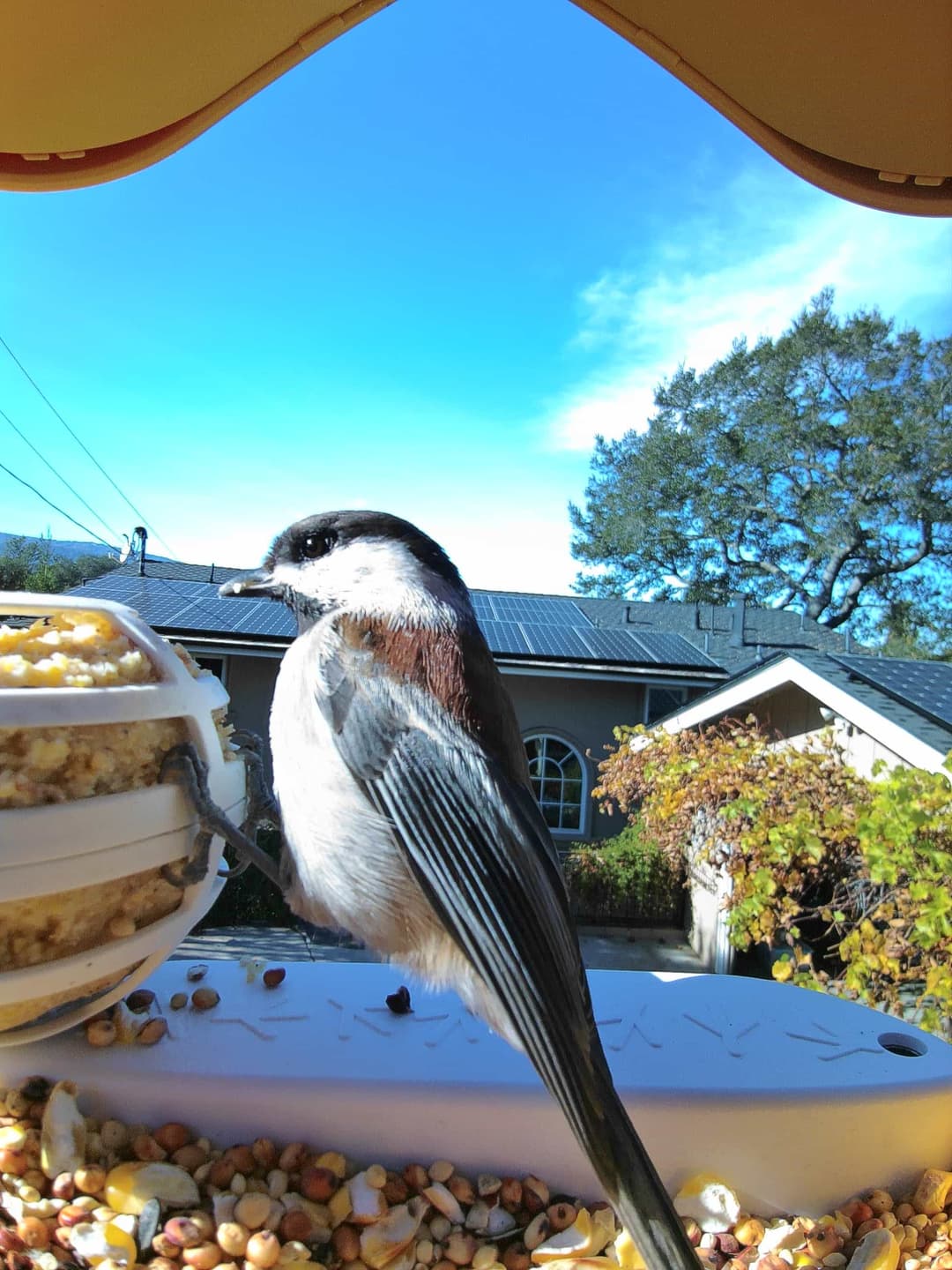
Features a distinctive black cap and bib that contrast sharply with its white cheeks
- •
Exhibits soft gray upperparts with lighter, almost white edges on its wings
- •
Has a short, stout black beak suited for foraging seeds and insects
What does a black-capped chickadee sound like?
The Black-capped Chickadee produces a variety of vocalizations like the buzzing "chick-a-dee-dee-dee" or clear, whistled "fee-bee" with the second note lower and often repeated. The song may be misleading in areas overlapping with the Carolina Chickadee as they may learn each other's songs. This bird's call types include a buzzing, chirping or chipping sound, trilling, and whistling, with a pattern that tends to fall.


Description
Black-capped chickadees are the state bird of Maine and Massachusetts and their name is based on their chicka-dee-dee call. They live in small groups with a strict pecking order – pun intended – where the most aggressive bird is king. The collective name for them is a banditry of chickadees. Their black face markings do, in fact, make them look like little masked bandits!
The black-capped chickadee can weigh between 10to14grams and be from12to15centimeters tall.
The black-capped chickadee typically lives 10-12 years, although exceptional cases have reached up to 20 years. In comparison to related species, such as the Boreal Chickadee that lives around 10 years, the Black-capped Chickadee has a similar lifespan. Meanwhile, the Carolina Chickadee has a shorter average lifespan of approximately 5 years. However, individual survival rates for all these species are influenced by environmental conditions and availability of resources.
Did you know?
Most popular questions about black-capped chickadee
How to recognise a black-capped chickadee?
General appearance
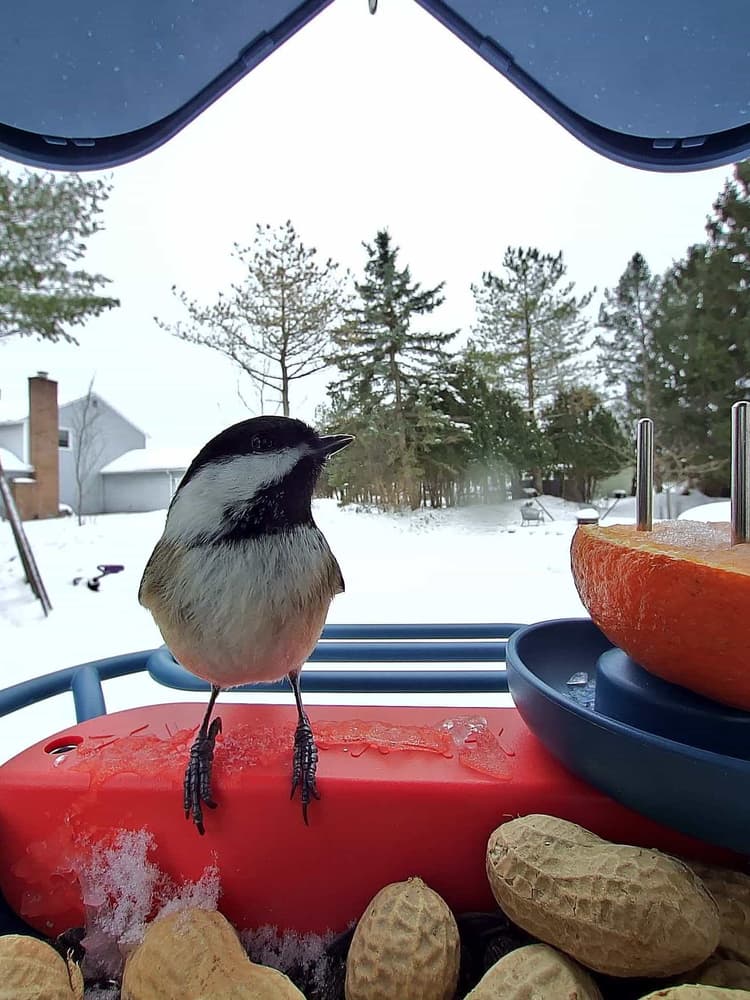
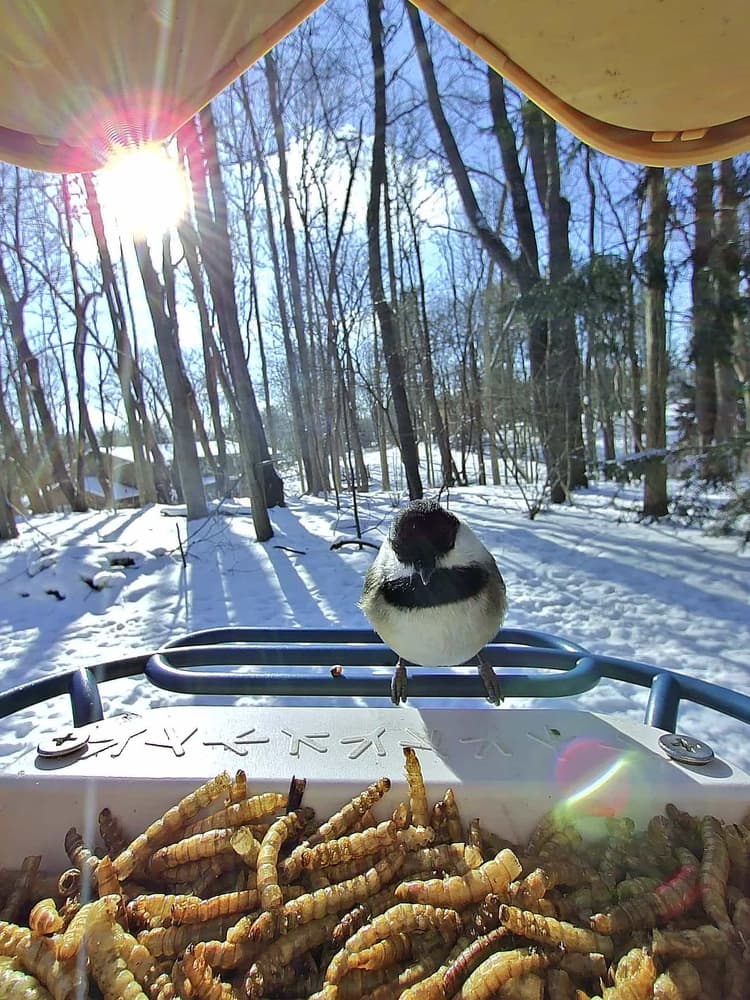
The black-capped chickadee is a small, plump bird with a distinctive black cap and bib, contrasting sharply with its white cheeks. Its back is soft gray, and it has subtle, buffy flanks. Its bill is short and pointed, and its wings and tail have white edges. The bird exhibits an acrobatic flight, often flitting around trees and feeders.
Male vs female
Males and females are visually similar, making it challenging to differentiate based on appearance. Both share the same black cap, bib, and white cheek pattern. However, males may appear slightly larger and have a more vibrant coloration, specifically noted during mating displays, though generally, such differences are subtle.
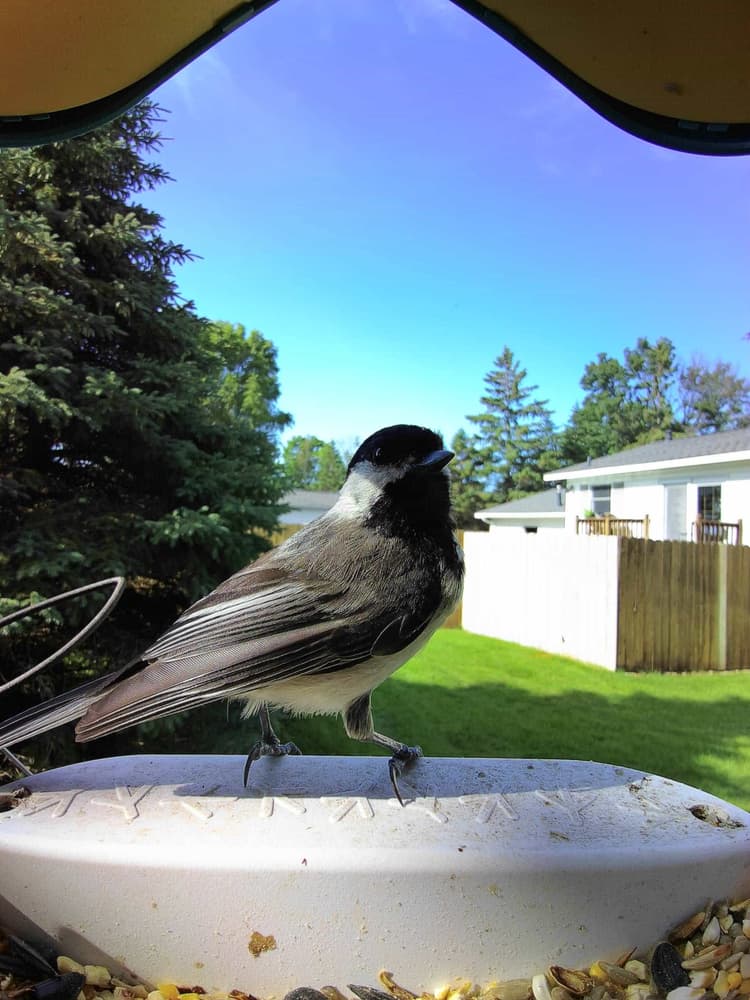
Male Black-Capped Chickadee
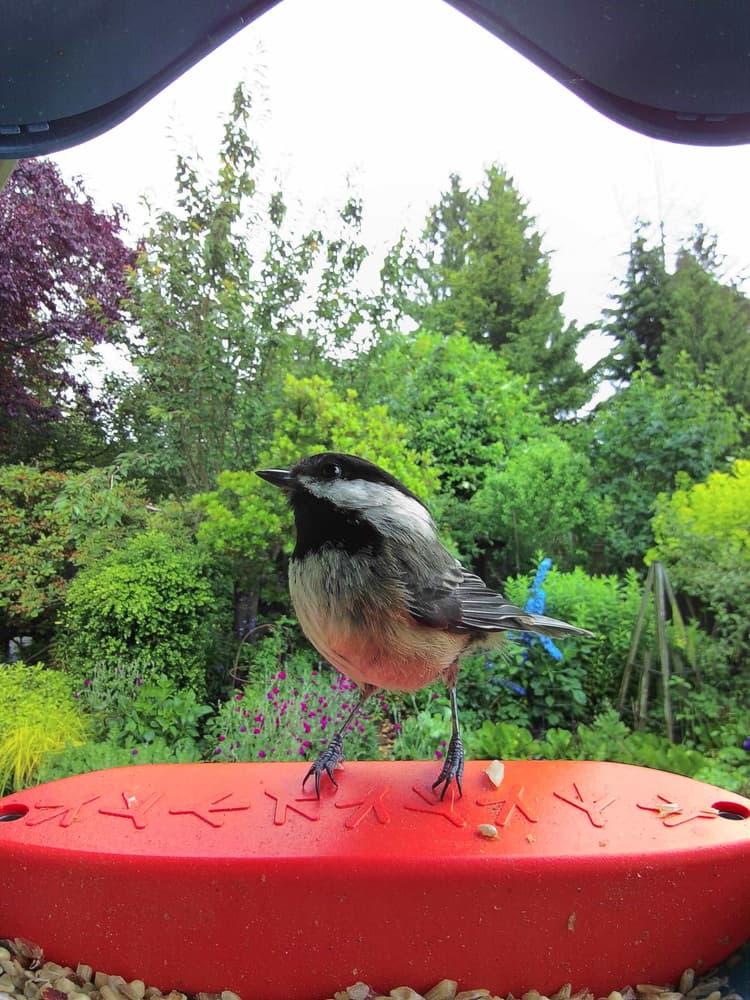
Female Black-Capped Chickadee
Juvenile
Juvenile black-capped chickadees resemble adults but with duller plumage. The black cap and bib are less pronounced, and their flanks may appear a lighter shade. As they mature, juveniles attain the crisp black and white patterning typical of adults. In juveniles, the bill base remains slightly flesh-colored before turning fully black.
Often mistaken for
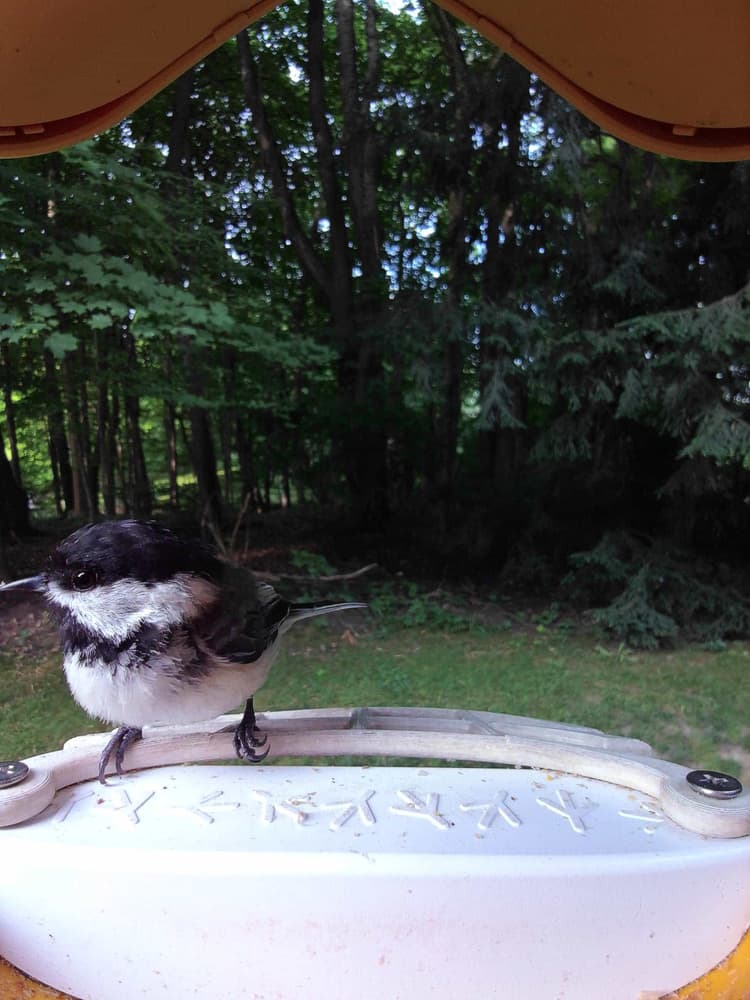
Carolina Chickadee vs Black-Capped Chickadee
The Black-Capped Chickadee has a larger range and a larger body than the Carolina Chickadee. It features a brighter white chest and more distinct black throat. Their call notes are distinctly different, with the Black-Capped sounding more nasal.
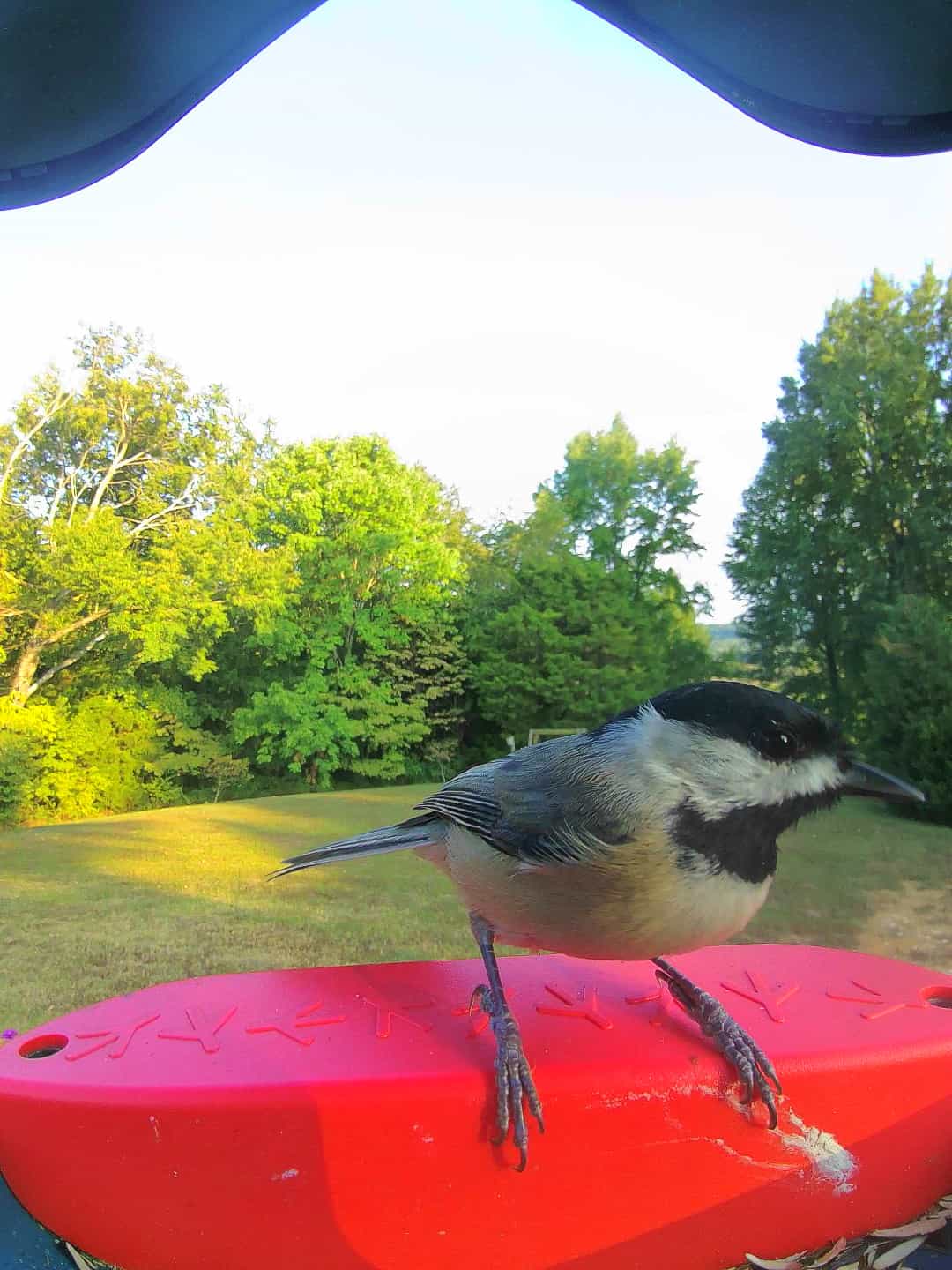
Mountain Chickadee vs Black-Capped Chickadee
Black-Capped Chickadees have a plain black cap, whereas Mountain Chickadees have a white stripe above the eye. The Black-Capped has a more uniform chest color, while the Mountain's chest is grayish.
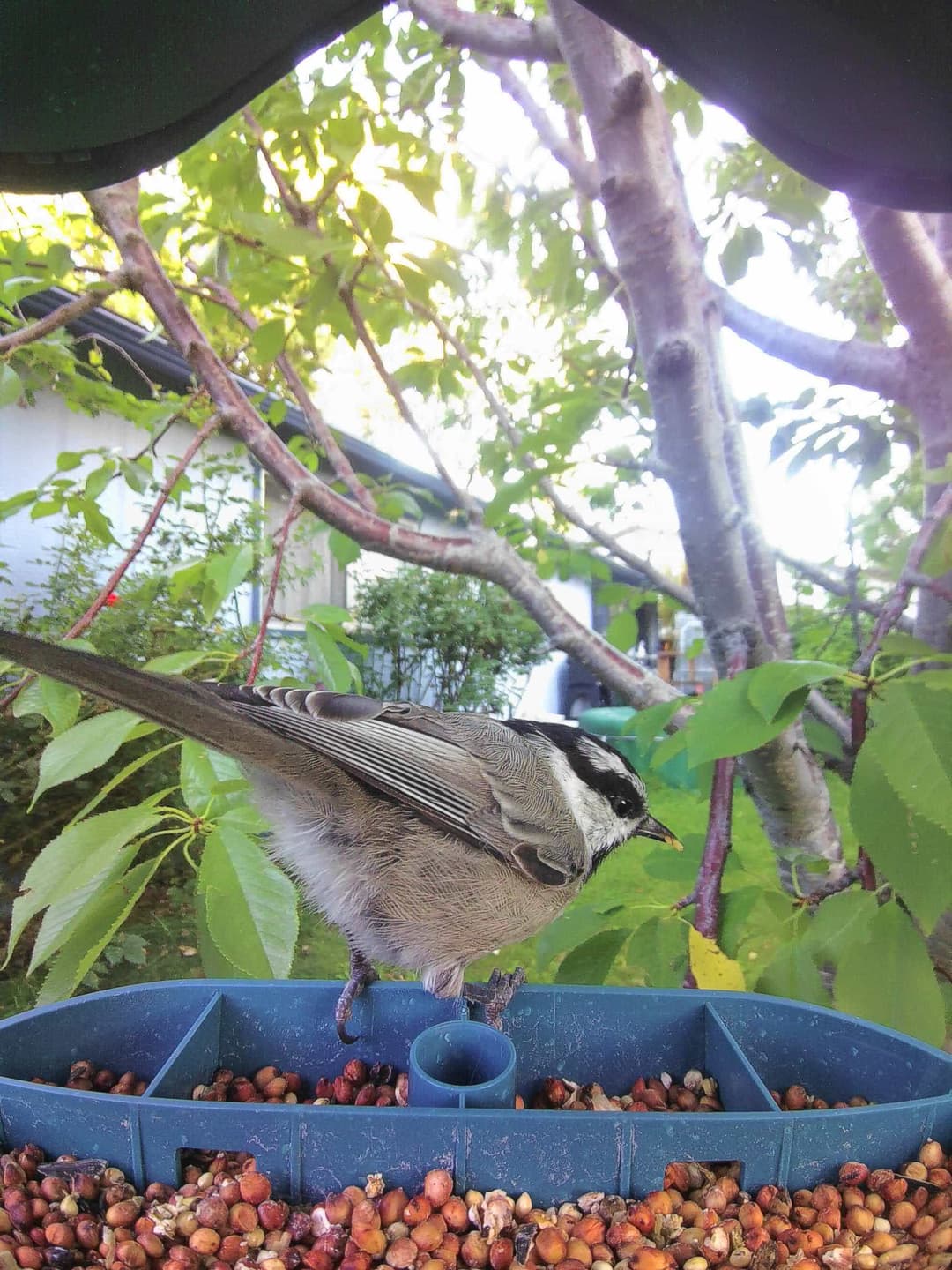
Boreal Chickadee vs Black-Capped Chickadee
Boreal Chickadees have a brownish cap and brown back, unlike the solid black cap and gray back of the Black-Capped Chickadee. They also have a rustier flanks and duller overall appearance.
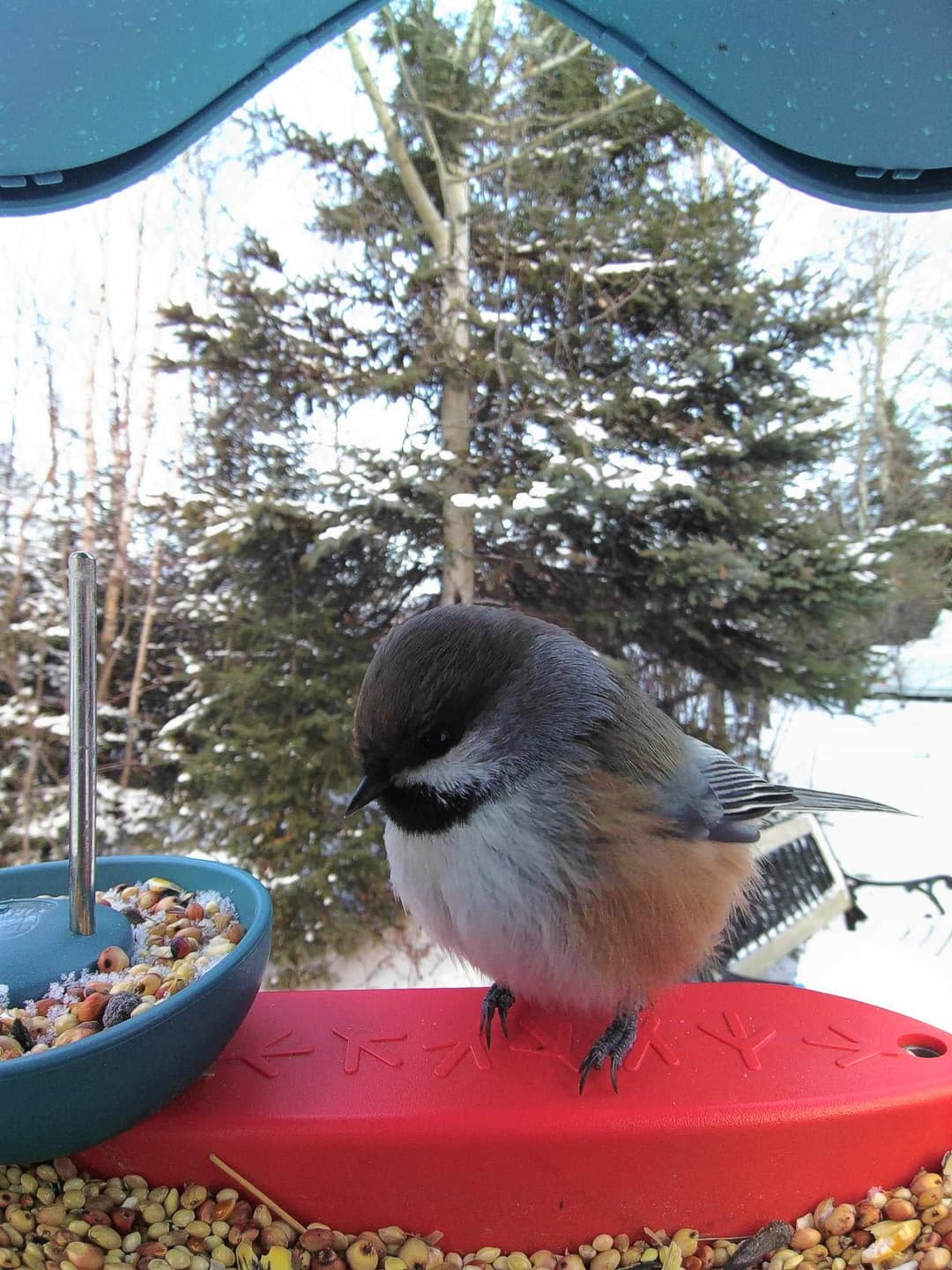
Chestnut-Backed Chickadee vs Black-Capped Chickadee
The Chestnut-Backed Chickadee displays a noticeable chestnut color on the back and sides, unlike the grayish Black-Capped. Its cap is less pronounced, with a smaller size and shorter neck.
White-Breasted Nuthatch vs Black-Capped Chickadee
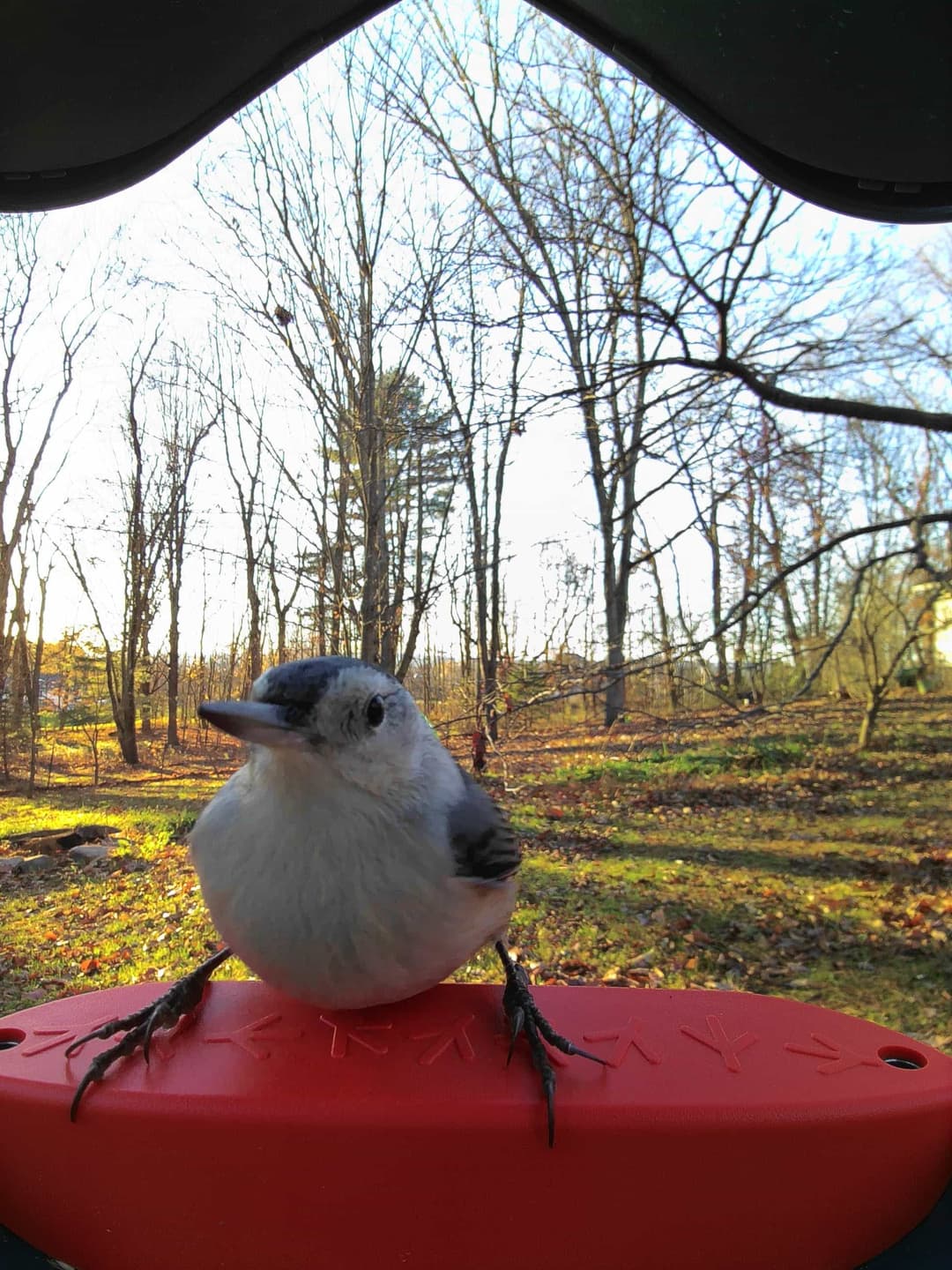
Unlike the Black-Capped Chickadee, the White-Breasted Nuthatch has a longer beak, a white face with a black cap, and a blue-gray back. It climbs down trees, an unusual behavior for chickadees.
Breeding and nesting habits of the black-capped chickadee
Mating behaviors
Black-capped chickadees form pairs in the fall, remaining together in winter flocks. By late winter, flocks disperse, and pairs jointly defend their nesting territory. Early in spring, the male provides food for the female as part of courtship.
Nesting details
Nest sites are typically found in tree holes, often enlargements of small natural cavities in rotten wood or old woodpecker holes, 5-20 feet off the ground. Chickadees can also use nesting boxes. Both sexes contribute to excavating or enlarging the nest. Females construct the nest with moss as the base and softer materials like animal hair for lining.
Eggs and chick-rearing
The female black-capped chickadee lays and incubates the eggs. Both parents take part in feeding and caring for the chicks post-hatching. Black-capped chickadees benefit from garden habitats, which can be enhanced with nesting boxes and natural materials such as mosses and hair to encourage nesting.
What does a black-capped chickadee like to eat?
Berries
Carrion
Fruits
Insects
Seeds
Spiders
Worms
Natural diet
The black-capped chickadee has a varied diet that includes mostly insects, seeds, and berries. Its diet changes with the seasons, comprising primarily insects during the summer, with caterpillars, other insects, spiders, snails, and invertebrates being significant components. During summer, vegetable matter, such as seeds and fruits, makes up no more than 10% of their diet. In winter, the diet shifts, incorporating more seeds and berries, which can account for up to 50% of their intake. They also consume small fruits and the fat of dead animals, focusing on insect eggs and pupae.
Bird feeders
At bird feeders, black-capped chickadees are known to favor sunflower seeds, peanuts, suet, and other high-energy foods. They are attracted to feeders that provide a reliable source of these foods, particularly during the colder months when natural food sources are scarce. These feeders help supplement their diet, providing essential nutrients needed for survival.
Attracting black-capped chickadees to your yard
Black-capped Chickadees are delightful visitors, known for their cheerful 'chick-a-dee-dee' calls. To encourage them, ensure your yard has a variety of trees and shrubs where they can perch and take cover. Also, provide fresh water for drinking and bathing.
Feeder types and treats for black-capped chickadees
Chickadees do not have a preference for a specific type of feeder. They will happily visit platform, hopper, or tube feeders. They especially love seeds and their favorites are sunflower and safflower seeds, peanuts, and suet. A great choice would be the Bird Buddy seeds, chosen by experts for the season and loved by chickadees.
Fun ways to encourage black-capped chickadees to visit
Black-Capped Chickadees are inquisitive birds and enjoy investigating new things in their environment. Add a new feeder or move an existing one to a different location to pique their curiosity. Playing bird songs can also attract chickadees to your yard for a potential sing-along!
Where can you find black-capped chickadees?
Based on Birdbuddy sighting data. The heatmap shows where Birdbuddy users have spotted this species.
Embed this map
This map shows the full native range based on scientific range data.
Primary habitat
The black-capped chickadee prominently resides in mixed and deciduous woods, willow thickets, groves, and shade trees. It favors open woods and forest edges, especially locations where birches or alders grow, and usually avoids purely coniferous forest.
Additional range
This species can also adapt to suburban areas, given the availability of nest sites. In regions where it overlaps with other chickadee species in the north and west, it chiefly restricts itself to deciduous groves.
Do they migrate?
The black-capped chickadee is primarily a permanent resident, meaning it usually stays in one place throughout the year. However, this species sometimes exhibits a unique migratory behavior known as "irruptive migration" or "invasions." During these events, particularly in the fall, large numbers of chickadees move southward. This primarily occurs in the northeastern United States and southeastern Canada. These invasions are not regular migrations but occasional movements often prompted by food shortages in their usual range. The southbound movements during invasions generally do not extend much beyond the southern edge of their breeding range. The exact route of these migrations can vary, but it largely involves the northeastern states and southeastern parts of Canada. Timing for these irregular movements typically centers around the autumn months. Key locations affected by these invasions include areas within the chickadee's main range in parts of the U.S. such as New England and the Great Lakes region, extending toward the northern Appalachian regions and southeastern Canadian provinces like Ontario and Quebec. Local abundance during such invasions can vary significantly from year to year, often depending on environmental factors like food availability.
What is the role of black-capped chickadees in nature and how to protect them?
Conservation status
The black-capped chickadee is considered widespread and common, with stable or even rising populations in certain areas, indicating it is not vulnerable or endangered. Key conservation efforts for this resilient species focus on habitat preservation, particularly maintaining forests and woodlands, which are critical for nesting and feeding. While there are no significant threats reported, habitat destruction and climate change could impact their populations in the long term. Encouraging biodiversity and planting native vegetation can further support their habitat needs. Overall, their conservation status is secure at present.
Ecological role of black-capped chickadees
Its role in the ecosystem
The Black-capped chickadee plays a vital role in the ecosystem through pest control and seed dispersal. Their diet primarily includes insects, especially during the summer season, aiding in keeping the insect population in check. This control of insects is critical to maintaining the health of vegetation, including crops and forests, as well as helping to control the spread of insect-borne diseases. They also feed on seeds, berries, small fruits during the winter months, thereby aiding in seed dispersal. This foraging behavior contributes to the germination and proliferation of various plant species. Moreover, their nesting behavior aids in the decomposition process by using rotten wood, which in turn, contributes to soil health and nutrient cycling.
How to help protect black-capped chickadees
Preservation tips
Habitat preservation strategies
To support the black-capped chickadee, habitat preservation is essential. Encourage the conservation of deciduous and mixed forests, which are their natural habitats. Protect large old trees which are often used for nesting. Implement forest management practices that promote a rich understory as chickadees forage in these areas. Discourage development and deforestation of these critical habitats.
Community science initiatives
Community science initiatives can play a crucial role in conserving the black-capped chickadee. Organize local citizen science projects to monitor chickadee populations and engage the community in conservation efforts. Educate the public about the importance of chickadees to our ecosystem and encourage bird-friendly practices such as installing birdhouses and reducing pesticide use. Report findings to local conservation authorities for greater impact.