
Carolina Chickadee
Carolina Chickadee
Poecile carolinensis


Quick Identification guide
Quick Identification guide
- •
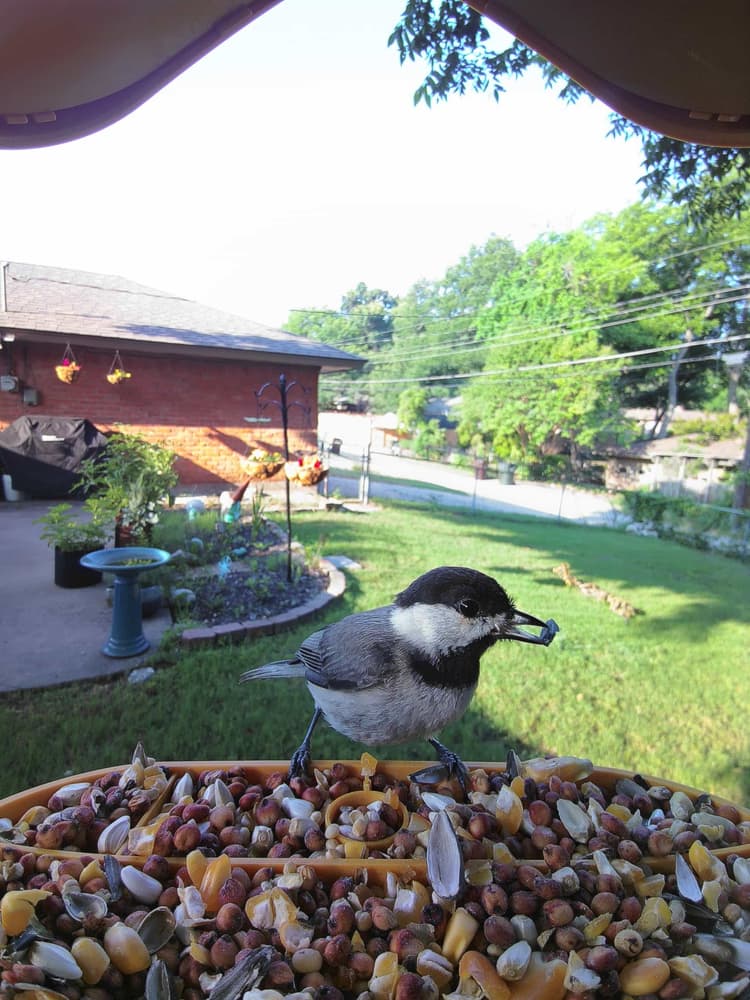
Distinctive with its gray body, black cap, and white cheeks, creating a striking contrast
- •
Displays a small, short beak suited for insect and seed foraging
- •
Features a short, rounded tail and compact build, typical of smaller songbirds
What does a Carolina chickadee sound like?
The Carolina Chickadee produces a buzzy, high-pitched song that is faster than the Black-capped Chickadee. It consists of 4 whistled notes, "see-dee, see-dee," with a downward inflection. This contrasts with the 2 or 3-note song of the Black-capped species. Its call types include a falling pattern, buzz, chirp or chip, trill, and whistle.
Call
Audio by G. McGrane


Description
It can be tough to commit to a friendship group; that's why, while Carolina chickadees form more or less permanent flocks, some individuals flit from one to another to find where they like it best! These curious and intelligent birds often hybridise with black-capped chickadees. Their chicks will sing the song of one species or a mix of both!
The Carolina chickadee can weigh between 9to12grams and be from11.5to13centimeters tall.
Carolina Chickadees typically live up to 10 to 12 years, though their lifespan may exceed this under optimal conditions. This is comparable to related species, such as the Black-capped Chickadee, with a similar lifespan. Life expectancy may vary depending on habitat quality, predation, and disease prevalence.
Did you know?
Most popular questions about Carolina chickadee
How to recognise a Carolina chickadee?
General appearance
The Carolina chickadee is a small songbird, about 4.5 to 5 inches long with a wingspan of 6 to 8 inches. Its most distinctive features include a black cap and bib, white cheeks, and a soft gray back. The underparts are mostly pale gray with a slightly buffy hue on the sides. They have short, stout bills and rounded wings. Spotting them in the wild, one can often notice their characteristic calls and acrobatic movements through tree branches.
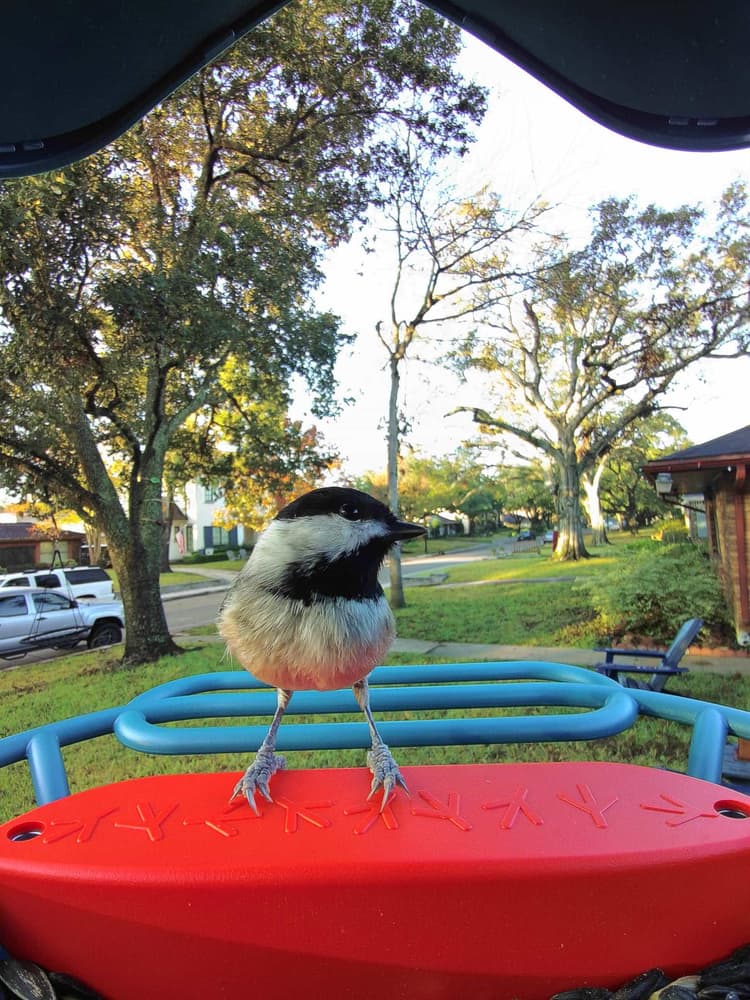
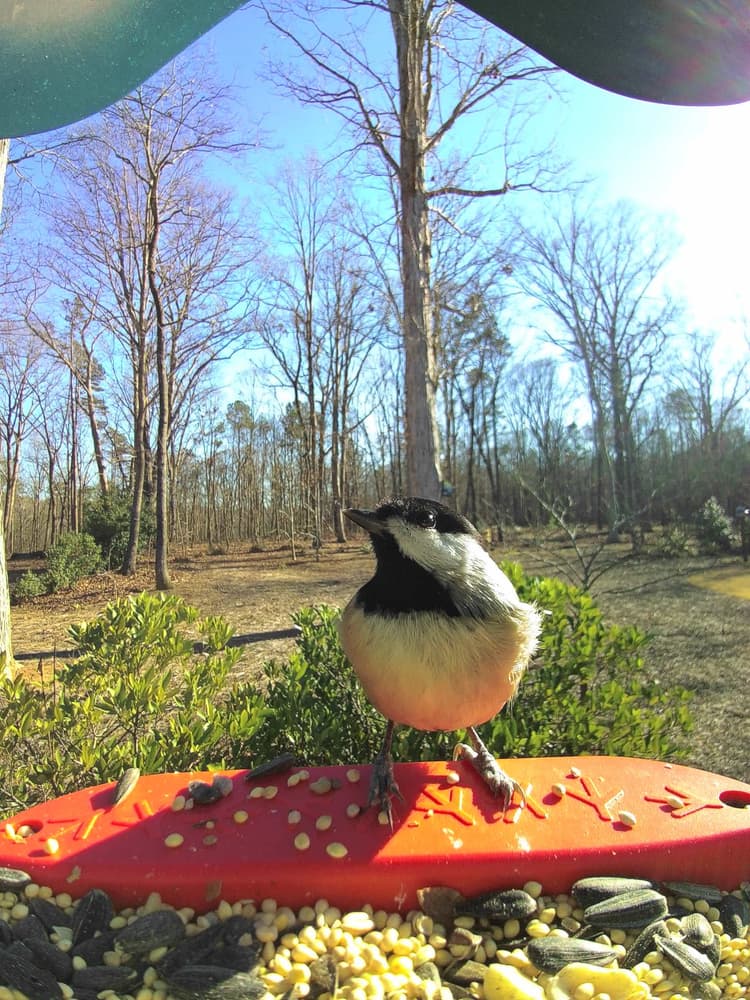
Male vs female
Males and females of the Carolina chickadee are very similar in appearance, making them difficult to differentiate by plumage alone. Both sexes share the same coloration pattern, lacking distinctive sexual dimorphism. Behavioral observations during the breeding season, such as males being more vocal and active in territory defense, may help distinguish them.
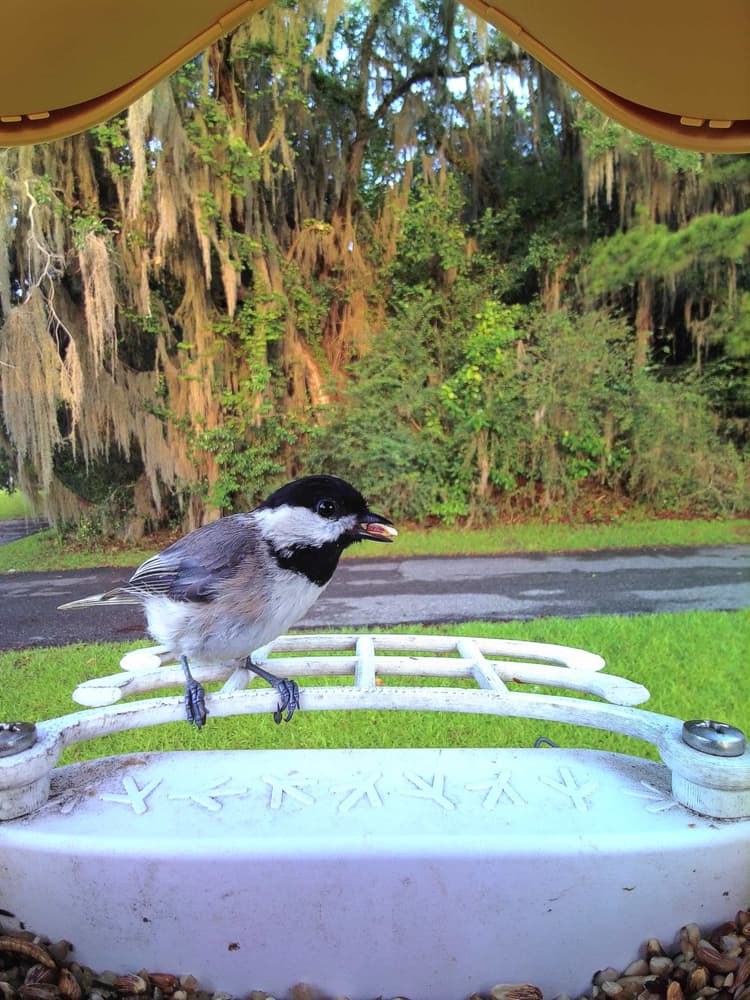
Male Carolina Chickadee
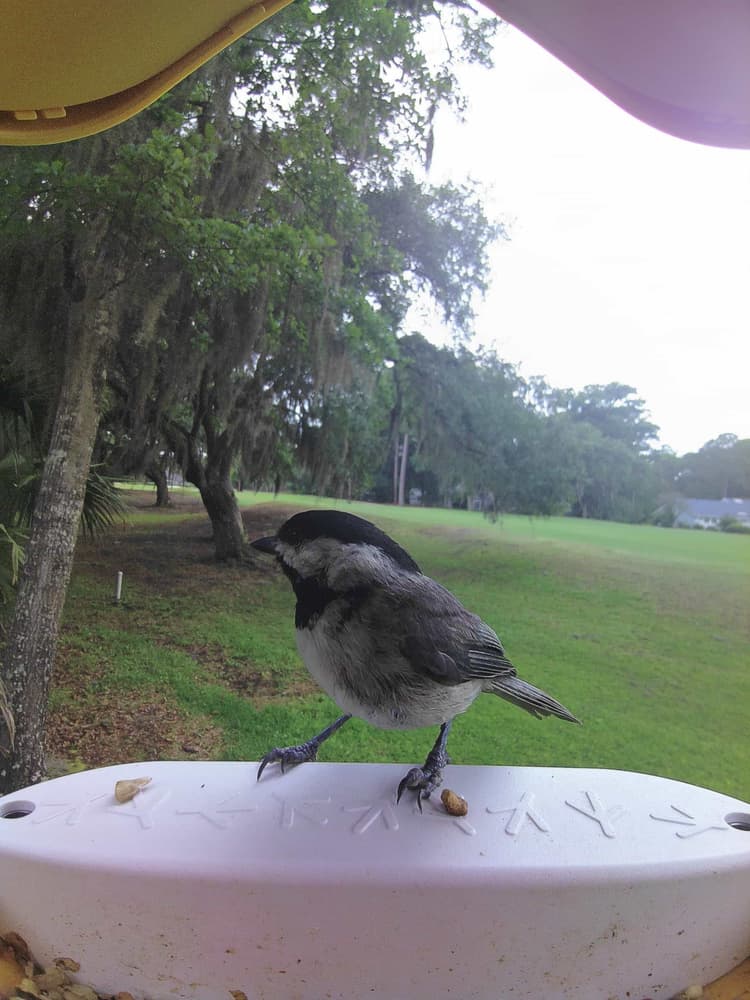
Female Carolina Chickadee
Juvenile
Juvenile Carolina chickadees resemble adults but with duller and less distinct coloration. Their black cap and bib may appear slightly browner, and their overall plumage is softer and fluffier. As they mature, these differences gradually fade, and they develop the crisp contrast seen in adults. Juveniles learn to forage and join mixed-species flocks after fledging.
Often mistaken for
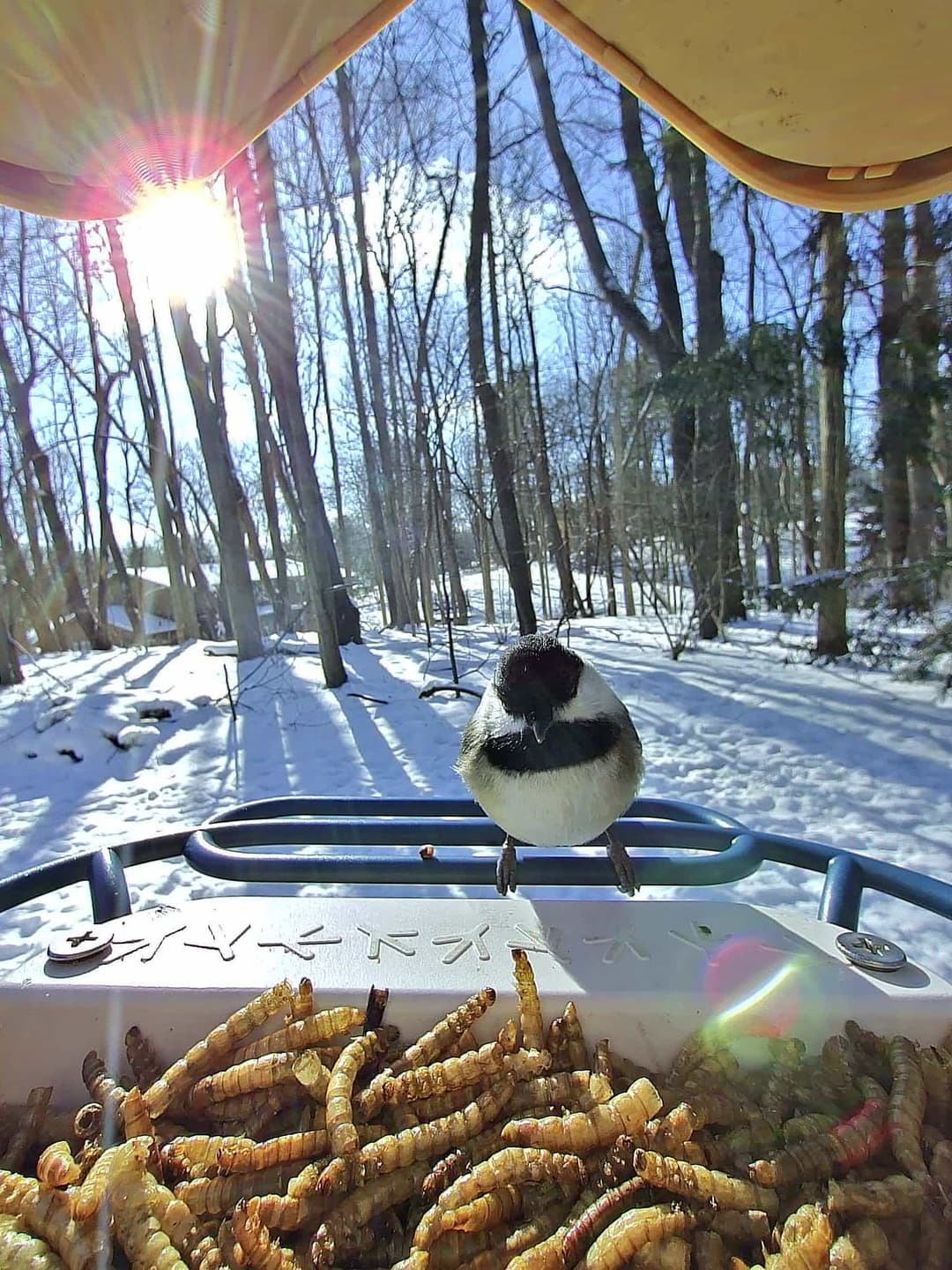
Black-Capped Chickadee vs Carolina Chickadee
Carolina Chickadees are generally smaller and have a neater black bib compared to the Black-Capped Chickadee. The Black-Capped has a more contrasting white edging on their wings, while the Carolina Chickadee's coloring is more subtle. Listen for their calls; the Carolina has a higher-pitched, faster 'chick-a-dee-dee-dee', in contrast to the Black-Capped's slower call.
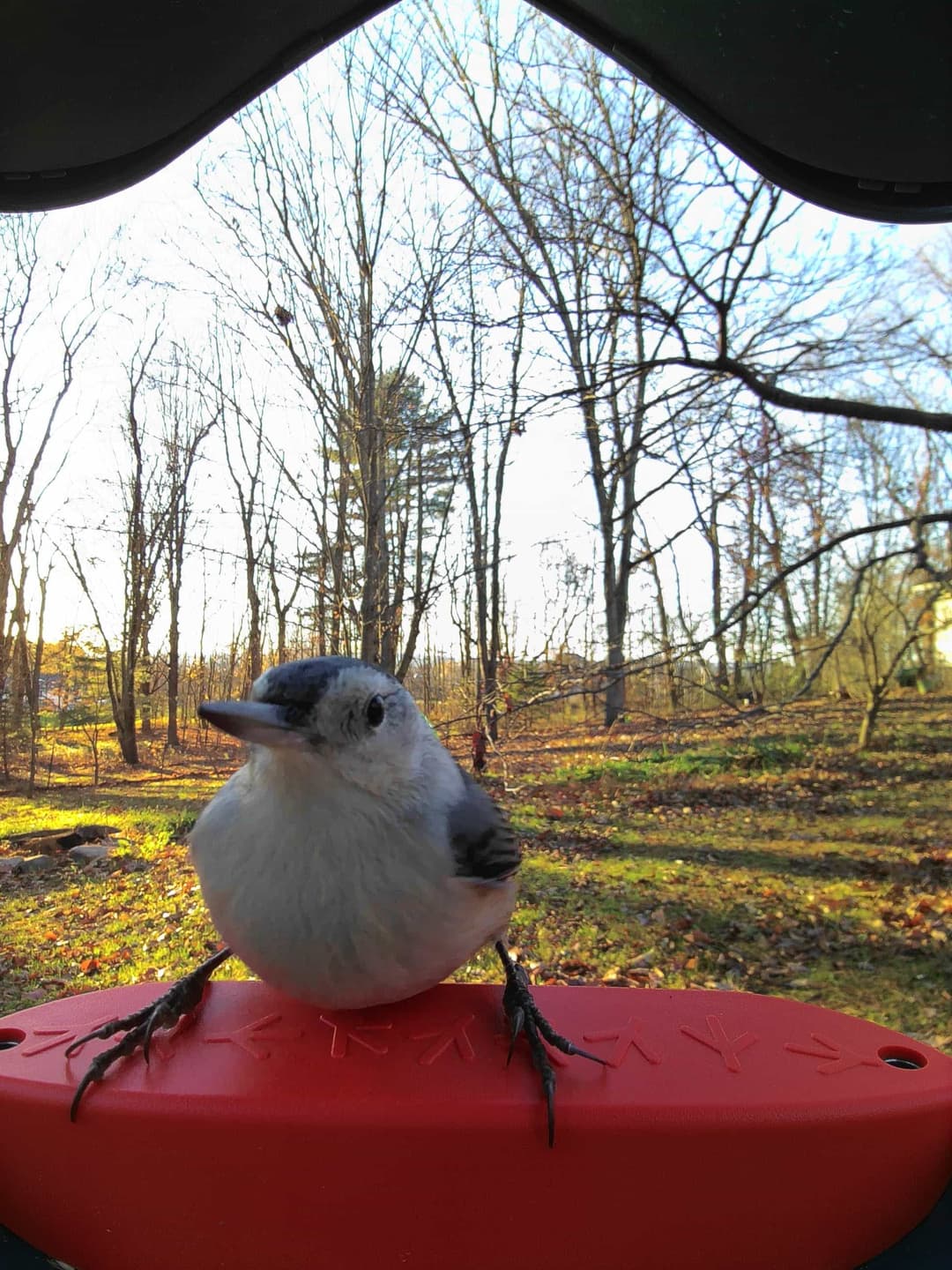
White-Breasted Nuthatch vs Carolina Chickadee
Carolina Chickadees differ from White-Breasted Nuthatches in size and behavior. While Carolina Chickadees are small, Nuthatches are slightly larger with a distinctive white face and black cap. Nuthatches move headfirst down tree trunks. Observe their movements; Chickadees flit through branches, whereas Nuthatches prefer creeping along bark.
Breeding and nesting habits of the Carolina chickadee
Mating behaviors
Carolina chickadees may mate for life, with pairs likely forming in the fall and remaining together in winter flocks. When these flocks break up in late winter, the pair establishes a nesting territory.
Nesting details
Nest sites for Carolina chickadees are typically in holes in trees, often enlarging small natural cavities in dead wood, old woodpecker holes, or nesting boxes. They are usually found 5-15 feet above the ground. In natural cavities, both sexes participate in excavating or enlarging the interior. Nests are constructed with a foundation of bark strips or other materials and lined with softer materials like plant down and animal hair.
Eggs and chick-rearing
The female Carolina chickadee likely builds the nest and is responsible for laying and incubating eggs. Both parents partake in feeding and raising the chicks, ensuring their growth and development.
What does a Carolina chickadee like to eat?
Fruits
Insects
Seeds
Spiders
Natural diet
The Carolina chickadee mainly consumes insects, seeds, and berries. During warmer months, its diet primarily consists of caterpillars, moths, true bugs, beetles, aphids, various other insects, and spiders. In the winter, it likely shifts to consuming more vegetable matter, including seeds and berries. It also eats seeds from weeds and trees, as well as small fruits.
Bird feeders
At bird feeders, Carolina chickadees typically consume sunflower seeds, suet, and sometimes peanuts or mealworms. They are known to prefer black oil sunflower seeds due to their high-fat content and ease of handling. Suet provides an energy-rich food source especially beneficial during colder months.
Provide yummy snacks
Tempting the Carolina chickadee to visit your yard is fairly easy, especially if you know their favorite snacks! This little bird loves sunflower seeds, peanuts, and suet. And when it comes to seeds, we highly recommend Bird Buddy seeds, which are selected by bird feeding experts and perfectly suited for each season.
Select suitable feeders
The type of feeder you choose can greatly influence the types of birds you attract. For Carolina chickadees, opt for tube feeders or hopper feeders. These feeders make it easy for chickadees to perch and snack, and they also protect the food from rain and snow. Remember to place the feeders near trees or shrubs which provide both a quick escape from predators and a place for chickadees to feel secure.
Try fun tricks
If you want to make your yard more inviting for Carolina chickadees, try installing a birdbath or a water mister. Chickadees are attracted to the sound of water, and they love taking baths and preening. You can also plant native trees and shrubs, which provide natural food and shelter for these birds. With all these elements in place, you might not just see these birds drop by, but also hear their beautiful songs!
Where can you find Carolina chickadees?
Based on Birdbuddy sighting data. The heatmap shows where Birdbuddy users have spotted this species.
Embed this map
This map shows the full native range based on scientific range data.
Primary habitat
The Carolina Chickadee prefers mixed and deciduous woods, river groves, and shade trees, often found in deciduous forests. It can also thrive in pine woods with a good mixture of oak or other leafy trees.
Additional range
This bird is adaptable to well-wooded suburbs. Notably, in the overlapping habitats of Black-capped and Carolina Chickadees in the Appalachians, the Carolina Chickadee is found at lower elevations.
Do they migrate?
The Carolina chickadee is a permanent resident, meaning it generally stays in one place all year and does not migrate. This small, non-migratory bird is commonly found throughout the southeastern United States, including parts of Maryland, Virginia, Kentucky, and Texas, as well as extending into parts of the Gulf Coast. Its range typically includes mixed and deciduous forest areas, as well as suburban and urban locations where trees and shrubs are available. During the winter months, the Carolina chickadee does not travel to warmer regions, unlike many other bird species. Instead, it adapts to colder temperatures by growing its plumage to better insulate against the chill and by engaging in behaviors such as roosting in sheltered areas. Additionally, the chickadee will often form mixed-species flocks with other small birds, a strategy that provides safety in numbers and enhances foraging efficiency. This permanent presence within its range is well supported by its capacity to find adequate food sources throughout the year, including seeds, insects, and larvae. As a result, there is no distinct migratory route or migration timing associated with the Carolina chickadee.
What is the role of Carolina chickadees in nature and how to protect them?
Conservation status
The Carolina chickadee is currently common and widespread, indicating it is not considered vulnerable or endangered. Its stable population reflects adaptability to various habitats, including suburban areas. Key conservation efforts include maintaining healthy forests and urban green spaces, which are crucial for nesting and feeding. Significant threats to the species include habitat loss due to urbanization and climate change, which may affect its range in the future. Continued monitoring and habitat preservation are essential to ensure its persistence.
Ecological role of Carolina chickadees
Its role in the ecosystem
The Carolina chickadee plays a significant role in the ecosystem it inhabits. Being a voracious consumer of a wide variety of insects, it is an effective natural pest control agent, helping to keep in check insect populations that could otherwise become harmful. In the warmer months, it preys heavily on caterpillars, moths, bugs, beetles, and aphids among others. Apart from invertebrates, it feeds on seeds and berries, and in doing so aids in seed dispersal, which is a crucial process for plant reproduction and diversification. During winter, its diet is largely made of more seeds and berries, indicating its contribution to seed dispersal might be even more significant in that season. The bird's habit to store food items could also result in accidental seed sowing in different areas. In terms of nesting behavior, the Carolina chickadee tends to use natural cavities, which they often enlarge, or old woodpecker holes thus contributing indirectly to the recycling of dead wood.
How to help protect Carolina chickadees
Preservation tips
Habitat preservation strategies
Carolina Chickadees are woodland birds requiring a blend of trees, shrubs, and open space. To assist, conserve existing forests and promote growth of native plant species which they use for food and nesting material. Avoid using pesticides and herbicides which can affect their food supply. Establish nest boxes in your yard to provide additional housing opportunities.
Community science initiatives
Participate in initiatives such as The Great Backyard Bird Count or Project FeederWatch to help track the bird's population trends. The Cornell Lab of Ornithology's NestWatch program can also be useful to monitor the breeding activities. Additionally, raise awareness in your community about the importance of conserving chickadee habitats, and encourage responsible practices.