
White-Breasted Nuthatch
White-Breasted Nuthatch
Sitta carolinensis


Quick Identification guide
Quick Identification guide
- •
Features a white face and underparts with a distinct black cap on top of the head
- •
Exhibits blue-gray upperparts and a short, square tail with a contrasting black and white pattern
- •
Carries a long, slender, slightly upturned bill which is prominent against its small frame
What does a white-breasted nuthatch sound like?
The white-breasted nuthatch communicates through various vocalizations. Its typical call includes a nasal 'yank-yank' and a distinctive call pattern starting with a flat note followed by a rising pitch. Furthermore, it showcases a range of call types including chirp/chip, raucous, and scream. Its song comprises a series of low-whistled notes, contributing to its unique bird song repertoire.


Description
These curious birds are common visitors at bird feeders! They are also known as the upside down bird, because of their habit of walking headfirst down tree trunks in search of insects. To be able to do that their feet have three toes that face forwards and one toe, called a hallux that faces backwards!
The white-breasted nuthatch can weigh between 18to27grams and be from13to14centimeters tall.
The white-breasted nuthatch has a typical lifespan of up to 12 years in the wild. This is longer than some related species, such as the red-breasted nuthatch, living up to 8 years. Nevertheless, some nuthatches like the brown-headed nuthatch have similar lifespans, ranging around 9-10 years.
Did you know?
Most popular questions about white-breasted nuthatch
How to recognise a white-breasted nuthatch?
General appearance
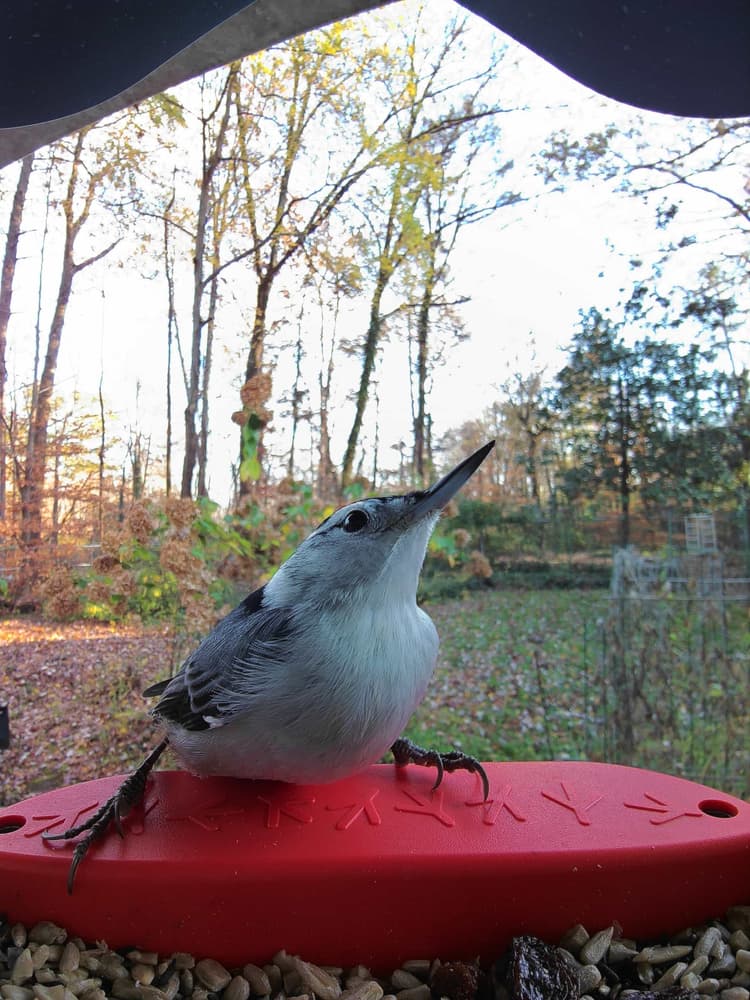
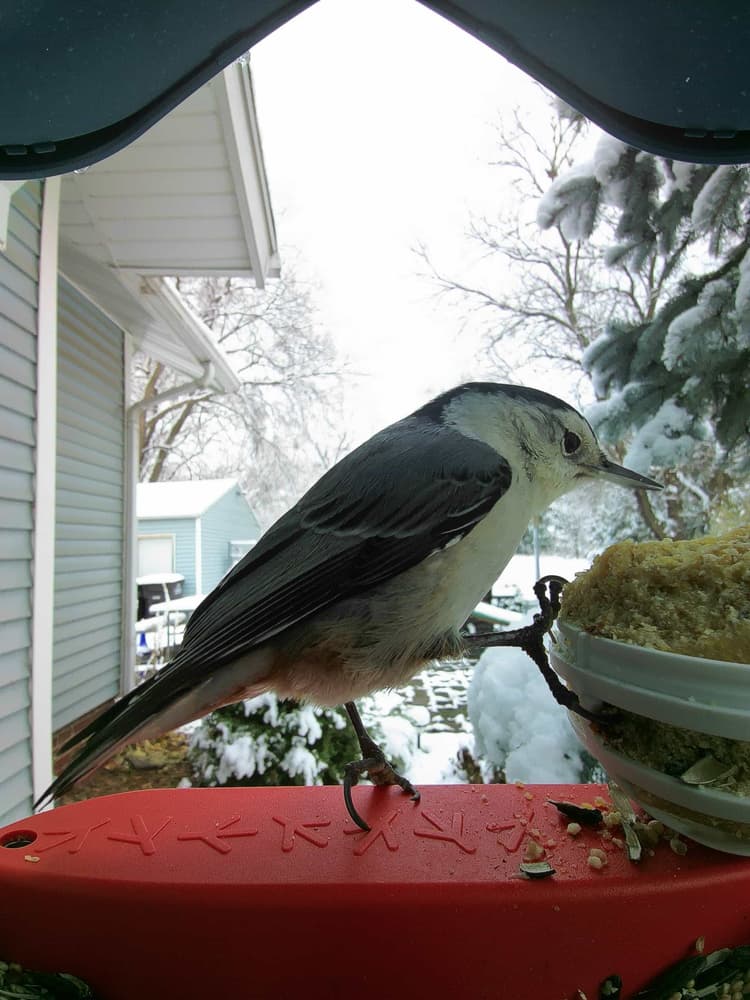
The white-breasted nuthatch has a chunky body and measures 5-6 inches (13-15 cm) in length. It has a short, square-tipped tail and a thin bill. The bird has a beady black eye that stands out against its white face and chest. Its coloration consists of black, grey, and white and it can show much orange-brown on its lower belly. The wing and tail shapes are rounded.
Male vs female
The male and female white-breasted nuthatch have similar appearances, but there are slight differences. They both have a narrow dark crown stripe, but while it's black on males, it's often gray on females.
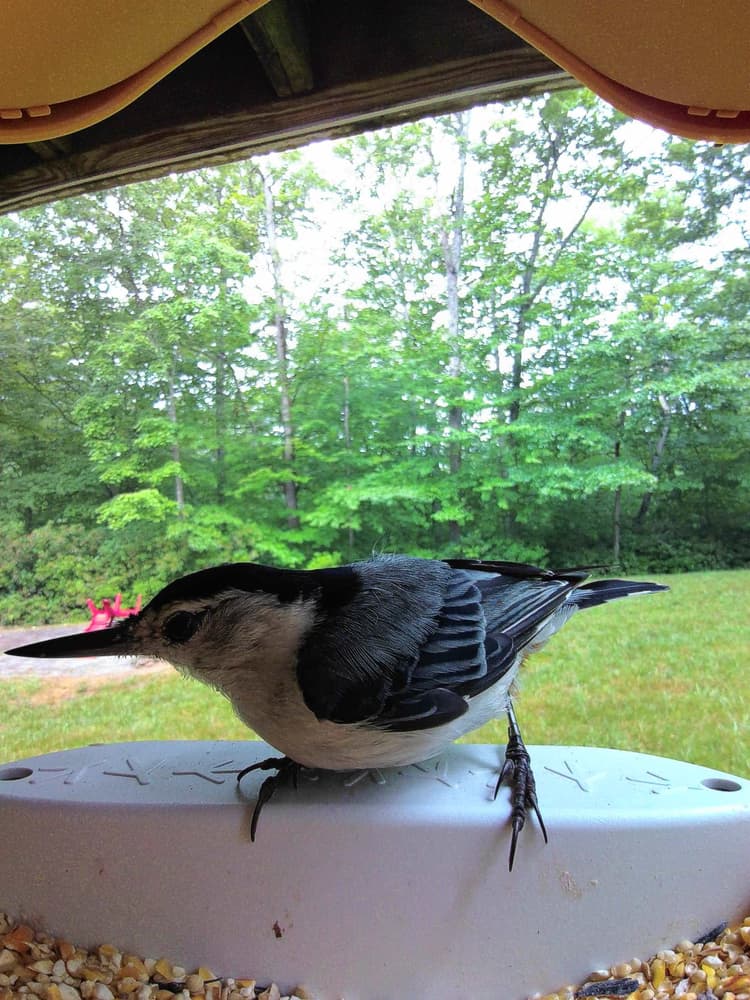
Male White-Breasted Nuthatch
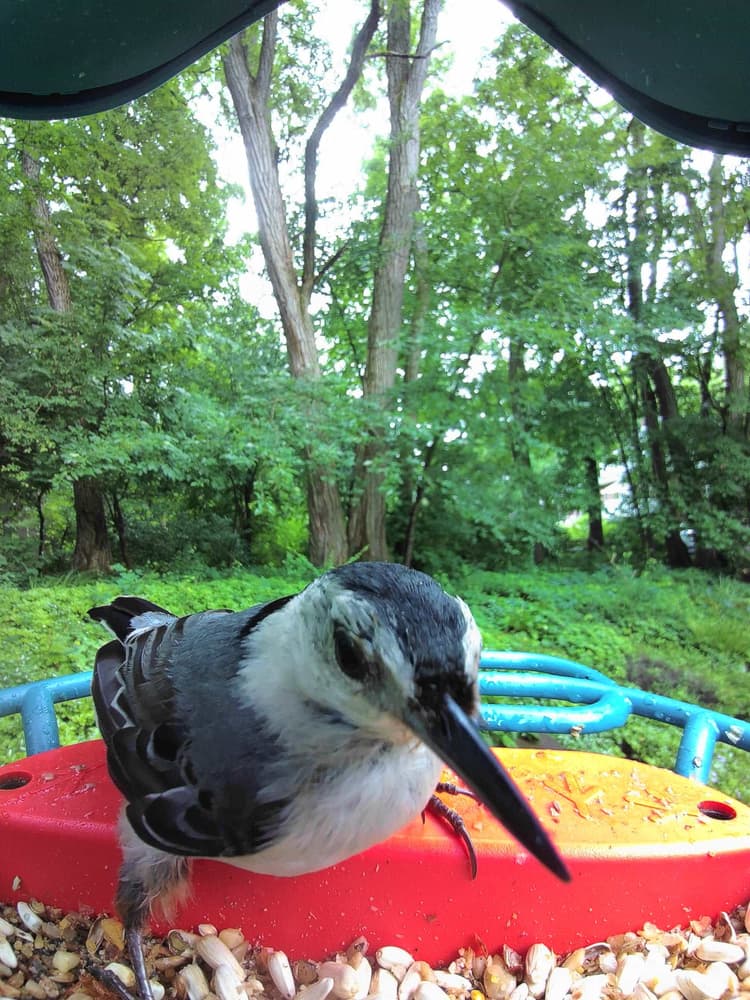
Female White-Breasted Nuthatch
Juvenile
Not much information is provided about the juvenile white-breasted nuthatch. Based on general bird development, they would likely have softer, less vivid coloration than adults. More specific characteristics would need further research.
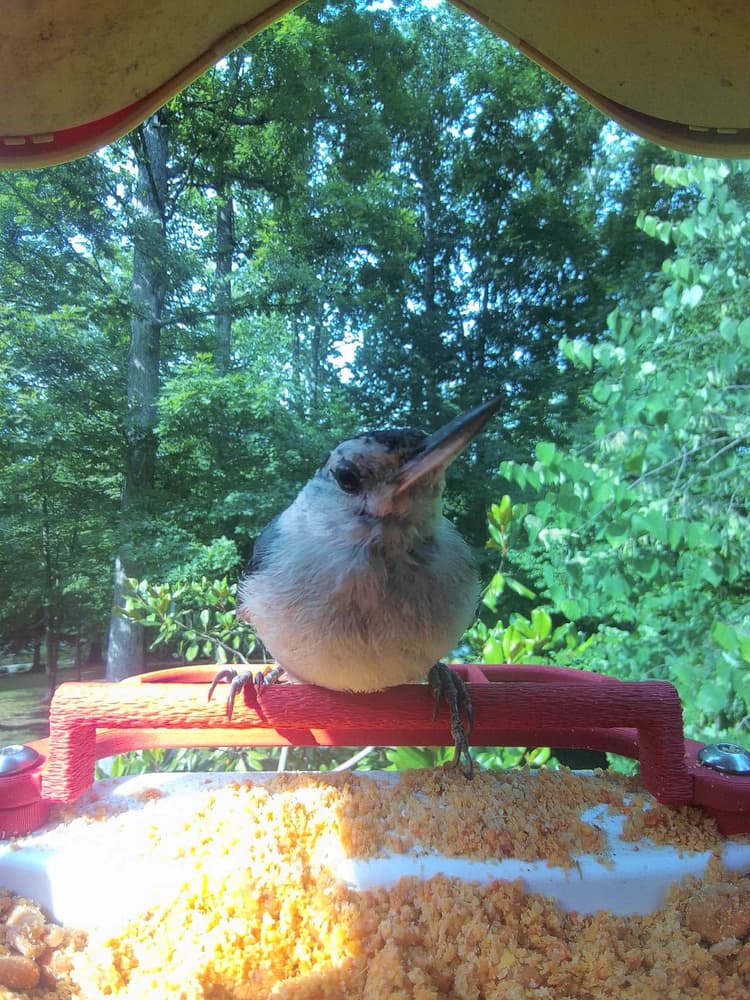
Often mistaken for
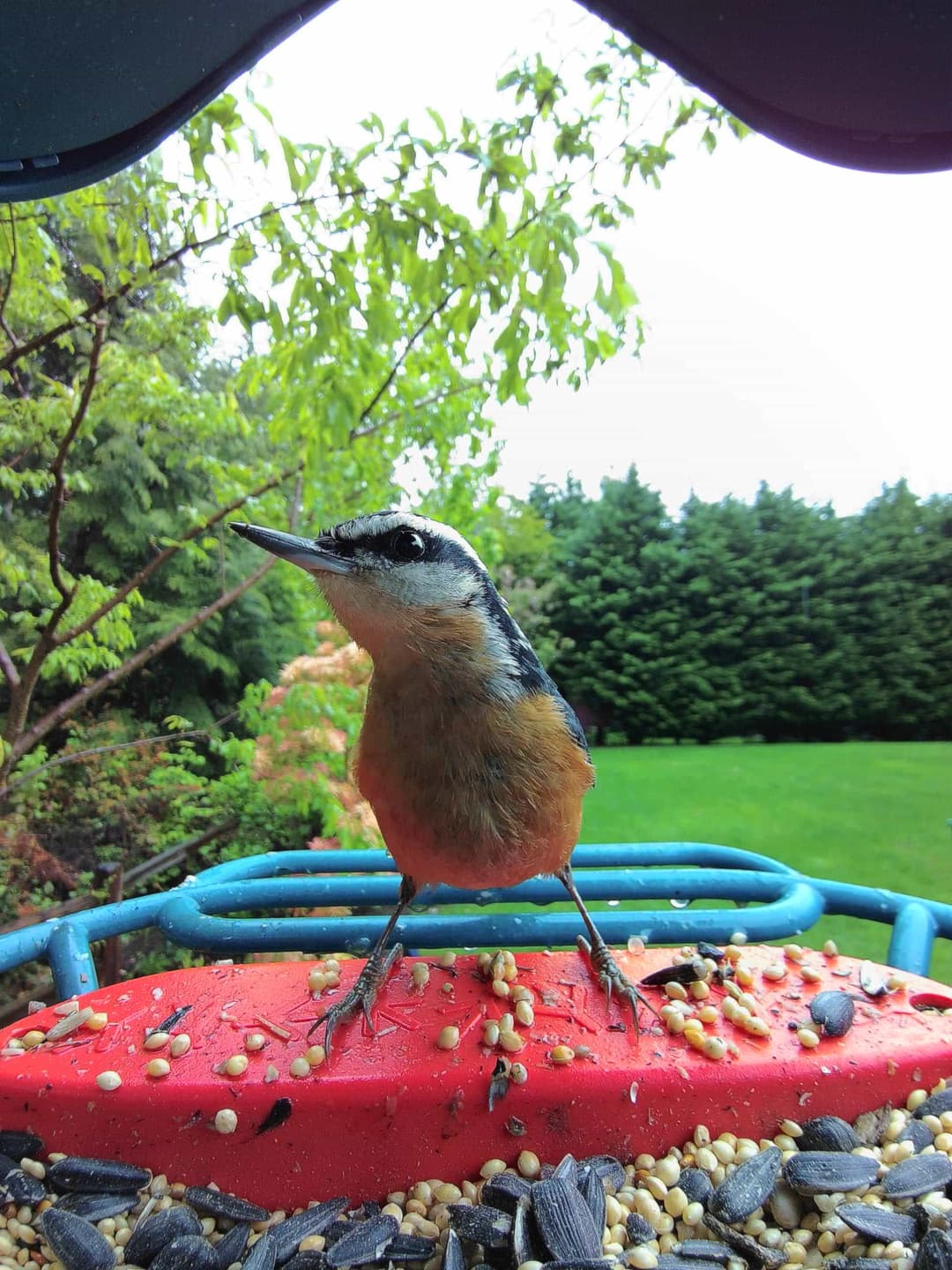
Red-Breasted Nuthatch vs White-Breasted Nuthatch
The White-Breasted Nuthatch has a white face and underparts, whereas the Red-Breasted Nuthatch displays a reddish underside. Both share similar size and structure, but listen for the more nasal call of the Red-Breasted.
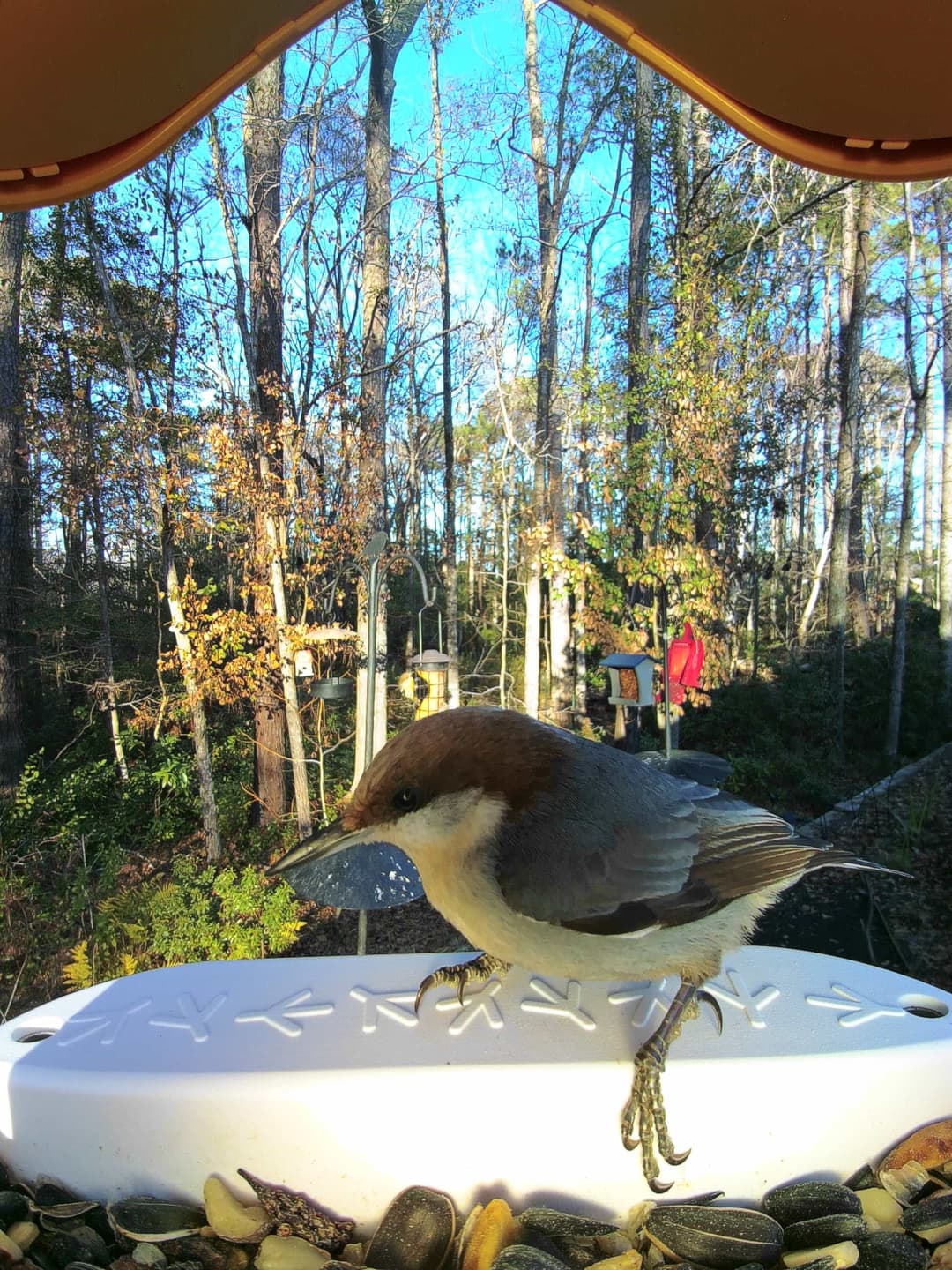
Brown-Headed Nuthatch vs White-Breasted Nuthatch
The White-Breasted is larger with a clear white face and chest, while the Brown-Headed has a distinct brown cap. Note the high-pitched 'squeaky' calls of the Brown-Headed.
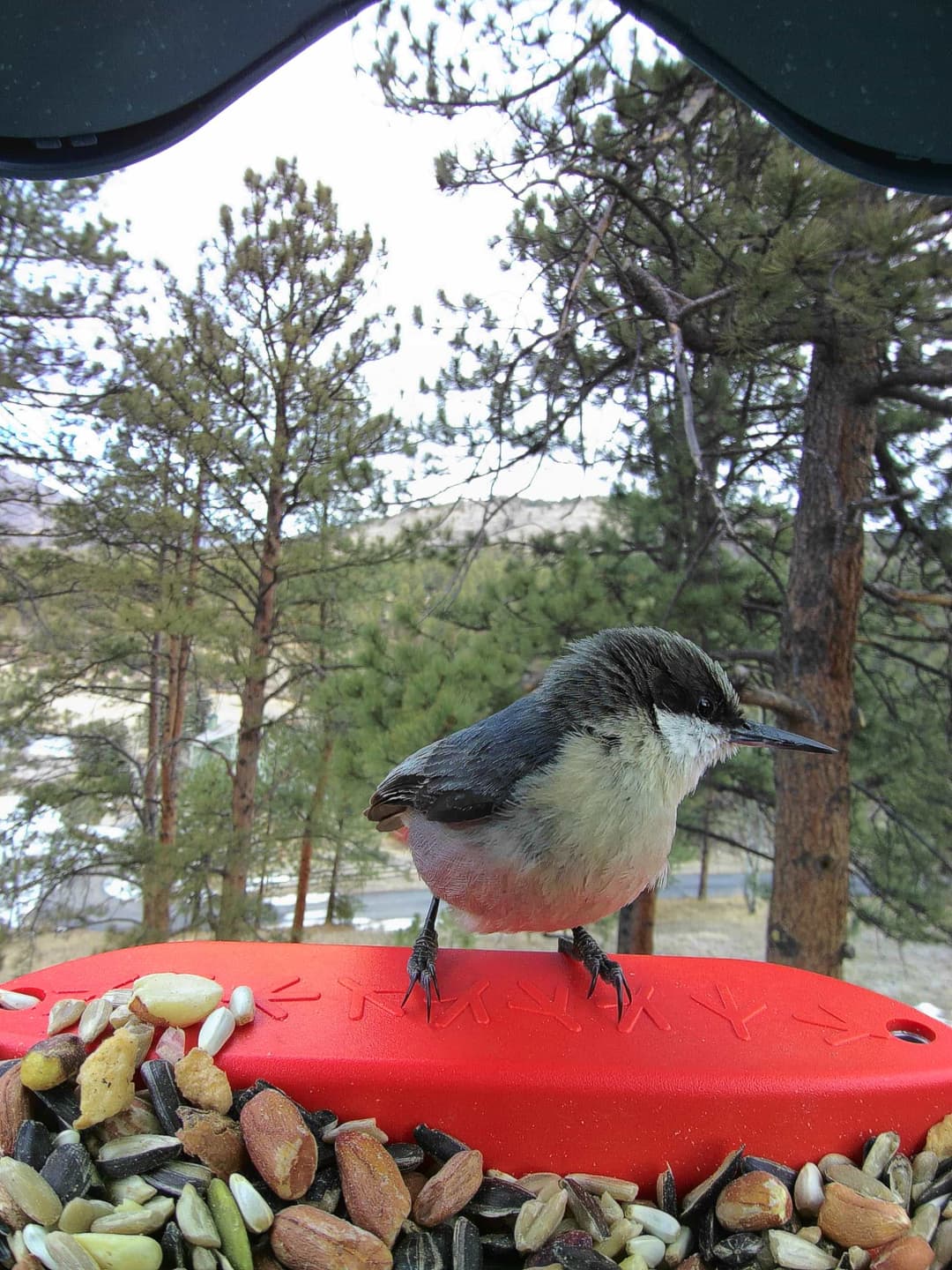
Pygmy Nuthatch vs White-Breasted Nuthatch
Pygmy Nuthatches are smaller and have a brownish cap, contrasting the White-Breasted’s black cap and white upperparts. They are more social, often seen in groups.
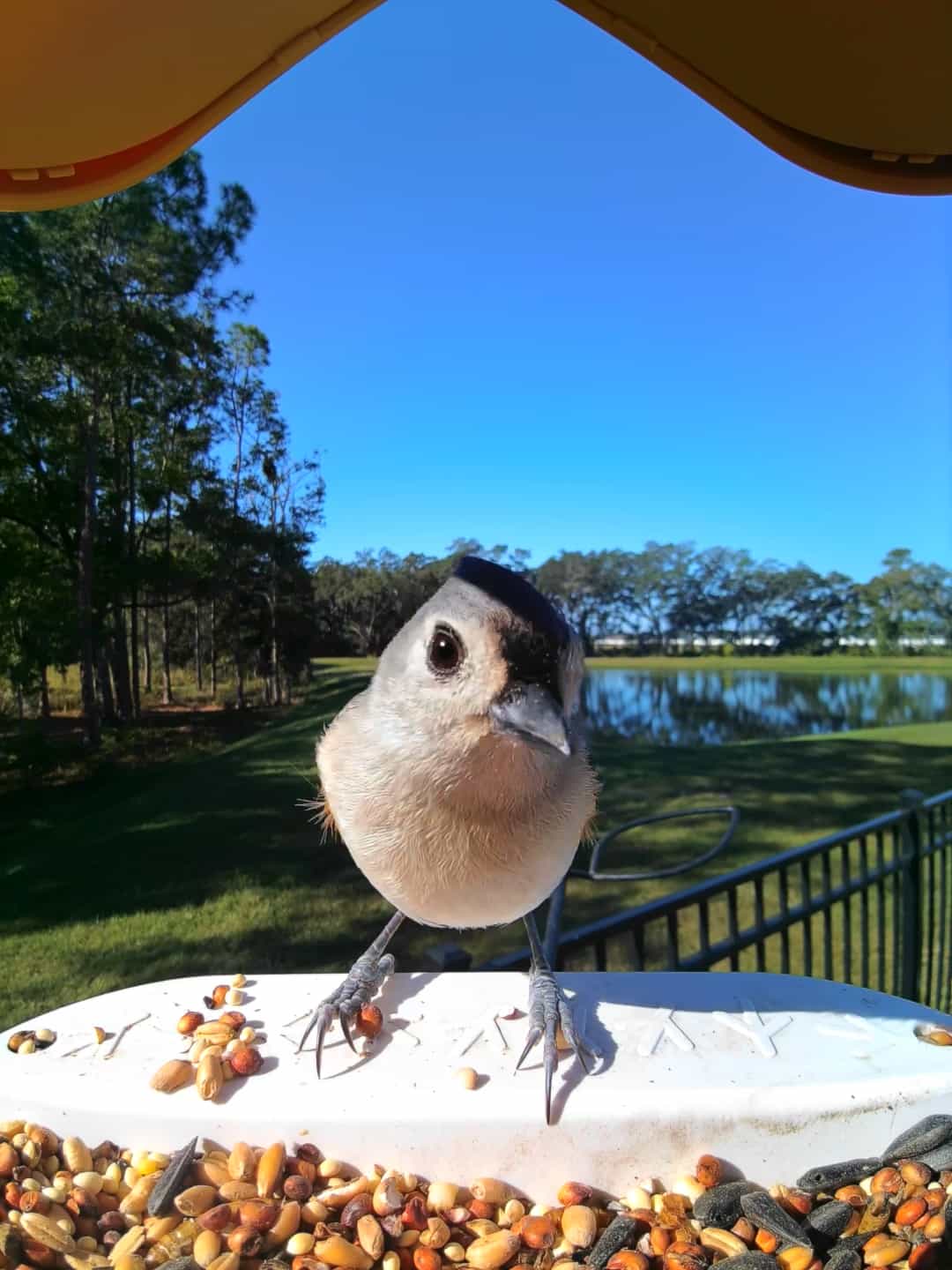
Tufted Titmouse vs White-Breasted Nuthatch
Tufted Titmice are larger, with a prominent crest, absent in nuthatches. Look for the more uniform gray of the Titmouse compared to the contrasting patterns of the nuthatch.
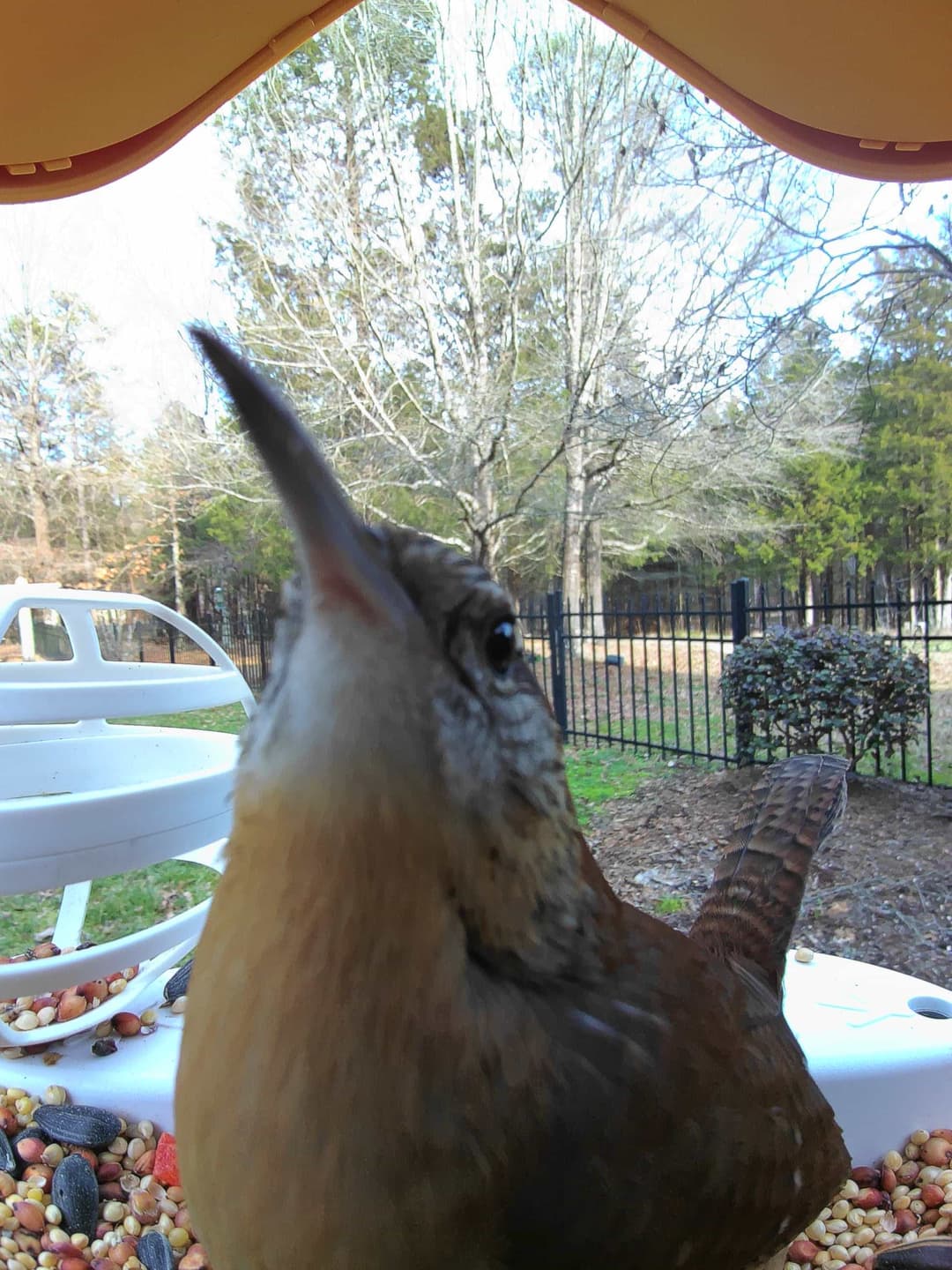
Brown Creeper vs White-Breasted Nuthatch
Brown Creepers are slender with streaked brown backs for camouflage, unlike the White-Breasted’s distinct black and white pattern. Creepers spiral up trees, nuthatches move headfirst down.
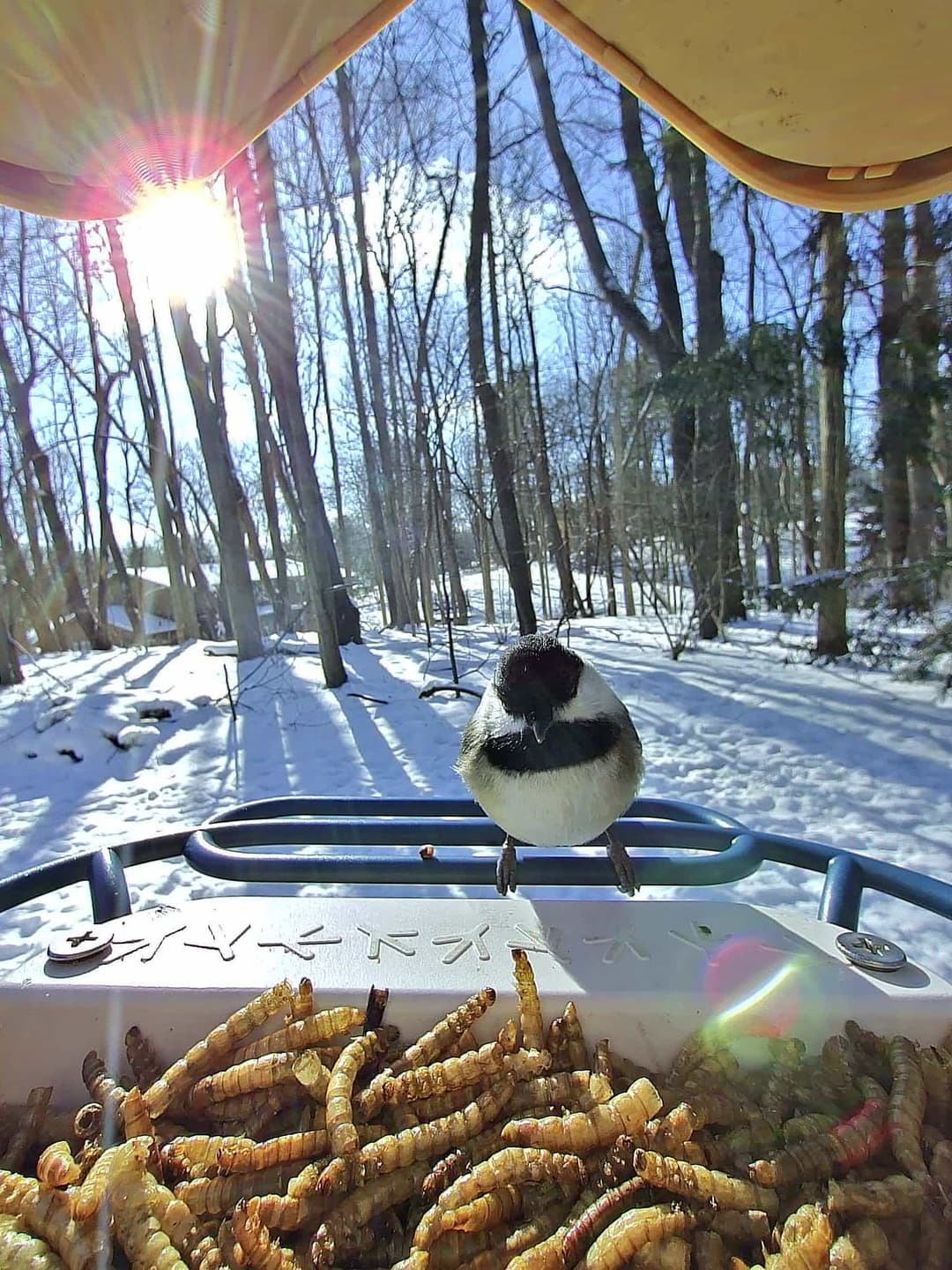
Black-Capped Chickadee vs White-Breasted Nuthatch
Black-Capped Chickadees have a black cap and bib with white cheek patches, while nuthatches sport a more pronounced black-and-white pattern. Chickadees are smaller and more vocal.
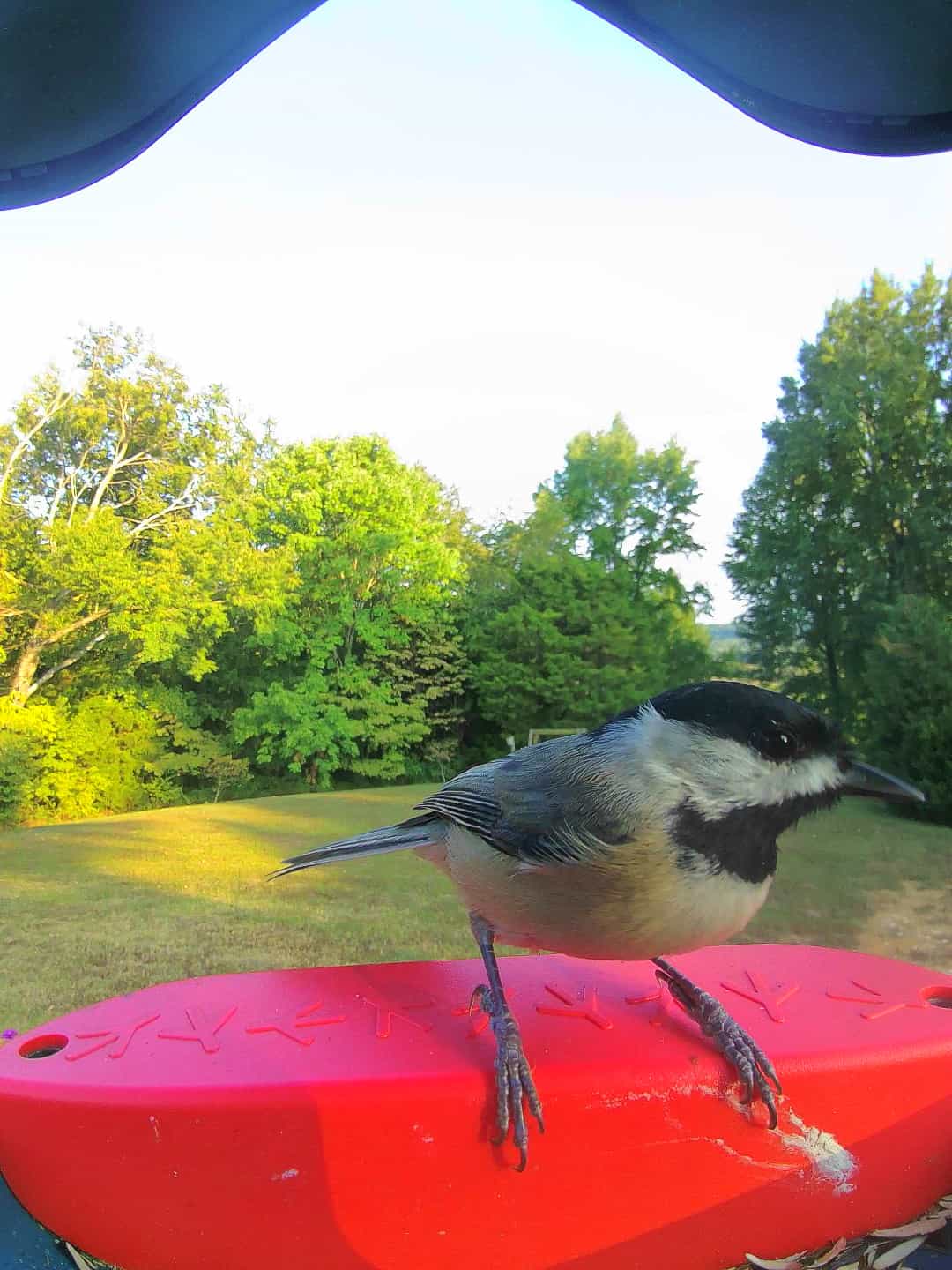
Carolina Chickadee vs White-Breasted Nuthatch
Like the Black-Capped, the Carolina Chickadee is smaller with a black cap and bib. It has subtle differences in calls and is best distinguished by geographic range.
Breeding and nesting habits of the white-breasted nuthatch
Mating behaviors
White-breasted nuthatches engage in courtship display involving calls, wing-flicking, and feeding to attract mates. Pairs remain monogamous, often staying together across seasons. The male showcases nest cavities and participates in allopreening to strengthen pair bonds.
Nesting details
These nuthatches prefer natural cavities or old woodpecker holes in deciduous or mixed forests. They also nest in backyards with mature trees, particularly oak, hickory, or maple. The nest is lined with fur, grass, and shredded bark. Encouraging nesting can be achieved by preserving dead trees or installing nest boxes.
Eggs and chick-rearing
The female lays 5-9 eggs, which are white with reddish-brown spots. Incubation lasts about 12 days, mainly by the female, while the male provides food. Both parents feed the chicks, which fledge around 18-21 days after hatching. Providing a safe, food-rich environment aids successful rearing.
What does a white-breasted nuthatch like to eat?
Insects
Nuts
Seeds
Spiders
Natural diet
The white-breasted nuthatch primarily consumes insects and spiders during the summer. In winter, its diet shifts to include a significant proportion of seeds, which can make up more than 60% of its diet during this season. The young are fed entirely on insects and spiders.
Bird feeders
At bird feeders, the white-breasted nuthatch will also consume suet and peanut-butter mixtures, supplementing its natural diet with these readily available food sources.
Attract the white-breasted nuthatch with their favorite snacks
White-Breasted Nuthatches love nuts and seeds. Sunflower seeds, peanuts, and suet are some of their favorites. Using these as snacks in your bird feeder can readily attract them. Among various options, Bird Buddy seeds seem to produce the best results as they are seasonally chosen by experts, providing the right nutrition to attract and support these birds.
Choosing the right bird feeder type
These agile birds prefer tree trunk-like surfaces. Thus, tube feeders with a perch or hopper feeders are excellent choices. Ensure that the feeder is sturdy and blends with a natural look and feel. It should ideally be able to hold both seeds and nuts to cater to the nuthatch's preference. Space it a bit away from noisy areas for the birds to feed in peace.
Fun tricks to make them stay longer
Nuthatches are known for their communicative noises and 'sing-song' sounds. You too can participate in this language of theirs by recording their calls and playing them quietly near the feeder. Remember not to play it too loud or too often as it can distress them. Make your yard a Nuthatch-friendly space with plenty of shrubs and trees for them to feel safe and welcomed.
Where can you find white-breasted nuthatches?
Based on Birdbuddy sighting data. The heatmap shows where Birdbuddy users have spotted this species.
Embed this map
This map shows the full native range based on scientific range data.
Primary habitat
The white-breasted nuthatch's primary habitat is mature deciduous or mixed forests featuring some conifers. It typically avoids pure coniferous forests.
Additional range
Apart from forests, the bird is known to inhabit woodlots, groves, shade trees, woodland edges, along rivers, roads and clearings. Surprisingly, it also ventures into suburban areas and parks provided large trees are present.
Do they migrate?
The White-breasted Nuthatch is typically a permanent resident throughout its range, which spans across much of North America. Unlike many bird species, it does not usually follow a regular migratory pattern. However, in some occasional years, particularly in the western and northern parts of its range, populations of White-breasted Nuthatches may exhibit an irruptive movement. This phenomenon is not well understood and occurs without a specific pattern or regular timing. It is often less frequent and not as pronounced as the irruptions seen in the closely related Red-breasted Nuthatch. When these irruptions occur, White-breasted Nuthatches may venture southward, but there is limited data on specific routes, timing, or key locations due to the infrequent and unpredictable nature of these movements. Generally, they stay within areas where habitat conditions remain suitable, such as deciduous and mixed forests with ample tree cover for foraging and nesting. Nonetheless, the majority of White-breasted Nuthatches remain in their established territories year-round, taking advantage of their adaptability in various environments.
What is the role of white-breasted nuthatches in nature and how to protect them?
Conservation status
The white-breasted nuthatch is widespread and common, with stable or possibly increasing numbers, indicating it is not currently vulnerable or endangered. As such, its conservation status suggests it is not under significant threat. While there are no critical conservation efforts targeted specifically at this species, maintaining healthy forest habitats benefits them indirectly. Significant threats to the species are minimal, but habitat loss due to deforestation and urban development could pose future risks. Therefore, preserving natural forest ecosystems is essential to ensure the continued stability of their population.
Ecological role of white-breasted nuthatches
Its role in the ecosystem
The ecological importance of the White-breasted Nuthatch is tied to its feeding and nesting behavior. Its diet mainly consists of insects and spiders which it feeds on during the summer. This feeding behavior plays a crucial role in pest control by naturally reducing populations of insects and spiders that could otherwise become pests. During fall and winter, its diet changes to include seeds as well, indirectly aiding in the dispersal of tree seeds, contributing to the growth of forests. Additionally, the fact that it can cache food items in bark crevices means it is acting as a seed disperser. Lastly, their nesting in old woodpecker cavities or natural cavities provides these cavities with a secondary use and can prevent the proliferation of insects that might use these cavities for laying eggs or as homes.
How to help protect white-breasted nuthatches
Preservation tips
Habitat preservation strategies
Supporting the white-breasted nuthatch requires active efforts towards habitat preservation. This can be done through conserving old-growth forests, as they prefer mature woodlands with large trees. Managing green spaces with a focus on native flora will also enhance their habitat, providing secure areas for them to forage and nest. Additionally, discourage deforestation and excessive pruning which may destroy their habitats.
Community science initiatives
Raise community awareness for the white-breasted nuthatch by organizing birdwatch programs that can help in their identification and reporting. Engage in citizen science initiatives such as the Audubon’s Christmas Bird Count or Project Feederwatch, which helps scientists track trends in bird populations. Encourage the public to install birdhouses in their yards that suit nuthatches to promote safe nesting. Propagate the importance of not using pesticides, as they impact the insects which the nuthatches feed on.