
Tufted Titmouse
Tufted Titmouse
Baeolophus bicolor


Quick Identification guide
Quick Identification guide
- •
Features a distinctive crest atop its head, lending it an alert appearance
- •
Displays soft gray upperparts with pale underparts, accented by a rusty or peachy flanks
- •
Possesses a short, stout beak, perfectly suited for foraging and cracking seeds
What does a tufted titmouse sound like?
The tufted titmouse typically vocalizes through a series of 4 to 8 whistled notes, creating a distinctive pattern which sounds similar to "Peter-Peter." This chirping pattern is often repeated continuously, providing a recognizable call. Their primary call types include a buzzy tone, chip or chirp-like sounds, and various whistle tunes, all falling in pattern suggesting their communicative behavior or potential alert signals. Their vocal variety contributes to their unique auditory presence within their habitat.


Description
Tufted titmice are known to hold seeds with their feet and hammer them open with their beaks. Keep your eyes peeled: you might see them dangling upside down or sideways from a tree in search of food. Did you know that titmice were symbols of good luck in most Plains Indian tribes, except the Cherokee, where they were associated with lying and bragging?
The tufted titmouse can weigh between 18to26grams and be from14to16centimeters tall.
The Tufted Titmouse typically lives up to 13 years. Compared to the related species, the Carolina Chickadee, lifespan is similar with maximum age reported at 12 years. However, the average lifespan for these species in the wild is typically much lower due to factors like predation and disease. An individual's lifespan can significantly increase when living in low-risk, resource rich environments like backyards.
Did you know?
Most popular questions about tufted titmouse
How to recognise a tufted titmouse?
General appearance
The tufted titmouse exhibits a general length of 6 inches or approximately 15 cm. It is predominantly recognizable by its gray and white coloration, complemented with black on the forehead. A distinguishing feature is its perky crest, along with a pale face and rusty sides. It is of similar size to a robin or a sparrow. In terms of shape, both its wings and tail are rounded, with the tail also being square-tipped.
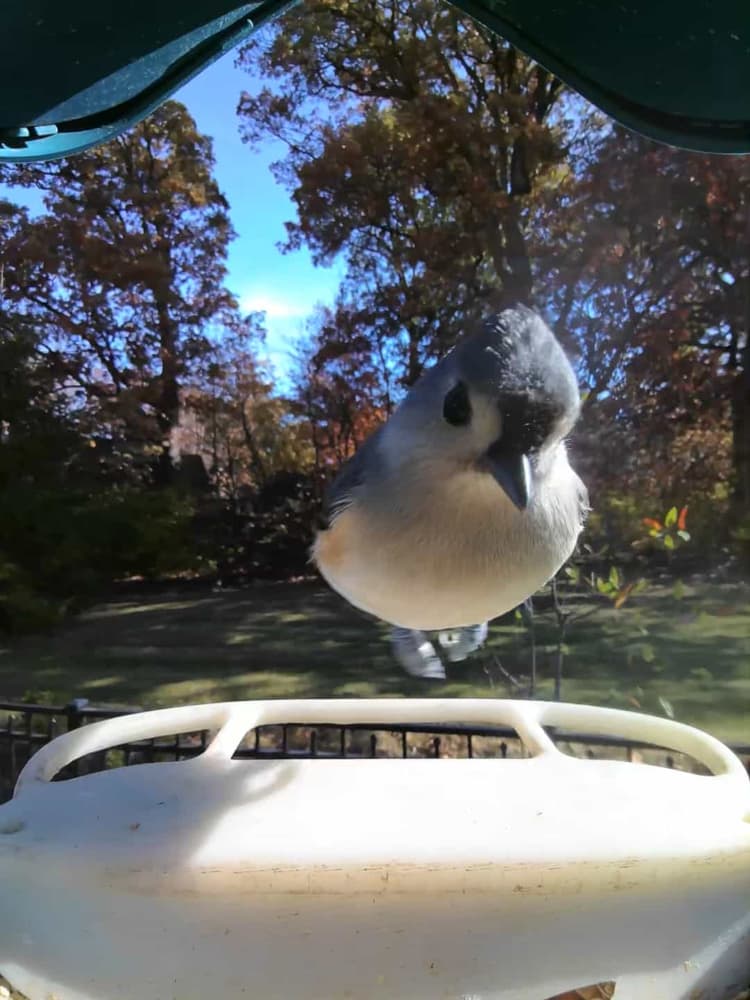
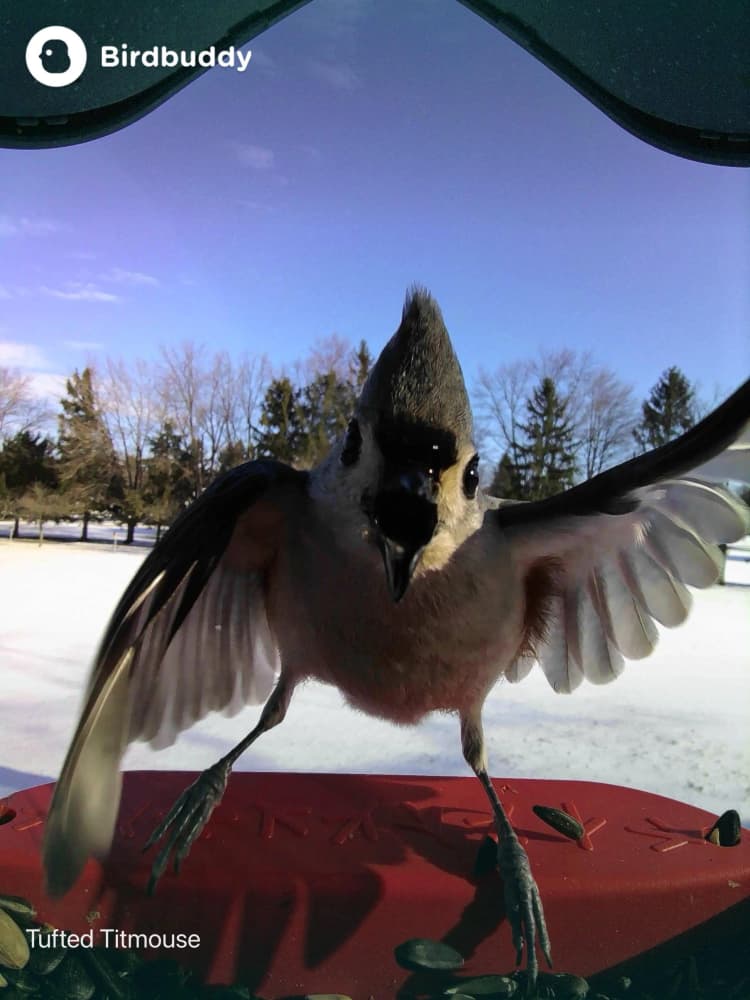
Male vs female
There are no significant noticeable differences between the males and females in terms of coloration and physical traits. Both sexes of the tufted titmouse exhibit similar features including the characteristic crest, pale face, and black forehead. This makes it challenging to differentiate between the genders in the wild purely based on appearance.
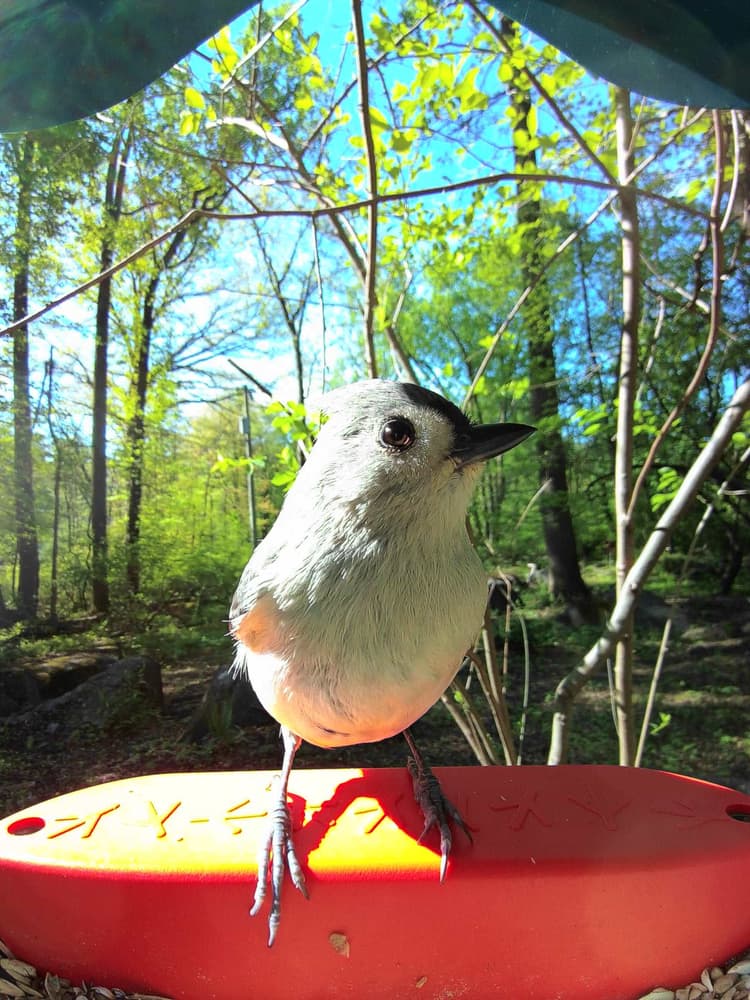
Male Tufted Titmouse
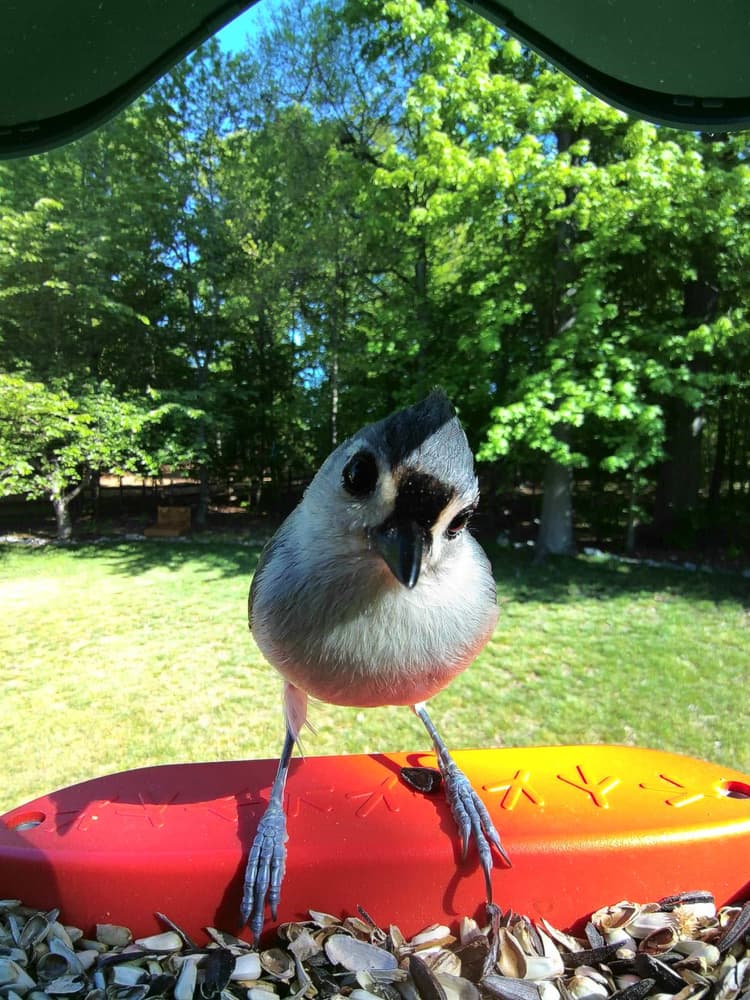
Female Tufted Titmouse
Juvenile
Juvenile tufted titmice are generally similar to adults in appearance. However, their coloration might be slightly less vivid, and their foreheads may not be as boldly black. Over time, as they mature, these subtle variations gradually fade, making them resemble the adult birds more closely. It's important to note that these differences may not be very conspicuous and require close observation to spot.
Often mistaken for
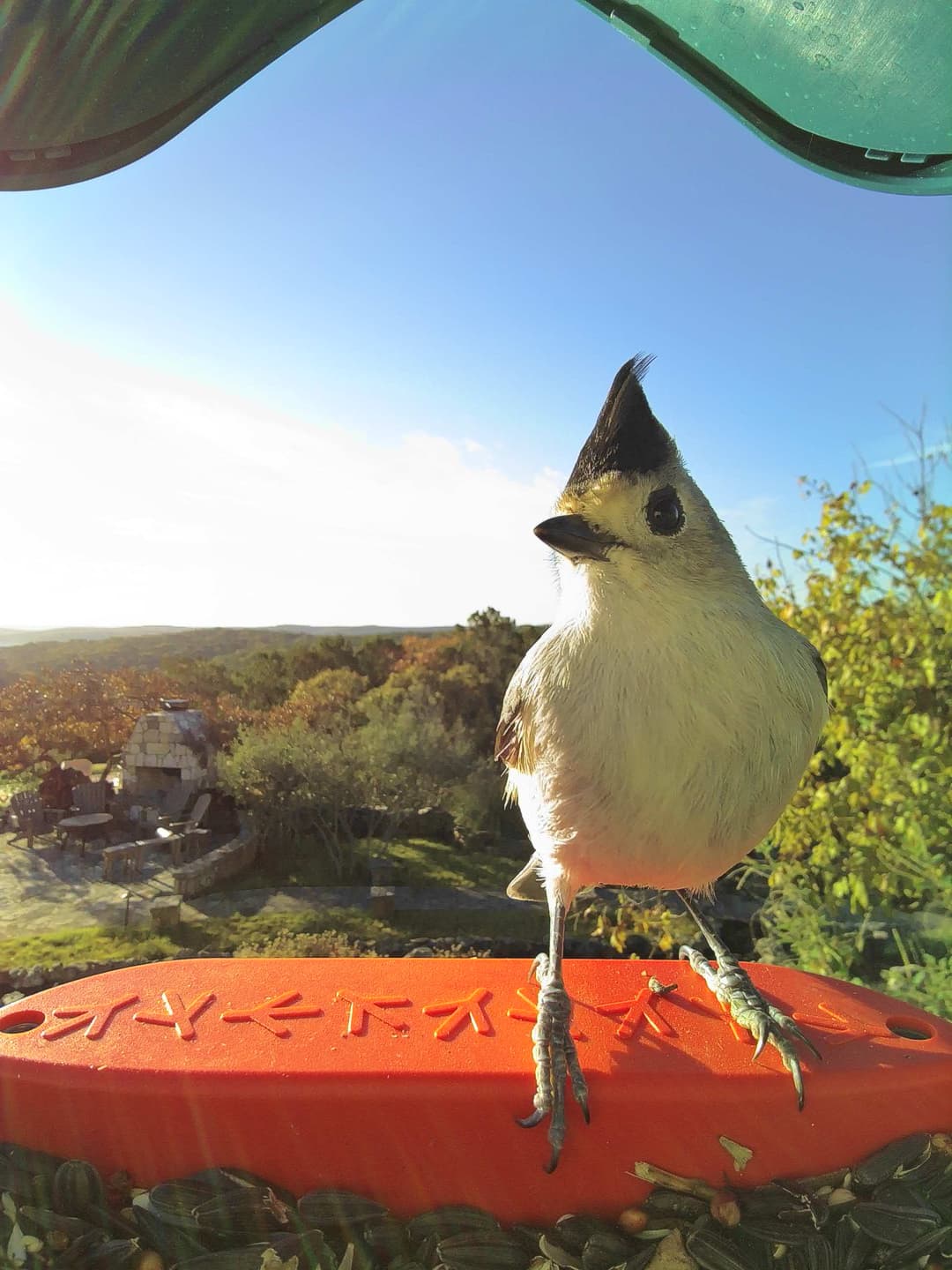
Black-Crested Titmouse vs Tufted Titmouse
Tufted Titmouse and Black-Crested Titmouse are similar, but the latter has a distinctive black crest, contrasting with the Tufted's gray crest. Both have a gray body and white front, but the Black-Crested version often appears in Texas, while the Tufted is more eastern.
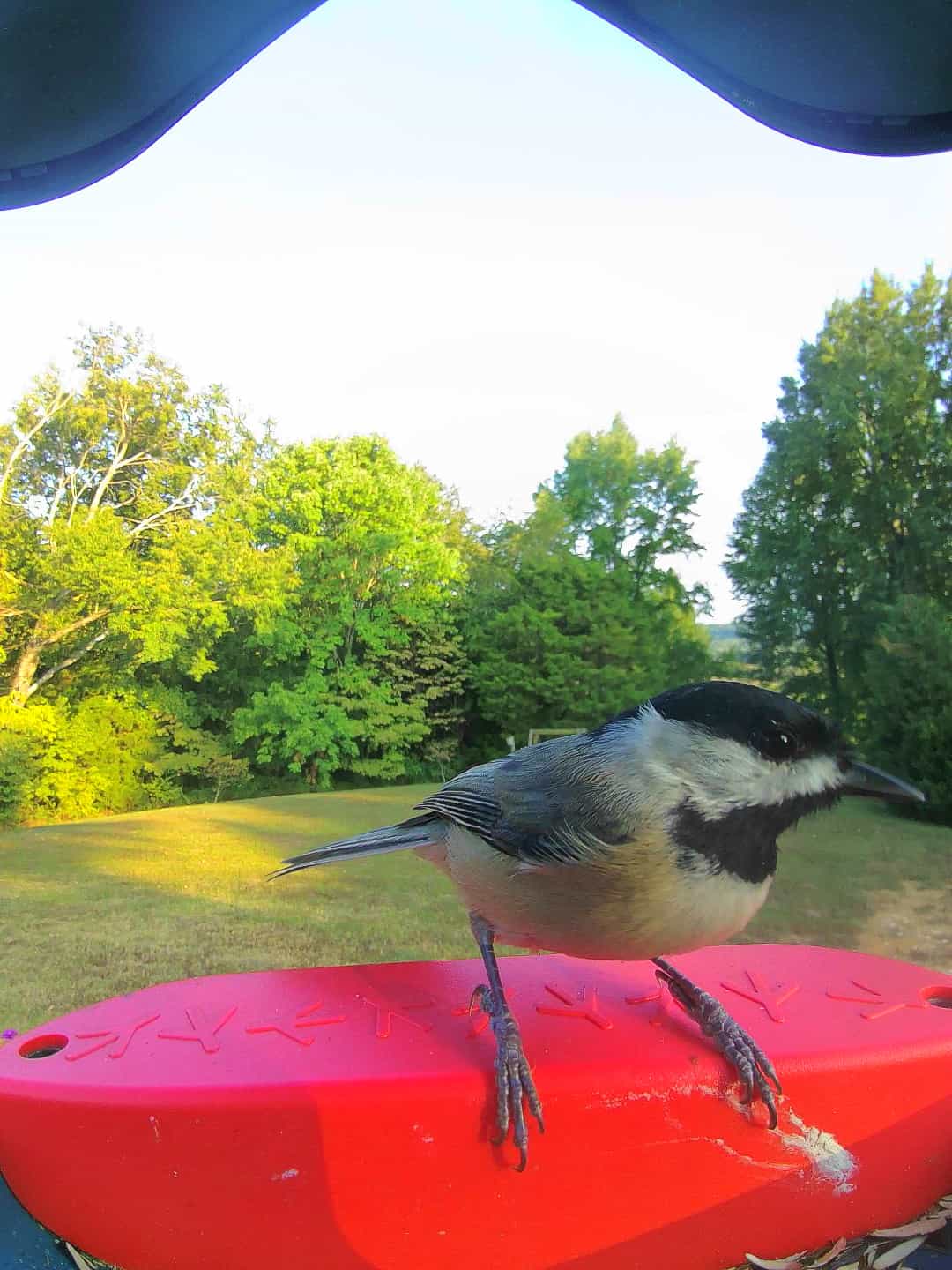
Carolina Chickadee vs Tufted Titmouse
Carolina Chickadees are smaller, with a black cap and bib that distinguish them from the Tufted Titmouse, which lacks the black markings and has a gray crest. Listen for the Titmouse's 'peter-peter' song versus the Chickadee's 'fee-bee' call.
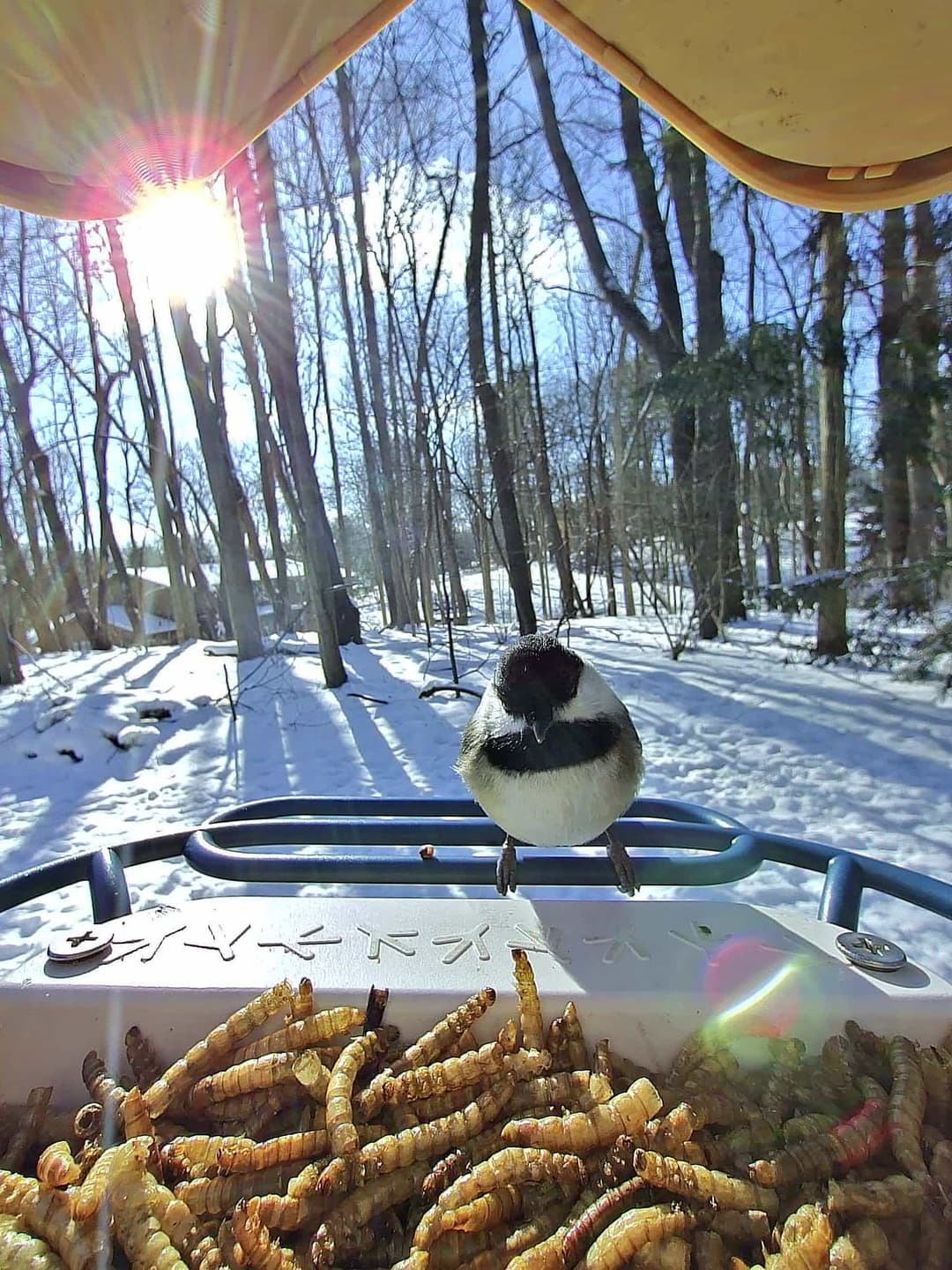
Black-Capped Chickadee vs Tufted Titmouse
Black-Capped Chickadees feature a distinctive black cap and bib, unlike the gray-crested Tufted Titmouse. Chickadees are smaller and rounder, with a 'chick-a-dee-dee-dee' call, contrasting with the Tufted's 'peter-peter' song.
Breeding and nesting habits of the tufted titmouse
Mating behaviors
Tufted titmice may remain paired throughout the year. During the courtship stage, males often feed females, a behavior that continues until after the eggs hatch. Occasionally, a 'helper,' usually an offspring from the previous year, assists the breeding pair.
Nesting details
These birds nest in holes in trees, preferring natural cavities or old woodpecker holes, typically around 35 feet above ground but ranging from 3 to 90 feet. They do not excavate these cavities but may use nest boxes. Nests are likely built by females using grass, moss, leaves, and bark, lined with soft materials like animal hair, which they may collect from live animals or humans.
Eggs and chick-rearing
The male continues to feed the female during incubation. Specific details about egg-laying and chick-rearing practices are not mentioned. For gardens, providing nest boxes can create a suitable environment for nesting.
What does a tufted titmouse like to eat?
Fruits
Insects
Seeds
Snails
Spiders
Natural diet
The tufted titmouse primarily consumes insects and seeds. Insects account for about two-thirds of its annual diet, with caterpillars being the most crucial prey during summer. Their insect diet also includes wasps, bees, sawfly larvae, beetles, true bugs, scale insects, and various other insects, including eggs and pupae. The bird also eats spiders and snails. Seeds, nuts, berries, and small fruits become vital food sources, especially in the winter months.
Bird feeders
At bird feeders, tufted titmice often consume sunflower seeds, suet, peanuts, and other nuts commonly provided by bird enthusiasts. Such foods supplement their natural diet, especially during winter when natural food sources are more scarce.
Attract tufted titmouse with favorite snacks
The Tufted Titmouse is quite partial to seeds, especially sunflower seeds. Suet and peanuts are also a favorite. But, if you want the best results attracting them, consider using Bird Buddy seeds. Chosen by experts for each season, these seeds will certainly lure the tufted titmouse to your yard.
Select proper feeder to attract tufted titmouse
When attracting a tufted titmouse, you must consider the right type of bird feeder. These energetic birds like to cling on feeders, so tube feeders or suet feeders with a tail prop area are the best. If feeders are not for you, simply scatter seeds on a flat platform.
Fun tricks to lure tufted titmouse to your yard
Now to the most exciting part, fun tricks to get these dainty birds to drop by, and hopefully, stay for a sing-along! Plant native shrubs and trees which produce seeds, berries, and insects as these provide a natural habitat. Another trick is to provide nesting materials like soft grass or dry moss during nesting season. Remember to keep your yard quiet and peaceful.
Where can you find tufted titmouses?
Based on Birdbuddy sighting data. The heatmap shows where Birdbuddy users have spotted this species.
Embed this map
This map shows the full native range based on scientific range data.
Primary habitat
The tufted titmouse chiefly resides in deciduous forests with tall trees, particularly favoring woodlands, shade trees, and groves.
Additional range
Additionally, this species can adapt to mixed forests and even human-made environments like orchards, suburbs, and city parks, provided that the trees are large enough.
Do they migrate?
The tufted titmouse is a permanent resident and does not engage in long-distance migration, meaning it generally stays in one place throughout the year. While adult tufted titmice typically reside in the same habitats year-round, young birds may disperse a certain distance from their birthplace after the breeding season. This dispersal can occur in any direction, including northward, but it is not considered a migratory pattern. Their range covers a large area across the eastern United States, from the northeast down to Florida and westward into parts of Texas and the Midwest. The species inhabits deciduous and mixed woodlands, often in suburban or park environments with ample tree cover. The tufted titmouse relies on food sources such as seeds, nuts, insects, and berries, which are available in these regions throughout the year, supporting their non-migratory behavior. This pattern of movement, particularly among juveniles, is a short-distance dispersal rather than a structured migration, focusing on exploring new territories without following a specific route or timing.
What is the role of tufted titmouses in nature and how to protect them?
Conservation status
The tufted titmouse is considered a common species, as it continues to expand its range northward and surveys indicate increasing populations across much of its range. There are no immediate threats categorizing it as vulnerable or endangered. Conservation efforts primarily focus on habitat preservation, as the species benefits from wooded areas and suburban environments. The absence of significant threats suggests a stable outlook for the tufted titmouse at this time. However, maintaining healthy habitats is crucial to supporting their continued prosperity.
Ecological role of tufted titmouses
Its role in the ecosystem
The Tufted Titmouse plays a vital role in both insect control and seed dispersal within its ecosystem. A large portion of its diet comprises insects, including caterpillars, bees, beetles, and wasp larvae. By preying on these species, the bird helps to control the populations of insects that may otherwise become pests. This avian species also feeds on seeds, nuts, and berries, particularly during the winter. Through the process of feeding, it contributes to the vital task of seed dispersal, aiding the propagation of various plant species. Furthermore, the Tufted Titmouse, by storing food and retrieving them later, plays a supplementary role in distributing food resources in its habitat. Its nesting habits provide beneficial recycling of natural resources: reusing old woodpecker holes and other natural tree cavities as nesting sites, thereby desisting from additional forest excavation. Additionally, the species' unique behavior of plucking hair for nest lining, from animals and even humans, illustrates an interesting interaction between different members of the ecosystem.
How to help protect tufted titmouses
Preservation tips
Habitat preservation strategies for tufted titmouse
Preserving the habitat of the Tufted Titmouse involves maintaining mature forests and woodlands that allow for nesting. Avoid heavy landscaping and leave deadwood when safe as it provides essential resources for the titmouse. Plant native shrubs and trees to provide food and shelter. Also, keep cats indoors to protect this bird species as they are a common victim of predation.
Community science initiatives for tufted titmouse conservation
Encourage community involvement in birdwatching initiatives to monitor the Tufted Titmouse population. Support local citizen science such as The Great Backyard Bird Count or Project FeederWatch. Additionally, promote educational programs to raise awareness of the importance of conserving the Tufted Titmouse and its habitat, empowering people to take action. Lastly, advocate for local, regional, and national policies that protect wildlife habitats.