Baltimore Oriole or Orchard Oriole?
Here's how to tell the difference
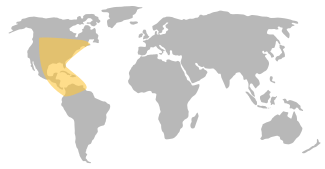
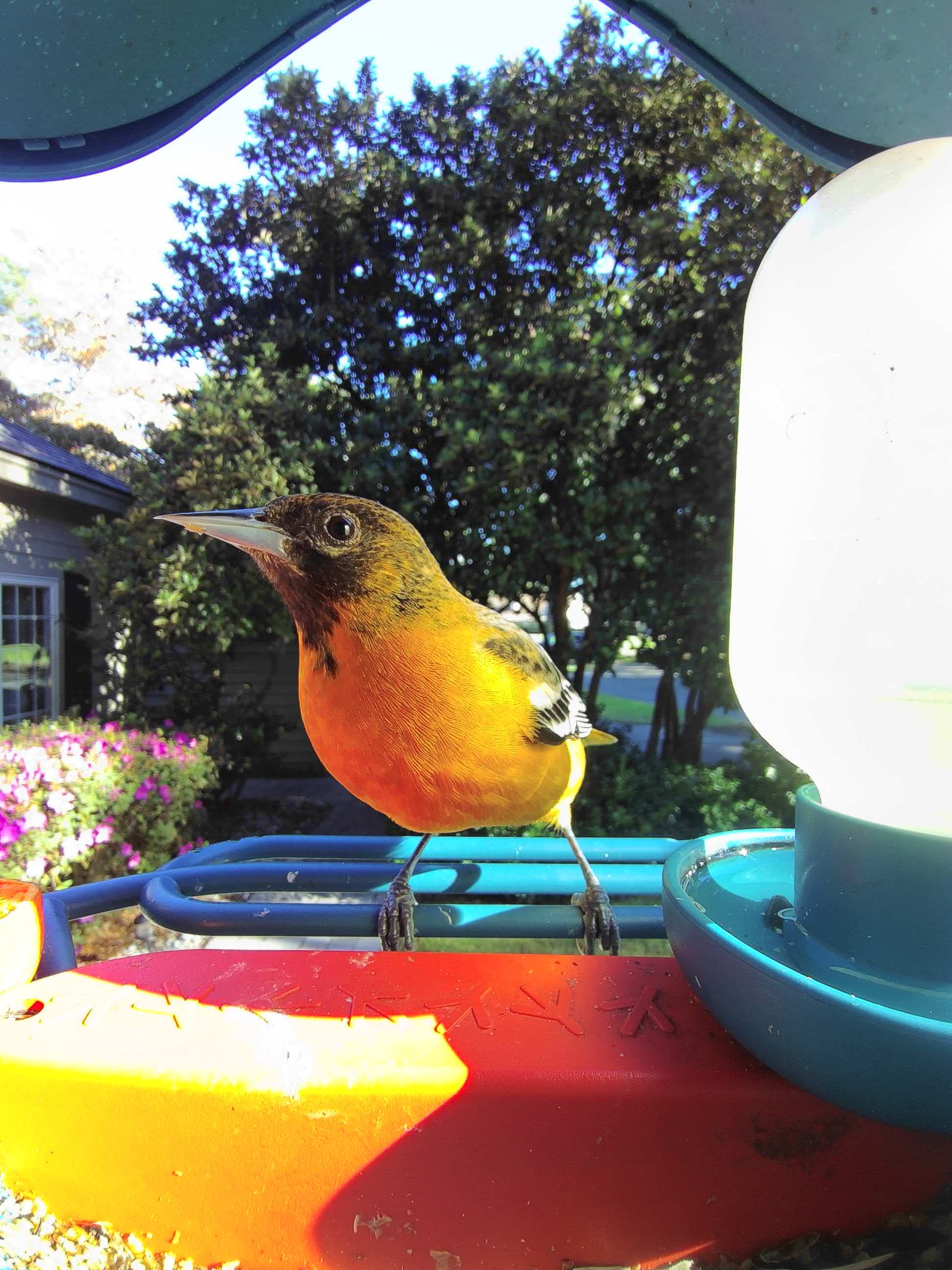


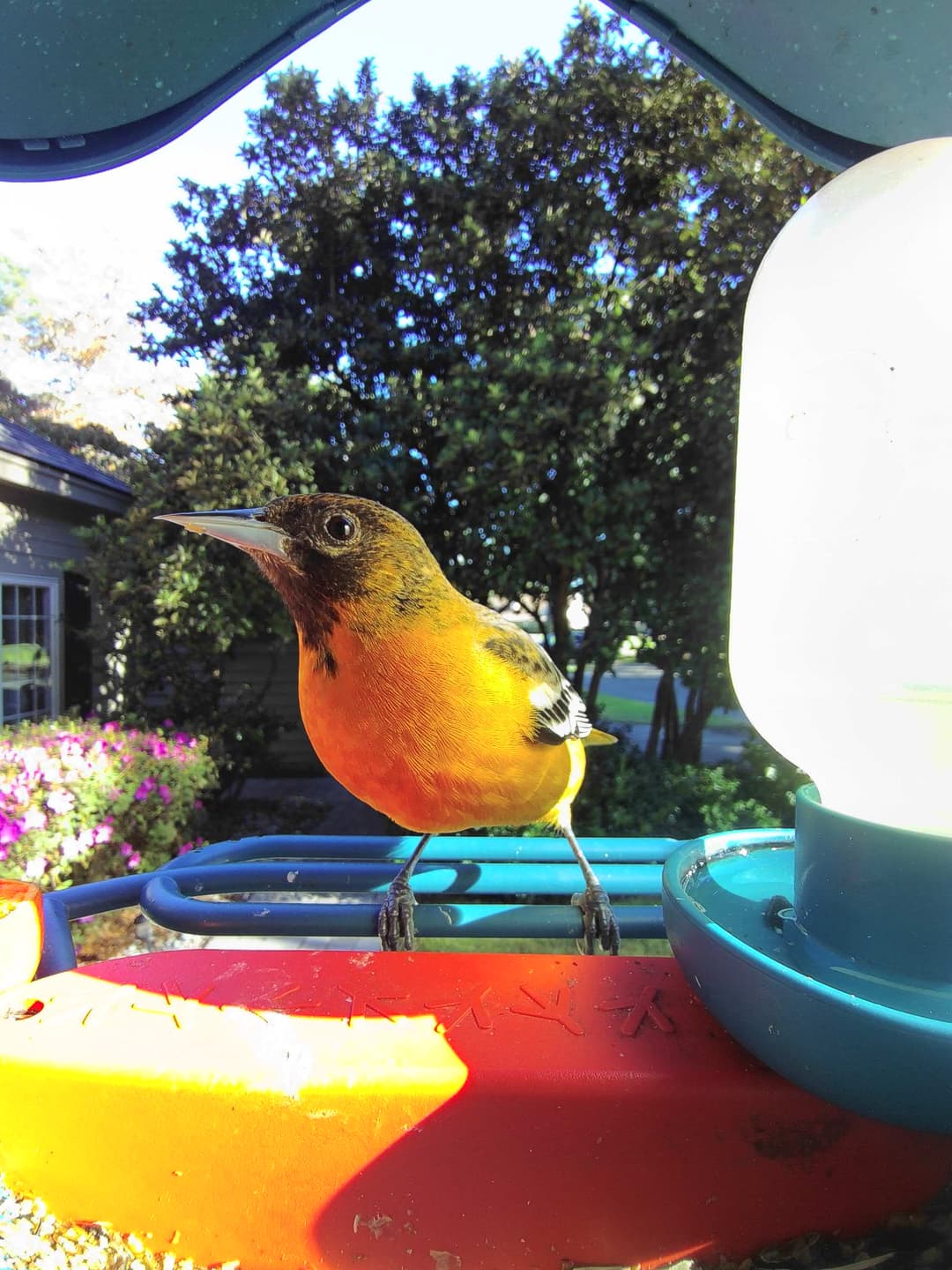
Baltimore Oriole
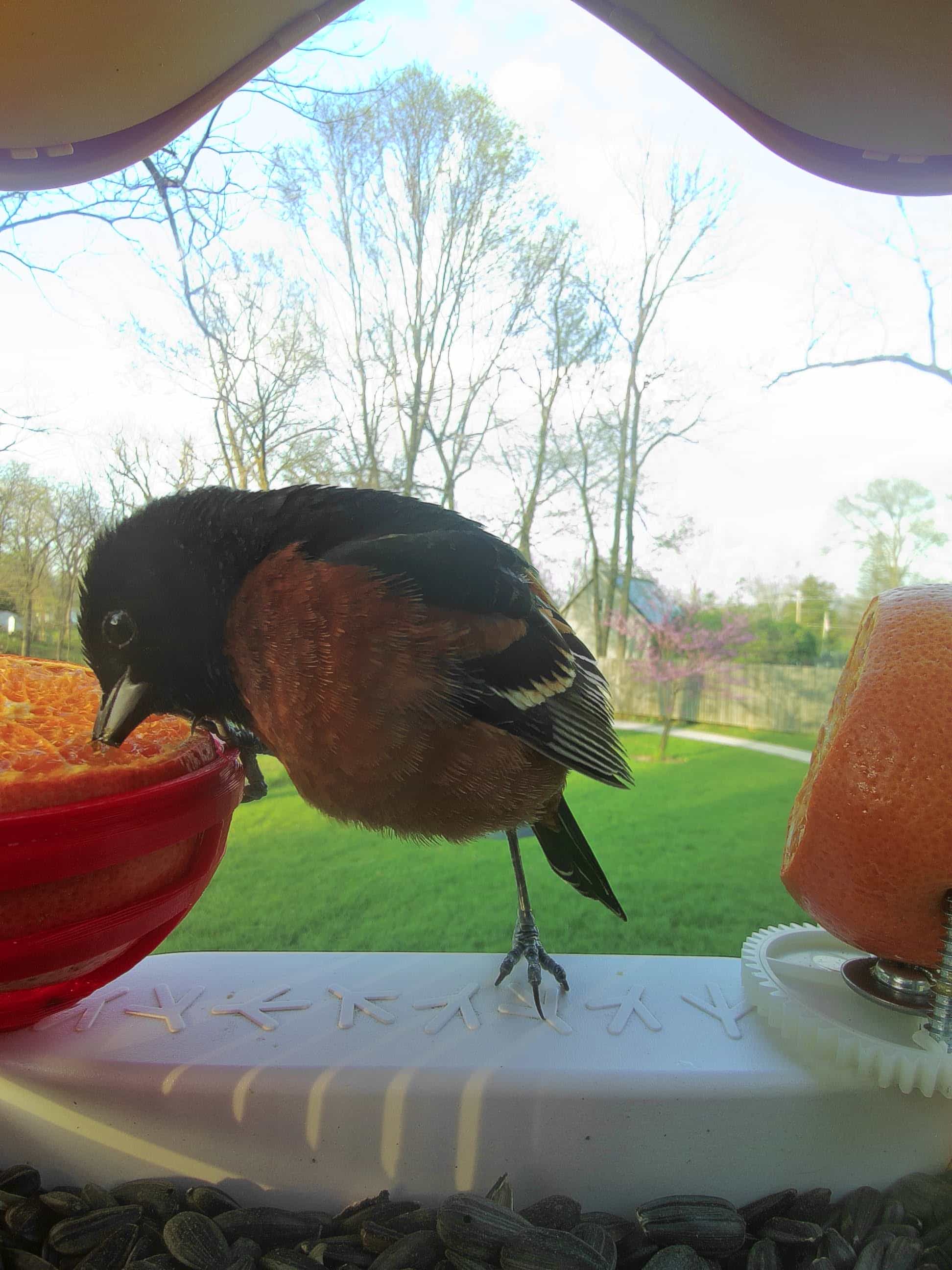


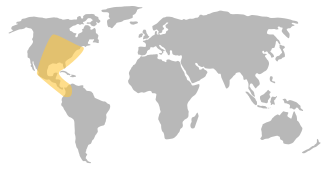
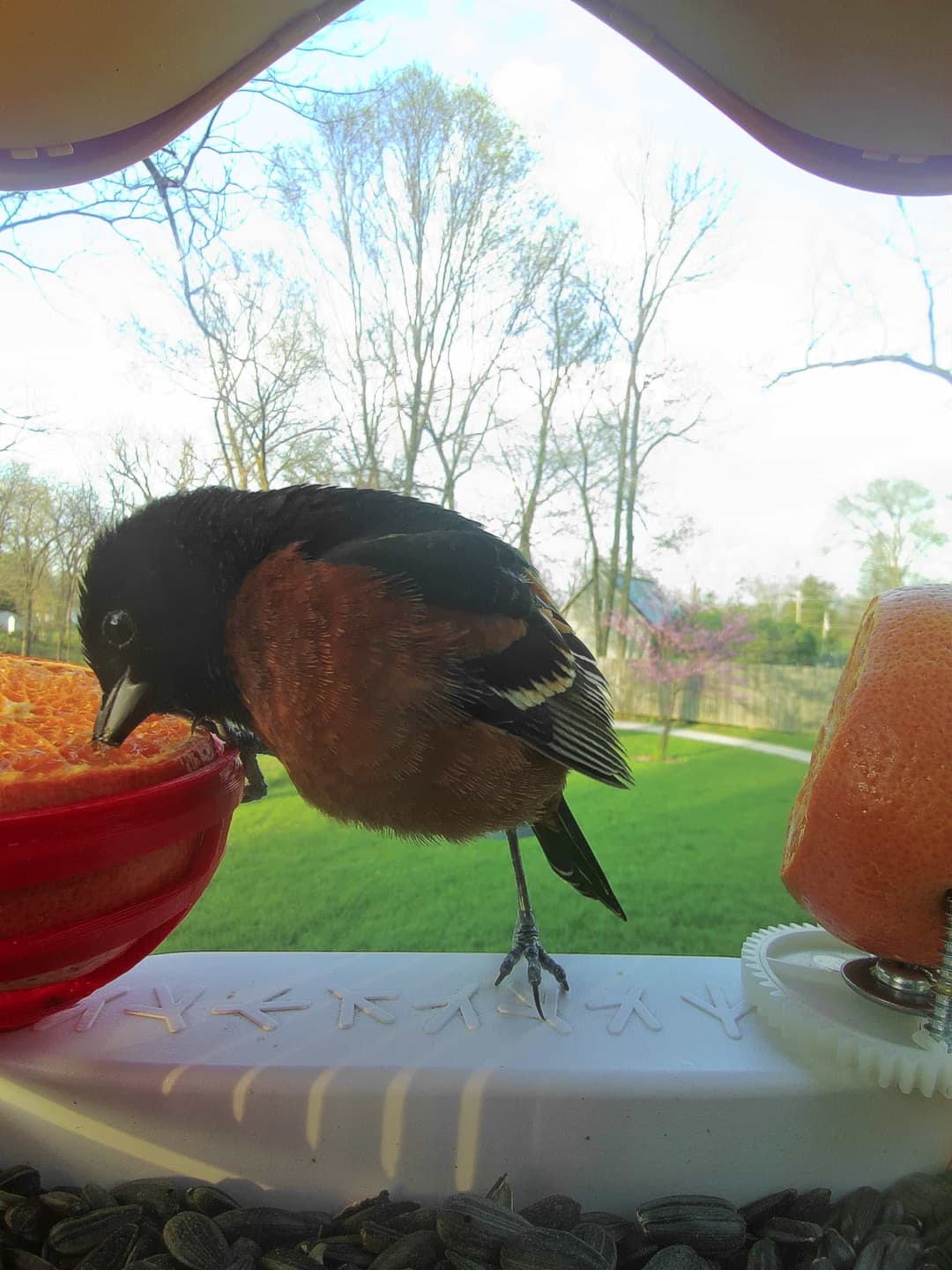
Orchard Oriole
Baltimore Oriole
Icterus galbula
General appearance
The Baltimore Oriole is an eastern bird measuring about 7-8 1/2"(18-22 cm), roughly the size of a Robin or Sparrow. Its markings are bold, with color strikingly black and orange. Its wings are rounded and tail shape can be either rounded or square-tipped.
Male vs female
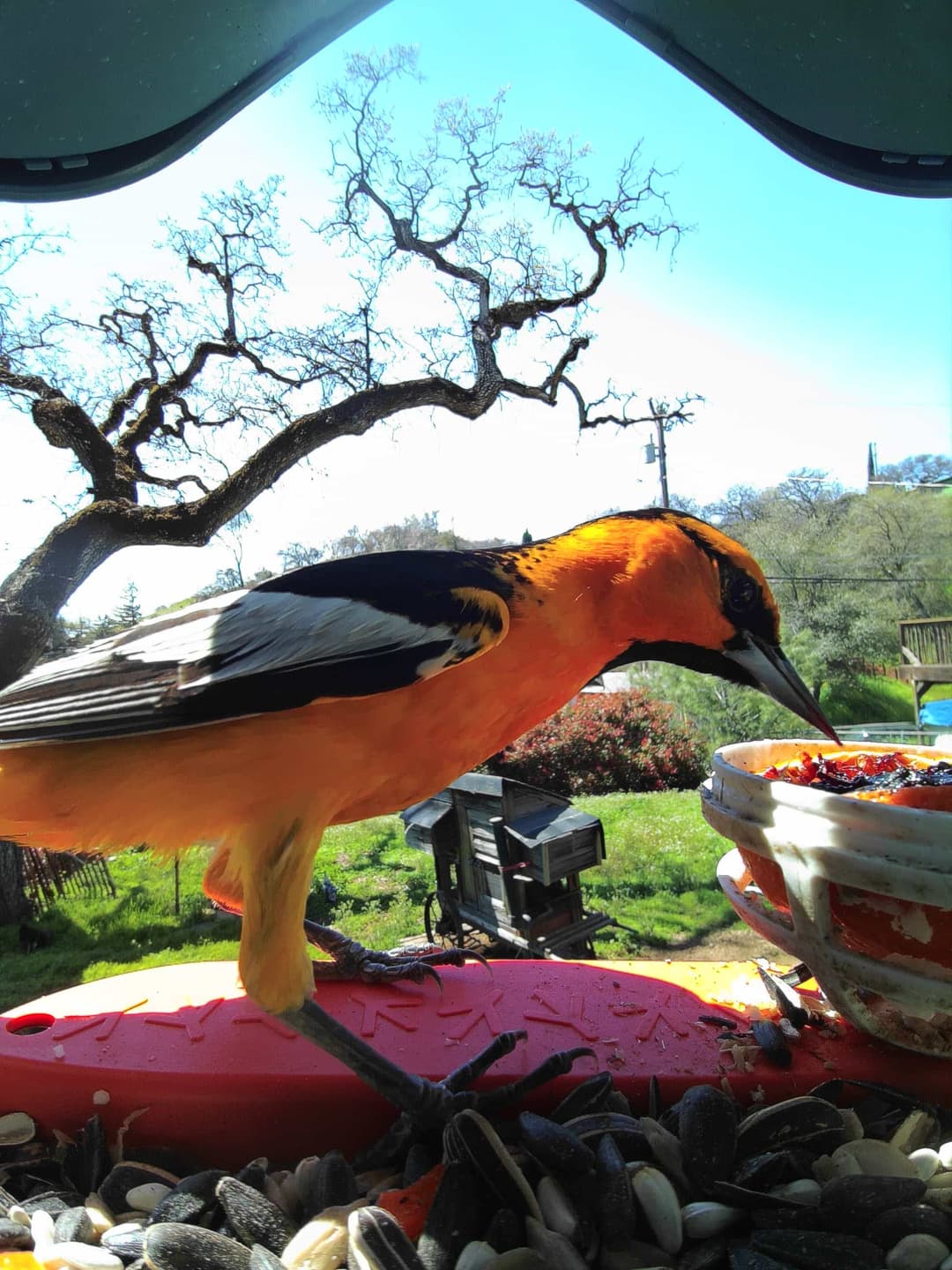
The adult male is unmistakable with its vibrant black and orange coloration. The female, on the other hand, is brown above and tinged orange below. She has white wing-bars and variable amounts of black on her head. In the Great Plains, Baltimore Orioles often interbreed with Bullock's Orioles, producing hybrids with intermediate patterns.
Juvenile
The text does not provide specific details on the appearance of juvenile Baltimore Orioles. However, juvenile birds often have a more muted coloration than adults.
Size
6.7 - 7.5 in/1.1 - 1.4 oz
There's more to learn about Baltimore Oriole
View full detailsOrchard Oriole
Icterus spurius
General appearance
The orchard oriole is a small bird about the size of a robin. It is smaller than the Baltimore Oriole, with a unique rounded wing shape and rounded, square-tipped tail shape. The bird's size is characterized as 7, measured in 18cm. The oriole’s colour palette consists of black, green, orange, red, white, and yellow.
Male vs female
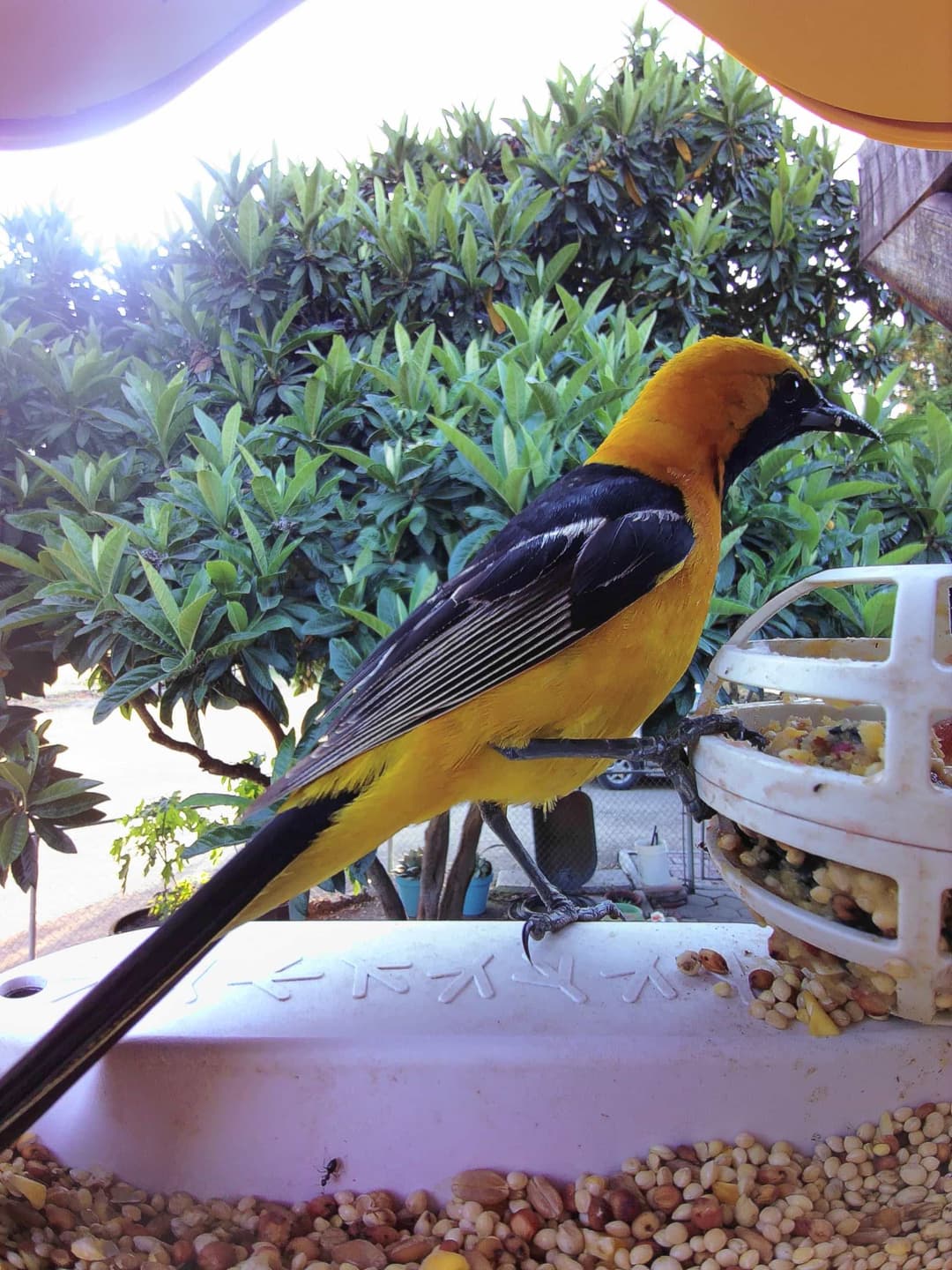
There are noticeable differences between males and females. The adult male orchard oriole is unmistakable with its striking black and chestnut coloration. On the other hand, the female is smaller and flaunts an all yellow-green appearance. They lack the orange tone seen in the female Baltimore and Bullock's Orioles and have a shorter bill compared to Hooded Oriole.
Juvenile
One-year-old males, or juveniles, resemble the females but have a distinguishing black throat. This characteristic is one of the earliest signs to distinguish between young males and females.
Size
5.9 - 7.1 in/0.6 - 0.9 oz
There's more to learn about Orchard Oriole
View full detailsHow to tell the Baltimore Oriole from the Orchard Oriole
Visual differences
The Baltimore Oriole is larger (7-8.5 inches) with bold black and orange plumage and rounded or square-tipped tails. Adult males are vibrant black and orange, while females are brownish with orange tinges. In contrast, the Orchard Oriole is smaller (6-7 inches), with males having black and chestnut plumage. Female Orchard Orioles are yellow-green, lacking the oranges seen in female Baltimore Orioles. The Orchard Oriole has a unique rounded wing shape and shorter bills. Juvenile male Orchard Orioles display black throats early on, distinguishing them from females.
Key differences and behavior
Baltimore Orioles and Orchard Orioles exhibit distinct behavioral and ecological traits. Baltimore Orioles are robust nest weavers, exhibiting strong territorial singing by males. They favor open woods and town trees, nesting higher, around 20-30 feet off the ground. Their diet includes insects, berries, and nectar, and they are frequent visitors at feeders for sugar-water and fruit. Conversely, Orchard Orioles are less territorial, allowing multiple pairs to nest near each other. They inhabit semi-open habitats and are more flexible in nesting locations, from trees to shrubs or marshes, usually 10-20 feet high. Their diet is insect-heavy, but they also consume berries and nectar, displaying less feeder dependency. Baltimore Orioles migrate to tropical regions, whereas Orchard Orioles choose tropical lowlands. Both species perform male courtship singing, but Baltimore Orioles are noted for more elaborate courtship displays. Overall, Baltimore Orioles prefer higher canopies and urban areas, while Orchard Orioles opt for variety and proximity to open spaces.
Still not sure? Here are more lookalikes!
Baltimore Oriole vs Bullock’s Oriole
Baltimore Oriole vs American Robin

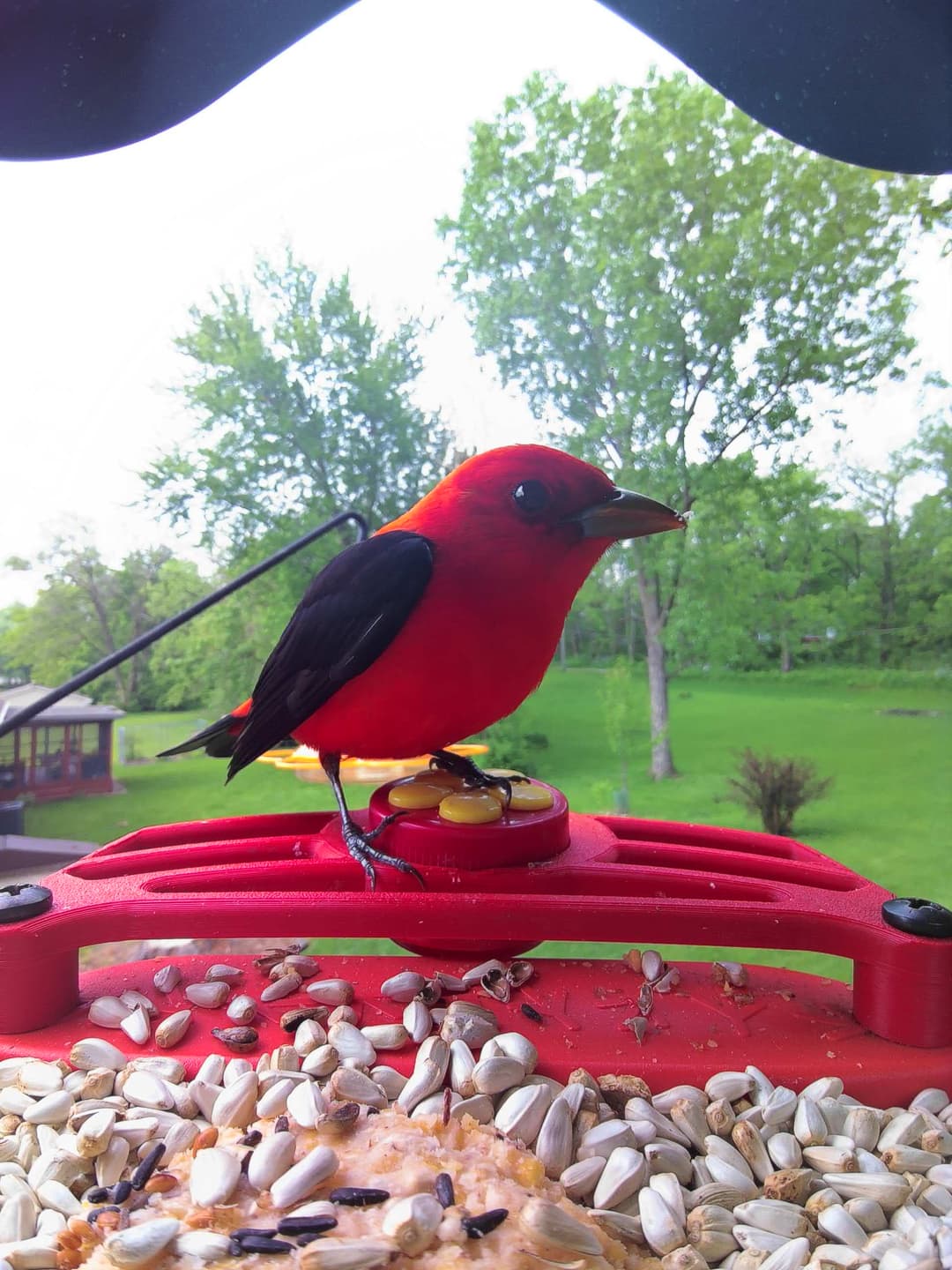
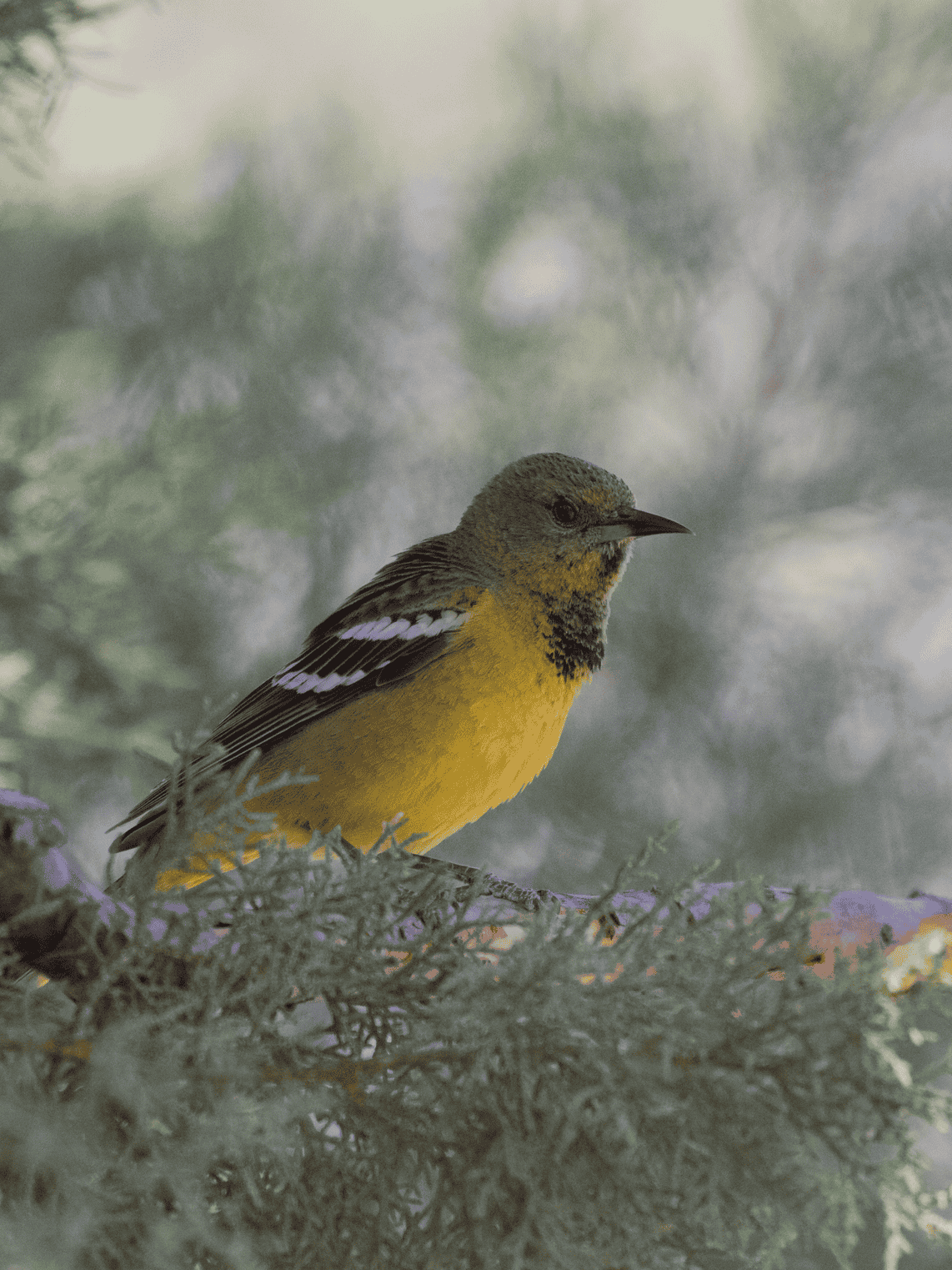
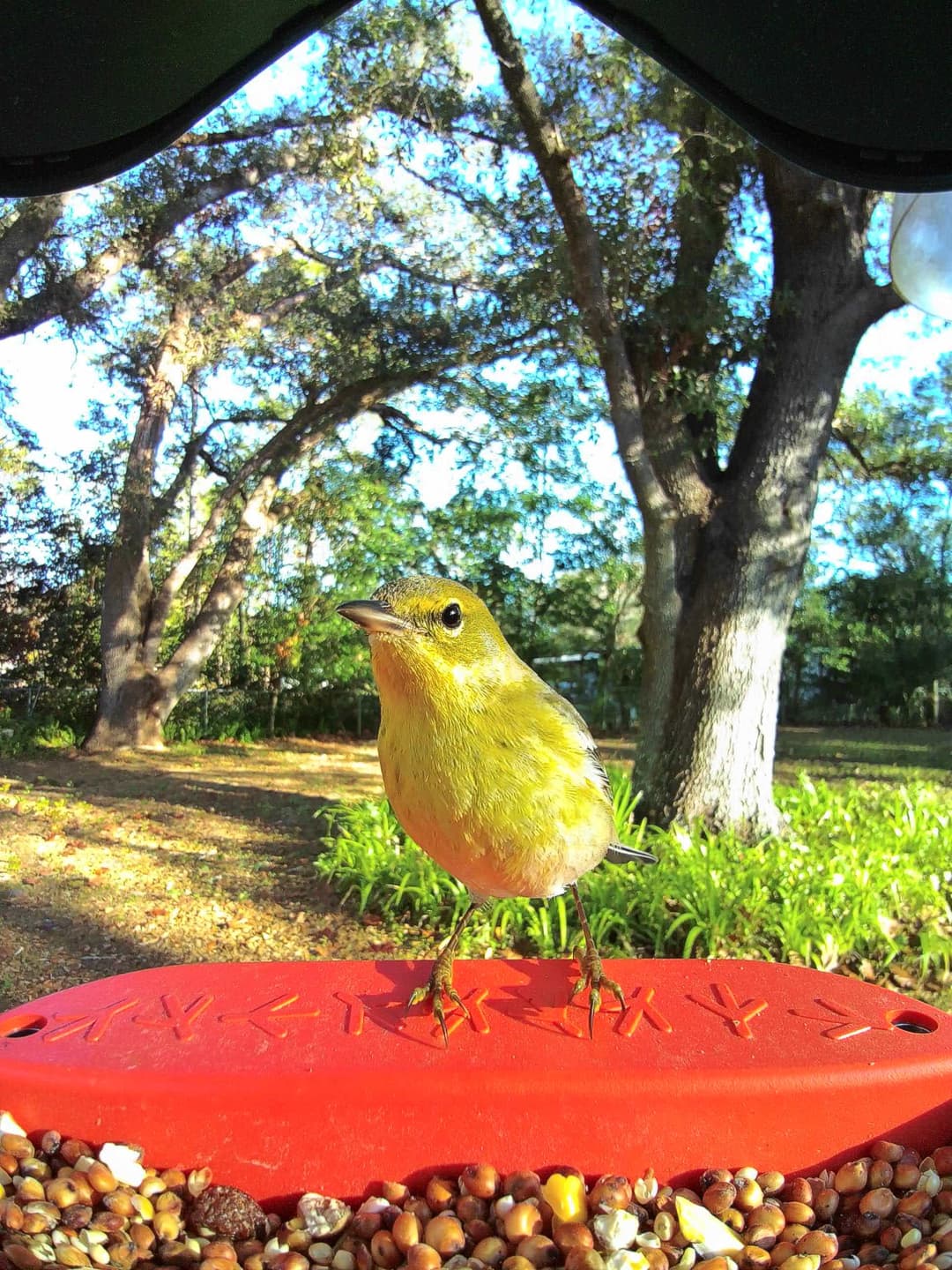
Orchard Oriole vs Pine Warbler
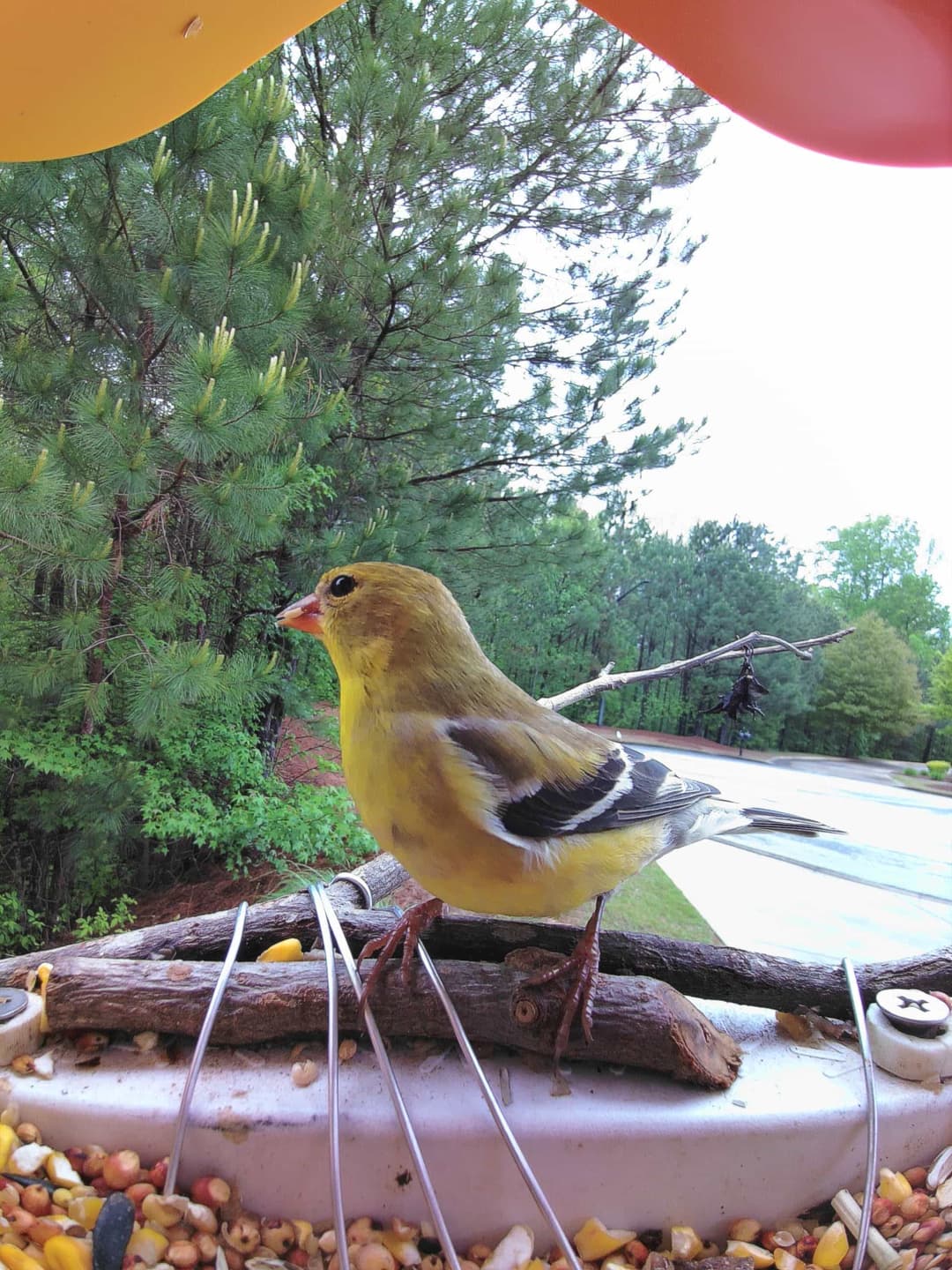
Orchard Oriole vs American Goldfinch
Baltimore Oriole vs [Select a bird]

[Select a bird]
Pick a bird to compare
Orchard Oriole vs [Select a bird]
[Select a bird]
Pick a bird to compare