
Orchard Oriole
Orchard Oriole
Icterus spurius


Quick Identification guide
Quick Identification guide
- •
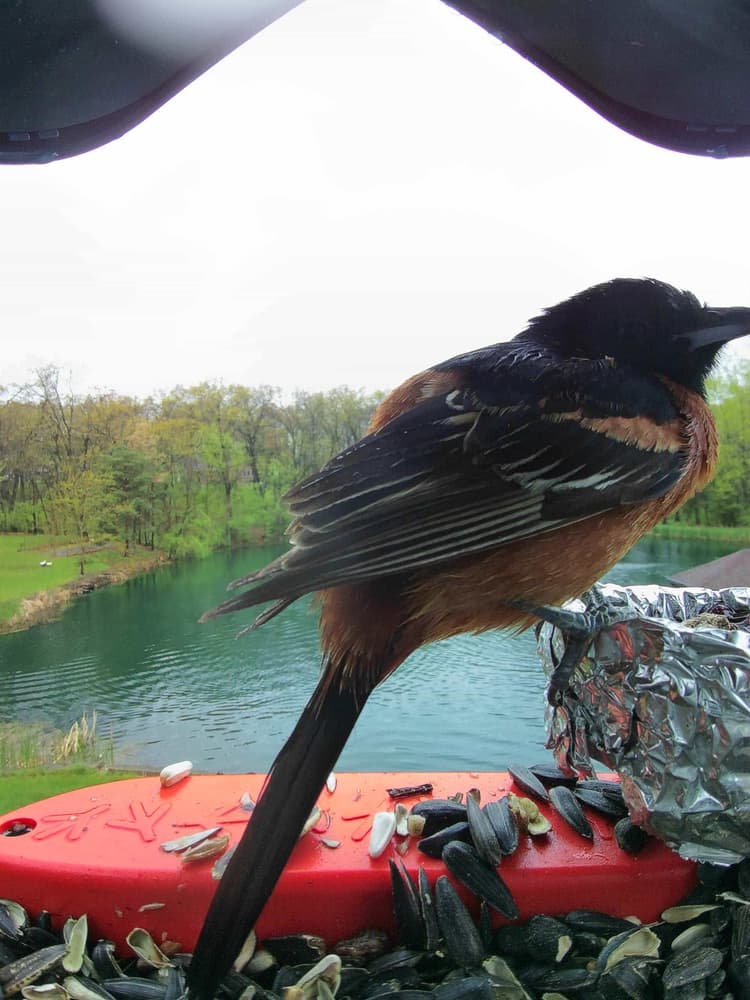
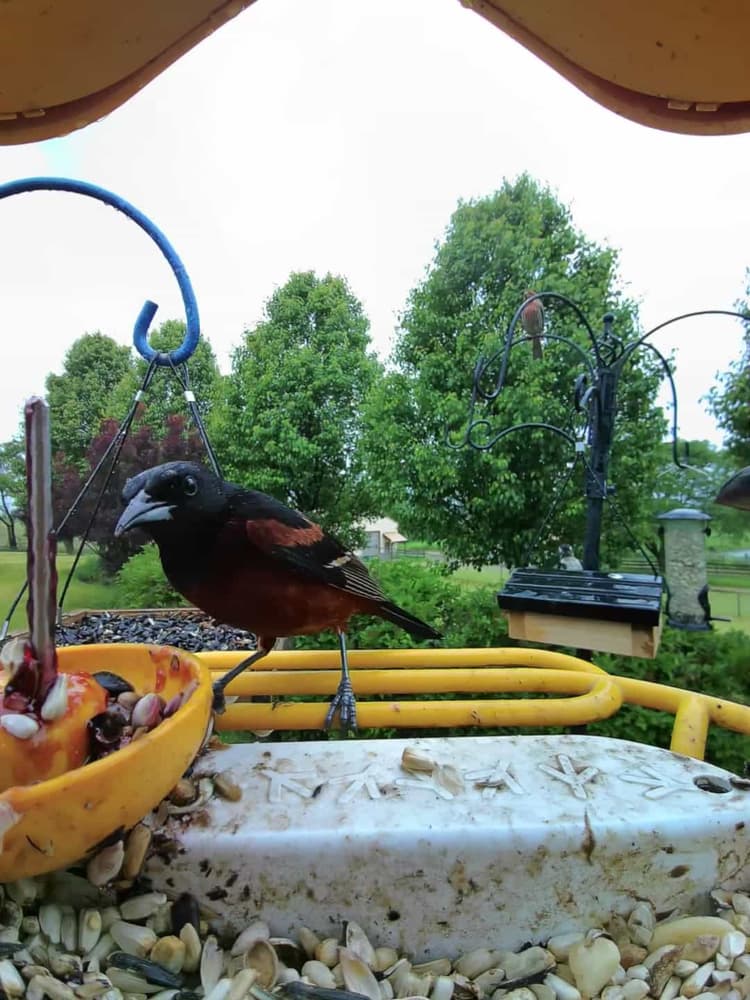
Adult males have a striking black head and back with a deep chestnut underbelly, making them quite distinctive
- •
Females and juveniles exhibit a more subtle yellow-green coloration across their bodies with darker wings
- •
Both sexes feature a slender, slightly curved bill that's typical of orioles, crafted for their fruit and insect diet
What does an orchard oriole sound like?
The orchard oriole's vocalization resembles a rapid musical warble, akin to the Purple Finch, albeit less rich in quality. Its call pattern follows a complex, undulating, and descending sequence. Typified by sounds resembling a chirp or chip, the orchard oriole's songs also tend to flute-like and whistle tones, giving its vocal repertoire a distinctive sound.


Description
This little bird is the smallest of the North American orioles! Did you know that its name, spurius, is Latin for illegitimate? These small birds are migratory and prefer to travel at night. Quite aptly, a group of orchard orioles is called a harvest!
The orchard oriole can weigh between 16to25grams and be from15to18centimeters tall.
The typical lifespan of an orchard oriole is about 6 years. This is similar to related species such as the northern oriole, which lives up to about 10 years, and the Baltimore oriole, which has a lifespan of around 12 years. However, these ages can vary depending on factors such as predation and disease.
Did you know?
Most popular questions about orchard oriole
How to recognise an orchard oriole?
General appearance
The orchard oriole is a small bird about the size of a robin. It is smaller than the Baltimore Oriole, with a unique rounded wing shape and rounded, square-tipped tail shape. The bird's size is characterized as 7, measured in 18cm. The oriole’s colour palette consists of black, green, orange, red, white, and yellow.
Male vs female
There are noticeable differences between males and females. The adult male orchard oriole is unmistakable with its striking black and chestnut coloration. On the other hand, the female is smaller and flaunts an all yellow-green appearance. They lack the orange tone seen in the female Baltimore and Bullock's Orioles and have a shorter bill compared to Hooded Oriole.
Juvenile
One-year-old males, or juveniles, resemble the females but have a distinguishing black throat. This characteristic is one of the earliest signs to distinguish between young males and females.
Often mistaken for
Baltimore Oriole vs Orchard Oriole
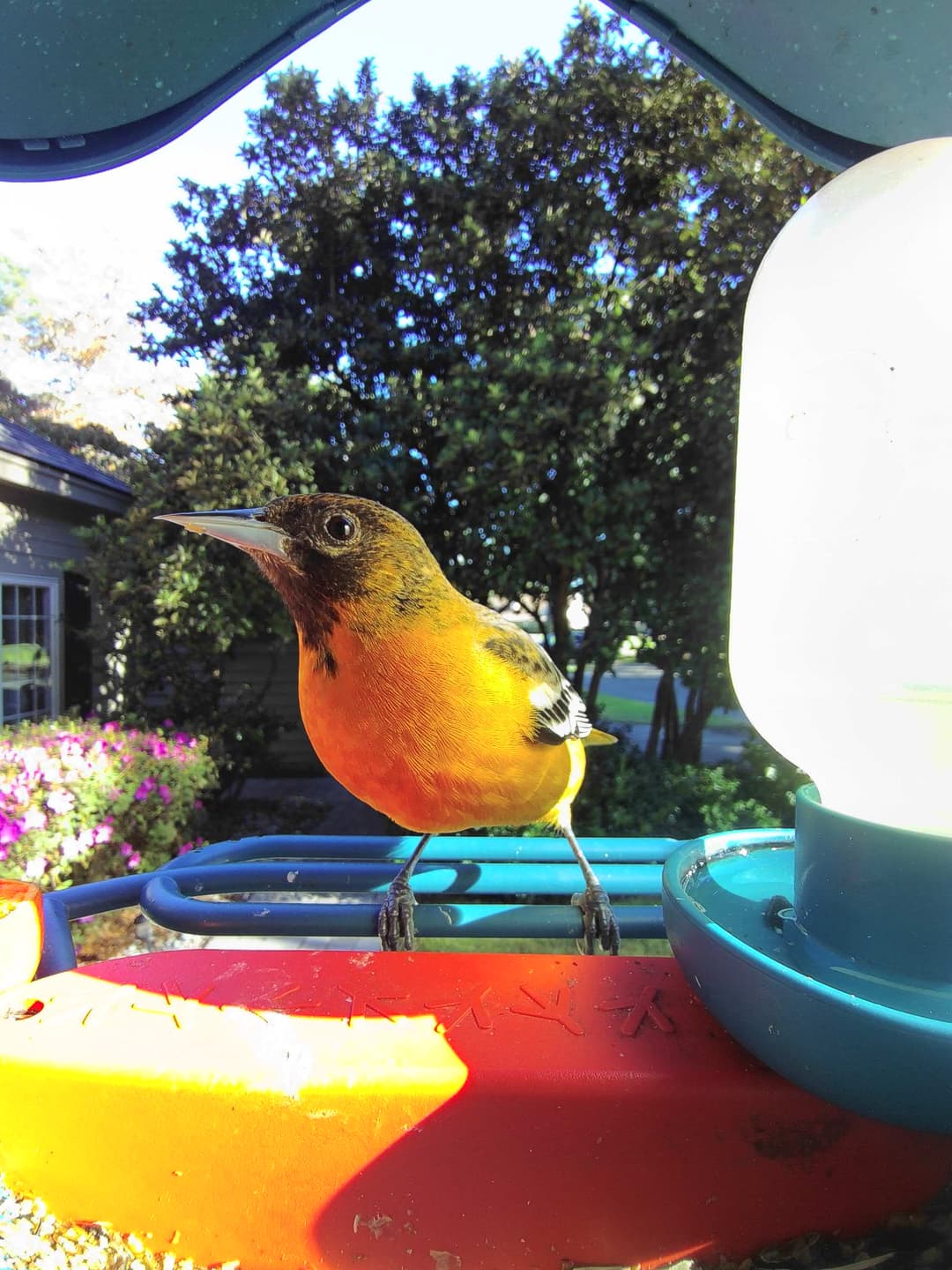
Orchard Orioles are smaller and darker, with a more chestnut or russet-colored belly compared to the bright orange of the Baltimore Oriole. Orchard Orioles have a shorter tail and a more slender build.
Bullock’s Oriole vs Orchard Oriole
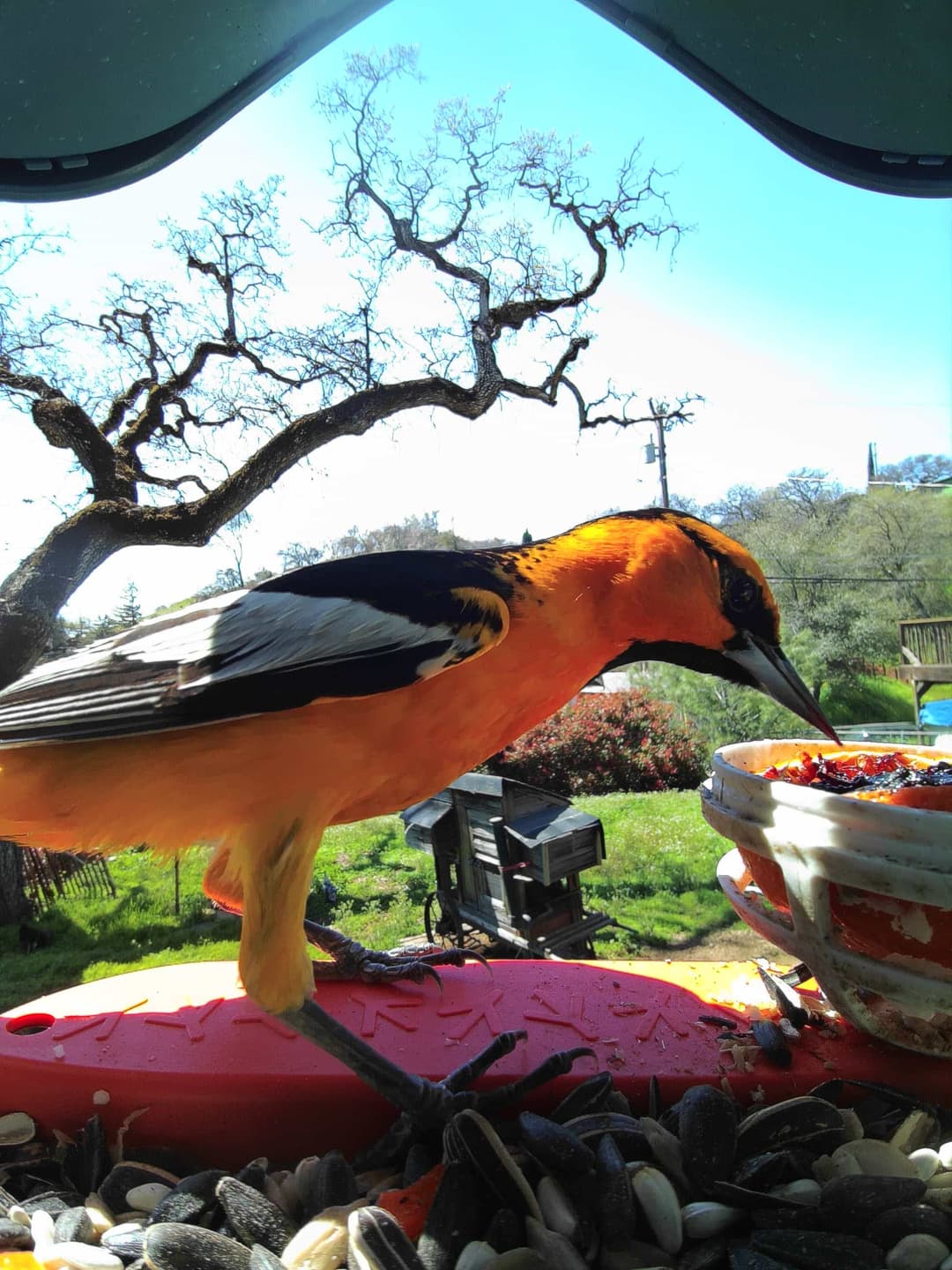
Orchard Orioles lack the distinctive white wing patch seen on the Bullock’s Oriole. Their coloration is more subdued with a deep chestnut underbelly compared to the orange of Bullock’s Oriole.
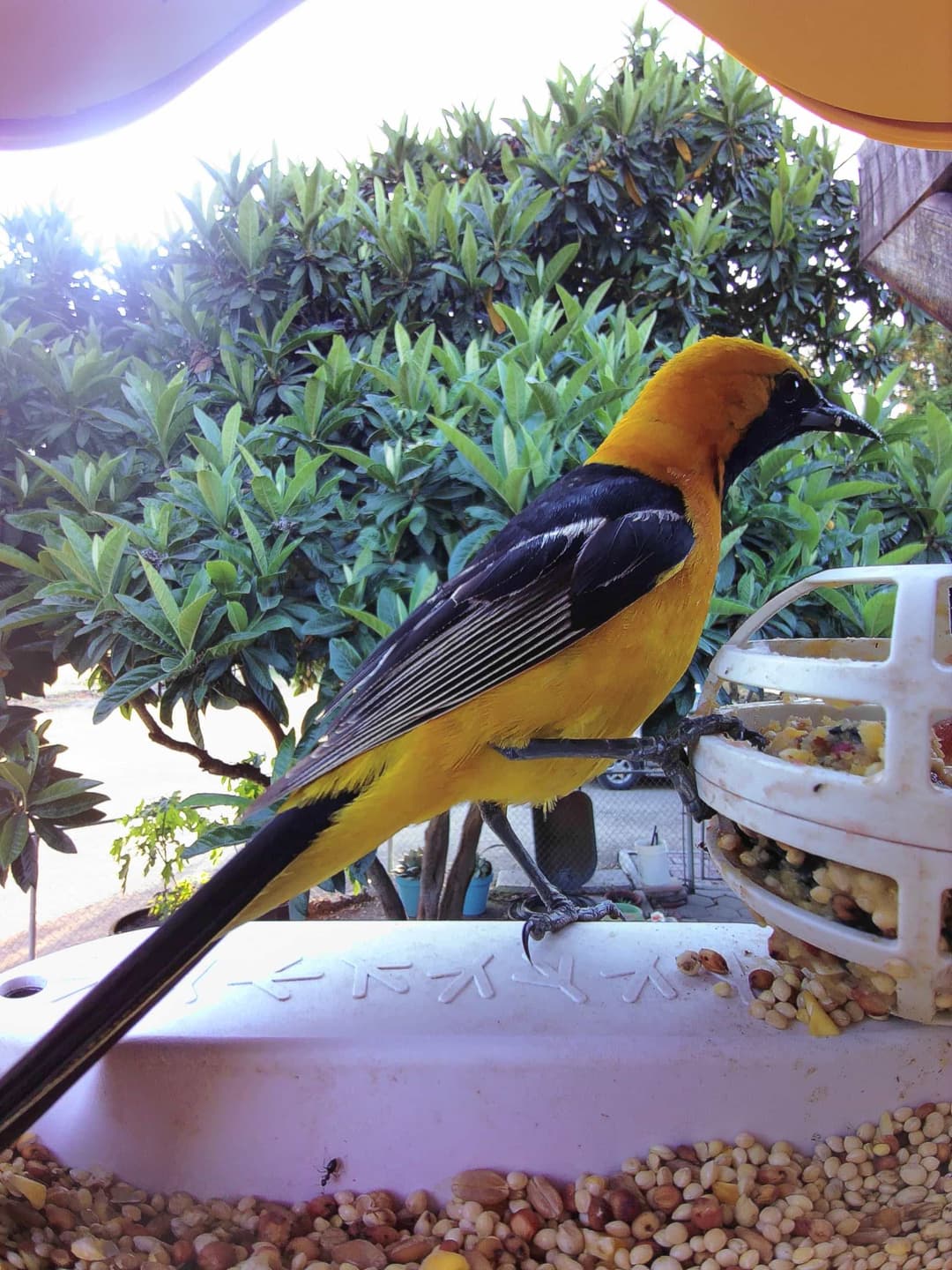
Hooded Oriole vs Orchard Oriole
The Orchard Oriole is darker and has a less pronounced orange hue compared to the Hooded Oriole. The Hooded Oriole has a taller postured look and more extensive black on the face.
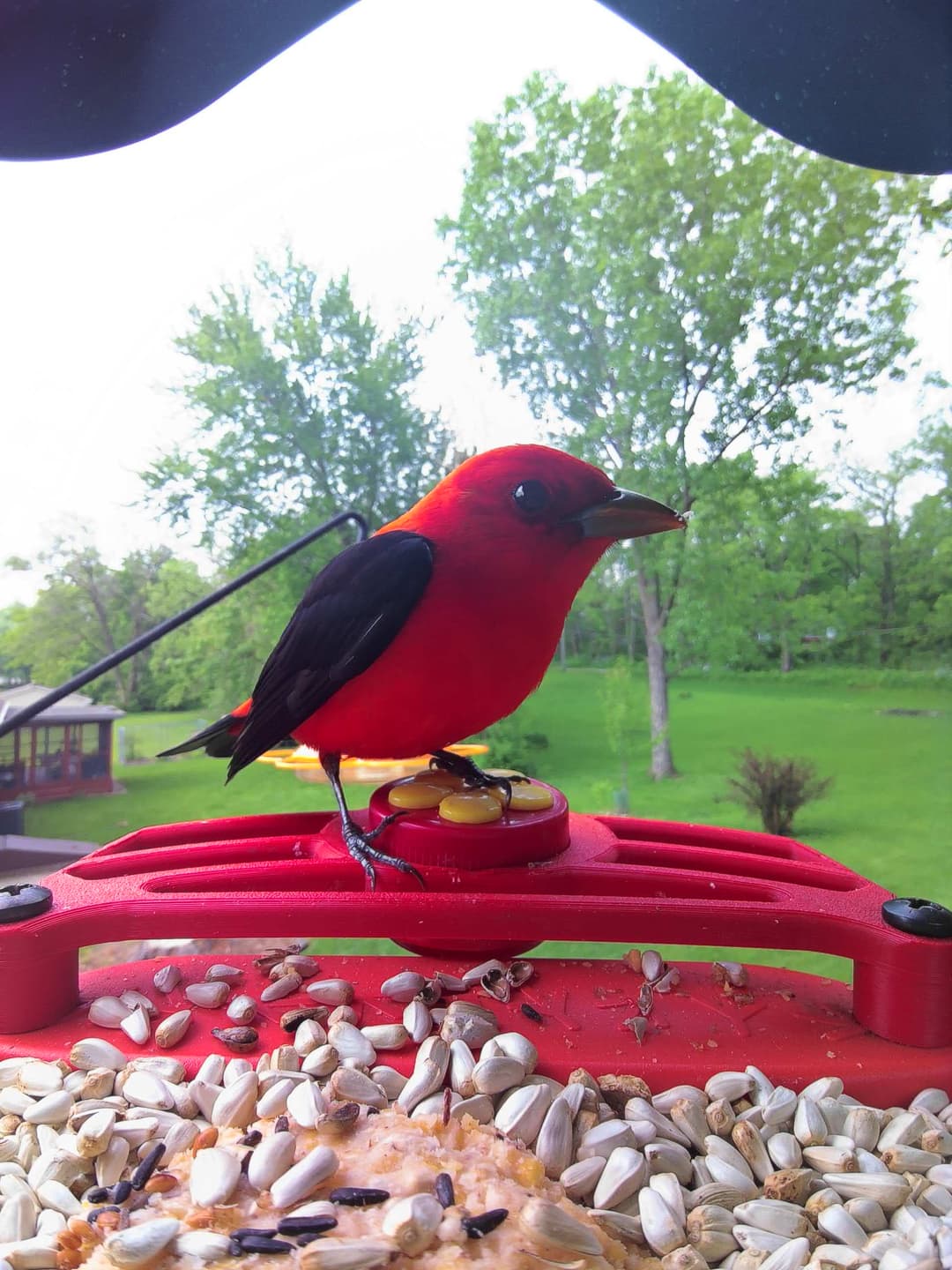
Scarlet Tanager vs Orchard Oriole
The Scarlet Tanager is more vibrant with all-red plumage and black wings, whereas the Orchard Oriole has a chestnut-colored body and lacks the intense red.
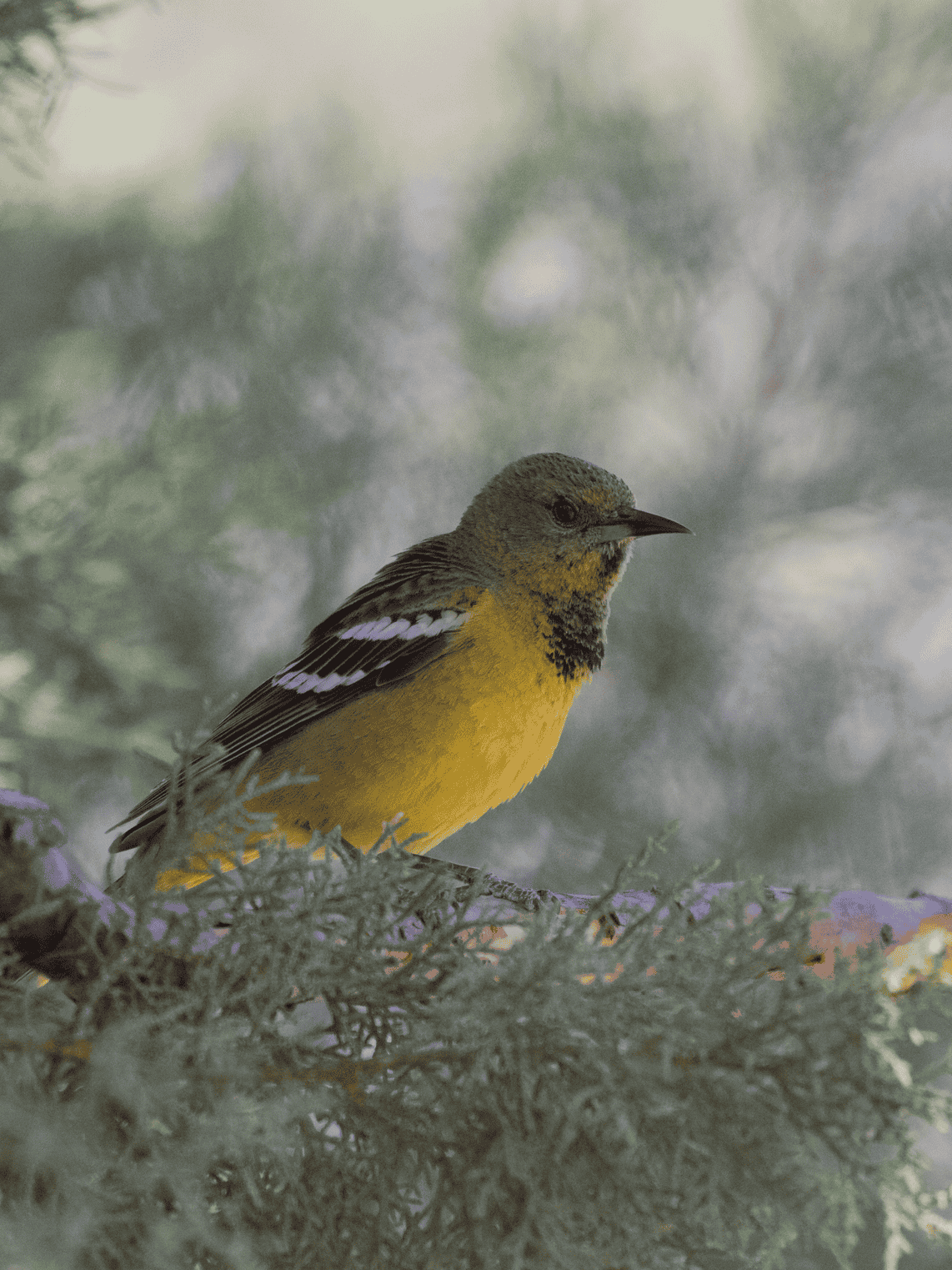
Scott’s Oriole vs Orchard Oriole
Orchard Orioles have a chestnut underbelly and are generally smaller, while Scott’s Orioles display a vivid yellow body with black wings and head.
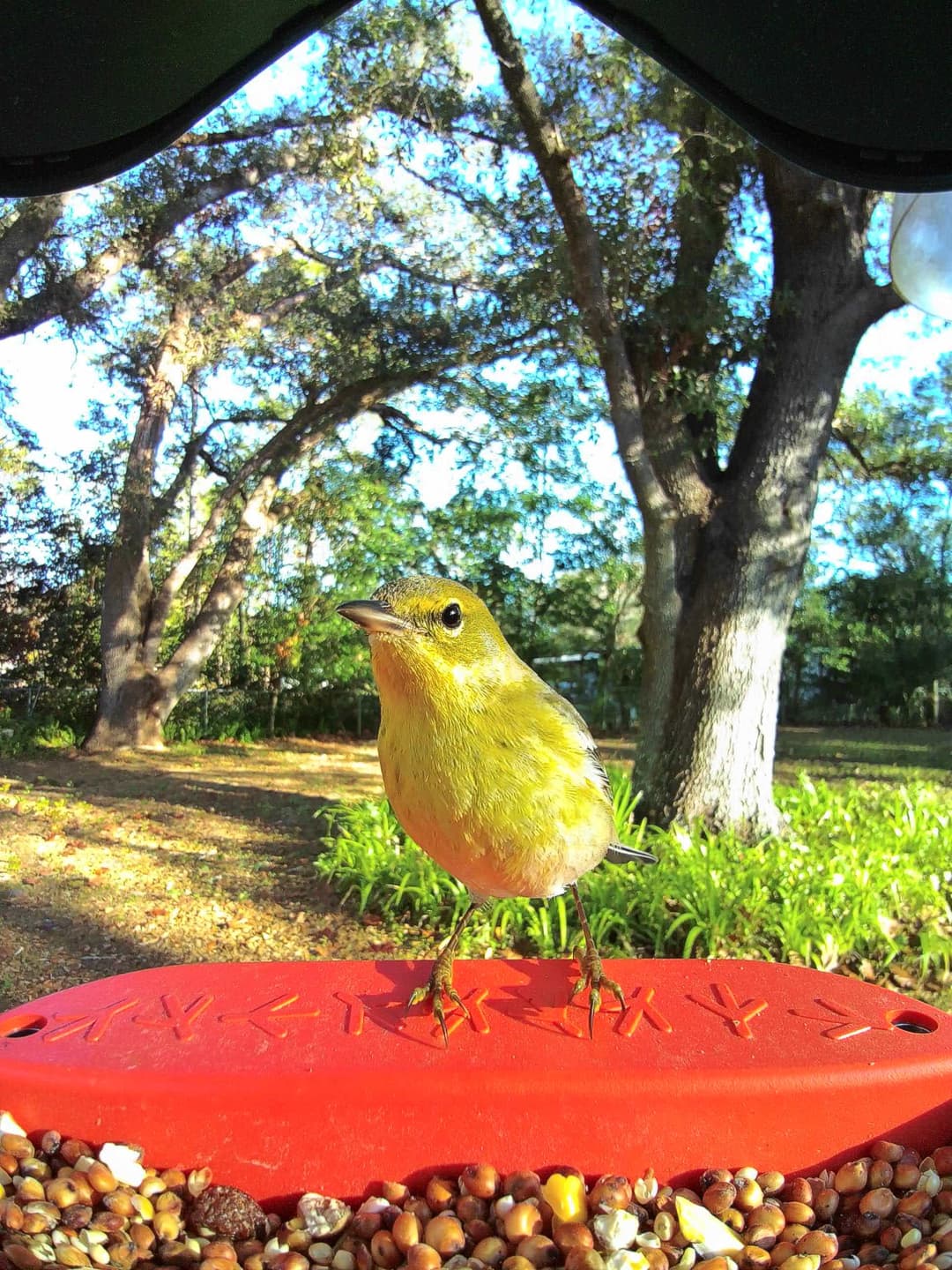
Pine Warbler vs Orchard Oriole
The Orchard Oriole is larger with a more slender build and a distinct chestnut color. Pine Warblers have a more muted yellow-green plumage and a stockier appearance.
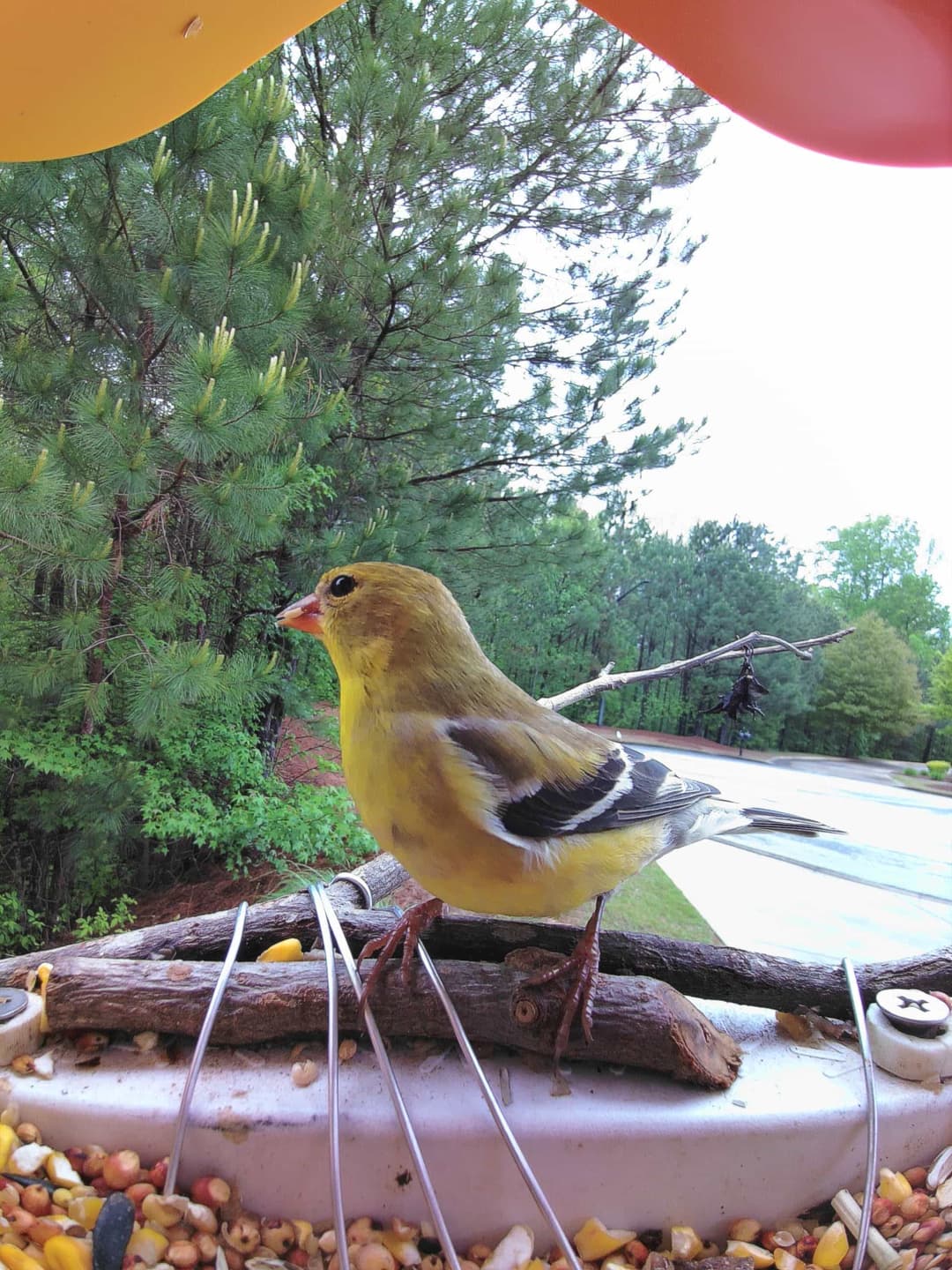
American Goldfinch vs Orchard Oriole
Orchard Orioles have a darker, chestnut hue and are larger. American Goldfinches display a bright yellow in summer with distinctive black cap and wings.
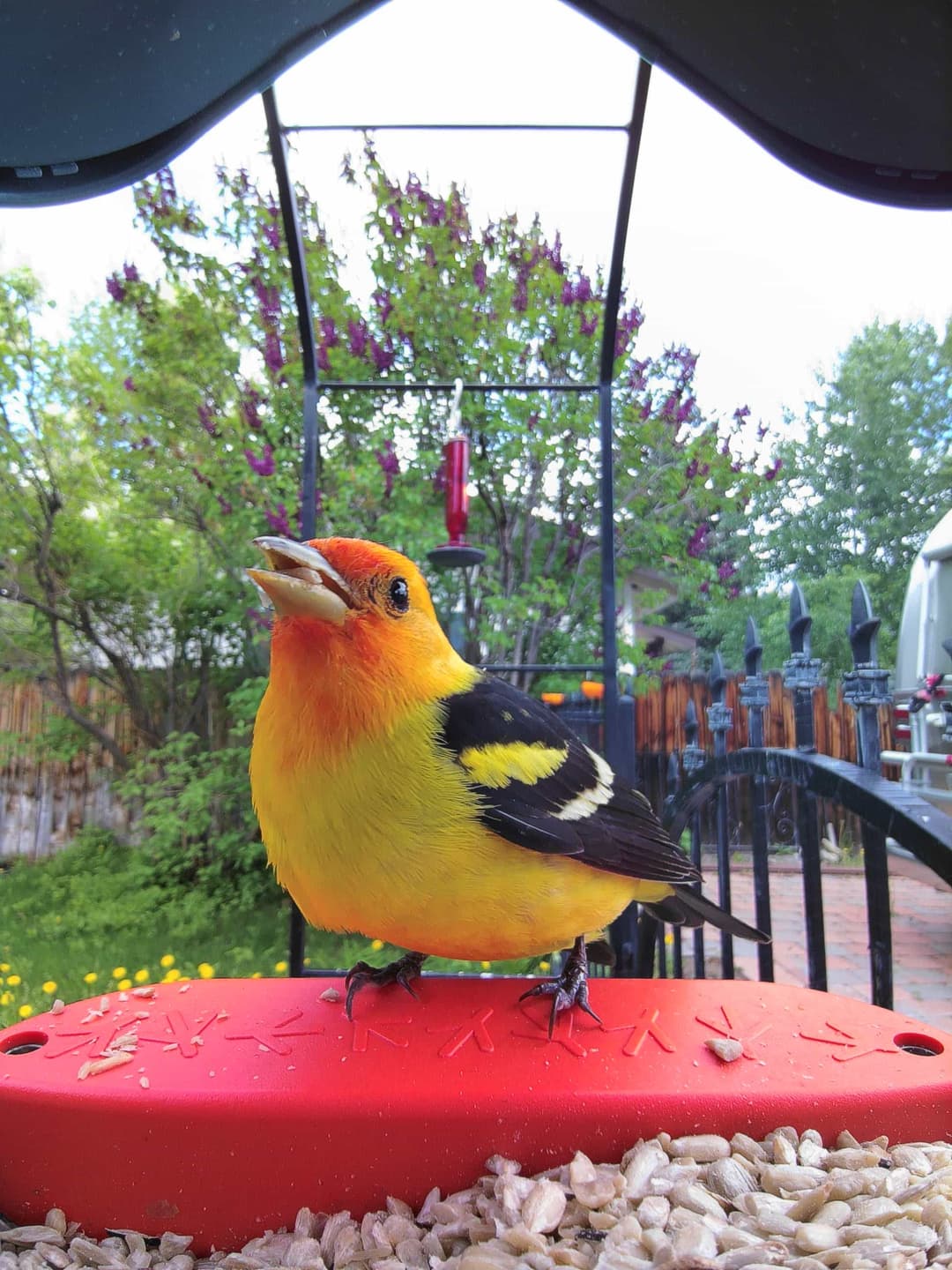
Western Tanager vs Orchard Oriole
Western Tanagers have a bright yellow body with a contrasting red face during the breeding season, whereas Orchard Orioles possess a chestnut color and lack extensive yellow.
Breeding and nesting habits of the orchard oriole
Mating behaviors
Male sings in spring to attract a mate. The species is often not strongly territorial, allowing more than one pair to nest in the same tree or vicinity, sometimes alongside Eastern Kingbirds.
Nesting details
Nests are often found in trees (usually deciduous) or tall shrubs, occasionally in dense marsh vegetation. They are typically placed 10-20 feet above the ground but can range from 3-70 feet up. The female, possibly aided by the male, builds a hanging pouch or basket using grass and plant fibers, lined with finer materials.
Eggs and chick-rearing
After constructing the nest, the female lays eggs, incubating them with minimal details known about chick-rearing. For those looking to create favorable nesting spots, planting deciduous trees or tall shrubs and ensuring an environment rich in materials like grass and plant fibers may help attract nesting pairs.
What does an orchard oriole like to eat?
Berries
Fruits
Insects
Nectar
Seeds
Spiders
Natural diet
The orchard oriole's diet primarily consists of insects, with a strong preference for caterpillars, beetles, and grasshoppers during the summer. Their diet also includes spiders and varies with the seasons. In fall and winter, they tend to consume more berries, while nectar and parts of flowers are common components of their diet year-round.
Bird feeders
At bird feeders, orchard orioles are known to be attracted by offerings such as fruit, nectar, and sometimes jelly due to their natural preference for sugary foods and fruits. However, they may be less frequent at feeders compared to other oriole species.
Choosing the right snacks
Orchard Orioles love eating insects, fruit, berries, and nectar. They particularly enjoy caterpillars, beetles, bugs, spiders, mulberries, wild cherries, and oranges. For the best results in attracting these lovely birds, consider using Bird Buddy seeds. They are especially selected by experts for each season, ensuring the orioles have a food source they'll enjoy.
Proper feeder types
Orioles prefer feeders that can hold their favorite foods securely. Oriole feeders usually have pegs for holding whole oranges, jelly dishes, and nectar reservoirs. Hang your feeders at a height of about 4 to 5 feet off the ground, ideally near flowering plants or shrubs. The location should be quiet, safe from predators and with a clear flight path.
Fun tricks to attract orchard orioles
Add a birdbath or water feature to your garden. Orioles love places where they can bathe and drink. They are also attracted to bright colors, particularly orange. Place orange items in your yard or hang an orange flag near the feeder. Additionally, playing oriole songs can attract these birds, sometimes, instigating a little sing-along. Another trick is to put out feeders early, before the migration season begins. This can give your yard a reputation as a reliable food source.
Where can you find orchard orioles?

Primary habitat
The orchard oriole typically resides in semi-open habitats with deciduous trees and open spaces including riverside trees, orchards, suburbs, forest edges, and prairie groves. It avoids unbroken forests.
Additional range
In the winter, the orchard oriole migrates to tropical lowlands, favoring brushy areas and woodland edges.
Do they migrate?
The Orchard Oriole is a migratory bird that follows a distinct seasonal journey. In the spring, these orioles migrate in flocks, often traversing the Gulf of Mexico to move northward. This movement typically begins in early spring as they head to their breeding grounds located across the eastern United States and southern Canada. The fall migration starts unusually early for Orchard Orioles, with some individuals beginning their southward journey by late July. This early departure is partly due to their shorter breeding season compared to other oriole species. During the fall, the orioles travel back across the Gulf of Mexico, returning to their winter habitats in Central America and the northern parts of South America, particularly in countries like Mexico, Guatemala, and parts of the Caribbean. The key locations for Orchard Orioles during migration include stopover sites along the Gulf Coast, which provide essential resources for their long journey. Their migrations are driven by the need for suitable breeding and wintering habitats, as well as the availability of food resources, such as insects and fruit.
What is the role of orchard orioles in nature and how to protect them?
Conservation status
The orchard oriole is currently considered a species of least concern, meaning it is not vulnerable or endangered. Its population has decreased in many areas but increased in regions like the northern Great Plains. Key conservation efforts focus on habitat preservation, as loss of suitable breeding and feeding grounds poses a significant threat. Maintaining and restoring grasslands and open woodlands are crucial for its continued survival. While it faces challenges due to habitat degradation, its adaptability to some changes has allowed for regional population increases.
Ecological role of orchard orioles
Its role in the ecosystem
The Orchard Oriole, a songbird species, plays a crucial role in maintaining the ecological balance within its habitat. It primarily feeds on insects, including caterpillars, beetles, and grasshoppers. By consuming them in large quantities, this bird acts as a natural pest control agent, reducing the population of these pests that can be harmful to vegetation. Additionally, they also contribute to seed dispersal through their consumption of berries. During their forage for nectar, the Orchard Oriole inadvertently assists in plant pollination, which results in the growth of new plants. In the tropics, where they often forage in flocks during winter, they may play a more significant role in controlling insect populations and pollination. Their nesting habits of frequently sharing trees with other species also aid in fostering biodiversity. Therefore, the Orchard Oriole serves multiple vital ecological functions including pest control, seed dispersal, and pollination, thus exhibiting a remarkably multifaceted contribution to their ecosystem.
How to help protect orchard orioles
Preservation tips
Habitat preservation strategies
To support the conservation of the orchard oriole, it is crucial to encourage the preservation of their natural habitats, primarily open woodlands and orchards. This can be done by opposing deforestation and promoting responsible use of lands. Creating bird-friendly gardens with native plants can also help by providing the birds appropriate food source and shelter.
Community science initiatives
Community science initiatives play a substantial role in species conservation. Engage local communities in bird counting programs and habitat mapping activities to monitor oriole populations. In addition, public education on the importance of these birds and their habitats is key to building support for their conservation. Use of bird feeding and nesting boxes can be encouraged in community spaces and private properties.