
Scott’s Oriole
Scott’s Oriole
Icterus parisorum
Quick Identification guide
Quick Identification guide
- •
Displays a striking black and yellow plumage, with the males having more vibrant yellow underparts and shoulders
- •
Features a slender body and a noticeably long tail that accentuates its elegant appearance
- •
Equipped with a sharp, pointed beak, suited for foraging on desert plants
What does a Scott's oriole sound like?
The Scott’s Oriole produces a sequence of flute-like notes that rise and fall, evocative of a Western Meadowlark's song. Its call, in contrast to the song, is a harsh 'chuck'. Its overall call pattern is undulating, covering a range of vocalization types including buzzing, chattering, rattling, and whistling.
Description
Did you know that the Scott's oriole belongs to the genus Icterus, the origin of which is the Greek ikteros, meaning jaundice? In Ancient Greece, it was thought that seeing a small, yellow bird could cure jaundice! Well, seeing or hearing, a Scott's oriole could definitely cure a bad mood! These gifted singers start singing before sunrise and continue throughout the day and it's unlikely their musical stylings would leave you indifferent!
The Scott's oriole can weigh between 32to41grams and be from19to24centimeters tall.
The Scott's Oriole typically lives for about 8 years. This is similar to a range of other oriole species, such as the Orchard Oriole which has a lifespan of 7 years, and the Baltimore Oriole that lives for 12 years. It's worth noting that environmental factors, predation and access to resources can affect these averages.
Did you know?
Most popular questions about Scott's oriole
How to recognise a Scott's oriole?
General appearance
The Scott's oriole is a medium-sized bird, around 19-21 cm in length, comparable in size to a robin or sparrow. Its wings are rounded in shape, with a square-tipped tail. The bird has a striking black and yellow coloration, along with green and white shades.
Male vs female
Sexual dimorphism is apparent in this species. The male Scott's oriole is unmistakable for its brilliant black-and-yellow plumage, featuring a black upper back with yellow on the rump and base of the tail. The female, on the other hand, is more of a dusky yellow-green color. She's darker and larger than the females of the Hooded or Orchard Oriole species.
Juvenile
Juvenile Scott’s Orioles and older females may have much black on their heads. This could potentially make it difficult to distinguish them from adult males in the wild without close inspection. The extent of the black on the head may also be representative of the bird's age.
Often mistaken for
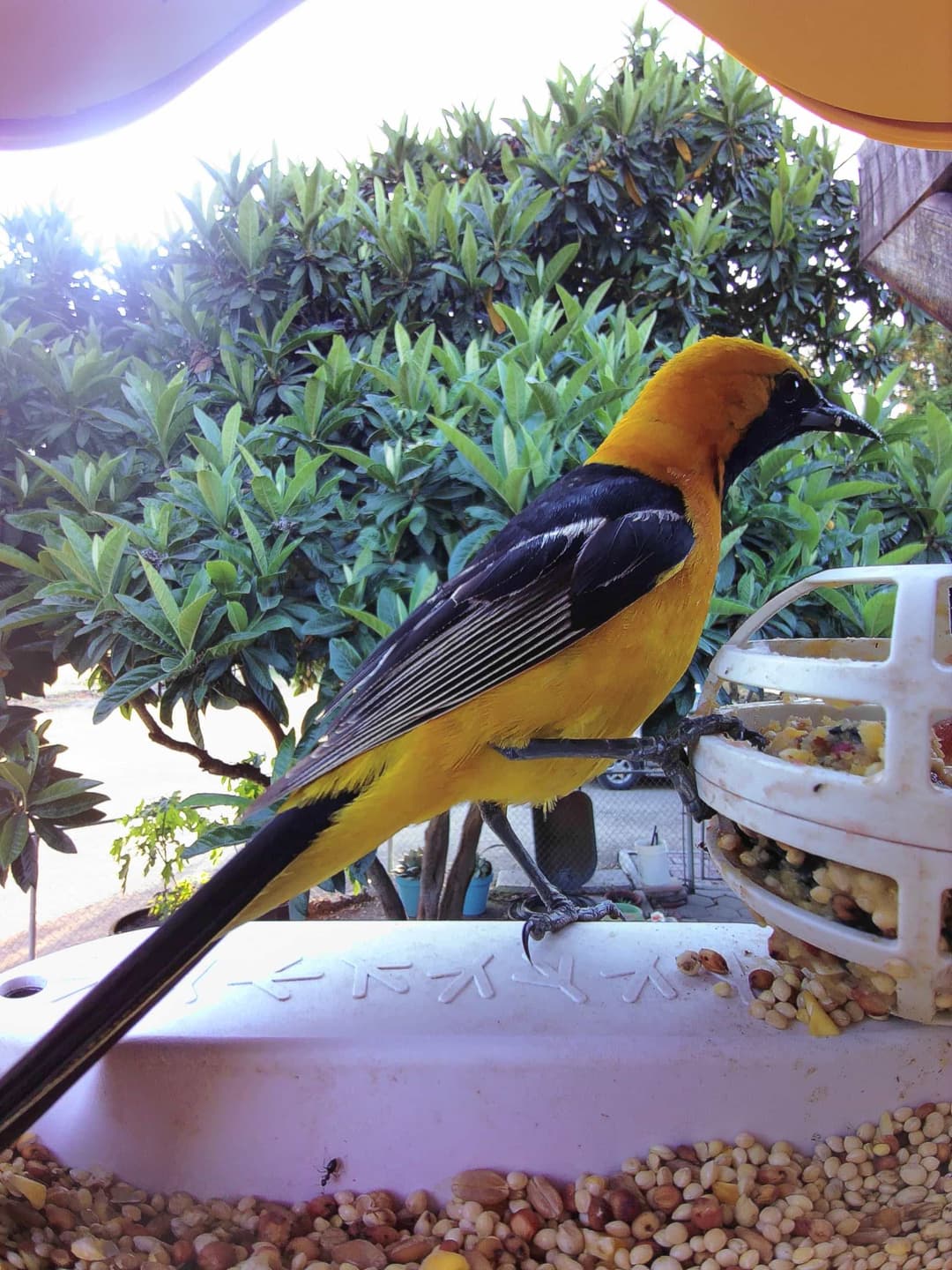
Hooded Oriole vs Scott’s Oriole
Scott’s Oriole has a distinct lemon-yellow body with a strong black hood and back, unlike the Hooded Oriole, which has an orange-yellow body and a more slender, down-curved bill. Scott's Oriole prefers arid habitats compared to the Hooded's more urban areas.
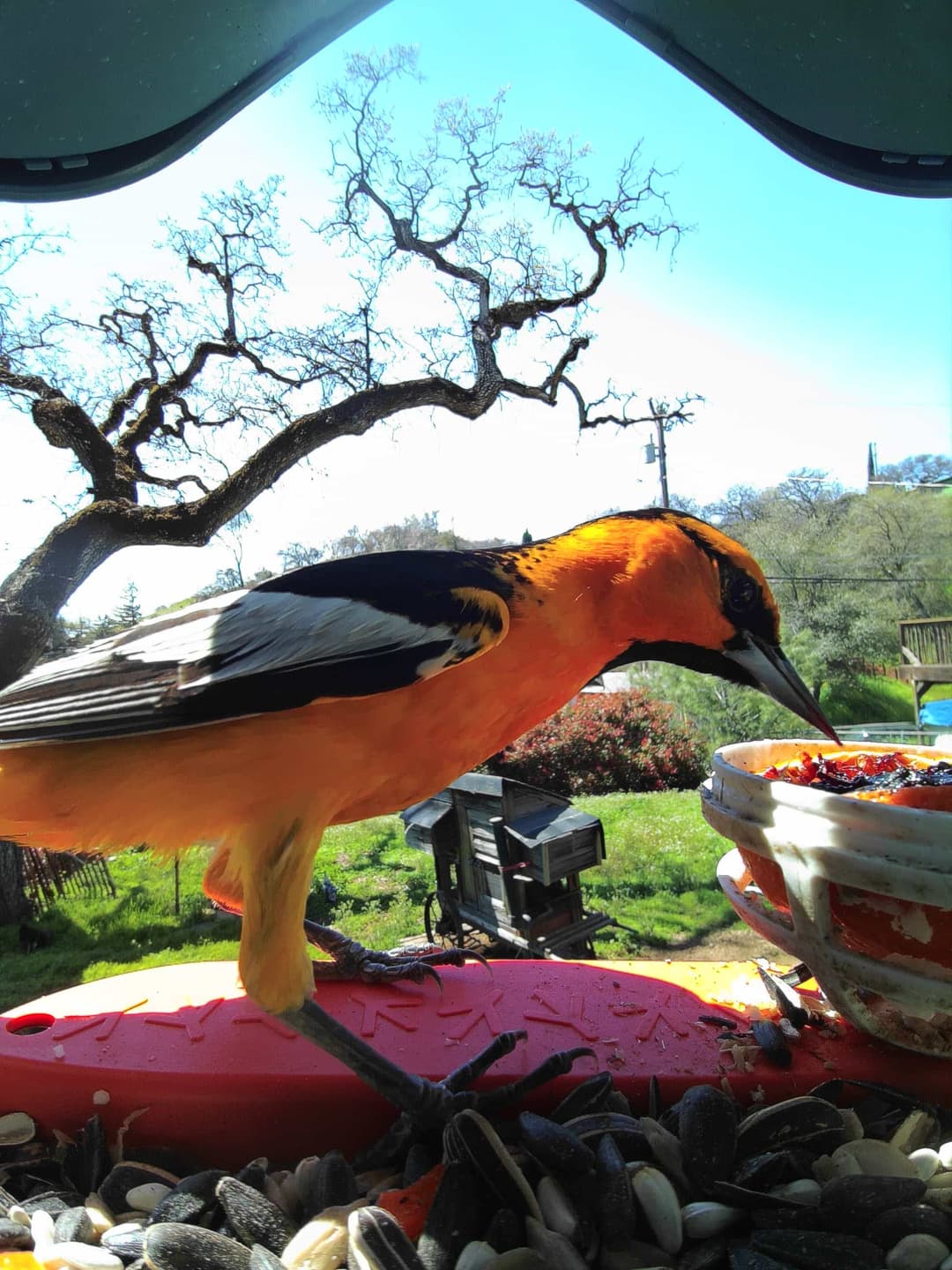
Bullock’s Oriole vs Scott’s Oriole
Bullock’s Oriole has orange plumage with a black eye line and chin unlike the vibrant yellow of Scott’s Oriole. Bullock's prefers open woodlands, whereas Scott’s is more often found in desert areas.
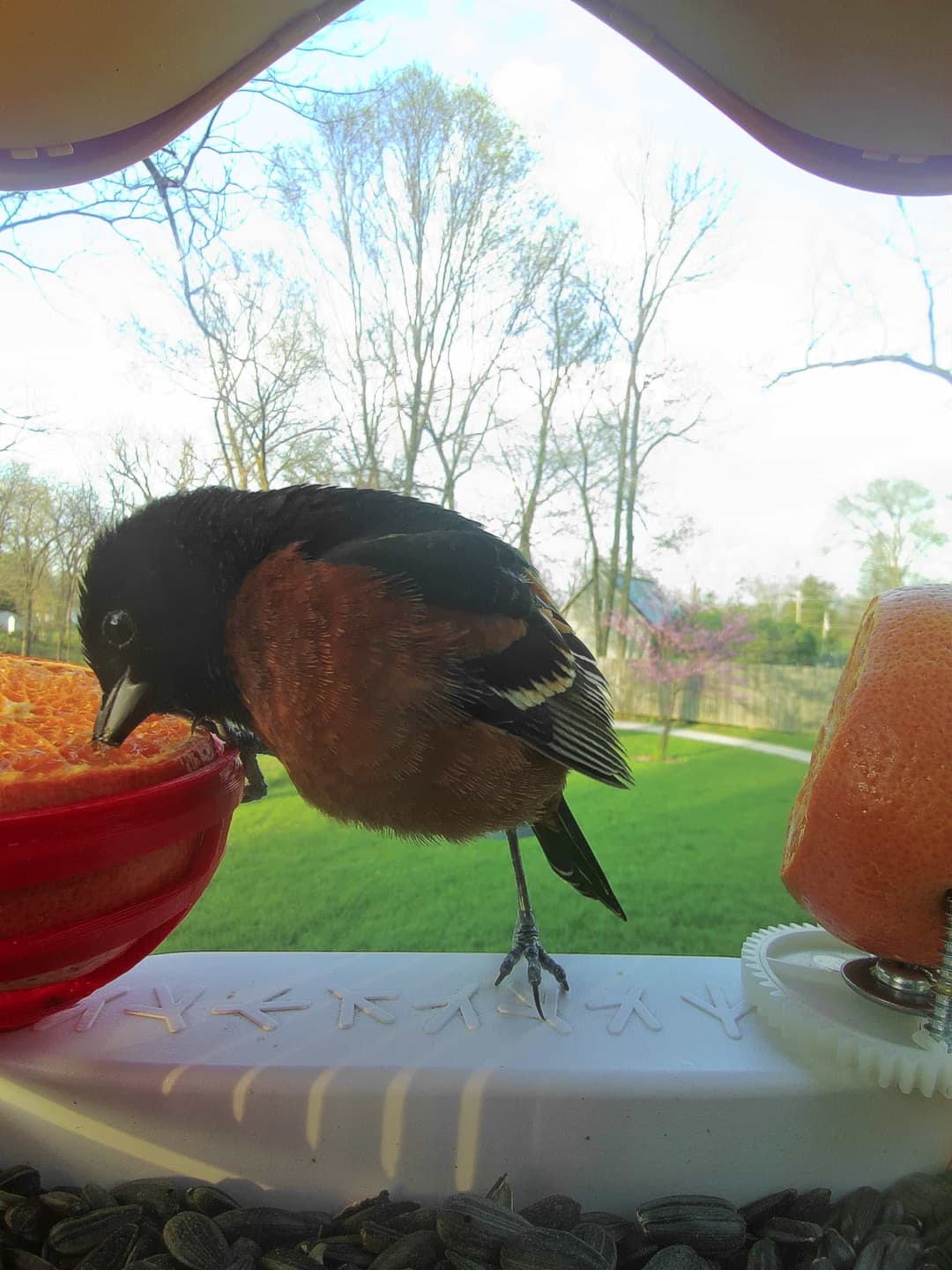
Orchard Oriole vs Scott’s Oriole
Orchard Oriole males are more chestnut than yellow and are smaller than Scott’s Oriole. Orchard Orioles are generally found in more lush habitats compared to the desert-loving Scott’s Oriole.
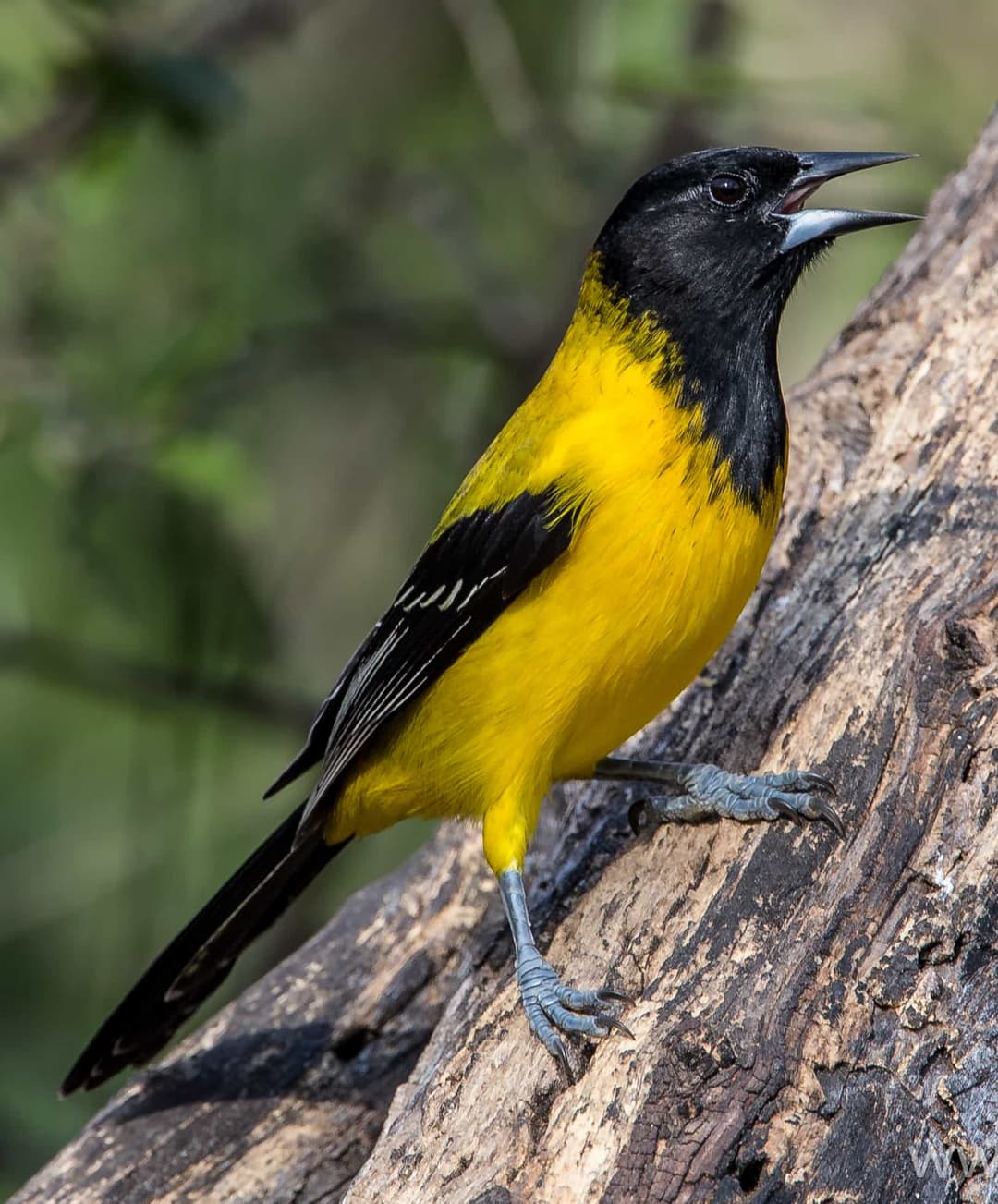
Audubon’s Oriole vs Scott’s Oriole
Audubon’s Oriole has a yellow body with extensively black head and wings unlike the simpler pattern of Scott’s. Found in Texas and Mexico, Audubon’s prefers denser woodlands compared to Scott’s desert scrub preference.
Breeding and nesting habits of the Scott's oriole
Mating behaviors
Males arrive on the breeding grounds a few days before females and sing frequently to establish nesting territory.
Nesting details
Nests are often placed in yucca or Joshua-tree, which is a tall, branched type of yucca. They may also be found in palm, sycamore, oak, or pine trees, usually 4-20 feet above ground. In trees, nests may be hidden in a clump of mistletoe. The nest is a hanging basket, likely built by the female, suspended by its edges and woven of grasses, yucca fibers, plant fibers, and lined with fine grass, hair, and plant down.
Eggs and chick-rearing
The breeding and chick-rearing specifics, including the number of eggs and care strategies, are not detailed in the provided information.
What does a Scott's oriole like to eat?
Fruits
Insects
Nectar
Natural diet
The Scott’s oriole predominantly feeds on insects including grasshoppers, beetles, and caterpillars. Additionally, it consumes berries and fruit, such as cactus fruit. It supplements its diet with nectar from flowers.
Bird feeders
At bird feeders, the Scott’s oriole may consume sugar-water, taking advantage of artificial nectar sources commonly offered to attract hummingbirds and other nectar-feeding birds.
Attract scott's oriole with bird friendly feeder
Your first step in attracting a Scott's oriole, is having a feeder that is bird friendly. Orioles prefer feeders that are specifically designed for small birds, like a small tube or platform feeders. This helps orioles feel safe and secure while they're feeding, encouraging them to come back regularly.
Provide scott's oriole's favorite snacks
Scott’s orioles are particularly fond of eating insects and nectar, but they also love fruit, especially oranges. Place pieces of orange on your feeder, or blend them up and put them in a dish. Don’t forget to also place some small insect snacks for your feathery friends.
Use bird buddy seeds for best results
To entice the Scott's Oriole to not just visit, but to stay, we recommend using Bird Buddy seeds. They are expertly chosen for the seasons, which helps to provide the nutrients that Scott’s orioles need throughout the year. Scott's orioles will appreciate the high-quality seeds and are more likely to stay in your yard.
Fun tricks to attract scott's oriole
If you are longing for a serenade by a Scott's Oriole, creating an environment they love can help. Along with providing food in a safe feeder, create a water source for bathing and drinking, like a shallow birdbath. Also, remember that Scott’s orioles are also attracted to bright colors, so consider adding orange or red elements to your yard.
Where can you find Scott’s orioles?

Primary habitat
The Scott’s oriole mainly resides in semi-arid zones of Southwest, favoring oak zones of lower canyons, juniper and pinyon pine woods.
Additional range
They may also inhabit grasslands filled with yuccas, palm oases, Joshua-tree stands, and dry scrub in desert mountains. They tend to avoid true deserts.
Do they migrate?
Scott's Oriole is a migratory bird species. Its migration is characterized by an early movement in both spring and fall. In spring, Scott's Orioles typically arrive at their nesting grounds during March or April. They are known to leave these nesting areas mostly by July and August, marking the fall migration period. Regarding its migration route and key locations, Scott's Oriole breeds in arid and semi-arid regions of the southwestern United States and northern Mexico, including areas such as Texas, New Mexico, Arizona, and California. During winter, a portion of the population migrates southward. Small numbers of these orioles are known to winter in southern Arizona and California, indicating a partial migration behavior where some individuals remain in these southern regions rather than migrating further south. This pattern shows that while many Scott's Orioles migrate, some remain in relatively warmer, southern parts of the United States during the winter, particularly in southern Arizona and California. This mixture of migratory and resident behavior is common among bird species that inhabit regions with diverse climates.
What is the role of Scott’s orioles in nature and how to protect them?
Conservation status
The Scott's oriole is considered stable in most regions, suggesting it is not currently vulnerable or endangered. Since the 1970s, its breeding range has expanded into western Colorado, indicating adaptability and resilience. While no critical conservation efforts are highlighted, maintaining habitat quality is essential to supporting its stable population. Significant threats are not explicitly mentioned, but general challenges could include habitat loss and climate change. Overall, the Scott’s oriole appears to be relatively common, with no immediate conservation concerns.
Ecological role of Scott’s orioles
Its role in the ecosystem
The Scott’s oriole plays a significant role in pest control within the ecosystem by consuming a variety of insects including grasshoppers, beetles, and caterpillars. This predatory behavior helps to maintain balance in the insect population and aids in the control of any potential pest outbreaks. The oriole's diet also includes berries and fruits such as cactus fruit. Through this feeding habit, they aid in seed dispersal, consequently contributing to plant propagation and the distribution of flora within their habitat. In particular, their preference for nesting in yucca or joshua trees supports the reproduction and spread of these plants by dispersing their seeds. Their consumption of nectar also plays a part in pollination, providing an important contribution to the reproduction of flowering plants. Considering these factors, the Scott’s oriole therefore plays a multifaceted role in supporting the diversity and functioning of ecosystems.
How to help protect Scott’s orioles
Preservation tips
Play your part in preserving habitats
Save the Scott’s oriole one step at a time by engaging in habitat preservation. Encourage and participate in local tree planting initiatives, especially focusing on desert riparian environment these birds experience. Avoid the use of pesticides in your gardens that harm their food sources. Both are great steps towards maintaining a safe environment for our feathered friends.
Get involved in citizen-science projects
Contribute to making a difference for the Scott’s orioles by participating in citizen-science projects like the 'Christmas Bird Count' or 'Project FeederWatch'. These projects need ordinary people like you to count birds in local areas, providing crucial data. You can also build and set up nesting boxes suitable for Scott’s orioles, offering them safe places to breed. Remember, every bit helps!