
Pine Warbler
Pine Warbler
Setophaga pinus


Quick Identification guide
Quick Identification guide
- •
Features a subtle olive-green back and yellowish underparts, giving it a camouflaged look among pine needles
- •
Exhibits two prominent white wing bars on otherwise grayish wings, creating a distinctive pattern
- •
Possesses a short, pointed bill, ideal for foraging insects and seeds
What does a pine warbler sound like?
Pine Warbler's vocalizations are musical yet bear a slight melancholy touch. Its typical calls and songs carry a soft, sweet iteration of the trill like the Chipping Sparrow’s. Its call follows a flat pattern while exhibiting a chirp or chip type sound, along with a trilling rendition.
Song
Audio by G. McGrane


Description
Where there are pines, there are pine warblers. These little birds are rarely found far from one. They like to nest high up in their canopies and eat. Variations in their diets can result in some physical differences between individuals. For example, if they eat mostly seeds, they will have a larger gizzard – this is the part o the body responsible for crushing the food.
The pine warbler can weigh between 9to15grams and be from13to14centimeters tall.
The Pine Warbler typically lives up to 7 years. This lifespan is similar to closely related species such as the Yellow-rumped Warbler that lives approximately 7 years. However, this is quite shorter when compared to the Blackpoll Warbler that can live up to 11 years. On average, their lifespan lies in the mid-range amidst the Warbler family.
Did you know?
Most popular questions about pine warbler
How to recognise a pine warbler?
General appearance
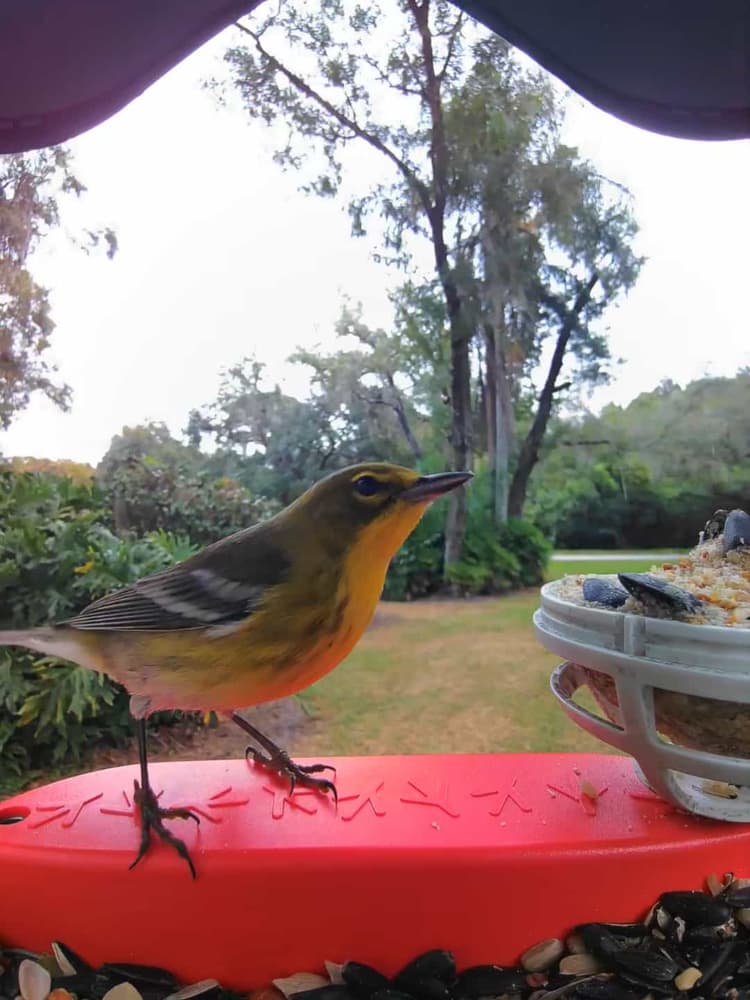
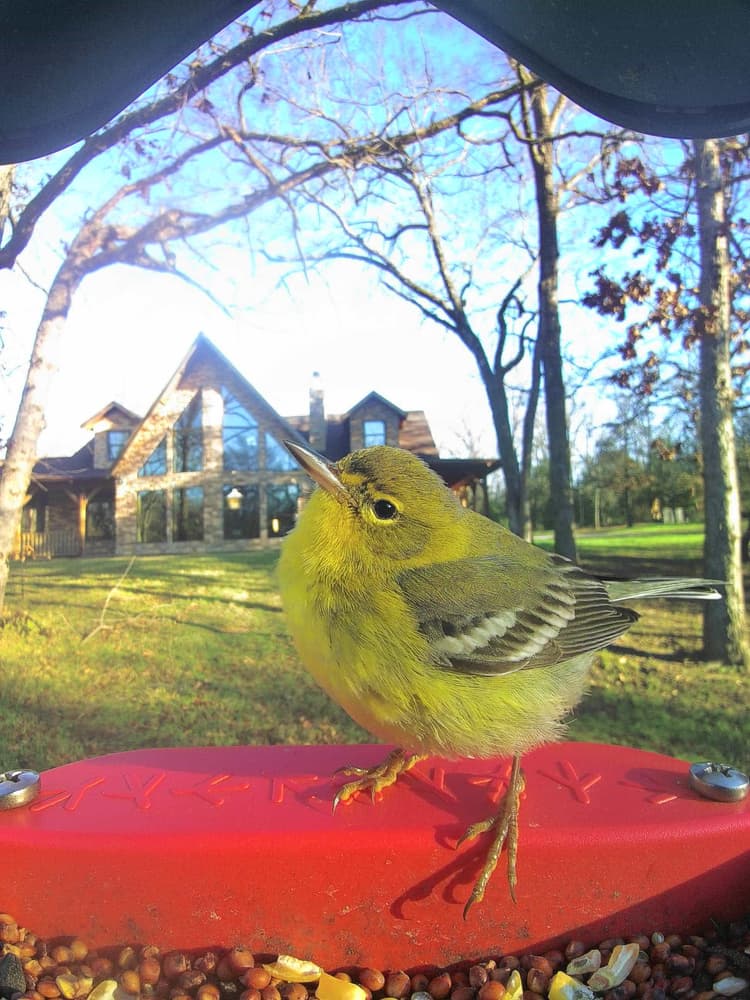
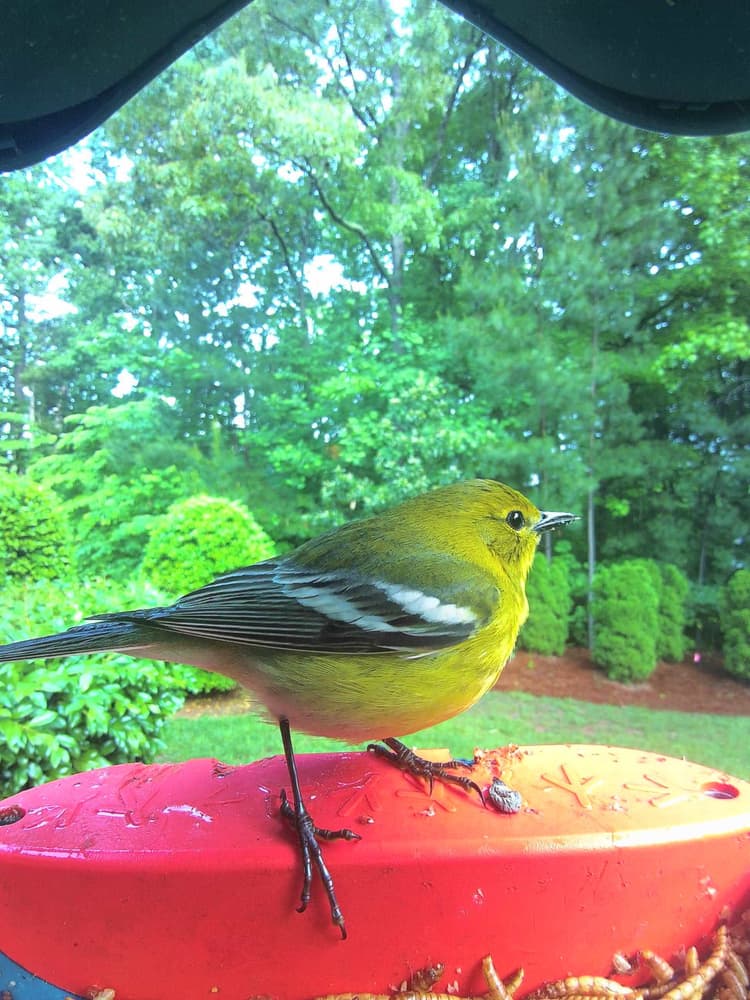
The Pine Warbler is a small bird about 14 cm in size, equivalent to a Sparrow. Its distinct features include rounded wings and a notched or square-tipped tail. The Warbler's coloration varies between black, brown, green, white and yellow. It carries an olive tone on the top side while boasting yellow on its chest area. It is marked with two wing-bars.
Male vs female
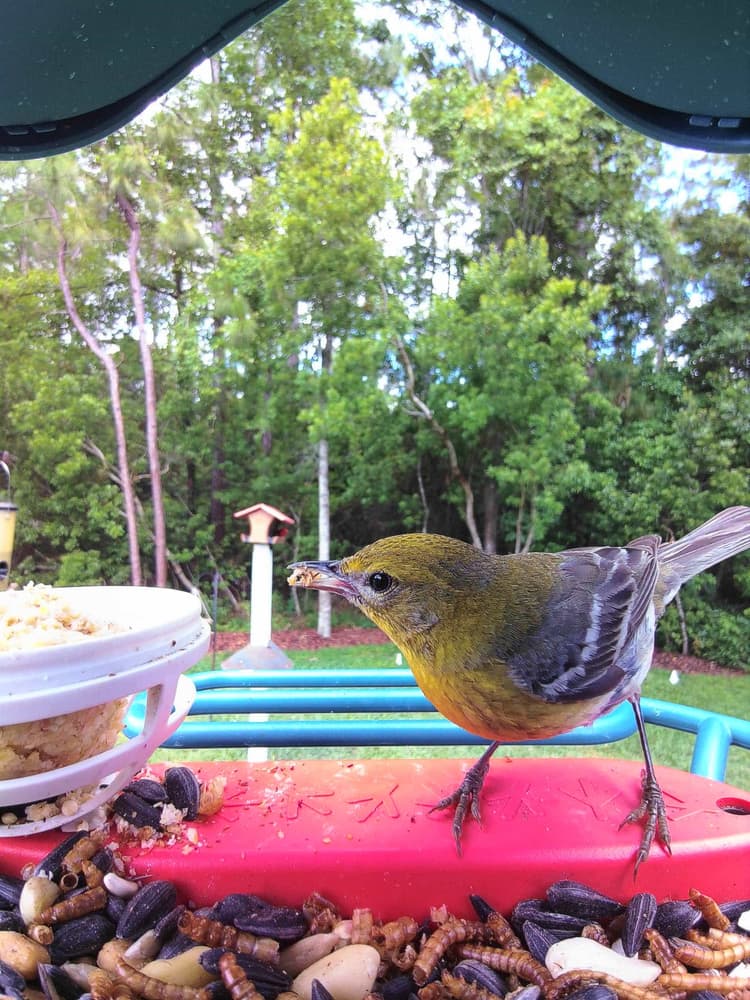
In mature Pine Warblers, there is a discernible difference between males and females. Males display blurry streaks on their chests, distinguishing them from the females who have plainer chests. On their cheeks, the patch shows more contrast when compared to females.
Male Pine Warbler
Male Pine Warbler
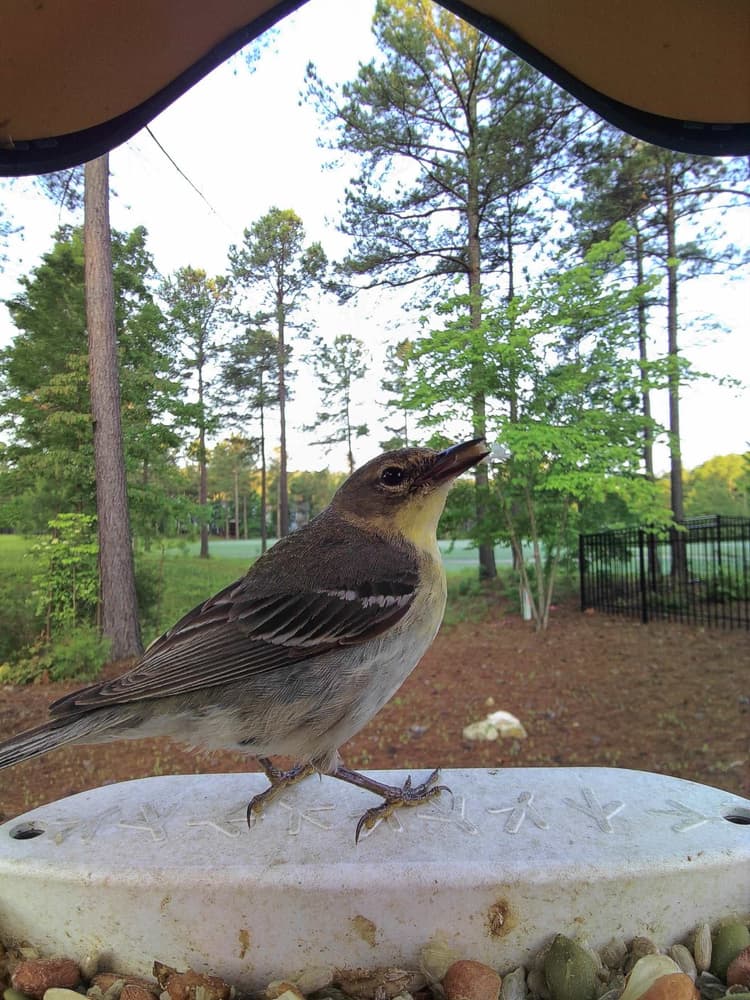
Female Pine Warbler
Juvenile
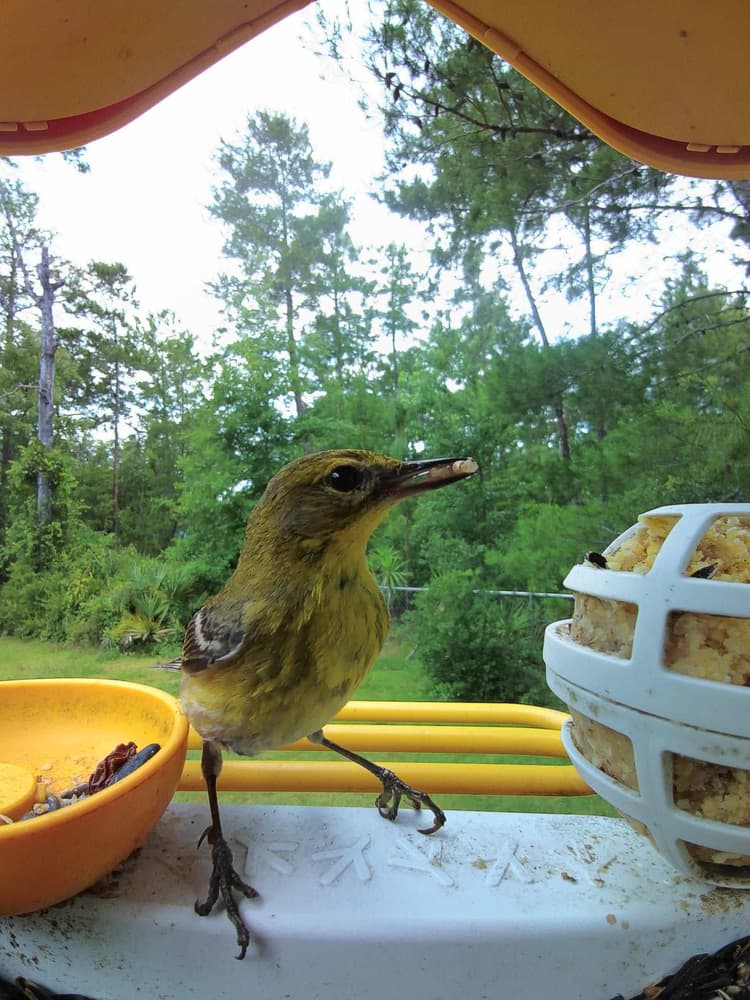
Juveniles or Pine Warblers in their immature fall phase, present a different appearance. Their color can range from yellowish to gray, bearing a resemblance to fall Blackpoll or Bay-breasted Warblers. However, they can be distinguished by the duller wing-bars and lack of streaks on their back.
Often mistaken for
Cape May Warbler vs Pine Warbler
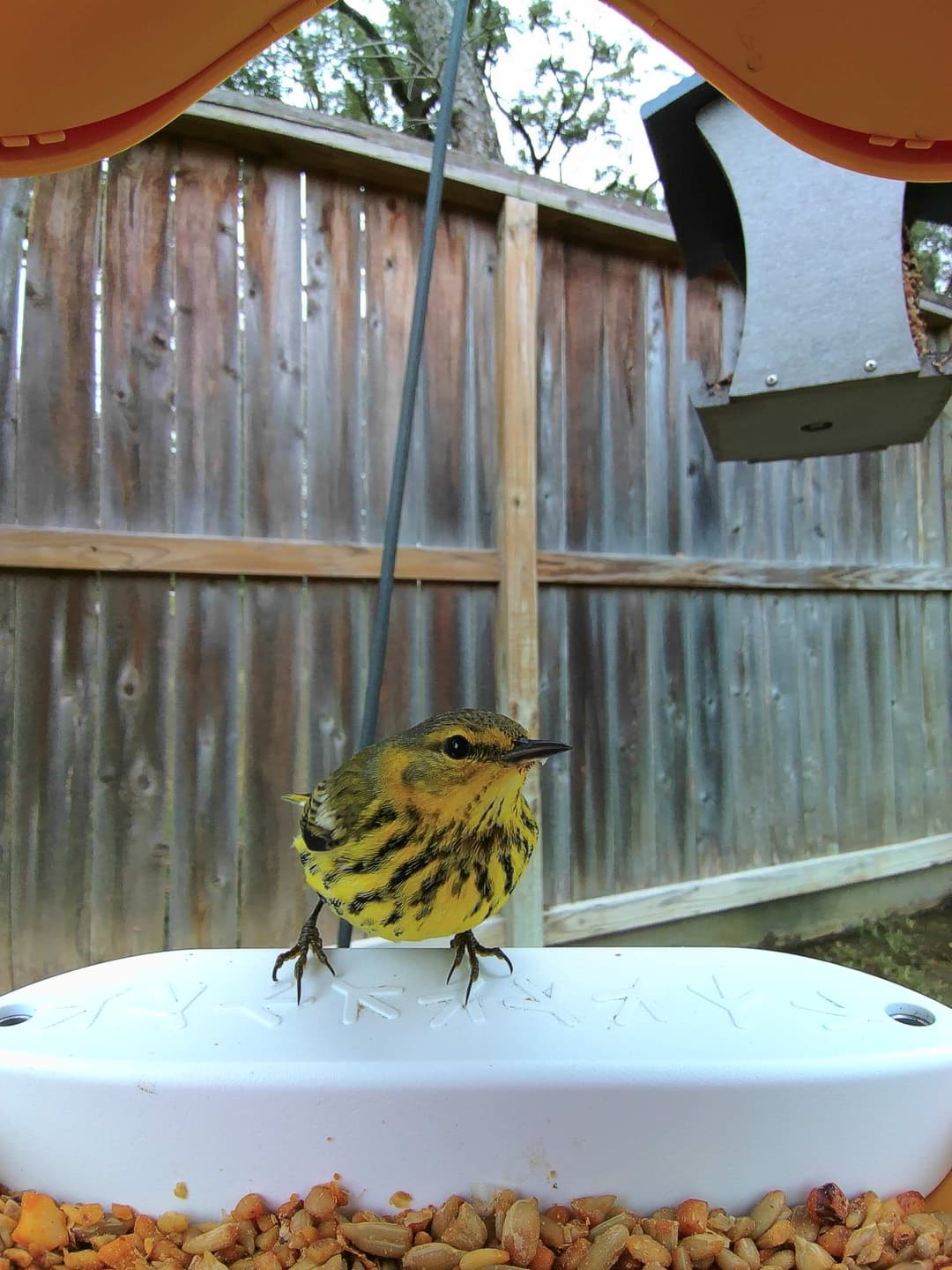
Pine Warbler and Cape May Warbler can be confused at first glance, but subtle differences exist. Pine Warblers have a more uniform olive-green plumage and lack the Cape May's striking yellow and black tiger-striping on the underparts. Cape May Warblers have a distinguishing chestnut cheek patch absent in Pine Warblers. Additionally, Pine Warblers are more robust and have a slower, trilling song compared to the Cape May Warbler's higher-pitched and varied song. Spotting these clues can help in identifying the true Pine Warbler.
Breeding and nesting habits of the pine warbler
Mating behaviors
Males begin singing on breeding territories in early February in the southern regions and in late March or early April in northern areas. This singing marks the beginning of the courtship period.
Nesting details
Nests are typically located towards the ends of limbs of pine trees or occasionally other trees, usually 30-50' above the ground, but can range from 8-135'. The nest is concealed from below by foliage. It is a deep, open cup constructed by the female using materials such as weed stalks, grass stems, strips of bark, pine needles, twigs, and spiderwebs, and is lined with feathers.
Eggs and chick-rearing
Specific details on eggs and chick-rearing practices are not provided, but typically the female is responsible for incubating the eggs and both parents may feed the chicks once they hatch.
What does a pine warbler like to eat?
Fruits
Insects
Nuts
Seeds
Spiders
Suet
Natural diet
The pine warbler's diet predominantly consists of insects and spiders, including grasshoppers, caterpillars, moths, beetles, ants, and other similar creatures. When insects are scarce, the pine warbler adapts by consuming seeds from pine trees, grasses, and weeds, as well as various berries.
Bird feeders
Pine warblers will visit bird feeders, where they are known to eat suet and other available items.
Luring pine warbler: setting up the space
To lure pine warblers to your space, start by setting up bird-friendly spaces around your yard. This includes planting native plants and trees with berries and seeds that the warblers prefer. Similarly, providing a shallow water source for drinking and bathing can make your yard more attractive to these birds.
Feeder advice: the preferred types
When it comes to feeders, pine warblers prefer suet feeders, tube feeders with small hoppers, or tray feeders. Place the feeders near cover, like shrubs or low branches, to protect the warblers from predators. Ensure to clean the feeders regularly to prevent disease spread among the birds.
Snack suggestions: bird buddy seeds
Pine warblers can't resist the delicious and nutritious assortment of Bird Buddy seeds. These seeds are expertly chosen for the seasons and are known to attract pine warblers more effectively than other seeds on the market. Regularly stocking your feeders with Bird Buddy seeds will sure to tempt the pine warblers to frequent your yard.
Fun tricks: get them to sing-along
To make your yard even more enticing for the pine warblers, try adding a few birdhouses or nesting boxes. To encourage them to stay and perhaps breed, providing nesting materials such as soft grasses or small twigs can be helpful. As for the sing-along, just enjoy their naturally melodic twittering; it's the best serenade a bird lover could ask for!
Where can you find pine warblers?

Primary habitat
The pine warbler primarily resides in open pine woods like the southern longleaf pine forest, sandy barrens of pitch pine with scrub oak undergrowth, and jack-pine barrens.
Additional range
In winter, the pine warbler can also be found in a wide array of environments such as heavily wooded bottomlands, orchards, thickets, woodland edges, and sometimes in cedar or cypress.
Do they migrate?
The pine warbler exhibits varied migratory behaviors depending on its location. Generally, this bird tends to migrate early in the spring and late in the fall. In the United States, pine warblers that breed in the northern and northeastern regions typically migrate to the southeastern U.S. during the winter months. This migration route mainly involves movement from breeding areas that range from southern Canada and northern United States to the wintering grounds in the southeastern states like Florida, Georgia, and the Gulf Coast. Key southern populations, particularly those in the southeastern U.S., may be nonmigratory or partially migratory, staying within their range year-round. Additionally, pine warblers residing on Caribbean islands such as the Bahamas are permanent residents. The timing of their migration is notably defined, with many birds leaving their breeding grounds early in the fall and returning in early spring. This suggests the species is adaptable to different migratory needs based on geographical and climatic conditions. Their well-timed migrations are influenced by the need for specific habitat conditions, particularly pine forests, which provide essential resources throughout the year.
What is the role of pine warblers in nature and how to protect them?
Conservation status
The pine warbler is considered common, with surveys indicating that their numbers are stable or slightly increasing. This suggests that the species is not currently vulnerable or endangered. Key conservation efforts focus on preserving their natural habitats, particularly pine forests, and monitoring population trends. Significant threats include habitat loss due to deforestation and urban development. However, the species has shown resilience in adapting to new environments, aided by reforestation and habitat management programs that support healthy pine ecosystems, thereby helping maintain their populations.
Ecological role of pine warblers
Its role in the ecosystem
The Pine Warbler contributes significantly to the ecosystem in various ways. Its primary diet consists of insects and spiders, which aids in natural pest control as it consumes bugs like grasshoppers, caterpillars, ants, and beetles, thus balancing the insect population. Furthermore, its preference for feeding on tree trunks and foraging on the ground helps control dormant insects, reducing potential threats to vegetation. Additionally, the bird plays a key role in seed dispersal. As the bird's diet includes seeds of pine, grass, and weeds in the absence of insects, its movements facilitate the spread of these seeds, contributing to plant propagation. Additionally, the Pine Warbler's nest-building habits, high up in the foliage, provide a form of aeration and pruning for trees. This coupled with the fact that they can raise 2-3 broods annually, highlights their important role in maintaining the biodiversity of their habitats.
How to help protect pine warblers
Preservation tips
Habitat preservation strategies for pine warbler
Conserve the pine warbler's habitat by protecting the pine forests. Prioritize preserving mature pine forests, as they provide optimum conditions for nesting. Use sustainable forestry practices, manage fire regimes by applying controlled burns, and maintain a diverse understory. Avoid habitat fragmentation and create buffer zones around their habitats to lessen the impact of activities that may disturb these birds.
Community science initiatives for pine warbler conservation
Support and participate in community science initiatives such as the Christmas Bird Count or the Project FeederWatch. These initiatives help track bird populations and inform conservation efforts. Encourage community education and local schools to raise awareness about the pine warbler and the importance of their habitat. Advocate for local, state, and national policies that conserve bird habitats and strengthen the Migratory Bird Treaty Act.