Baltimore Oriole or American Robin?
Here's how to tell the difference
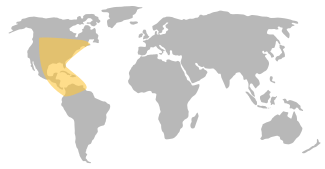
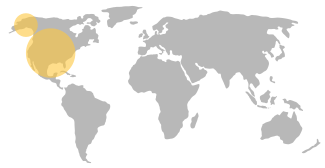
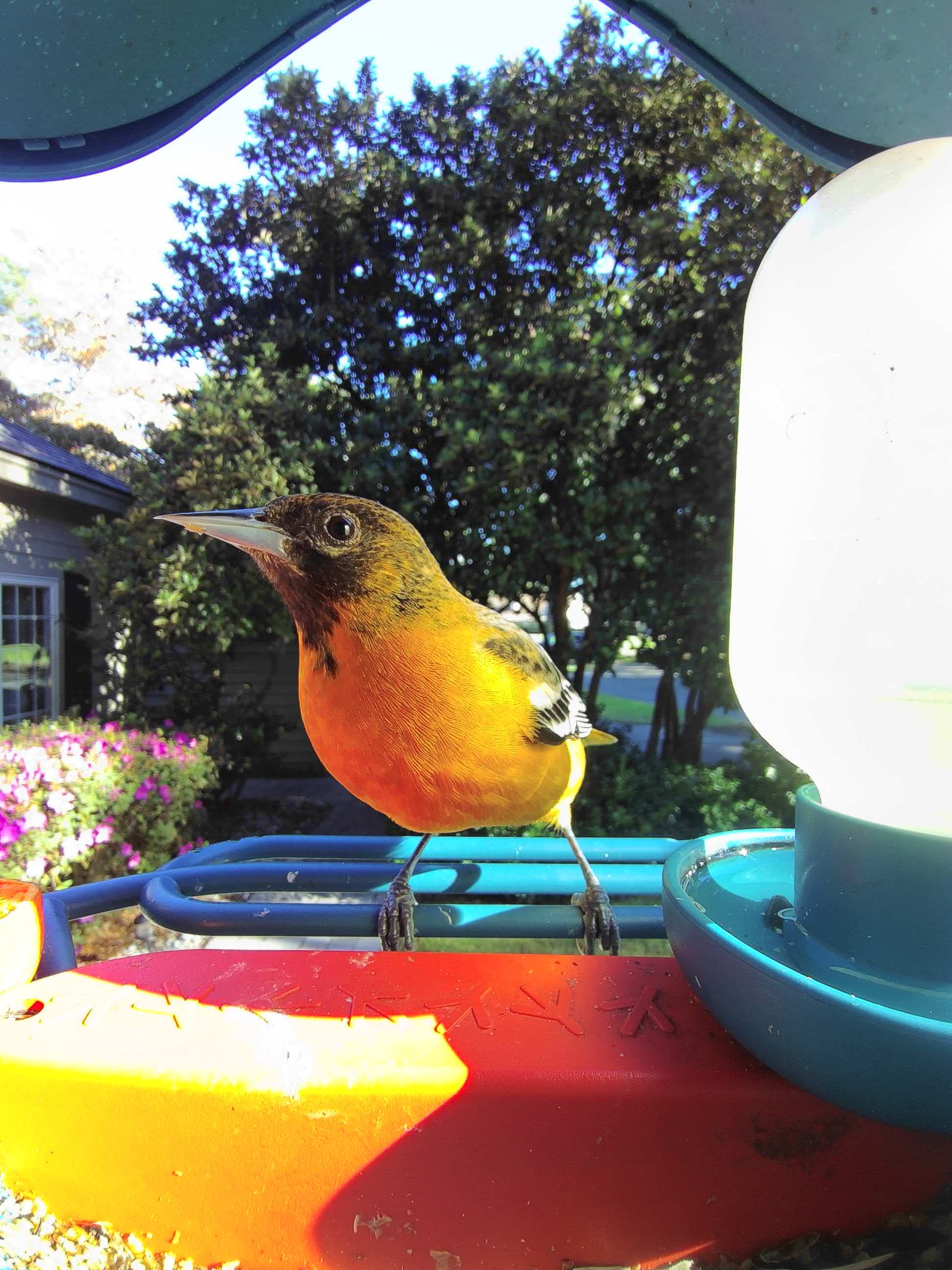


Baltimore Oriole
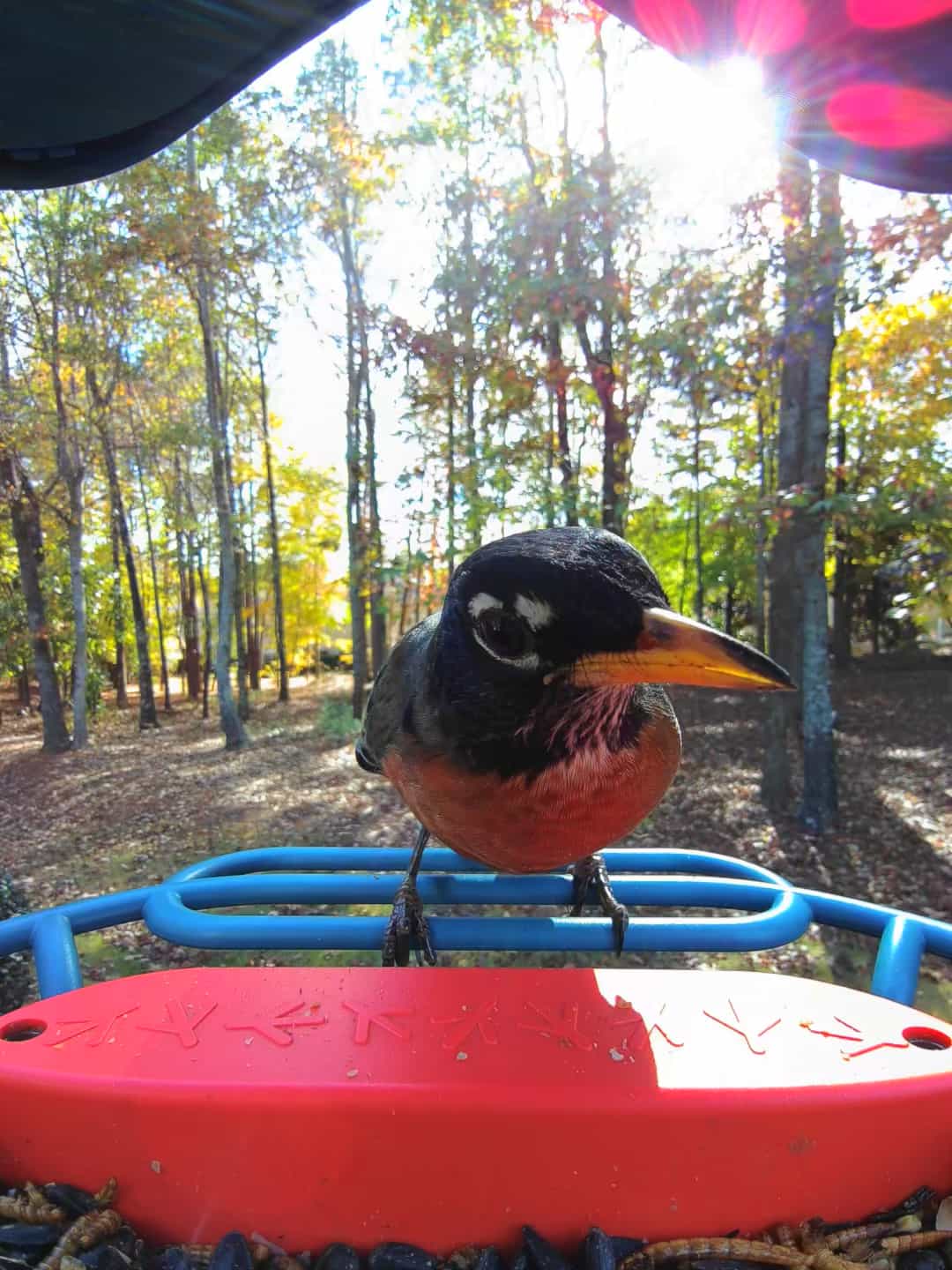


American Robin
Baltimore Oriole
Icterus galbula
General appearance
The Baltimore Oriole is an eastern bird measuring about 7-8 1/2"(18-22 cm), roughly the size of a Robin or Sparrow. Its markings are bold, with color strikingly black and orange. Its wings are rounded and tail shape can be either rounded or square-tipped.
Male vs female
The adult male is unmistakable with its vibrant black and orange coloration. The female, on the other hand, is brown above and tinged orange below. She has white wing-bars and variable amounts of black on her head. In the Great Plains, Baltimore Orioles often interbreed with Bullock's Orioles, producing hybrids with intermediate patterns.
Juvenile
The text does not provide specific details on the appearance of juvenile Baltimore Orioles. However, juvenile birds often have a more muted coloration than adults.
Size
6.7 - 7.5 in/1.1 - 1.4 oz
There's more to learn about Baltimore Oriole
View full detailsAmerican Robin
Turdus migratorius
General appearance
The American Robin is about 10 inches (25 cm) in size, or the size of a robin. It has a brick-red chest and a gray back with streaks on the white chin. Additionally, small white spots are visible around its eyes, as well as usually on tail corners. The wings are pointed and the tail is rounded and square-tipped.
Male vs female
Males exhibit a slightly blacker head and richer colors compared to the females. Despite these differences, both genders feature the signature black, brown, orange, red, and yellow colors.
Juvenile
The juvenile American Robin can appear confusing, due to the heavy spotting below, mottling on the back, and pale marks on the face. However, a distinguishing feature to identify a juvenile is the reddish tinge visible on its chest.
Size
7.9 - 11.0 in/2.7 - 3.0 oz
There's more to learn about American Robin
View full detailsHow to tell the Baltimore Oriole from the American Robin
Visual differences
The Baltimore Oriole is smaller at 7-8.5 inches, with vibrant orange and black plumage. Its wings are rounded, and the tail can be square-tipped. In contrast, the larger American Robin is about 10 inches, featuring a brick-red chest, gray back, and white markings around the eyes and on the tail. The robin's wings are pointed with a square-tipped tail. Orioles have a distinct dichotomy between male and female plumage, while robins show subtle gender coloration differences. Orioles have a more slender beak compared to the robin's more robust, pointed beak.
Key differences and behavior
Behaviorally, Baltimore Orioles and American Robins have distinct preferences aiding field identification. Orioles prefer breeding in open woodlands, often weaving intricate hanging nests from high deciduous branches, mainly built by females. In contrast, Robins nest in urban areas, crafting mud-based nests on horizontal branches or man-made structures. Orioles are insectivorous, enjoying caterpillars and berries, and frequent nectar feeders, whereas Robins favor earthworms and fruits, foraging on the ground. During courtship, Oriole males sing and perform displays, while Robins are more aggressive, with males often fighting for territory. Orioles migrate to tropical regions in winter, while Robins remain where berries are plentiful. Attracted to sugar-water feeders, Orioles can be enticed to gardens, whereas Robins prefer ground-based offerings like mealworms. Both species contribute to insect control and pollination, yet their diverse habitat, nesting, and feeding behaviors offer clear distinctions for observers.
Still not sure? Here are more lookalikes!
Baltimore Oriole vs Orchard Oriole
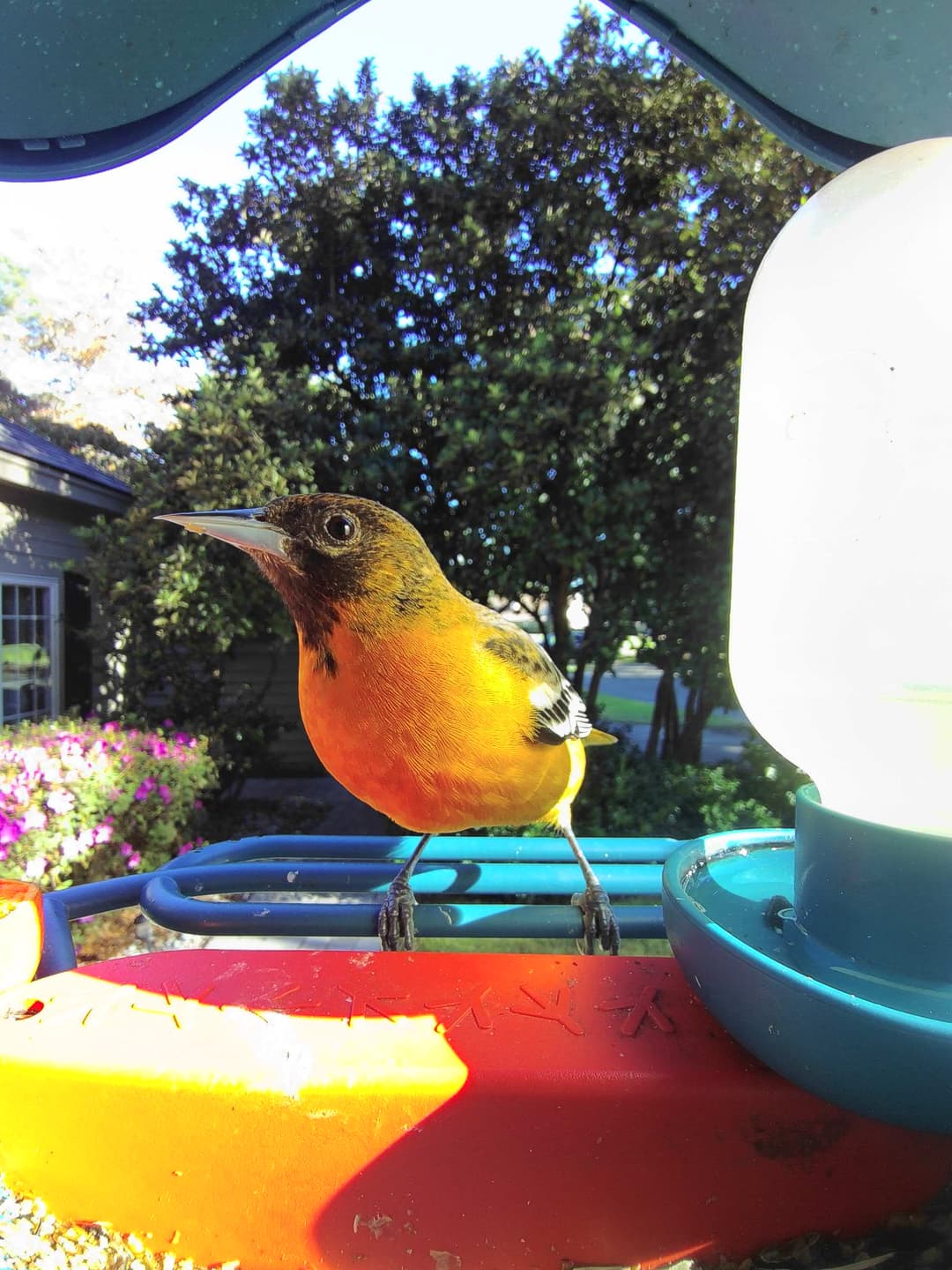
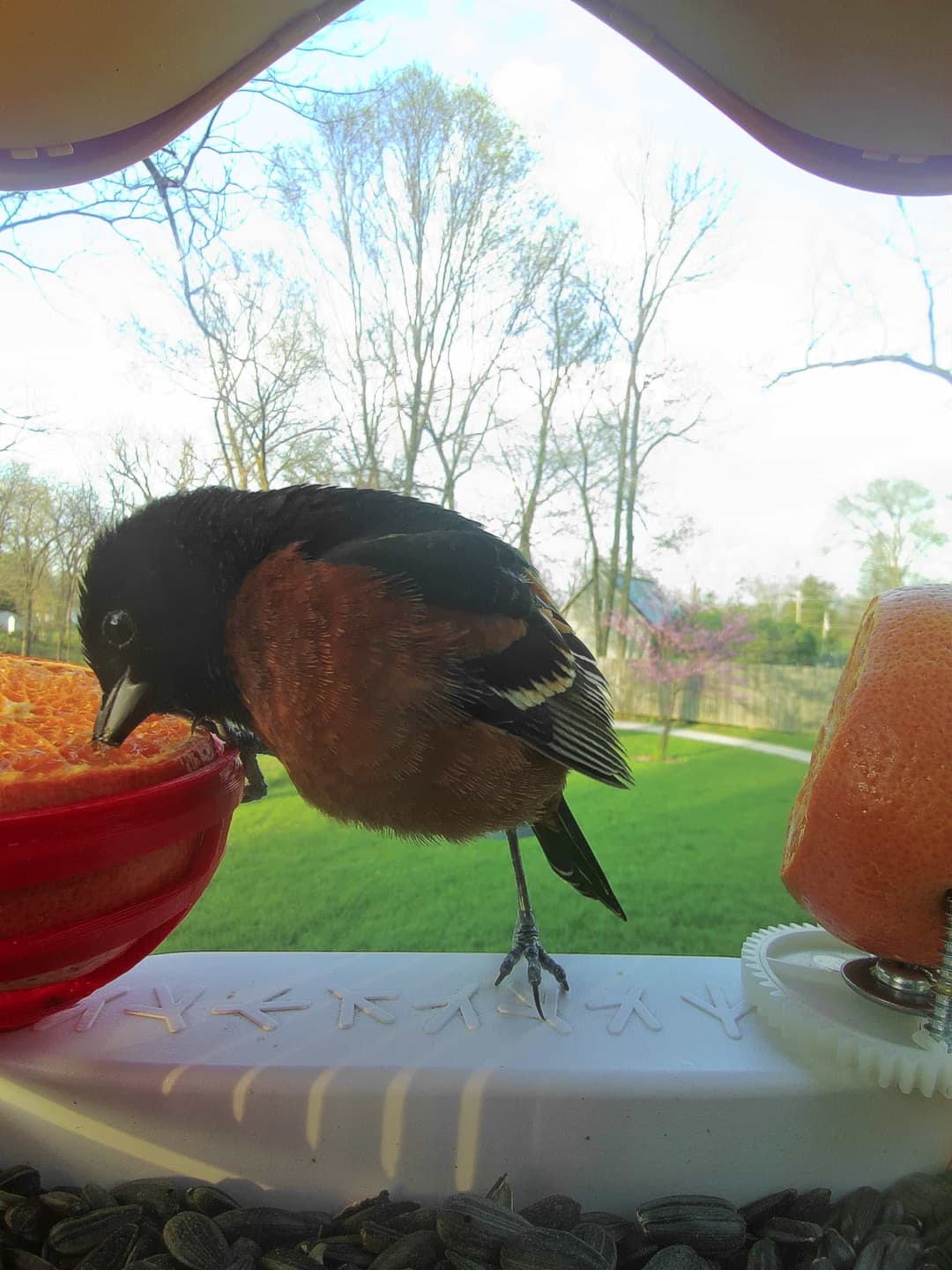
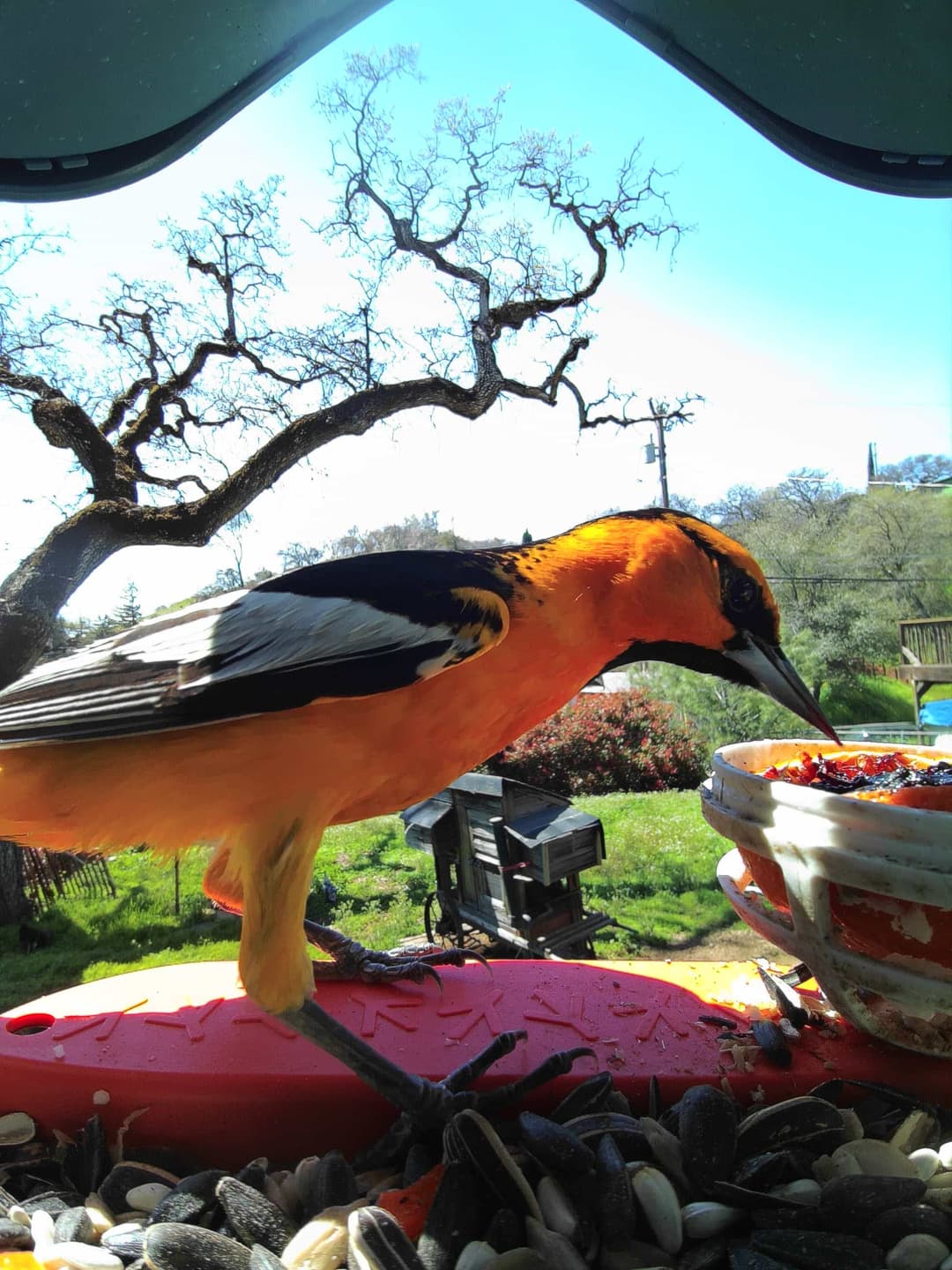
Baltimore Oriole vs Bullock’s Oriole
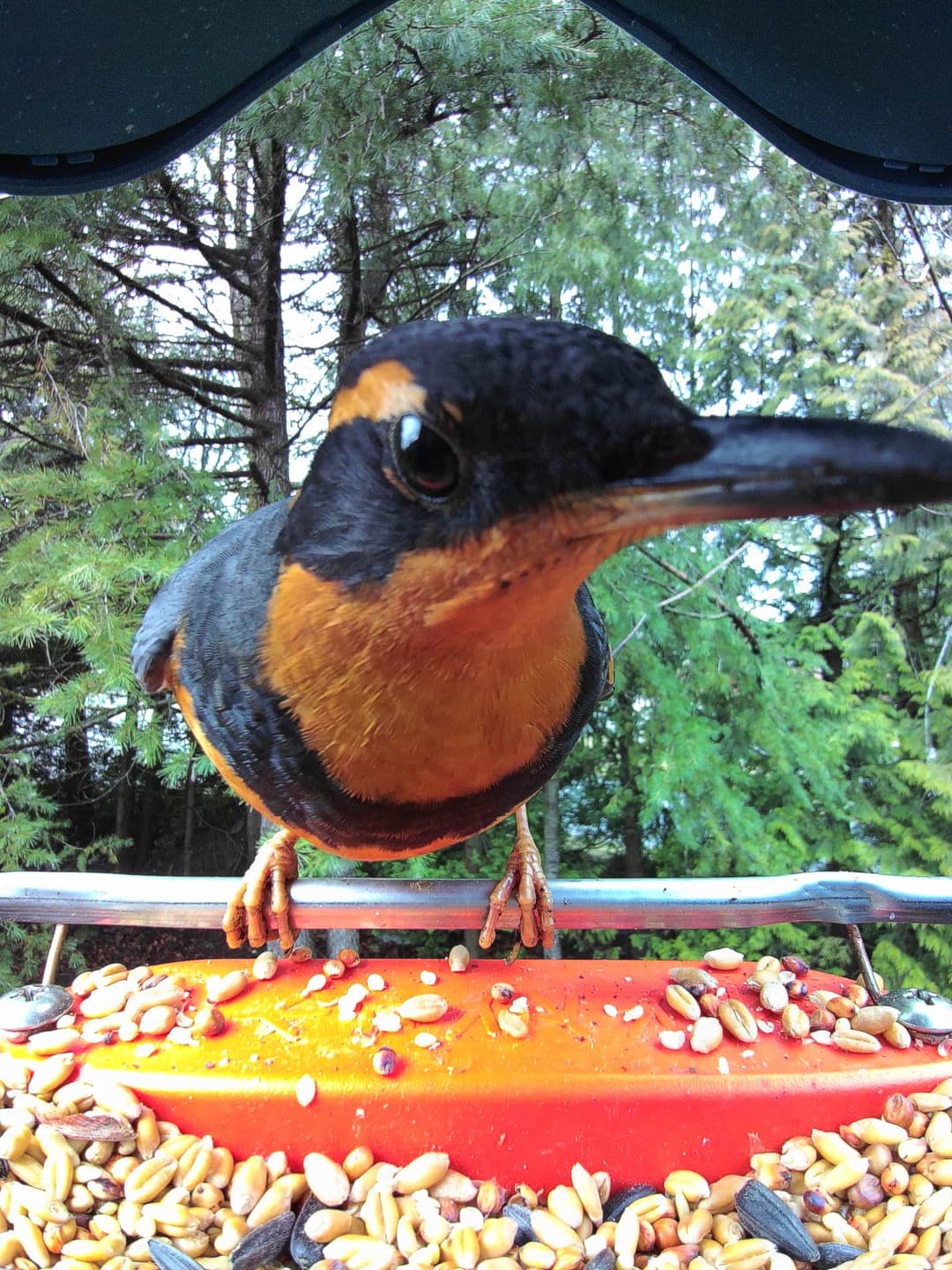
American Robin vs Varied Thrush

American Robin vs Spotted Towhee

American Robin vs Eastern Towhee
Baltimore Oriole vs [Select a bird]

[Select a bird]
Pick a bird to compare
American Robin vs [Select a bird]
[Select a bird]
Pick a bird to compare