
Fish Crow
Fish Crow
Corvus ossifragus


Quick Identification guide
Quick Identification guide
- •
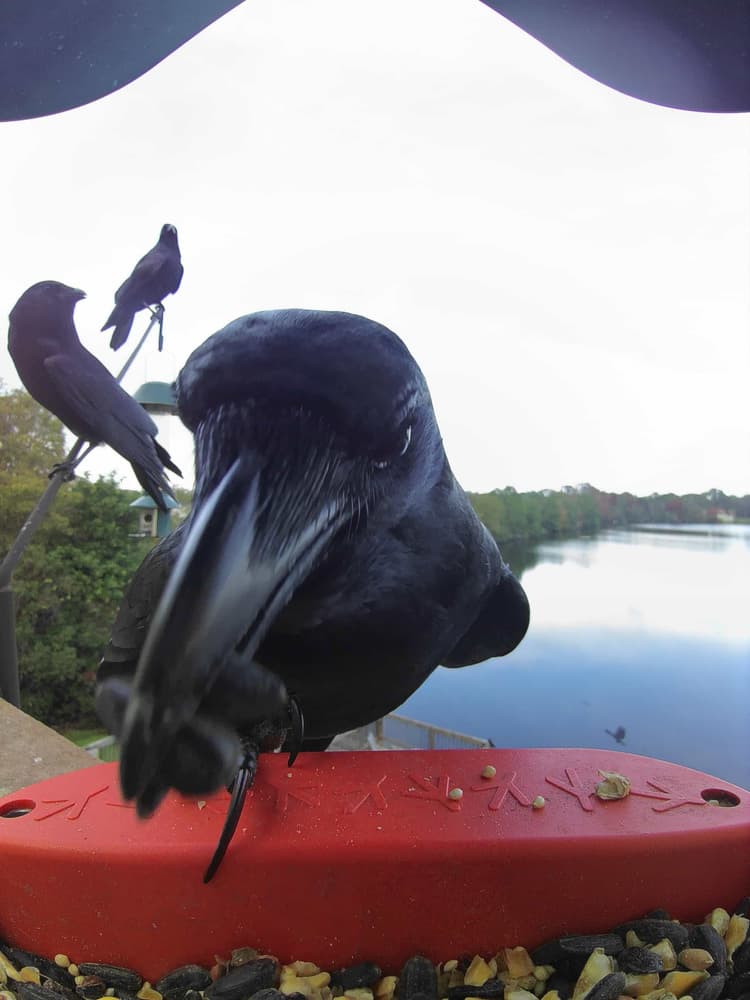
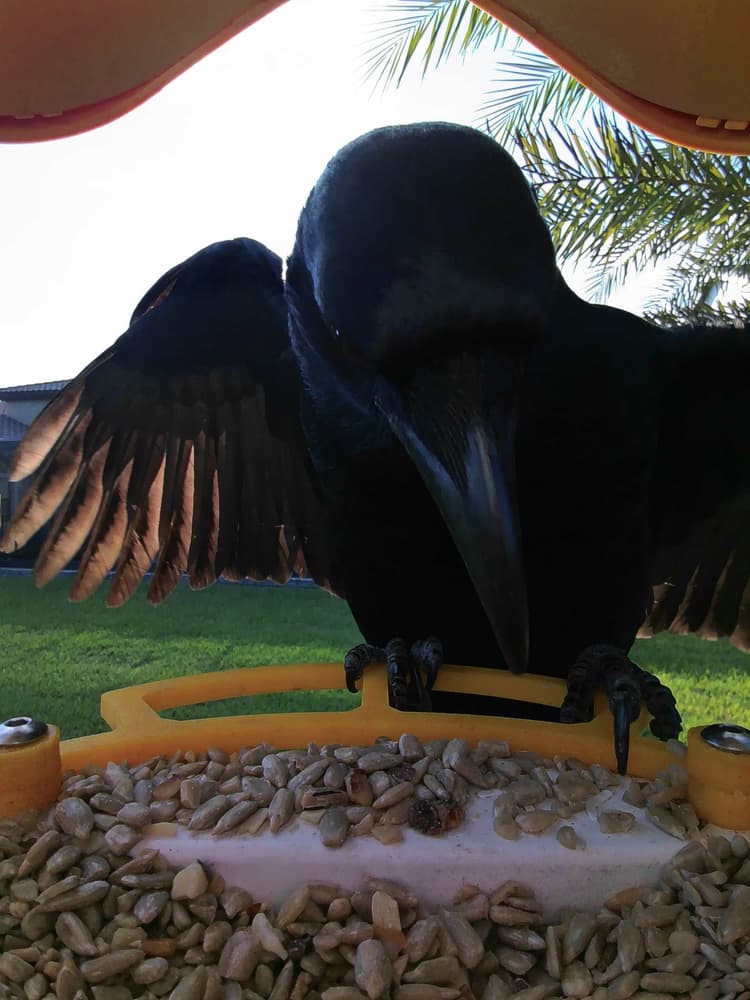
Features a glossy black plumage with little to no color variation throughout the body
- •
Displays shorter legs and smaller bill compared to the American Crow
- •
Noticeably broad-winged and short-tailed, contributing to a compact appearance
What does a fish crow sound like?
The Fish Crow vocalizes distinct calls separate from the common American Crow's caw, including a nasal 'kwok' and a two-noted 'ah-ah'. During breeding season, the American Crow's young also emit a similar 'kwok' call. The Fish Crow's call pattern is falling, flat, and simple with a rattle or raucous call type.


Description
When it comes to food, fish crows are not picky and will eat just about anything. If there is anything left over, they will cache the surplus for later and use it to feed their young. Pairs are affectionate and often preen the back of each other's heads, but they can be quite the troublemakers when dealing with other birds. They have been known to harass them and steal food, as well as raid nests.
The fish crow can weigh between 195to330grams and be from36to40centimeters tall.
The typical lifespan of a fish crow is about 14-16 years. This is comparable to, and slightly longer than, the lifespan of the closely related American crow, generally reported to live around 7-8 years in the wild. However, both species have been known to occasionally reach into their 20s when in captivity or under ideal conditions.
Did you know?
Most popular questions about fish crow
How to recognise a fish crow?
General appearance
The fish crow is slightly smaller than the American Crow, measuring around 43 cm. It has slightly more pointed wingtips and is generally black in color. Its wings show a broad and fingered shape, while its tail is rounded and square-tipped.
Male vs female
There are no significant physical differences between male and female fish crows. Both sexes share the same coloration and physical traits. Any difference would be identifiable primarily through their various calls and behavior.
Juvenile
Young fish crows produce many nasal calls much like young American Crows. Apart from these vocal differences, juvenile Fish Crows resemble adults in physical characteristics and coloration. As they mature, their overall size increases and their call alters, further distinguishing them from the similar American Crow species.
Often mistaken for
American Crow vs Fish Crow
Fish Crows are smaller, have a more nasal, shorter 'cah' call, and lack the distinct fan-shaped tail in flight that American Crows have. Look for the throat puffing when Fish Crows call.

Common Raven vs Fish Crow
Fish Crows are smaller and have a more nasal call compared to the deep croak of Common Ravens. Ravens also have wedge-shaped tails and are bulkier with shaggy throat feathers.

Boat-Tailed Grackle vs Fish Crow
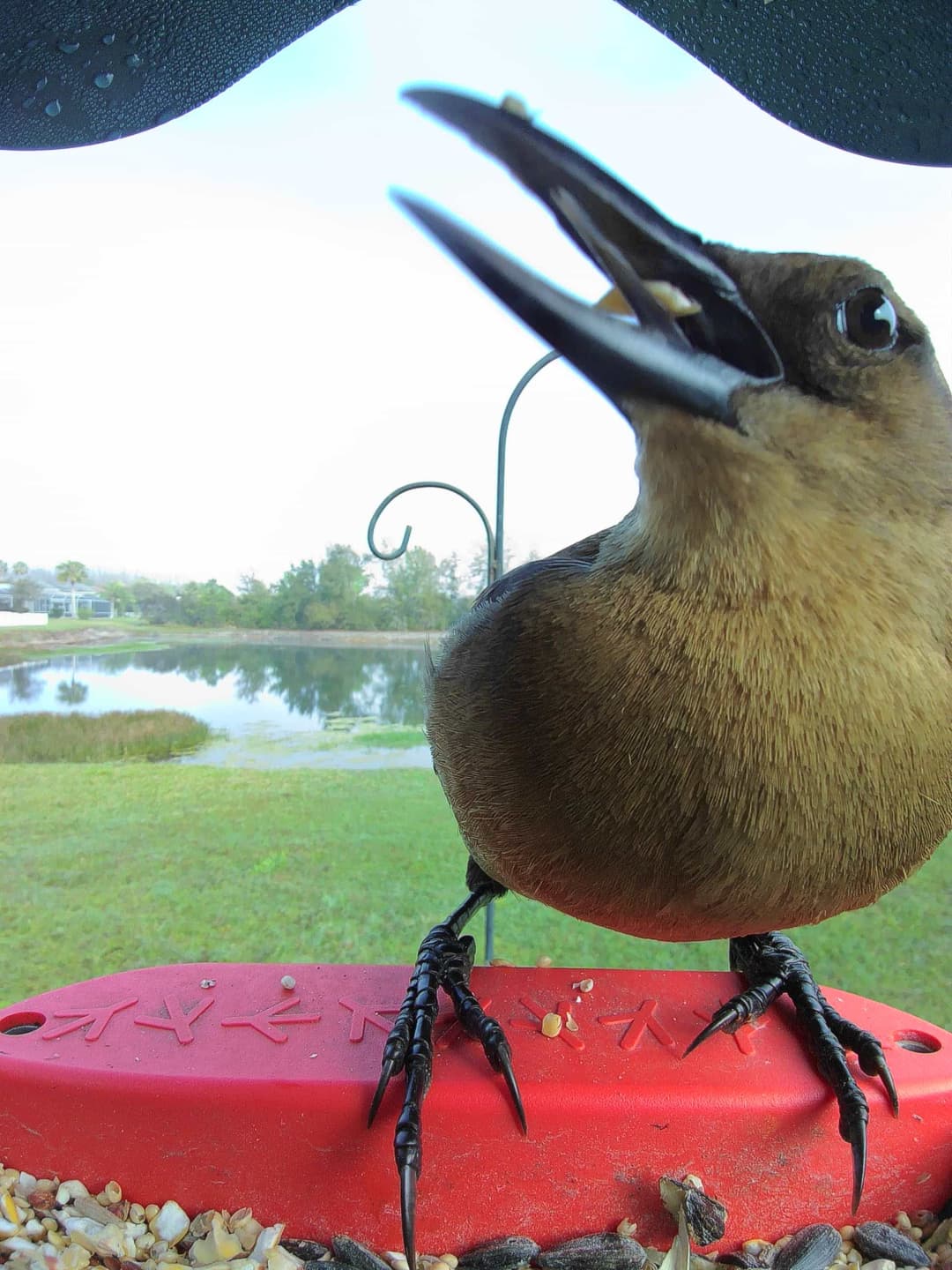
Fish Crows have a thicker, shorter bill than Boat-Tailed Grackles, which have longer tails and glossy iridescent bodies. Grackles also produce a variety of sharp, metallic calls.
Breeding and nesting habits of the fish crow
Mating behaviors
Fish crows often nest in loose colonies, with courtship involving male and female crows gliding closely together in a display flight.
Nesting details
Nesting sites are typically located in the upright forks of trees or shrubs, ranging from low coastal pines and cedars to high inland swamp deciduous trees. Nests can be 5-70 feet above ground or even higher and are constructed by both sexes. The nest is a bulky platform made from sticks and bark strips, lined with soft materials like grass, rootlets, hair, feathers, paper, pine needles, and even manure.
Eggs and chick-rearing
While specific details on the fish crow's egg-laying and chick-rearing were not provided, the construction and location of their bulky nests suggest care and protection for the young. Enhancing gardens with diverse flora can create a supportive environment for fish crow nesting.
What does a fish crow like to eat?
Aquatic animals
Bird eggs
Carrion
Crustaceans
Fruits
Insects
Nuts
Scraps
Seeds
Small animals
Snails
Spiders
Worms
Natural diet
The fish crow is omnivorous and exploits a diverse range of natural food sources. It feeds on carrion, crabs, shrimp, and crayfish. This bird also consumes a wide variety of insects. Additionally, the fish crow includes plant-based items in its diet, such as berries, seeds, and nuts. It is known to prey on bird eggs and turtle eggs, showcasing its opportunistic feeding behavior. The adaptability of the fish crow's diet is further highlighted by its tolerance for human-modified environments, where it is often seen scavenging for scraps and consuming garbage.
Bird feeders
While the fish crow primarily relies on its natural hunting and foraging skills, it may occasionally visit bird feeders. When doing so, it is likely to be attracted to offerings similar to its natural diet, such as seeds and nuts. However, due to its opportunistic nature, the fish crow might also take advantage of any human food scraps available, reinforcing its adaptability to both natural and urban settings.
Snacks for attracting fish crows
Fish crows are drawn to a variety of snacks. Typically the Fish Crows diet consists of insects, earthworms, berries, grains, and small fish. However, they will eagerly partake in feeders stocked with Bird Buddy seeds. Experts carefully select these seeds for each season ensuring the best results.
Choosing the right feeder
The choice of feeder can also impact the attractiveness of your yard to fish crows. They are comfortable with platform and ground feeders. Make sure to place the feeder in an open, quiet, and safe area away from predators and high traffic. The calmer the environment, the more birds, including the elusive fish crow, you're likely to see.
Encouraging fish crows to stay
One unique way to encourage fish crows to stay around for longer is by playing bird songs. Having a bird-friendly garden with plenty of plants, shrubs, and trees can also create a habitat for them to nest. Regular stocking your feeders with Bird Buddy seeds will make your yard a reliable food source for the crows.
Where can you find fish crows?
Primary habitat
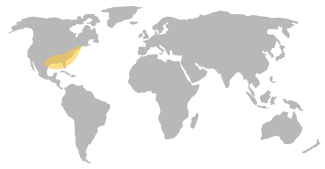
The fish crow predominantly occupies tidewater, river valleys, swamps, woodland, farmland, and particularly coastal regions where it forages on beaches, marshes, and estuaries.
Additional range
While it prefers proximity to water, it may sometimes venture into woods and fields a few miles away, following drainage patterns of large rivers.
Do they migrate?
The fish crow is mostly a permanent resident, which means it generally remains in its established habitat throughout the year. However, there is some seasonal movement where these birds may withdraw from certain inland parts of their range during the winter months. This limited withdrawal suggests a partial migration or local dispersal rather than a long-distance migration. Specifically, fish crows are commonly found in the southeastern United States, particularly in coastal regions and the Mississippi River Valley. During winter, they tend to stay closer to coastal and warmer areas, moving away from colder, inland regions. There isn't a defined migratory route involving lengthy travel similar to that of highly migratory bird species. Instead, fish crows might shift their habitat slightly within their existing range for better access to resources and milder climatic conditions. Overall, the fish crow's movement is highly dependent on the local environmental conditions rather than a structured migration involving specific timing or key locations typical of long-distance migrators.
What is the role of fish crows in nature and how to protect them?
Conservation status
The fish crow is considered common, with its population likely increasing due to expansion further north and inland. This adaptability helps the species maintain a stable conservation status, reducing the risk of it becoming vulnerable or endangered. Key conservation efforts focus on habitat preservation, particularly in coastal and wetland areas, which are crucial for their nesting and feeding. Significant threats include habitat destruction due to urban development and pollution, which can impact their food sources. Overall, the species remains relatively secure but requires ongoing monitoring to ensure its continued health and stability.
Ecological role of fish crows
Its role in the ecosystem
The Fish Crow plays a significant role in maintaining ecological balance. Its dietary habits contribute to pest control as it feeds on a wide variety of insects, reducing their population. Additionally, consuming carrion aids in keeping the environment clean. Feeding on aquatic creatures like crabs, shrimp, and crayfish, it helps manage these populations. The Fish Crow also partakes in seed dispersal, by consuming berries, seeds, and nuts, assisting in the propagation of various plant species. Moreover, it feeds on bird and turtle eggs, influencing their population control. By frightening adults from their nests in colonies of herons and other waterbirds, it contributes to population management of these species. In terms of nesting, the Fish Crow creates platforms of sticks and strips of bark in trees or shrubs. These nests add to the structural complexity of the habitat, benefiting other organisms. However, it is crucial to note that their predation on other birds' eggs can sometimes be harmful to smaller bird populations.
How to help protect fish crows
Preservation tips
Habitat preservation strategies
To conserve the fish crow, focus on protecting its habitats which are mainly near water bodies. Apply local zoning ordinances to prevent development or deforestation near wetlands, riverbanks, and coastlines. Promote healthier ecosystems by limiting chemical pollutants that contaminate water sources, affecting the fish populations upon which fish crows feed.
Community science initiatives
Engage local communities in citizen science projects focused on monitoring fish crow populations and its habitat. Develop education programs in schools and community centers to raise awareness about fish crow conservation. Encourage people to report sightings, create bird-friendly spaces, and advocate for policies preserving fish crow habitats. Such initiatives can result in extensive data and stronger community participation in conservation efforts.