
Pygmy Nuthatch
Pygmy Nuthatch
Sitta pygmaea


Quick Identification guide
Quick Identification guide
Male
- •
grayish-blue upperparts with a paler underside
- •
compact, rounded body with a short tail
- •
A small, pointed beak and a cinnamon-buff crown
Female
- •
grayish-blue upperparts like the male but with slightly duller tones
- •
stout, compact build with a similar short tail
- •
Shares the small, pointed beak and cinnamon-buff crown of the male
What does a pygmy nuthatch sound like?
The Pygmy Nuthatch produces a monotonous, repetitive "peep, peep-peep" sound. The pattern of its vocalizations generally falls or is flat, displaying a lack of variation in pitch or rhythm. This bird's usual call type is categorized as a chirp or chip, indicative of short, sharp sounds frequently used for communication. Its simplistic and repetitive peeping makes its call distinct and easily recognizable.


Description
Pygmy nuthatches weigh only 8 grammes and need just nine calories a day to survive. They put them to good use, though. These teeny, tiny birds are little balls of energy! They need to stick together to conserve it; when roosting, up to 100 nuthatches will pile into a single roost hole to fight the cold.
The pygmy nuthatch can weigh between 9to11grams and be from9to11centimeters tall.
The Pygmy Nuthatch typically lives up to 7 years. However, the oldest recorded living pygmy nuthatch lived for 10 years. Compared to the white-breasted nuthatch, which has a lifespan of 12 years, and the red-breasted nuthatch with a lifespan of up to 8 years, the pygmy nuthatch has a relatively short lifespan.
Did you know?
Most popular questions about pygmy nuthatch
How to recognise a pygmy nuthatch?
General appearance
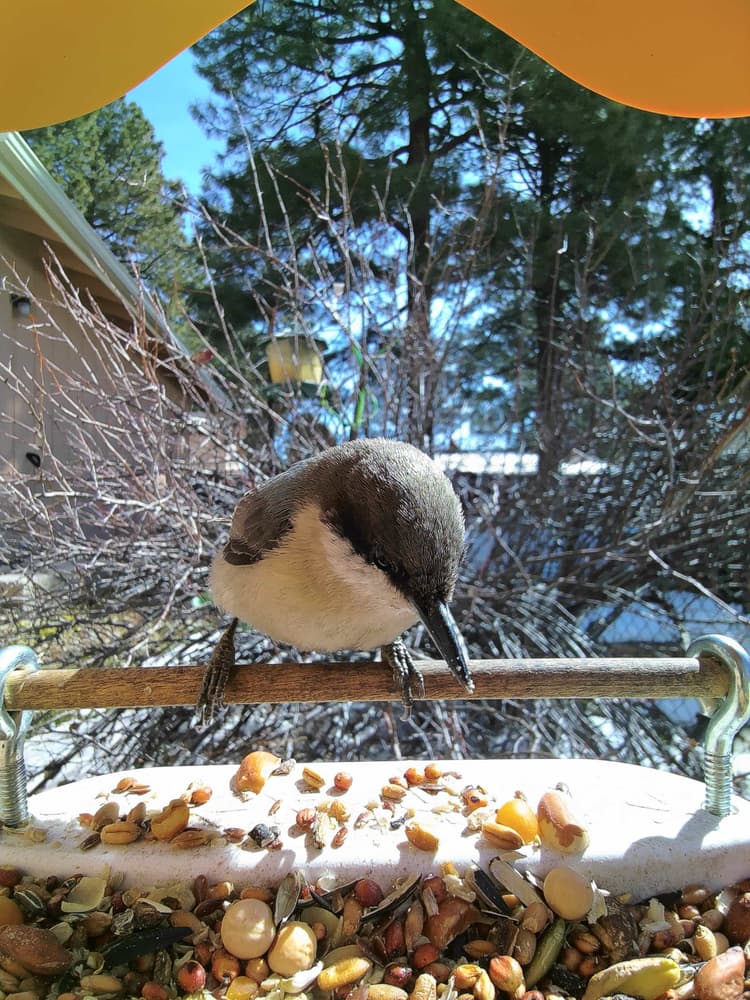
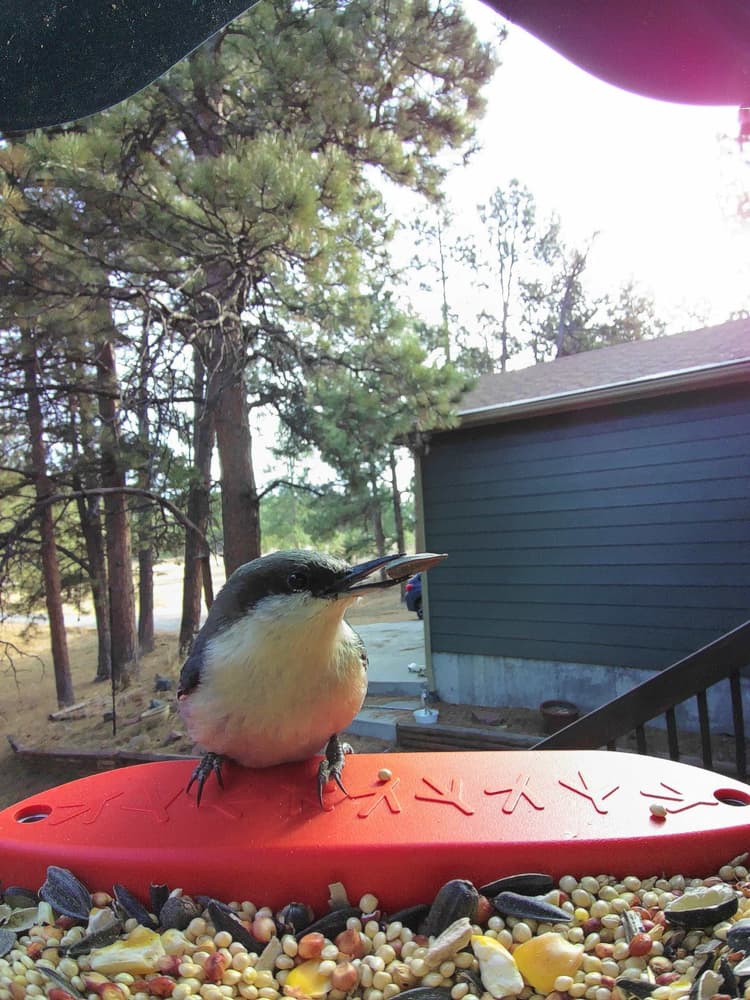
The pygmy nuthatch is a small, compact bird measuring around 4 inches in length. It features a grayish-blue upper body and a buffy-white underbelly. The most distinctive feature is its cap, which is a contrasting dark gray. Its sharp, pointed beak and short tail add to its characteristic structure. The bird often appears agile, clinging to tree trunks and branches.
Male vs female
There is little to no sexual dimorphism in pygmy nuthatches, making it difficult to distinguish between males and females based solely on appearance. Both sexes share the same plumage coloration and pattern across all seasons.
Juvenile
Juvenile pygmy nuthatches are similar in appearance to adults but may appear slightly duller in coloration. Their underparts can be more muted, with a softer contrast between the gray cap and the rest of the plumage. As they mature, their colors become more distinct, matching those of adult birds.
Often mistaken for
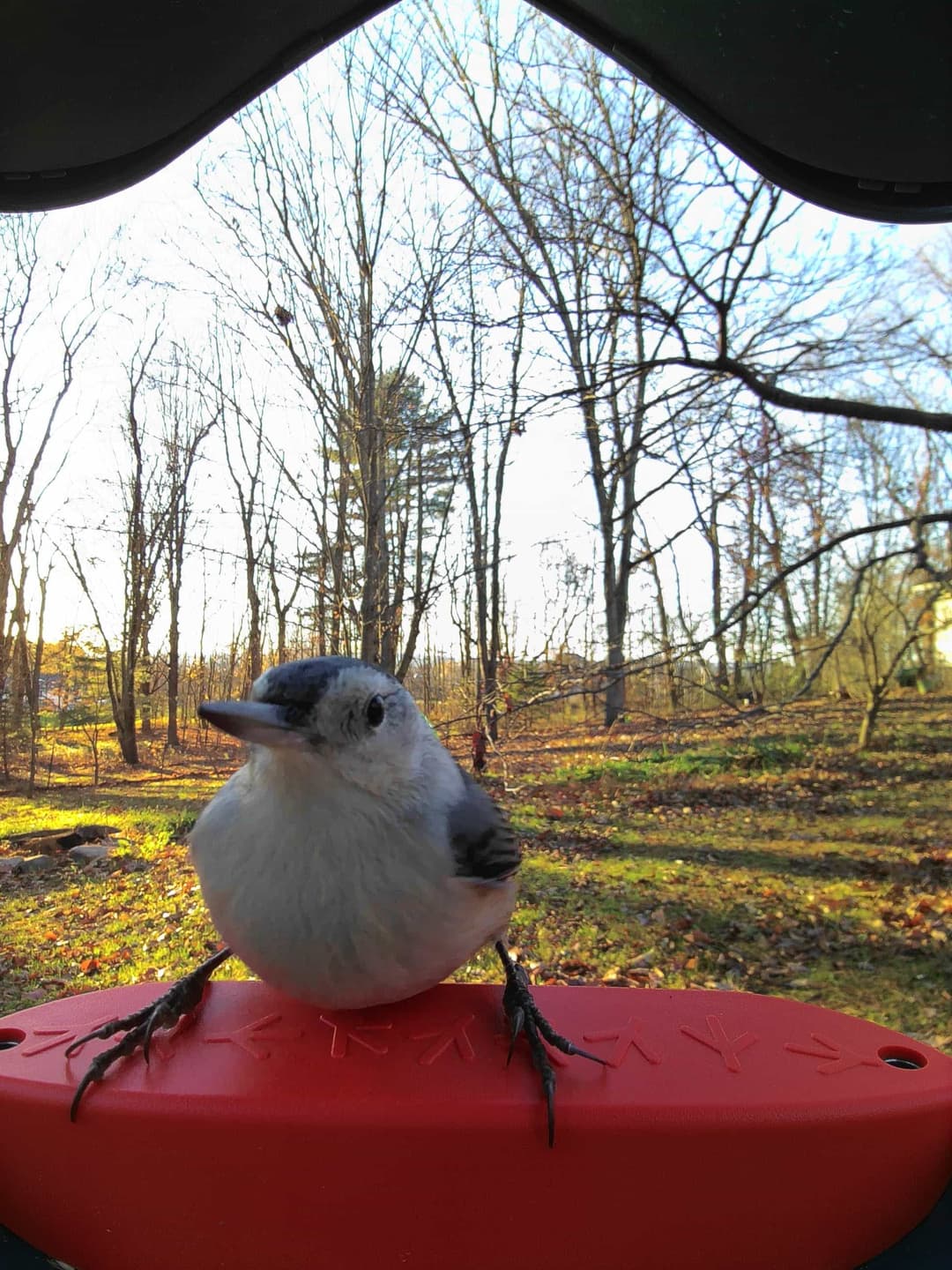
White-Breasted Nuthatch vs Pygmy Nuthatch
The Pygmy Nuthatch is smaller with a brownish cap, while the White-Breasted has a white face and larger size. Listen for Pygmy's rapid, high-pitched calls.
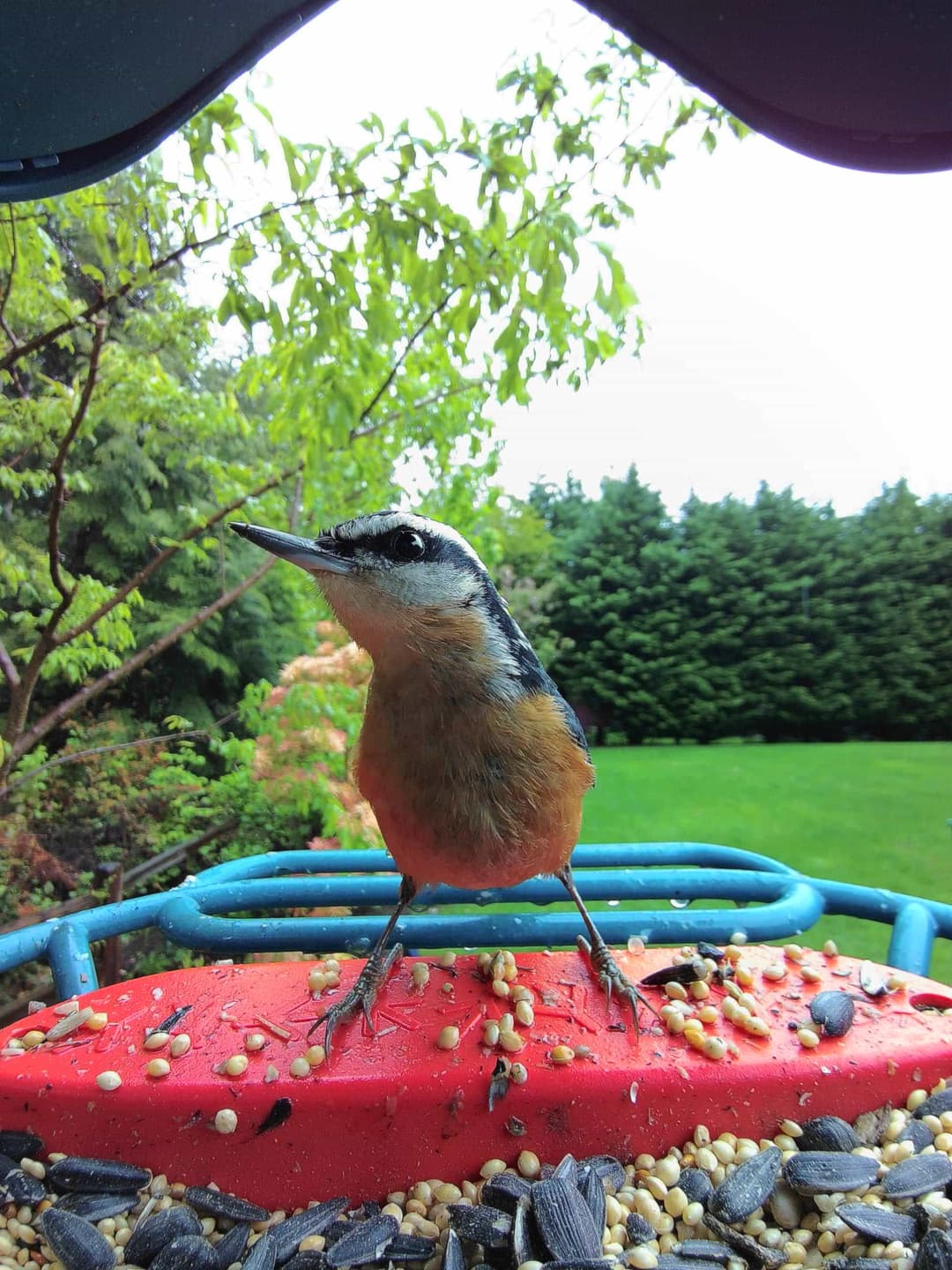
Red-Breasted Nuthatch vs Pygmy Nuthatch
Pygmy Nuthatch sports a plain blue-gray back; the Red-Breasted has a rusty underbody and a black cap. Pygmies are more social, foraging in flocks.
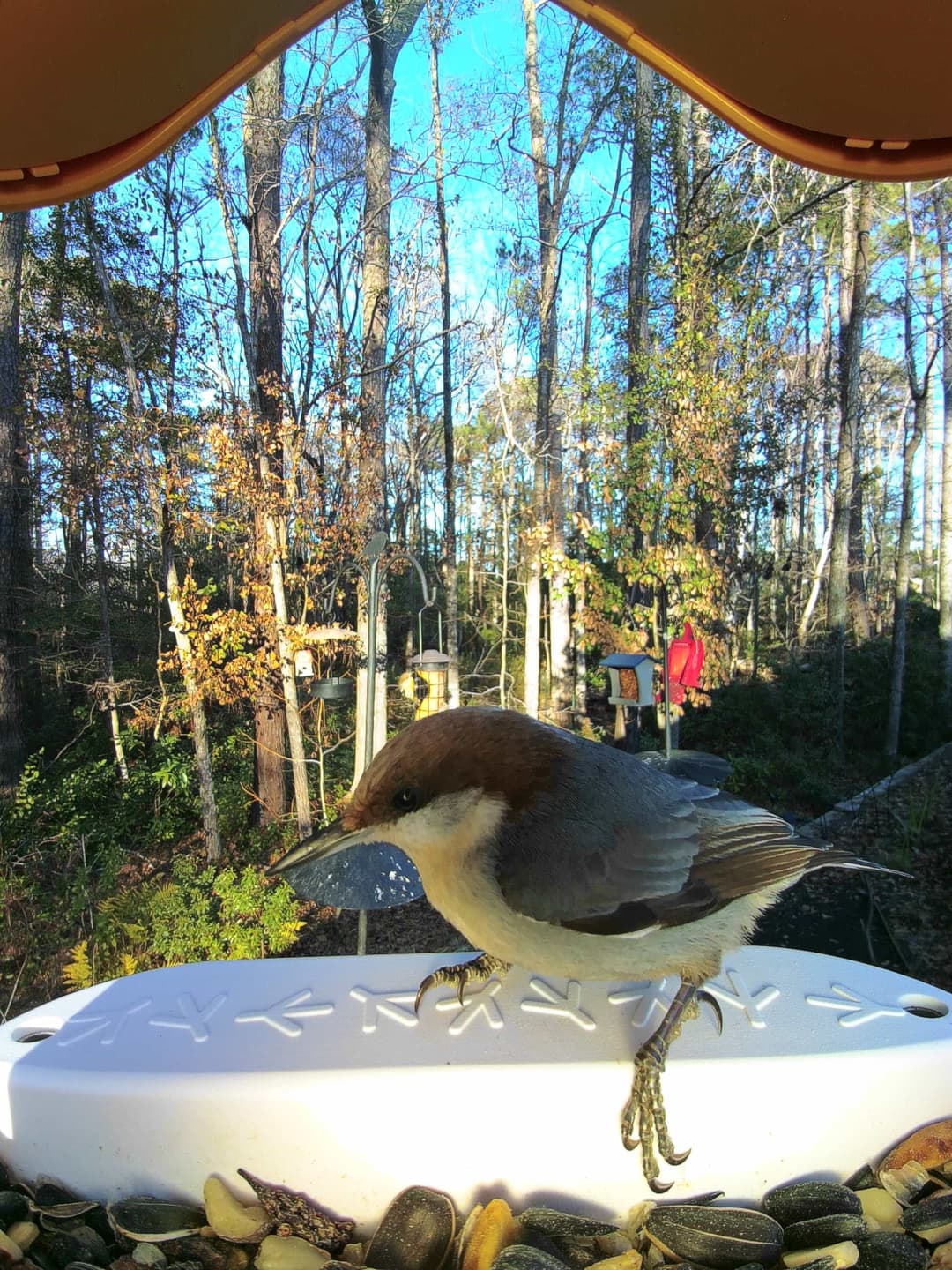
Brown-Headed Nuthatch vs Pygmy Nuthatch
Both have brown caps, but Pygmy Nuthatch is slightly larger and more bluish-gray. Look for Pygmies in high-elevation pine forests.
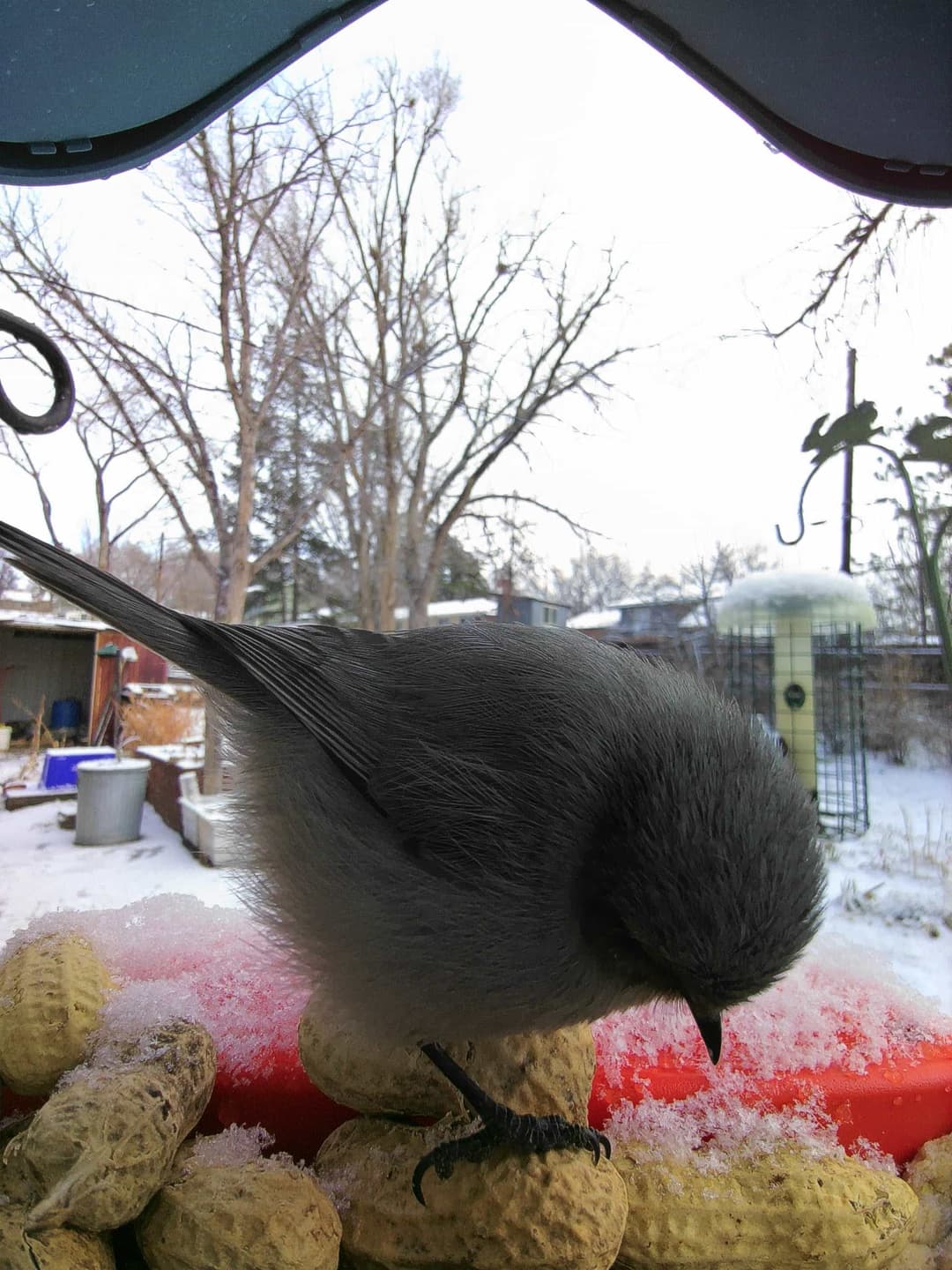
Bushtit vs Pygmy Nuthatch
Bushtits are smaller, with plain gray coloration and lack the nuthatch's beak shape. Pygmy Nuthatches have a distinct pattern and behavior of climbing trees.
Breeding and nesting habits of the pygmy nuthatch
Mating behaviors
Pygmy nuthatches engage in cooperative breeding where nesting pairs are joined by 1-3 additional birds, usually previous offspring. These 'helpers' assist in defending the territory and raising the young.
Nesting details
The birds excavate nest cavities in dead limbs or snags, typically 8-60 feet above the ground, often higher than 20 feet. They use bark fibers, plant down, and feathers to construct the nest. Bluebirds and swallows are tolerated nearby but not chickadees or other nuthatches.
Eggs and chick-rearing
Helpers play a crucial role in increasing the number of fledglings. The nesting pair and helpers may roost in the cavity before egg-laying. Pairs without helpers generally fledge fewer young. Habitat in gardens can be enhanced by providing deadwood snags for nesting sites and ensuring a safe environment for the nuthatches.
What does a pygmy nuthatch like to eat?
Insects
Seeds
Natural diet
The pygmy nuthatch's natural diet consists mainly of insects and seeds. During summer, it primarily consumes insects like beetles, wasps, caterpillars, and true bugs. In winter, its diet shifts to include a high intake of seeds, particularly pine seeds. Nestlings are mostly fed insects, highlighting the importance of insect consumption in their early development.
Bird feeders
Pygmy nuthatches visiting bird feeders may consume sunflower seeds, suet, and small pieces of nuts. They are particularly attracted to feeders offering seeds similar to those found in their natural habitat, such as pine seeds, and are also drawn to protein-rich offerings that mimic their insect diet.
Set up the right feeders
Attracting pygmy nuthatches starts with the right feeders. These birds favor tube feeders, hopper feeders, and suet feeders. You can easily hang these from a sturdy branch or a bird feeder pole. Make sure the feeders are in quiet areas, as pygmy nuthatches tend to avoid noisy and high-trafficked locations.
Serve up tasty treats
Pygmy nuthatches love to eat insects, seeds, and nuts. Try serving Bird Buddy seeds since they've been expertly selected for the season, offering the birds tasty seeds they cannot resist. Also, offering sunflower seeds, peanut butter treats, or suet can be effective, especially in winter when their natural food sources are scarce.
Create a comfortable environment
These birds love pine and oak trees, so if your landscape permits, consider planting these varieties. Pygmy nuthatches often nest in tree cavities, so you can also mount bird boxes in your yard to offer them a safe place to stay. Provide a water source as pygmy nuthatches need clean water for drinking and bathing.
Keep predators away
Pygmy nuthatches are small birds, and cats, snakes, and certain other birds can pose a threat. Ensure your feeders are in an open space where the nuthatches can quickly escape to nearby trees or shrubs. Using bird feeder baffles can also help detour squirrels and other pests.
Enjoy the sing-along
Once you've attracted these fun birds to your yard, be prepared to enjoy their unique calls. Pygmy nuthatches are social birds that enjoy communicating with their peers, often resulting in lovely bird choruses. You're not just feeding birds, but creating a lively backyard environment!
Where can you find pygmy nuthatches?

Primary habitat
The Pygmy Nuthatch's preferred habitat is the Yellow Pine region throughout the mountains of the west, including Ponderosa and Jeffrey pines.
Additional range
Additional habitats encompass Monterey Pine in California coast, Pinyon-Juniper woodland, and Redwood Canyons. Occasionally, they can visit the lowlands, often seen in planted conifers.
Do they migrate?
The pygmy nuthatch is mostly a permanent resident, meaning it generally stays in one place throughout the year. However, in years when cone crops are poor, some mountain-dwelling individuals may wander to lower elevations in search of food. This movement is not a true migration but rather a short-range dispersal as these birds seek better food resources. Very rarely, these movements can extend further out onto the plains, but such occurrences are uncommon. Typically found in pine forests of western North America, the pygmy nuthatch's need for food drives these irregular movements. Key locations include mountainous regions where pine trees are abundant. During poor crop years, these birds may be observed in nearby lowland areas just outside their typical range, favoring similar habitats wherever pine seeds are available. The specific routes and destinations vary each year depending on food availability, so there is no fixed migration route or timing. Instead, their movements are opportunistic and reliant on environmental conditions and resources.
What is the role of pygmy nuthatches in nature and how to protect them?
Conservation status
The pygmy nuthatch is considered to have a stable conservation status, as it remains common with apparently stable numbers. This indicates that the species is not currently categorized as vulnerable or endangered. While there are no specific large-scale conservation efforts detailed for the species, maintaining healthy pine forest habitats is crucial for its continued stability. Potential threats could include habitat loss due to logging, forest fires, or climate change. Effective management and conservation of their natural habitats are essential to prevent future decline.
Ecological role of pygmy nuthatches
Its role in the ecosystem
The pygmy nuthatch showcases crucial ecological traits, playing a dynamic role in maintaining the health of forest ecosystems. Firstly, its diet consists mainly of insects in the summer - including beetles, wasps, caterpillars, and various other bugs. Therefore, it aids in the control of these populations, acting as a natural pest deterrent for trees and plants. This also leads to a reduction in the usage of chemical pesticides, contributing to a healthier ecosystem. During winter, it consumes numerous pine seeds, facilitating seed dispersal, a critical process in the reproduction of plants. Additionally, the unique behavior of storing seeds in holes or crevices in the bark benefits new plant growth in different areas. The communal nesting habits of the pygmy nuthatch promote survival and contribute to maintaining a balanced bird population. Lastly, it seems to exhibit amiable co-habitation with other bird species which is crucial in promoting biodiversity.
How to help protect pygmy nuthatches
Preservation tips
Habitat preservation strategies
Preservation of old-growth forest and woodland habitats is vital for the survival of pygmy nuthatch populations. Planting drought-tolerant trees, such as oaks, will help enhance their habitats. Avoid unnecessary tree removal in areas where pygmy nuthatch is known to reside. Support policies and organizations promoting forest conservation.
Community science initiatives
Community involvement is key in pygmy nuthatch conservation. Participate in bird monitoring programs, such as the Audubon Society's Christmas Bird Count and Birdwatcher's Digest Backyard Bird Count. These initiatives provide important data about bird populations. Report any sightings of the pygmy nuthatch to local conservation agencies. Educate others about the importance of conserving habitats for this species and other wildlife.