
Red-Breasted Nuthatch
Red-Breasted Nuthatch
Sitta canadensis


Quick Identification guide
Quick Identification guide
- •
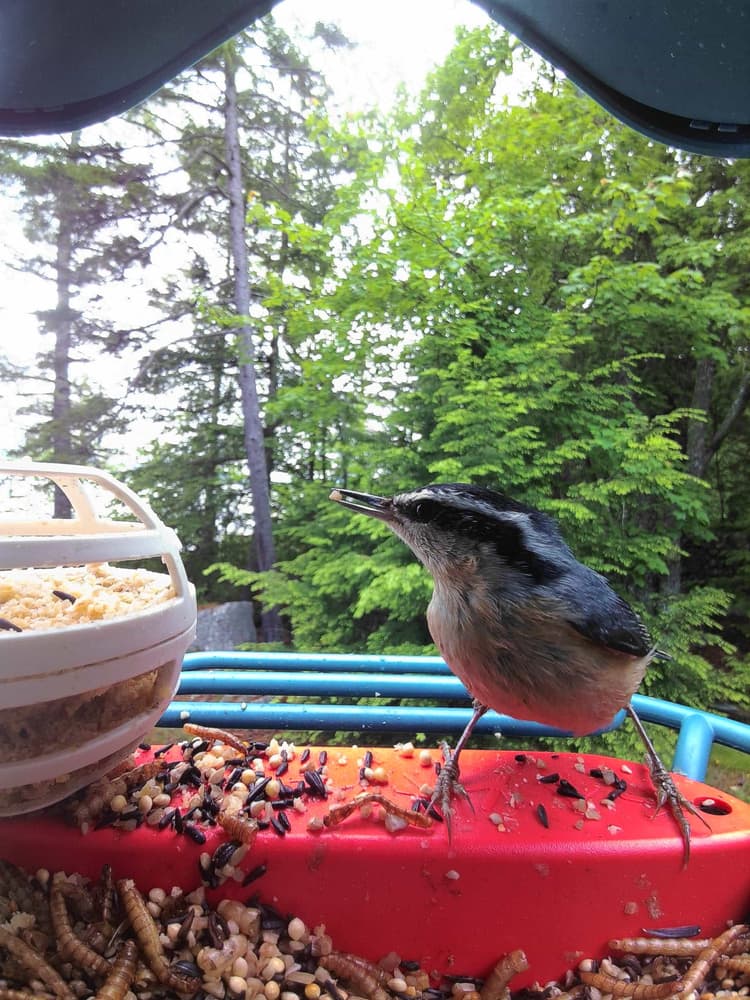
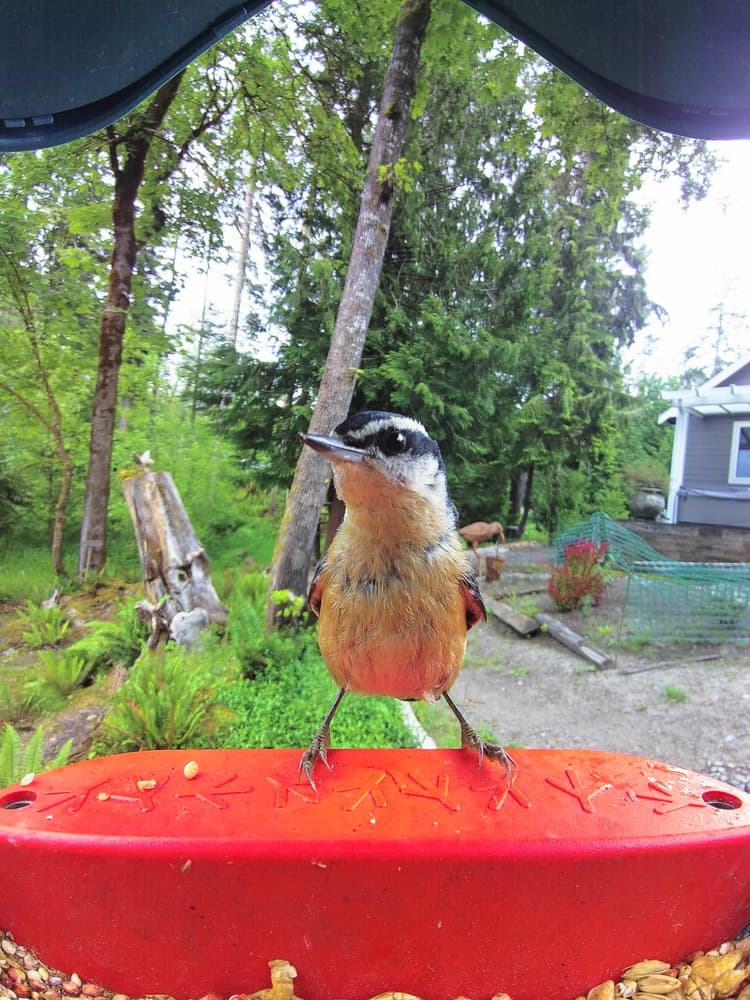
Displays a striking, rusty-red breast with grayish-blue upperparts, making it easily noticeable in the forest
- •
Features a bold black line through the eye, contrasting with the white face, enhancing its distinctive facial pattern
- •
Compact in size with a short tail and stout, pointed beak ideal for foraging on tree bark
What does a red-breasted nuthatch sound like?
The red-breasted nuthatch exhibits a unique vocalization that features a higher pitched, nasal sound, relatively tinny and more yanky than the white-breasted nuthatch. Its typical calls carry a flat, rising pattern, commonly identified as a chirp or chip, and at times, a scream.


Description
What's the best way to keep unwanted visitors out of your nest hole, nuthatch-style? By making a sticky booby trap, of course. These glue resin on the entrance of the nest hole: males do the outside and females the inside! They generally stop at nothing in their pursuit of the perfect home and if that means stealing some nest-lining materials, then so be it.
The red-breasted nuthatch can weigh between 9to12grams and be from10to12centimeters tall.
The Red-breasted Nuthatch typically lives up to about 8 years, with the oldest recorded living up to 9.9 years. This is relatively long compared to most small birds; for instance, their close relatives, the Brown-headed Nuthatch and Pygmy Nuthatch typically live only up to 6-7 years. However, other species like the White-breasted Nuthatch have similar lifespans with some exceeding 12 years.
Did you know?
Most popular questions about red-breasted nuthatch
How to recognise a red-breasted nuthatch?
General appearance
The Red-breasted Nuthatch is roughly the size of a Sparrow and is best identified by its black eye stripe, white eyebrow, and head-down nuthatch behavior. It features a buffy orange belly and distinctive blue-gray back. The bird's wings and tail are rounded, with the tail being short and square-tipped.
Male vs female
In terms of physical traits, males and females are largely similar. Both sexes feature the same rounded shape, black, gray, orange, red, and white coloration. However, in terms of color intensity, females may appear somewhat paler compared to the brightly colored males.
Juvenile
Juvenile Red-breasted Nuthatches are similar in shape to adults. Their coloration tends to be duller than adults, with less pronounced black, gray, and orange tones. As they mature, their colors deepen, more closely resembling the adults' vibrant hues.
Often mistaken for
White-Breasted Nuthatch vs Red-Breasted Nuthatch
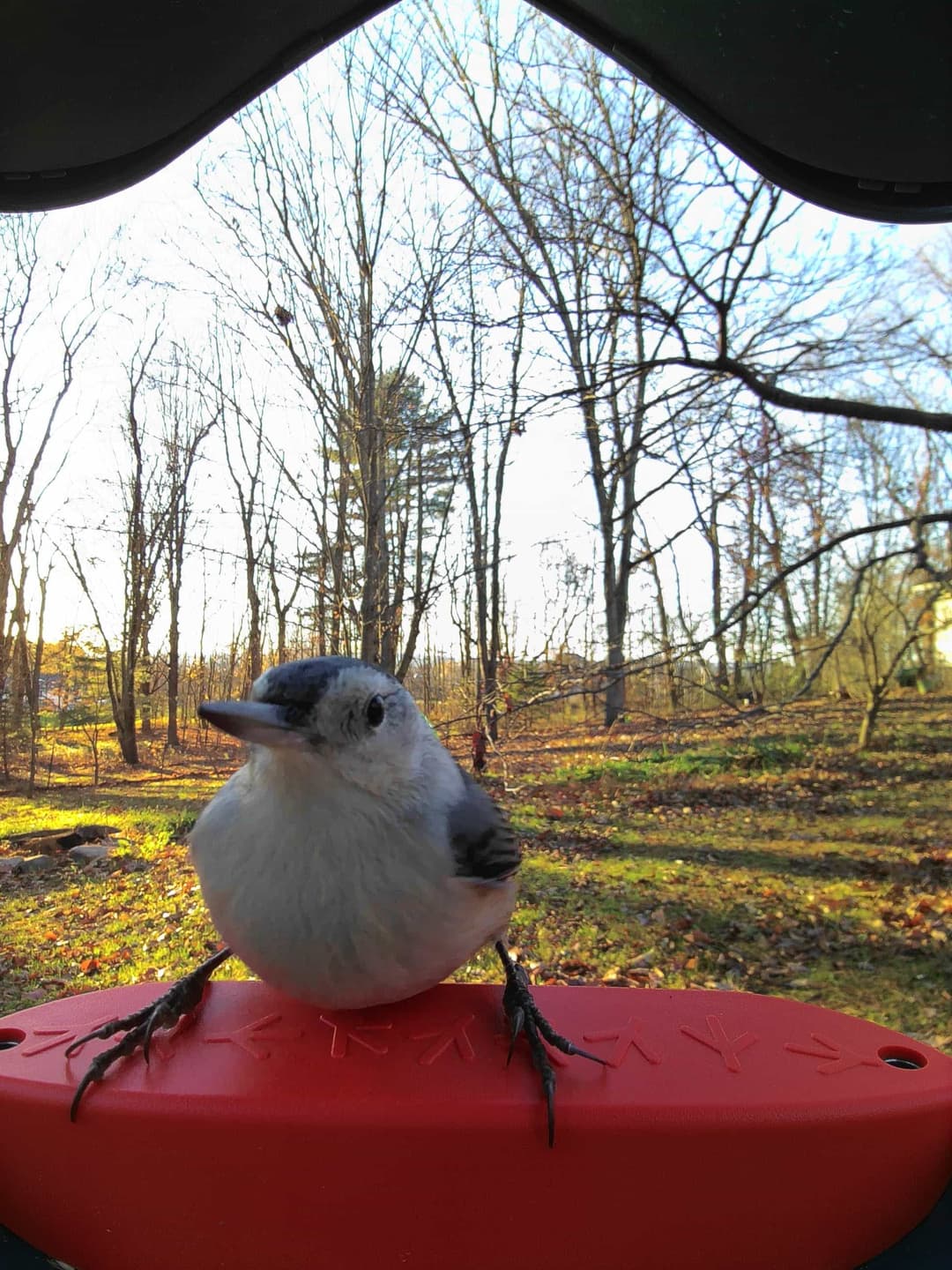
Red-Breasted Nuthatches have a rusty-red breast, while White-Breasted Nuthatches feature a white breast. Look for the black cap and eye stripe on the Red-Breasted for a clear distinction.
Pygmy Nuthatch vs Red-Breasted Nuthatch
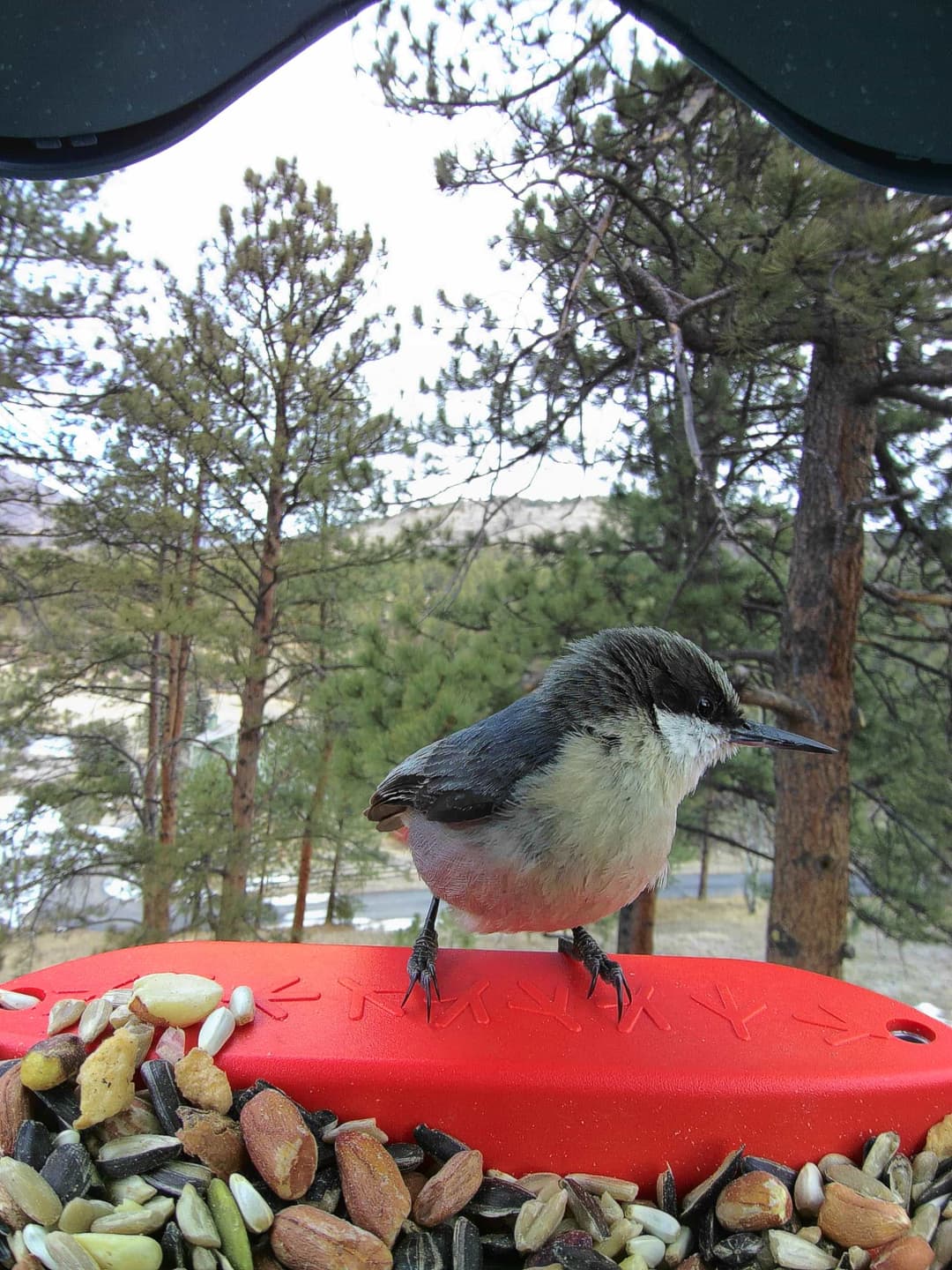
Pygmy Nuthatches are smaller with a pale underbelly. The Red-Breasted has a striking red breast and a black cap, contrasting with the Pygmy's grayish-blue cap.
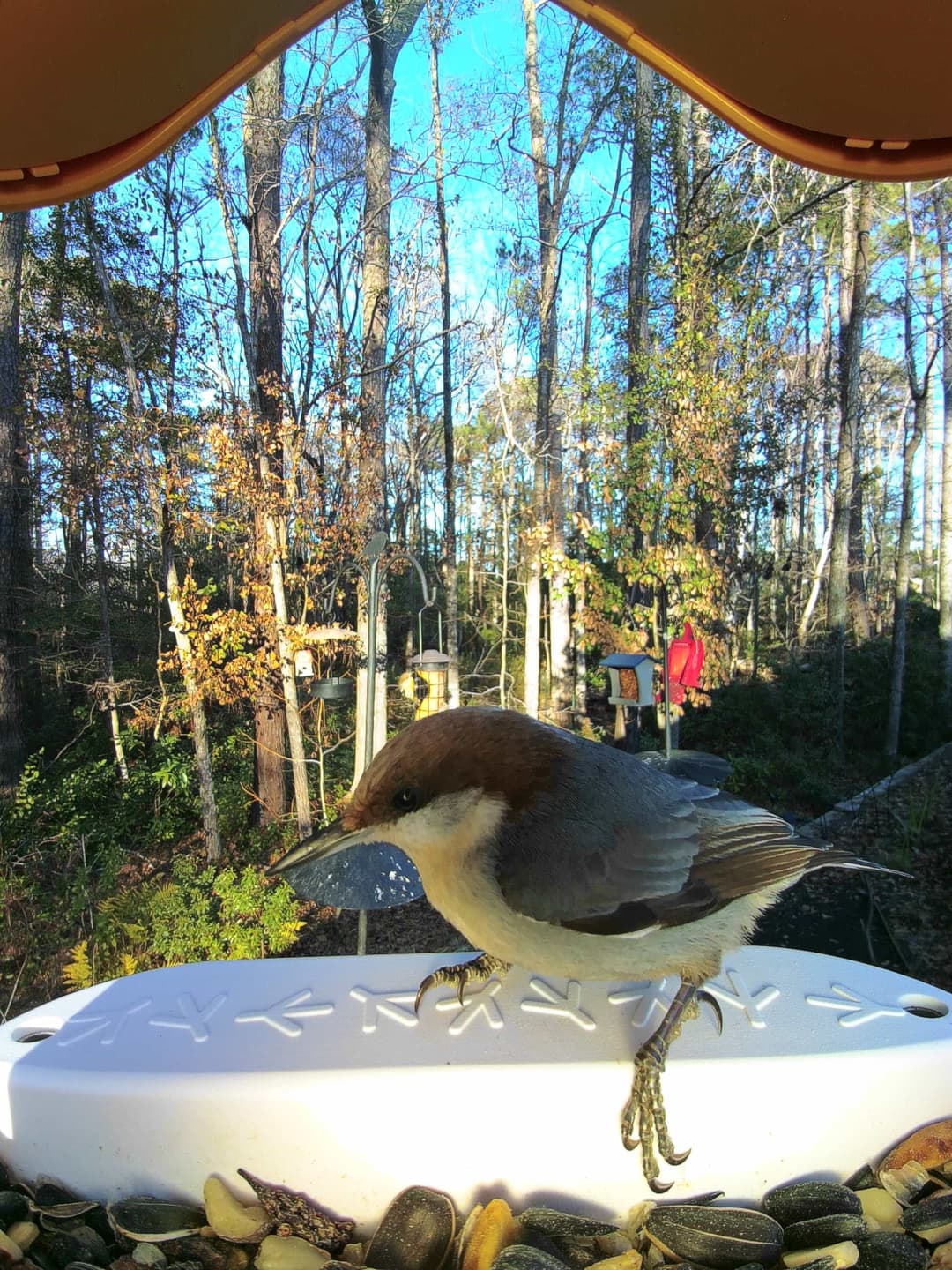
Brown-Headed Nuthatch vs Red-Breasted Nuthatch
The Brown-Headed has a distinct brown cap, unlike the Red-Breasted’s black one. The Red-Breasted’s underparts are red, setting it apart from the Brown-Headed’s pale belly.
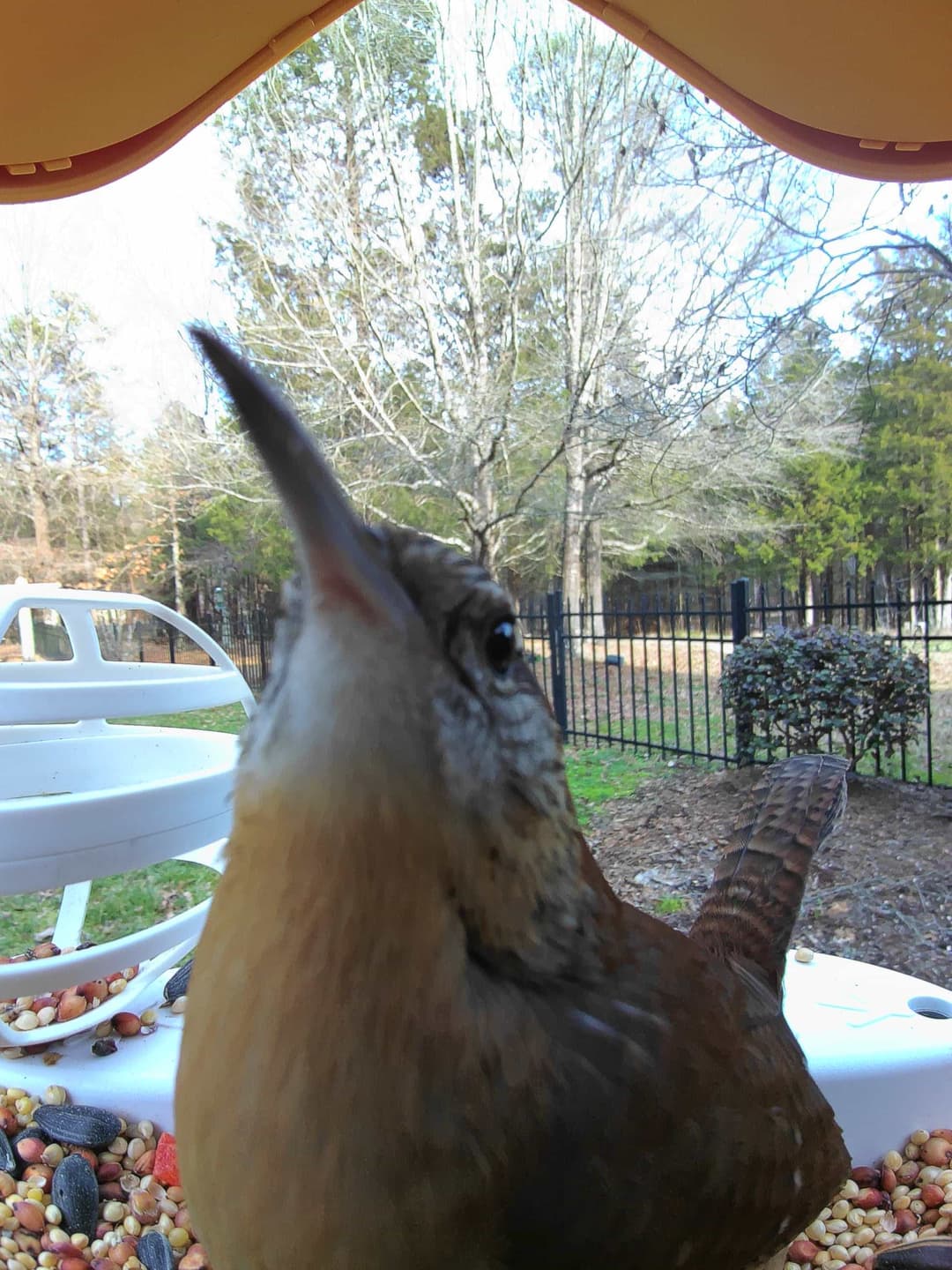
Brown Creeper vs Red-Breasted Nuthatch
Brown Creepers have a streaky brown back and long tail compared to the Red-Breasted’s gray-blue back and short tail. Their creeping behavior is distinctive.
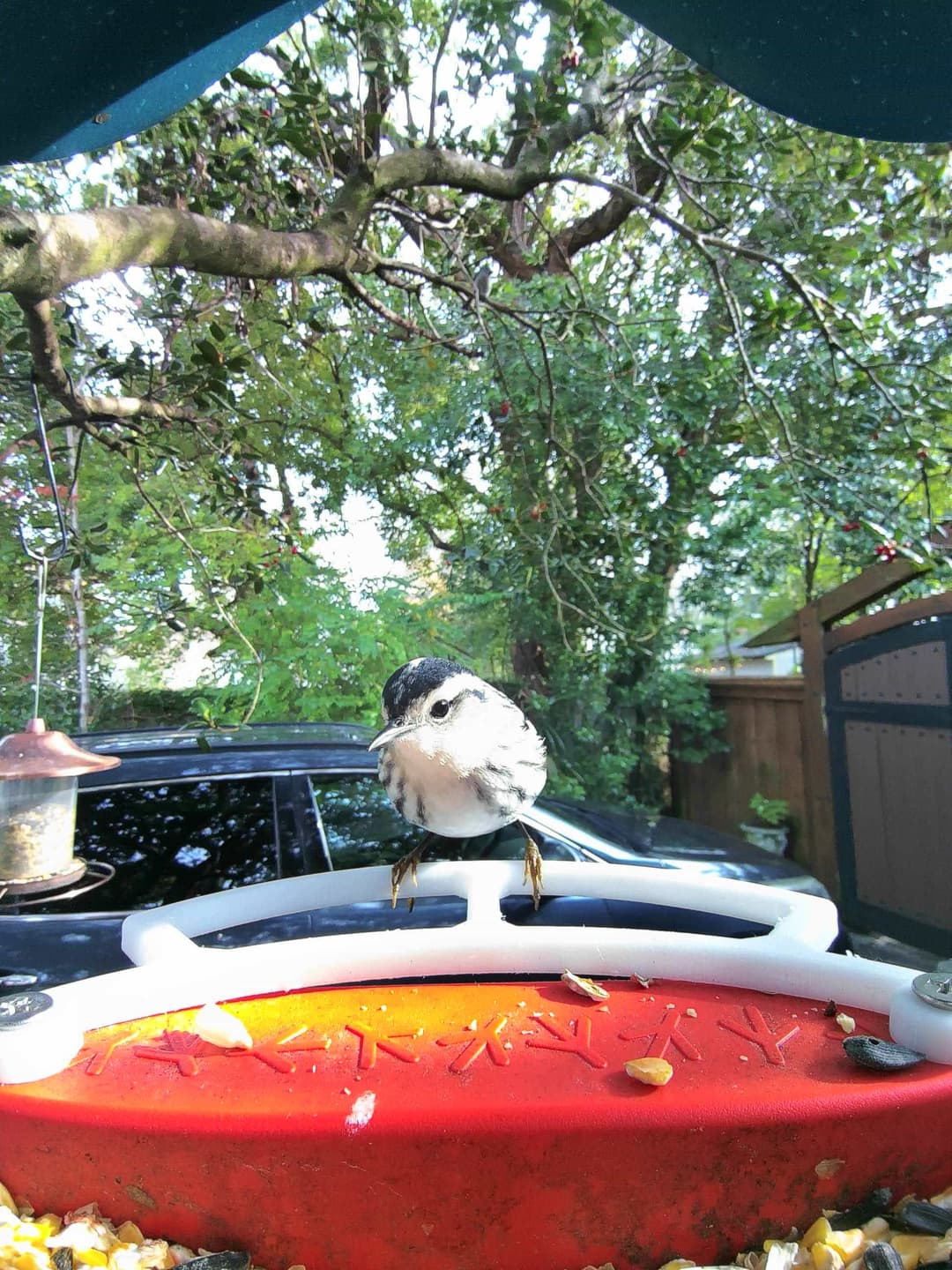
Black-and-White Warbler vs Red-Breasted Nuthatch
Black-and-White Warblers have bold black and white stripes and longer tails. Red-Breasted Nuthatches are smaller, with a red breast, and lack the Warbler’s striking pattern.
Breeding and nesting habits of the red-breasted nuthatch
Mating behaviors
Red-breasted nuthatches engage in elaborate courtship displays involving males showcasing feathers and offering food to females. Both sexes participate in territorial singing.
Nesting details
They prefer to nest in coniferous forests but can also inhabit gardens with suitable trees. They excavate cavities in dead trees using bark and twigs for the nest. To attract them, provide a habitat with native trees and minimal disturbance.
Eggs and chick-rearing
The female lays 5-8 eggs, incubating them for about 12 days. Both parents feed the chicks, which fledge after 18-21 days. It's beneficial to provide feeders with suet or seeds to support feeding.
What does a red-breasted nuthatch like to eat?
Fruits
Insects
Seeds
Spiders
Natural diet
The red-breasted nuthatch has a varied diet that includes both insects and seeds. During the summer months, it primarily feeds on insects and spiders, which are abundant in its natural habitat. In contrast, during the winter, when insects are less available, it shifts its diet to consume many seeds, with a strong preference for the seeds of conifers. This seasonal variation in diet helps the bird adapt to the changing availability of food sources throughout the year. Additionally, young red-breasted nuthatches are fed mostly or entirely on insects and spiders, providing them with necessary nutrients for growth.
Bird feeders
At bird feeders, the red-breasted nuthatch is known to consume seeds, particularly favoring sunflower seeds and shelled peanuts. These feeder foods mimic some of the seeds it would naturally consume during the winter months, making bird feeders a popular and accessible food source. Fat-rich suet is also occasionally eaten, providing an additional source of energy, especially useful during colder months when its natural food is scarce.
Attract red-breasted nuthatches with their favorite snacks
Red-breasted nuthatches have a hearty appetite, particularly when it comes to sunflower seeds, peanuts, and suet. You can also offer Bird Buddy seeds, which are designed by experts and tailored to the changing seasons, attracting a wide range of birds including the red-breasted nuthatch.
Choose the right feeder for red-breasted nuthatches
These energetic little birds prefer feeders that are easy to cling to. A tube feeder with a tray is optimal as it allows them to pick out their favourite seeds. You can also tempt them by placing a suet feeder near the trunk of a tree, a favourite perch of the red-breasted nuthatch.
More tips to attract the red-breasted nuthatch
To make your garden more appealing, keep birdhouses around your garden. Red-breasted nuthatches like to nest in small cavities, typically located in mature trees. You can also play nuthatch songs; their music might just coax a red-breasted nuthatch or two to join for a sing-along!
Where can you find red-breasted nuthatches?

Primary habitat
The red-breasted nuthatch prefers mature conifer forests made up of spruce, fir, hemlock, either pure or mixed with deciduous trees.
Additional range
In winter it can occupy other types of wooded habitats, but will always opt for coniferous areas if available. They may appear in any wooded habitat during migration.
Do they migrate?
The red-breasted nuthatch exhibits a behavior known as irruptive migration, where its winter range varies significantly from year to year. This irregular movement is primarily influenced by the availability of cone crops in the northern forests where they breed. When cone crops are poor, these birds may undertake southward invasions in the fall, expanding their range into areas well outside their typical breeding territory. In years when food supply is abundant in their nesting territories, red-breasted nuthatches may remain there throughout the winter. However, in years of scarcity, they move southward into the eastern and central United States, sometimes reaching the southern states and even northern Mexico. The migration route is not as clearly defined as other migratory birds, because it largely depends on food availability. Key locations during irruptive years can include deciduous and mixed forests where alternate food sources are present. Timing for these movements typically begins in late summer to fall, and the distance and direction can vary based on environmental conditions. Thus, while red-breasted nuthatches can stay in their breeding areas all year, their tendency to irruptively migrate results in a dynamic migratory pattern influenced by ecological factors.
What is the role of red-breasted nuthatches in nature and how to protect them?
Conservation status
The red-breasted nuthatch is generally considered stable, with its population numbers not showing significant decline. Its breeding range has expanded southward in some eastern states, aided by nesting in ornamental conifers. This adaptability to new breeding habitats suggests resilience to certain environmental changes. There are no immediate indications that the species is vulnerable or endangered. While specific conservation efforts aren't extensively documented, preserving coniferous habitats and monitoring population trends remain essential to its continued stability. Significant threats to its population appear minimal at this time.
Ecological role of red-breasted nuthatches
Its role in the ecosystem
The Red-breasted Nuthatch plays a notable role in forest pest control as its diet primarily comprises insects and spiders during summer. It actively forages for these on tree trunks and branches, thus helping to maintain a balance in the forest insect populations and reducing the damage caused by forest pests. During winter, it switches to a diet of conifer seeds, thereby contributing to seed dispersal. As it caches food items in bark crevices when food is abundant, those seeds that are forgotten or not retrieved end up germinating, aiding in the regeneration of coniferous forests. The species also makes nests in rotten stubs or snags, typically smearing sticky pitch around the entrance to prevent other creatures from entering. As such, they have a role in the utilisation and cycling of dead wood material within the forest ecosystem. Thus, the Red-breasted Nuthatch is an important species contributing to pest control, seed dispersal, and nutrient recycling in forest ecosystems.
How to help protect red-breasted nuthatches
Preservation tips
Habitat preservation strategy for red-breasted nuthatch
One crucial step towards preserving the red-breasted nuthatch is ensuring their natural habitat is protected. Forests, particularly mature coniferous or mixed coniferous-deciduous woodlands, are preferred by this species. Efforts must focus on limiting deforestation and promoting reforestation of indigenous trees. Another strategy involves creating 'buffer zones' around nesting sites to prevent human-induced disturbances.
Community science initiatives
Community science plays a pivotal role in conservation. Engaging local communities in data collection can significantly contribute to understanding the nuthatch’s behaviour, habitat usage, and threats. Incorporating bird-watching clubs, school groups, or local community members in monitoring bird populations can improve data coverage. An online platform can facilitate the reporting on these bird sightings, ultimately helping to track their migration and population trends. The community should also be educated on the importance of biodiversity and the need to conserve our precious bird species.