Ruby-Throated Hummingbird or Rufous Hummingbird?
Here's how to tell the difference




Ruby-Throated Hummingbird


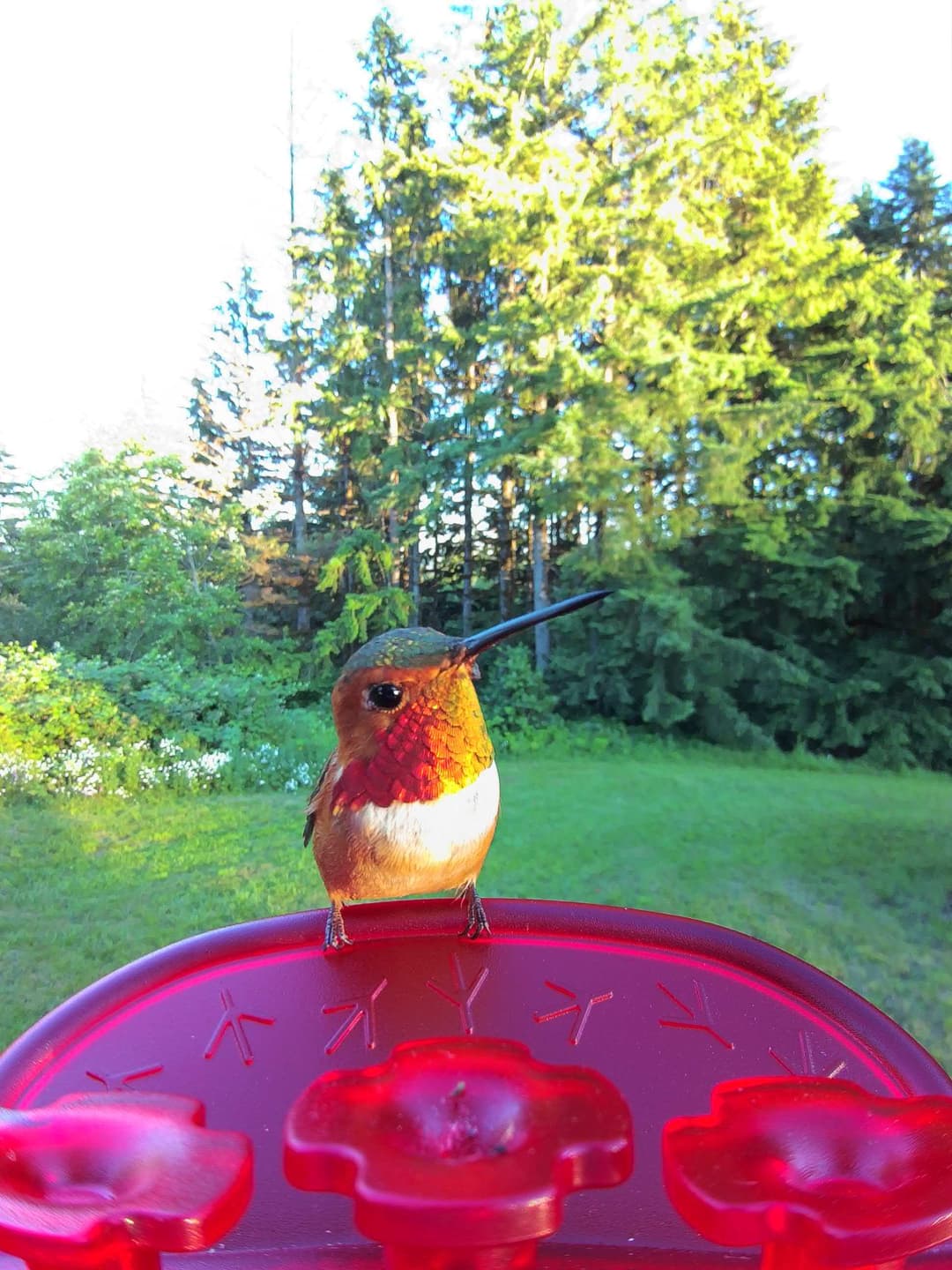
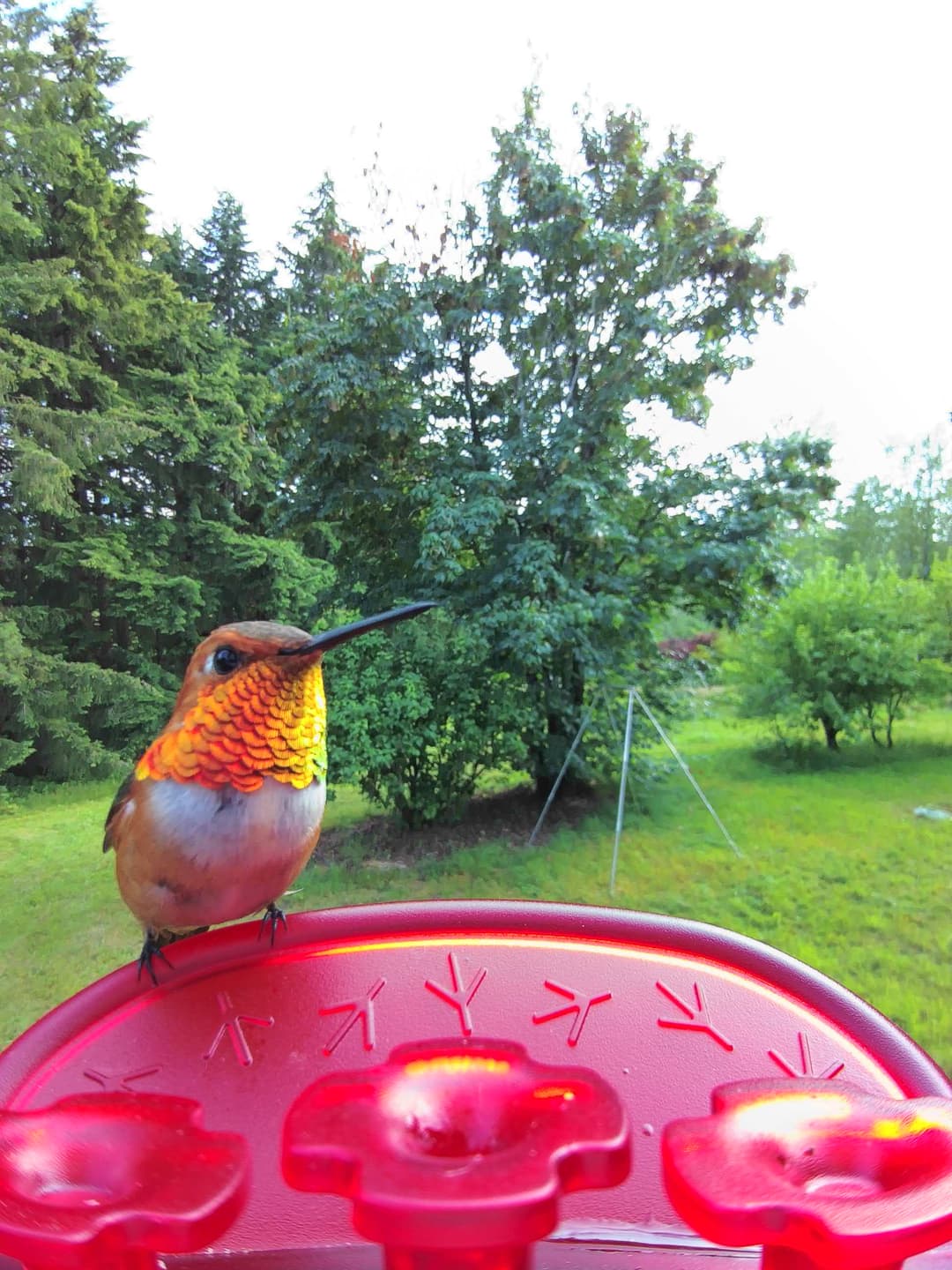
Rufous Hummingbird
Ruby-Throated Hummingbird
Archilochus colubris
General appearance
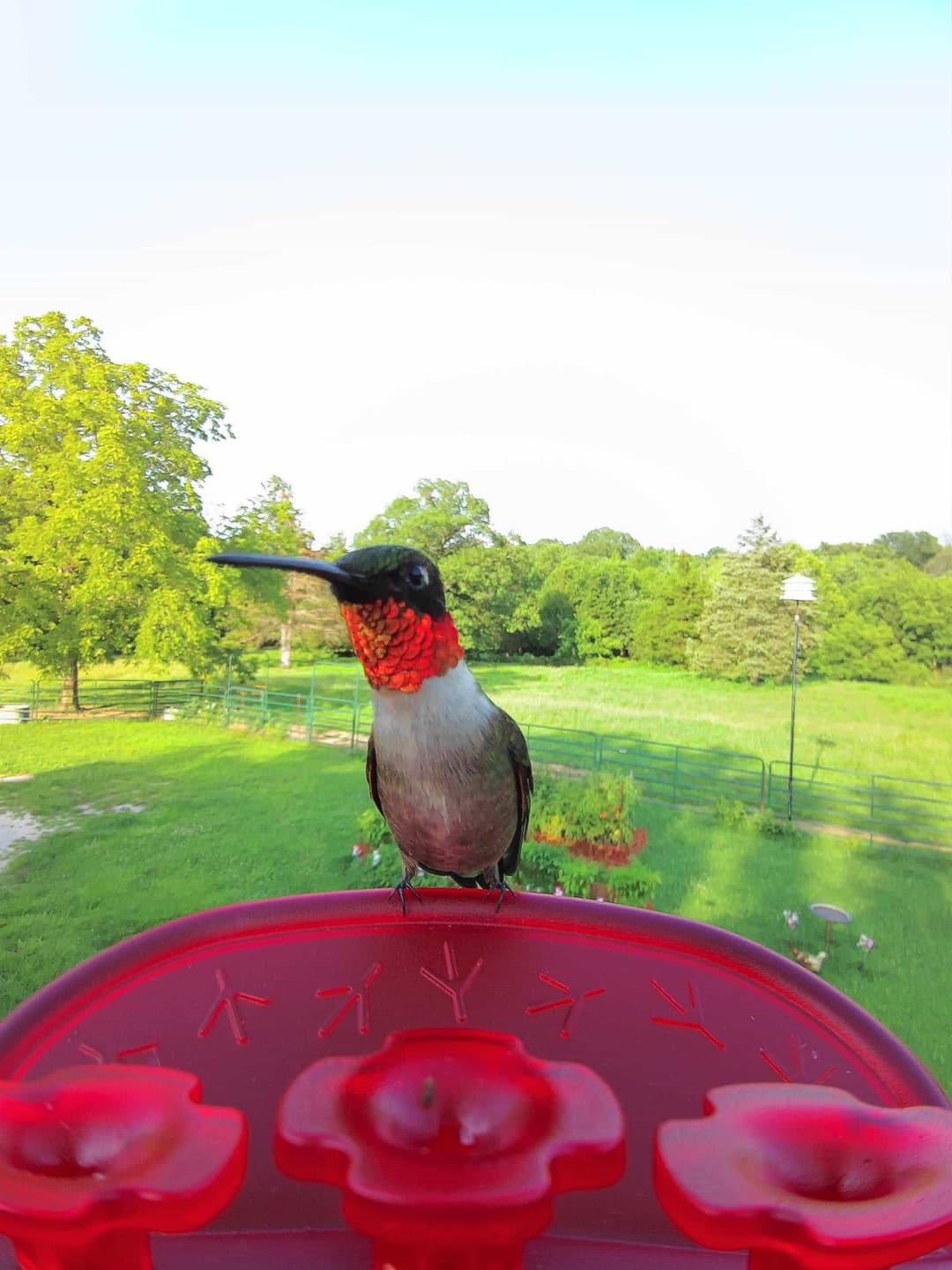
The ruby-throated hummingbird is a small bird with iridescent green plumage on its back and head, and white underparts. It has a slender, straight bill designed for feeding on nectar. Its wings are narrow and enable rapid, agile flight, making a buzzing sound that is often the first indicator of its presence in the wild.
Male vs female
Males are distinguished by their striking ruby-red throat patch, known as a gorget, which can appear black in poor lighting. Their tail feathers are forked with a dark, iridescent blue-green. Females lack the bright throat patch and instead have white underparts with a light spotting or streaking. Their tail feathers are rounded and edged with white.
Juvenile
Juveniles resemble adult females with similar green and white coloring. They lack the distinctive gorget of adult males. As they mature, young males begin to develop the red throat feathers that gradually replace the white of their juvenile plumage. Juveniles have buffy edges to their plumage, especially noticeable on the breast.
Size
2.8 - 3.9 in/0.1 - 0.2 oz
There's more to learn about Ruby-Throated Hummingbird
View full detailsRufous Hummingbird
Selasphorus rufus
General appearance
The rufous hummingbird measures about the length of 3 1/2 inches or 9 cm, similar to a sparrow. It boasts an array of colors: black, green, orange, red, and white. Its wing and tail shapes are varied, being narrow, rounded, and short, with multiple points, notches, rounded edges, and square tips.
Male vs female
The adult male is distinguished by a bright coppery rufous color above with a dark throat that glistens red in favorable light. In contrast, females and young sport a green back, a spotted throat with an orange-buff wash on their sides and at the tail's base, presenting a more variegated look.
Juvenile
Juvenile rufous hummingbirds share similar physical attributes with the females, with a green back, a spotted throat, and an orange-buff wash on the sides and tail base. It is likely these colors help them blend into their surroundings for protection, since their eye-catching adult coloration is not yet developed.
Size
3.5 - 3.9 in/0.1 - 0.2 oz
There's more to learn about Rufous Hummingbird
View full detailsHow to tell the Ruby-Throated Hummingbird from the Rufous Hummingbird
Visual differences
The Ruby-Throated Hummingbird is smaller (2.8-3.5 inches) with iridescent green plumage, white underparts, and a slender bill; males have a ruby-red throat. The Rufous Hummingbird, about 3.5 inches long, features bright coppery orange plumage; the male's throat glistens red. Females of both species have green backs but Rufous females show an orange-buff wash. Ruby-Throated tails are forked, while Rufous have notched, square-tipped tails.
Key differences and behavior
The Ruby-Throated and Rufous Hummingbirds share similarities in their diet of nectar and insects, with both visiting tubular flowers and feeders. However, the Rufous Hummingbird is notably more aggressive, often dominant at feeders. While both species perform U-shaped courtship displays, the Ruby-Throated is more attached to semi-open habitats like gardens during summer. In contrast, Rufous prefers forest edges and mountain meadows, with notably longer migrations up to 2,000 miles. Nesting behaviors are alike, with females of both constructing and maintaining nests, but Rufous nests can be refurbished and reused. The Ruby-Throated is less migratory and often shuffles rather than hops, contrasting with the Rufous's adept memory for feeder locations along its migration route.
Still not sure? Here are more lookalikes!
Ruby-Throated Hummingbird vs Black-Chinned Hummingbird
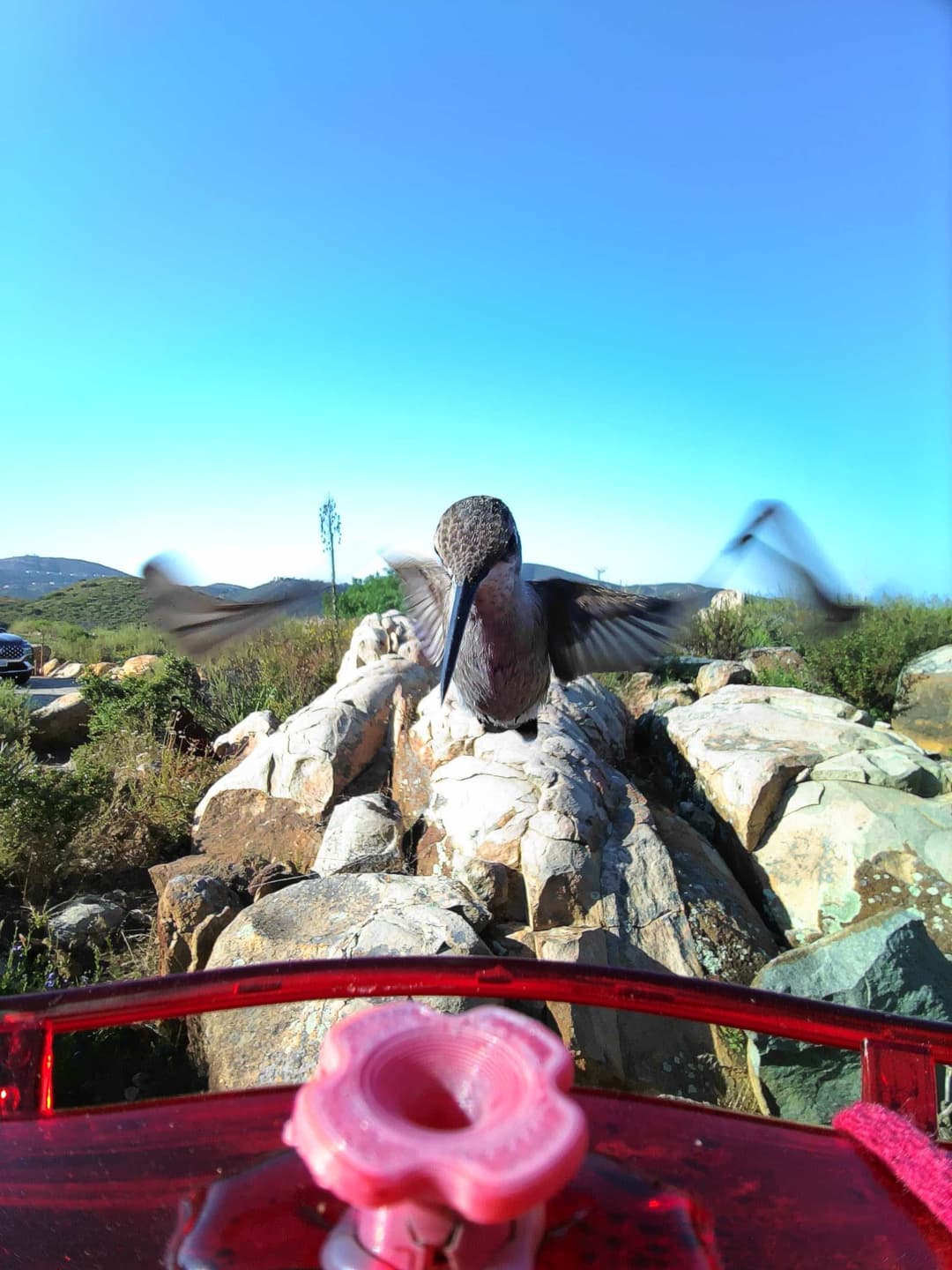
Ruby-Throated Hummingbird vs Broad-Tailed Hummingbird
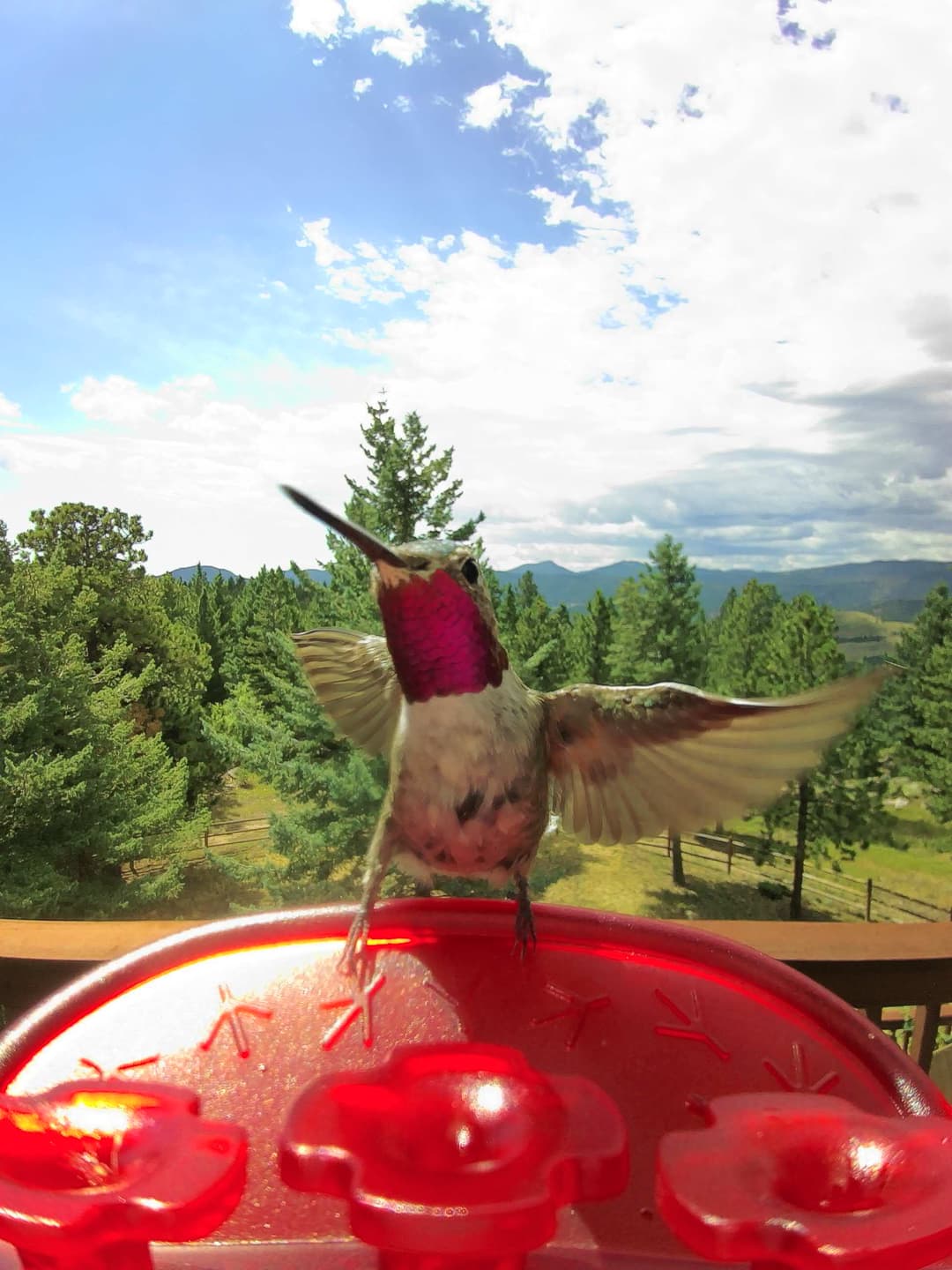
Ruby-Throated Hummingbird vs Anna's Hummingbird
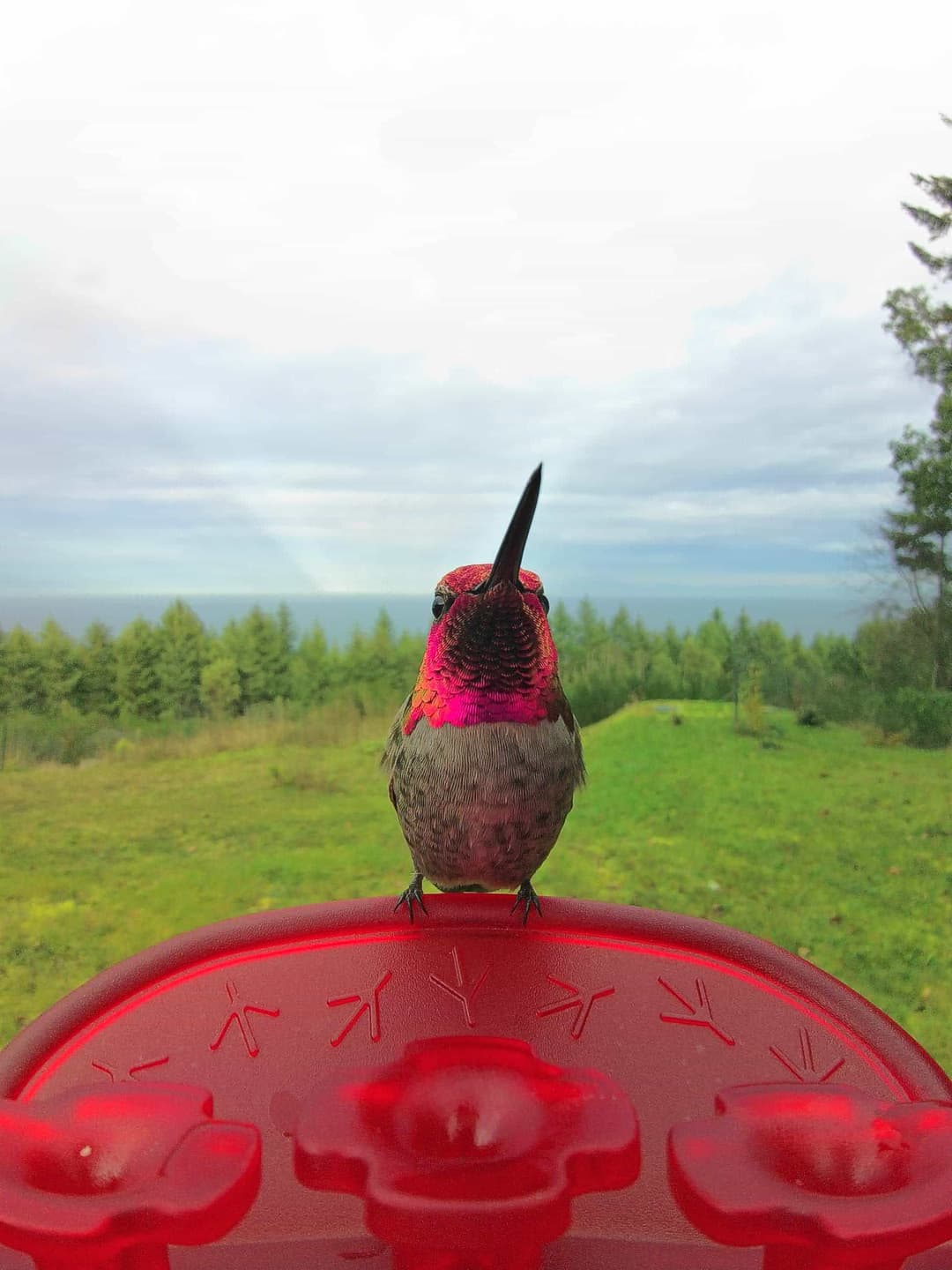
Rufous Hummingbird vs Allen's Hummingbird
Rufous Hummingbird vs Broad-Tailed Hummingbird
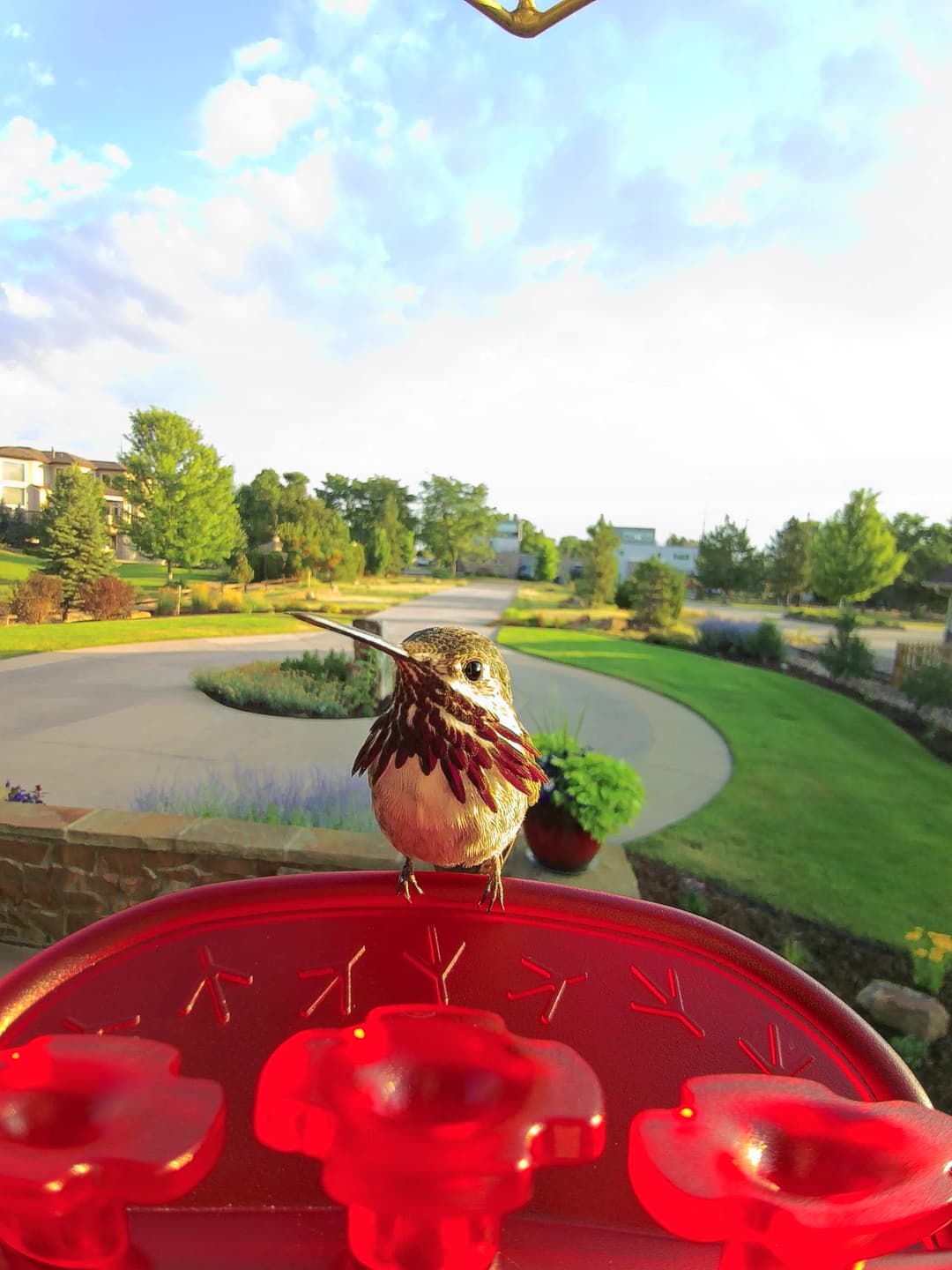
Rufous Hummingbird vs Calliope Hummingbird
Ruby-Throated Hummingbird vs [Select a bird]

[Select a bird]
Pick a bird to compare
Rufous Hummingbird vs [Select a bird]
[Select a bird]
Pick a bird to compare