
Calliope Hummingbird
Calliope Hummingbird
Selasphorus calliope


Quick Identification guide
Quick Identification guide
- •
Features a small, compact body with iridescent green upperparts and a mostly white underside
- •
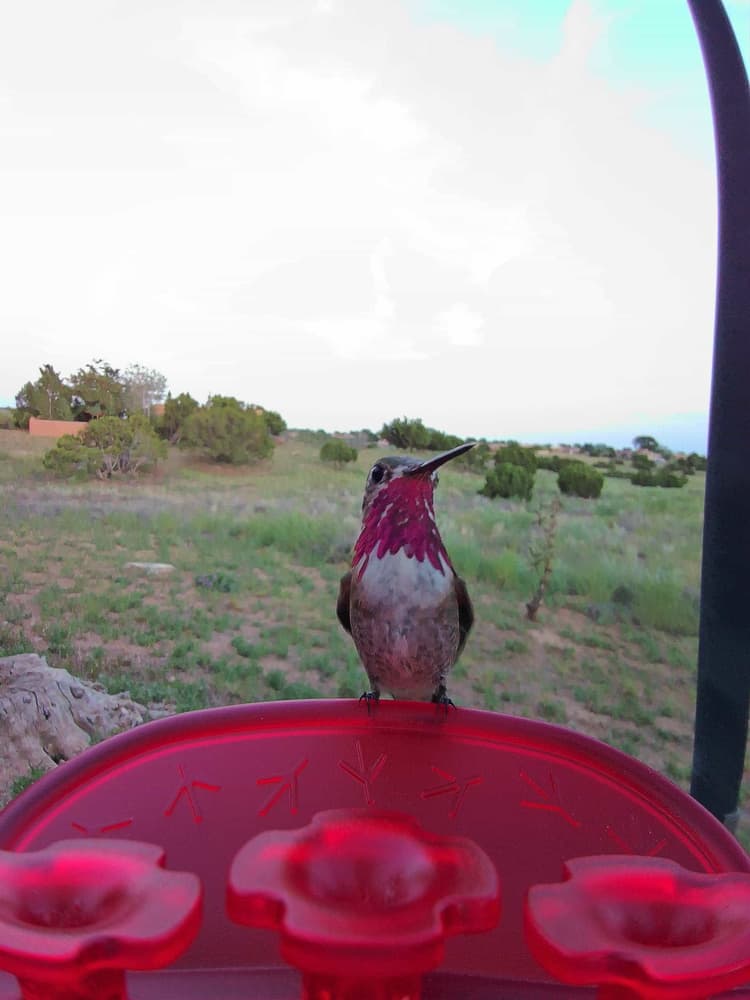
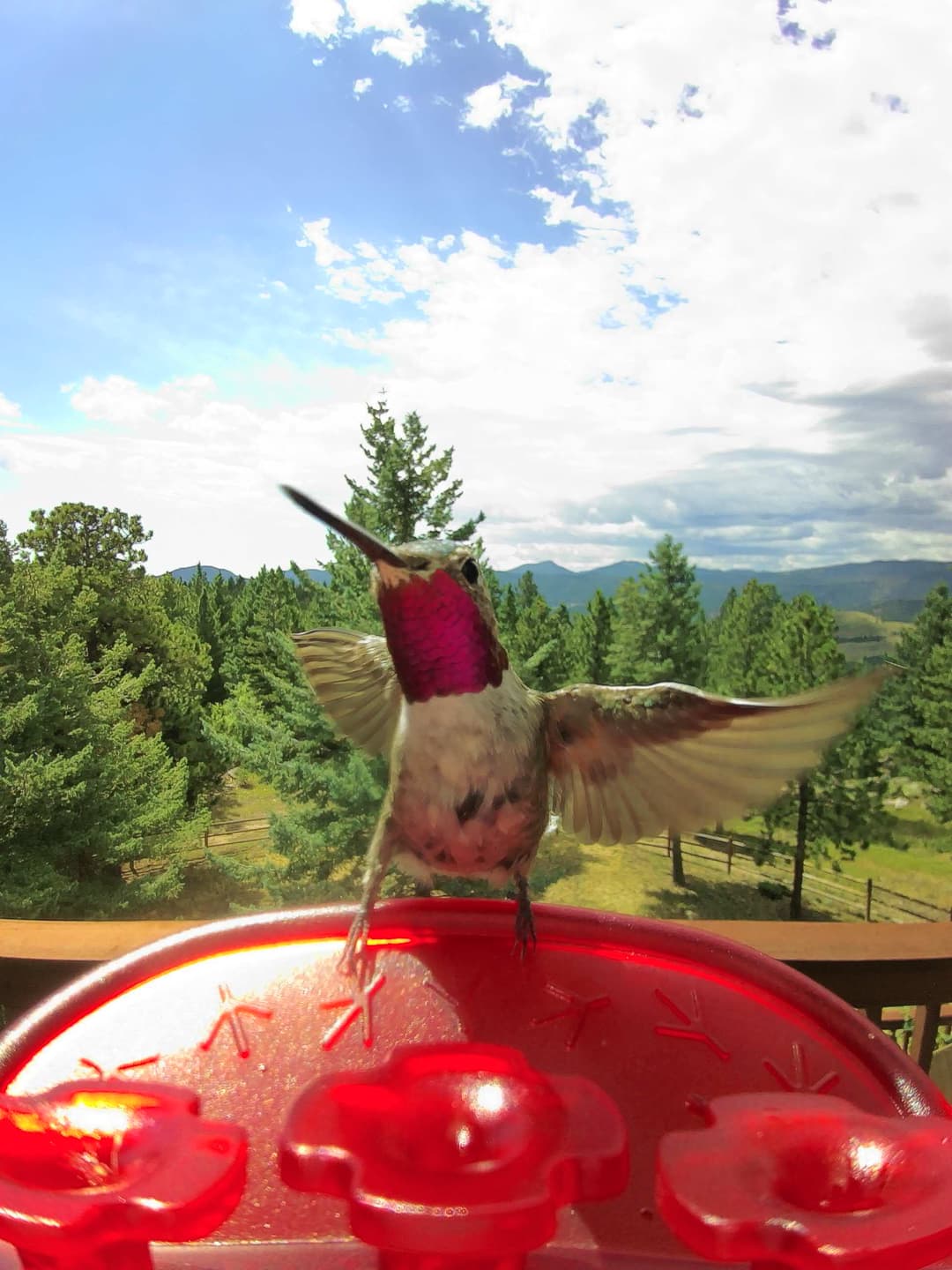
Males have a striking radiant purple throat, known as a gorget, which contrasts sharply with their white underparts
- •
Possesses a short, straight beak and a slightly forked tail, which are typical of hummingbirds


Description
Despite being the smallest bird in the United States, this tiny hummingbird thrives in the meadows and open forests of the chilly Northwestern mountains, and astonishingly, embarks on an annual journey of over 5,000 miles to pine-oak forests in Mexico and back again. The male Calliope Hummingbird dazzles with bursts of magenta from its throat as it dances and hovers, showcasing U-shaped display dives to court females. These displays are accompanied by a sputtering buzz from its tail feathers and a sharp, zinging call.
The Calliope hummingbird can weigh between 2.3to3.4grams and be from8to9centimeters tall.
The Calliope Hummingbird typically lives up to 8 years, which is consistent with many hummingbird species' lifespan. In comparison, the related Ruby-throated hummingbird also averages around 5 to 9 years. However, these lifespans are very contingent on the birds surviving their first challenging year of life.
Did you know?
Most popular questions about Calliope hummingbird
How to recognise a Calliope hummingbird?
General appearance
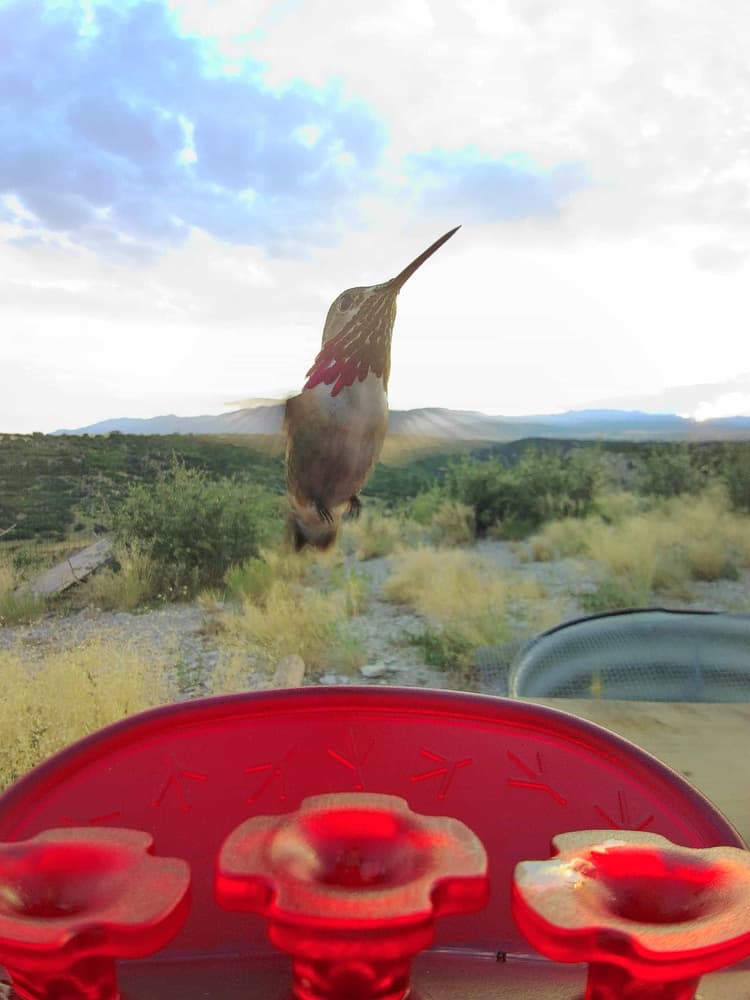
The Calliope Hummingbird is the smallest hummingbird at a size of 2 3/4-3 1/4 inches or 7-8 cm, comparable to a Sparrow. It features a short, rounded tail with a square tip. The wings are narrow and rounded. Colorations include green, orange, purple, and red.
Male vs female
The adult male Calliope Hummingbird displays distinctive magenta stripes on its throat and pale green on its sides. Females, as well as younger birds, are smaller than female Rufous Hummingbirds, and have a shorter bill. They also show a pale buff wash across their chest. Females possess very little rusty color at the base of their tail, differentiating them from the males.
Juvenile
Juvenile Calliope Hummingbirds are similar to females in size, with a shorter bill. They also share the characteristic of a pale buff wash clearly seen across their chest. Differences may emerge with seasonal variations, which influence their appearance.
Often mistaken for
Allen's Hummingbird vs Calliope Hummingbird
Calliope Hummingbird is smaller and has a more compact body compared to Allen's. The Calliope male's gorget features distinct magenta streaks rather than the orange of Allen's. Females of both species are difficult to differentiate, but Calliope's wingtips extend beyond the tail.
Rufous Hummingbird vs Calliope Hummingbird
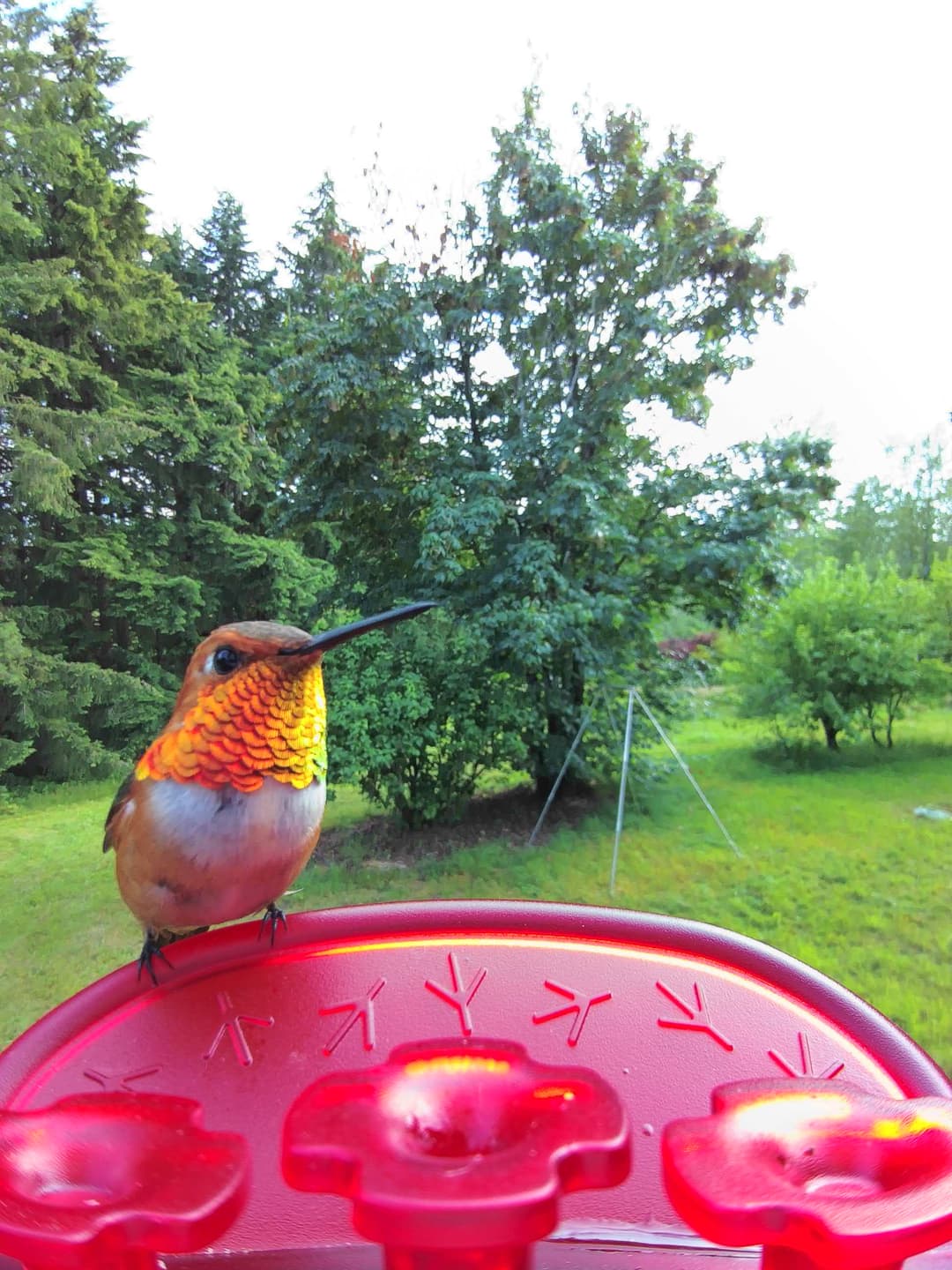
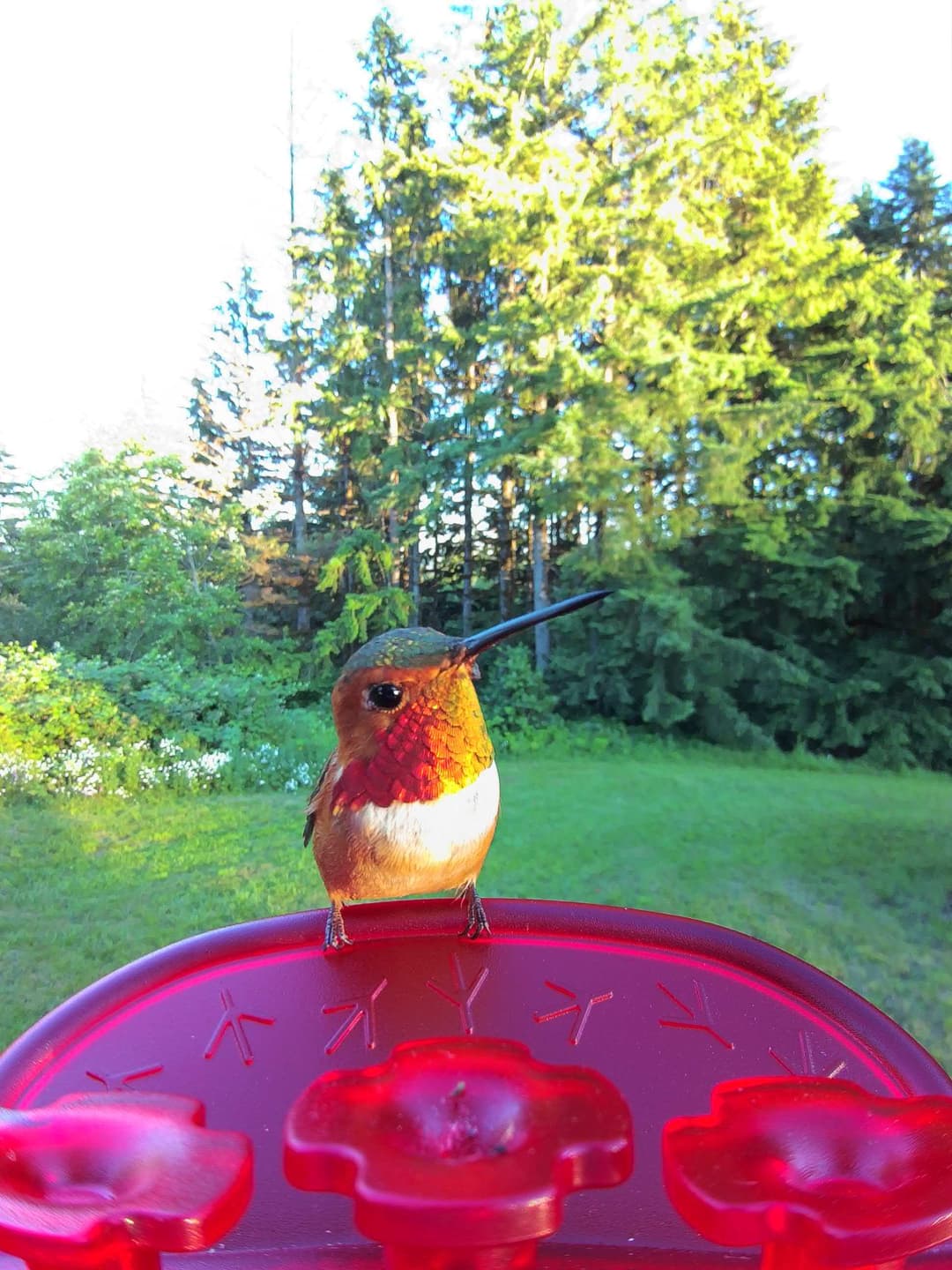
Compared to the Rufous, the Calliope is smaller and lacks the Rufous's reddish-brown coloration. Calliope males have iridescent magenta stripes on their throat, while Rufous males show a bright orange gorget. Calliope's flight is smoother than the Rufous's rapid wingbeats.
Broad-Tailed Hummingbird vs Calliope Hummingbird
Calliope Hummingbirds are notably smaller than Broad-Tailed Hummingbirds. The Calliope male's magenta throat pattern contrasts with the Broad-Tailed's rosy-pink gorget. Listen for the distinctive wing trill of the Broad-Tailed, absent in Calliope.
Breeding and nesting habits of the Calliope hummingbird
Mating behaviors
The male establishes a breeding territory and drives other males away, performing a U-shaped courtship flight display. This involves rising 30-100 feet and diving steeply with popping and zinging sounds at the bottom before rising again. The male also hovers before the female with throat feathers flared out.
Nesting details
The nest site is usually in a pine or other conifer, sometimes in a deciduous shrub, located typically 6-40 feet up but can be higher. The nest, built by the female, is a compact cup made from plant down, moss, bark fibers, and spider webs, with the exterior camouflaged with lichen. (It may be built on an old pine cone base.)
Eggs and chick-rearing
The female lays and incubates two white eggs, with chicks hatching after about two weeks. Both protection and feeding primarily rest with the female, as the male's courtship roles cease after initial mating.
What does a Calliope hummingbird like to eat?
Insects
Nectar
Natural diet
The calliope hummingbird primarily feeds on nectar from flowers, which provides them with essential energy. In addition to nectar, they consume tiny insects, which supply necessary proteins and nutrients for growth and maintenance.
Bird feeders
At bird feeders, calliope hummingbirds are often attracted to sugar-water mixtures. This artificial source of food resembles the nectar they naturally seek and can supplement their diet, providing extra energy especially during migration periods or when natural sources are scarce.
Optimal feeder types and placement
Calliope hummingbirds prefer dish-style or vacuum feeders, which are easy to clean and refill. Position your feeders in a slightly shaded area, away from high-traffic areas or windows. This allows the birds to feed in peace and helps the nectar stay fresh for longer. Additionally, try putting up multiple feeders in different locations to reduce competition among these territorial birds. Space them at least 10 feet apart to ensure each hummingbird has its own feeder.
Feeding: using nectar and seeds
Make your yard irresistible by offering the Calliope's favourite snacks - nectar and seeds. Prepare homemade nectar by mixing 1 part of white granulated sugar with 4 parts of water, then boiling for 2 minutes. Change the nectar every two days and more often during hot weather to prevent fermentation and mold growth. More than the nectar, Calliope hummingbirds are also drawn by the seeds. We highly recommend Bird Buddy seeds as the best choice, thanks to their expert seasonal selection that the birds can't resist.
Add sparkle and song to draw them
Since Calliope hummingbirds are attracted to bright, flashy colors, try tying red ribbons around the tree branches or on your feeder as a lure. Or you could hang up a multi-color wind spinner by your feeder to catch their attention. As for the sing-along, ambient recordings of the Calliope hummingbird's song played at a low volume can pique their curiosity and bring these feathered guests to your yard.
Landscaping for hummingbirds
To increase the chances of these tiny wonders visiting and staying in your yard, consider planting flowers that they love like bee balm, columbine, or lupine. Opt for red, orange, or pink tubular flowers, as these attract hummingbirds the most. Create layers in your landscaping with trees, shrubs, and flowers to provide shelter and a diversity of feeding options.
Where can you find calliope hummingbirds?

Primary habitat
The calliope hummingbird mainly inhabits forest glades and canyons in mountains, from 4,000 feet up to near the treeline. It favors open shrubby areas close to streams and is common in second growth post-fire or logging.
Additional range
During winter, it resides in the pine-oak woods of Mexican mountains, while migrants can be found in both mountains and lowlands.
Do they migrate?
The calliope hummingbird is a migratory species. In the early spring, this small bird embarks on its northwest migration primarily through the Pacific lowlands. This route is part of its journey to breeding grounds, which predominantly lie in the mountainous regions of the northwestern United States and parts of Canada. The migration begins early, taking advantage of the spring season to reach suitable habitats for breeding. As summer transitions to fall, the calliope hummingbird starts its southeast migration very early, beginning in July. This time, the route mainly cuts through the Rocky Mountain region, guiding the birds back to their wintering grounds. These winter destinations are typically in the southwestern United States and extending into Mexico, where the climate is milder during the colder months. Additionally, adult males generally undertake this migratory journey slightly ahead of the females and young in both seasons, likely to establish territories first in the breeding grounds and possibly to secure resources during their return to wintering sites. This strategic migration pattern helps the species optimize breeding success and survival across a range of diverse environments.
What is the role of calliope hummingbirds in nature and how to protect them?
Conservation status
The calliope hummingbird is fairly common within its range; however, it faces vulnerability due to habitat loss. While not currently endangered, the species is threatened by activities such as deforestation and land development, which reduce its natural habitat. Key conservation efforts focus on preserving and restoring its habitat in both breeding and migratory regions. Maintaining native plant species and protecting critical areas can support the hummingbird's survival and mitigate habitat loss impacts. Public awareness and habitat protection initiatives are vital to ensuring the long-term conservation of this species.
Ecological role of calliope hummingbirds
Its role in the ecosystem
The Calliope Hummingbird plays a significant role in the balance of its ecosystem. Through its feeding behavior, it contributes to both pollination and pest control. As it dips deep into flowers to consume nectar - its primary food source - pollination occurs, facilitating plant reproduction and ensuring the continued growth and regeneration of these plants. This process aids in the distribution and diversity of plants within the hummingbird's habitat. In addition to nectar, the Calliope Hummingbird feeds on small insects, performing a crucial role in controlling insect population. It flies out in mid-air or hovers over the foliage to catch the insects, thus reducing the numbers of potential pest species and maintaining the health of plants. Lastly, their unique nest-building habits also contribute to the process of decomposition, recycling organic materials into the environment. Their nests, composed of plant down, moss, bark fibers, and spider webs, help to turn decomposing materials back into productive elements of the ecosystem.
How to help protect calliope hummingbirds
Preservation tips
Habitat preservation strategies
Protect and restore the natural habitat of the Calliope Hummingbird, particularly nectar-rich flora like bush monkeyflower and Indian paintbrush. Avoid using pesticides, as these can kill insects essential to their nutrition. Install bird-friendly structures (like bird baths and feeders) that mimic their natural feeding habits. Adopt sustainable gardening and farming practices favoring native vegetation.
Community science initiatives
Engage in community science projects related to hummingbirds. Participate in birdwatching groups and record observations in apps like eBird. Collaboration with environmental organizations, such as Audubon Society, is paramount. Organize awareness-building events and outreach programs about this species. Support policies and legislation favorable to wildlife conservation.